
Tooba Siddiqui
March 12, 2026 • Updated March 16, 2026
12 mins Read
There’s one common factor among all the online consumers that influences their purchase decision: video content. According to research, an average person consumes video content for at least 17 hours per week, and more than 84% of consumers want brands to produce more video content. For small businesses, this represents an enormous opportunity.
The best part is you don’t need fancy equipment, production teams, or a five-figure budget to make video marketing work for you. With AI tools, video marketing for small businesses is more accessible and affordable than traditional marketing.
Why Video Marketing Matters for Small Businesses
As of 2026, almost 83% of video marketers report that video content has directly increased sales. That clearly indicates that investing in video content marketing isn’t just a fleeting trend but a proven growth strategy. If you are still wondering why go through all the trouble of creating a marketing video for business, here are some benefits that video content has to offer:
1. Builds Trust Faster Than Any Other Format
Small businesses struggle to gain the trust of the target consumers and build credibility for their brand. Established brands often benefit from social proof and brand recognition, which makes earning trust for small businesses more crucial. Video content marketing accelerates this process.
Watching a CEO speak on camera, learning from live product demonstrations, or hearing a real customer experience helps the audience connect with the brand. 96% of people have watched a video to learn more about a product or service — that’s not just a minor uplift but a fundamental shift in consumer behavior.
2. Video Drives Higher Engagement
Well, it’s not just the consumers; even the digital landscape prefers video content over text-based articles or static images. Even the social media platforms and algorithms increasingly favor short-form video content because it keeps users on-platform longer.
69% of video marketers have produced and benefited from social media videos, making it one of the most popular video marketing tactics. Marketing videos for business often outperform static images and text-based posts on Facebook, Instagram, YouTube, and LinkedIn in terms of reach and interaction. For an emerging brand, video marketing isn’t just about content creation; it’s more about improving brand visibility.
3. Video Improves Conversions
As per studies, 82% of marketers have reported gaining significant ROI through video marketing, while 85% of video marketers say video content has helped them generate leads. Why? Because video content reduces uncertainty. The consumers can view the size, functionality, use cases, and features in real-time. It builds confidence and reduces customer hesitation.
When strategized correctly, video marketing has an impact on business:
- Conversion rates
- Average order value
- Customer retention
- Brand recall
Recommened read: 15 Video Marketing Trends
Video Marketing Strategy for Small Business
Video content adds a sense of personality to your brand. When the audience can hear, see, and interact with you, they feel more confident purchasing from you. So when you incorporate video into your marketing approaches, make sure you plan it strategically.
Step 1: Define Clear Objectives
Before you begin creating any marketing video for business, determine its exact goal. If it’s for generating brand awareness or increasing website traffic. Or should you focus more on educating customers and building community? Once you have the goal in mind, you will define the type and format for your next video content. Take this as an example:
- If it’s for awareness, create short-form social videos.
- If it’s for increasing sales, create product demos & testimonials.
- If it’s for customer education, create more tutorials & explainer videos.
- If it’s for building consumers’ loyalty, create behind-the-scenes content.
Without a clear objective, video becomes content noise instead of a growth tool.
Step 2: Understand Your Audience
Video marketing for small businesses succeeds only when the content aligns with your customer behavior. Figure out the pain points of your customers, note down their preferences, and circle out the channels and platforms they consume most video content on.
Keep in mind that different video-sharing and social media platforms attract different viewing patterns:
- The TikTok & Instagram audience prefer short, vertical, mobile-first content.
- The YouTube audience prefers longer educational content.
- The LinkedIn audience prefers professional thought leadership videos.
- The audience visiting your website will most likely prefer product-focused explainer videos.
Create content aligned with where your audience already spends time.
Step 3: Plan Your Content and Stay Consistent
Video marketing doesn’t have to be complicated, and marketing videos for business don’t have to have cinematic perfection. When starting out, focus on consistency and clarity. Write a simple script, add relevant and strong CTAs, and keep the content concise. Build narratives and tell stories that help you connect with your audience.
Publishing a basic storytelling video once or twice a week will outperform posting a single professionally-produced video once every three months. For small businesses, momentum builds brand presence.
Step 4: Video Production on a Budget
One of the most common misconceptions about video marketing is that it’s limited to big brands with deep pockets. However, in reality, the digital marketing now focuses more on consistent content over cinematic results. Short-form clips, customer testimonials, and tutorials drive more engagement. So instead of investing in single high-production video, small businesses should focus on producing multiple pieces of marketing content per week across social platforms.
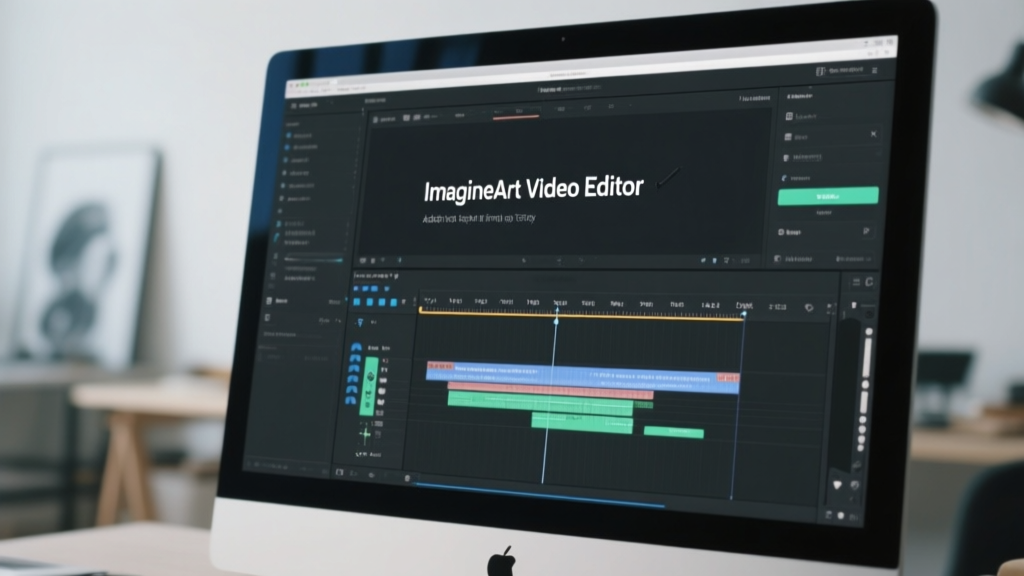
AI video tools make this possible by reducing production time and enabling rapid campaign iteration. Now, anyone with a good smartphone and access to the internet can shoot professional-grade video content. With a simple ring light to improve lighting and good quality headphones for sound, you can create a marketing video for business in just a couple of hour. Or you can skip the recording part and use AI tools like ImagineArt AI video generator and AI video editor to create and refine marketing videos on the go.
Step 5: Optimize and Distribute Video
Video content creation is only half the equation; optimization and distribution determine the actual ROI. Small business shoud focus on these distribution channels:
- Social media discovery
Platforms like TikTok, Instagram Reels, and YouTube Shorts are powerful for brand discovery. Short-form videos optimized for mobile viewing help small businesses reach new audiences organically. Use vertical format for mobile platforms and add captions as many users watch without sound.
- Website conversion videos
Embedding product demos or testimonial videos on landing pages can significantly increase conversions by reducing buyer hesitation.
- Paid video advertising
Short video ads on Meta, TikTok, and YouTube allow small businesses to scale reach quickly and test multiple creative variations.
Video marketing for business also supports organic search. Make sure to include important keywords in titles, descriptions, tags, and transcripts, and embed them on your website to improve the dwell time of the website.
Step 6: Measure Video Marketing Performance
To improve your video marketing strategy and build sustainably, measure performance.
Track these metrics:
- Watch time
- Audience retention
- Engagement rate
- Click-through rate
- Conversion rate
The better the content quality, the higher the retention rate. If the viewers drop off early, work on your video hook. Track the data and make amends to your creative decisions accordingly.
Recommended read: Video Editing Tips
Types of Marketing Videos for Small Businesses
If you want to make your video marketing strategy effective, diversify your video content and format.
1. Product Demo Videos
Product demo videos explain the core functionality of your product while highlighting its key features. Find out the main painpoint of your audience and create a video about how your product resolves it. If your audience can’t understand how your product benefits them, they will probably never buy it. Product demo videos significantly increase conversion rates on landing pages. The key is to keep it concise, show real usage, and focus on outcomes.
2. UGC & Testimonial Videos
Customer reviews can help build credibility. Around 57% of video marketers create and benefit from testimonial videos, showcasing that it can increase trust during the consideration stage. Compile the authentic product reviews from your customers into engaging videos. Even simple smartphone recordings can perform well if they feel authentic. Instead of you marketing your product, share real feedback from happy customers and let their experience tell the story.
Recommended read: How to Make UGC Ads with AI
3. Explainer Videos
Considering the shrinking attention span, today’s online audience prefers a short video explaining the product over a lengthy blog. If your product or service is slightly complex to use, create a short explainer video clarifying:
- What problem do you solve?
- How your process works
- What makes you different
Around 68% of video marketers now create explainer videos promote their products. The core reason: clarity reduces friction in the sales funnel.
Recommended read: How to Make Explainer Videos
4. Educational Videos
Educational content builds brand awareness while positioning your business as an authority. Creating how-to tutorials or sharing industry insights, tips, and tricks can help create a long-term relationship with your audience. Such videos also bring in organic traffic and boost SEO results.
5. Behind-the-Scenes & Culture Videos
Today’s customers value authenticity. Sharing with them a sneak peek of how you work and your company culture fosters relatability and builds an emotional connection. It can include videos about howyou use your own product or giving the audience tips about using your product to improve their business. Trust builds when customers see the real people behind the product.
6. FAQ & Quick Answer Videos
Customers' queries are often repetitive, and small businesses end up losing significant revenue and potential sales dealing with the same concerns every month or year. The best way to deal with customer concerns is to compile an FAQ video, answering all the relevant and commonly asked questions. Small businesses can share these videos on social media platforms or add them to their landing pages. That’s why short videos addressing common customer questions reduce hesitation and increase confidence.
Best Video Marketing Tools for Small Businesses
Small businesses need video marketing tools that maximize efficiency and minimize production costs. Instead of hopping between multiple applications and video software, an AI-powered creative suite, like ImagineArt, offers simplified production and scaling.
Here’s how ImagineArt video generation and editing tools can transform your video content strategy.
Create Scroll-Stopping Social Ads
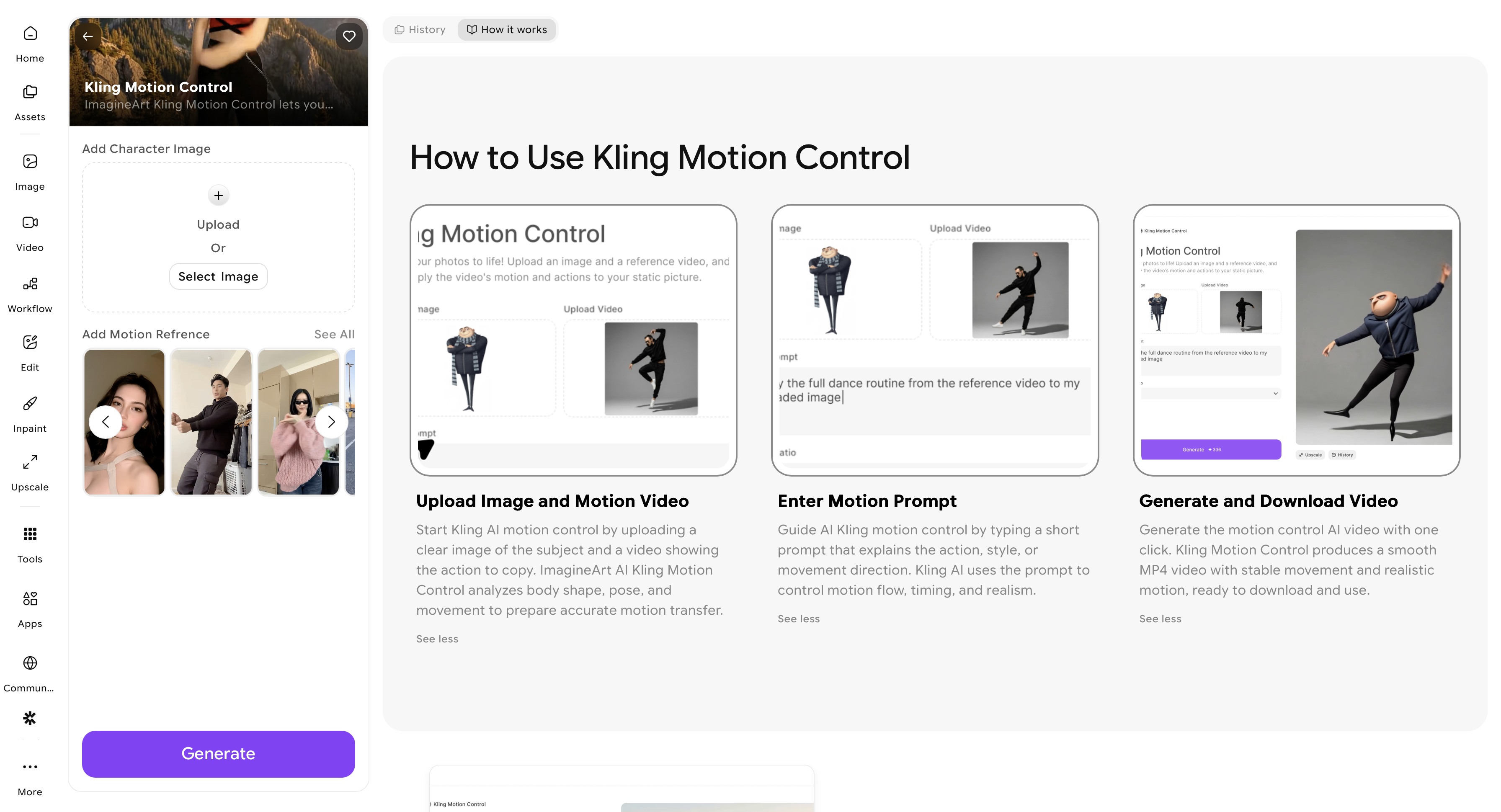 ImagineArt Kling Motion Control app dashboard
Social feeds are highly competitive, which means static visuals often struggle to capture attention. Small businesses can use AI motion tools to transform product images into dynamic short-form video ads. These videos work well for:
- TikTok discovery campaigns
- Instagram Reels product showcases
- retargeting ads on Meta
With ImagineArt AI Motion Control, small businesses can add dynamic motion to their AI image ads or create viral clips following the current trends. This works well for social media posts, product showcases, website posts, and promotional clips.
It elevates production quality without increasing your budget, which is crucial for video marketing for small businesses competing against larger brands.
AI UGC Ads & Product Review Videos for Social Proof
AI UGC ads and product reviews give your potential customers a reason to trust your brand. With the ImagineArt AI Product Review app, you can create marketing videos for business promotions, product listings, paid ads, and social media posts. It helps small businesses create structured and persuasive testimonial-style videos with reduced production time and consistent messaging.
Video Object Replacement for Scalable Campaigns
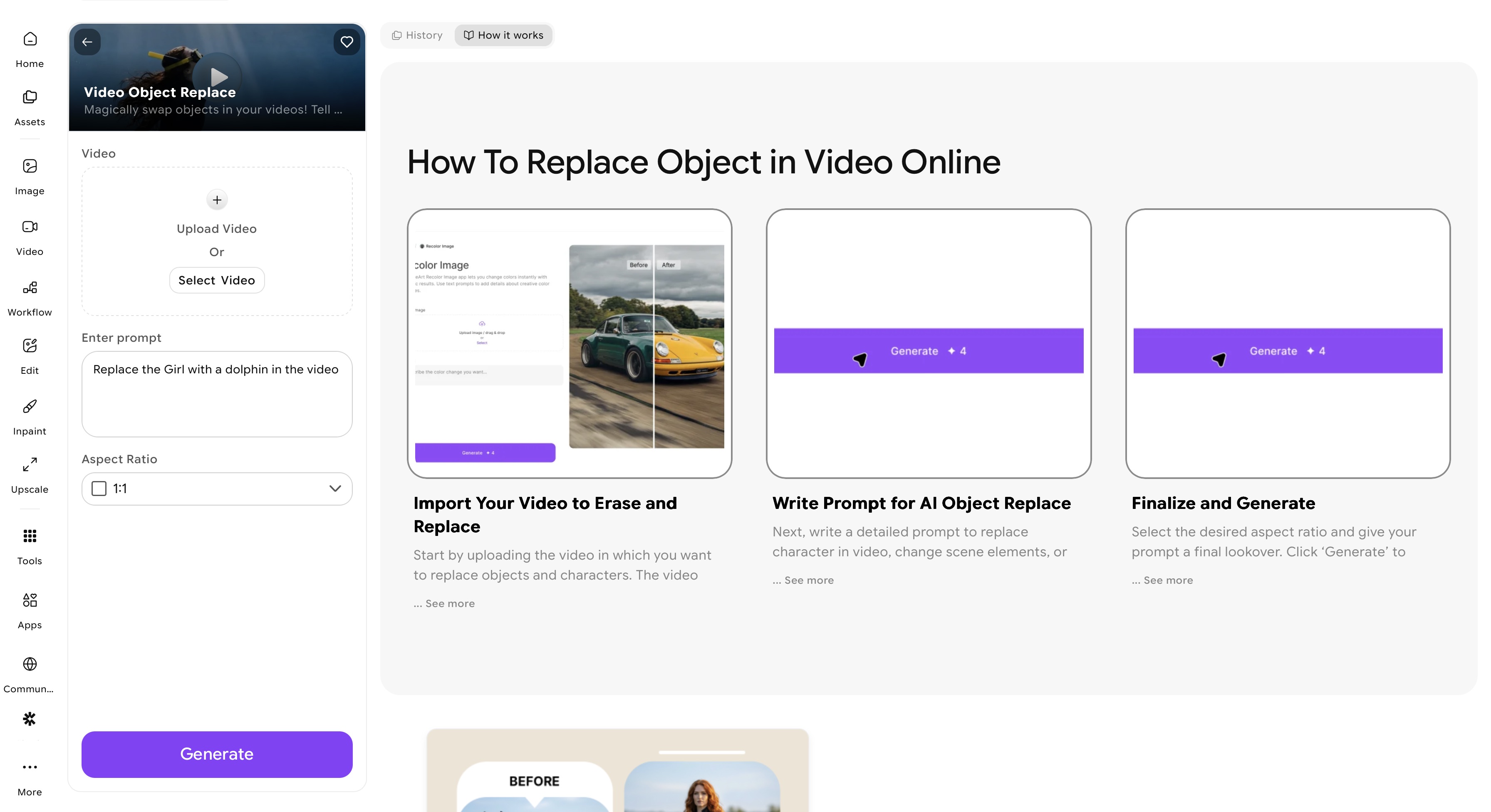 ImagineArt Video Object Replace app dashboard
Updating campaigns traditionally requires reshooting footage. That’s costly and time-consuming. With ImagineArt Video Object Replace, small businesses can swap products or elements within the existing footage and create fresh video content. It works well for seasonal campaigns, testing creatives, creating multiple ad variations and product versions, and even localizing video content. It can improve scalability in video marketing for business growth.
Video Object Removal for Professional Polish
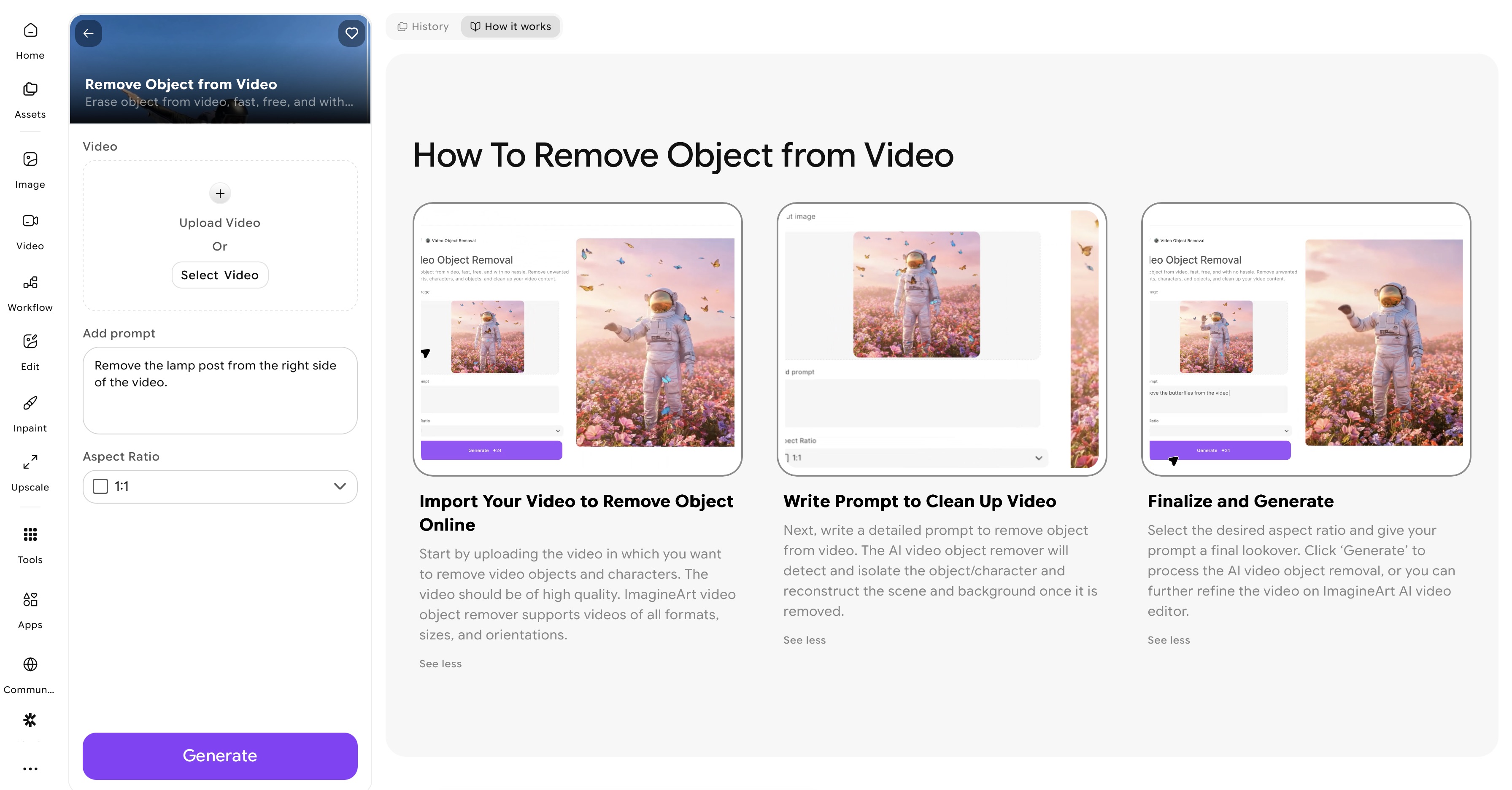 ImagineArt Video Object Removal app dashboard
Filming in real environments often means distractions such as background clutter, a stranger walking into the frame, accidental objects, or visual inconsistencies. With ImagineArt Video Object Removal, small businesses can clean up footage without reshooting or hiring a video editing expert. It helps improve professionalism and quality of every video marketing asset while reducing production time.
AI Product Reveal Videos for Launch Campaigns
Product launches require impact. With the ImagineArt AI Product Reveal, small businesses can create cinematic unveiling sequences with dramatic motion and lighting effects. It works well for new product announcements, paid advertising creatives, social media countdown posts, and website launch banners. Small businesses no longer have to rent studios or hire advertising agencies for their launch campaigns.
AI Influencer for Brand Representation
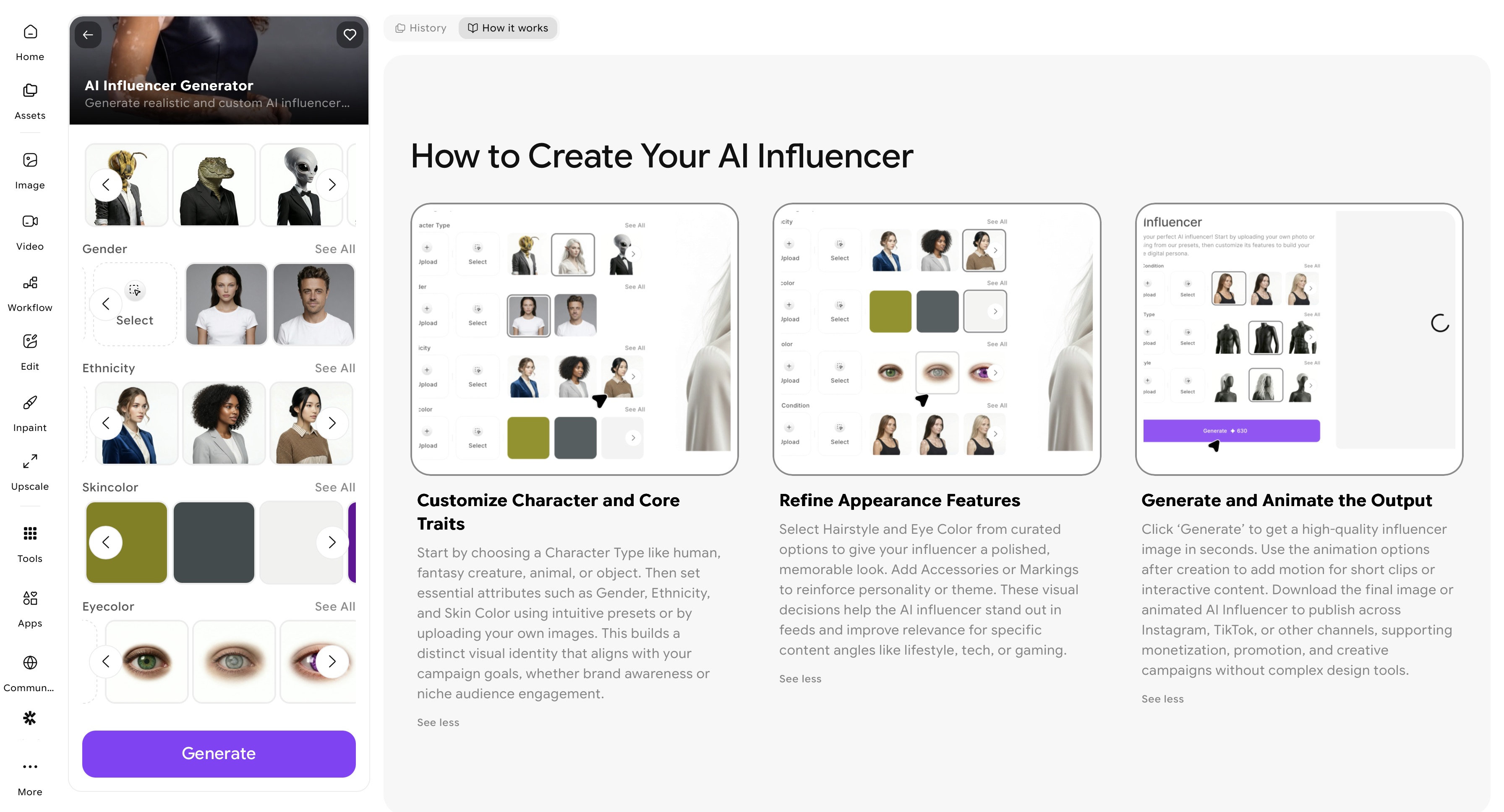 ImagineArt AI Influencer app dashboard
AI Influencer allows small businesses to generate virtual brand ambassadors for marketing videos. These AI influencers can present products, narrate content, or engage audiences on social platforms, sans the costs of hiring real influencers. Small businesses can use AI influencers for social media campaigns, feature them as virtual spokespersons in explainer videos, or create personalized video content.
With ImagineArt AI Influencer, small businesses can maintain a professional and engaging brand presence across all platforms, without encountering any availability or logistics constraints.
Recommended read: Best AI Marketing Tools
Common Video Marketing Mistakes to Avoid
Even an established business can stumble and make mistakes when it comes to video marketing. Here are some of the most common video marketing mistakes and how you should avoid them:
- No defined objective: Uploading a bunch of videos without any specific goal in mind will most likely lead to zero conversion. Before you publish anything or start recording, have a clear idea about the objectives.
- Ignoring platform-specific formatting: No, one size doesn’t fit all. Landscape videos are most likely to be scrolled away on TikTok. Don’t forget to add captions and subtitles, as most viewers watch videos on mute.
- Inconsistency: There’s no one formula to create the perfect marketing video. Being objective-driven builds momentum. Create consistently; your marketing video isn’t supposed to have cinematic flair.
- Skipping analytics: If you aren’t tracking performance, you are working in the dark. Keep track of your video marketing performance. Watch retention rates, engagement, and click-throughs to understand what works and what doesn’t.
- Weak or missing calls to action: Even the most engaging video fails if viewers don’t know the next step. Always guide your audience toward the action you want them to take.
By keeping these pitfalls in mind, small businesses can produce videos that actually work — capturing attention, building trust, and driving real results.
Ready to Create a Marketing Video for Business?
Video marketing only works if the views convert to potential leads. With ImagineArt, you can create marketing videos that capture attention, showcase your products, and guide viewers toward making the purchase decision.
Tooba Siddiqui
Tooba Siddiqui is a content marketer with a strong focus on AI trends and product innovation. She explores generative AI with a keen eye. At ImagineArt, she develops marketing content that translates cutting-edge innovation into engaging, search-driven narratives for the right audience.