
Tooba Siddiqui
April 17, 2026 • Updated April 17, 2026
17 mins Read
Minimalism is one of the most misunderstood ideas in design. People see a clean white page with one bold word and think, that must have been easy. It wasn't. Behind every great minimalist design is a process of subtraction so deliberate it borders on obsessive — a designer asking, again and again, does this element earn its place?
The paradox of minimalism in design is that it demands more from a designer, not less. When you strip away the decorative scaffolding, everything that remains is exposed. There is nowhere to hide a weak composition, an unclear hierarchy, or a forgettable idea. That is precisely what makes it so powerful and so challenging to get right.
What Is Minimalist Design?
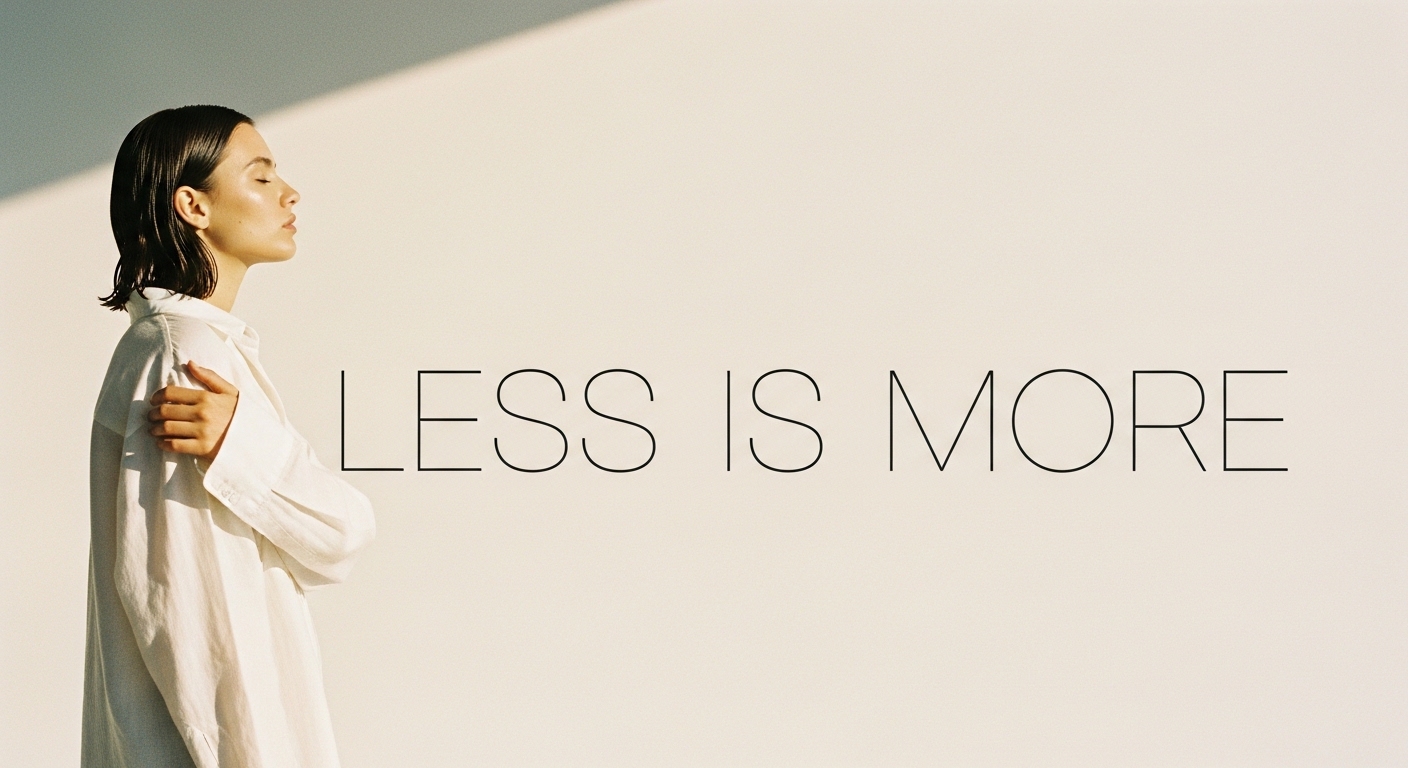 The stillness and restraint of the composition showcasing why less is more in minimalist design
Minimalist design is the practice of reducing a design to only its most essential elements — removing everything that does not directly serve the message, the function, or the user. It is not a style in the decorative sense. It is a discipline of intentional subtraction.
This philosophy applies across every medium: websites, logos, interiors, print, and product design. Its core conviction is that clarity, not complexity, creates impact.
The phrase most associated with the movement is less is more, a line attributed to architect Ludwig Mies van der Rohe, who became the final director of the Bauhaus before its closure in 1933. The Bauhaus school was one of the earliest and most influential incubators of the minimalist design philosophy, insisting that beauty and function were not opposites but the same thing pursued rigorously.
In the mid-20th century, the Swiss International Typographic Style — or Swiss Style — formalized these ideas into a visual language. Characterized by clean grid systems, sans-serif typefaces, asymmetric layouts, and heavy reliance on white space, Swiss Style became the dominant visual grammar for corporate identity, editorial design, and signage across the world.
In the 1960s and 70s, Dieter Rams brought these principles into product design. His work for Braun — radios, coffee makers, calculators — embodied a philosophy: Good design is as little design as possible. His influence is visible in virtually every Apple product ever made.
Today, minimalism in design is not a trend. It is a foundational approach that crosses every medium, from digital interfaces to retail spaces to brand identities. Its continued relevance comes from a simple truth: in a world of relentless visual noise, clarity is a competitive advantage.
Benefits of Minimalist Design
- Faster load times: fewer elements mean leaner pages that load quicker and rank better
- Reduced cognitive load: simpler interfaces require less mental effort, keeping users focused
- Higher conversion rates: studies show a one-second delay in load time reduces conversions by 7%; clean layouts remove friction
- Timeless aesthetic: minimalist work does not date the way trend-driven design does
- Stronger brand recall: 60% of consumers are more likely to remember a simple, clean visual identity over a complex one
Minimalist Design vs. Maximalist Design
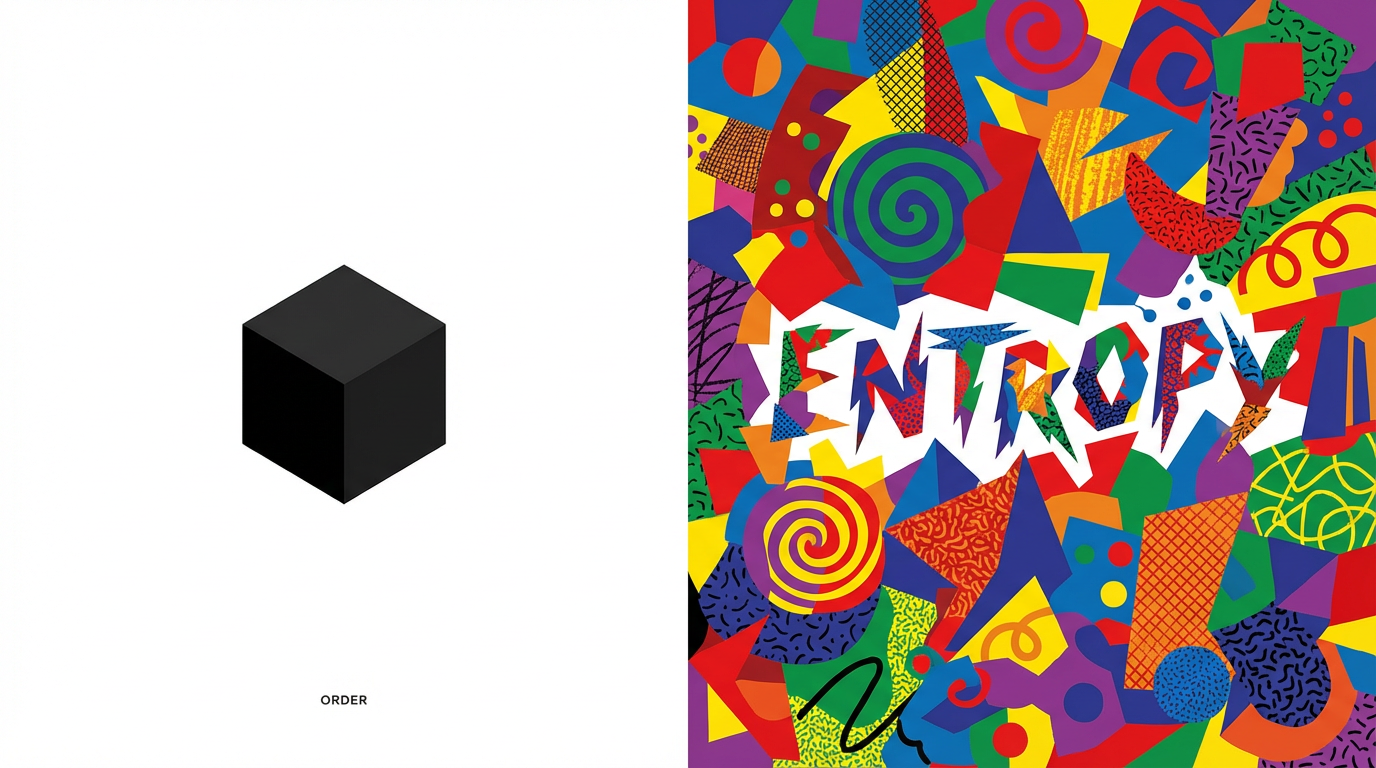 Split composition contrasting minimalist design on the left with maximalist design on the right
To understand minimalism fully, it helps to understand what it is not.
Maximalist design operates from the opposite conviction: more is more. It layers color, pattern, texture, and ornamentation to create environments and compositions that are deliberately rich, dense, and stimulating. Think Versace, the interior of a Wes Anderson film set, or a Baroque-era cathedral ceiling. Maximalism communicates abundance, personality, and intensity.
Minimalist design communicates clarity, confidence, and restraint. Think Apple's product pages, the Muji brand identity, or a well-designed Swiss magazine layout.
The difference is not just visual — it is intentional. Minimalism asks every element to justify itself. Maximalism invites every element to contribute to a whole. Neither is inherently superior. The question is always: what does this work need to communicate, and to whom?
A luxury perfume brand targeting a discerning, high-income audience may use a minimalist color palette — black, white, and a single metallic accent — to signal exclusivity and restraint. A children's toy brand targeting parents of five-year-olds will likely reach for maximalism's full arsenal of color and playfulness.
Context is everything. In a busy social media feed saturated with maximalist imagery and bold colors, a clean minimalist graphic can stop a scroll precisely because of its calm. Conversely, in an interface designed with clinical whiteness, a single rich image can feel dramatic and arresting. Each style is most powerful when deployed with knowledge of its opposite.
What both share is the requirement for intention. The worst maximalist work is cluttered. The worst minimalist work is cold and confusing. The goal in either direction is coherence.
The Misconception: Minimal Does Not Mean Empty
The single most persistent mistake people make when attempting minimalist design is confusing minimal with bare. They remove elements, strip away color, reduce typography to one weight, and end up with something that feels unfinished — like a sketch that never became a painting.
Minimalism is not the absence of design. It is the presence of only the right design.
Consider the FedEx logo. On its surface, it is clean, simple, two-color corporate typography. Nothing unusual. But between the E and the x, there is a hidden arrow — a piece of negative space so deliberate and perfectly constructed that it has become one of the most studied pieces of logo design in history. That arrow does not announce itself. It rewards attention. The design is minimal on the surface, but dense with craft underneath.
 Close-up of FedEx logo highlighting the hidden arrow in negative space — minimalist design is not empty
Or consider a great minimalist poster: a single image, a single line of text, acres of white space. What makes it work is not the emptiness — it is the relationship between the image and the type, the weight of the chosen font, the exact proportion of white space to content. Every decision is load-bearing. Great minimalist designers are not making fewer decisions — they are making the same number of decisions, but each one carries more consequence.
This is the paradox that beginners miss: minimalist design is harder than complex design because there is no excess to hide behind. When you reduce a composition to three elements, each of those elements must be perfect. The white space is not nothing — it is an active force, shaping how the eye moves, what it notices first, and how long it lingers.
The Core Principles of Minimalist Design
Every field that practices minimalism — graphic design, UI design, architecture, fashion — operates from a shared set of underlying principles. Master these, and the specific techniques become intuitive.
1. Less Is More
The foundational principle. Every element you add to a design introduces visual weight, impacts design balance, and asks something of the viewer's attention. Before adding, ask what you can remove. Before keeping something, ask what would be lost if it were gone. If the answer is nothing, remove it.
2. White Space Is a Design Element
White space in design — also called negative space — is not empty. It is the counterpart to everything visible. It creates breathing room, establishes hierarchy, signals sophistication, and guides the eye. Macro white space shapes the overall layout — margins, section gaps, padding around hero images. Micro white space governs readability — line height, letter spacing, padding inside buttons. A design that treats white space as wasted space will always feel cluttered, regardless of how few elements it contains.
3. Visual Hierarchy Does the Heavy Lifting
When you remove most visual complexity, hierarchy becomes the primary navigation system. The viewer's eye needs to know where to go first, second, and third. In minimalist design, hierarchy is established through scale, weight, contrast, and — critically — white space. A large headline surrounded by generous negative space will command attention even on the most stripped-back page.
Read about the Gestalt principle of design to know more about visual hierarchy in design.
4. A Restrained Color Palette
A true minimalist color palette typically works within two to three colors, often anchored by neutrals — white, black, grey, or warm off-whites — with one accent color used strategically. This restraint is not timidity; it is precision. When color is rare, it carries weight. A single red dot on a black-and-white composition will pull the eye with magnetic force. That is the power of using color sparingly.
5. Typography Carries the Message
In minimalist design, when imagery and ornamentation are reduced, typography steps forward. It must work harder. A well-chosen typeface can carry an entire brand identity, set an emotional tone, and establish hierarchy all at once. Minimalist typography tends toward clean, geometric sans-serifs — Helvetica, Futura, Gill Sans — or, at the other end, elegant serifs with strong personalities. The key is commitment: choose one or two typefaces and use them with discipline.
6. Every Element Earns Its Place
The final and most important test. Before any design is finished, every element on the page should be interrogated: Why is this here? What does it do? What would happen if it were removed? If it cannot answer clearly, it goes.
How to Design with Minimalism: Step-by-Step
Knowing the principles is one thing. Applying them to a blank canvas is another. Here is a practical process for how to design with minimalism — and make it work.
1. Start with content, not aesthetics
Minimalism begins with knowing exactly what the design needs to communicate. Before touching a single visual element, write out the message in plain language. What is the one thing a viewer must understand or feel? Everything in the design should serve that answer.
2. Choose your color palette before anything else
Open your project with a color decision already made. Two to three colors maximum. Anchor the palette with a neutral — white, off-white, or a deep charcoal — and introduce one accent color with a clear purpose. This constraint will force every subsequent decision into alignment.
3. Select one primary typeface, one secondary
A minimalist approach applies equally to typography. One display face for headlines. One workhorse face for body copy. Set your type scale — headline sizes, subheading, body, caption — and do not deviate from it. Consistency in type is what separates polished minimalist work from amateur attempts.
4. Work on a grid
A grid is the invisible architecture that makes everything feel intentional. Even asymmetric minimalist layouts are built against a grid they knowingly break. Use a standard 12-column grid for web, or construct a baseline grid for print. The grid ensures that your white space is proportional, not arbitrary. Read more about alignment principle of design to know more about grid in minimalist design.
5. Place your most important element first, then build outward
Put your primary visual or headline down first. Give it breathing room. Add your second element and observe how the relationship feels. Keep adding only what is necessary. If adding an element makes the composition feel more complete, it stays. If it makes it feel busier, it goes.
6. Audit the finished design ruthlessly
Step back and look at the whole. Ask, one more time: what can be removed? Shrink the decoration. Widen the margins. Reduce the number of type weights. Trust the white space. The first pass at a minimalist design is rarely minimal enough.
Minimalist Design by Medium
Minimalist Web Design
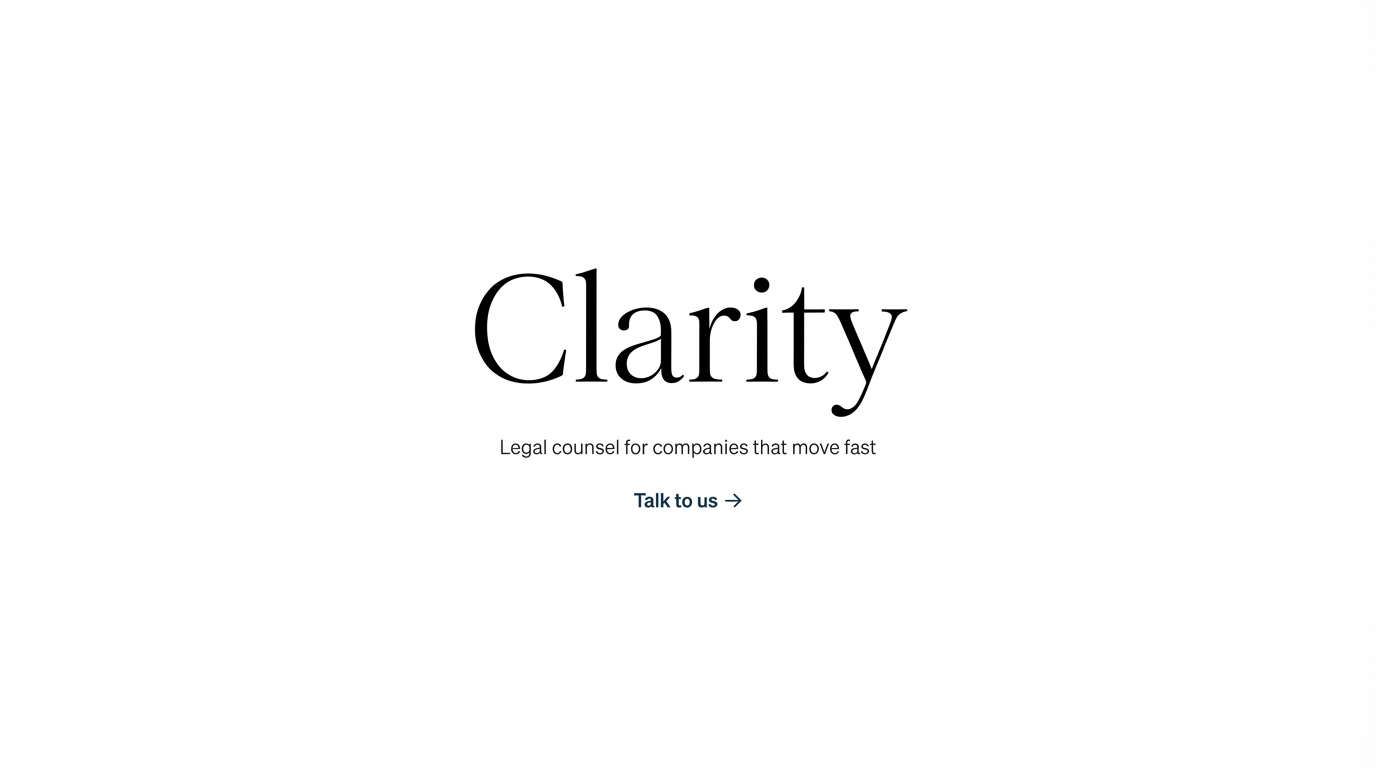 A minimalist web deisgn with clean layout, single headline, and white space
Minimalist web design is defined by fast-loading, uncluttered layouts that prioritize user experience over visual spectacle. White space is used generously. Navigation is simplified — sometimes reduced to a hamburger menu or hidden entirely. Color is used sparingly, and imagery, when present, is large and purposeful.
The UX benefits are measurable. Simpler interfaces reduce cognitive load — the mental effort required to process a page. Studies show that a one-second delay in page load reduces conversions by 7%. Minimalist sites load faster, engage more clearly, and convert more reliably. Google's homepage remains the definitive example: one logo, one search bar, two buttons.
If you want to apply minimalist principles to visual content creation, tools like the AI image editor and AI image generator let you build clean and intentional visuals without the noise, stripping the process down to exactly what the image needs to say.
Minimalist UI Design
 Smartphone screen displaying a minimal app interface with generous white space and two-color palette — minimalist UI design example
Minimalist UI design applies the same philosophy to application interfaces. The goal is to eliminate every element that is not directly helping the user complete their task. This means reducing menu options, hiding secondary functionality behind progressive disclosure, and using iconography carefully.
The key tension in minimalist UI is between simplicity and usability. Strip too much and users become lost and confused by the absence of visual cues, unable to navigate between sections. Apple's Human Interface Guidelines and Google's Material Design both represent sophisticated minimalist UI frameworks that manage this tension through consistent spatial rhythms, clear hierarchy, and deliberate use of motion.
Designing a repeatable minimalist UI workflow is easier when the tooling supports it. An AI workflow lets you systematize your visual decisions, so your palette, spacing, and component choices stay consistent across every screen you build. Tools like an AI UI design generator can help teams prototype minimal interfaces quickly, letting you stress-test hierarchy and spacing decisions before committing to a full build.
Also read: How to Create UI/UX Design with Nano Banana Pro
Minimalist Graphic Design
In minimalist graphic design — posters, editorial layouts, packaging, brand collateral — restraint becomes a creative act. The designer works with a small set of elements and uses the relationship between them to generate meaning and emotion.
The strongest minimalist graphic work tends to carry a conceptual idea: the negative space in the FedEx arrow, the absent body in a Saul Bass film poster, the single overscaled letter that turns typography into image. Reduction is not the goal in itself — it is the method through which an idea is made more powerful.
For motion and video work, the same principles apply. An AI video editor gives you precise control over pacing and visual rhythm, essential when every frame needs to earn its place, just as every element does in a minimalist composition. Paired with an AI video generator, you can produce clean, purposeful video content that reflects the same restraint you bring to static design.
Minimalist Logo Design
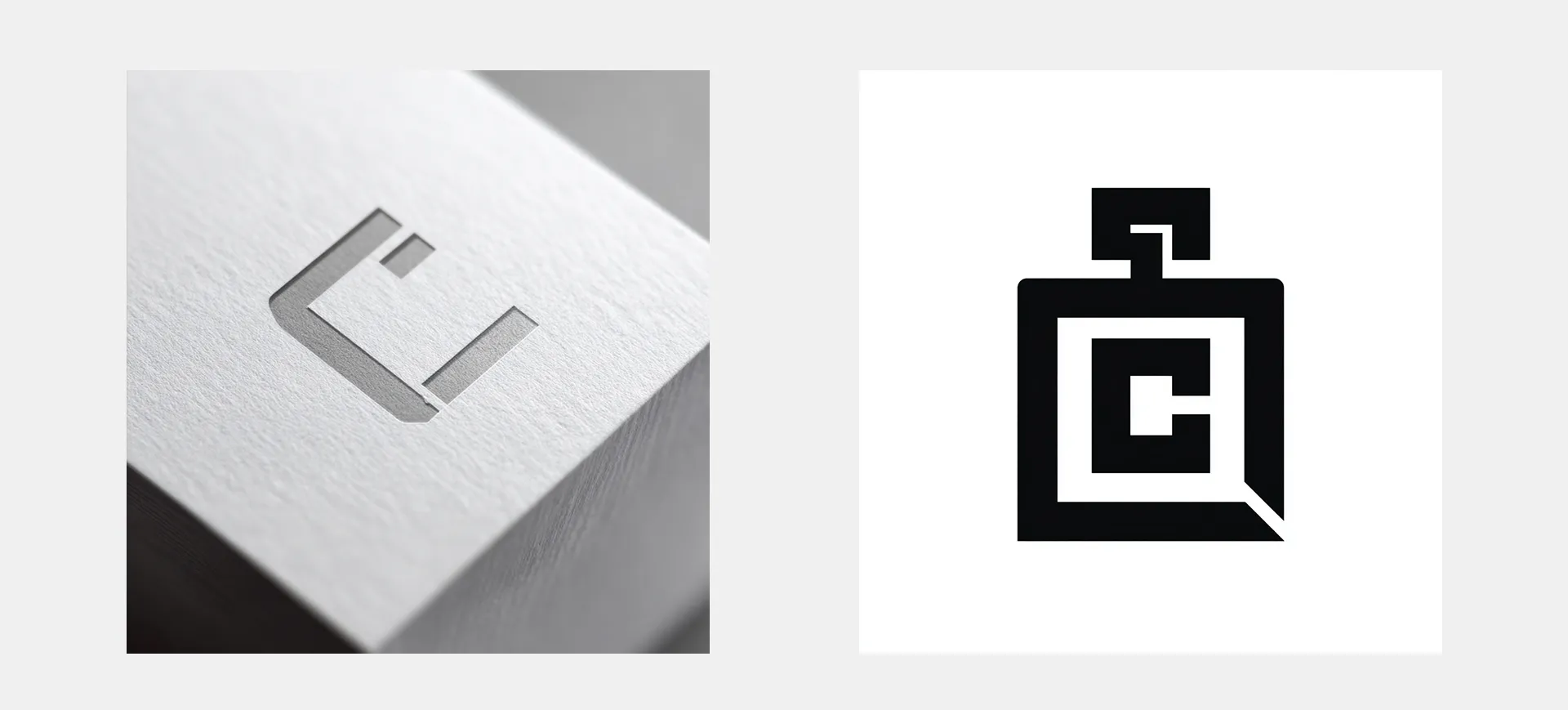 Minimalist logo designs and concepts
Minimalist logo design is perhaps the most commercially proven application of the philosophy. Studies show that 60% of consumers are more likely to remember a simple, clean logo over a complex one. The reason is cognitive: simple shapes are processed faster and stored more reliably in memory.
Nike's swoosh communicates speed, motion, and athletic energy with a single curved line — designed in 1971 for $35. Apple's bitten apple, refined to a monochromatic silhouette under Steve Jobs in 1998, became one of the most recognized marks in history. In both cases, simplicity was not the starting point — it was the destination after everything superfluous had been removed.
For minimalist logo design, the practical principles are: geometric shapes and clean lines, limited color (often one or two), confident use of negative space, and a single, clear concept that survives reproduction at any size. For designers and brand builders looking to test minimalist concepts quickly, an AI logo generator lets you iterate on clean, stripped-back mark ideas without the overhead of building each variation from scratch.
Minimalist Interior Design
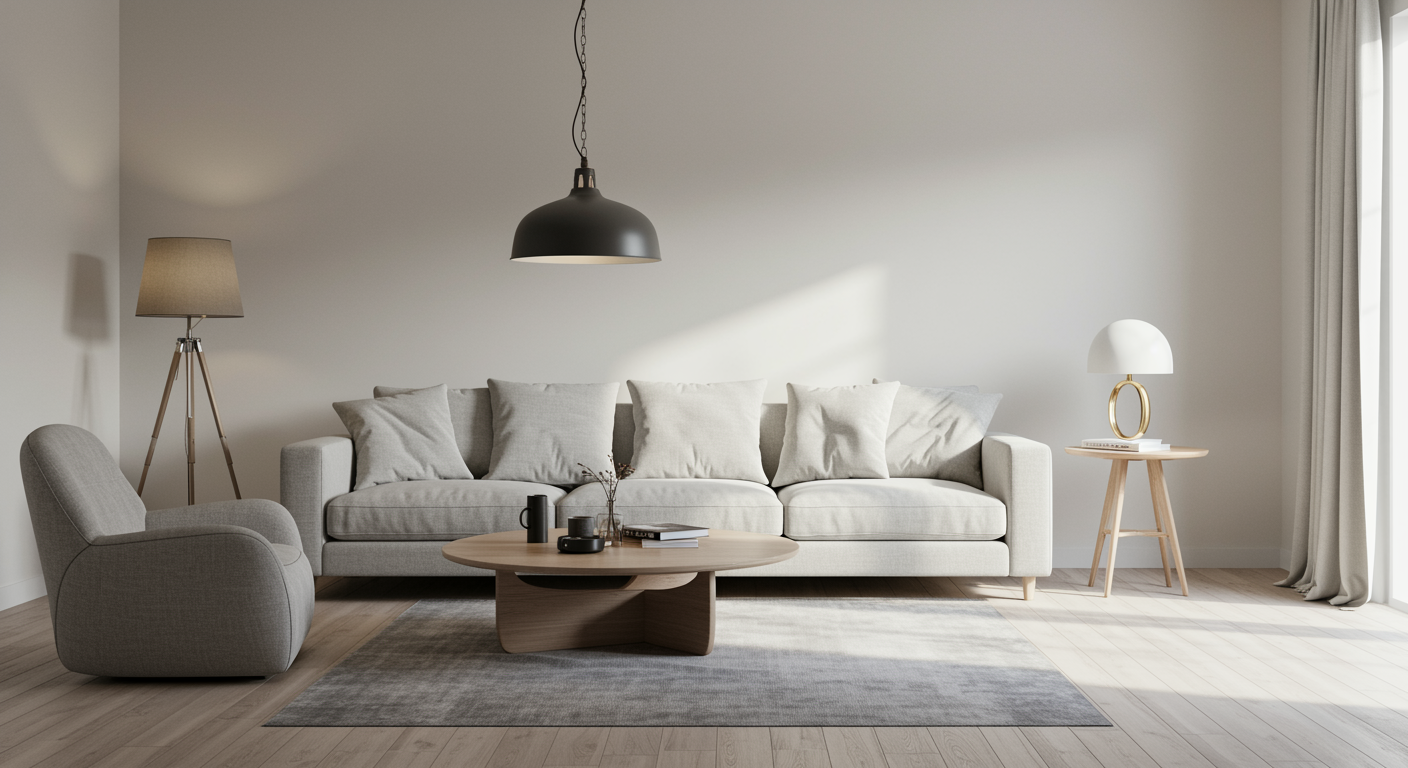 Luxurious minimalist interior design
Minimalist interior design extends the same philosophy into physical space. Rooted in Japanese aesthetic traditions — particularly wabi-sabi, the appreciation of simplicity and imperfection — and in Scandinavian functionalism, minimalist interiors prioritize open space, natural materials, and a strict edit of what is allowed in the room. To understand where minimalism sits within the broader landscape of interior design styles, it helps to see how it compares to Scandinavian, Japanese, and industrial approaches. All of these share some minimalist DNA.
Key principles: a neutral base palette, furniture selected for both beauty and function, the elimination of visual clutter, and the deliberate use of a single accent — a piece of art, a plant, a textured throw — to introduce warmth without chaos. The goal is a space that feels considered, not sterile. If you want to visualize a minimalist interior before committing to changes, AI interior design tools let you experiment with neutral palettes, furniture edits, and spatial arrangements in real time. For a deeper look at how AI is changing spatial design, this guide to AI interior design tools covers the best options for visualizing and refining minimalist spaces. For a current look at how minimalism is evolving in residential and commercial spaces, the latest interior design trends show how restraint is being reinterpreted for 2026.
Minimalist Design Ideas & Examples
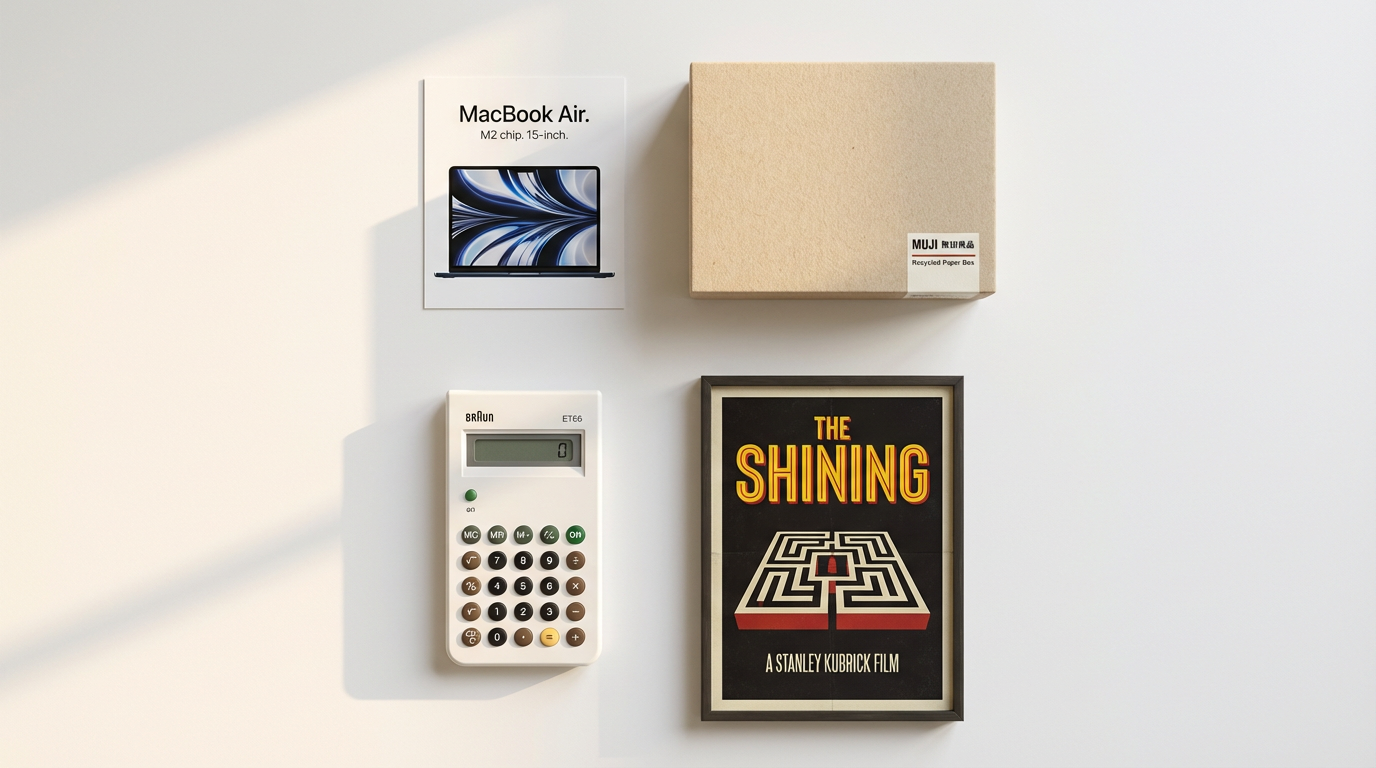 Curated mood board flat lay featuring iconic minimalist design examples
The best way to internalize minimalist design principles is to study work that executes them brilliantly.
- Apple's product pages remain the gold standard for minimalist web design: a single product image on a white background, a headline in one weight of San Francisco, and enough white space to make the product feel like an object worth considering seriously.
- Muji's brand identity applies minimalism to retail at every touchpoint — packaging, store layout, visual communication — creating a coherent aesthetic of "no-brand" that paradoxically became one of the world's most recognizable brand identities.
- Dieter Rams' Braun T3 pocket radio is one of the most cited minimalist design ideas in product history — a rectangle, two knobs, a dial, and nothing else. It inspired the original iPod so directly that the two objects are almost indistinguishable in silhouette.
- Saul Bass's film posters — for Vertigo, Anatomy of a Murder, The Shining — show how minimalist graphic design can generate psychological tension from the simplest possible imagery. A tilted spiral. A figure without a face. A single jagged line.
For your own work: study these pieces not as things to imitate, but as problems solved. Ask what decision was made at each step, and why.
Common Mistakes to Avoid
Here’s a breakdown of some of the common mistakes designers make while working on minnimalist designs:
- Confusing bare with boring. Removing elements is not the same as making decisions. A blank page with a single line of body copy is not minimalist — it is unfinished. Every element that remains must be chosen with purpose.
- Neglecting contrast and hierarchy. When everything is the same size, weight, and color, nothing stands out. Minimalism still requires hierarchy. Use scale and weight to signal importance, even if your palette is limited.
- Treating white space as wasted space. White space is not nothing. When a client or colleague says "there's too much white space," the answer is to explain what it is doing: creating emphasis, signaling premium quality, giving the eye room to rest.
- Removing too much. Minimalism can become unusable when it sacrifices clarity for aesthetics. Hidden navigation, icon-only menus, and the removal of labels are common culprits. Always test with real users. If they cannot find what they need, the design has failed, regardless of how clean it looks.
- Ignoring texture and warmth. Particularly in interiors and branding, pure minimalism can feel cold or clinical. A single natural material — linen, wood grain, matte ceramics — introduces warmth without visual complexity. For designers looking to sharpen their overall craft alongside these principles, these graphic design tips cover foundational skills that support minimalist and complex work alike.
Ready to Create Minimalist Design with ImagineArt?
Minimalism is not a shortcut. It is the longest route to clarity — one that requires you to know your message completely, choose every element with absolute purpose, and trust that what you leave out is doing as much work as what you keep.
The principles are simple to articulate and genuinely hard to practice. Less is more — but only when every element that remains is more than enough. White space is not empty — it is the medium through which everything visible becomes meaningful. Minimalist design is not about making things look clean. It is about making things work.
Whether you are designing a website, a logo, a poster, or a room, start with the same question: what is the one thing this needs to communicate? Then build only that. Remove everything else. Trust the space.
The most powerful minimalist designs in history are not remarkable for what they contain. They are remarkable for the precision, discipline, and conviction of what they removed.
Frequently Asked Questions about Minimalist Design
Minimalist design is the practice of reducing a design to only its most essential elements — removing everything that does not directly serve the message, the function, or the user. It is built on the conviction that clarity, not complexity, creates impact.
The six core principles are: less is more, white space as a design element, visual hierarchy, a restrained color palette, purposeful typography, and the rule that every element must earn its place. Together they form a discipline of intentional subtraction rather than a visual style.
Minimalist design strips away everything non-essential and communicates through restraint, clarity, and white space. Maximalist design layers color, pattern, texture, and ornamentation to create richness and intensity. Neither is superior — the right approach depends on what the work needs to communicate and to whom.
Start by defining the one thing your design needs to communicate. Then choose a color palette of two to three colors, select one or two typefaces, work on a grid, and place your most important element first. After each addition, ask whether it makes the composition clearer or busier. Audit the final design and remove anything that does not earn its place.
Yes — and increasingly so. As digital environments become more cluttered and attention spans shorter, minimalist design's ability to communicate quickly and clearly becomes a competitive advantage. It also performs better technically: minimalist websites load faster, reduce cognitive load, and tend to convert at higher rates.
A strong minimalist logo uses geometric shapes and clean lines, limits color to one or two choices, uses negative space deliberately, and communicates a single clear concept that works at any size. The goal is a mark that is processed quickly, stored reliably in memory, and remains effective across every medium and application.
Tooba Siddiqui
Tooba Siddiqui is a content marketer with a strong focus on AI trends and product innovation. She explores generative AI with a keen eye. At ImagineArt, she develops marketing content that translates cutting-edge innovation into engaging, search-driven narratives for the right audience.