
Aqsa Nazir Kayani
March 20, 2026 • Updated June 3, 2026
20 mins Read
You’re trying to change the vibe and style of your house. For that you have 200 saved TikToks, 47 Pinterest boards, and …. zero clarity on what your actual style is.
We get it.
The problem is not that you have bad taste. The problem is that nobody ever explained what these styles actually mean, where they come from, and why some rooms just work while others feel like … you placed everything you could find in a room.
Don’t worry, because this guide fixes that chaotic lack of direction.
You will get every major interior design style, broken down simply, and by the end, you won’t need a design degree to style the interior.
Once you know your style, you can visualize it in your actual space before spending a single dollar. ImagineArt AI Interior Design lets you do exactly that.
But first, let us get you to a style.
Wait, What Even Is an Interior Design Style?
Let's answer the basic first (we will try to keep it simple):
An interior design style is a set of visual rules. It covers your color palette, your materials, your furniture shapes, and the mood a room creates.
Styles are not trends. Trends are popular right now. Styles are rooted in culture, history and architecture.
Knowing your style also saves money. You stop buying things on impulse and start making choices that actually belong together.
To learn more about the trendy interior design, we broke that down in our Interior Design Trends 2026 guide. This blog focuses purely on the styles themselves.
The 12 Interior Design Styles You Actually Need to Know
Each style below follows the same breakdown: the vibe, what defines it, key materials and colors, who it suits and the one thing that makes or breaks it.
1. Modern Minimalist Interior Design
The vibe: Less is more, but make it intentional, and not just lazy.
Modern Minimalism strips everything back to what the room actually needs. Every piece earns its place and nothing sits on a surface without a reason.
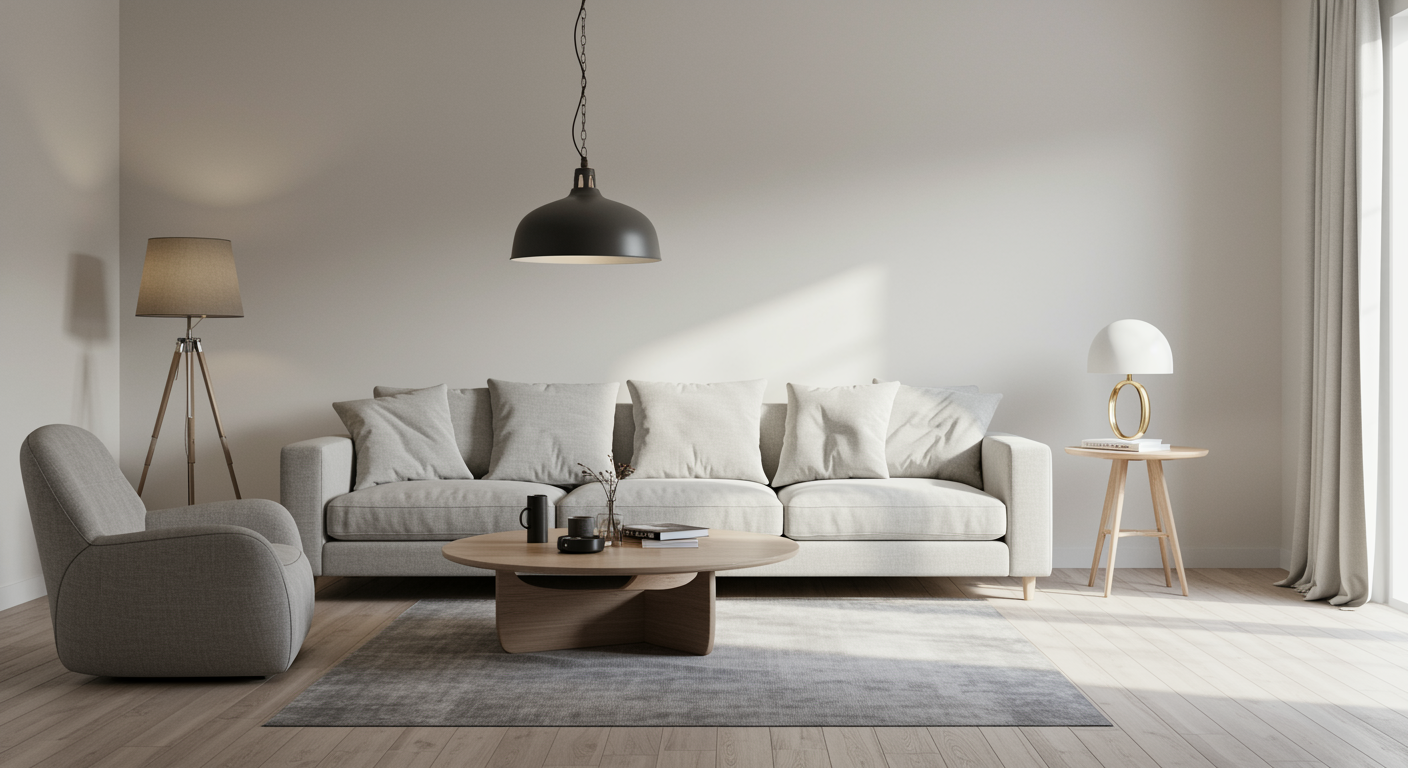 Modern Minimalist - Image Created on ImagineArt
Key materials: Concrete, glass, steel, smooth plaster, light natural wood
Modern Minimalist - Image Created on ImagineArt
Key materials: Concrete, glass, steel, smooth plaster, light natural wood
Best for: People who find clutter genuinely stressful and love the feeling of walking into a clean, calm space.
Make or break: The difference between Minimalism and a room that looks unfinished is quality. One beautiful piece beats five average ones every time.
What defines it:
- Clean lines and zero ornamentation
- A neutral color palette built on white, off-white, warm grey, and black
- Furniture with simple geometric forms
- Lots of negative space is used as a design element
2. Scandinavian Interior Design
The vibe: Cozy, clean, and somehow both at once.
Scandinavian design comes from Northern Europe where winters are long and dark. The style solves for that by prioritizing warmth, natural light and comfort without sacrificing simplicity.
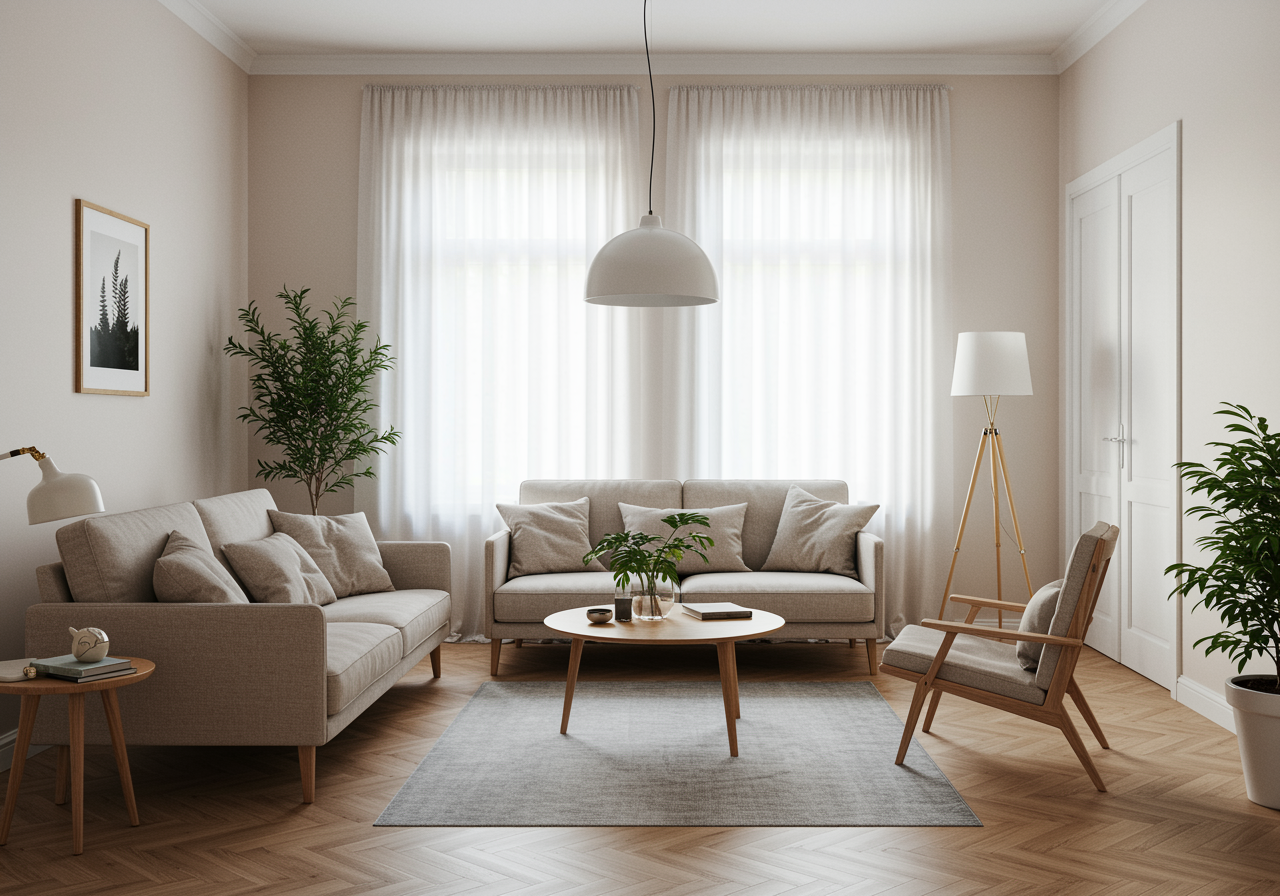 Scandinavian - Image Created on ImagineArt
Key materials: Light pine, birch wood, linen, wool, ceramic
Scandinavian - Image Created on ImagineArt
Key materials: Light pine, birch wood, linen, wool, ceramic
Best for: People who want a clean space that still feels genuinely warm and lived-in.
Make or break: The textiles. Without layered soft furnishings, Scandi reads cold instead of calm.
What defines it:
- Warm whites and soft neutrals as the base palette
- Natural wood as a consistent material throughout
- Textiles layered generously: wool throws, linen cushions, sheepskin rugs
- Functional furniture with clean but soft lines
- Plants used as a core design element
3. Mid-Century Modern Interior Design
The vibe: Your cool aunt who has impeccable taste and never has to try.
Mid-Century Modern covers design from roughly the 1940s through the 1970s. Designers like Eames, Saarinen and Wegener defined the aesthetic and it has never really gone out of style because the proportions are just that good.
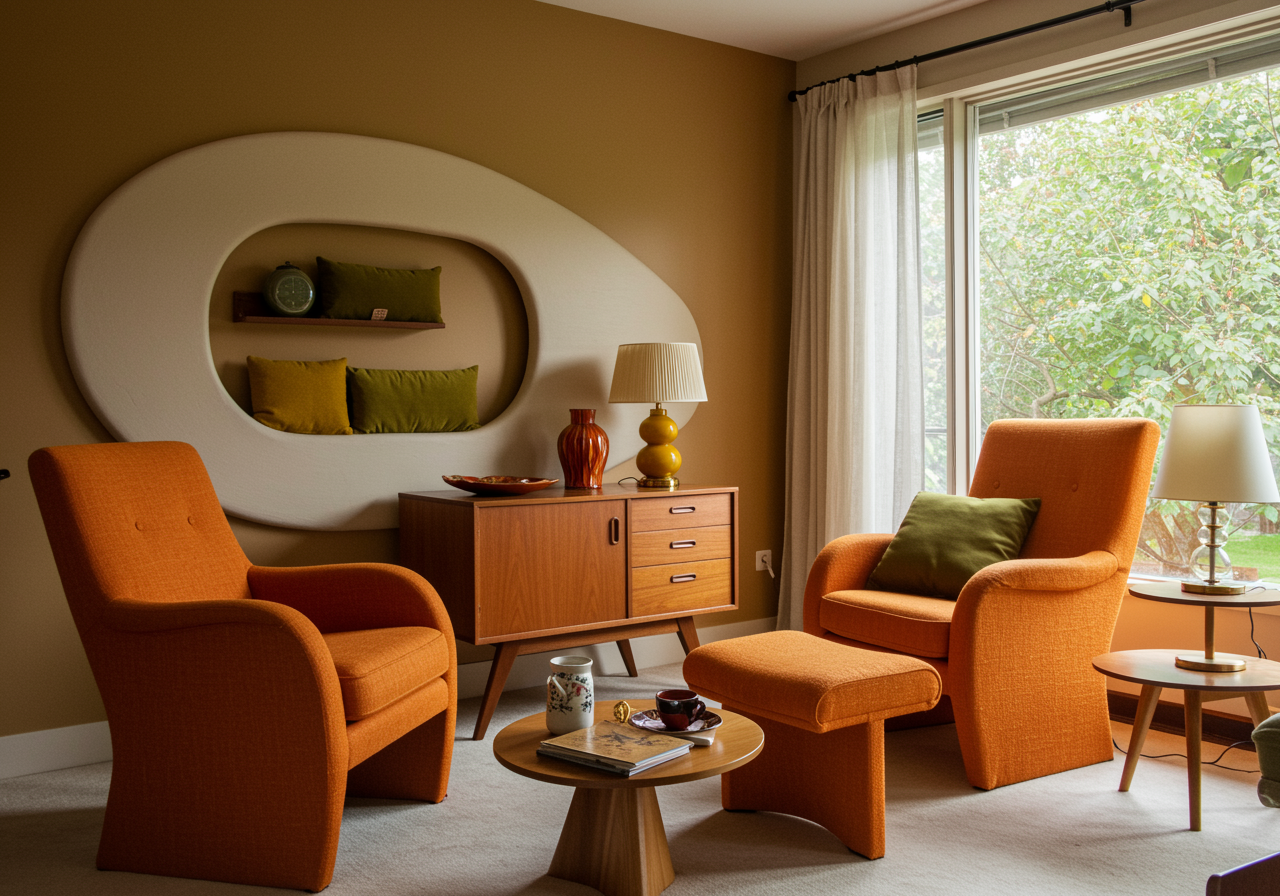 Mid-Century Modern - Image Created on ImagineArt
Key materials: Walnut, teak, molded plastic, wool upholstery, leather
Mid-Century Modern - Image Created on ImagineArt
Key materials: Walnut, teak, molded plastic, wool upholstery, leather
Best for: People who love retro references but want a space that still feels current and livable.
Make or break: The legs. Tapered wooden legs on sofas, chairs and sideboards carry the whole aesthetic.
What defines it:
- Organic curves mixed with clean geometric forms
- Tapered furniture legs as a signature detail
- A warm color palette with mustard, burnt orange, olive green and teal as accents
- Natural wood in walnut and teak tones throughout
- Large windows and an emphasis on connecting indoors with outdoors
4. Contemporary Interior Design
The vibe: Whatever design looks like right now, basically.
Here is the thing most people get wrong. Contemporary does not mean the same as Modern. Modern refers to a specific historical period. Contemporary just means what designers are producing today.
Contemporary interior design shifts over time because it reflects the current moment. Right now it leans toward organic shapes, warm neutrals, sustainable materials and a mix of textures.
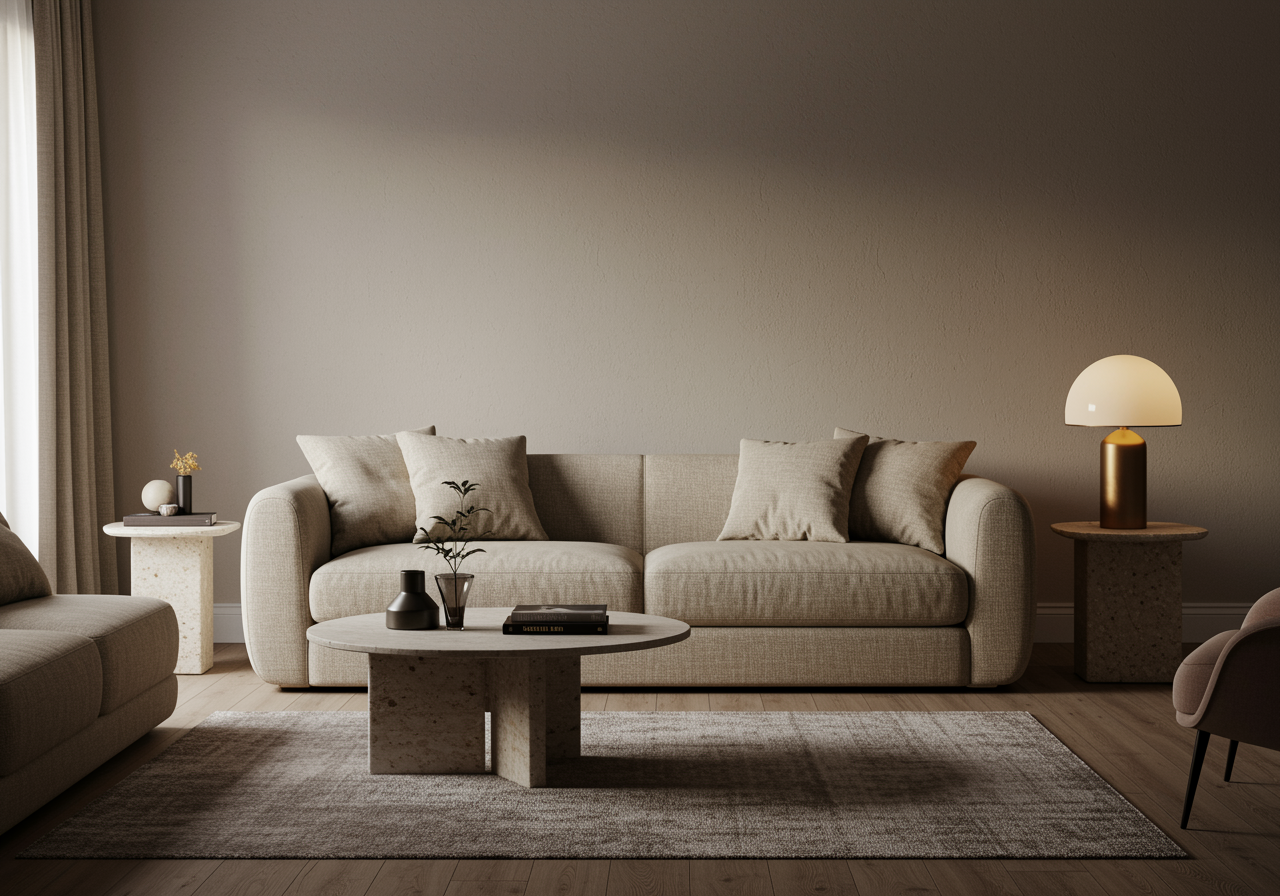 Contemporary - Image Created on ImagineArt
Key materials: Natural stone, warm wood, linen, matte metals
Contemporary - Image Created on ImagineArt
Key materials: Natural stone, warm wood, linen, matte metals
Best for: People who want a space that feels current without chasing specific trends.
Make or break: Updating accent pieces every few years. Contemporary requires some maintenance to stay relevant.
What defines it:
- Neutral palettes that lean warm rather than cool
- A mix of textures across surfaces and soft furnishings
- Clean lines without the rigidity of pure Minimalism
- A balance between comfort and visual interest
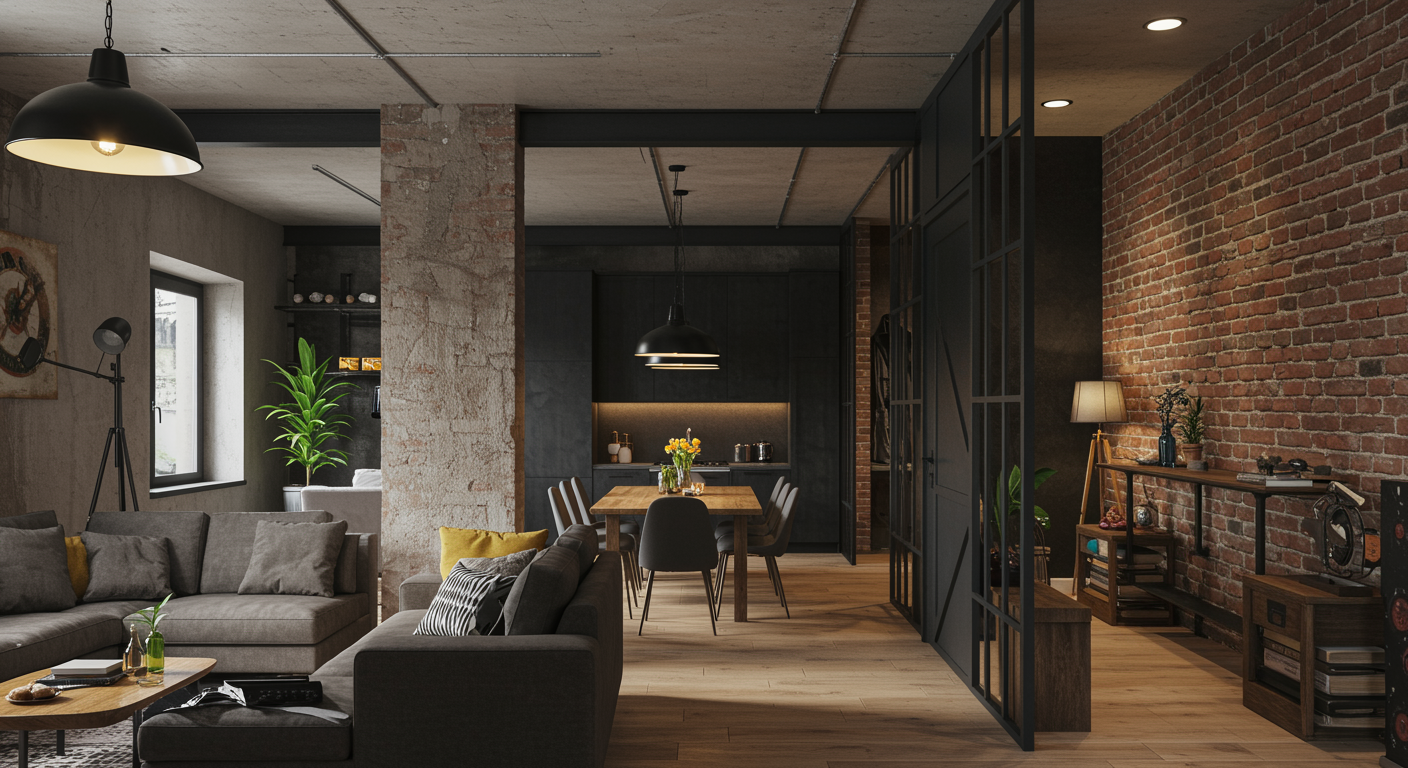
5. Industrial Interior Design
The vibe: Raw, unfinished and somehow extremely attractive.
Industrial design draws from the look of converted warehouses and factories. It celebrates exposed structural elements instead of hiding them. Think brickwork, steel beams and concrete floors left visible on purpose.
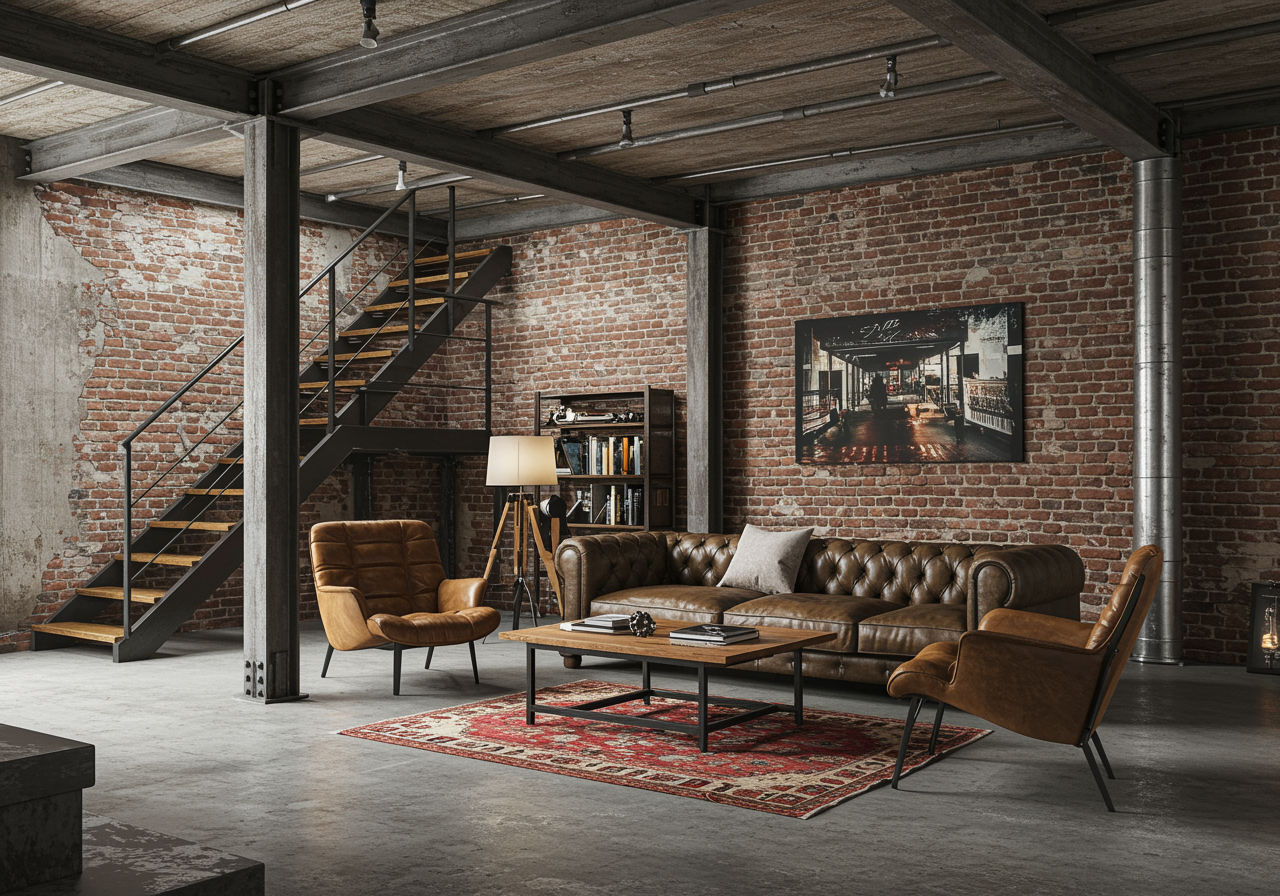 Industrial Interior Design - Image Created on ImagineArt
Key materials: Concrete, raw steel, reclaimed wood, exposed brick, iron
Industrial Interior Design - Image Created on ImagineArt
Key materials: Concrete, raw steel, reclaimed wood, exposed brick, iron
Best for: People with loft-style spaces or anyone who wants a space that feels edgy and intentional without being precious.
Make or break: Warmth. Industrial spaces without enough warm wood and textile elements feel cold and unwelcoming.
What defines it:
- Exposed brick walls and raw concrete surfaces
- Steel, iron and pipe fittings as design features
- Open ceiling structures with visible beams or ductwork
- A dark, moody color palette built on black, charcoal, rust and warm brown
- Reclaimed wood paired with metal throughout
6. Bohemian / Boho Interior Design
The vibe: You have been everywhere, kept a souvenir from each place and somehow it all goes together.
Bohemian interior design and boho interior design describe the same aesthetic. It pulls from global influences, layers pattern on pattern and prioritizes personal expression over any rulebook.
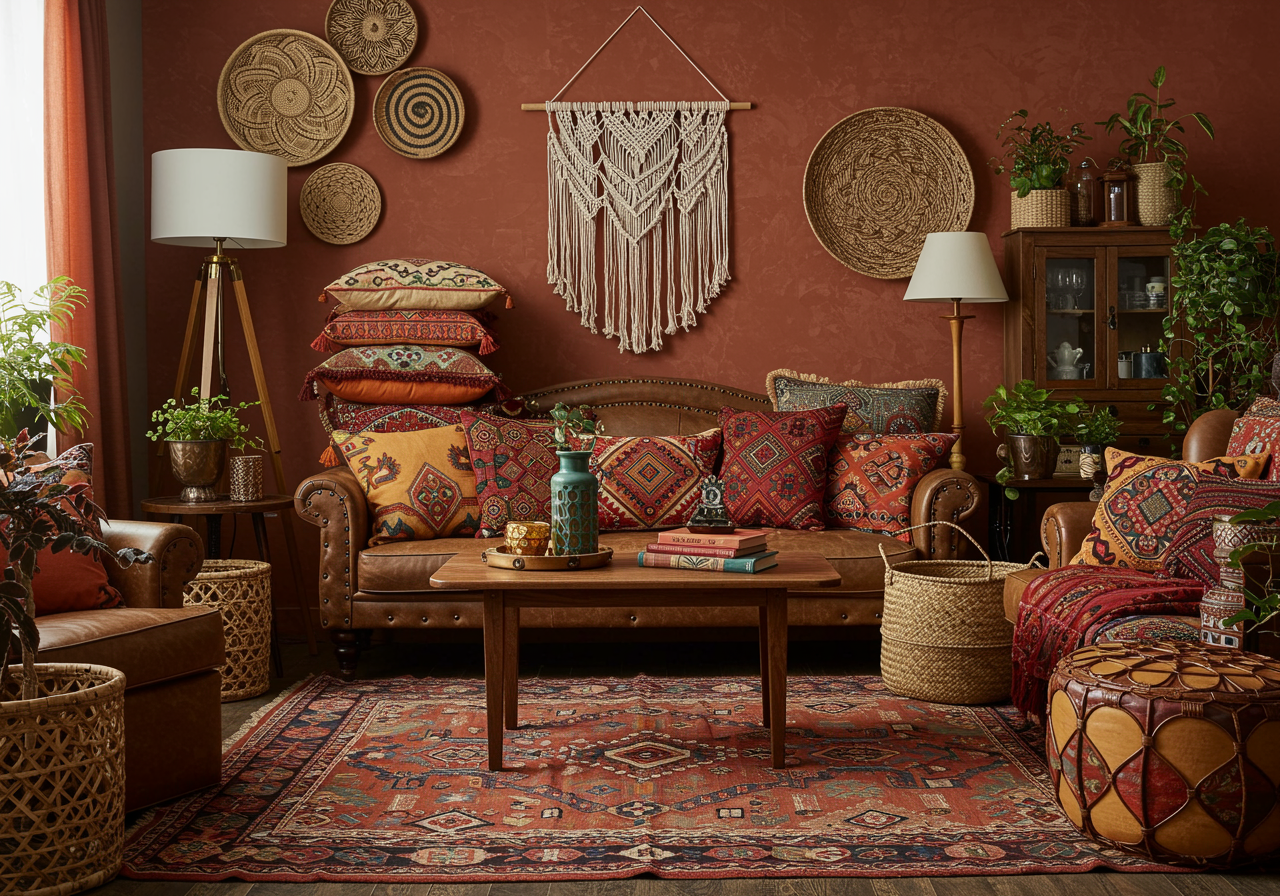 Bohemian/Boho Style - Image Created on ImagineArt
Key materials: Rattan, jute, velvet, woven cotton, terracotta, natural wood
Best for: People who hate the idea of a matching furniture set and want their home to reflect their actual life and travels.
Make or break: Curation. Boho done well looks collected and intentional. Boho done poorly looks like nothing got unpacked.
What defines it:
- Rich, warm color palettes with jewel tones and earthy hues
- Layered textiles including kilim rugs, macrame, woven baskets and embroidered cushions
- A mix of furniture from different eras and cultures
- Plants everywhere, the more the better
- Collections displayed openly as part of the decor
7. Japanese Interior Design
The vibe: Silence as a design choice. On purpose. And it works.
Japanese interior design draws from three core philosophies: Wabi-Sabi (finding beauty in imperfection), Ma (the intentional use of empty space) and Zen (simplicity as a path to calm).
This is the original style. Japandi is what happened when it met Scandinavian design.
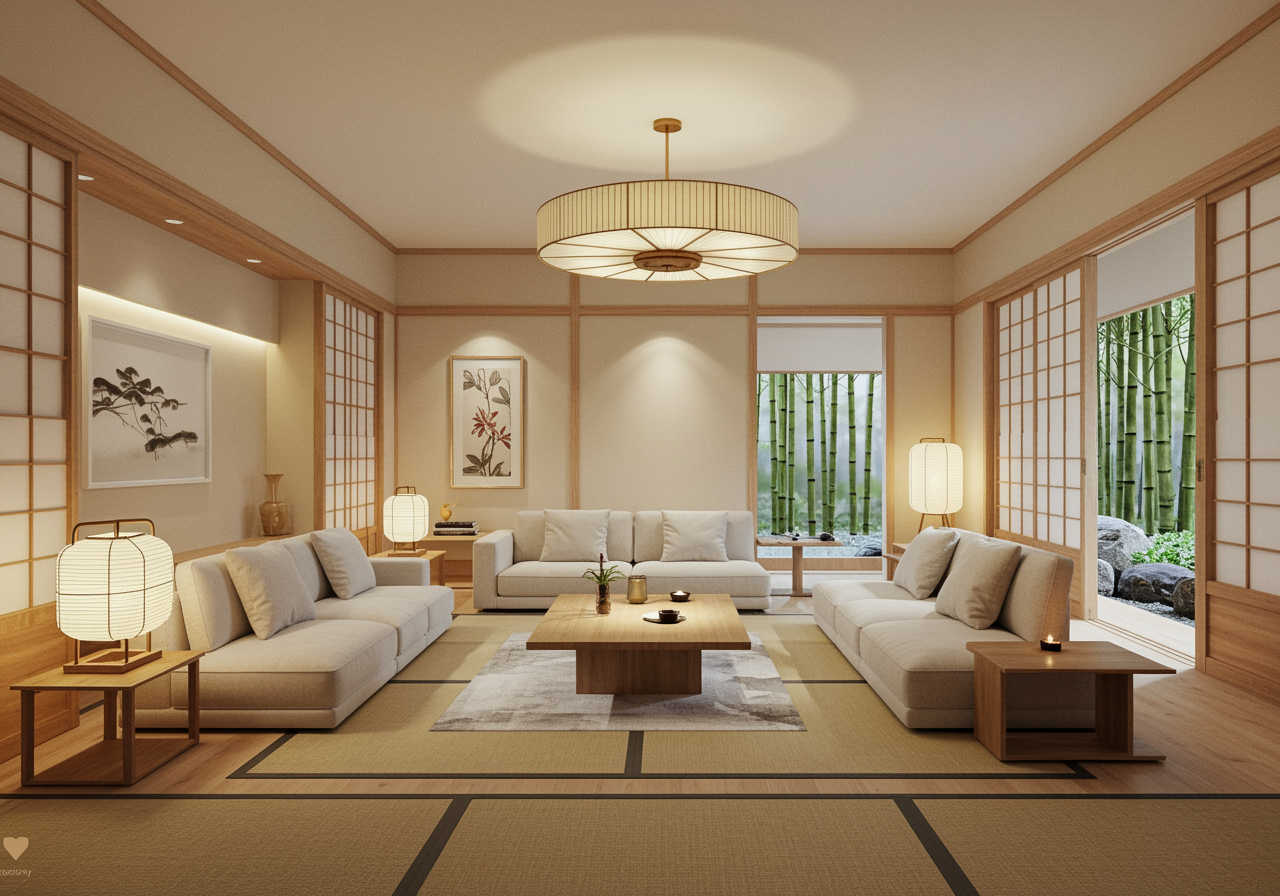 Japanese Interior Design - Image Created on ImagineArt
Key materials: Bamboo, light wood, rice paper, stone, natural linen
Japanese Interior Design - Image Created on ImagineArt
Key materials: Bamboo, light wood, rice paper, stone, natural linen
Best for: People who find busy spaces exhausting and want a home that genuinely feels like a reset.
Make or break: Restraint. Every single object needs a reason to be there. If it does not serve a purpose or bring genuine calm, it goes.
What defines it:
- An extremely restrained color palette of white, beige, warm grey and natural wood
- Low furniture profiles that bring the eye down and create calm
- Natural materials with visible texture and grain
- Shoji screens, tatami mats and sliding elements used to define space
- Negative space treated as a feature, not something to fill
8. Art Deco Interior Design
The vibe: Old money glam with a geometry obsession.
Art Deco originated in 1920s Paris and spread globally through the 1930s and 1940s. It celebrates luxury, symmetry and decorative boldness. The style carries a sense of glamour that very few aesthetics match.
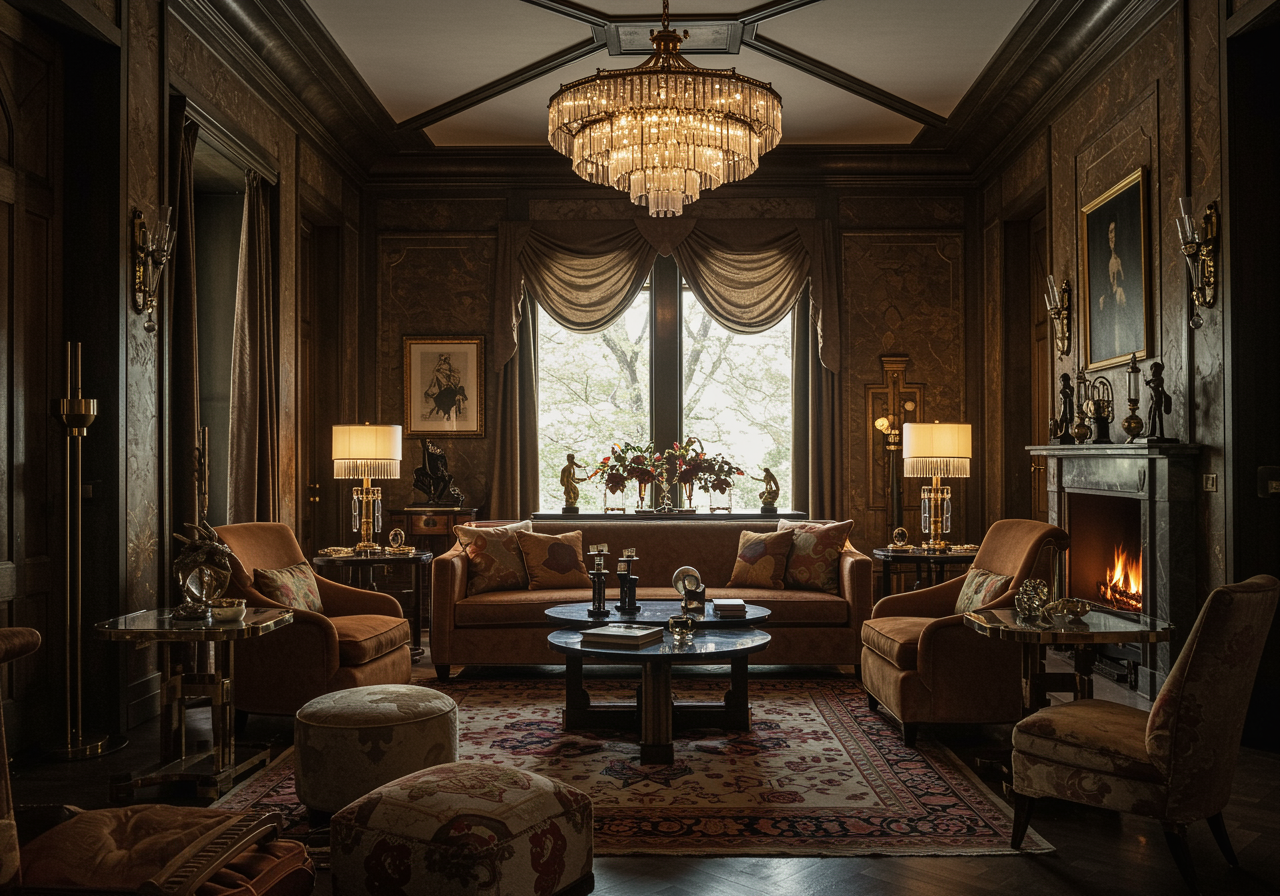 Art Deco Reference Interior Design - Image Created on ImagineArt
Key materials: Lacquered wood, mirrored glass, marble, brass, velvet, chrome
Art Deco Reference Interior Design - Image Created on ImagineArt
Key materials: Lacquered wood, mirrored glass, marble, brass, velvet, chrome
Best for: People who want a dramatic, glamorous space that makes a strong visual statement.
Make or break: Symmetry. Art Deco spaces rely on balanced, deliberate layouts. An asymmetric Art Deco room reads as unfinished.
What defines it:
- Bold geometric patterns in chevrons, sunbursts and stepped forms
- Rich jewel tones including emerald, sapphire, ruby and gold
- Highly polished and mirrored surfaces throughout
- Symmetrical layouts used consistently
- Luxurious materials displayed unapologetically
9. Maximalist Interior Design
The vibe: More is more. No apologies.
Maximalist interior design works as a complete design philosophy, not just an attitude. It celebrates abundance, layering, pattern mixing and personal expression at full volume.
The key difference between well-executed Maximalism and visual chaos is curation. Every item earns its place. The room tells a story.
Key materials: Velvet, patterned fabric, lacquered finishes, brass, layered rugs, gallery wall arrangements
Best for: People who feel suffocated by minimalism and want a home that reflects the full range of who they are.
Make or break: One dominant color that runs through every layer. Without a unifying color thread, Maximalism tips into chaos fast.
What defines it:
- Rich, layered color palettes with multiple tones working together
- Pattern mixing across wallpaper, upholstery, rugs and cushions
- Collections displayed openly and styled with intention
- Statement furniture pieces that hold visual weight
- Every surface used but nothing left random
10. Coastal / Hamptons Interior Design
The vibe: Beach house energy without the beach house budget.
Coastal interior design pulls the feeling of being near water into your space. The Hamptons version of it adds a layer of polish and refinement. Both share the same foundation: light, airy and relaxed.
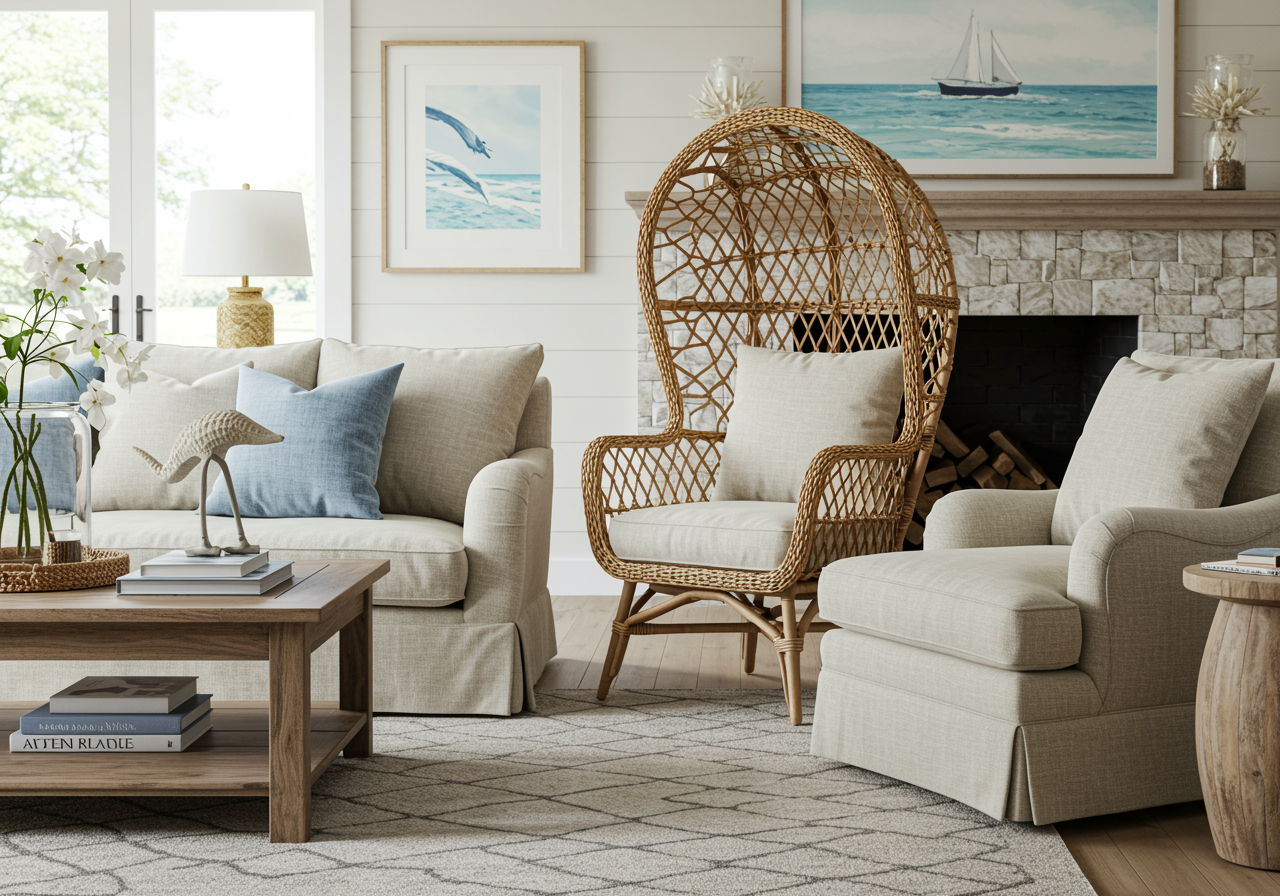 Coastal: Hamptons Interior Design Reference - Image Created on ImagineArt
Key materials: White-washed wood, rattan, linen, jute, ceramic, sisal
Coastal: Hamptons Interior Design Reference - Image Created on ImagineArt
Key materials: White-washed wood, rattan, linen, jute, ceramic, sisal
Best for: People who want a space that feels permanently calm and like a holiday even when it is not.
Make or break: The nautical line. Coastal design works when the ocean reference stays subtle. The moment you add a ship wheel or anchor print, it crosses into theme park territory. What defines it:
- A palette of white, soft blue, sandy beige and warm natural wood
- Natural textures including rattan, jute, linen and sisal
- Light-colored wood floors and furniture
- Sheer curtains that let light move through the space
- Subtle references to the ocean through texture and form, not literal seashell decor
11. Transitional Interior Design
The vibe: Could not pick a side between classic and modern and honestly it worked out.
Transitional interior design sits exactly between Traditional and Contemporary. It takes the warmth and comfort of classic design and the clean lines of modern design and blends them deliberately.
It is also the style that resale agents love because it appeals to almost everyone.
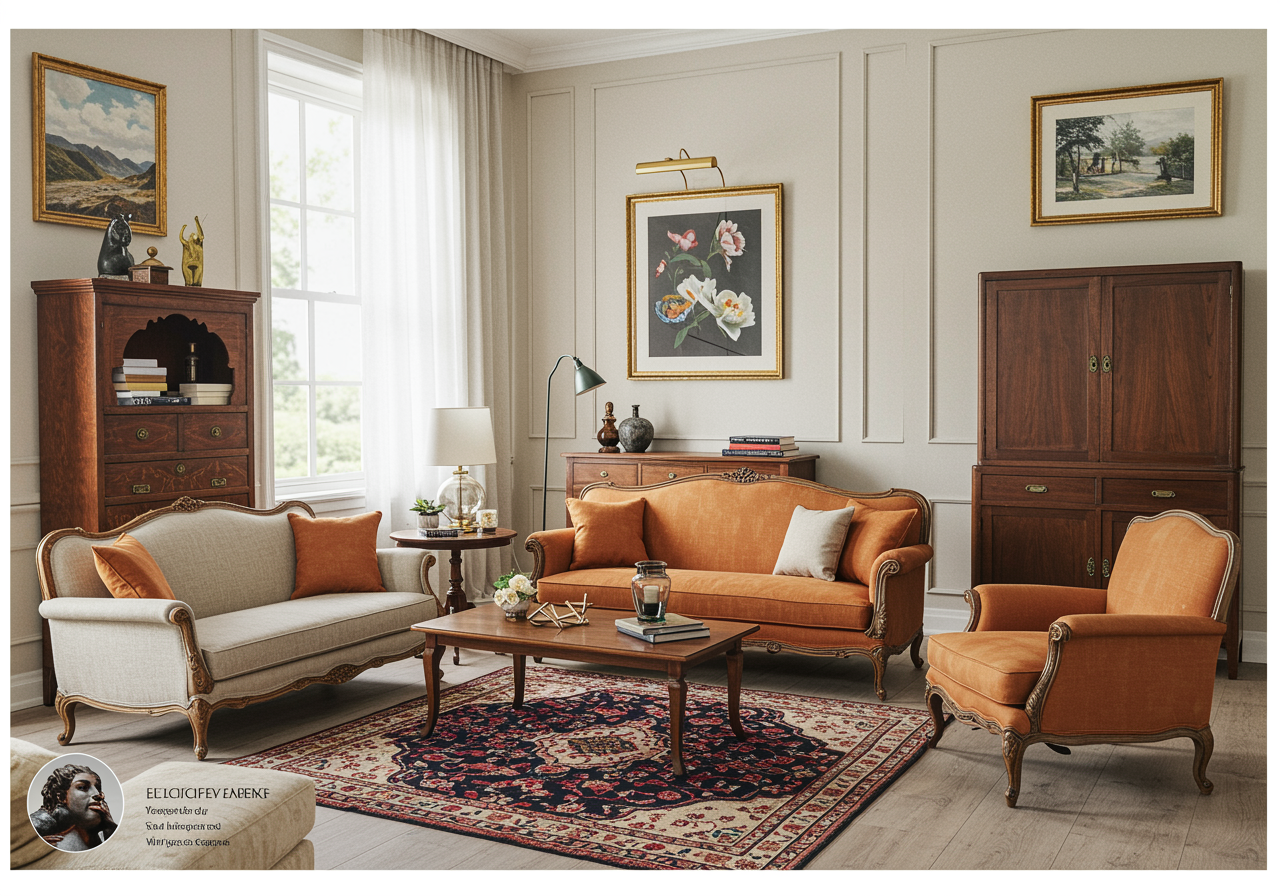 Transitional Interior Design Style - Image Created on ImagineArt
Key materials: Warm wood, linen, wool, stone, brushed metal
Transitional Interior Design Style - Image Created on ImagineArt
Key materials: Warm wood, linen, wool, stone, brushed metal
Best for: People who want a space that feels refined and comfortable without committing to a strong visual identity.
Make or break: The edit. Transitional spaces need restraint in accessories. Too many decorative objects tip it back into full Traditional territory.
What defines it:
- Neutral palettes with warm undertones
- Furniture with classic proportions but simple, unornamented surfaces
- A mix of traditional fabrics like linen and wool with cleaner modern forms
- Minimal accessories chosen with care
- Consistent hardware and fixture finishes throughout
12. Eclectic Interior Design
The vibe: Broke every rule in the book, and somehow it slaps.
Eclectic interior design combines elements from multiple styles, eras and cultures into one space. It looks effortless. It is not. The difference between Eclectic and just a confused room is an intentional color palette that ties every piece together.
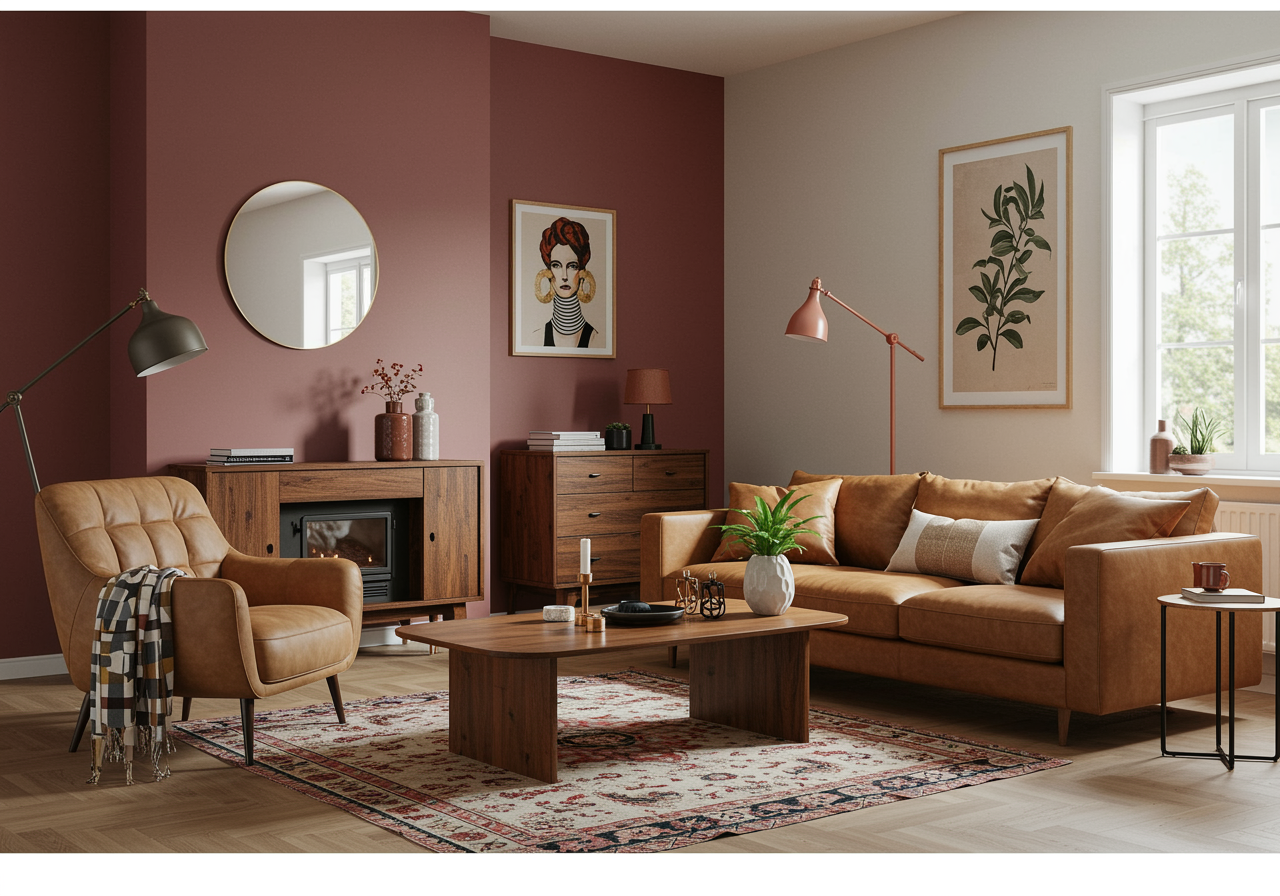 Eclectic Interior Design Reference - Image Created on ImagineArt
Key materials: Anything, genuinely. The materials vary. The color story stays consistent.
Eclectic Interior Design Reference - Image Created on ImagineArt
Key materials: Anything, genuinely. The materials vary. The color story stays consistent.
Best for: People who refuse to be boxed into one aesthetic and have strong enough taste to pull it off.
Make or break: The color story. Pick three to four colors and make sure every single piece in the room touches at least one of them. That thread is what makes the difference.
What defines it:
- A deliberate mix of furniture from different periods and styles
- One consistent color palette running through every piece
- Strong focal points that anchor each area of the room
- High and low pieces mixed without apology
- Personality and personal history visible in every corner
Modern vs Contemporary Interior Design: They Are Not the Same Thing
This is one of the most common mix-ups in interior design and it genuinely matters when you go shopping or brief a designer.
Modern design refers to a specific historical period spanning roughly the 1920s to the 1970s. It has fixed characteristics rooted in the Modernist movement: function over decoration, clean geometry, natural materials and a rejection of ornament.
Contemporary design means what designers produce right now. It shifts over time because the "now" keeps moving. Right now, Contemporary leans warm, organic and textured.
| Modern | Contemporary | |
|---|---|---|
| Era | 1920s to 1970s | Right now, always shifting |
| Lines | Clean, geometric, structured | Soft, organic, fluid |
| Color | Neutral with bold accents | Warm neutrals, earthy tones |
| Materials | Steel, glass, natural wood | Stone, warm wood, linen, matte metal |
| Ornamentation | None | Minimal but intentional |
| Feeling | Crisp, structured, graphic | Warm, current, layered |
The short version: if someone says their space is "Modern," they mean a specific retro-influenced aesthetic. If they say "Contemporary," they mean it looks like what is happening in design right now.
Want to change the lighting in your room? ImagineArt AI Relight lets you upload your space and change the lighting from any angle instantly.
Interior Design Styles for Your Living Room
The living room is the hardest room to style. It needs to do the most: look good, feel comfortable, work for guests and work for a Tuesday night on the sofa. Most rooms fail because people pick a style without thinking about how it behaves in that specific room.
Which styles suit small living rooms:
- Minimalist and Scandinavian both create the illusion of more space through restraint and light color palettes
- Japanese and Transitional keep furniture low and layouts clean, which opens the floor plan visually
- Coastal works well in small rooms because the light palette keeps things airy
Which styles need space to breathe:
- Maximalist and Eclectic need enough square footage for the layers to read as intentional rather than crowded
- Industrial requires ceiling height to work properly
- Art Deco needs enough wall space for the symmetry and pattern to land correctly
Living room style signatures at a glance:
| Style | Sofa | Key Piece | Color Anchor |
|---|---|---|---|
| Minimalist | Structured, neutral | Nothing competes | White, warm grey |
| Scandi | Linen or wool, low profile | Layered rug | Warm white, wood |
| Mid Century Modern | Tapered legs, solid color | Walnut credenza | Mustard, olive, teal |
| Industrial | Leather or dark velvet | Exposed brick wall | Charcoal, rust, black |
| Boho | Layered cushions, eclectic | Kilim rug | Terracotta, jewel tones |
| Coastal | Linen slipcover | Rattan chair | White, sand, soft blue |
| Maximalist | Velvet, bold color | Gallery wall | Deep, rich, layered |
You can try all these styles instantly with ImagineArt AI Interior Design:
5 Kitchen Interior Design Styles: Your Kitchen Deserves a Personality Too
Most people treat the kitchen as a purely functional space and then wonder why it feels soulless. Your kitchen style matters. It sets the tone for the whole home.
The key is understanding which styles translate well into a kitchen and which ones rely on architectural elements you might not have.
Style-specific kitchen signatures:
1. Mid-Century Modern Kitchens
Flat-front cabinetry in warm wood tones or muted solid colors. Simple bar pulls or no visible hardware at all. Clean lines everywhere. The warm walnut lower cabinets with a white upper cabinet combination sits squarely in this style.
2. Industrial Kitchens
Open shelving on steel brackets. Concrete or dark stone countertops. Matte black hardware throughout. Exposed brick or raw plaster as a feature wall. The refrigerator stays visible rather than integrated.
3. Coastal Kitchens
White or cream cabinetry with natural wood countertops or light stone. Shaker-style doors. Brushed nickel or unlacquered brass hardware. Open shelving for displaying ceramics and natural objects.
4. Transitional Kitchens
The crowd pleaser. Shaker doors in a warm neutral. Stone countertops with some natural movement. Consistent hardware finish, usually brushed gold or matte black. Practical, polished and broadly appealing.
5. Eclectic Kitchens
Two-tone cabinetry, unexpected tile choices, a mix of hardware styles tied together by a consistent color thread. The only kitchen style that rewards rule-breaking.
Before you commit to a full kitchen renovation, generate your preferred kitchen style on ImagineArt AI Interior Design. Renovation regret is very real and very expensive.
Commercial Interior Design Styles: The Design World Beyond Your Home
Commercial interior design operates differently from residential design. The stakes involve brand identity, customer behavior and how physical space shapes human experience at scale.
It also matters to regular people because the spaces you love outside your home, your favorite cafe, your go-to hotel lobby, that restaurant you keep going back to, all of them influence what you eventually want at home.
Retail Interior Design Styles
Retail spaces use design to communicate brand identity and guide customer behavior simultaneously. A luxury retail store uses Minimalism and high-end materials to signal exclusivity. A lifestyle brand uses Eclectic or Boho-influenced design to signal community and personality. The physical environment does selling work that no ad campaign can replicate.
Restaurant and Hospitality Interior Design Styles
Atmosphere is the entire product in hospitality. A restaurant with average food and a stunning room outperforms one with exceptional food in a forgettable space almost every time. Hospitality designers work with lighting, acoustics, material texture and spatial flow to engineer a specific emotional response from the moment a guest walks in.
Office and Workplace Interior Design Styles
The office finally started looking like somewhere humans want to spend time. Contemporary workplace design borrows heavily from residential and hospitality design: warm materials, biophilic elements, varied seating zones and lighting that supports actual human energy levels.
The connection matters because commercial spaces and residential spaces constantly influence each other. The hotel lobby that made you feel incredible? Designers translate that feeling into living rooms. The cafe that made you linger for three hours? That lighting scheme belongs in your dining room.
How to Mix Interior Design Styles Without It Looking Unhinged
You do not have to pick just one style. Most great interiors borrow from two or three. The key is doing it with a system instead of vibes alone.
The 60/30/10 rule:
- 60% goes to your dominant style: the one that sets the overall tone
- 30% goes to a supporting style: the one that adds contrast or warmth
- 10% goes to an accent: one unexpected element that gives the room its personality
Four combinations that genuinely work:
Scandinavian plus Boho
Scandi gives you the clean, light base. Boho layers in warmth, pattern and personality. The Scandi foundation stops it from reading chaotic. The Boho layer stops it from reading sterile.
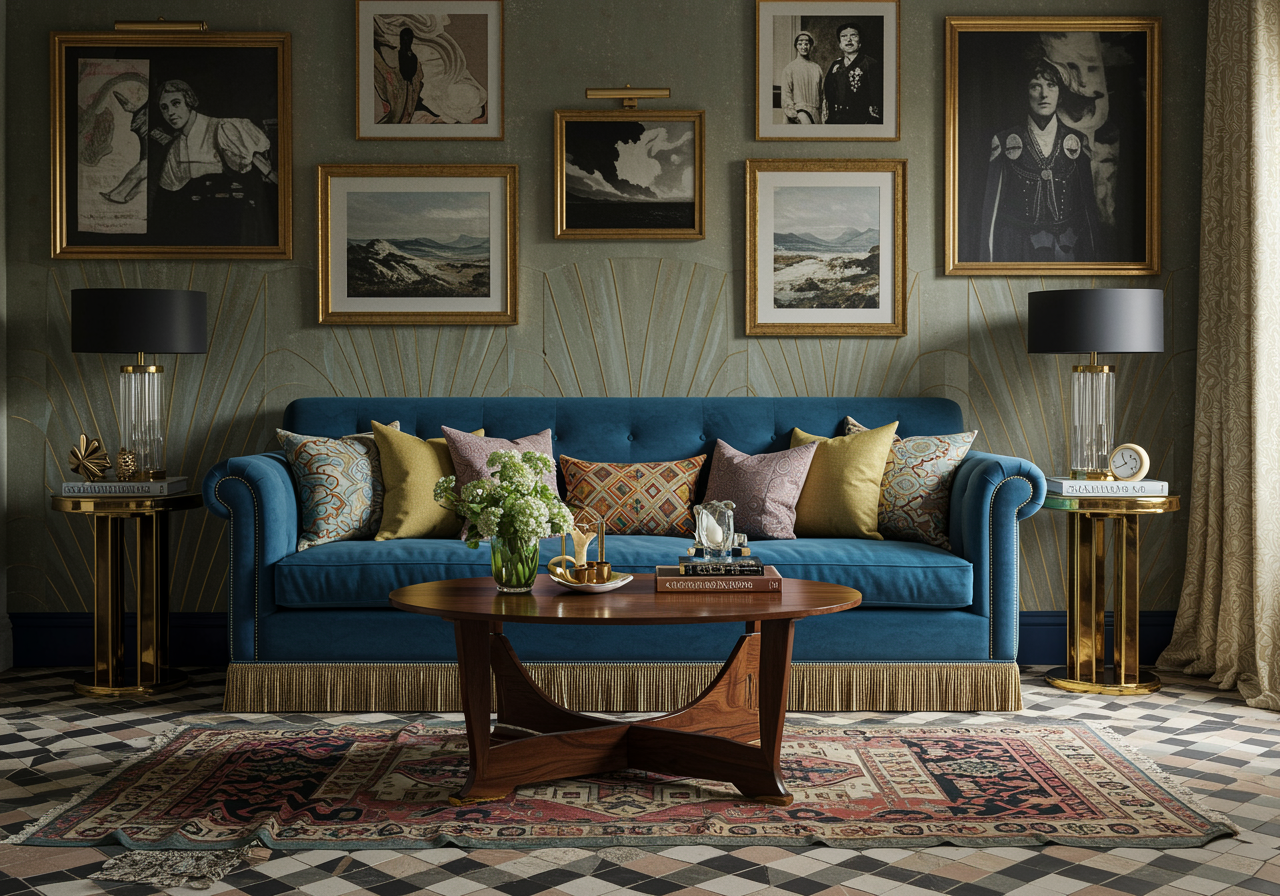 Maximalist+Art Deco + Electric + Japandi - Image Created on ImagineArt
Mid-Century Modern plus Organic Modern
MCM gives you the retro structure and tapered legs. Organic Modern softens it with curved forms and natural textures. The two styles share a love of natural materials which makes them easy to blend.
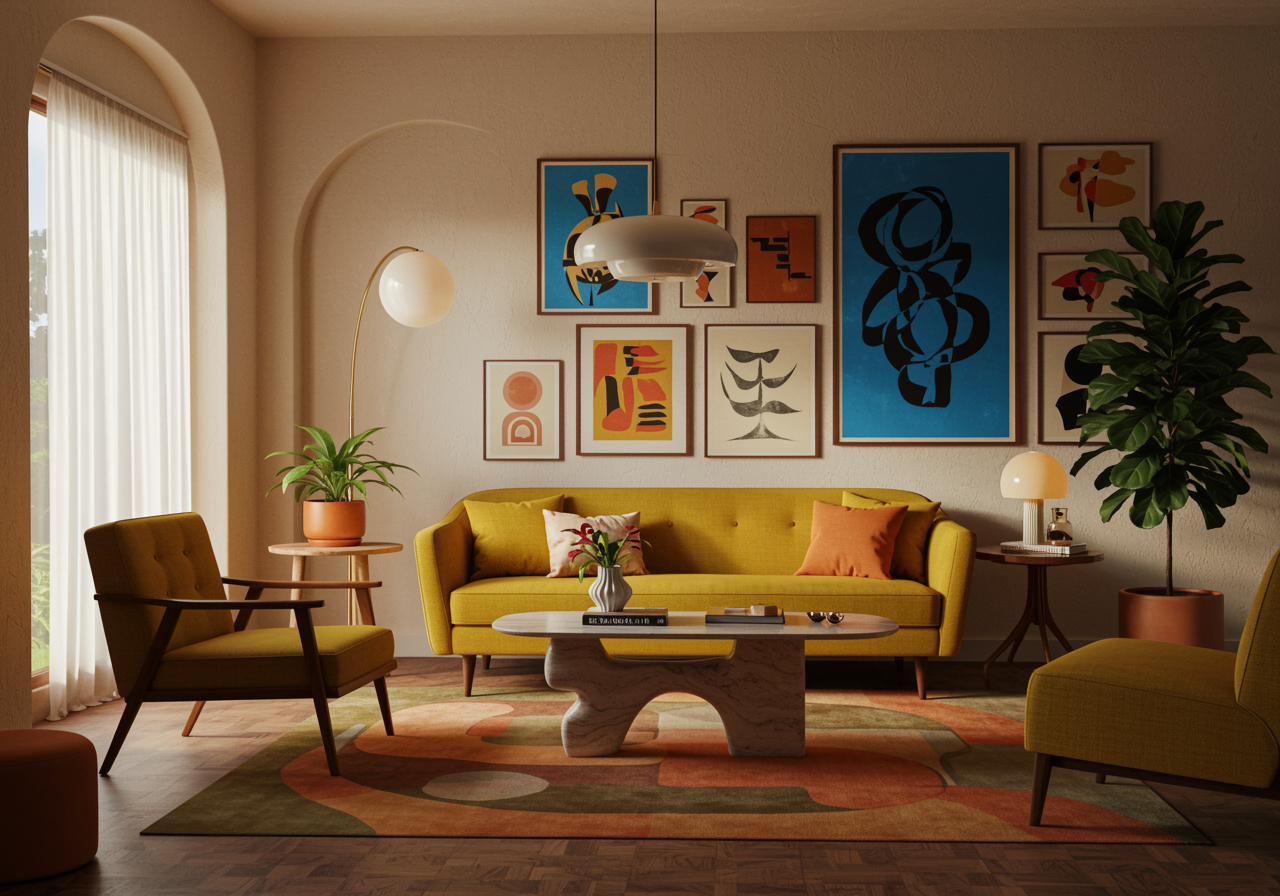 Mid-Century + Organic Modern (warm & punchy) - Image Created on ImagineArt
Industrial plus Eclectic
Industrial gives you the raw, structural backdrop. Eclectic fills it with personality, collected objects and color. The strong Industrial bones hold the Eclectic layering without the room falling apart visually.
Mid-Century + Organic Modern (warm & punchy) - Image Created on ImagineArt
Industrial plus Eclectic
Industrial gives you the raw, structural backdrop. Eclectic fills it with personality, collected objects and color. The strong Industrial bones hold the Eclectic layering without the room falling apart visually.
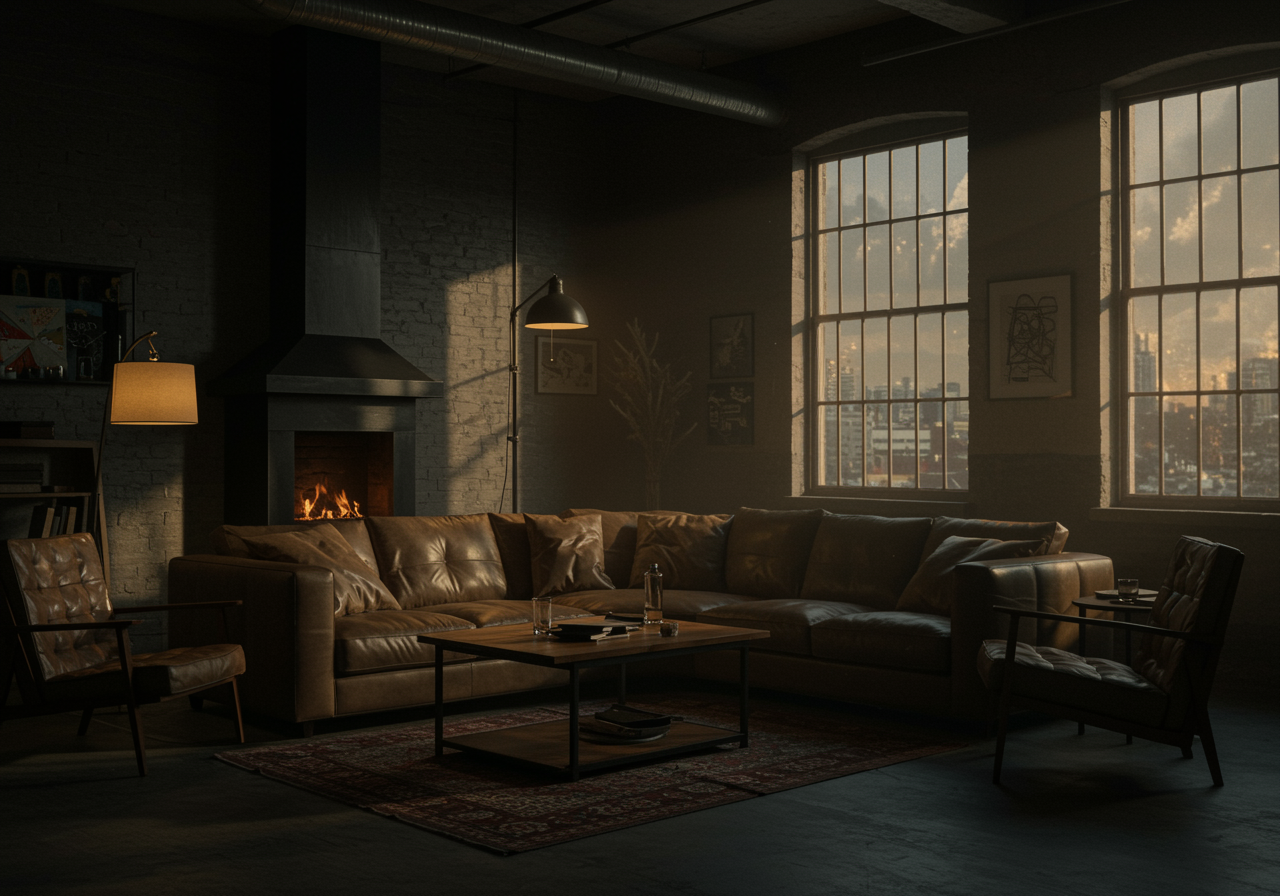 Industrial + Eclectic (dark, dramatic, electric) - Image Created on ImagineArt
Transitional plus Coastal
Both styles lean neutral and restrained. The combination reads as relaxed, refined and broadly appealing. Safe but not boring.
Industrial + Eclectic (dark, dramatic, electric) - Image Created on ImagineArt
Transitional plus Coastal
Both styles lean neutral and restrained. The combination reads as relaxed, refined and broadly appealing. Safe but not boring.
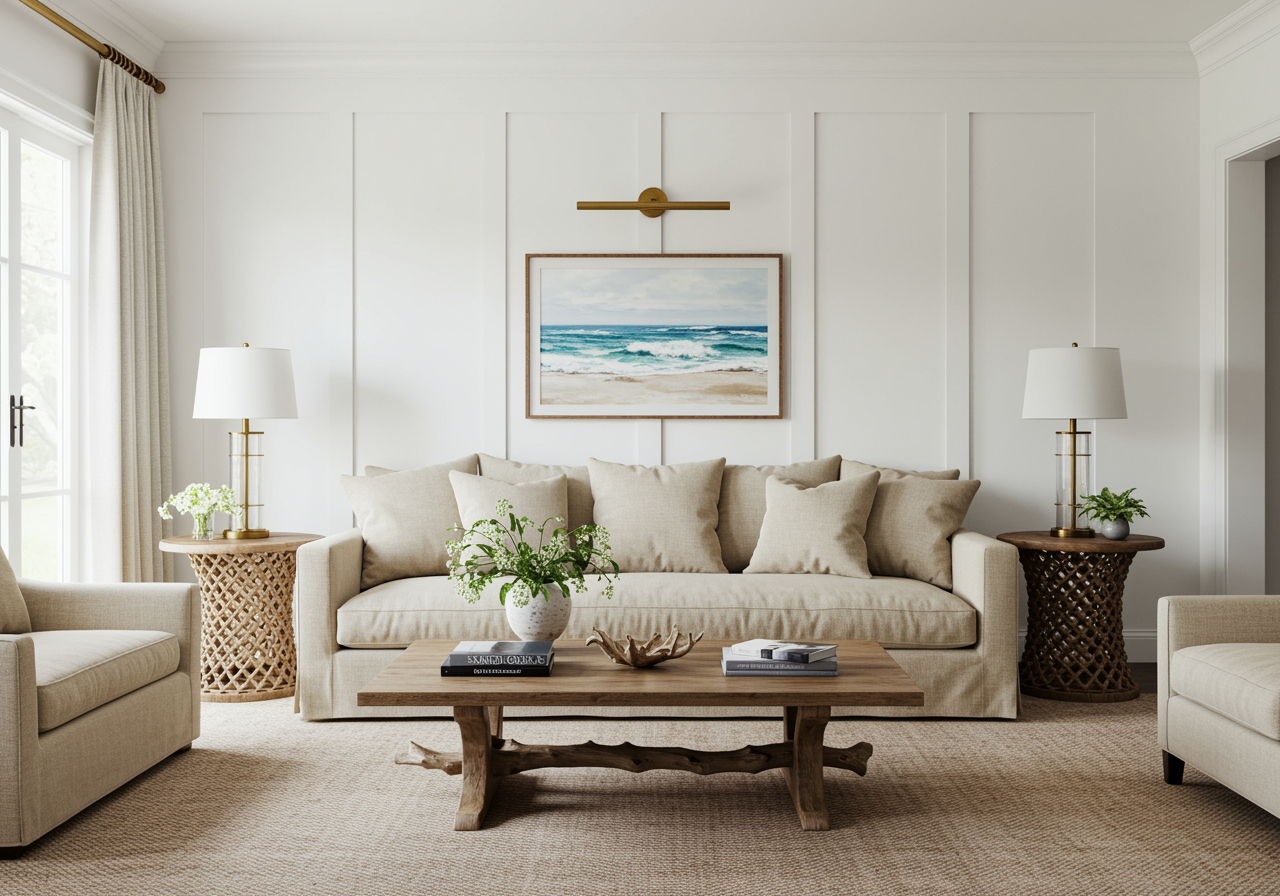 Transitional + Coastal (bright, fresh, editorial) - Image Created on ImagineArt
What not to combine:
Transitional + Coastal (bright, fresh, editorial) - Image Created on ImagineArt
What not to combine:
- Art Deco and Minimalism fight each other at a fundamental level. Art Deco wants ornament. Minimalism refuses it.
- Full Maximalism and Industrial do not share enough visual language to merge comfortably.
- Traditional and Industrial have almost no material or tonal overlap. The contrast reads as an accident rather than a choice.
Before you commit to any combination, test it visually first. ImagineArt AI Interior Design lets you generate your room in a mixed style so you see exactly how it reads before you buy anything.
How to Actually Figure Out Your Interior Design Style
Most people already have a style. They just have not noticed it yet.
Open your phone. Go to your saved photos, your Pinterest boards, your TikTok bookmarks. Scroll through all of it. Do not look at the furniture. Look at the feeling. What keeps coming up? Calm? Cozy? Dramatic? Colorful? That feeling is your style. Trust it.
No saved images? Answer these five questions honestly.
How do you want to feel when you walk through your front door?
Calm and clear: you lean Minimalist, Japanese or Scandinavian. Warm and wrapped up: go Transitional, Coastal or Organic Modern. Alive and stimulated: Boho, Eclectic or Maximalist is your territory.
How do you actually feel about stuff on display?
Visible clutter stresses you out: Minimalist or Japanese. You like a few chosen pieces out: MCM, Scandi or Transitional. You want your whole collection on show: Boho, Eclectic or Maximalist.
Do you reach for warm or cool?
Warm wood, terracotta, cream: Scandi, MCM, Boho, Organic Modern or Transitional. Concrete, steel, grey, black: Industrial, Minimalist or Contemporary.
Should a stranger walk in and immediately know it is your space?
Yes, absolutely: Eclectic, Boho, Art Deco or Maximalist. Not really: Minimalist, Transitional or Scandinavian.
How often will you genuinely want to change things?
Almost never: invest in MCM, Traditional or Transitional. Every couple of years: Contemporary, Coastal or Scandi. All the time: Eclectic, Boho or Maximalist will keep up with you. Read our guide on how to use AI for interior design.
So Which Interior Design Style Is Actually Yours?
You do not need to have it figured out perfectly before you start. Nobody does.
The best interiors borrow from multiple styles and reflect the actual person living there. A Scandi base with Boho layers. A Transitional foundation with MCM accents. Whatever makes you feel good when you walk in.
Start with one room. Pick a style from this guide that kept pulling your attention. Try it with a rug, a lamp or a piece of furniture before committing to paint or cabinetry.
And if you want to skip the guesswork entirely, ImagineArt AI Interior Design lets you upload your room and see any of these styles applied to your actual space in seconds. No mood board required. No decorator needed. Just your room, your style and a clear picture of what to do next.
FAQs About Interior Design Styles
What is the most timeless interior design style?
Traditional interior design is the most timeless style, built on symmetry, rich textures, and classic furnishings that hold up across decades. Use our AI interior design generator to visualize how it fits your space. It adapts well to most room types without ever feeling dated.
What is the difference between Japanese and Japandi interior design?
Japanese design is rooted in wabi-sabi, zen minimalism, and cultural tradition, while Japandi merges that simplicity with Scandinavian warmth and functionality. Our interior design AI tool lets you visualize both styles side by side. Japandi feels warmer and more livable, while Japanese leans more meditative.
What is the difference between Bohemian and Eclectic interior design?
Bohemian is free spirited, earthy, and culturally layered, while Eclectic is a deliberate mix of contrasting styles, periods, and influences. Our AI interior design tool helps you experiment with both and find the right balance. Eclectic is curated, while Bohemian is more expressive and relaxed.
What interior design style works best for small living rooms?
Minimalist and Scandinavian styles work best, using light palettes, clean lines, and purposeful furniture to maximize perceived space. ImagineArt's AI interior design generator lets you visualize compact layouts instantly. Mid Century Modern is another strong option because of its sleek and low profile furniture.
What is Mid Century Modern interior design?
Mid Century Modern is a 1940s to 1960s style defined by clean geometry, organic curves, and functional furniture that blends indoor and outdoor elements. Our interior design AI tool lets you generate and refine room concepts in this aesthetic. Its appeal comes from simplicity, warmth, and timeless craftsmanship.
Can you do Maximalist interior design in a small space?
Yes, layer bold patterns, rich colors, and curated pieces vertically rather than horizontally to make Maximalism work in small rooms. Use our AI interior design generator to preview concepts in your actual room dimensions. A strong color story keeps everything cohesive rather than overwhelming.
What is the difference between Art Deco and Contemporary interior design?
Art Deco is bold, geometric, and glamorous with luxe materials like brass and marble, while Contemporary is clean, neutral, and constantly evolving. ImagineArt lets you generate both styles to compare how they feel in the same space. One emphasizes opulence, while the other focuses on restraint.
How many interior design styles can you mix in one room?
Two to three styles is the sweet spot to keep a room visually cohesive. Our AI interior design tool lets you test combinations before making changes. Let one style dominate and use the others as accents.
Aqsa Nazir Kayani
Aqsa Nazir Kayani specializes in SaaS and Gen AI, delivering search-optimized content that boosts visibility and strengthens brand authority.