How Much Does a Fashion Photoshoot Cost? Prices by Shoot Type, Line Item and Image
A professional fashion photoshoot costs about $2,000 to $8,000 for a one-day clothing shoot and $25,000 or more for a campaign, or $150 to $400 per on-model image. Here is every line item a quote should include, three worked budgets, a real $259,000 estimate broken down, and what the same images cost with AI.
Kamran Arshad
November 4, 2026 • Updated November 12, 2026
20 mins Read
A professional fashion photoshoot costs about $2,000 to $8,000 for a typical one-day clothing shoot, $2,000 to $15,000 per day when you add models and a full crew, and $25,000 to $100,000 or more for a premium campaign. Per image, that works out to roughly $25 to $150 for product photos and $150 to $400 for on-model photos. The biggest swing factors are models, usage rights and retouching.
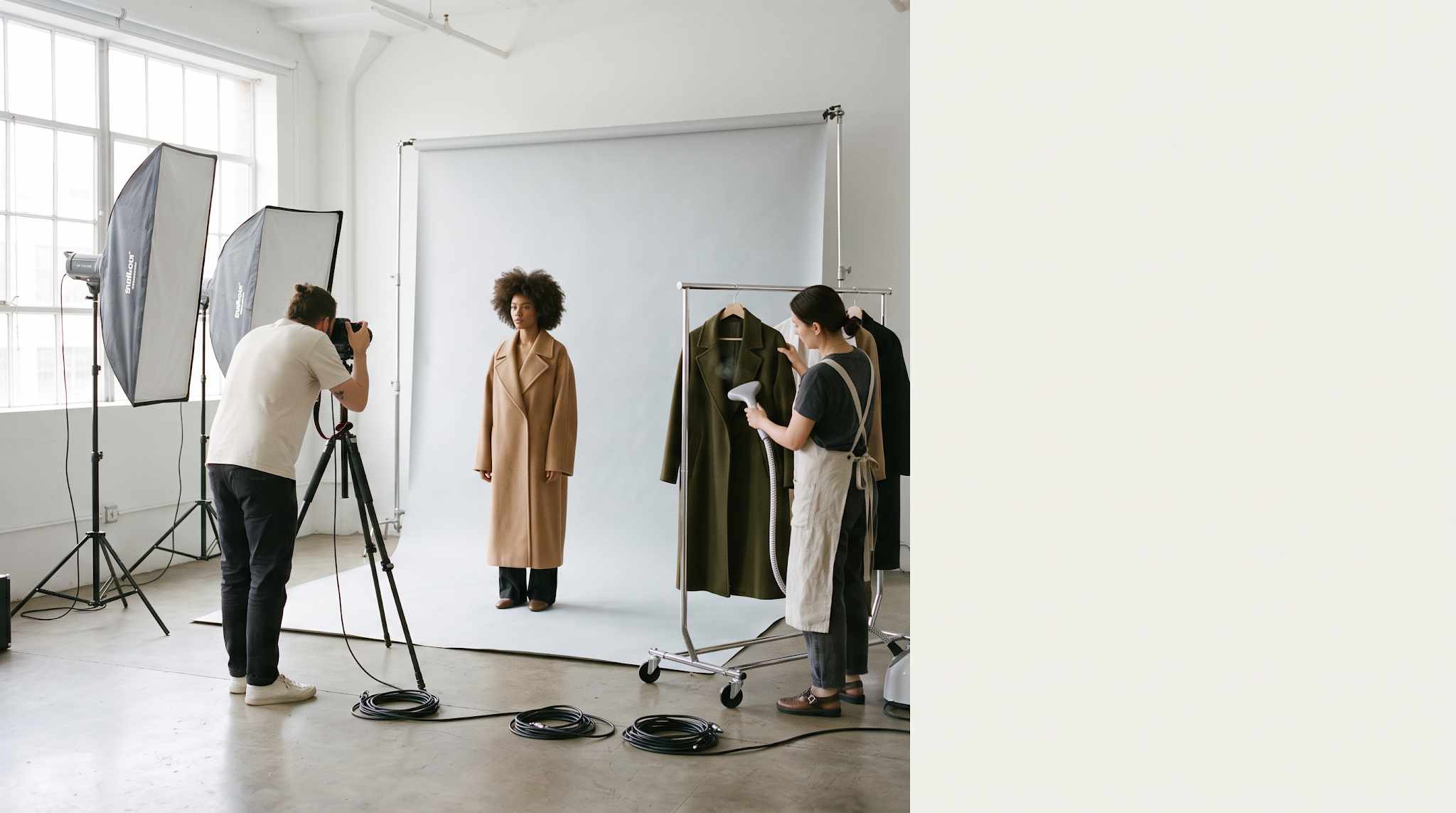
A working fashion photo studio mid-shoot with a model in a camel coat, a photographer, softboxes and a stylist steaming a coat.
Key takeaways
- A photoshoot can mean a smartphone flat lay or a 40-person campaign. Fashion shoot cost varies by shoot type and by cost per finished image.
- DIY $200 to $800. Professional one-day clothing shoot $2,000 to $8,000. Model shoot with a crew $2,000 to $15,000 a day. Premium campaign $25,000 to $100,000 or more.
- A model can charge $100 to $2,000 or more per day, and a three-year usage license on one real estimate cost $19,800.
- Basic edits run $5 to $20 an image. Heavy retouching runs $50 to $150, and one estimate used $100 an image.
- Sample shipping, rush fees, reshoots, props, meals and insurance rarely appear in the first quote.
- A hybrid plan, with real shoots for hero images and AI for the long tail, can cut the cost per product page sharply. Our own cost model puts approved AI images at roughly $1 to $4 each, with review time included.
Quick answer: cost by shoot type
The type of shoot decides most of the price. Use this table as a first estimate, then refine it with the line items in the next section.
| Shoot type | Typical cost | What you get | Best for |
|---|---|---|---|
| DIY with smartphone or basic kit | $200 to $800 | Basic listing photos. You supply the time and the editing | Startups testing a product |
| Flat lay or mannequin, outsourced | $15 to $75 per shot | Clean product-only images, no model | Large catalogs, basics, accessories |
| Ghost mannequin, outsourced | $50 to $150 per product, including shoot and editing | Garment shape with no mannequin visible | Structured garments |
| Professional one-day clothing shoot | $2,000 to $8,000 | A photographer, basic retouching and commercial usage | Small and mid-size brands |
| E-commerce on-model, priced per image | $150 to $400 per image | Model, styling, shoot and retouching included | Product pages for key styles |
| Model shoot with full crew | $2,000 to $15,000 per day | Photographer, model, hair and makeup, styling, studio | Lookbooks and campaigns |
| Premium campaign | $25,000 to $100,000+ per day | Top photographer, agency models, art direction, sets | Luxury and national campaigns |
If a model shoot with a full crew is what you are pricing, it is usually because you are planning a lookbook. Our guide to lookbooks, with examples and types, covers what to shoot and how to brief it.
Line-by-line breakdown of a photoshoot budget
Every quote is a sum of the same few lines. Knowing them lets you compare quotes fairly and spot what is missing.
| Line item | Typical range | Notes |
|---|---|---|
| Photographer | $50 to $500 per hour, or $1,000 to $5,000 per day | Fashion specialists charge more. A creative fee for campaign work can sit on top of the day rate |
| Model | $100 to $2,000 or more per model | Agency models, usage and exclusivity push this higher |
| Hair and makeup | $150 to $800 per day | Scales with the number of models |
| Stylist and wardrobe | Varies. Often a day rate plus props | Needed for lookbooks and campaigns more than for catalog |
| Studio rental | $75 to $500 per hour | Premium studios in New York or Los Angeles can exceed $1,500 per day |
| Equipment rental | $200 to $500 per day for pro kit. Much more for full lighting and grip | Often included in a photographer's rate. Ask |
| Assistants and crew | A fraction of the photographer's rate each | Larger sets need a digital tech, a stylist's assistant and a producer |
| Retouching | $5 to $20 per image basic. $50 to $150 per image heavy | One 2026 estimate used $100 per image, up to an hour each |
| Usage rights and licensing | Sometimes bundled. Sometimes thousands of dollars | See the licensing section |
1. Photographer
The photographer is usually the largest line. Rates depend on portfolio, market and the shoot's complexity. Most small and mid-size clothing brands work with photographers who charge $1,000 to $5,000 a day, often including basic retouching and commercial usage. Campaign photographers add a creative fee and bill separately for usage.
2. Models
Model fees range from about $100 for a newer face on a simple shoot to $2,000 or more for experienced or agency talent. Three things move the price: experience, the number of hours and what you plan to do with the images. A model who appears in a paid ad costs more than one who appears only on your product page, because usage is priced separately.
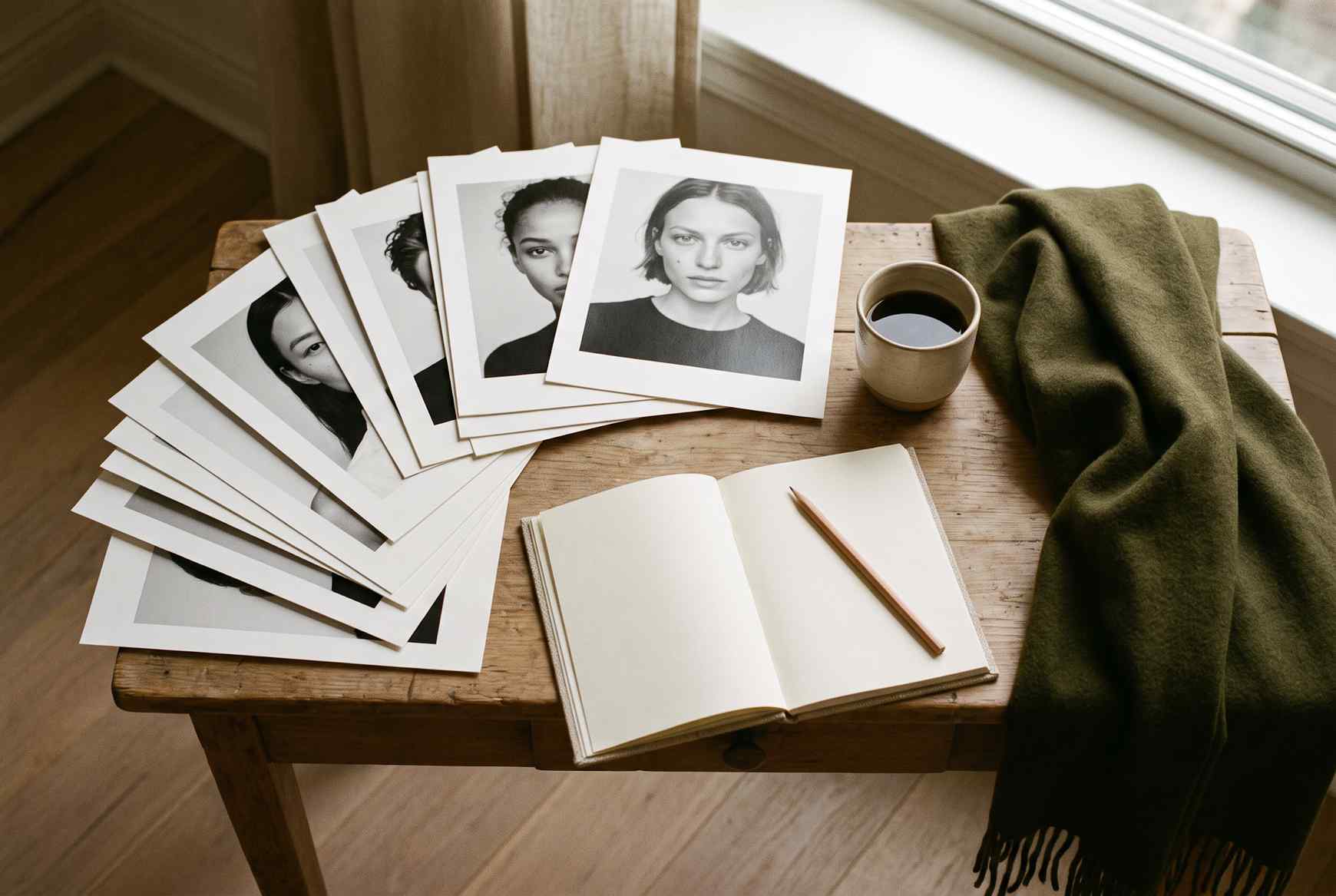 A casting table with printed headshots of several models, a notebook and coffee.
Many brands save by using one model across many outfits in a single day and by booking a model for a half day when the volume allows it.
3. Hair, makeup and styling
Hair and makeup artists commonly charge $150 to $800 a day, and the bill grows with each extra model. A stylist keeps garments pressed, pinned and consistent, which saves studio time and retouching. On an e-commerce day, a skilled stylist can pay for themselves in the images you do not have to redo.
4. Studio and equipment
Studio rental runs $75 to $500 an hour, and premium studios in high-cost cities can top $1,500 a day. Many photographers bring their own camera and lighting, which is part of why their day rate is high: they may have invested tens of thousands of dollars in kit. Ask what is included before you add rental lines of your own.
5. Retouching
Retouching is quoted per image and scales with volume. Basic color correction and cleanup typically costs $5 to $20 an image. Heavy work on skin, fabric and backgrounds can reach $50 to $150. Outsourced ghost mannequin editing is priced separately by retouching firms, and published per-image rates for the edit alone start under a dollar for simple jobs and climb with complexity.
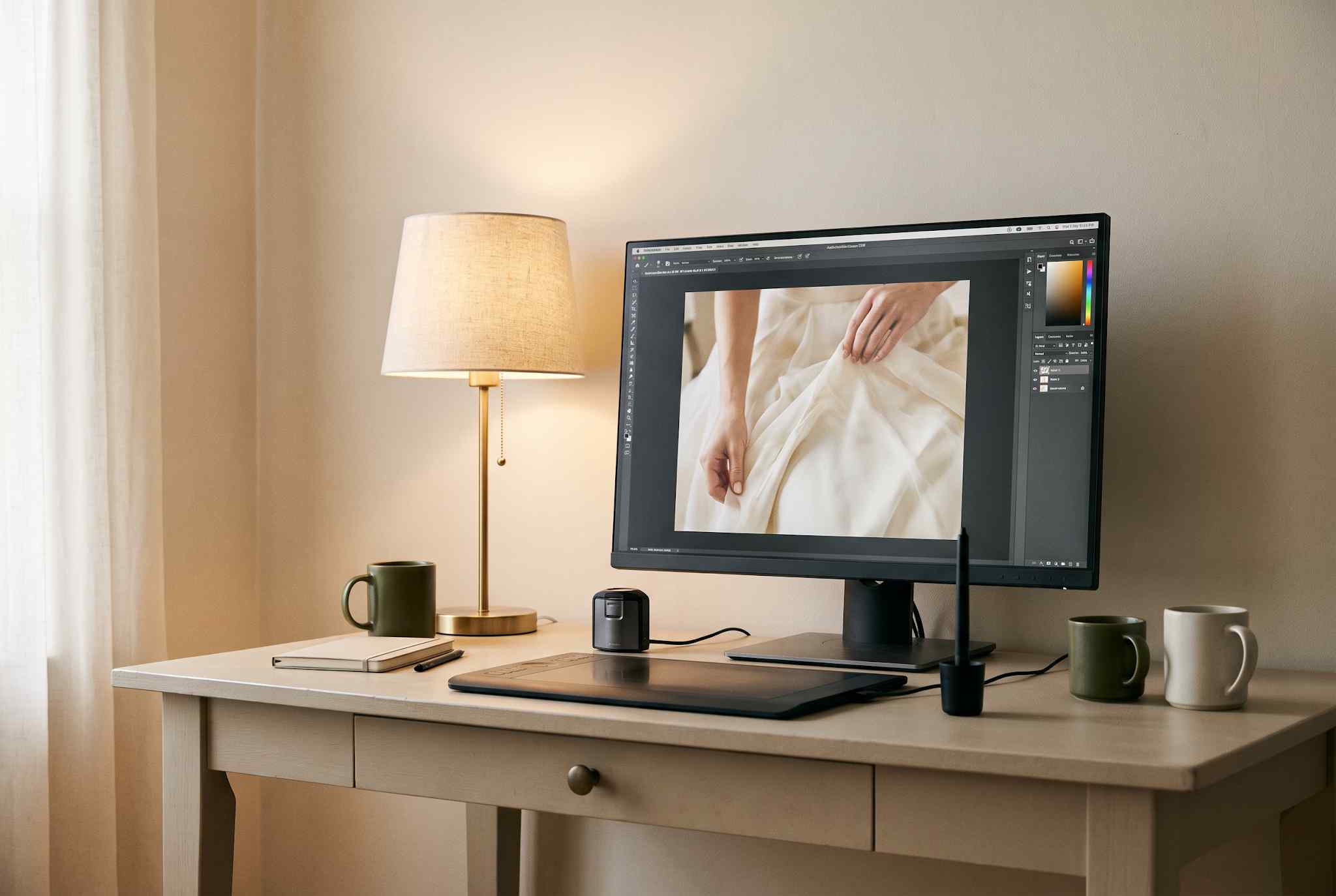 A retoucher's desk with a calibrated monitor showing a garment photo being cleaned up.
Agree the retouching standard up front, and show reference images. Over-editing makes products look unrealistic, and that raises returns when the real garment arrives.
Worked budgets: small brand, season and campaign
Ranges are useful. Worked examples are better. These three use the ranges above. They are estimates, not quotes.
1. Small brand, one shoot day
Twenty styles, three images each, one model, one day: 60 images in total.
| Line | Low | High |
|---|---|---|
| Photographer (one day) | $1,000 | $5,000 |
| Model (one day) | $100 | $2,000 |
| Hair and makeup (one day) | $150 | $800 |
| Studio, eight hours (if not included) | $600 | $4,000 |
| Basic retouching, 60 images | $300 | $1,200 |
| Total | $2,150 | $13,000 |
| Cost per image | about $36 | about $217 |
The low case assumes a photographer who includes the studio and an inexpensive model. The high case assumes separate lines for everything. Most real quotes land in between.
2. Season for a mid-size brand
Four collections of 30 items each is 120 styles. At three to five images a style, that is 360 to 600 core product images.
| Approach | Price per image | 360 images | 600 images |
|---|---|---|---|
| Product-only (flat lay, mannequin) | $15 to $75 | $5,400 | $45,000 |
| On-model, priced per image | $150 to $400 | $54,000 | $240,000 |
Read the low end of each row against the low end of the other, and the high with the high. The gap between product-only and on-model is why many brands shoot on-model images for hero styles and use product-only or AI for the rest.
3. Premium campaign day
Top photographers, agency models, a styling team, art direction and sets can push a single day to $25,000 to $100,000 or more. A big part of that is not the shoot day. It is usage rights across channels and territories, and the number of people on set.
Cost per image: the number that matters
The most useful way to compare quotes is cost per finished, published image. A day rate on its own tells you little. A $5,000 day that yields 80 usable images costs about $62 an image. The same day that yields 25 costs $200.
| Quote | Images delivered | Cost per image |
|---|---|---|
| $2,000 day | 100 | $20 |
| $5,000 day | 80 | about $62 |
| $8,000 day | 50 | $160 |
| $8,000 day | 25 | $320 |
Professional teams commonly shoot 50 to 100 or more product images in a full day when the setup is fixed and the preparation is good. Editorial and campaign days yield far fewer finished images, because each one takes longer. That is by design, and it is why cost per image is high for campaigns.
The formula
Cost per image = total project cost / number of published images
Use the published count, not the shot count. Frames you reject, redo or never use are cost, not output. Our guide to what a product page image really costs works through this formula for studio and AI side by side.
Hidden costs
The first quote in fashion shoot rarely includes everything. These are the lines that surprise brands most.
| Hidden cost | Why it appears | How to control it |
|---|---|---|
| Sample shipping and handling | Garments travel to and from the shoot, sometimes twice | Ship once. Insure samples. Plan returns |
| Rush fees | Faster editing and delivery can add 25% to 50% to base editing costs | Plan the calendar. Avoid last-minute shoots |
| Reshoots | A color issue, a missed shot or a changed brief | Write a shot list. Check samples before the day |
| Extra usage rights | A campaign extended to new channels or territories | Negotiate usage for your real plans up front |
| Props and styling purchases | Accessories, steamers, fillers and clips | Reuse a kit across shoots |
| Meals, travel and permits | People and locations cost money | Ask for an all-in estimate |
| Insurance | Expensive samples and equipment | Check what the studio and photographer carry |
| Storage and asset management | Files you cannot find get shot again | Name files by SKU. Keep one source of truth |
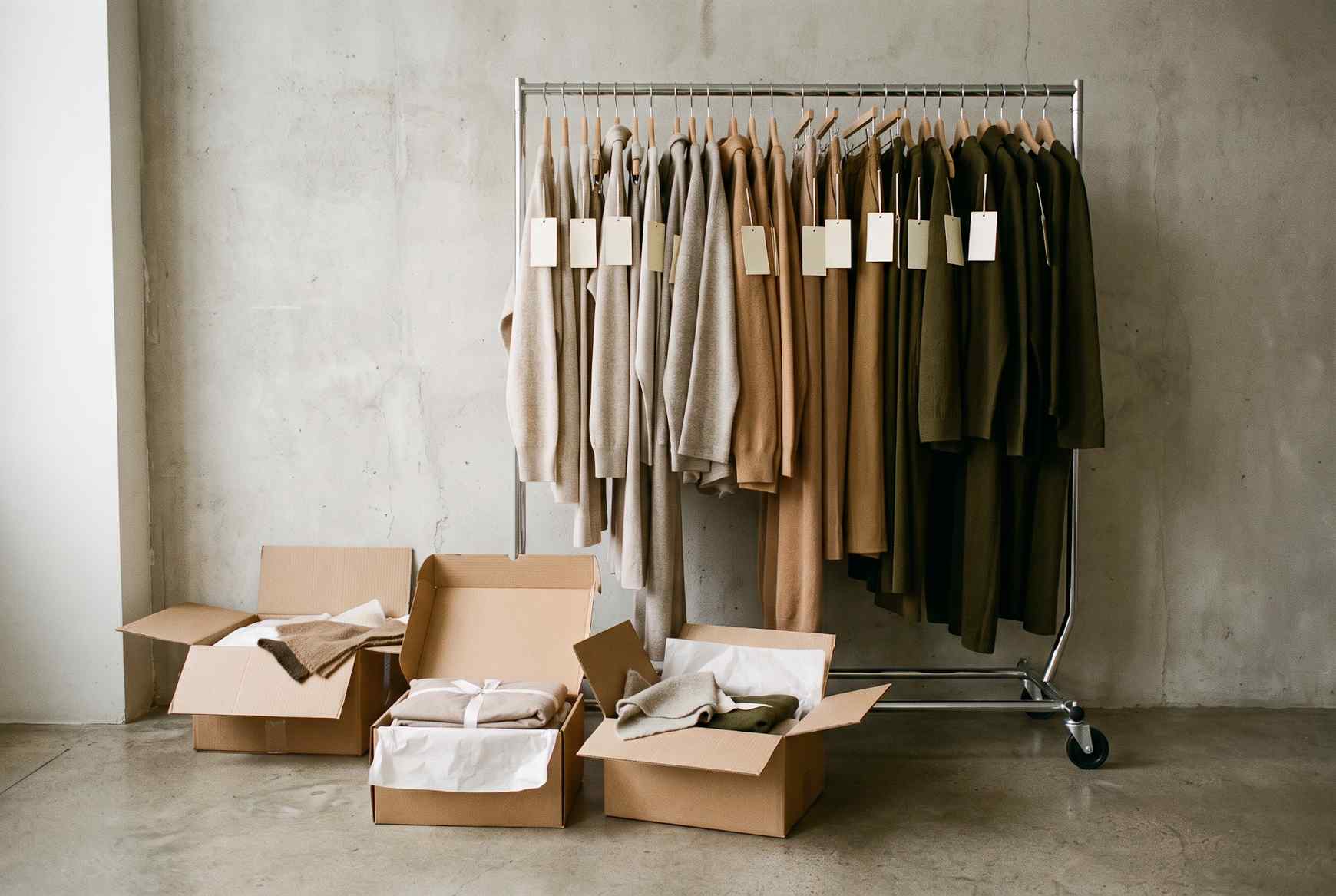 A rolling rack of garments with blank hang tags beside open sample boxes and tissue paper.
Add a contingency of 10% to 20% to any budget, and more if the shoot is complex or on location.
Usage rights and licensing
Licensing is the line most brands forget, and over time it can cost more than the shoot. When you hire a photographer or a model, you rarely buy the images outright. You license them for a set period, set channels and often a set territory.
- Period: one year, three years or in perpetuity.
- Channels: your own site, marketplaces, paid social, print, out-of-home.
- Territory: one country, a region or worldwide.
- Exclusivity: whether the model or photographer can work for competitors.
The sports apparel estimate above shows how large it gets: $19,800 for three years of web, e-commerce and paid social use, on top of a $2,500 day fee. If you extend a campaign to a new channel in year two, expect another license fee.
How to keep licensing under control
- Decide the channels and the period before you ask for quotes.
- Ask for usage to be quoted as a separate line.
- Buy the length you will actually use. A product image often lives for a full season or longer.
- Negotiate a buyout if you plan to reuse images widely.
- Check model contracts for AI reuse. Older releases may not cover it.
AI-generated images follow different rules. With a platform like ImagineArt Fashion Studio, what you generate is yours to use commercially across your store, ads and social, with no licensing fee tied to the model or the shoot. Read the details in our guide to commercial use, ownership and disclosure.
How to cut costs without cutting quality
You can lower the cost per image a lot with planning. These tactics work for real shoots, and none of them needs lower quality.
-
Write the shot list first
List every product, angle and styling variation. Studio time is expensive when you decide on the day.
-
Batch products
Shoot garments by color and type to cut lighting changes.
-
Prepare the garments
Steam, label and sort them before the shoot day. A prepared rack saves hours.
-
Use one model across many outfits
One model booked for the full day usually costs less than several half days.
-
Shoot tethered
Reviewing images live catches problems while you can still fix them.
-
Go hybrid
Use flat lay or mannequin images for the long tail and keep on-model shoots for hero styles and campaigns.
-
Negotiate usage to match your plans
Do not pay for territories and channels you will not use.
-
Book off-peak
Many photographers offer better rates outside busy seasons.
-
Bundle photography and retouching
Packages usually beat separate quotes. Always look for bundle deals when possible.
-
Standardize
The same lighting setup, backdrop and retouching template for every shoot makes each image cheaper.
AI fashion photography as an alternative, with real numbers
AI fashion photography changes the cost structure. You pay a small amount per generation plus review time, and you skip casting, studio, travel and reshoot fees. It is not free, and it does not suit every image. It does suit the long tail of product pages.
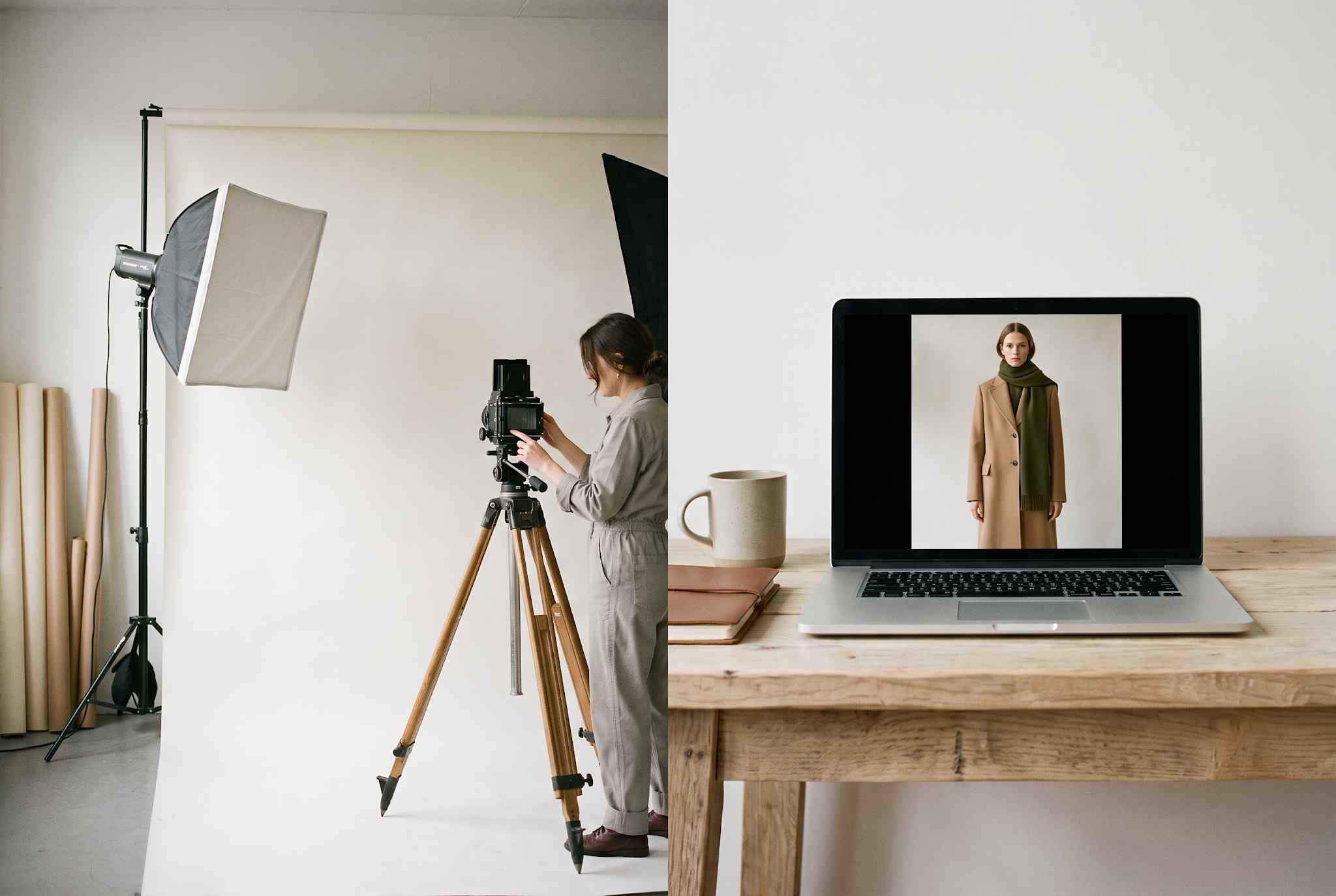 Split image: a real photo studio set on the left and a laptop showing a finished model photograph on the right.
What AI fashion photography costs per image
In our cost model, one generation in Fashion Studio costs roughly 20 cents to $1. At about two generations per kept image, the tool cost is $0.40 to $2 per approved image. Adding one to three minutes of review time at $40 an hour brings the total to about $1 to $4 per approved image. If you do not yet have garment photos, add $30 to $150 per style to shoot them.
Studio versus AI by catalog size
The table uses five images per style. Studio cost uses the all-in project cost per published image from the same model, $100 to $500. AI cost includes review time.
| Styles | Images | Studio, all-in | AI, with review |
|---|---|---|---|
| 50 | 250 | $25,000 to $125,000 | $267 to $1,000 |
| 100 | 500 | $50,000 to $250,000 | $533 to $2,000 |
| 250 | 1,250 | $125,000 to $625,000 | $1,333 to $5,000 |
| 500 | 2,500 | $250,000 to $1,250,000 | $2,667 to $10,000 |
These are modeled ranges for planning, and results vary by brand and baseline. Garment photography, if you need it, adds to the AI column. They are not promises. Run a pilot to get your own figure.
The hybrid plan
The most practical plan for many brands is a hybrid. In our 400-style example, shooting 100 hero images in a studio at about $250 each and generating 1,900 images with AI at about $2.53 each comes to roughly $29,800.
That compares with $200,000 to $1,000,000 to shoot every image in a studio. Hero images keep full copyright and real-world craft. The long tail gets worn images it could not otherwise afford.
Price your own catalog
Try ImagineArt Fashion Studio on your hardest garments, count approved images and see your own cost per image. Prefer a walkthrough? Book a demo.
When a real shoot still wins
AI does not replace every shoot, and a good guide should say so.
- Hero campaigns. A real photograph carries full copyright, and a real crew brings craft, direction and story.
- Fabric movement. If drape, flow or stretch is the whole sale, shoot it live.
- Brand relationships. Partnerships with real talent and creators depend on real people.
- Unusual or complex garments. Sheer, sequined or heavily layered pieces need a careful check, and some are better shot live.
- Markets that expect it. Some luxury audiences judge by craft cues AI cannot yet supply.
The strongest results come from combining both. Our guides to turning a flat lay into an on-model photo and keeping the same AI model across a collection show how.
A photoshoot budget template
Copy this into a spreadsheet and fill each line with your quotes. Total the lines, divide by the images you will publish, and compare quotes by cost per image.
| Quote line | Included? (Y/N) | Amount |
| Photographer (day rate or hourly) | $ | |
| Creative fee | $ | |
| Model(s) | $ | |
| Hair and makeup | $ | |
| Stylist and wardrobe | $ | |
| Studio or location | $ | |
| Equipment and grip | $ | |
| Assistants and crew | $ | |
| Retouching (images x per-image rate) | $ | |
| Usage licence (years, channels, territory) | $ | |
| Sample shipping and insurance | $ | |
| Props, meals, permits | $ | |
| Rush fees (if any) | $ | |
| Contingency (10% to 20%) | $ | |
| TOTAL | $ | |
| Cost per published image | $ |
Note: usage licence terms and rush fees change from studio to studio, so get both in writing on the quote itself rather than in an email thread.
Questions to ask before you book a fashion shoot
- What is included in the day rate: studio, equipment, assistants, basic retouching?
- How many finished images should we expect from the day?
- Is usage included? For which channels, how long and where?
- What does extra usage cost, and who owns the files?
- What is the retouching standard, and what does each extra round cost?
- How do you handle reshoots if a sample or a color is wrong?
- What is the turnaround from shoot to final files, and what do rush fees cost?
- Who casts and pays the model, and what usage does the model release cover?
- Does the model release cover AI-altered or AI-generated reuse?
- What happens if we cancel or reschedule?
Photoshoot costs by market and by brand stage
Prices in this guide are US dollars and reflect typical US markets. Your own quotes will vary with where you shoot, who you hire and how much you need.
Prices change with the city
- Big fashion cities charge more. Premium studios in New York or Los Angeles can exceed $1,500 a day, and top photographers and agency models cost more there too.
- Smaller markets and emerging photographers often charge less. Building a relationship with a photographer who is growing a portfolio can lower rates.
- Travel changes the math. If samples or crew have to move, shipping, travel and accommodation become real lines. Shooting where your samples already are avoids them.
- Remote production is possible. Some teams ship garments to a specialist studio, which trades travel cost for shipping and turnaround time.
What to budget at each stage of a brand
- Startup: a few styles, tight cash. A DIY setup at $200 to $800, or product-only shots at $15 to $75 each, covers basic listings. Put the first real money into one strong hero image.
- Growth brand: a few collections a year. A professional one-day shoot at $2,000 to $8,000 for hero styles, plus product-only or AI imagery for the rest, keeps images consistent without large retainers.
- Established brand: four or more collections a year. A standing relationship with a photographer or studio, a clear usage policy and a hybrid plan keep cost per image falling as volume grows.
- Enterprise: thousands of SKUs. Cost per image and delivery speed dominate, so bulk workflows, governance and delivery commitments matter as much as creative quality.
Many brands front-load photography budgets in the first and third quarters to capture spring and fall collections ahead of peak selling seasons. Spreading spend across the year avoids cash flow crunches.
How long a photoshoot takes, and how to schedule it
Time is a cost too. A rushed shoot costs more and delivers less, so plan the calendar before you plan the budget.
- Pre-production, two to four weeks: choose the photographer, cast the model, book the studio, finalize the shot list and confirm samples.
- Samples, one to two weeks before: receive, steam, label and check every garment. Missing samples are the most common cause of reshoots.
- Shoot day, one to two days: shoot in a planned order to minimize lighting changes, and review images live.
- Editing and retouching, one to two weeks: faster is possible, and rush fees of 25% to 50% on editing are common.
- Delivery and upload: name files by SKU and load them into your store and asset library in one pass.
Compare that with an AI workflow, where the sample-to-image gap can shrink from weeks to days, and where a reshoot means regenerating an image instead of rebooking people. Our guide to turning a flat lay into an on-model photo shows the steps.
How to judge a quote, and the red flags to watch for
Two quotes for the same job can differ by thousands of dollars. These checks help you compare them fairly.
- Ask for an itemized quote. A single number hides what is missing.
- Check what a day rate includes. Studio, equipment, assistants, retouching and usage are the usual gaps.
- Compare cost per published image, not the day rate.
- Be wary of a very low quote with a long list of extras. A photographer quoting $40 an image can end up near double once everything is counted.
- Watch the usage clause. Unlimited or perpetual use should be priced as such, and short licenses should be cheaper.
- Ask for examples of the same type of work, such as clothing on models, not only a general portfolio.
- Confirm turnaround and revision rounds in writing.
- Check the model release for AI reuse if you plan to use any AI tools on the images later.
Measuring the return on your photography spend
Photography is an investment, and you can measure whether it pays. Track a few numbers before and after a new set of images goes live.
- Conversion rate on the product pages that changed.
- Time on page and interaction with the image gallery, such as zoom and swipes.
- Returns and support questions that mention the product looking different from the photos.
- Social and email engagement on posts and campaigns that use the new images.
- Cost per published image, and how it falls as you reuse the same assets across channels.
Good images keep working for months.
A product image stays relevant for the life of the item, and a lifestyle image can be reused across social, email and web. That is why a larger up-front spend on the right hero images can still pay back, and why a lower spend on the long tail often does too.
FAQs
A professional one-day clothing shoot typically costs $2,000 to $8,000. A shoot with models and a full crew costs $2,000 to $15,000 a day, and a premium campaign costs $25,000 to $100,000 or more.
Hourly rates run from about $50 to $500, and day rates from about $1,000 to $5,000 for most clothing work. Campaign photographers add creative and usage fees.
Model fees usually run from $100 to $2,000 or more per model, depending on experience, hours and usage. Agency models and paid-ad usage cost more.
Product-only images such as flat lays and mannequin shots cost about $15 to $75 each when outsourced. On-model product photography costs about $150 to $400 per image.
A lookbook usually needs models, a stylist and hair and makeup, so expect the model-shoot range of $2,000 to $15,000 a day. Our guide, What Is a Lookbook?, explains what to plan.
Outsourced ghost mannequin work, including the shoot and editing, commonly runs about $50 to $150 per product, with the per-image edit alone often under a dollar for simple jobs.
Basic retouching is about $5 to $20 an image. Heavy retouching is $50 to $150 an image. A 2026 campaign estimate used $100 an image.
Professional teams often deliver 50 to 100 or more product images in a full day. Editorial and campaign days deliver far fewer finished images.
Usage rights and reshoots. A multi-year license can cost thousands of dollars, and rush fees can add 25% to 50% to editing costs.
Per approved image, in our cost model, yes by a wide margin: about $1 to $4 with review time, against $100 to $500 for studio imagery. The right choice depends on the image. See our guide, AI vs Studio Photography: What a Product Page Image Really Costs.
Write a shot list, batch products, prepare garments, use one model across outfits, negotiate usage and go hybrid with AI for the long tail.
For many product pages, yes, with a review process. Keep a real shoot for hero images and fabric movement.
Sometimes. A fully AI-generated person in an ad needs a label in New York and likely in the EU, and Amazon asks sellers to tag them. See our guide, Can You Use AI-Generated Fashion Images Commercially? Rights, Ownership and Disclosure.
Kamran Arshad
Kamran Arshad is a full-stack marketer and growth strategist for Gen AI and B2B SaaS companies.
View all articlesRecent posts
The Best AI Avatar Generators In 2027: 11 Tools Compared And Ranked
50 Types of Art Styles: Definitions, Examples and AI Prompts
How to Edit Images With Ideogram 4.6: 38 Edits, Prompts and Results