
Kamran Arshad
November 25, 2026 • Updated November 25, 2026
34 mins Read
Art styles are the visual languages artists use to tell you what they see, and what they feel about it. Learn to recognize them and you can read a painting's era at a glance, describe what you like, and find the look for your own work.
This guide covers 50 types of art styles, from Byzantine mosaics to vaporwave. Each one comes with a short definition, its era, key traits, famous artists, and an original example image we made with AI, plus the exact prompt so you can recreate it in an AI image generator.
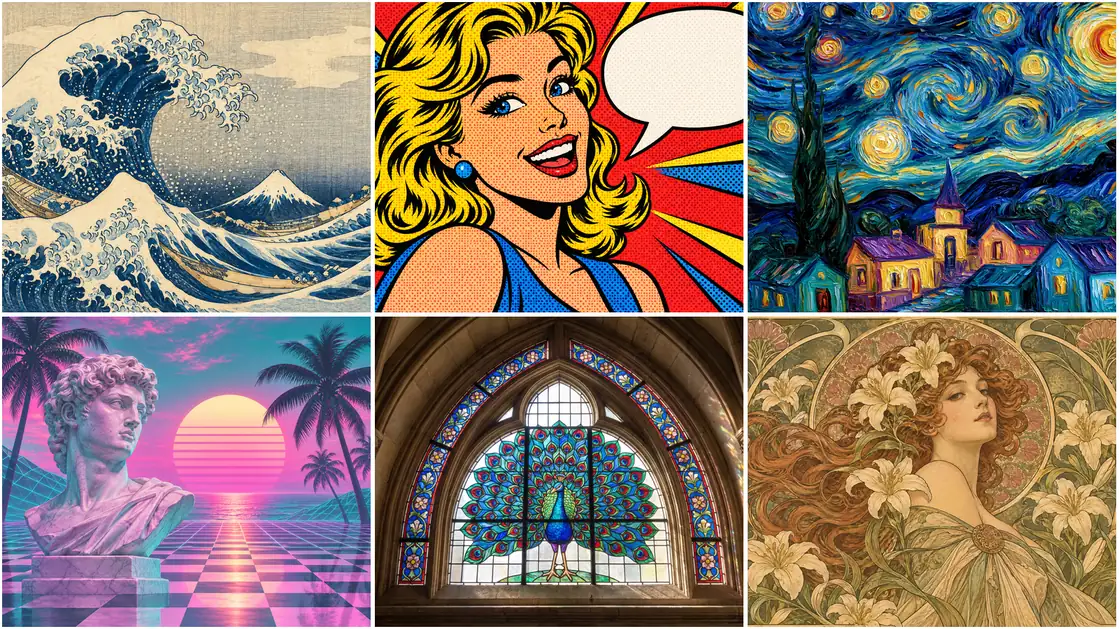
Six art styles side by side: ukiyo-e, Pop Art, Post-Impressionism, vaporwave, stained glass and Art Nouveau
What Is an Art Style?
An art style is a recognizable way of making art, a shared set of choices about color, line, form, subject and technique. A style can belong to one artist, a group, an era or a medium.
People use three overlapping ways to group art styles:
- Movements and periods: styles tied to a time and a group of artists, such as Impressionism or Cubism.
- Mediums and techniques: styles defined by materials, such as watercolor, charcoal or woodcut.
- Contemporary and digital styles: looks born from animation, games and the internet, such as anime, pixel art and vaporwave.
How many art styles are there? There is no fixed number. New styles keep appearing and historians draw the lines differently. The 50 below cover the styles people search for, study and recreate most.
All 50 Art Styles at a Glance
| # | Art style | Era | Defining trait |
|---|---|---|---|
| 1 | Byzantine Art | c. 330 to 1453 | Gold mosaics, flat sacred figures |
| 2 | Gothic Art | c. 1150 to 1400 | Illuminated pages, gold leaf, vines |
| 3 | Chinese Ink Wash Painting | Tang dynasty (618 to 907) onward | Black ink, mist, empty space |
| 4 | Renaissance | c. 1400 to 1600 | Perspective, balance, lifelike figures |
| 5 | Baroque | c. 1600 to 1750 | Drama, deep shadow, one light |
| 6 | Rococo | c. 1730 to 1780 | Pastels, frills, playful elegance |
| 7 | Ukiyo-e | 17th to 19th century | Flat color, bold outline, woodblock |
| 8 | Neoclassicism | c. 1760 to 1830 | Calm, crisp, classical order |
| 9 | Romanticism | c. 1790 to 1850 | Emotion, nature, the sublime |
| 10 | Realism | c. 1840 to 1880 | Everyday life, painted honestly |
| 11 | Impressionism | 1860s to 1880s | Light, color, quick brushstrokes |
| 12 | Pointillism | 1880s | Tiny dots of pure color |
| 13 | Post-Impressionism | c. 1886 to 1905 | Expressive color, bold structure |
| 14 | Art Nouveau | c. 1890 to 1910 | Flowing curves, flowers, ornament |
| 15 | Expressionism | c. 1905 to 1925 | Distorted forms, raw emotion |
| 16 | Fauvism | c. 1905 to 1910 | Wild, pure, unnatural color |
| 17 | Cubism | c. 1907 to 1920s | Many viewpoints in one image |
| 18 | Futurism | 1909 to 1940s | Speed, machines, motion lines |
| 19 | Dada | c. 1915 to 1924 | Absurd collage, anti-art |
| 20 | Constructivism | c. 1913 to 1930s | Bold diagonals, red and black |
| 21 | Art Deco | 1920s to 1930s | Geometric glamour, gold, sunbursts |
| 22 | Bauhaus | 1919 to 1933 | Primary colors, pure geometry |
| 23 | Surrealism | 1920s to 1950s | Dream logic, painted precisely |
| 24 | Abstract Expressionism | 1940s to 1950s | Gesture, drips, scale |
| 25 | Pop Art | mid-1950s to 1970s | Comics, ads, Ben-Day dots |
| 26 | Op Art | 1960s | Optical illusions of movement |
| 27 | Minimalism | 1960s onward | Less is more |
| 28 | Photorealism | late 1960s onward | Paintings that look like photos |
| 29 | Street Art and Graffiti | 1970s onward | Spray paint, murals, stencils |
| 30 | Anime | 1960s onward | Big eyes, cel shading, painted skies |
| 31 | Manga | 1950s onward | Black ink, screentones, speed lines |
| 32 | Pixel Art | 1970s onward | Visible square pixels, retro games |
| 33 | Low Poly | 1990s onward | Faceted triangles |
| 34 | Isometric Art | 1980s onward | 3D views with no vanishing point |
| 35 | Vaporwave | early 2010s onward | Pastel neon, marble busts, retro grids |
| 36 | Cyberpunk | 1980s onward | Neon megacities in the rain |
| 37 | Steampunk | 1980s onward | Brass, gears and Victorian tech |
| 38 | Fantasy Concept Art | 1970s onward | Epic worlds for films and games |
| 39 | Claymation | 1900s onward | Handmade clay worlds |
| 40 | Glitch Art | 2000s onward | Beautiful digital errors |
| 41 | Watercolor | ancient to today | Soft blooms, white paper glow |
| 42 | Impasto Oil Painting | 17th century to today | Thick, sculptural paint |
| 43 | Gouache and Storybook Illustration | 18th century to today | Matte, opaque, cozy |
| 44 | Charcoal Drawing | prehistoric to today | Smudged, dramatic black |
| 45 | Ink Line Art | ancient to today | Clean lines, no shading |
| 46 | Flat Vector Illustration | 2010s onward | Bold flat shapes, no outlines |
| 47 | Collage | early 1900s to today | Cut paper, layered and torn |
| 48 | Stained Glass | medieval to today | Glowing color held by lead lines |
| 49 | Woodcut and Linocut | 15th century to today | Carved lines, stark contrast |
| 50 | Risograph Print | 1980s onward | Grainy two-color zine prints |
Classical and Historical Art Styles
These are the movements art history classes cover first. Each grew out of its time, and most can be dated and traced to specific artists.
1. Byzantine Art
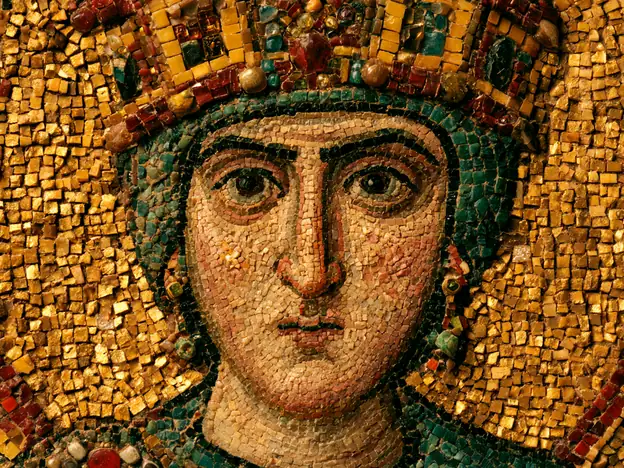 Byzantine Art art style example: Byzantine mosaic of a serene crowned figure against a shimmering gold tesserae background, flat frontal pose,
Byzantine art grew out of the Eastern Roman Empire and is best known for glowing church mosaics. Figures are flat, frontal and still, set against shimmering gold that makes them feel otherworldly.
- Era: c. 330 to 1453
- Key traits: gold backgrounds, flat frontal figures with large eyes, jewel colors, small glass tiles
- Famous artists and examples: the mosaics of Ravenna, Hagia Sophia in Istanbul
Try it with AI (Midjourney V7):
Byzantine mosaic of a serene crowned figure against a shimmering gold tesserae background, flat frontal pose, large eyes, rich jewel colors.
2. Gothic Art
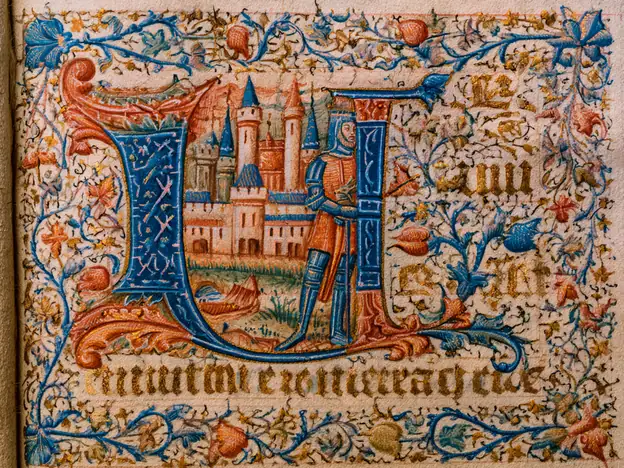 Gothic Art art style example: Medieval Gothic illuminated manuscript page with a knight and a castle inside an ornate initial letter, gold l
Gothic art covers the cathedrals, stained glass and illuminated manuscripts of the late Middle Ages. In painting it means hand-decorated pages with gold leaf, elongated figures and dense ornamental borders.
- Era: c. 1150 to 1400
- Key traits: gold leaf, deep blue and vermilion, decorated initial letters, vine borders, flat elongated figures
- Famous artists and examples: the Très Riches Heures du Duc de Berry, the Luttrell Psalter
Try it with AI (Midjourney V7):
Medieval Gothic illuminated manuscript page with a knight and a castle inside an ornate initial letter, gold leaf, lapis blue and vermilion, vine borders on aged vellum.
3. Chinese Ink Wash Painting
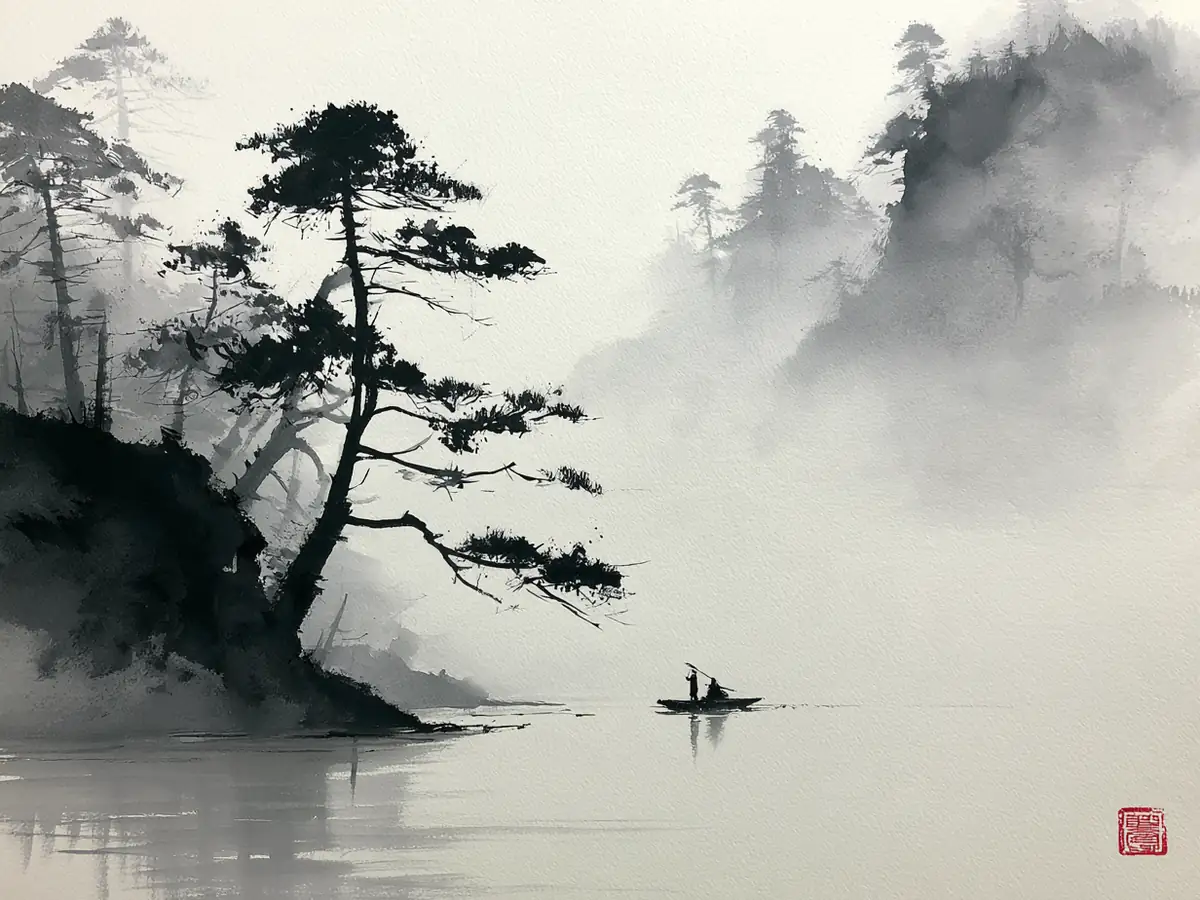 Chinese Ink Wash Painting art style example: Traditional Chinese ink wash painting of misty mountains, pine trees and a tiny fishing boat, expressive black
Ink wash painting, known as shuimo in Chinese and sumi-e in Japan, uses black ink in many dilutions on rice paper. Landscape painters, known as shan shui painters, prize what is left out as much as what is painted.
- Era: Tang dynasty (618 to 907) onward
- Key traits: black ink in soft gradients, expressive brushstrokes, misty mountains, generous empty space, red seal stamps
- Famous artists and examples: Fan Kuan, Ma Yuan, Sesshū Tōyō in Japan
Try it with AI (Midjourney V7):
Traditional Chinese ink wash painting of misty mountains, pine trees and a tiny fishing boat, expressive black ink, generous empty space, rice paper texture, red seal stamp.
4. Renaissance
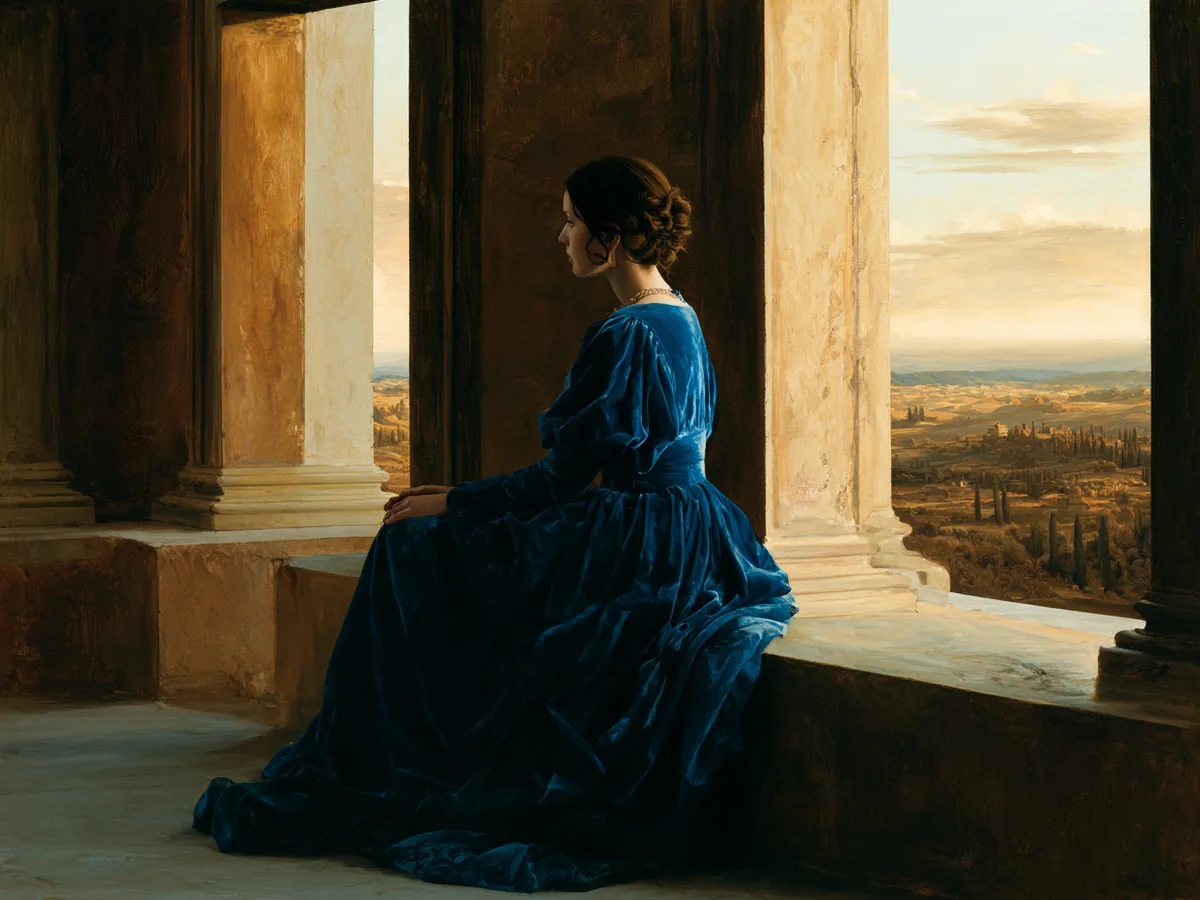 Renaissance art style example: High Renaissance oil painting of a young woman in a blue gown by an open loggia, pyramid composition, soft sfu
The Renaissance revived classical ideals in Italy and spread across Europe. Painters used linear perspective, anatomy and soft modeling to make figures and space look real and harmonious.
- Era: c. 1400 to 1600
- Key traits: linear perspective, pyramid compositions, sfumato (soft blending), realistic anatomy, calm balance
- Famous artists and examples: Leonardo da Vinci, Raphael, Michelangelo, Titian
Try it with AI (Midjourney V7):
High Renaissance oil painting of a young woman in a blue gown by an open loggia, pyramid composition, soft sfumato, linear perspective to a distant landscape.
5. Baroque
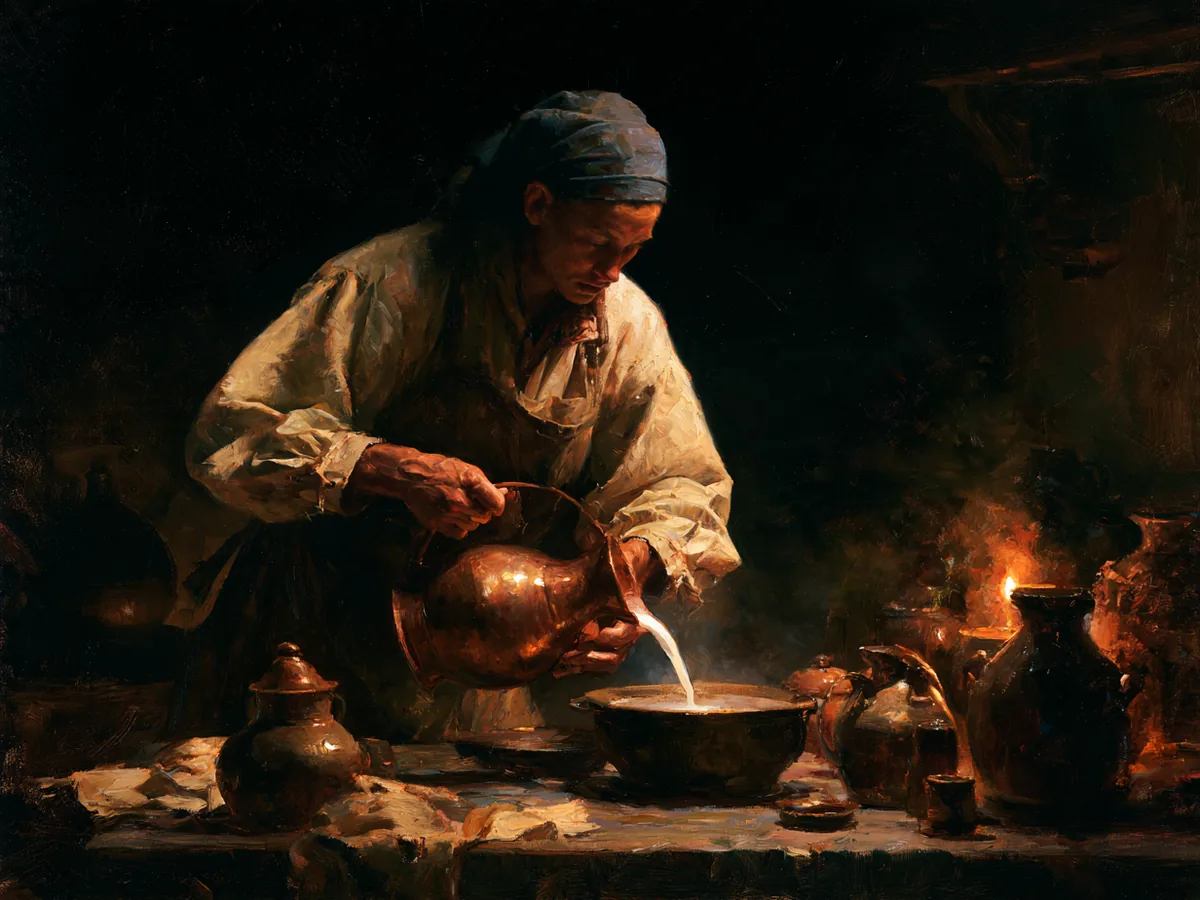 Baroque art style example: Baroque oil painting of a candlelit kitchen, a cook pouring milk from a copper jug, dramatic chiaroscuro with
Baroque art is theatrical. It uses strong contrast between light and dark, known as chiaroscuro, along with movement and emotion to pull the viewer into the moment.
- Era: c. 1600 to 1750
- Key traits: dramatic chiaroscuro, a single strong light source, rich textures, motion and emotion
- Famous artists and examples: Caravaggio, Rembrandt, Johannes Vermeer, Peter Paul Rubens
Try it with AI (Midjourney V7):
Baroque oil painting of a candlelit kitchen, a cook pouring milk from a copper jug, dramatic chiaroscuro with deep black shadows and one warm light source.
6. Rococo
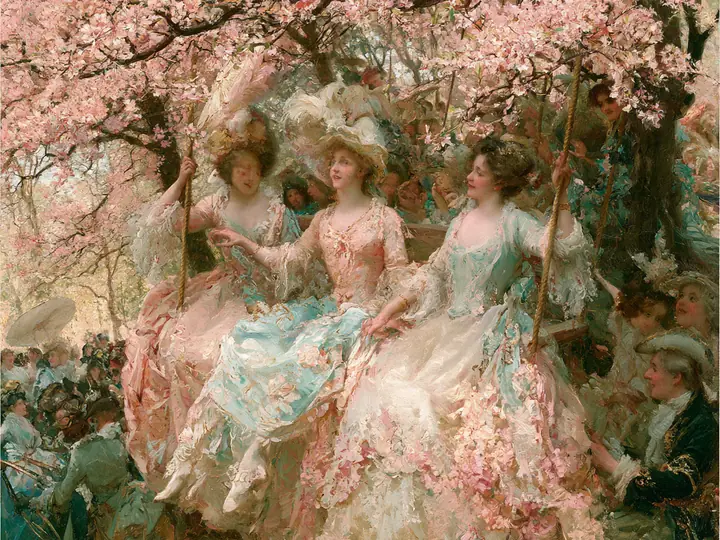 Rococo art style example: Rococo painting of an elegant garden party on a swing under blossoming trees, pastel pinks and powder blues, f
Rococo lightened the Baroque into something playful and decorative. It favored pastel colors, curving ornament and aristocratic leisure scenes in gardens and salons.
- Era: c. 1730 to 1780
- Key traits: pastel pinks and blues, curving ornament, lace and silk, feathery brushwork, romantic garden scenes
- Famous artists and examples: Jean-Honoré Fragonard, Antoine Watteau, François Boucher
Try it with AI (Midjourney V7):
Rococo painting of an elegant garden party on a swing under blossoming trees, pastel pinks and powder blues, frothy lace, feathery brushwork.
7. Ukiyo-e
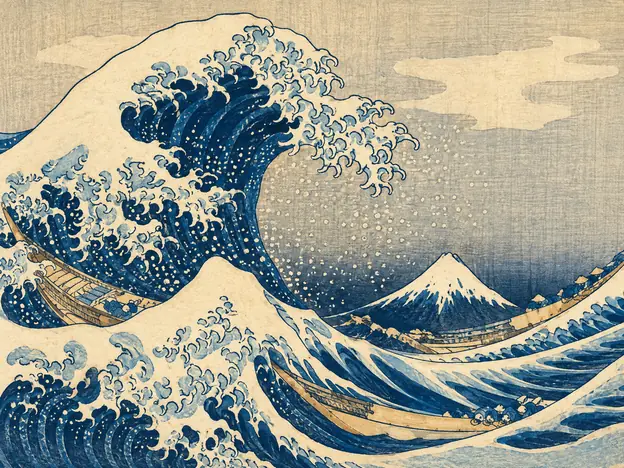 Ukiyo-e art style example: Japanese ukiyo-e woodblock print of a great wave curling over small boats with a snowy mountain behind, flat P
Ukiyo-e, meaning "pictures of the floating world", is the Japanese woodblock print tradition of the Edo period. Its flat color, strong outlines and bold compositions later shaped Impressionism and Art Nouveau.
- Era: 17th to 19th century
- Key traits: flat areas of color, bold outlines, Prussian blue, dramatic framing, visible woodgrain
- Famous artists and examples: Katsushika Hokusai, Utagawa Hiroshige, Kitagawa Utamaro
Try it with AI (GPT Image 2.6):
Japanese ukiyo-e woodblock print of a great wave curling over small boats with a snowy mountain behind, flat Prussian blue and cream, bold outlines, woodgrain texture.
8. Neoclassicism
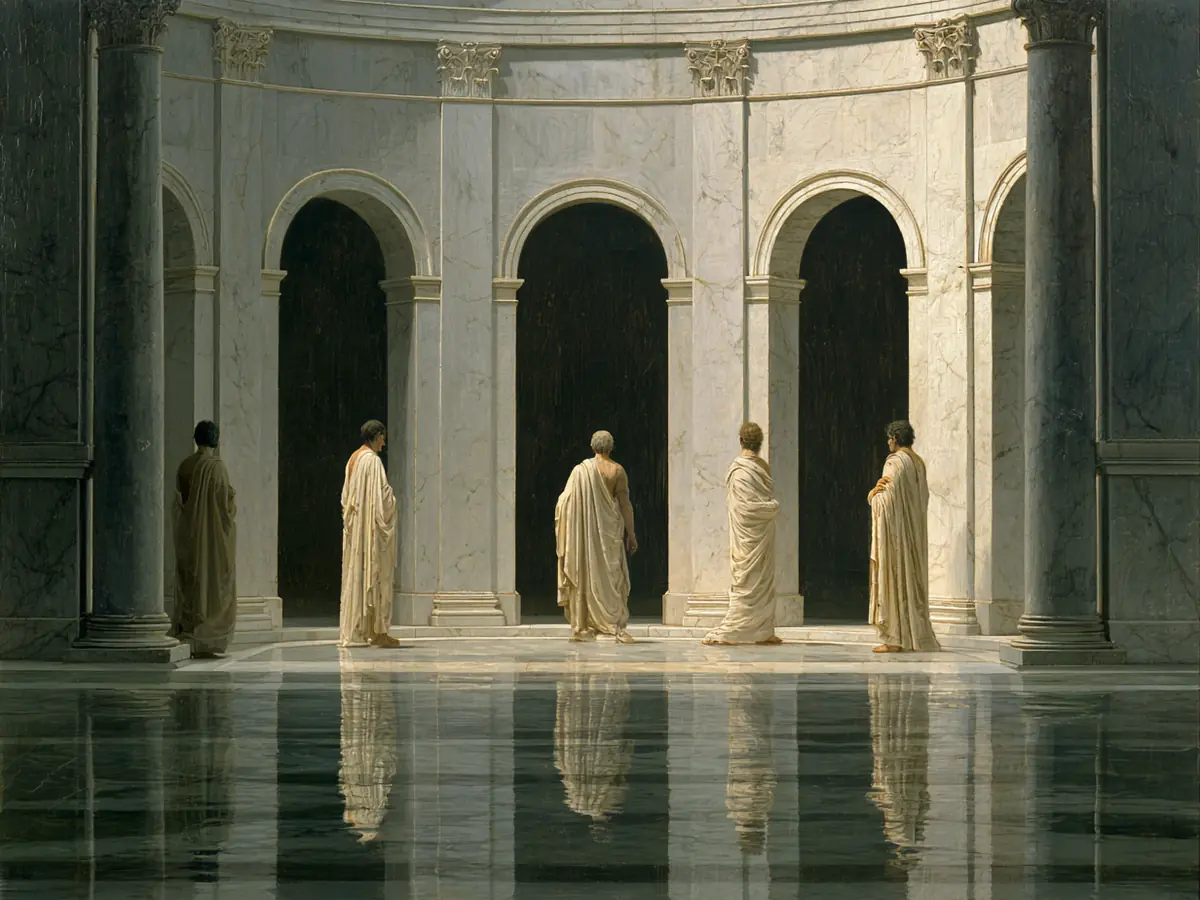 Neoclassicism art style example: Neoclassical oil painting of a calm marble temple courtyard with figures in draped classical robes, crisp outl
Neoclassicism reacted against Rococo frivolity by returning to Greek and Roman order. Paintings are crisp, symmetrical and serious, with smooth surfaces and heroic subjects.
- Era: c. 1760 to 1830
- Key traits: crisp outlines, smooth invisible brushwork, symmetry, classical architecture and robes, restrained color
- Famous artists and examples: Jacques-Louis David, Jean-Auguste-Dominique Ingres, Angelica Kauffman
Try it with AI (Midjourney V7):
Neoclassical oil painting of a calm marble temple courtyard with figures in draped classical robes, crisp outlines, symmetrical composition, cool restrained palette.
9. Romanticism
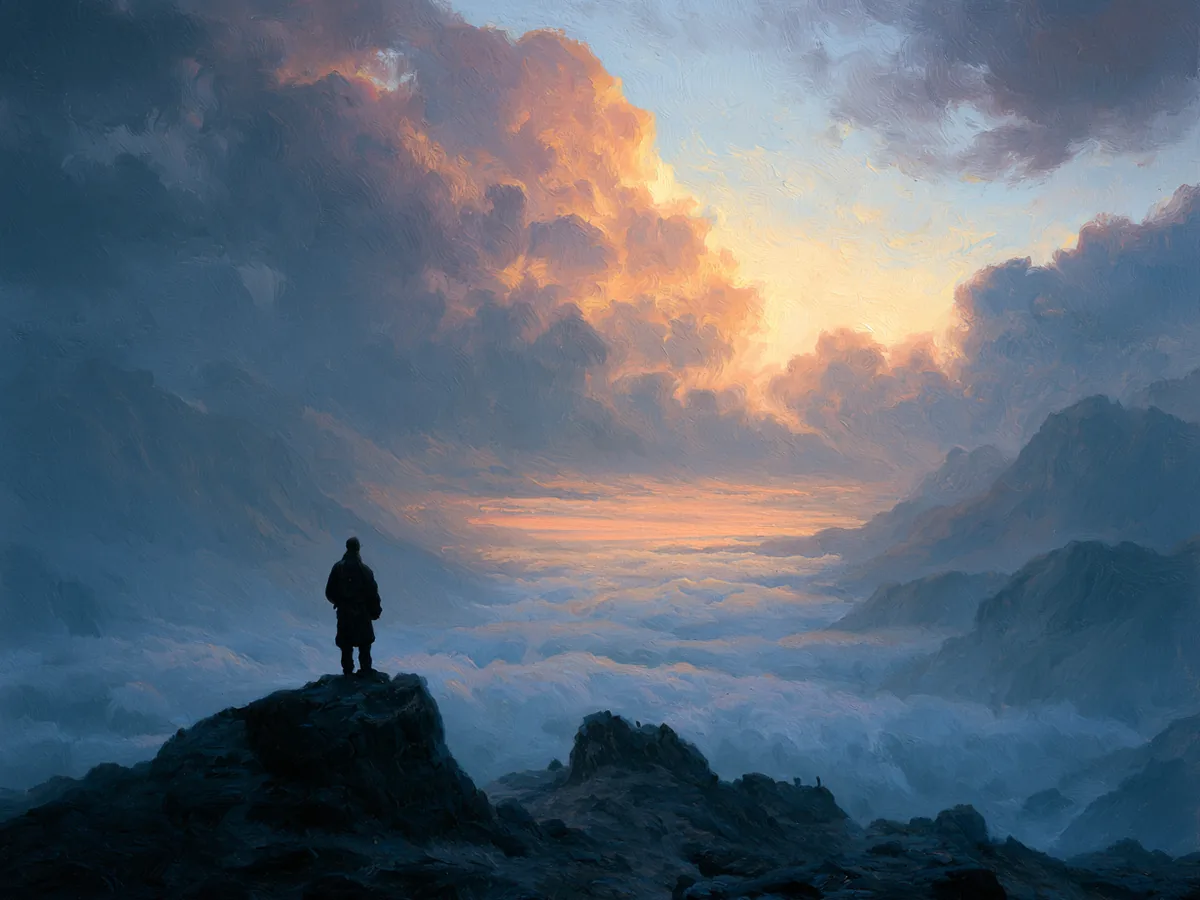 Romanticism art style example: Romanticism oil painting of a lone traveler on a rocky peak above a sea of fog at dawn, sublime mountains, emo
Romanticism put feeling over reason. Its painters chose vast, wild nature, storms and lone figures to capture awe, longing and the sublime.
- Era: c. 1790 to 1850
- Key traits: dramatic skies, vast landscapes, small lone figures, emotional light, a sense of awe
- Famous artists and examples: Caspar David Friedrich, J.M.W. Turner, Eugène Delacroix
Try it with AI (Midjourney V7):
Romanticism oil painting of a lone traveler on a rocky peak above a sea of fog at dawn, sublime mountains, emotional dramatic sky.
10. Realism
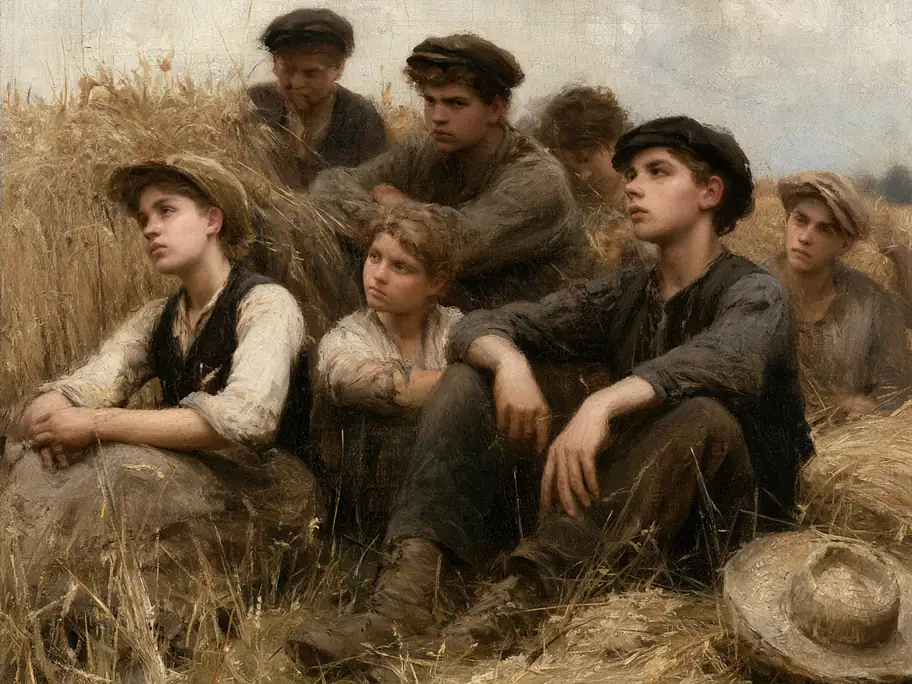 Realism art style example: Realism oil painting of tired wheat harvesters resting in a field at noon, earthy browns and ochres, natural l
Realism turned away from myths and heroes to paint ordinary people as they were. Workers, peasants and everyday scenes became serious subjects for art.
- Era: c. 1840 to 1880
- Key traits: everyday working life, earthy palette, natural light, unidealized faces
- Famous artists and examples: Gustave Courbet, Jean-François Millet, Honoré Daumier
Try it with AI (Midjourney V7):
Realism oil painting of tired wheat harvesters resting in a field at noon, earthy browns and ochres, natural light, unidealized faces.
11. Impressionism
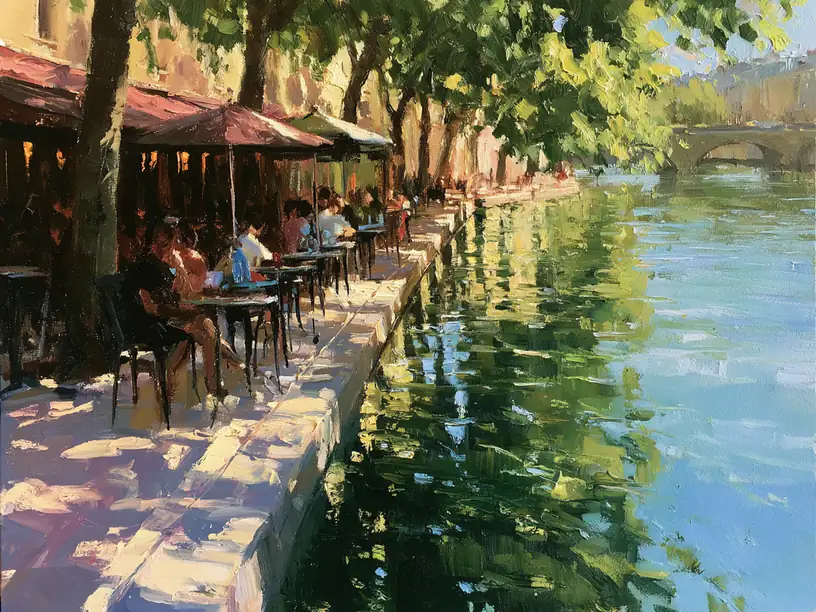 Impressionism art style example: Impressionist oil painting of a sunlit riverside cafe terrace, dappled light, short broken brushstrokes, shimm
Impressionists painted outdoors to catch fleeting light and color. Short, visible brushstrokes and bright, unblended color give their scenes a shimmering, in-the-moment feel.
- Era: 1860s to 1880s
- Key traits: visible broken brushstrokes, outdoor light, bright unblended color, everyday modern life
- Famous artists and examples: Claude Monet, Pierre-Auguste Renoir, Berthe Morisot, Edgar Degas
Try it with AI (Midjourney V7):
Impressionist oil painting of a sunlit riverside cafe terrace, dappled light, short broken brushstrokes, shimmering reflections, painted en plein air.
12. Pointillism
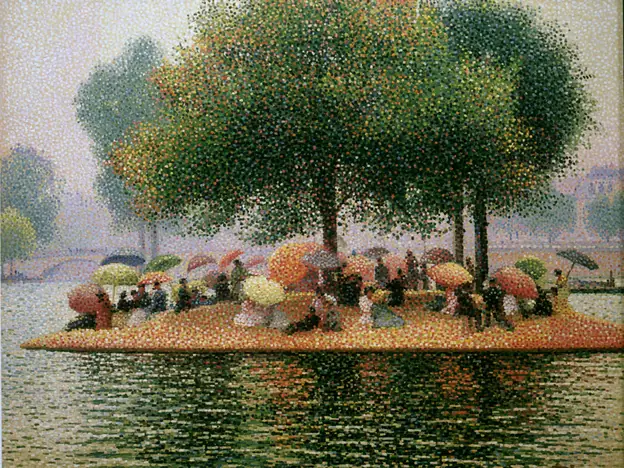 Pointillism art style example: Pointillism painting of a Sunday afternoon on a park island by a river, people with parasols, made of tiny dot
Pointillism builds an image from small dots of pure color that blend in the viewer's eye. It is a scientific offshoot of Impressionism, also called Neo-Impressionism.
- Era: 1880s
- Key traits: tiny separate dots, pure unmixed color, optical blending, calm ordered scenes
- Famous artists and examples: Georges Seurat, Paul Signac
Try it with AI (Midjourney V7):
Pointillism painting of a Sunday afternoon on a park island by a river, people with parasols, made of tiny dots of pure color.
13. Post-Impressionism
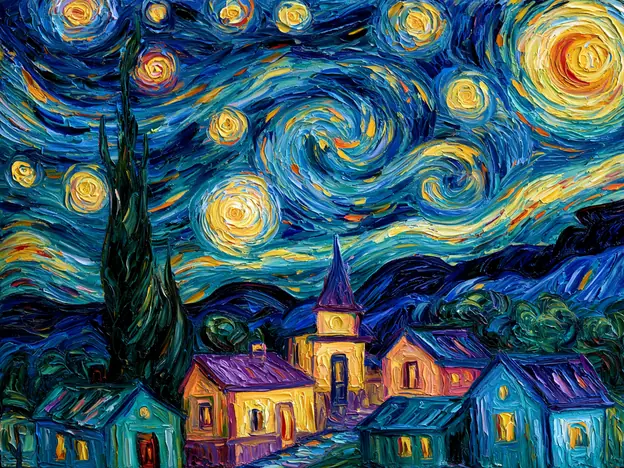 Post-Impressionism art style example: Post-Impressionist oil painting of a starry night over a small village, swirling expressive brushstrokes, thic
Post-Impressionists kept Impressionism's color but added emotion, structure and symbolism. Each artist pushed in a personal direction, from swirling brushwork to solid geometric form.
- Era: c. 1886 to 1905
- Key traits: thick expressive brushwork, bold outlines, symbolic color, emotional or structured forms
- Famous artists and examples: Vincent van Gogh, Paul Cézanne, Paul Gauguin, Henri de Toulouse-Lautrec
Try it with AI (Midjourney V7):
Post-Impressionist oil painting of a starry night over a small village, swirling expressive brushstrokes, thick impasto, vivid cobalt blues and yellows.
14. Art Nouveau
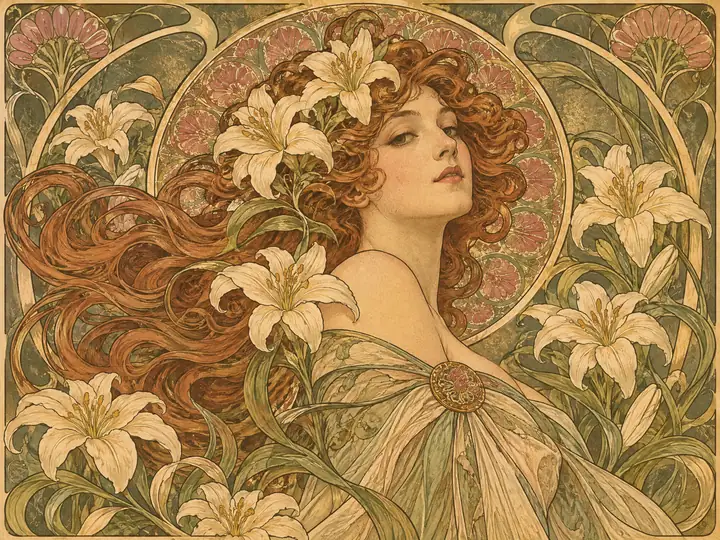 Art Nouveau art style example: Art Nouveau decorative poster of a woman with flowing hair framed by lilies and whiplash curves, ornate circul
Art Nouveau brought nature's curves into posters, buildings, jewelry and furniture. Its signature is the whiplash line: long, flowing curves framing women, flowers and vines.
- Era: c. 1890 to 1910
- Key traits: whiplash curves, floral motifs, decorative halos, muted gold and sage, flat elegant linework
- Famous artists and examples: Alphonse Mucha, Gustav Klimt, Aubrey Beardsley
Try it with AI (GPT Image 2.6):
Art Nouveau decorative poster of a woman with flowing hair framed by lilies and whiplash curves, ornate circular halo, muted gold, sage and rose.
Modern Art Movements
From about 1905, artists broke with realistic representation. These modern movements came fast, often reacting against each other.
15. Expressionism
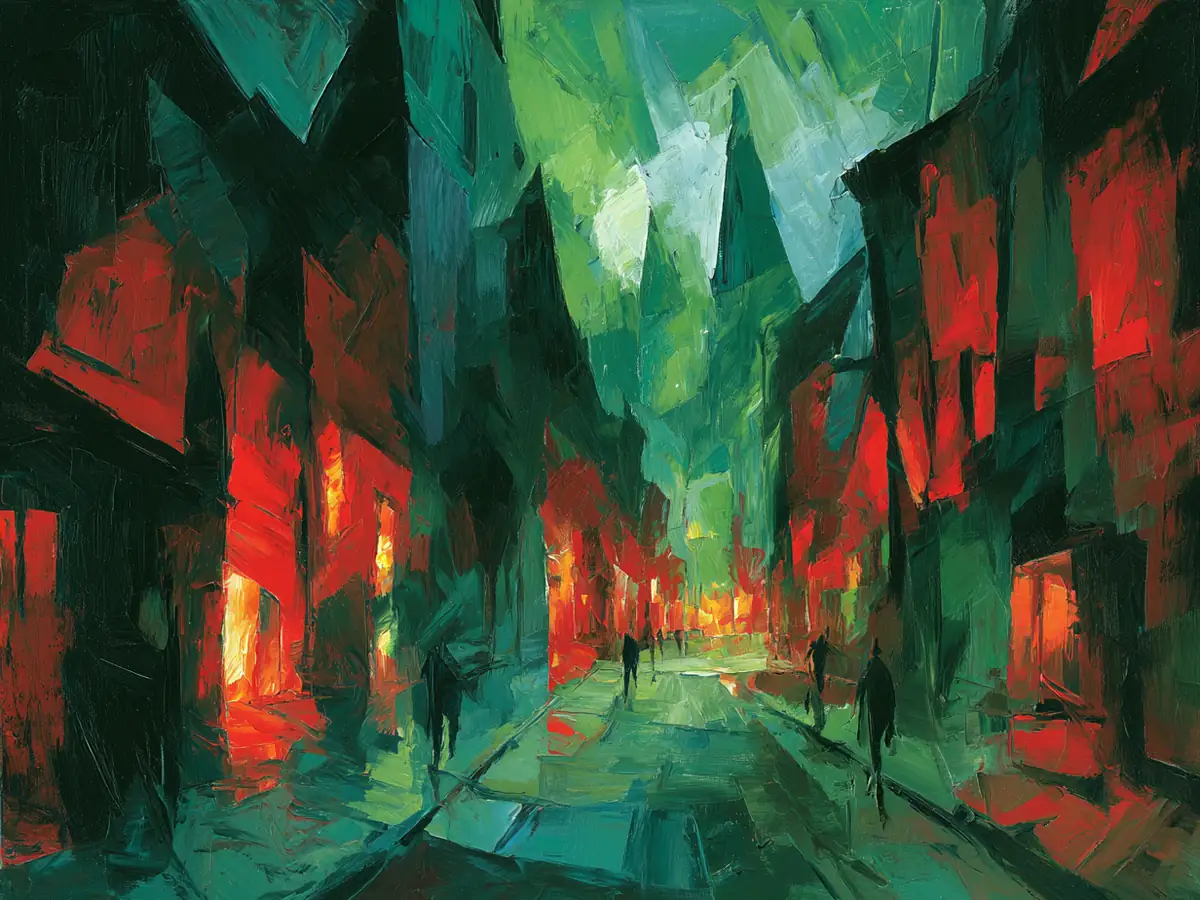 Expressionism art style example: Expressionist painting of a city street at night with distorted buildings and anxious figures, acid greens and
Expressionism distorts form and color to show inner feeling rather than outward reality. Cities, faces and landscapes bend to express anxiety, alienation or spirituality.
- Era: c. 1905 to 1925
- Key traits: distorted forms, harsh unnatural color, jagged strokes, intense mood
- Famous artists and examples: Edvard Munch, Ernst Ludwig Kirchner, Egon Schiele
Try it with AI (Midjourney V7):
Expressionist painting of a city street at night with distorted buildings and anxious figures, acid greens and blood reds, jagged angular strokes.
16. Fauvism
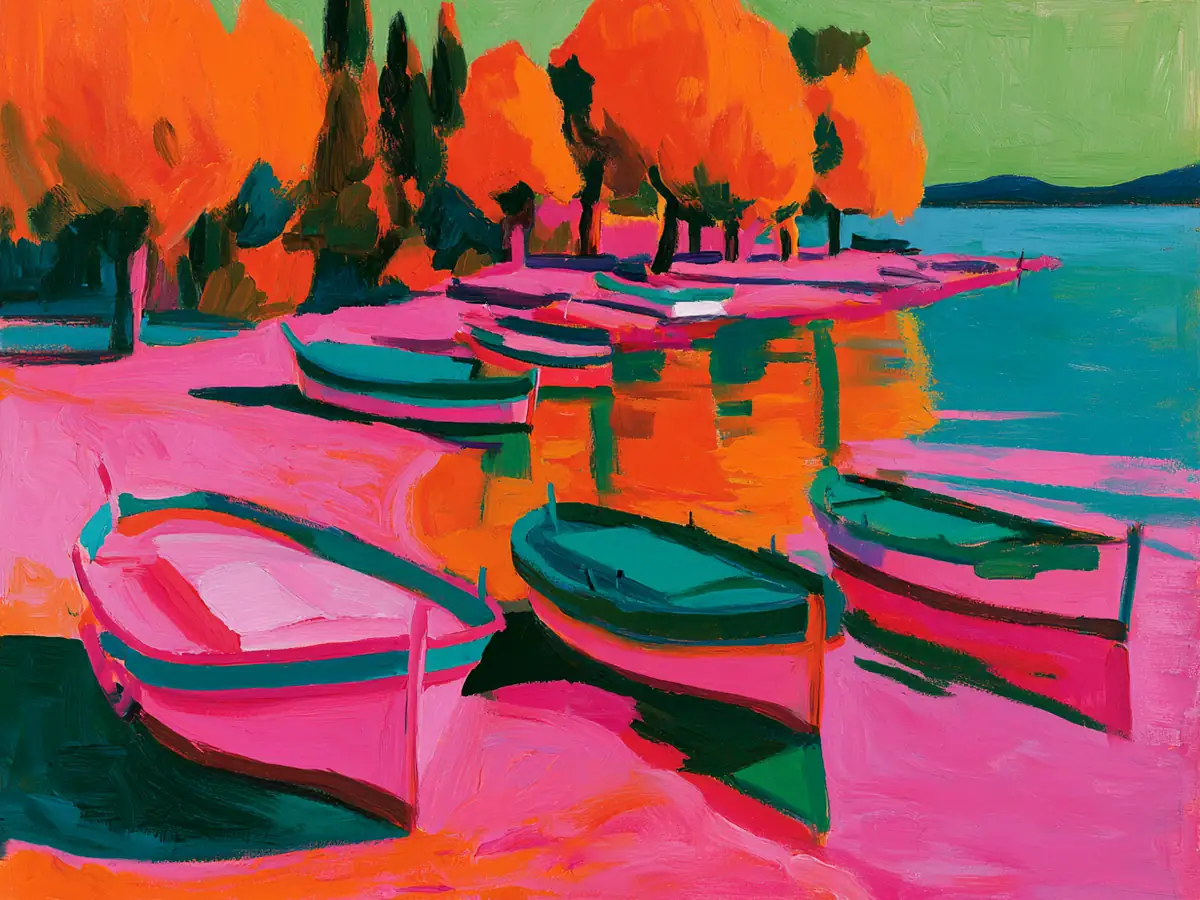 Fauvism art style example: Fauvist painting of a Mediterranean harbor with boats, pink sea, orange trees, green sky, flat bold strokes of
The Fauves, or "wild beasts", used color for its own sake: pink seas, green faces, orange trees. Brushwork is loose and flat, and the mood is joyful.
- Era: c. 1905 to 1910
- Key traits: pure saturated color, unnatural color choices, flat loose brushwork, simplified forms
- Famous artists and examples: Henri Matisse, André Derain, Maurice de Vlaminck
Try it with AI (Midjourney V7):
Fauvist painting of a Mediterranean harbor with boats, pink sea, orange trees, green sky, flat bold strokes of pure color.
17. Cubism
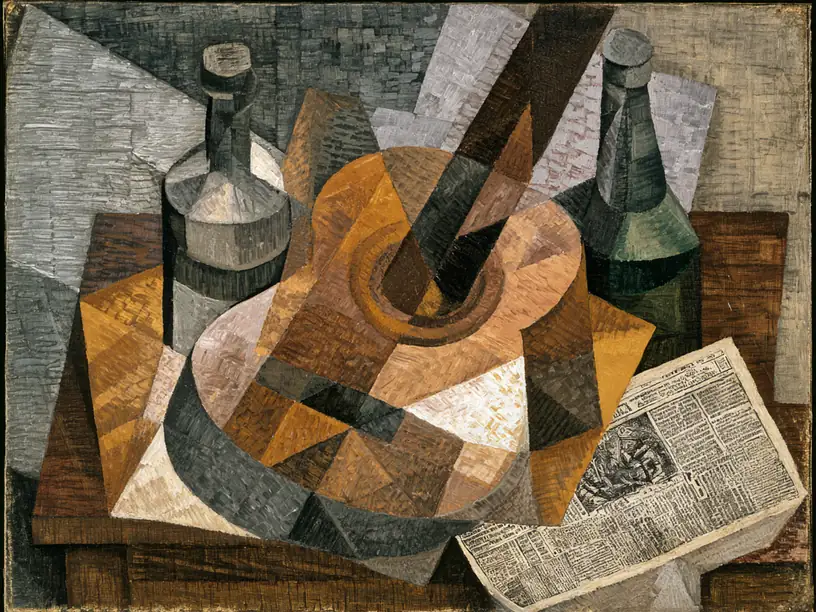 Cubism art style example: Analytic Cubist painting of a still life with a guitar, a bottle and a newspaper fragmented into overlapping g
Cubism breaks objects into geometric planes and shows them from several viewpoints at once. It began with muted, fragmented still lifes and changed how artists thought about space.
- Era: c. 1907 to 1920s
- Key traits: geometric fragmentation, multiple viewpoints, muted browns and greys (early), collage elements (later)
- Famous artists and examples: Pablo Picasso, Georges Braque, Juan Gris
Try it with AI (Midjourney V7):
Analytic Cubist painting of a still life with a guitar, a bottle and a newspaper fragmented into overlapping geometric planes, muted browns and greys.
18. Futurism
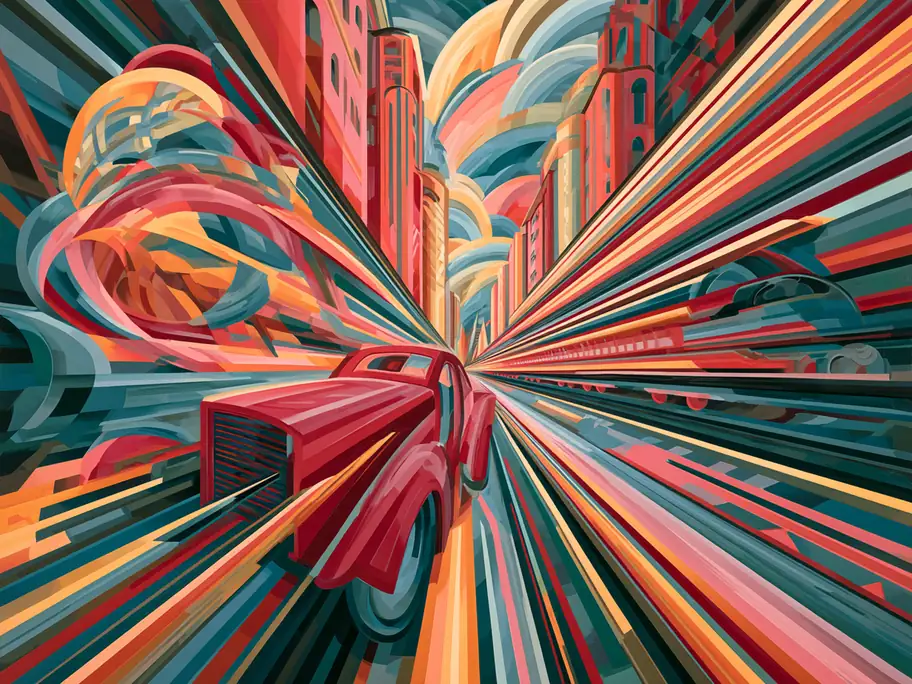 Futurism art style example: Italian Futurist painting of a speeding car and train rushing through a city, dynamic lines of force, overlapp
Italian Futurism celebrated speed, machines and the modern city. Its painters repeated forms and used lines of force to show motion frozen on canvas.
- Era: 1909 to 1940s
- Key traits: lines of force, repeated overlapping forms, machines and cities, energetic bright color
- Famous artists and examples: Umberto Boccioni, Giacomo Balla, Gino Severini
Try it with AI (Midjourney V7):
Italian Futurist painting of a speeding car and train rushing through a city, dynamic lines of force, overlapping forms showing motion.
19. Dada
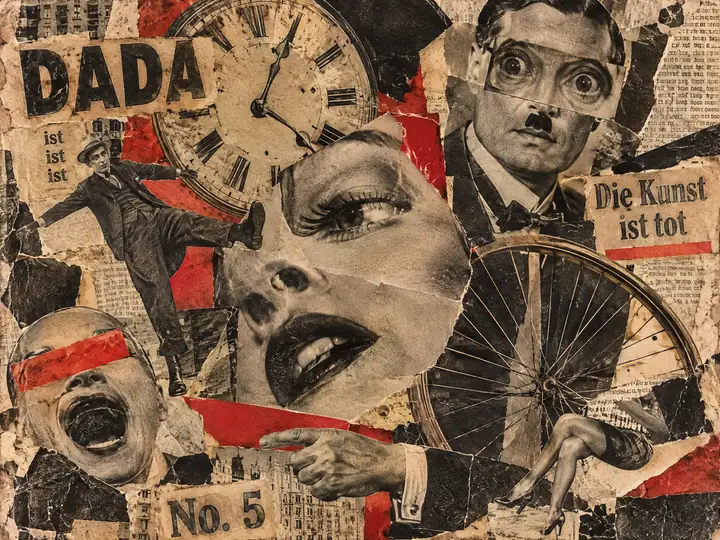 Dada art style example: Dada photomontage collage of cut-up newspaper, a vintage clock, a bicycle wheel and mismatched faces, absurd,
Dada was an anti-art movement born from the absurdity of World War I. Its artists mocked logic and taste with collage, readymades and nonsense.
- Era: c. 1915 to 1924
- Key traits: photomontage, found objects, nonsense text, chance, irony
- Famous artists and examples: Marcel Duchamp, Hannah Höch, Jean Arp, Kurt Schwitters
Try it with AI (GPT Image 2.6):
Dada photomontage collage of cut-up newspaper, a vintage clock, a bicycle wheel and mismatched faces, absurd, torn edges, aged paper.
20. Constructivism
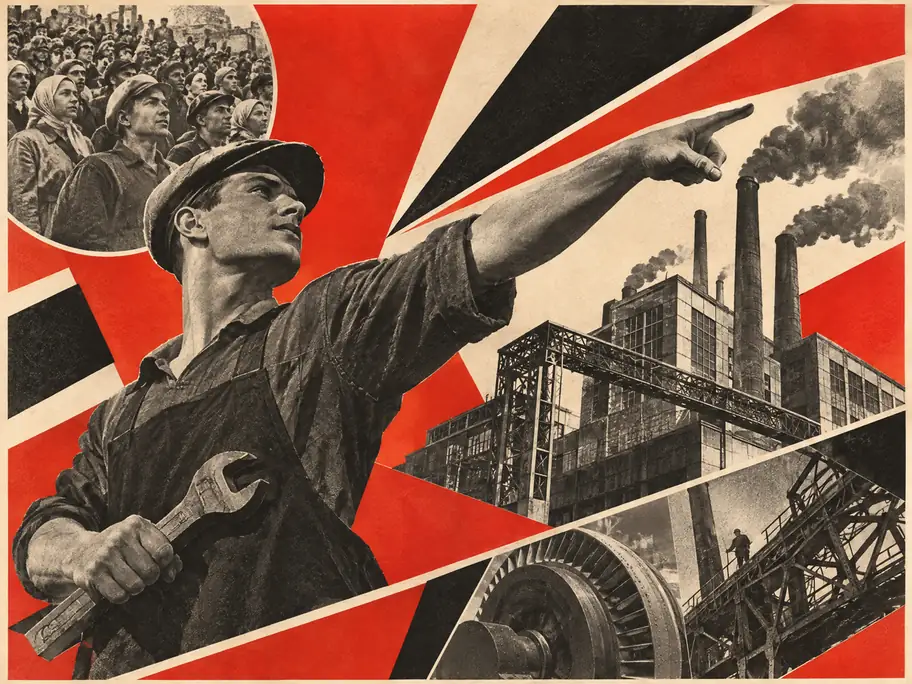 Constructivism art style example: Russian Constructivist poster with bold diagonal red and black shapes, a stylized worker and a factory, photom
Russian Constructivism treated art as a tool for building a new society. Posters use hard diagonals, red and black, photomontage and strong typography.
- Era: c. 1913 to 1930s
- Key traits: bold diagonals, red, black and cream, geometric shapes, photomontage, industrial subjects
- Famous artists and examples: Alexander Rodchenko, El Lissitzky, Vladimir Tatlin
Try it with AI (GPT Image 2.6):
Russian Constructivist poster with bold diagonal red and black shapes, a stylized worker and a factory, photomontage, cream paper.
21. Art Deco
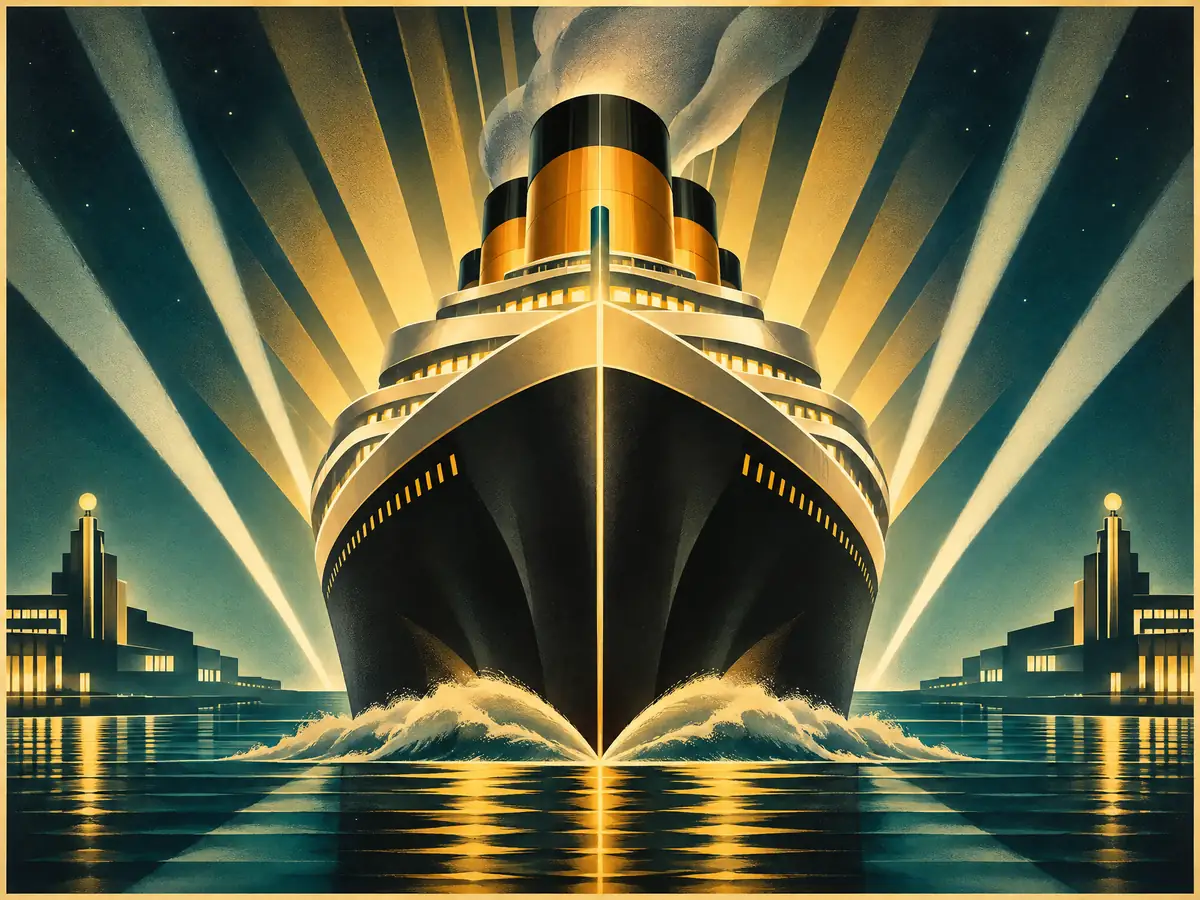 Art Deco art style example: Art Deco travel poster of a sleek ocean liner at night with searchlights, geometric symmetry, gold, black and
Art Deco is the glamorous, geometric style of the Jazz Age, seen in skyscrapers, ocean liners and travel posters. It mixes luxury materials with streamlined machine-age forms.
- Era: 1920s to 1930s
- Key traits: geometric symmetry, sunburst rays, gold, black and teal, streamlined forms
- Famous artists and examples: Tamara de Lempicka, A.M. Cassandre, Erté
Try it with AI (GPT Image 2.6):
Art Deco travel poster of a sleek ocean liner at night with searchlights, geometric symmetry, gold, black and teal, sunburst rays.
22. Bauhaus
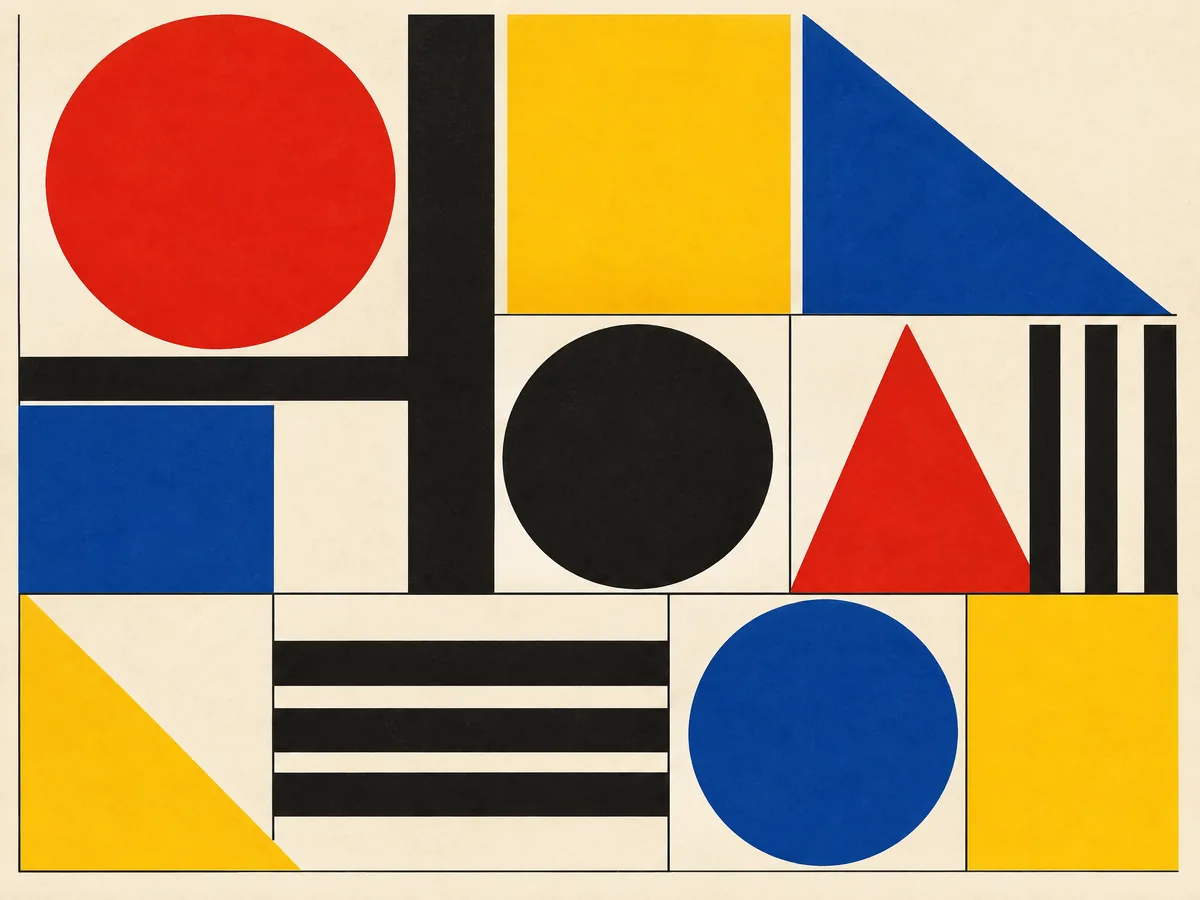 Bauhaus art style example: Bauhaus design poster of circles, squares and triangles in primary red, yellow and blue with black bars on off
The Bauhaus school in Germany merged art, craft and industrial design. Its graphic style uses basic shapes, primary colors and clean grids, where form follows function.
- Era: 1919 to 1933
- Key traits: circles, squares and triangles, primary red, yellow and blue, clean grids, sans-serif type
- Famous artists and examples: Wassily Kandinsky, Paul Klee, László Moholy-Nagy, Herbert Bayer
Try it with AI (GPT Image 2.6):
Bauhaus design poster of circles, squares and triangles in primary red, yellow and blue with black bars on off-white, clean grid.
23. Surrealism
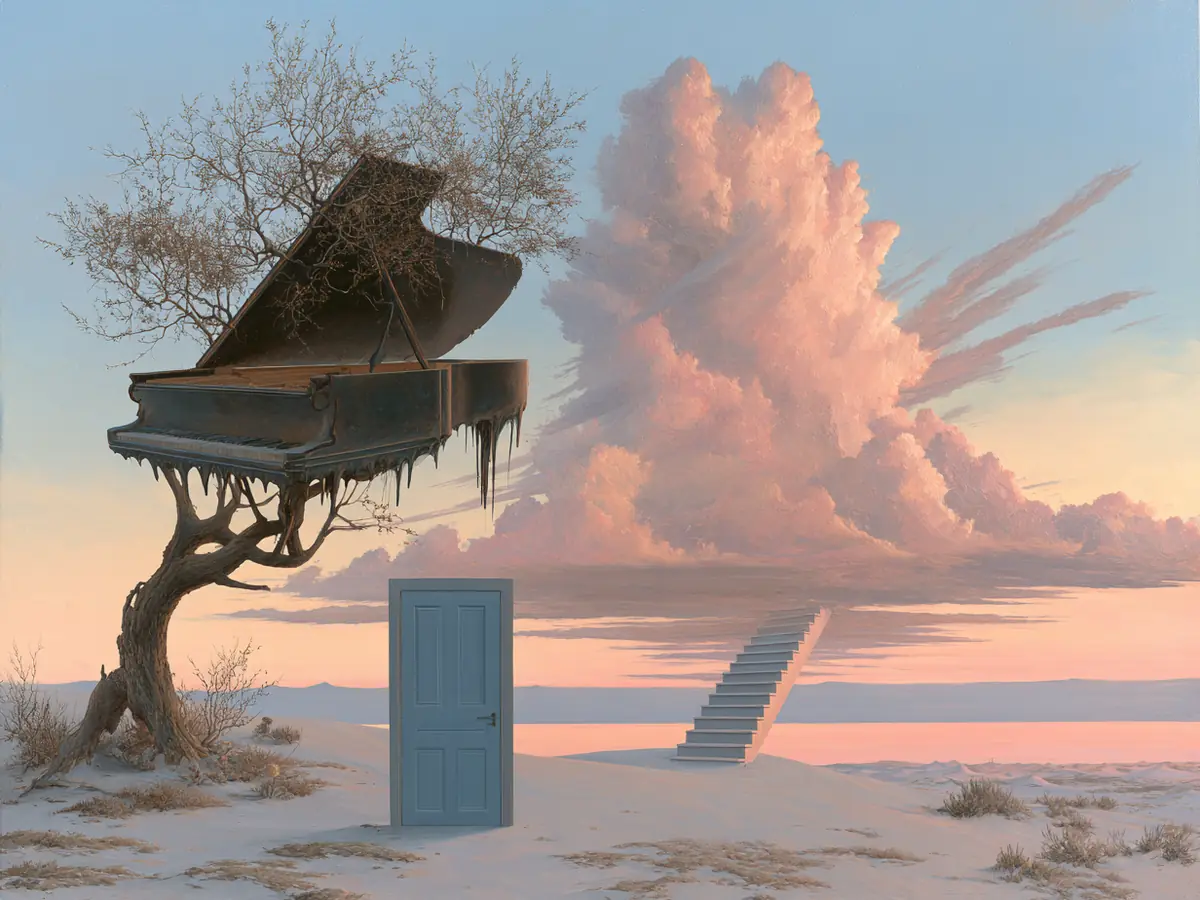 Surrealism art style example: Surrealist painting of a desert at dusk with a grand piano melting over a branch, a staircase into the clouds
Surrealism paints the logic of dreams. Impossible scenes, such as melting objects, floating doors and strange pairings, are rendered with realistic precision.
- Era: 1920s to 1950s
- Key traits: dreamlike scenes, impossible combinations, precise realistic rendering, empty landscapes
- Famous artists and examples: Salvador Dalí, René Magritte, Max Ernst, Leonora Carrington
Try it with AI (Midjourney V7):
Surrealist painting of a desert at dusk with a grand piano melting over a branch, a staircase into the clouds and a lone door in the sand.
24. Abstract Expressionism
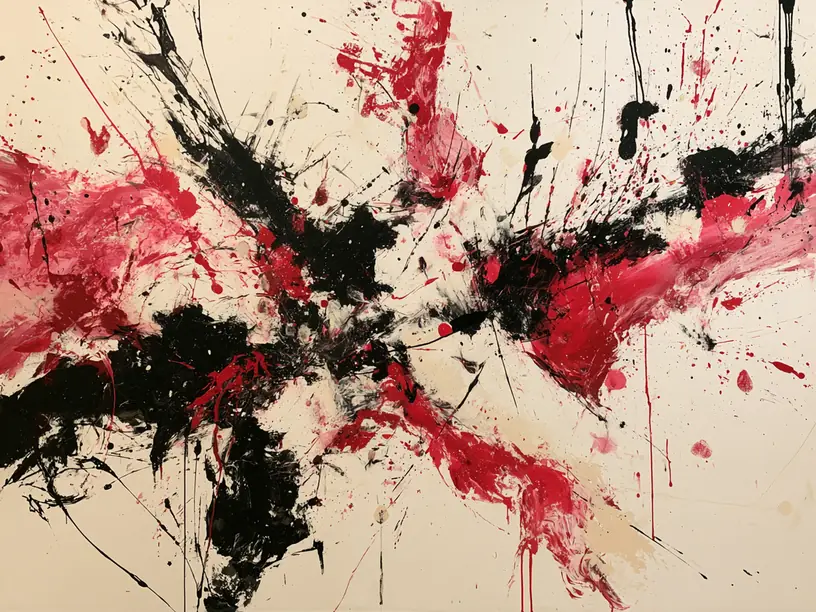 Abstract Expressionism art style example: Abstract Expressionist painting of energetic gestural drips and sweeping strokes in black, crimson and cream,
Abstract Expressionism moved the center of the art world to New York. It made the act of painting itself the subject, through big gestures, drips and fields of color.
- Era: 1940s to 1950s
- Key traits: large canvases, gestural drips and splatters, no recognizable subject, color fields
- Famous artists and examples: Jackson Pollock, Willem de Kooning, Mark Rothko, Lee Krasner
Try it with AI (Midjourney V7):
Abstract Expressionist painting of energetic gestural drips and sweeping strokes in black, crimson and cream, raw action painting.
25. Pop Art
 Pop Art art style example: Pop Art portrait of a smiling woman in comic-book style, Ben-Day dots, thick black outlines, flat primary colo
Pop Art took its images from comics, ads and celebrity culture. It uses flat bright color, thick outlines and printing dots to blur the line between high art and mass media.
- Era: mid-1950s to 1970s
- Key traits: Ben-Day dots, thick black outlines, flat primary colors, consumer and comic imagery
- Famous artists and examples: Andy Warhol, Roy Lichtenstein, Richard Hamilton
Try it with AI (GPT Image 2.6):
Pop Art portrait of a smiling woman in comic-book style, Ben-Day dots, thick black outlines, flat primary colors, an empty speech bubble.
26. Op Art
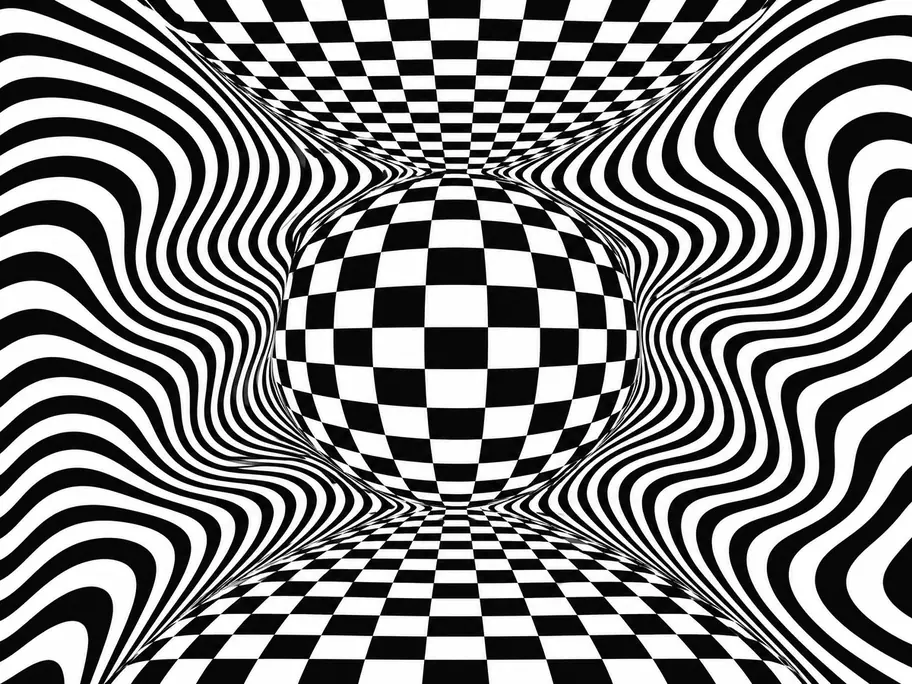 Op Art art style example: Op Art composition of black and white wavy stripes and checkerboard that seem to bulge and vibrate, crisp hard
Op Art, short for optical art, uses precise patterns that seem to move, bulge or vibrate. It is pure geometry that plays tricks on the eye.
- Era: 1960s
- Key traits: black and white patterns, precise hard edges, illusions of depth and motion
- Famous artists and examples: Bridget Riley, Victor Vasarely
Try it with AI (GPT Image 2.6):
Op Art composition of black and white wavy stripes and checkerboard that seem to bulge and vibrate, crisp hard edges.
27. Minimalism
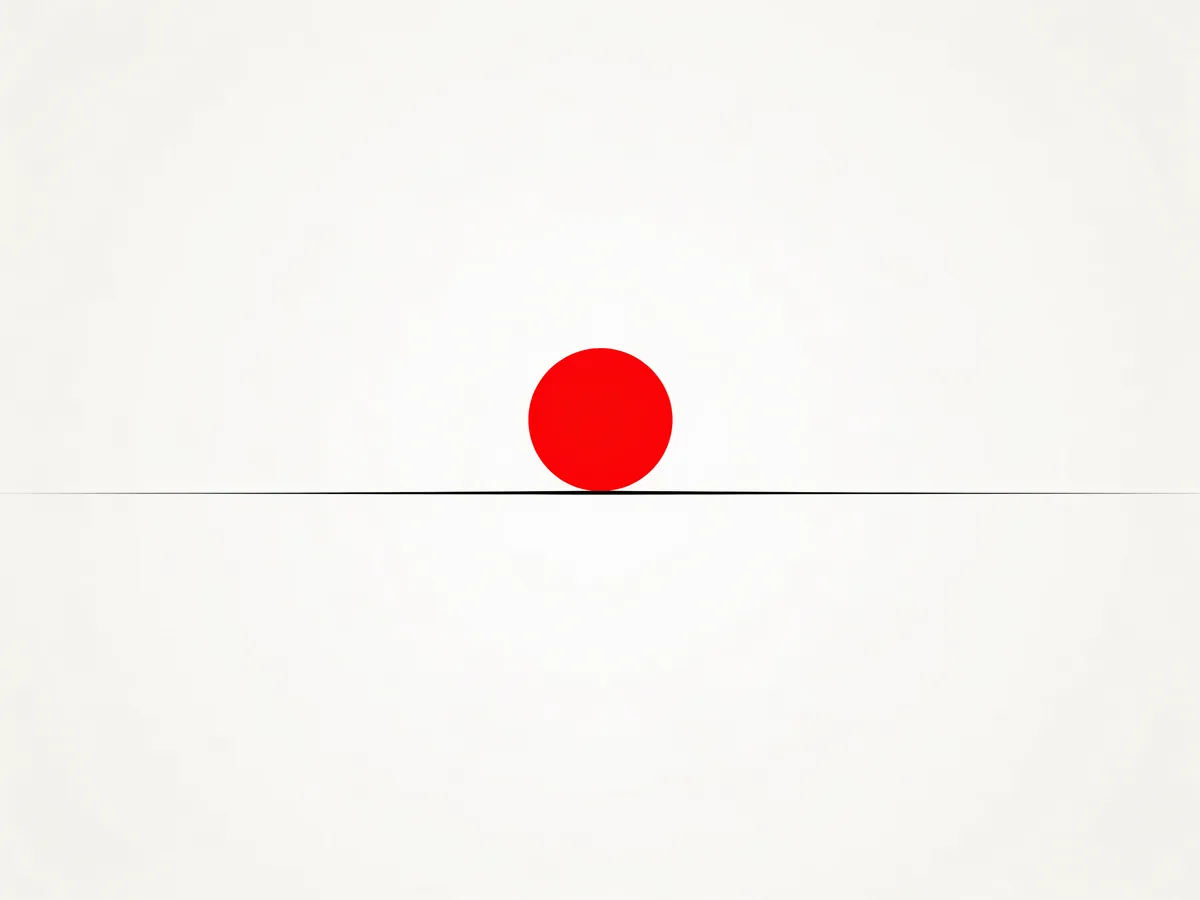 Minimalism art style example: Minimalist composition of a single red circle sun over a thin horizon line on an off-white field, vast negativ
Minimalism strips art down to simple shapes, flat color and empty space. What is left out matters as much as what is there.
- Era: 1960s onward
- Key traits: simple geometric forms, flat color, vast negative space, calm precision
- Famous artists and examples: Donald Judd, Agnes Martin, Frank Stella
Try it with AI (Recraft V4.1):
Minimalist composition of a single red circle sun over a thin horizon line on an off-white field, vast negative space.
28. Photorealism
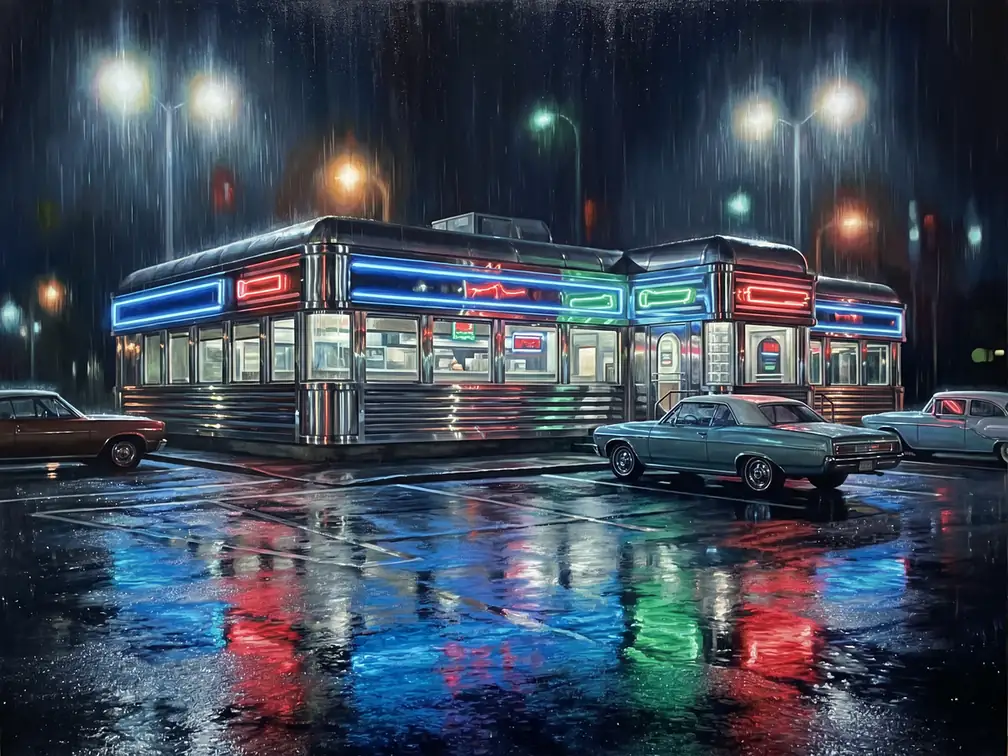 Photorealism art style example: Photorealistic painting of a chrome diner at night with reflections on wet pavement, so sharp it looks like a
Photorealist painters copy photographs so precisely that the paintings are hard to tell from photos. Chrome, glass and reflections are favorite subjects.
- Era: late 1960s onward
- Key traits: photographic precision, reflections, chrome and glass, urban scenes, sharp focus everywhere
- Famous artists and examples: Richard Estes, Chuck Close, Audrey Flack
Try it with AI (Nano Banana Pro):
Photorealistic painting of a chrome diner at night with reflections on wet pavement, so sharp it looks like a photograph.
29. Street Art and Graffiti
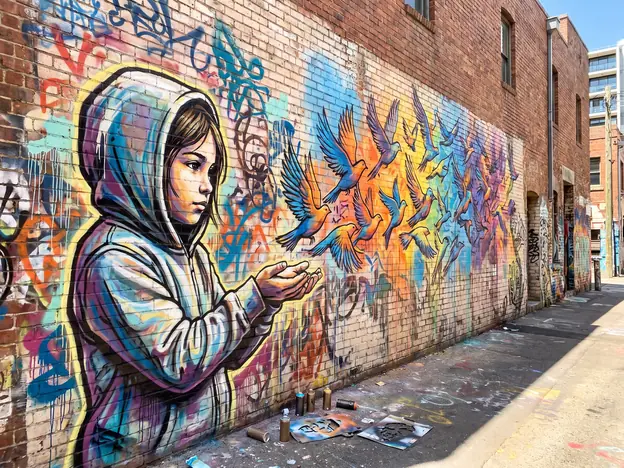 Street Art and Graffiti art style example: Colorful street art mural on a brick wall of a girl releasing birds, spray paint gradients, drips, bold outlin
Street art moved art out of galleries and onto city walls. It ranges from lettered graffiti to large spray-painted murals and stencil pieces.
- Era: 1970s onward
- Key traits: spray paint gradients and drips, bold outlines, stencils, large murals, public walls
- Famous artists and examples: Keith Haring, Banksy, Shepard Fairey, Jean-Michel Basquiat (early)
Try it with AI (Nano Banana Pro):
Colorful street art mural on a brick wall of a girl releasing birds, spray paint gradients, drips, bold outlines, layered stencils.
Contemporary and Digital Art Styles
These styles come from animation, games, the internet and science fiction. They are the styles people most often recreate with AI today.
30. Anime
 Anime art style example: Anime-style illustration of a girl with short silver hair on a train platform at sunset, cherry blossom petals
Anime is the Japanese animation style recognized by large expressive eyes, clean line art and cel shading. Background art is often lush and painterly, with glowing skies.
- Era: 1960s onward
- Key traits: large expressive eyes, clean line art, cel shading, luminous painted backgrounds
- Famous artists and examples: Osamu Tezuka (pioneer), Studio-era directors such as Satoshi Kon and Makoto Shinkai
Try it with AI (GPT Image 2.6):
Anime-style illustration of a girl with short silver hair on a train platform at sunset, cherry blossom petals, cel shading, luminous sky, original character.
31. Manga
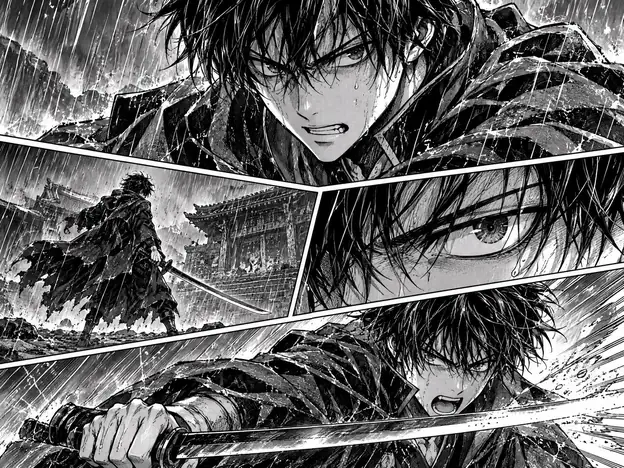 Manga art style example: Black and white manga page of a young swordsman in the rain, speed lines, screentone shading, bold ink, origin
Manga is the Japanese comic style, usually printed in black and white. Artists build tone with screentones and show motion with speed lines.
- Era: 1950s onward
- Key traits: black and white ink, screentone shading, speed lines, panel layouts, expressive faces
- Famous artists and examples: Osamu Tezuka, Akira Toriyama, Naoko Takeuchi
Try it with AI (GPT Image 2.6):
Black and white manga page of a young swordsman in the rain, speed lines, screentone shading, bold ink, original character.
32. Pixel Art
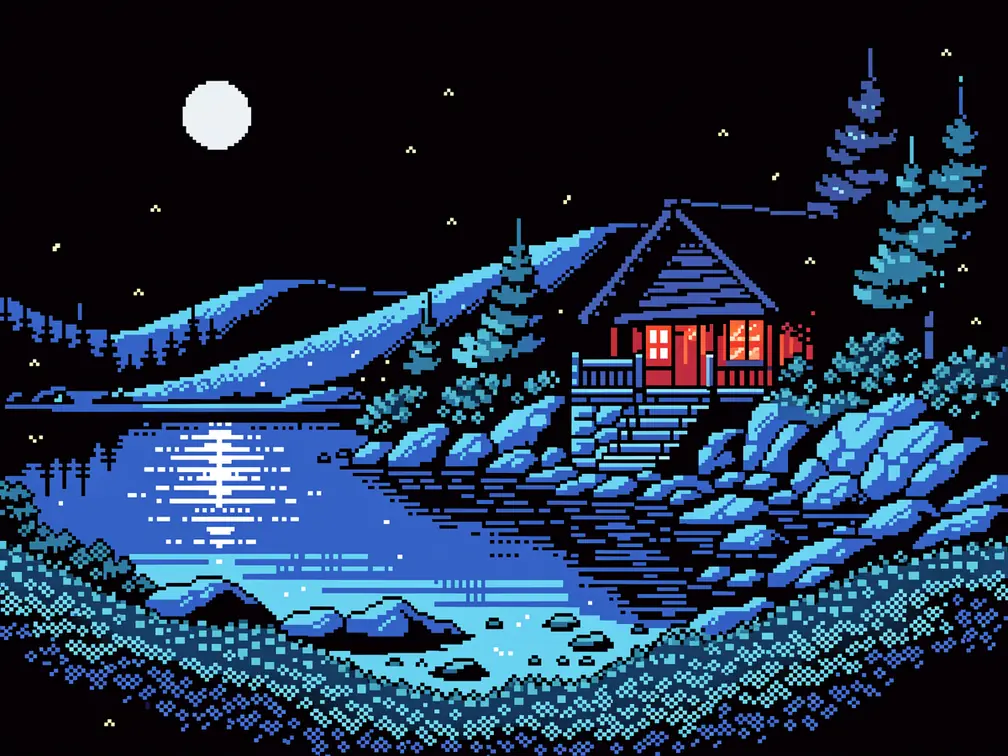 Pixel Art art style example: Pixel art scene of a cozy cabin by a lake at night with fireflies and a full moon, 16-bit style, limited palet
Pixel art is drawn one pixel at a time, a style born from early video games with tiny screens and palettes. Today it is a deliberate retro look.
- Era: 1970s onward
- Key traits: crisp square pixels, limited color palette, retro game scenes, no smoothing
- Famous artists and examples: classic 8-bit and 16-bit games, indie games
Try it with AI (Recraft V4.1):
Pixel art scene of a cozy cabin by a lake at night with fireflies and a full moon, 16-bit style, limited palette, crisp pixels.
33. Low Poly
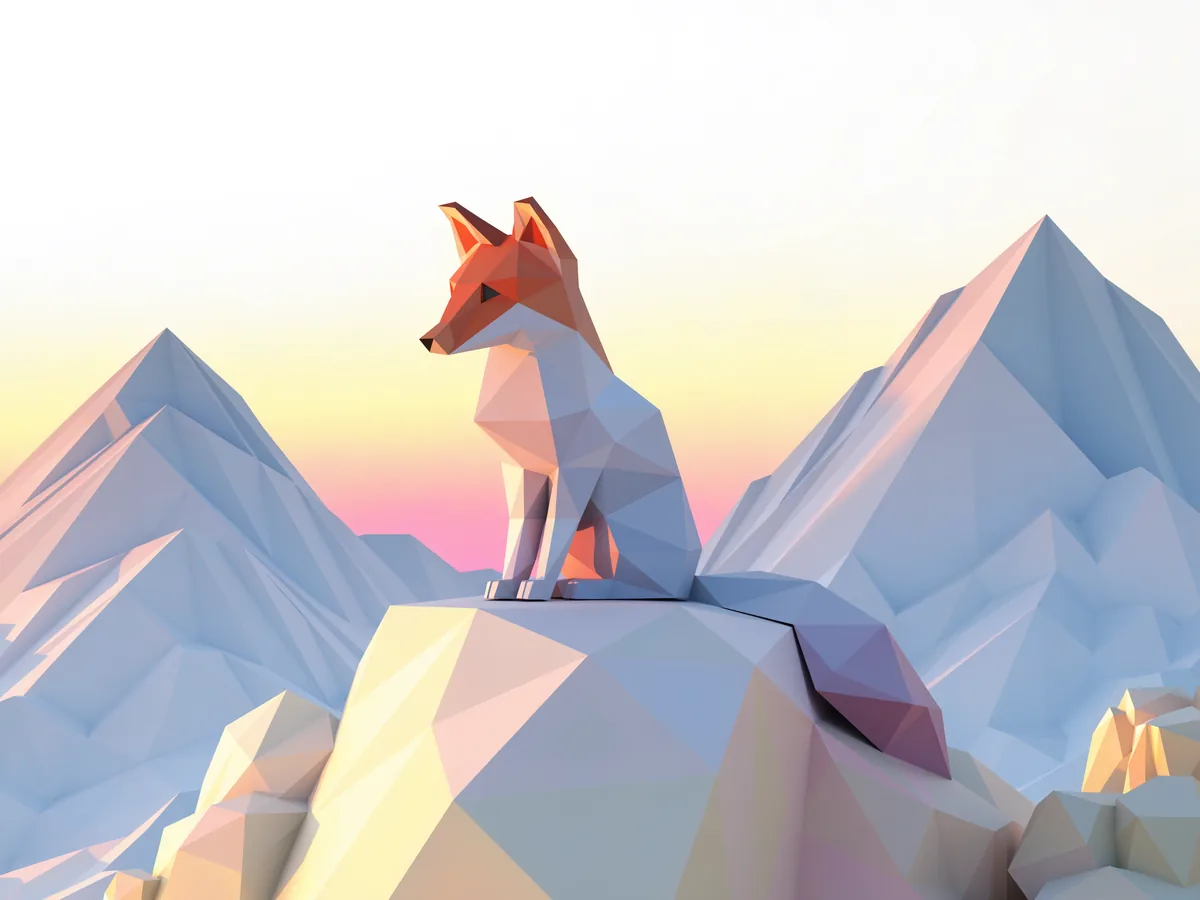 Low Poly art style example: Low poly 3D illustration of a fox in a mountain landscape at sunset, faceted triangles, soft gradient light
Low poly art builds 3D forms from a small number of flat triangles. Once a technical limit in early 3D games, it is now a clean, geometric illustration style.
- Era: 1990s onward
- Key traits: faceted triangle surfaces, soft gradients, simplified 3D forms
- Famous artists and examples: early 3D games, modern motion and web design
Try it with AI (Recraft V4.1):
Low poly 3D illustration of a fox in a mountain landscape at sunset, faceted triangles, soft gradient light.
34. Isometric Art
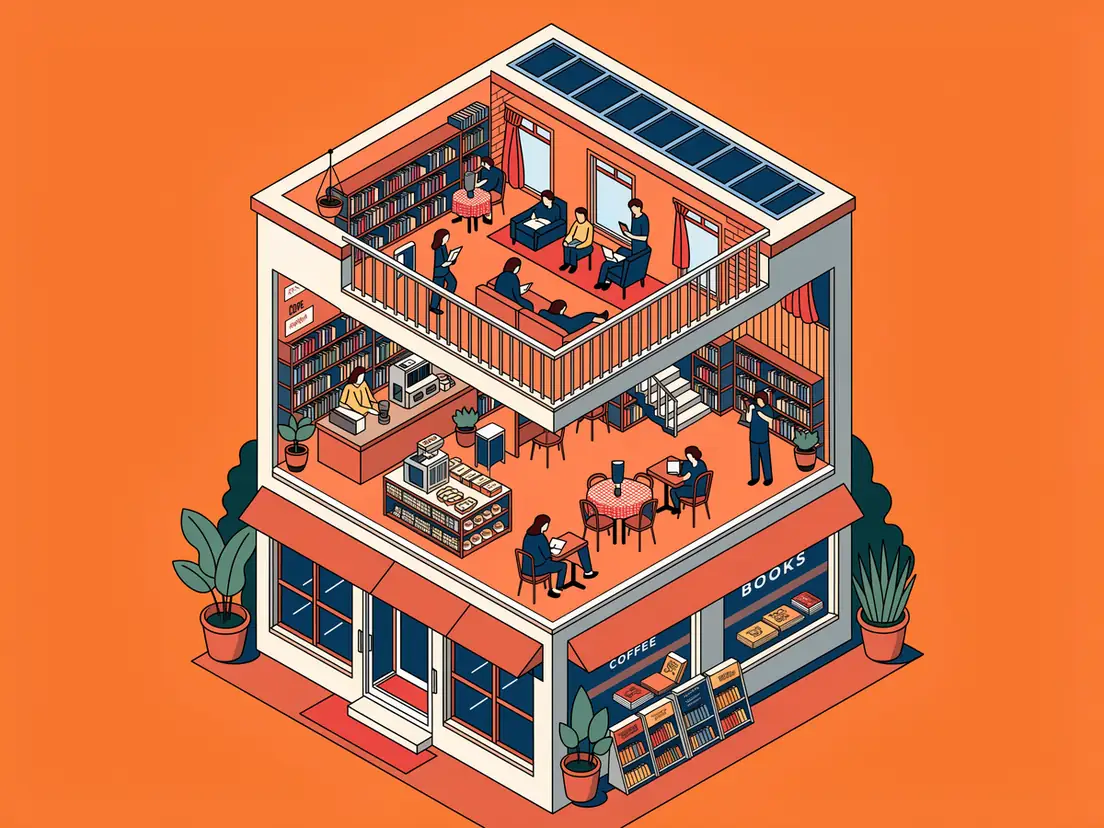 Isometric Art art style example: Isometric illustration of a cozy two-story bookstore cafe cut away to show the rooms, tiny people reading, war
Isometric art shows 3D objects at a fixed angle without perspective, so parallel lines stay parallel. It is common in strategy games, infographics and cutaway illustrations.
- Era: 1980s onward
- Key traits: fixed 30-degree angles, no vanishing point, cutaway rooms, clean shading
- Famous artists and examples: strategy and simulation games, tech illustration
Try it with AI (Recraft V4.1):
Isometric illustration of a cozy two-story bookstore cafe cut away to show the rooms, tiny people reading, warm colors.
35. Vaporwave
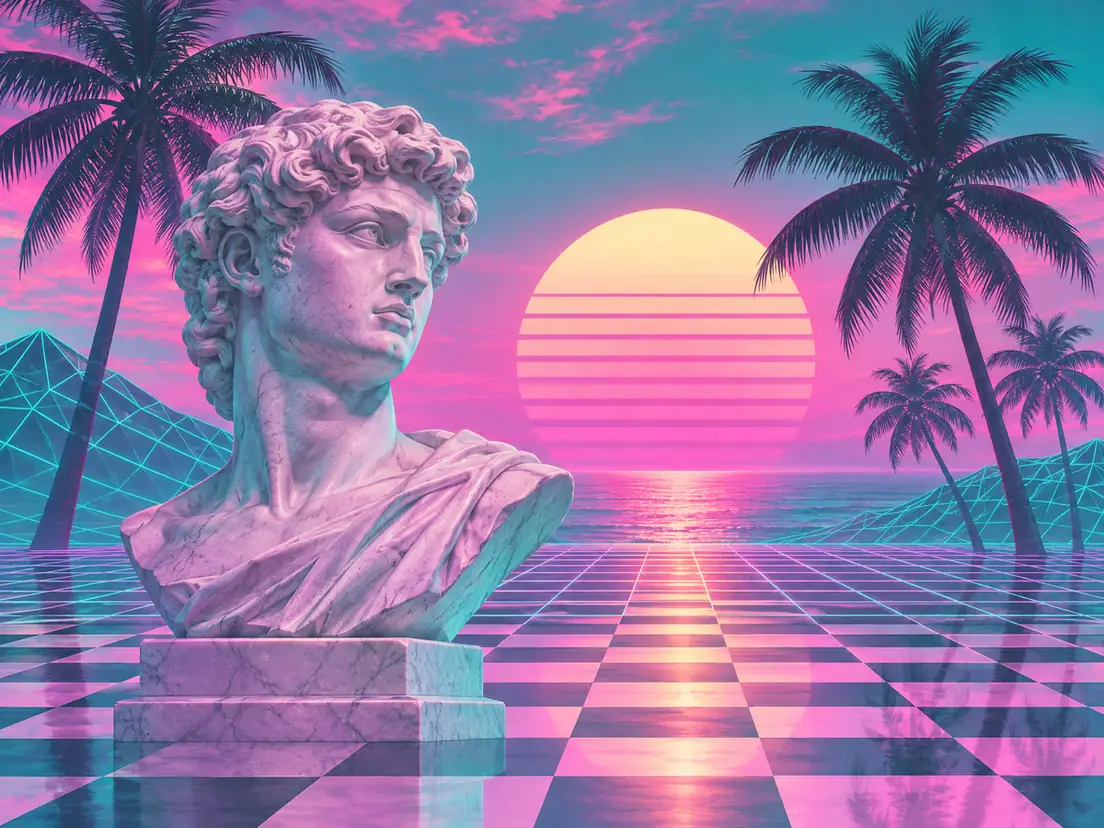 Vaporwave art style example: Vaporwave artwork of a pastel sunset with a marble bust, palm trees, a checkerboard floor and a retro grid, 19
Vaporwave grew from an internet music genre into a visual style of nostalgic irony. It mixes 1980s and 1990s computer graphics, classical statues and pastel neon.
- Era: early 2010s onward
- Key traits: pastel pink and teal, marble busts, palm trees, checkerboard floors, retro grids
- Famous artists and examples: internet and album-cover artists
Try it with AI (GPT Image 2.6):
Vaporwave artwork of a pastel sunset with a marble bust, palm trees, a checkerboard floor and a retro grid, 1990s digital nostalgia.
36. Cyberpunk
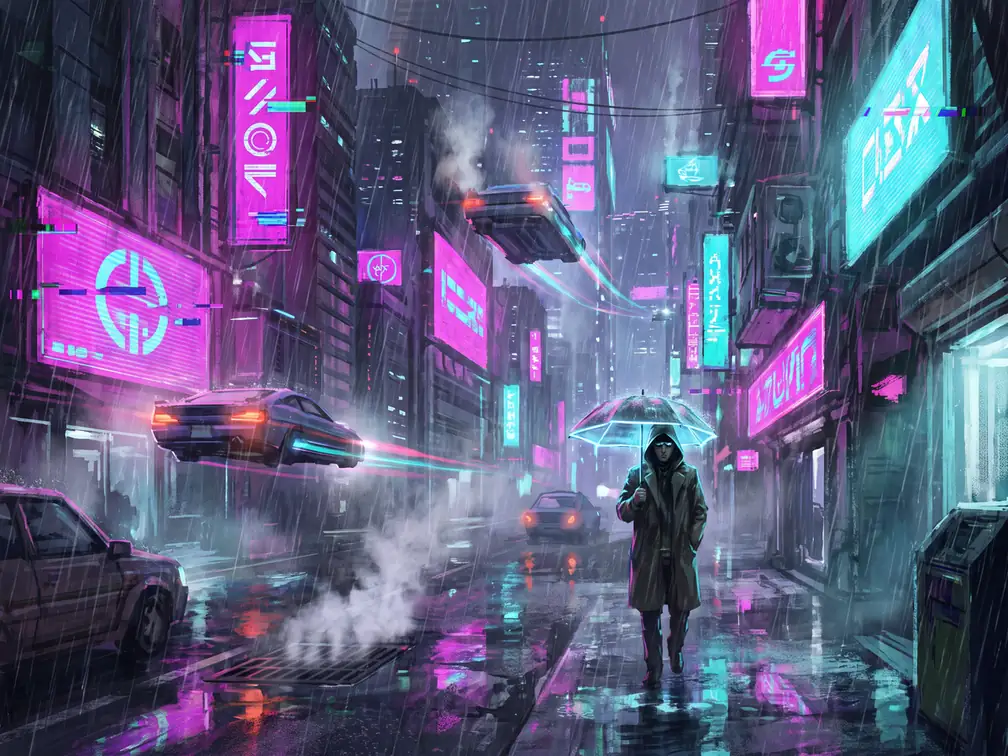 Cyberpunk art style example: Cyberpunk illustration of a rain-soaked megacity street at night, neon magenta and cyan signs, flying cars, a
Cyberpunk imagines high-tech, low-life futures: neon-soaked megacities, rain, and lone figures among towering ads. It comes from 1980s science fiction film and novels.
- Era: 1980s onward
- Key traits: neon magenta and cyan, rain and reflections, dense megacities, futuristic tech
- Famous artists and examples: Syd Mead (Blade Runner designs), the Neuromancer era of sci-fi
Try it with AI (Nano Banana Pro):
Cyberpunk illustration of a rain-soaked megacity street at night, neon magenta and cyan signs, flying cars, a lone hooded figure.
37. Steampunk
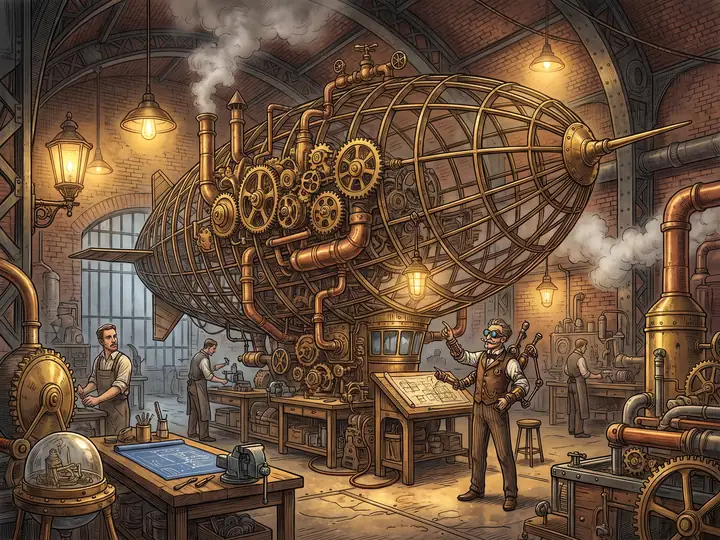 Steampunk art style example: Steampunk illustration of a Victorian inventor's airship workshop with brass gears, copper pipes and a half-bu
Steampunk reimagines technology as if the Victorian steam age had never ended. Brass gears, copper pipes, airships and goggles define the look.
- Era: 1980s onward
- Key traits: brass and copper, gears and valves, Victorian clothing, airships, warm gaslight
- Famous artists and examples: Jules Verne-inspired illustrators, prop and game designers
Try it with AI (Nano Banana Pro):
Steampunk illustration of a Victorian inventor's airship workshop with brass gears, copper pipes and a half-built dirigible, warm gaslight.
38. Fantasy Concept Art
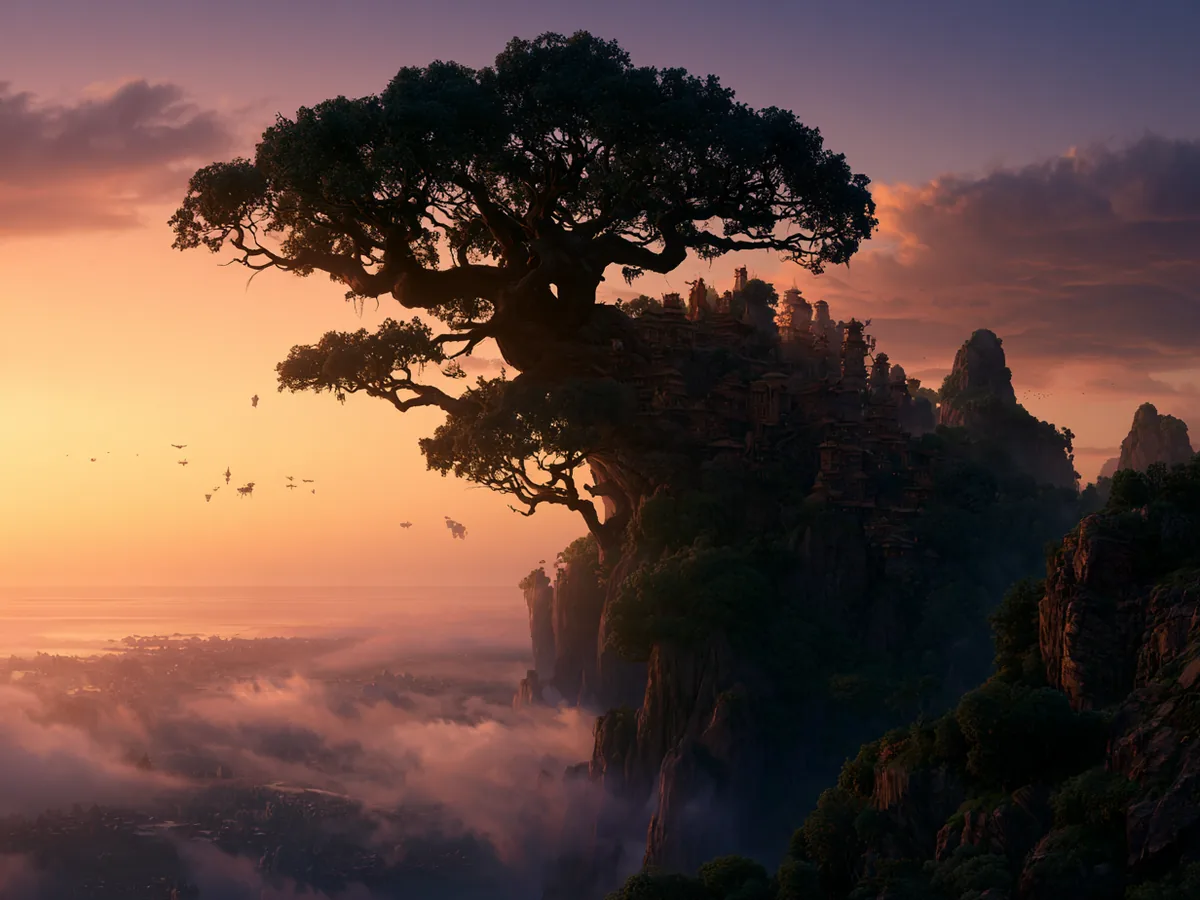 Fantasy Concept Art art style example: Fantasy concept art of a colossal tree city built into a cliff above a misty valley at sunrise, tiny flying sh
Fantasy concept art designs the worlds of films, games and books. It favors epic scale, atmosphere and painterly light over fine detail.
- Era: 1970s onward
- Key traits: epic scale, atmospheric depth, painterly digital brushwork, volumetric light
- Famous artists and examples: Frank Frazetta, Alan Lee, John Howe
Try it with AI (Midjourney V7):
Fantasy concept art of a colossal tree city built into a cliff above a misty valley at sunrise, tiny flying ships, epic scale.
39. Claymation
 Claymation art style example: Claymation-style scene of a fox baker in a tiny bakery, plasticine textures with fingerprints, miniature set,
Claymation is stop-motion animation with sculpted clay or plasticine. Its charm is in the handmade imperfection: fingerprints, soft edges and miniature sets.
- Era: 1900s onward
- Key traits: plasticine textures, visible fingerprints, miniature sets, soft studio light
- Famous artists and examples: Aardman Animations, Will Vinton
Try it with AI (Nano Banana Pro):
Claymation-style scene of a fox baker in a tiny bakery, plasticine textures with fingerprints, miniature set, stop-motion look.
40. Glitch Art
 Glitch Art art style example: Glitch art portrait split by digital distortion, RGB channel shifts, pixel sorting streaks, scan lines, neon o
Glitch art turns digital errors into an aesthetic. Corrupted files, color channel shifts and pixel sorting become deliberate creative tools.
- Era: 2000s onward
- Key traits: RGB channel shifts, pixel sorting streaks, scan lines, corrupted blocks
- Famous artists and examples: Rosa Menkman, digital and new media artists
Try it with AI (GPT Image 2.6):
Glitch art portrait split by digital distortion, RGB channel shifts, pixel sorting streaks, scan lines, neon on black.
Art Mediums and Illustration Styles
Some styles are defined by the material or technique as much as by an era. These are the ones you'd name to get a specific look and texture.
41. Watercolor
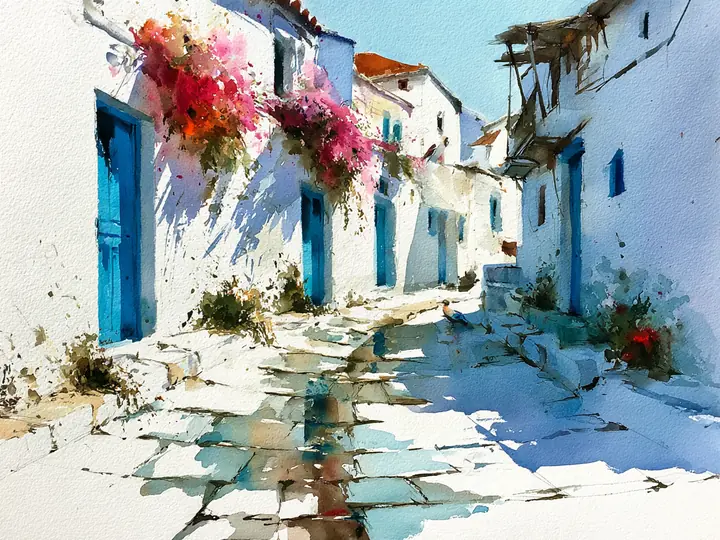 Watercolor art style example: Loose watercolor painting of a coastal village with white houses and blue doors, wet-on-wet blooms, white pape
Watercolor uses transparent pigment and water, so the white of the paper becomes the light. Colors bleed and bloom in ways that are hard to control and easy to love.
- Era: ancient to today
- Key traits: transparent washes, soft bleeding edges, wet-on-wet blooms, white paper showing
- Famous artists and examples: J.M.W. Turner, Winslow Homer, John Singer Sargent
Try it with AI (Midjourney V7):
Loose watercolor painting of a coastal village with white houses and blue doors, wet-on-wet blooms, white paper showing, cold-press paper.
42. Impasto Oil Painting
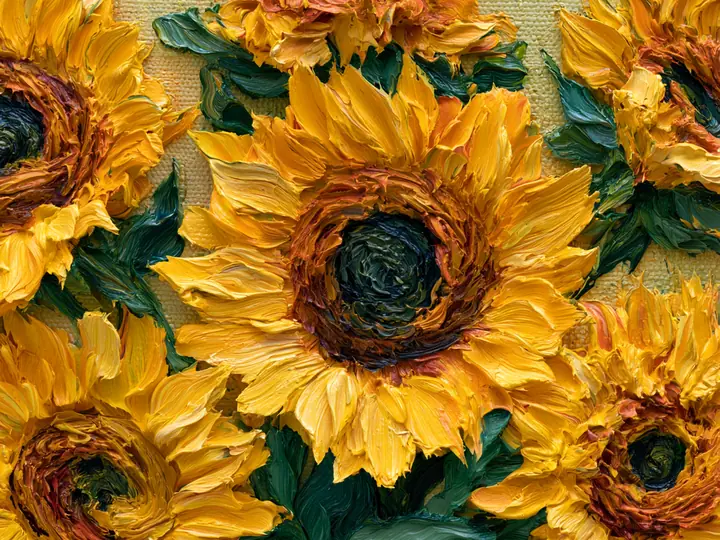 Impasto Oil Painting art style example: Thick impasto oil painting of a vase of sunflowers, heavy palette-knife texture, raised paint ridges catching
Impasto means laying paint on so thickly that brush or knife marks stand up from the canvas. Light catches the ridges, making the surface part of the picture.
- Era: 17th century to today
- Key traits: thick raised paint, palette-knife texture, visible strokes, sculptural surface
- Famous artists and examples: Rembrandt, Vincent van Gogh, Frank Auerbach
Try it with AI (Midjourney V7):
Thick impasto oil painting of a vase of sunflowers, heavy palette-knife texture, raised paint ridges catching light.
43. Gouache and Storybook Illustration
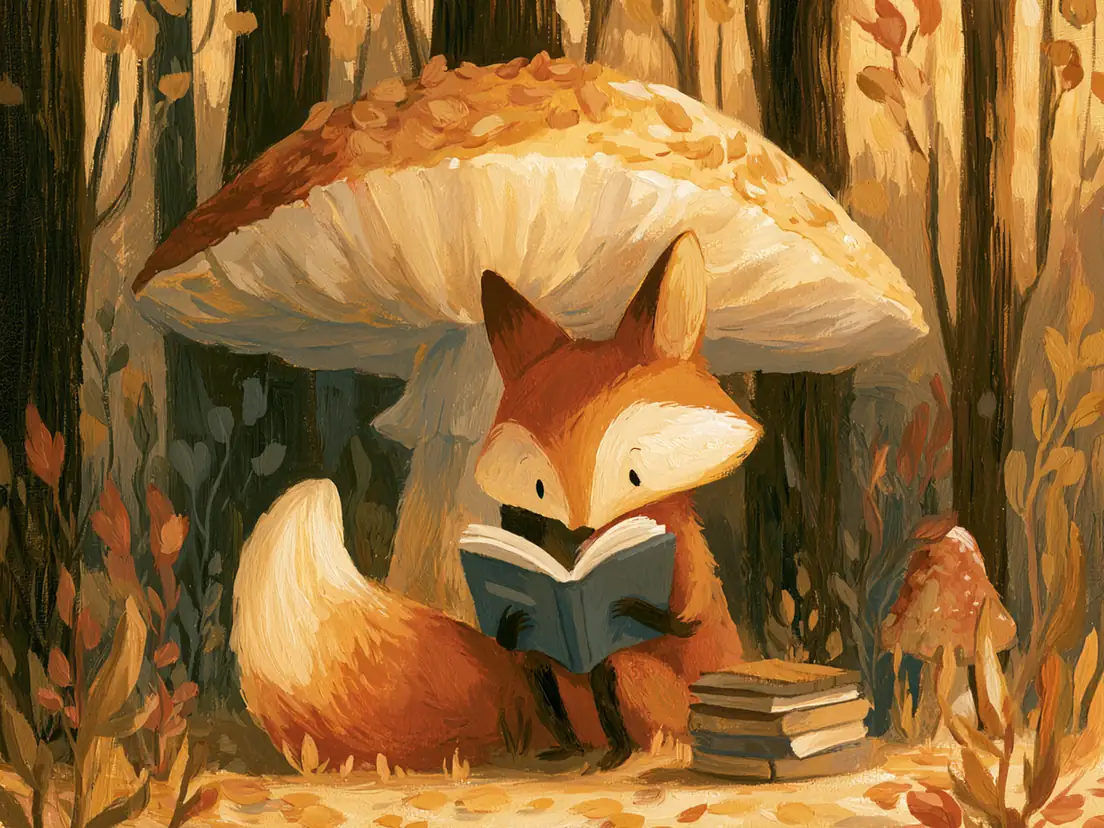 Gouache and Storybook Illustration art style example: Gouache storybook illustration of a fox reading under a mushroom in a cozy autumn forest, matte opaque colors
Gouache is an opaque, matte watercolor loved by illustrators. It gives the flat, velvety color of classic picture books and mid-century illustration.
- Era: 18th century to today
- Key traits: matte opaque color, soft textured edges, warm whimsical scenes
- Famous artists and examples: Mary Blair, Beatrix Potter (watercolor), mid-century children's book artists
Try it with AI (Midjourney V7):
Gouache storybook illustration of a fox reading under a mushroom in a cozy autumn forest, matte opaque colors, soft texture.
44. Charcoal Drawing
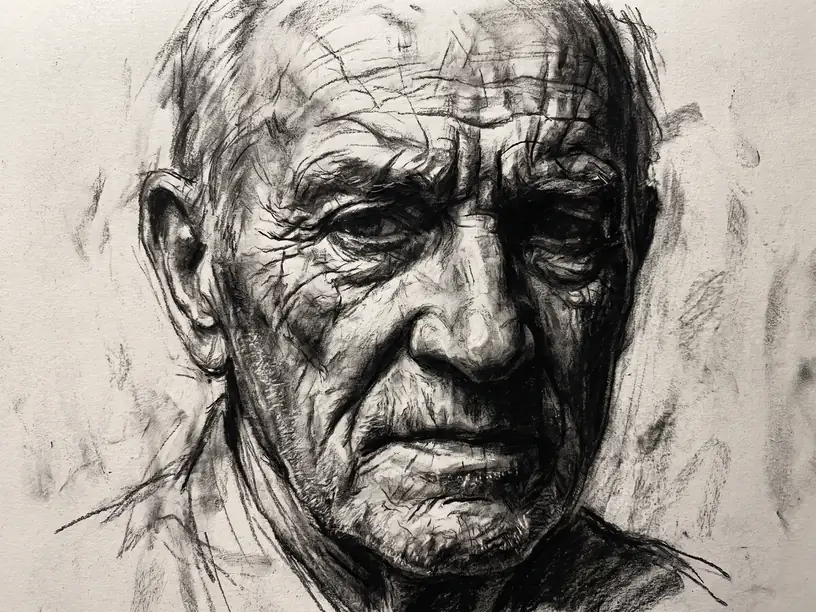 Charcoal Drawing art style example: Charcoal drawing of an old man's face with deep wrinkles, smudged shading, strong contrast, visible paper text
Charcoal is one of the oldest drawing media. It makes deep blacks and soft smudges, perfect for dramatic portraits and quick studies.
- Era: prehistoric to today
- Key traits: deep blacks, smudged shading, strong contrast, visible paper grain, gestural marks
- Famous artists and examples: Käthe Kollwitz, Georges Seurat (conté drawings)
Try it with AI (Nano Banana Pro):
Charcoal drawing of an old man's face with deep wrinkles, smudged shading, strong contrast, visible paper texture.
45. Ink Line Art
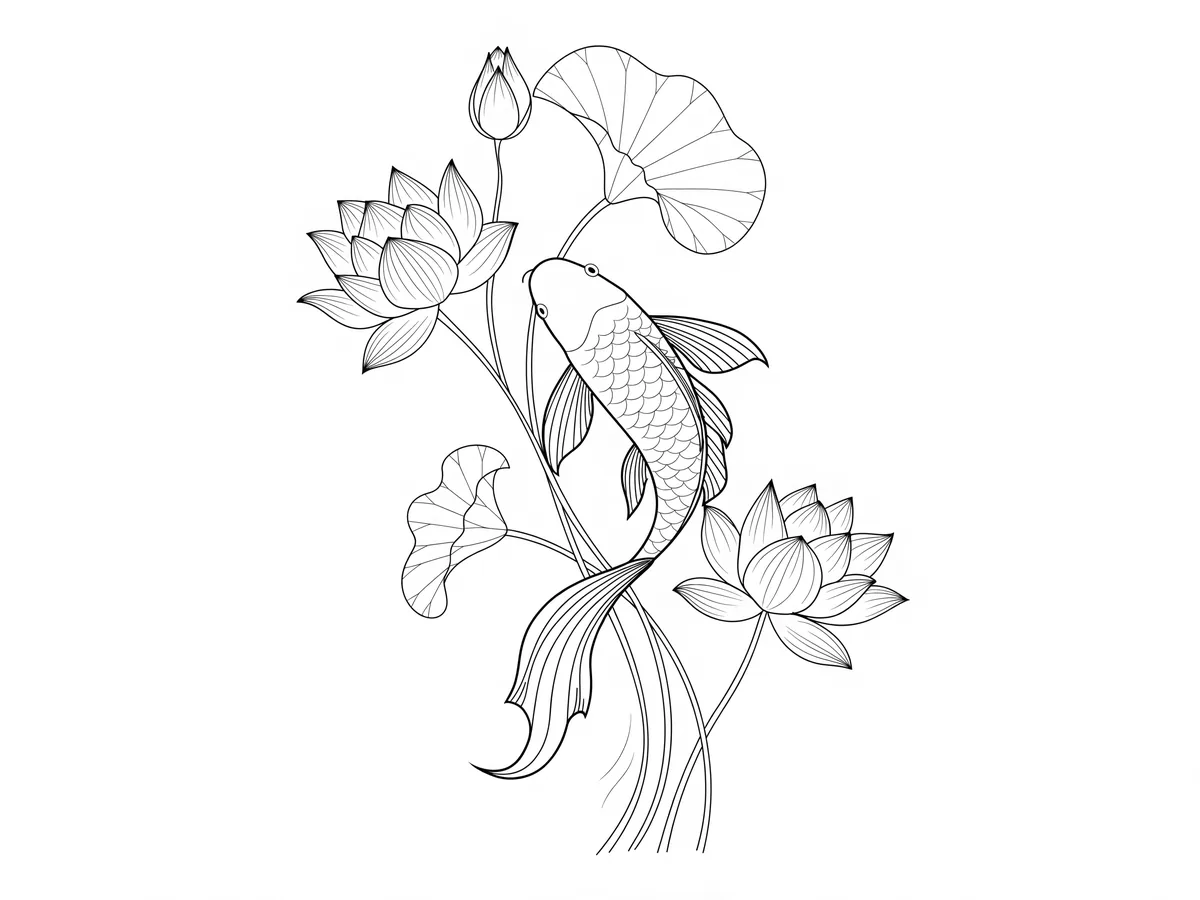 Ink Line Art art style example: Black ink line art of a koi fish among lotus flowers, clean continuous lines, white background, no shading
Line art describes form with lines alone, usually in ink. It is the basis of coloring books, tattoos, technical drawing and elegant minimal illustration.
- Era: ancient to today
- Key traits: clean continuous lines, no fill or shading, white background, controlled detail
- Famous artists and examples: Aubrey Beardsley, Hokusai's sketchbooks, tattoo flash artists
Try it with AI (Recraft V4.1):
Black ink line art of a koi fish among lotus flowers, clean continuous lines, white background, no shading.
46. Flat Vector Illustration
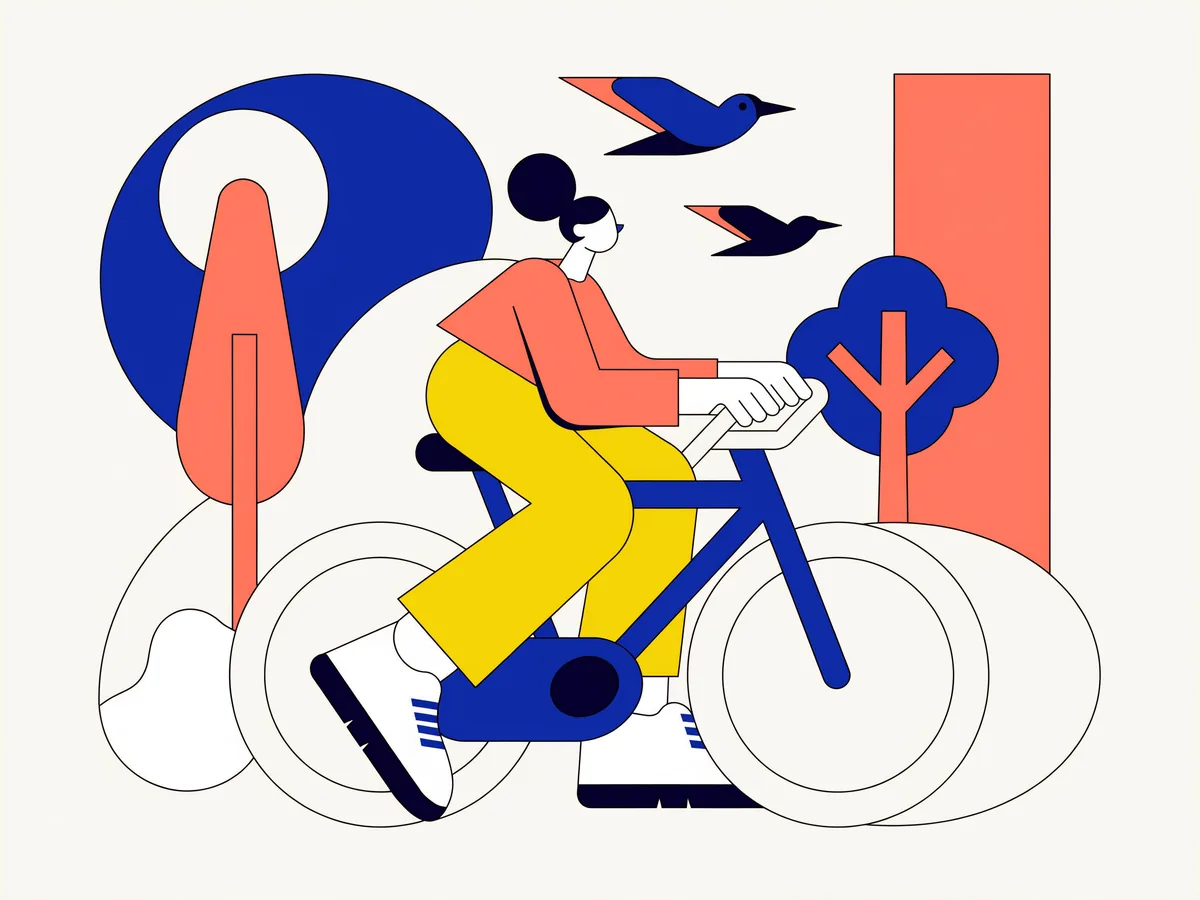 Flat Vector Illustration art style example: Flat vector illustration of a woman riding a bicycle through a park with trees and birds, bold flat shapes, li
Flat illustration is the clean digital style of apps, websites and explainer graphics. Shapes are simple, colors are limited and depth is suggested rather than rendered.
- Era: 2010s onward
- Key traits: flat color shapes, limited palettes, minimal shadows, simple figures
- Famous artists and examples: tech brand and editorial illustrators
Try it with AI (Recraft V4.1):
Flat vector illustration of a woman riding a bicycle through a park with trees and birds, bold flat shapes, limited palette.
47. Collage
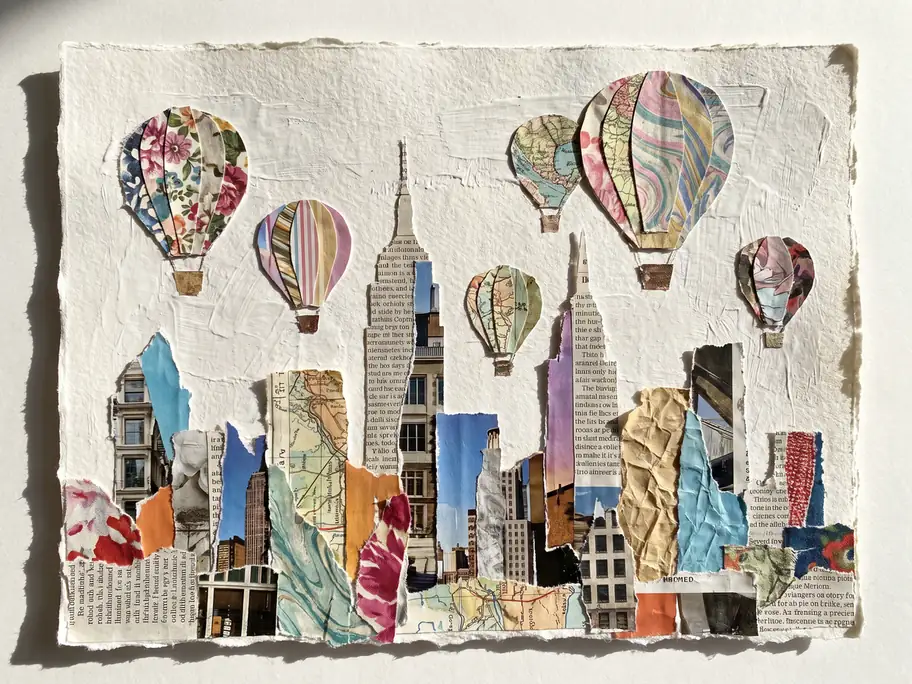 Collage art style example: Mixed-media paper collage of a city skyline and hot air balloons from cut magazine paper, torn edges, layered
Collage builds an image from cut or torn paper, photos and found material. Cubists made it an art form, and it lives on in zines, editorial design and mixed media.
- Era: early 1900s to today
- Key traits: cut and torn paper, mixed patterns, layered shadows, handmade texture
- Famous artists and examples: Pablo Picasso, Georges Braque, Henri Matisse (paper cut-outs), Romare Bearden
Try it with AI (Nano Banana Pro):
Mixed-media paper collage of a city skyline and hot air balloons from cut magazine paper, torn edges, layered shadows.
48. Stained Glass
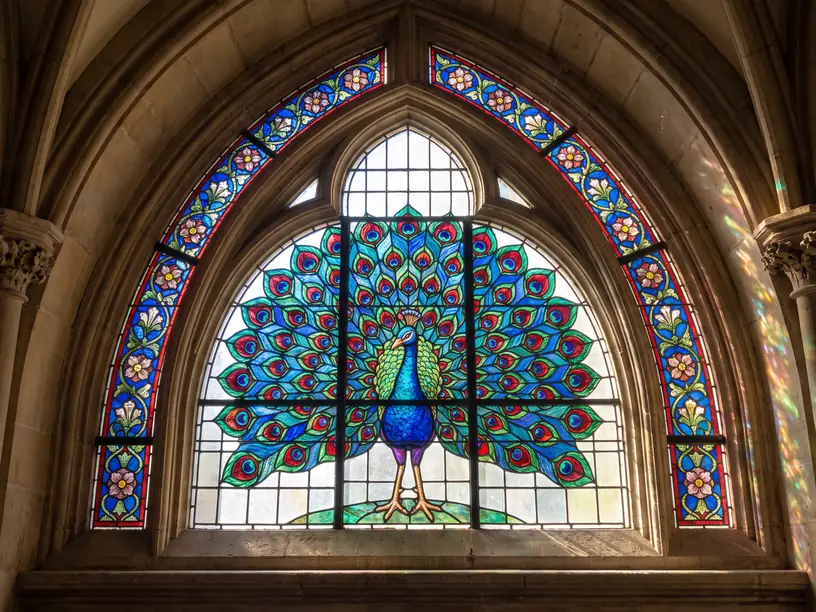 Stained Glass art style example: Stained glass window of a peacock among flowers, glowing jewel-toned glass, thick black lead lines, sunlight s
Stained glass fills windows with colored glass held in place by lead lines. Light shining through turns it into glowing pictures, from Gothic cathedrals to Tiffany lamps.
- Era: medieval to today
- Key traits: jewel-toned glass, thick black lead lines, light shining through, arched frames
- Famous artists and examples: Chartres Cathedral windows, Louis Comfort Tiffany, Marc Chagall
Try it with AI (Nano Banana Pro):
Stained glass window of a peacock among flowers, glowing jewel-toned glass, thick black lead lines, sunlight shining through, Gothic arch.
49. Woodcut and Linocut
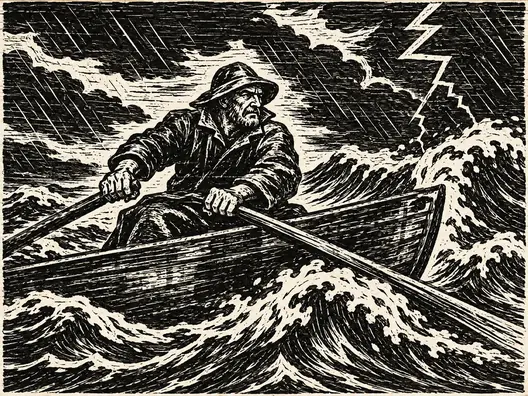 Woodcut and Linocut art style example: Black ink woodcut print of a fisherman rowing on stormy waves, bold carved lines, strong contrast, visible gou
Woodcut and linocut are relief prints: the artist carves away everything that should stay white. The result is bold, high-contrast black and white with visible gouge marks.
- Era: 15th century to today
- Key traits: bold carved lines, stark black and white, gouge textures, folk or dramatic subjects
- Famous artists and examples: Albrecht Dürer, Ernst Ludwig Kirchner, Käthe Kollwitz
Try it with AI (GPT Image 2.6):
Black ink woodcut print of a fisherman rowing on stormy waves, bold carved lines, strong contrast, visible gouge marks.
50. Risograph Print
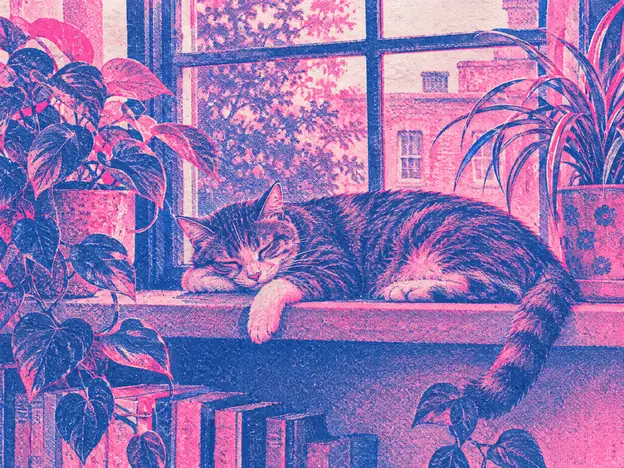 Risograph Print art style example: Two-color risograph print of a cat sleeping on a windowsill with plants, fluorescent pink and blue ink, grainy
Risograph is a stencil printing method from Japan that indie artists adopted for zines and posters. Its fluorescent inks, grain and slightly off registration are now a loved style.
- Era: 1980s onward
- Key traits: two or three fluorescent inks, grainy texture, slight misregistration, halftone shading
- Famous artists and examples: indie zine makers and print studios
Try it with AI (GPT Image 2.6):
Two-color risograph print of a cat sleeping on a windowsill with plants, fluorescent pink and blue ink, grainy, slight misregistration.
How to Identify an Art Style
Not sure what you're looking at? Work through these six clues in order. Two or three usually narrow it down.
- Brushwork. Invisible and smooth points to Renaissance or Neoclassicism. Short and broken suggests Impressionism, swirling and thick suggests Post-Impressionism, and drips and splatters suggest Abstract Expressionism.
- Color. Pastels suggest Rococo or vaporwave. Wild, unnatural color is Fauvism or Expressionism, and flat primaries point to Bauhaus or Pop Art.
- Light. A single dramatic light in darkness is Baroque. Bright outdoor light is Impressionism, and neon in the rain is cyberpunk.
- Form. Geometric fragments mean Cubism. Flowing curves mean Art Nouveau, and impossible, dreamlike scenes mean Surrealism.
- Subject. Myths and heroes suggest Neoclassicism or Romanticism. Workers suggest Realism, and ads and comics suggest Pop Art.
- Medium and texture. Look for the material itself: mosaic tiles, woodgrain, risograph grain, pixels or plasticine.
One Subject in Nine Art Styles
The fastest way to understand how much style matters is to keep the subject fixed. Here is the same lighthouse on a cliff at dusk, made in nine different art styles with the same short prompt and only the style words changed.
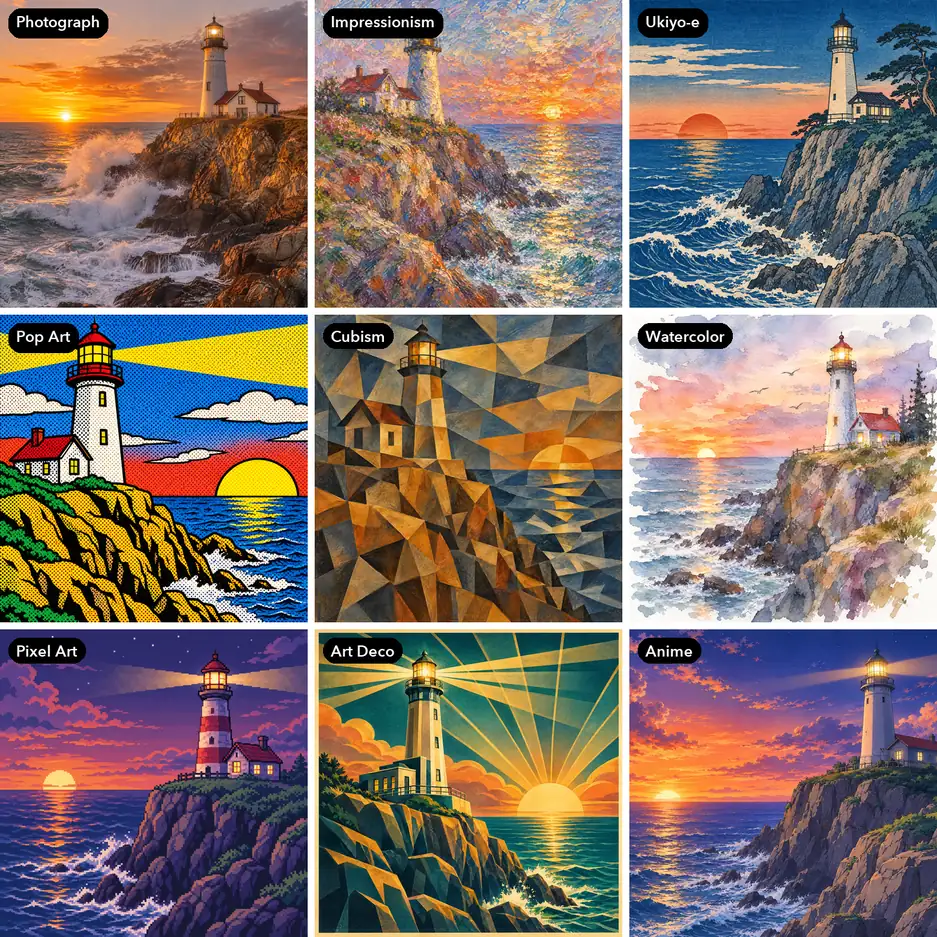 The same lighthouse on a cliff at dusk shown as a photograph and in Impressionism, ukiyo-e, Pop Art, Cubism, watercolor, pixel art, Art Deco and anime styles
The prompt pattern was: "A lighthouse on a rocky cliff above the sea at dusk, as [style] with [two or three style traits]." Swapping in a style's key traits, not just its name, is what makes the result look authentic.
How to Find Your Own Art Style
Your style is the sum of choices you keep making. These steps help you find it faster:
- Collect 20 images you love and sort them by style using the guide above. Patterns show up quickly.
- Copy two or three styles closely for practice, the way art students have always learned.
- Mix one trait from each. For example, ukiyo-e outlines plus vaporwave colors, or watercolor texture plus Art Deco geometry.
- Limit your palette and subjects for a month. Constraints make a style recognizable.
- Use AI to explore, then decide. Run one subject through ten styles in an AI image generator to see which direction excites you, then develop it by hand or with more refined prompts.
How to Create Any Art Style With AI
You can recreate every style in this guide with a text prompt. Here's the method we used for the 50 style images above:
- Name the style and the medium. "Impressionist oil painting" works better than "Impressionist".
- Add two or three key traits from the style's description: "short broken brushstrokes, outdoor light, shimmering reflections".
- Pick a subject that suits the style. Cafés and rivers for Impressionism, megacities for cyberpunk, waves for ukiyo-e.
- Choose the model for the job. Painterly styles came out best on Midjourney V7. Posters and graphic styles worked well on GPT Image 2.6, photo-real and textured styles on Nano Banana Pro, and flat or geometric styles on Recraft V4.1. All four are in ImagineArt's AI image generator, so you can compare them side by side.
- Describe the style, not a living artist. Use traits like "thick impasto, swirling strokes" rather than an artist's name. It gives better control and respects working artists.
For more prompt technique, see our AI image prompt guide. To choose a model, read our hands-on test of the best AI image generators. For camera language in photo-style images, see types of camera shots.
Want a specific look in one click? Try the AI anime generator, the AI comic generator or sketch to image.
FAQs
Art styles are usually grouped into historical movements (Renaissance, Baroque, Impressionism), modern movements (Cubism, Surrealism, Pop Art), contemporary and digital styles (anime, pixel art, vaporwave) and medium-based styles (watercolor, charcoal, woodcut). This guide covers 50 across all four groups.
There is no fixed number. Art historians define movements differently and new styles keep appearing, especially online. Most guides cover between 20 and 60 of the best-known styles.
Among historical movements, Impressionism is one of the most widely loved and exhibited. Among styles people create today, anime, watercolor and digital illustration are some of the most popular.
An art movement is a group of artists working with shared ideas in a specific period, such as Cubism in the early 1900s. An art style is the visual look itself, which can come from a movement, a single artist, a medium or a culture, and can be used long after the movement ends.
Look at six clues: brushwork, color, light, form, subject and medium. For example, short broken brushstrokes and outdoor light point to Impressionism, while geometric fragments seen from several angles point to Cubism.
Collect images you love, notice which styles they share, practice copying two or three of them, then combine traits from each. Limiting your palette and subjects for a while also helps a personal style emerge.
Yes. Name the style and medium, add two or three of its key traits and choose a subject that suits it. Different models suit different styles, so an AI image generator that offers several models, such as ImagineArt, lets you compare results side by side.
Styles themselves aren't protected the way specific artworks are, but copying a living artist's distinctive work closely is widely seen as unfair. The better approach is to describe a style's traits, as the prompts in this guide do, rather than naming a living artist.
Kamran Arshad
Kamran Arshad is a full-stack marketer and growth strategist for Gen AI and B2B SaaS companies.
View all articlesRecent posts

The Best AI Avatar Generators In 2027: 11 Tools Compared And Ranked
How to Edit Images With Ideogram 4.6: 38 Edits, Prompts and Results

Best time to post on Instagram and Reels: 4 studies compared