Tooba Siddiqui
July 21, 2026 • Updated July 22, 2026
11 mins Read
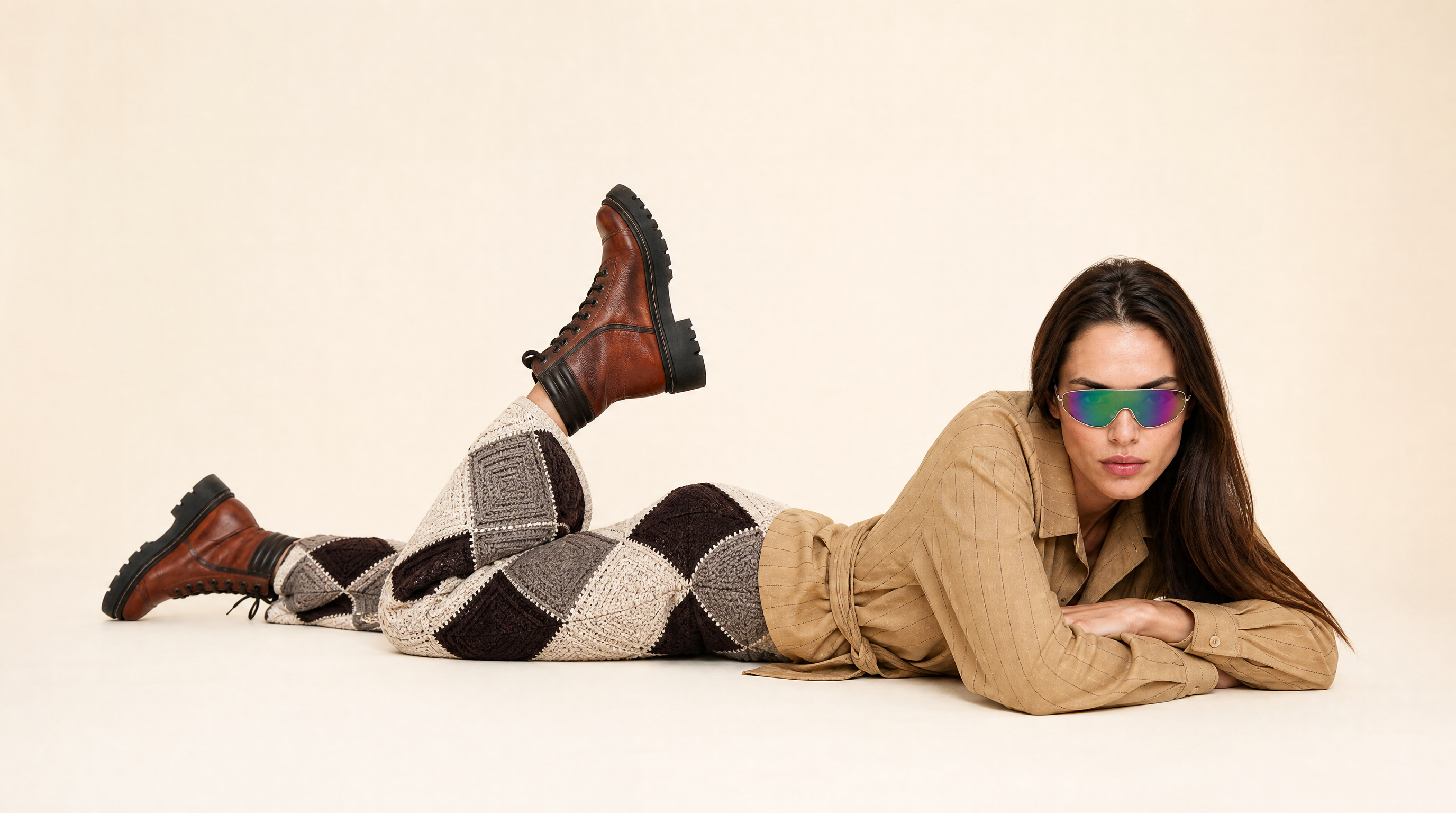
A traditional fashion shoot — model booking, studio time, photographer fees, retouching — runs anywhere from $1,500 to $10,000 per day. For brands launching seasonal collections or updating product listings at scale, that cost structure doesn't hold. AI fashion model generators address the core problem: professional-quality model imagery without the production overhead.
This guide covers seven of the best AI fashion model generators in 2026, evaluated on realism, catalog vs editorial capability, model consistency, and ease of use — with a clear recommendation for each use case.
Key Takeaways
- Most AI clothing model generators are built for either catalog (consistent, product-first) or editorial (atmospheric, campaign-ready) — few handle both well
- ImagineArt AI Fashion Studio is the only tool here that generates video alongside photography within the same workflow
- Botika and PhotoRoom are the strongest options for flat-lay to on-model conversion at volume
- FASHN AI is the only tool with a purpose-built virtual try-on API for developers
- Browzwear is enterprise-only — it creates custom IP-owned models, not access to a shared library
- Free tiers exist at FASHN AI and Krea for teams testing before committing budget
What Is an AI Fashion Model Generator?
An AI fashion model generator is a tool that places clothing on an AI-generated or reference-based human figure to produce professional imagery for catalogs, campaigns, product pages, or marketing materials — without a physical photoshoot.
The two primary use cases pull in different directions:
- Catalog photography — same face, consistent lighting, controlled background across every SKU in a collection
- Editorial photography — atmospheric scenes, styled poses, campaign-level art direction
Most tools optimize for one. A few cover both. Knowing which you need is the fastest way to narrow the shortlist.
How We Evaluated
Each tool was assessed across six criteria:
- Realism — how close output is to professional photography
- Catalog support — consistent model identity across multiple SKUs
- Editorial support — ability to generate scene, atmosphere, and creative direction
- Model consistency — same face and body across multiple generations
- Ease of use — steps required, technical skill needed
- Output formats — image only, or video as well
Best AI Fashion Model Generator At a Glance
| Tool | Catalog | Editorial | Video | Model Consistency | Free Tier | Starting Price |
|---|---|---|---|---|---|---|
| ImagineArt AI Fashion Studio | ✓ | ✓ | ✓ | High | ✓ | $13/mo |
| Botika | ✓ | Partial | ✓ | High | Trial only | $33/mo |
| FASHN AI | ✓ | — | — | High | 10 credits | $19/mo |
| PhotoRoom | ✓ | — | — | Medium | ✓ | $12.99/mo |
| Claid AI | ✓ | Partial | ✓ | Medium | — | Not listed |
| Krea | Partial | ✓ | — | Medium | ✓ | $9/mo |
| Browzwear | ✓ | ✓ | — | Very High | No | Enterprise |
Best AI Fashion Model Generators in 2026
The tools below are ordered from most versatile to most specialized.
1. ImagineArt AI Fashion Studio — Best for Catalog and Editorial in One Workflow
ImagineArt AI Fashion Studio is a six-step AI fashion model generator built for brands that need catalog and editorial output from the same platform. The workflow covers model selection, garment dressing, accessory layering, background setting, pose direction, and generation — with video output available via Seedance 2.0.
Best for: Brands that need consistent model identity across a full collection, with the option to extend imagery into video content.
Key features:
- AI model creation from preset, uploaded reference, or text prompt
- Catalog and editorial background modes within the same workflow
- Flat-lay to on-model and ghost mannequin conversion
- Pose direction via preset, reference image, or AI-generated
- Video output from the same generation session
- Team collaboration and shared project access
- Full commercial ownership of all generated content
Pros:
- Catalog and editorial output from one tool — no need to run two platforms
- Model stays consistent across a full shoot session and across seasonal campaigns
- Video output is a differentiator no other tool in this list offers natively
Cons:
- Six-step workflow requires a short learning curve compared to single-click tools
Pricing: Free plan available; Basic $13/mo, Standard $30/mo, Ultimate $55/mo
What we liked best: The model consistency across months is practical for brands that refresh collections seasonally and need the same face across spring and autumn campaigns without rebooking.
2. Botika — Best for Flat-Lay to On-Model Conversion at Scale
Botika converts existing flat-lay product photos into professional on-model imagery using AI-generated models. It works from assets brands already have rather than requiring new input creation — making it the fastest route from existing inventory photography to model imagery at volume.
Best for: Retailers with large catalogs of flat-lay photography that need on-model images without starting a new shoot.
Key features:
- Flat-lay and mannequin photo conversion
- Diverse pre-built model gallery across body types, skin tones, and ethnicities
- AI fashion video output
- Professional retouching workflow
- Enterprise integrations
Pros:
- 90% cost reduction and 6-week to 24-hour turnaround claimed by clients including Forever 21, Perry Ellis, and Jordache
- Strong diversity options within the model gallery
- Works from existing assets — no new product photography required
Cons:
- Less suited for editorial or atmospheric campaign work
Pricing: Free trial available; Lite $33/mo, Pro $35/mo, Advanced $40/mo, Enterprise custom
What we liked best: Starting from flat-lay photos instead of generating from scratch removes significant setup time for brands that already have product photography in place.
3. FASHN AI — Best for Virtual Try-On and Model Swapping
FASHN AI focuses on three operations: product-to-model generation, model swapping across an existing image, and virtual try-on for product pages. The model swap feature keeps the product, pose, and background fixed while changing only the model — useful for brands showing the same garment across diverse model options. It's also the most developer-friendly option in this list.
Best for: Brands building virtual try-on for PDPs, or developers integrating AI model generation into an existing e-commerce stack.
Key features:
- Product-to-model generation
- Model swap — changes model while preserving product, pose, and background
- Virtual try-on for customer-facing PDP content
- Developer API
- Web app and iOS app
- Integrations with Pinterest, Shopify, and About You
Pros:
- Only tool here with a purpose-built virtual try-on developer API
- Free credits
- Integrates directly with major e-commerce platforms
Cons:
- No editorial capability — focused on product photography
- Limited creative control compared to full-workflow tools
Pricing: 10 free credits to start; Basic $19/mo, Pro $49/mo, Agency $99/mo
What we liked best: The model swap feature is genuinely practical — showing the same garment on different models for representation without reshooting is something other tools don't handle as cleanly.
4. PhotoRoom — Best for High-Volume Batch Processing
PhotoRoom is a product photography platform that added AI fashion models, ghost mannequin, and flat lay as dedicated features in 2026. Its primary strength is volume — processing hundreds of product images in one pass and outputting them in multiple formats for different e-commerce sales channels simultaneously.
Best for: High-volume fashion retailers and resale marketplaces that need to process large batches of product listings efficiently.
Key features:
- AI fashion model generation
- Ghost mannequin and flat lay options
- Unwrinkle clothes feature
- Batch processing across hundreds of images
- Multi-format output (Instagram, Amazon, Shopify in one pass)
- Brand Kit for style consistency across the catalog
- Depop marketplace partnership
Pros:
- Batch processing volume is the strongest in this comparison
- One image generates outputs formatted for every major sales channel
- Ghost mannequin and AI model generation within the same platform
Cons:
- AI fashion model feature is newer than dedicated tools — less mature
- Not suited for editorial or campaign-level imagery
Pricing: Free plan available; Pro $12.99/mo, Max $34.99/mo, Ultra and Enterprise custom
What we liked best: Generating one product image and automatically outputting it in every required platform format cuts a manual step most brands handle separately.
5. Claid AI — Best for High-Resolution Catalog Quality
Claid AI focuses on output quality — 4K catalog imagery with detailed texture rendering and precise background control. It's the right tool when standard AI image resolution isn't sharp enough, particularly for categories where product photography pricing justifies investing in sharper material texture, stitching detail, or fine garment work.
Best for: Luxury apparel, accessories, jewelry, or any category where image sharpness directly affects conversion.
Key features:
- AI fashion model generation
- 4K background and model output
- Background editing and manipulation
- AI video with sound (recently added)
- Catalog-focused workflow
Pros:
- 4K output resolution is visibly better for detail-heavy product categories
- Background editing and model generation in one platform
- Video output with sound now available
Cons:
- Pricing not publicly disclosed — requires sign-up to access
- More limited creative toolkit compared to full-workflow platforms
Pricing: Not publicly listed
What we liked best: The 4K output makes a visible difference on luxury product pages where fabric texture and garment construction are part of the selling point.
6. Krea — Best for Creative Editorial Shoots
Krea is a general AI image platform with 4K native output, 64+ AI models, and strong fashion generation capability. It's less structured than dedicated fashion tools — which is the point. Designers who want artistic control over editorial looks or unconventional styling will get further here than inside a step-by-step catalog workflow. It also rewards prompt skill more than other tools in this list.
Best for: Designers and creative directors who need editorial control and aren't running a catalog workflow.
Key features:
- 4K native output, upscalable to 22K
- 64+ AI models including Flux and Krea 2
- Style transfer and generative editing
- Fashion model generation via text prompt
- Used by Nike and Samsung
Pros:
- Most creative control of any tool in this comparison
- Transparent public pricing starting at $9/month
- Free tier available for testing
Cons:
- No catalog workflow features — no model consistency tools or shoot management
- Requires more prompt skill than structured fashion platforms
Pricing: Free / Basic $9/mo / Pro $35/mo / Max $105/mo
What we liked best: The range of models and style transfer capability makes it the strongest option for editorial images that don't look like they came from a fashion tool template.
7. Browzwear — Best for Enterprise with Full IP Ownership
Browzwear creates custom, brand-owned AI models — not access to a shared library. Each model is fit-validated, fully adjustable across size, emotion, pose, skin tone, and hair, and owned entirely by the brand rather than licensed. It's purpose-built for enterprise apparel operations.
Best for: Enterprise apparel brands that need full IP ownership, validated fit accuracy, and consistent global output across channels.
Key features:
- Custom brand-owned AI model creation (not shared library access)
- Adjustable size, pose, emotion, skin tone, hair
- Ecommerce, wholesale, and marketing channel output
- Integration with Stylezone for team collaboration
- Virtual try-on capability
- Clients include Nike, Walmart, Target, Puma, Under Armour, VF Corporation
Pros:
- Full IP ownership — models belong to the brand, not licensed from a shared pool
- Fit-validated models for accurate product representation
- 30–50% faster go-to-market reported by enterprise clients
Cons:
- Enterprise-only — no self-serve access or public pricing
- Not appropriate for small or mid-market brands
Pricing: Enterprise, contact required
What we liked best: IP ownership is a real differentiator at enterprise scale — shared model libraries create liability exposure that large brands can't accept.
How to Choose an AI Fashion Model Generator
If you're unsure which tool fits, start with the use case — not the feature list. Here's how to narrow it:
-
Running a full product catalog: Model consistency and background control come first. ImagineArt AI Fashion Studio covers catalog plus editorial in one tool; PhotoRoom handles volume batch output.
-
Have existing flat-lay photography: Botika works from what you already have — no new garment photography required before generation.
-
Building virtual try-on for product pages: FASHN AI is purpose-built for PDP use cases and provides a developer API for custom integration.
-
Output quality is critical (luxury, accessories, detail-heavy garments): Claid AI's 4K output is worth the extra step when image sharpness affects conversion.
-
Editorial campaigns and creative lookbooks: Krea for maximum artistic control. ImagineArt AI Fashion Studio if you need editorial and catalog output from the same session.
-
Exploring AI in fashion design more broadly: Many brands use a combination — a catalog tool for product listings and a creative platform for campaign imagery.
-
Enterprise with IP requirements: Browzwear creates brand-owned models rather than providing shared library access.
-
Testing before budget commitment: FASHN AI's free tier and Krea at $9/month are the lowest-friction entry points.
Ready to Generate AI Fashion Model?
AI fashion model generators are production tools now, not experiments. The right choice comes down to one decision: catalog consistency, editorial creativity, or both. ImagineArt AI Fashion Studio covers the widest range. Botika for flat-lay conversion at volume. FASHN AI for virtual try-on. Browzwear for enterprise IP control.
Frequently Asked Questions
What is an AI fashion model generator?
An AI fashion model generator creates realistic human model images wearing a brand's clothing without a physical photoshoot. Inputs range from flat-lay product photos to text prompts; outputs range from e-commerce catalog images to editorial campaign photography.
Can AI fashion models replace real models for catalog photography?
For standard catalog work — consistent lighting, clean backgrounds, controlled poses — yes, for most brands. Enterprise clients like Forever 21 and Perry Ellis already run full catalog workflows on AI tools. Editorial work still requires more creative input to match professional output.
Which AI clothing model generator works best for small brands?
FASHN AI (free tier) and Krea ($9/month) are the most accessible starting points. ImagineArt AI Fashion Studio covers both catalog and editorial from one workflow, which reduces the number of tools a small team needs to manage.
How realistic are AI-generated fashion model images in 2026?
At the top end of the tools in this comparison, outputs are close enough to professional product photography that some brands publish them without disclosure. Output quality depends on the tool, the quality of the input garment image, and how precisely the workflow or prompt is configured.
What is the difference between catalog and editorial AI fashion photography?
Catalog photography prioritizes product clarity — same model, same lighting, clean background, every SKU shown consistently. Editorial photography prioritizes atmosphere — styled environments, expressive poses, campaign-level art direction. Most AI tools are built for one; ImagineArt AI Fashion Studio and Browzwear both support both.
Is it legal to use AI-generated fashion models in commercial campaigns?
Generally yes, provided the platform grants commercial rights to generated content. ImagineArt AI Fashion Studio and Browzwear both include commercial ownership of output. Review each platform's terms before publishing — some restrict commercial use at lower pricing tiers. For fashion ads and paid campaigns specifically, confirm usage rights cover paid media placements.
Tooba Siddiqui
Tooba Siddiqui is a content marketer with a strong focus on AI trends and product innovation. She explores generative AI with a keen eye. At ImagineArt, she develops marketing content that translates cutting-edge innovation into engaging, search-driven narratives for the right audience.