ImagineArt vs Canva
Canva runs on templates you edit by hand. ImagineArt runs on prompts that generate the finished shot. If you need a poster or mood board fast, this is the canva alternative built for AI-native generation.

You Might Also be Interested in
Community Creations
Two different starting points
Canva starts with a template grid: pick a layout, then swap the photo and headline. ImagineArt starts with a blank prompt box. Type "a minimalist poster for a rooftop jazz night, navy and gold" and the image exists in seconds, generated from scratch, not assembled from a library. A template reused a thousand times looks reused. Canva's library is the one every small business pulls from. ImagineArt renders from your own wording, so two people writing the same brief land on different results.
Speed for one-off content
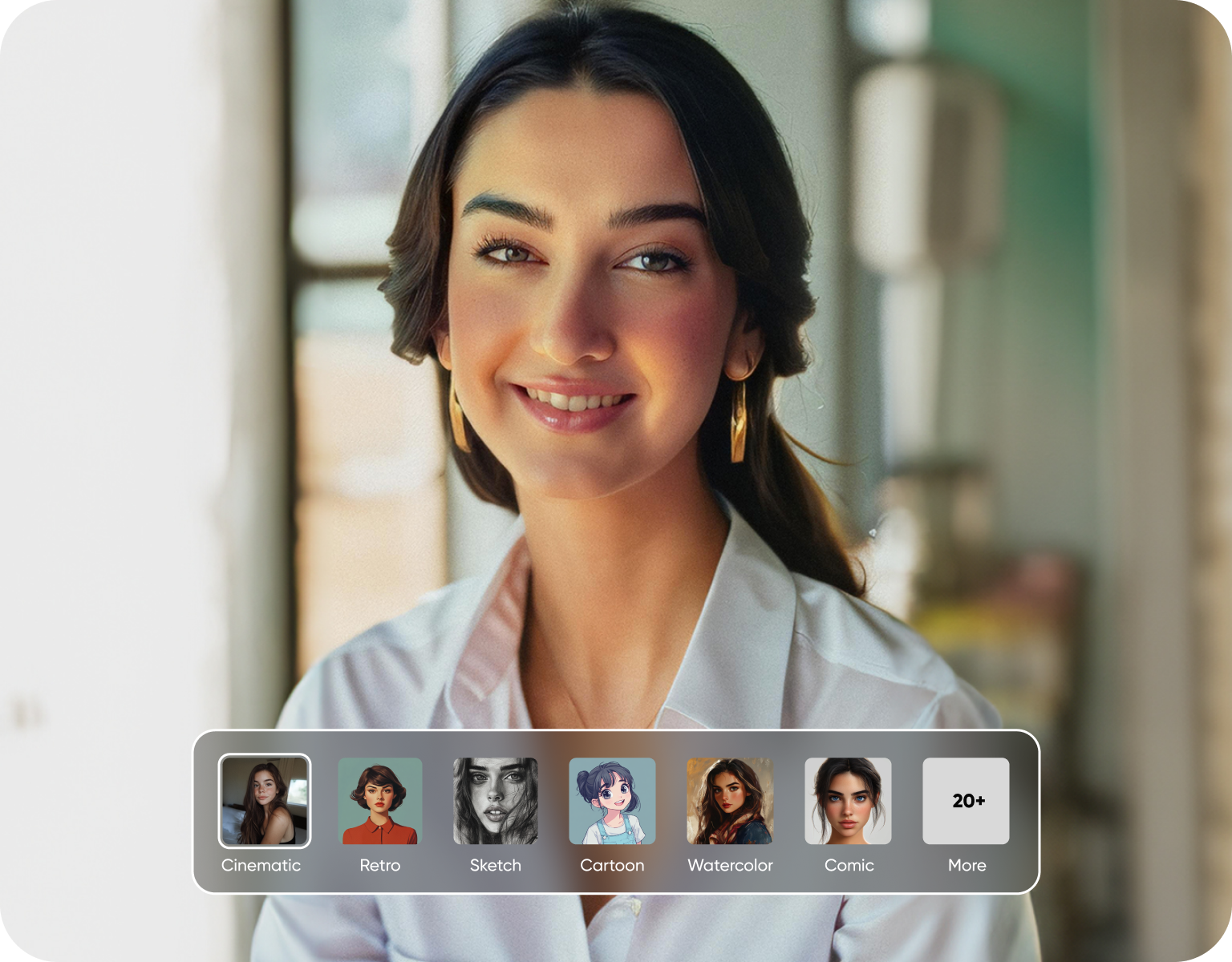
A single flyer, product shot, or social banner is where the two tools diverge most. In Canva, a one-off means opening a template, resizing text boxes, and swapping photos until it looks intentional. In ImagineArt, a one-off is one prompt and one render, under 30 seconds. Canva rewards reuse: build a template once, apply it fifty times. ImagineArt rewards variety: fifty prompts cost the same setup time, none. Pick based on whether your week looks like one template repeated, or fifty ideas that never repeat.
Collaboration, reimagined
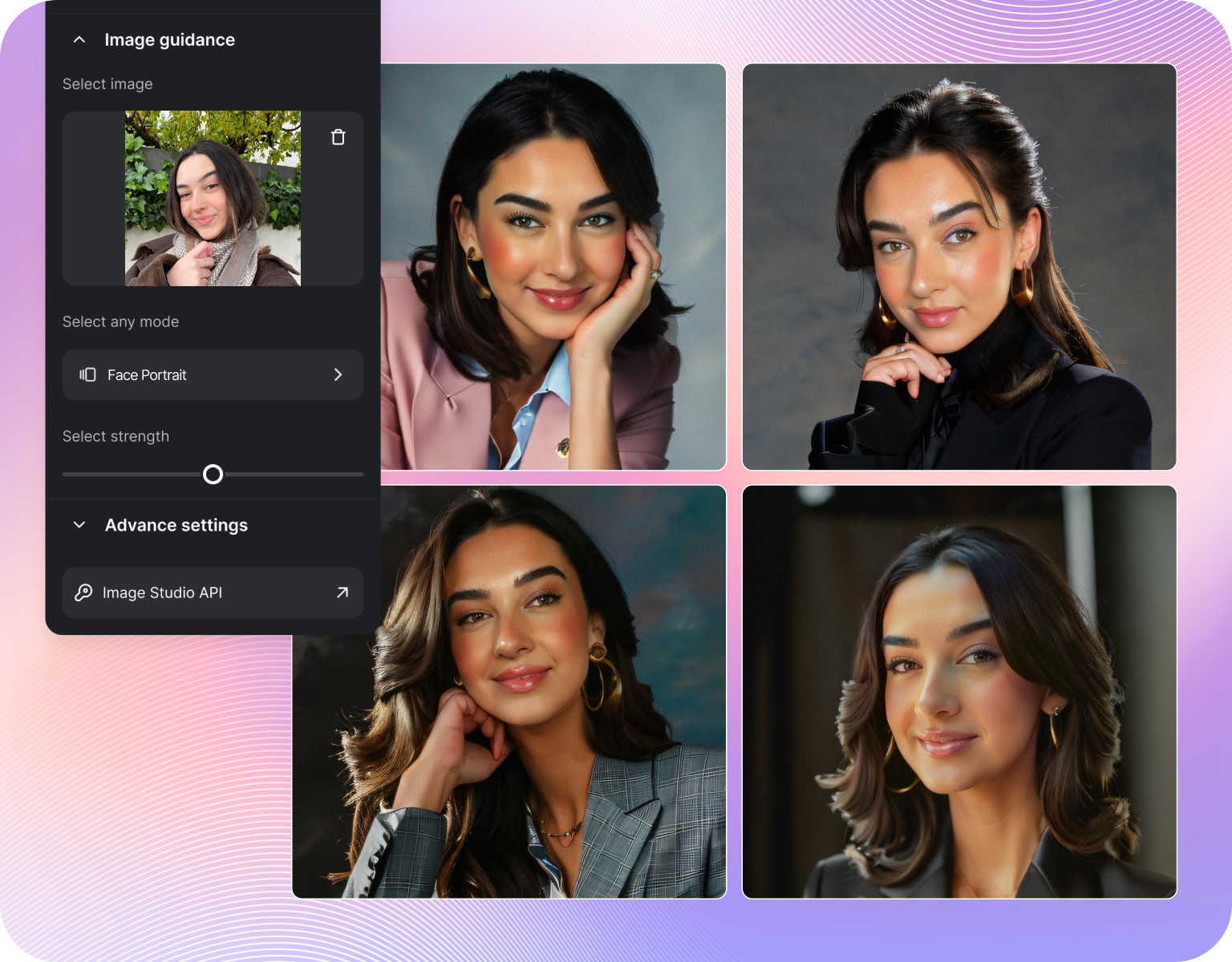
Canva's real-time editor suits a marketing team assembling a slide deck together, with comments, shared brand kits, and drag-and-drop layout control. ImagineArt collaboration works differently: a team shares prompts and reference images instead of a canvas, generating variations off one brief.
Five people adjusting text boxes on one design at once is what Canva was built for. Five variations of one campaign concept, fast, is what ImagineArt's prompt-based workflow delivers without a layout tool.
Who each tool actually fits
Canva fits a small business owner or marketer who needs a professional flyer, carousel, or presentation without design training, built from a template that's already balanced and on brand. It's editing software with AI layered on top.
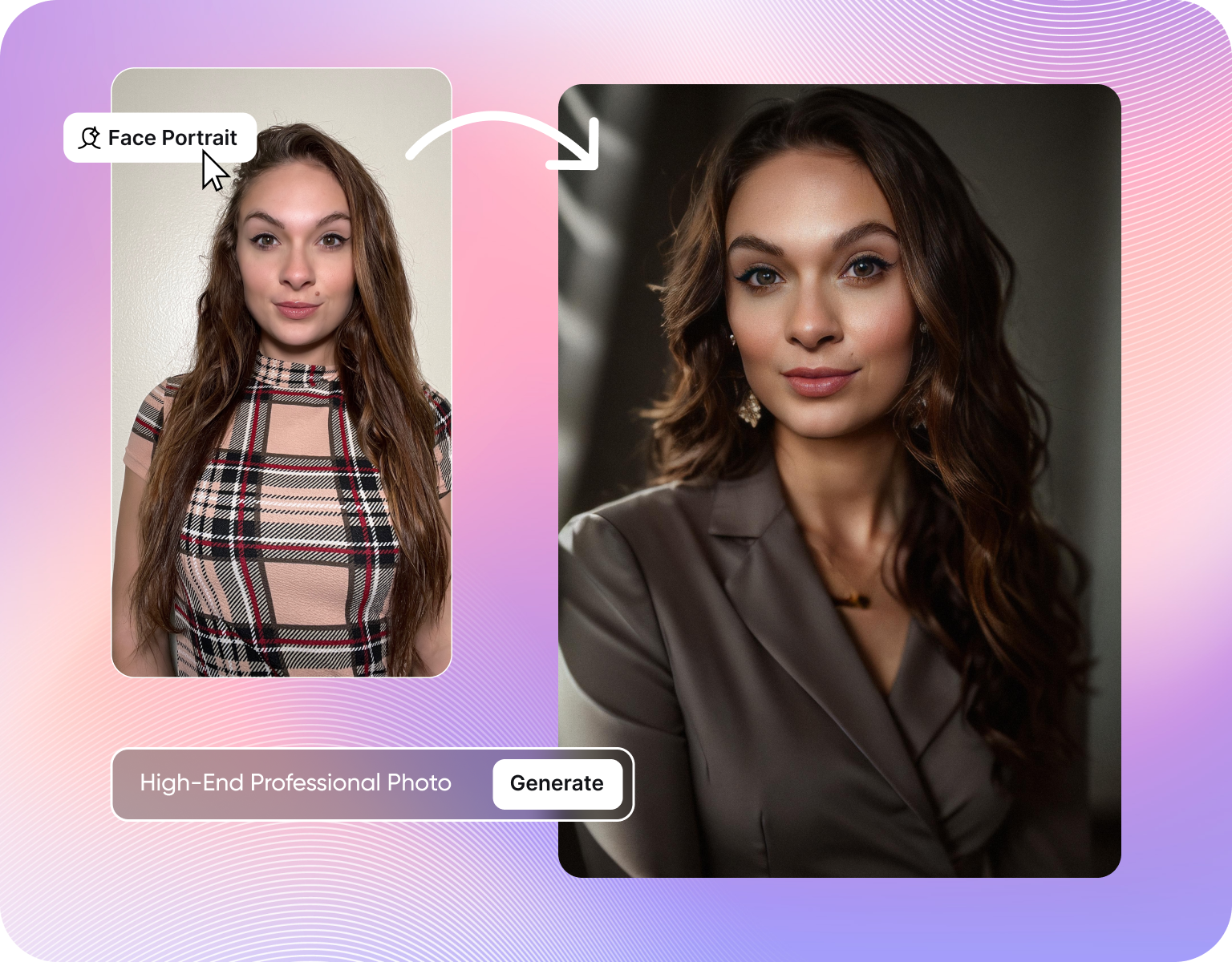
ImagineArt fits a creator or brand team that needs original visuals fast: mockups, ad concepts, or a poster series that shouldn't look like the Canva template everyone used this month. It's an ai image generator first, built around what it generates.
How ImagineArt works
Step 1
Describe the shot
Type what you want in plain language, down to lighting, angle, and mood. "Product shot of a ceramic mug on a marble counter, morning light from the left, shallow depth of field" reads like a photographer's brief, not a search query, because the model responds to that level of specific, concrete detail rather than a vague description.
Step 2
Generate and refine
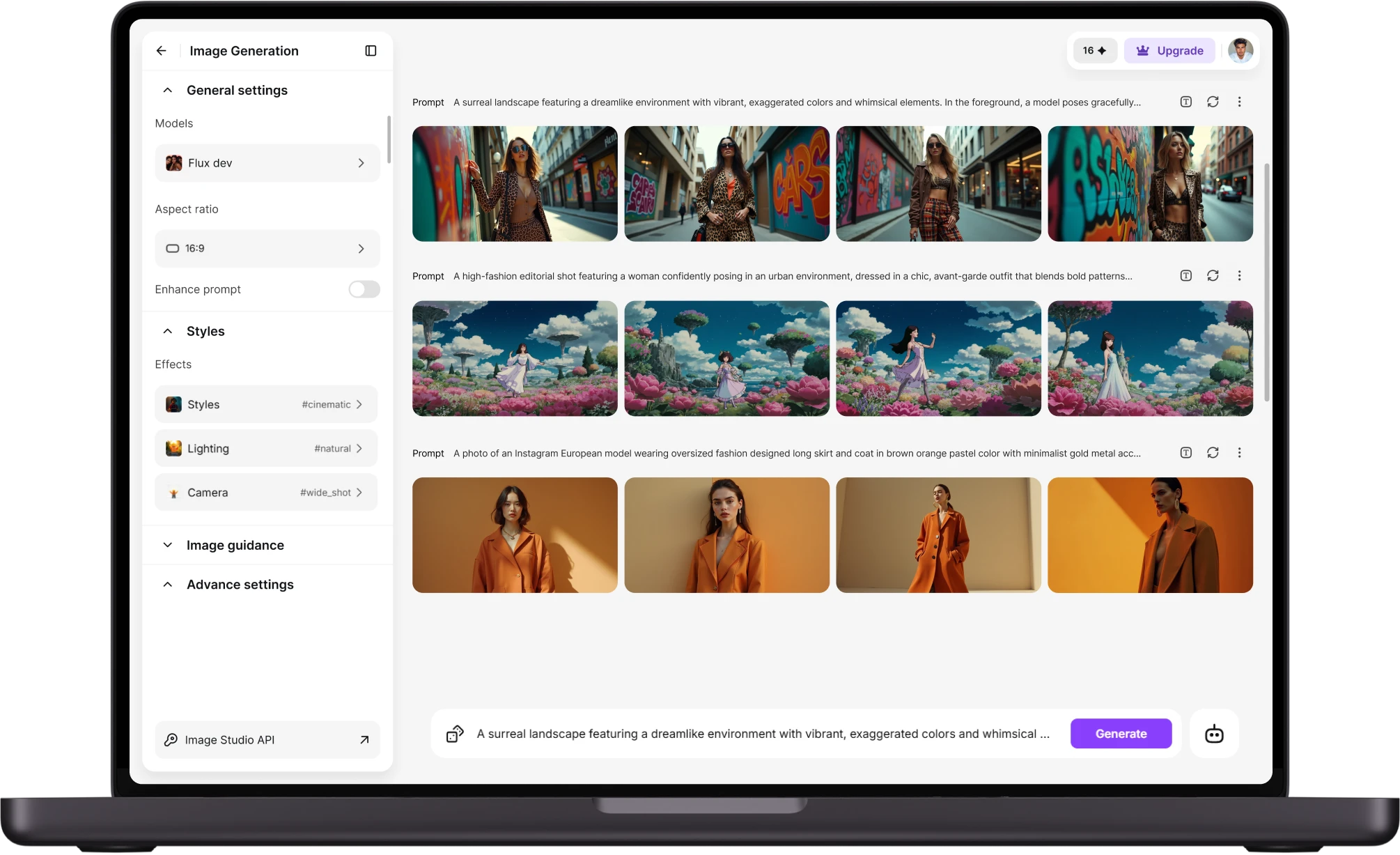
ImagineArt renders multiple options from that single prompt, then lets you adjust the wording, swap in a reference image, or regenerate specific regions until the shot matches what you pictured. No layer stack, no manual masking, and no template swapping required to get from a rough idea to a finished, usable image.
Step 3
Export and reuse the prompt
Download the final image at full resolution, then reuse the same prompt structure for the next variation in the series. A campaign of twenty related visuals starts from one refined prompt and a few adjusted details, not twenty separate template edits pieced together one layer at a time in an editor.
What ImagineArt generates that a template library can't
- Original concepts, not reused layouts:Every render starts from your prompt, not a template Canva users may have already applied to their own post.
- Product shots without a studio:Describe the product and lighting, and get a usable shot without a camera, a set, or a stock photo license.
- Poster and flyer art built from scratch:A jazz night poster generates as unique art, not a recolored version of a template someone else already picked.
- Mood boards from a single brief:Generate five or six visual directions from one description instead of manually collecting reference images across a dozen tabs.
- Style consistency across a series:Reuse a prompt's structure so a batch of assets shares one visual language without a shared template file.
Where speed of iteration actually shows up
- Ten variations in the time Canva takes for one edit:Regenerating a prompt with a small tweak takes seconds, versus readjusting a template's layers each time.
- No stock photo search required:Describing the shot replaces scrolling a stock library for something close enough to what you pictured.
- No design skill floor for original work:Getting an unrepeated visual out of Canva usually means manual editing skill. ImagineArt gets there from one sentence.
- Batch content without batch templates:A week of social posts can each start from a distinct prompt instead of one template stretched thin.
- Faster testing for ad creative:Marketers running paid social can generate several visual directions before a campaign launches, instead of building one design and hoping it performs.
Where the model lineup actually shows up in the work
- Photoreal vs stylized in one project:Use ImagineArt's 2.0 model for a realistic shot and a third-party model for a stylized icon, without leaving the platform.
- Consistent characters across a set:Keep the same reference image and style settings across a batch, so a character looks like itself across ten renders.
- Faster iteration on one idea:Regenerate a variation without rebuilding the prompt, since style and model choice sit in their own fields.
- Format flexibility built in:Set aspect ratio and resolution per job, useful for a team producing a square post, a story, and a banner from one shoot.
- No re-explaining the brief: ChatGPT resets each new chat, but ImagineArt's saved style and reference settings carry across renders.
Customer Testimonials About ImagineArt vs Canva
Learn what user says about AI ImagineArt vs Canva
“ImagineArt has a really amazing interface, well layered and clean. The workflow feature really makes working easy with all tools available in one place. One other thing, when I tested models like for instance Nano Banana 2 on ImagineArtAi and other Ai brands I got better results and higher quality on ImagineArtAi. It goes to show how much they have invested in making it the best of the best”
“Great platform, lots of useful features. All the models you would want under one roof. Multi variation parallel generation of images and videos. workflows. awesome stuff THOUGH lots and I mean lots of popups. ”
“I have tried quite a few AI image generators, and ImagineArt has quickly become one of my favourites. The image quality is consistently impressive, with detailed, creative, and highly accurate results from even simple prompts. The platform is easy to use, generates images quickly, and offers a great variety of styles and customisation options. One of the main ways I use ImagineArt is to create artwork for my YouTube music videos. I generate unique images and then animate them as visuals to accompany my music. The quality and creativity of the images make them perfect for this purpose, and they often require very little editing before I can use them in my projects. What stands out most is how well it understands complex prompts and turns ideas into stunning visuals with minimal effort. Whether you're creating concept art, character designs, content for social media, or visuals for videos, ImagineArt delivers excellent results. The regular updates and new features show that the team is actively improving the platform, and the overall experience feels polished and reliable. It's become an important part of my creative workflow, and I'd highly recommend it to anyone looking for a powerful and user-friendly AI image generation tool. ”
“Easy interface with all the latest models. Great pricing and worth using for advanced AI generations.”
“ImagineArt offers an impressive range of AI image generation styles and tools. The platform is intuitive and produces high-quality results across different creative styles. The support team is responsive and genuinely helpful. Would recommend to anyone looking for a versatile AI image tool.”
“Using imagine has honestly been a great experience overall. The image quality is impressive, especially for cinematic and anime-style generations, and the platform feels smooth compared to many other AI tools. Prompt understanding is strong, and the renders usually come out detailed and visually appealing even without overly complex descriptions. One thing I really like is how easy the interface is to use. It doesn’t feel confusing for beginners, but still has enough features for advanced creators. The video and motion tools also have a lot of potential and can create very eye-catching content for reels and edits. ”
Purchase a Subscription
Upgrade to get access to pro features and generate more and better
Basic
For newcomers taking their first steps
View Plans
Billed monthly
Included in plan
3Kcredits per month
Additional Features
Up to ~600 Image Generations/month
Up to ~97 Video Generations/month
General Commercial Terms
Image Generation Visibility: Public
4 Concurrent Image Generations
Complimentary Access
All GPT Models
All Gemini Models
All Claude Models
Unlimited Generations
10 Image Models
9 Video Models
Standard
For rising creators to level up their game
View Plans
Billed monthly
Included in plan
8Kcredits per month
Additional Features
Up to ~1.6k Image Generations/month
Up to ~265 Video Generations/month
General Commercial Terms
Image Generation Visibility: Private
8 Concurrent Image Generations
Complimentary Access
All GPT Models
All Gemini Models
All Claude Models
Unlimited Generations
Nano Banana
Runway Gen 4 Turbo
Midjourney V7
8 more Image Models
8 more Video Models
Ultimate
Peak performance for pros
View Plans
Billed monthly
Included in plan
16Kcredits per month
Additional Features
Up to ~3.2k Image Generations/month
Up to ~530 Video Generations/month
All styles and models
General Commercial Terms
Image Generation Visibility: Private
Complimentary Access
All GPT Models
All Gemini Models
All Claude Models
Unlimited Generations
All image models in Standard plan
All video models in Standard plan
Kling 2.6 Pro
Seedance 1.5 Pro
ChatGPT 1.5
Creator
A full production engine for powerhouses
View Plans
Billed monthly
Included in plan
100Kcredits per month
Additional Features
Up to ~20k Image Generations/month
Up to ~3.3k Video Generations/month
All styles and models
General Commercial Terms
Image Generation Visibility: Private
Complimentary Access
All GPT Models
All Gemini Models
All Claude Models
Unlimited Generations
All image models in Ultimate plan
All video models in Ultimate plan
Kling 3.0 Pro
Seedance 2 Fast
Nano Banana 2
Have questions?
We have answers!
ImagineArt is generation-first: most output starts from a text prompt rather than a pre-built layout you edit by hand. It does include structured tools for specific formats like flyers and posters, but the core workflow is describing what you want in words rather than picking a template and swapping elements around it, which is the main structural difference from how Canva's editor is built. Templates play a smaller role here, generation plays the lead one.
Not identically, and that's by design. Canva supports real-time multi-user editing on one canvas, with comments, cursors, and shared brand kits visible to everyone at once. ImagineArt teams collaborate around shared prompts, reference images, and generated variations instead of a shared layout file, then pick the strongest render together. Both support real team workflows, but the unit of collaboration is different: a canvas in Canva, a prompt and its outputs in ImagineArt.
For AI-native content, meaning visuals meant to look original and generated rather than assembled from parts, ImagineArt is the stronger fit, since every render starts from scratch based on your wording. For template-based design, meaning structured documents like decks, brochures, or brand-kit-locked layouts with fixed text zones, Canva's editor remains the better tool for the job. Many teams end up using both, one for imagery and one for layout, rather than picking a single winner.
ImagineArt offers a free tier so you can test text-to-image generationimage generation before committing to a paid plan, similar to how Canva offers a free layer before its Pro features kick in. There's no hidden requirement to hand over a card just to generate your first images and see if the output holds up. Paid tiers add higher generation volume, faster rendering, and additional features as your actual usage grows over time.
No design background is required. The main skill is writing a clear, specific prompt, describing subject, lighting, angle, and mood the way you'd brief a human photographer before a shoot. Canva still requires some layout sense to make a template look intentional and balanced once it's filled in. ImagineArt shifts that skill requirement from visual design toward written description, which tends to be a lower barrier for most people without a design background.
There's no direct file-format bridge between the two today, since they're built on genuinely different foundations: one generates pixels from text, the other arranges existing elements on a canvas. In practice, teams generate images inside ImagineArt, download the finished files, then drop those images into a Canva layout as a photo or graphic element, exactly the way they'd use any other downloaded image file inside an existing design.
Try the canva alternative built for original content
Stop reusing the same template everyone else picked first. Describe the shot, generate it, and download it in the time a template edit would have taken. First images are free to generate, no card required.
![38 AI Affiliate Programs for SaaS Bloggers - Highest Income Potential [2026 Edition]](https://blogs-cdn.imagine.art/Add_a_heading_14cf442dc9.png)