
Arooj Ishtiaq
July 22, 2026 • Updated July 22, 2026
14 mins Read
A spec ad, short for speculative advertisement, is a commercial, print ad, or campaign concept that a creative makes on their own initiative for a brand that never asked for it and never paid for it. No client, no brief, no budget from the brand side, just a creator proving what they can do before anyone hires them.
This guide covers the full spec ad meaning, how it differs from a related but separate industry practice, whether using a real brand's name is legal, and the exact process for writing, producing, presenting, and even selling one, including how AI has changed what used to take a crew and two weeks into something one person can finish in an afternoon.
What Is a Spec Ad?
A spec ad is a self-initiated piece of advertising, video, or print, created without a commission, a brief, or payment from the brand it features. The person making it invents the concept; the brand simply supplies the inspiration. It exists purely to demonstrate the creator's skill:
writing, directing, art direction, editing, or all four at once.
The term comes directly from "speculative," meaning the work is done on spec, on the speculation that its quality alone will open a door: a job, a freelance contract, a meeting with an agency, or a client relationship, and nobody guarantees that outcome. That's the trade a spec ad makes.
Spec ads show up in two main forms:
- Video spec ads (spec commercials). A short film-style commercial, typically 15 to 30 seconds, built around a real or invented brand, shot and edited to look like a finished, broadcast-ready spot.
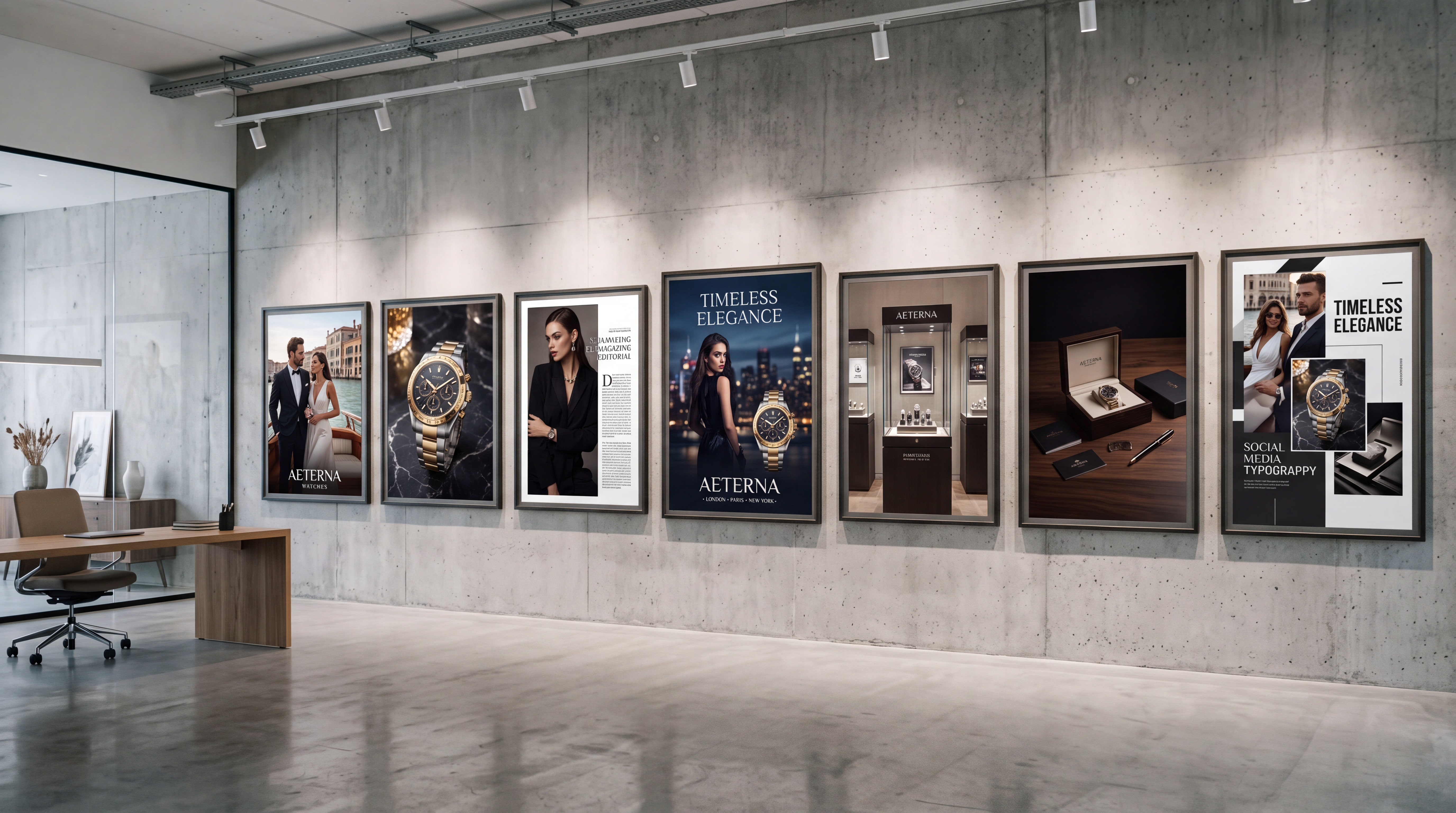
- Print and copywriting spec ads. A headline, body copy, and visual concept for a static ad or campaign, common in copywriter and art director portfolios where the goal is proving conceptual thinking rather than production polish. An AI image generator covers producing the visual half of this format without a photographer or designer on hand.
Both share the same core purpose: they are auditions, not commissioned work.
Spec Ad, Spec Commercial, and Spec Pitch
The word "spec" gets applied to three related but distinct practices in advertising, and mixing them up leads to confusion about what's legal, what's ethical, and what actually helps a career.
Spec ad and spec commercial mean the same thing. They describe an individual creative's self-initiated portfolio piece. Film and video professionals tend to say spec commercial or spec spot; copywriters and art directors, especially in print-heavy or agency-training contexts, tend to say spec ad. Neither term implies the work is fake or low-quality.
Spec pitch (or speculative creative pitch) is a different practice entirely, and one the industry treats far more critically. This is when an advertising agency produces unpaid creative work as part of a competitive new-business pitch, at a client's request, before any contract is signed.
The American Association of Advertising Agencies (4A's) and the Association of National Advertisers jointly published Positive Pitch Principles addressing this practice directly, including a recommendation that agencies be compensated for speculative pitch work and that agencies retain ownership of the ideas they present, even if they don't win the business. This concern exists because some advertisers have used competitive pitches to collect creative concepts and strategy from multiple agencies for free, then quietly used elements of the unpaid work regardless of who was hired.
If you're researching "spec" in an agency new-business context rather than a portfolio-building context, this is the practice you're actually looking at, and it comes with real compensation and IP-ownership debates that don't apply to an individual's portfolio spec ad.
This guide focuses on the individual portfolio spec ad, the practice a freelancer, student, or in-house creative uses to demonstrate skill.
Why Creatives Make Spec Ads
Spec ads solve a specific problem: you can't show client work you've never had, and you can't get client work without something to show. A handful of situations make this trade worth it.
- Entry-level creatives with no paid work yet. A portfolio full of spec ads fills the gap until real client projects arrive.
- Career changers. Someone moving into advertising from another field has no relevant samples at all. Spec ads build a portfolio from nothing.
- Freelancers pitching a specific brand. Rather than a generic reel, a spec ad built for the exact brand you want to work with shows that brand precisely what you'd do with their budget.
- Award submissions. Several student and open advertising competitions are structured specifically around self-initiated concepts made without a paying client, because that format isolates creative thinking from client compromise.
- Working creatives keeping their edge sharp. Directors and copywriters between paid jobs use spec ads to stay creatively engaged and to try ideas a client brief would never approve.
Is It Legal to Make a Spec Ad Using a Real Brand?
Yes, with real limits. You don't need a brand's permission to make a spec ad featuring their name or products, but you do need to stay inside the boundaries of trademark and copyright law, and the advertising production industry has a documented standard for exactly how to do that.
The AICP (Association of Independent Commercial Producers) publishes formal guidelines for using third-party trademarks in a spec spot, and they set the bar most professionals still follow:
- Disclose it as spec, visibly. The AICP recommends superimposing the words "Spec Commercial" on screen throughout the piece, not buried in a description.
- Add a disclaimer. A standard version reads: "The following commercial is a spec commercial. The originator of the commercial is not affiliated with, connected to, nor sponsored or endorsed by [brand]."
- Avoid copyrighted characters and footage. Well-known copyrighted characters and any film footage, music, or literature you don't own should stay out entirely, or be used narrowly enough to qualify as fair use.
- Never combine competing trademarks. Pairing two brands' marks together in a way that implies a relationship between them, a fictional Dr. Pepper and Pepsi crossover, for instance, crosses a real line.
- Don't imply endorsement or tarnish the brand. Nominative fair use, the legal doctrine that lets you reference a trademark to identify a real product, only holds up if you use no more of the mark than necessary and do nothing suggesting the brand approved or sponsored the work.
Even a properly disclaimed spec ad carries some residual risk. A disclaimer reduces legal exposure; it doesn't eliminate the possibility that a brand's legal team sends a cease-and-desist anyway, particularly if the concept touches anything the brand would consider reputationally sensitive.
The practical guidance from working professionals is to keep the tone respectful of the brand and avoid content that could read as mocking, sexual, or otherwise risky regardless of how clearly it's labeled. Follow the five points above and a spec ad sits on solid legal ground for the vast majority of cases.
How to Make a Spec Ad
Every strong spec ad follows the same sequence, whether it ends up as a 30-second video or a single print execution.
1. Choose the Right Brand
Pick a brand you understand and actually want to work for, not the biggest logo you can think of. Nike and Apple already work almost exclusively with established agencies and production companies, so a spec ad aimed at them functions more as a portfolio centerpiece than a realistic pitch. Mid-size or emerging brands are far more likely to see, respond to, and potentially license work aimed directly at them.
2. Write Your Own Brief
Real agency work starts with a client brief. Spec work starts with you writing your own: who's the audience, what's the one thing you want them to feel, and what's the single idea the whole piece hangs on. Skipping this step is the most common reason spec ads feel unfocused. Pairing your finished spec ad with a short written case study, the invented brief, the audience insight, and the concept rationale also demonstrates strategic thinking, not just execution.
3. Develop Multiple Concepts Before You Commit
Generate three to five directions and evaluate them against your brief rather than falling in love with the first idea. Each concept should define its hook, the opening moment that stops the scroll or the skip, its narrative arc, its visual approach, and the emotional payoff at the end.
A breakdown of real advertising hooks with the performance data behind them is a useful reference for building this out, available in this library of advertising hook examples. Experienced spec ad creators consistently report that the strongest execution comes from the third or fourth concept, not the first one written.
4. Script and Storyboard It
For video, write a complete script with visual descriptions and timing side by side, budgeting roughly 130 words of spoken copy per minute if there's narration or dialogue. For print, write the headline first and work outward from it. A headline should grab attention and signal what's being sold before a single line of body copy gets read.
Storyboarding matters even for a 15-second spot, because it's far cheaper to fix a bad sequence on paper than after you've generated or shot it. A full walkthrough of frame composition, shot notes, and pre-visualizing a sequence with AI-generated frames instead of hand drawings is covered in a step-by-step guide to film storyboarding.
5. Produce It
This is the step AI has rewritten completely, covered in the next section.
6. Edit Ruthlessly
Your first cut is never your best cut. Step away from it, come back, and cut anything that doesn't earn its place. A spec ad has no client to blame for a weak scene: everything left in it is a choice you made.
7. Present It, and Consider Whether to Sell It
Export in the format appropriate to the platform, vertical for social, horizontal for a reel, and include a short case study alongside it explaining the concept, the audience, and the creative reasoning. A polished execution with no context reads as a pretty exercise. The same execution with a one-paragraph rationale reads as strategic thinking.
If the finished piece is genuinely strong, some creators reach out to the brand directly rather than only using the work as a portfolio sample. A short, professional email works best:
- Introduce yourself
- Attach the finished piece
- State an asking price if you're open to selling it outright
- Be transparent about the fact that it was made as spec work with no formal rights transferred yet.
Most spec ads never get bought this way, and that's the expected outcome, not a failure. The piece still does its job sitting in your portfolio or demo reel, available to show the next brand, agency, or client that asks what you can do.
How AI Has Changed Spec Ad Production
A spec commercial used to require a crew, rented equipment, a scouted location, cast talent, and days in post-production, all for a piece nobody commissioned and might never buy. That barrier kept most spec ad ideas from ever becoming finished work.
AI doesn't replace the thinking behind a spec ad. It replaces the production chain around it. The concept, the brief, and the script stay the creator's own work entirely; AI executes the idea once that thinking is done.
For Narrative and Brand-Film Concepts
A cinematic spec ad needs shot-level control and a consistent presenter from the opening frame to the close. This used to mean hiring a director of photography and locking a cast for continuity.
- An AI Film Studio gives that shot-level control directly: lens choice, camera movement, and lighting, without a DP on set.
- The same tool locks character identity across every scene, so a presenter or model stays consistent shot to shot.
- A full walkthrough of the interface is available in a step-by-step guide to using it.
For Testimonial, UGC, and Product-Led Concepts
Concepts built around a presenter or a product shot need a different toolset.
- An AI avatar library replaces the need to cast talent, with lip-synced, expression-accurate presenters.
- A UGC ad generator writes and narrates a testimonial-style script automatically from a short brief.
- A talking-head generator built from a single photo is the faster option when the concept calls for one presenter rather than a full scene.
- An AI product video generator handles the reveal or demo shot directly when the product, not a presenter, carries the concept.
From Rough Cut to Finished Export
Once the footage exists, finishing the ad no longer means a separate edit suite for every placement.
- A dedicated ad production platform handles format and hook selection, brand color matching, and platform-ready export in one pass.
- An AI video editor covers the trims, transitions, and color consistency the final cut needs.
The Real Time Savings
The numbers behind this shift are worth stating plainly. A single spec ad, from brand research to a finished, polished cut, now runs roughly two to four hours end to end:
- About 30 minutes each for brand research, brief writing, and scriptwriting
- The remainder split between generation and final editing
Compare that to two to four weeks for the same result under a traditional production model. The real consequence isn't just speed, it's volume. A creative who once needed months to assemble three spec ads can now build a portfolio of six to ten in a single month.
For the broader craft and pipeline principles behind this kind of work, a complete guide to AI filmmaking covers concept-to-cut in more depth, and a comparison of AI production tools breaks down which platform fits which stage of a cinematic concept.
Spec Ad Examples: What the Strong Ones Have in Common
Rather than chasing a single viral spec ad as a template, look at the traits that separate spec ads that get their creator hired from ones that sit unwatched in a folder. The strongest examples across formats consistently share four qualities:
- One clear concept, held all the way through. A spec ad that tries to say three things says nothing memorably. Every strong example picks a single idea and commits to it completely.
- Visual identity that matches the brand's actual DNA. Color grading, lighting, pacing, and tone should feel like a plausible extension of the brand, not a generic template with a logo dropped on top.
- A tight runtime. Most strong video spec ads land between 15 and 30 seconds, respecting how fast attention actually moves on the platforms where the work would realistically run.
- A final frame worth remembering. Every strong spec ad ends on something specific: a clean logo lockup, a hero shot of the product, a line of copy that lands, rather than fading out on a generic close.
One widely cited case in the spec ad world is a fan-made Adidas spot that went viral in early 2017, built entirely as unpaid spec work and shared purely on the strength of its storytelling. It's a useful reminder that a spec ad's audience isn't only the brand it's aimed at. Distribution matters. A strong spec ad shared on LinkedIn, Instagram, or a personal portfolio site can attract inbound interest from brands and agencies who were never the original target at all.
Common Mistakes That Weaken a Spec Ad
- Barely rewriting an existing ad. Changing one line of an ad that already exists isn't a spec ad; it's an edit. The point is to reinvent the concept from scratch and show your own creative vision, not to lightly remix someone else's.
- Choosing a brand you don't understand. A spec ad that misreads what a brand actually means to its audience, beyond the tagline, reads as generic no matter how polished the execution is.
- Presenting the work with no context. A finished spec ad with no brief, no rationale, and no explanation of the thinking behind it leaves the viewer to guess at your strategic reasoning instead of seeing it.
- Overcomplicating the concept. Two pages to make a point that fits on one, or a 60-second story that should have resolved in 20, both signal a lack of editorial discipline more than they signal ambition.
- Confusing spec ad rules with agency pitch rules. The disclosure and disclaimer standard covered above applies to an individual's portfolio spec ad. It does not resolve the separate compensation and IP-ownership questions that come up when an agency is asked to do unpaid speculative creative for a formal client pitch, a different situation with its own industry guidance.
Conclusion
A spec ad is proof of what you can do, made before anyone asks you to do it. The concept, the brief, and the creative reasoning still have to be entirely yours; what AI has changed is everything standing between that idea and a finished, polished piece. A dedicated ad production platform and a full AI filmmaking environment now cover that entire production gap, concept to platform-ready export, so the only real bottleneck left is the strength of the idea.
Frequently Asked Questions
What does spec ad mean exactly?
Spec ad is short for speculative advertisement: a piece of advertising, video or print, created independently by a creative without a client commission, brief, or payment, made specifically to demonstrate skill for future paid work.
Is a spec commercial the same as a spec ad?
Yes. Spec commercial and spec ad refer to the same individual portfolio practice. Spec commercial is more common in video and film contexts, while spec ad is used across both video and print, especially in copywriting and art direction. A separate, unrelated practice, agencies producing unpaid work for a competitive client pitch, sometimes gets called "speculative creative" too, but it involves different compensation and ownership questions.
Can I use a real brand's logo in my spec ad?
You can reference a real brand under nominative fair use, but avoid using their logo, tagline, or trademarked font wherever possible, and always disclose the piece as unaffiliated spec work with a visible disclaimer. The AICP's published guidelines are the industry standard for staying inside those lines, though a disclaimer reduces legal risk rather than eliminating it.
How long should a spec ad be?
Most strong video spec ads run 15 to 30 seconds, matching how attention actually works on the social and digital platforms where the finished piece would realistically appear. Print spec ads are typically a single execution or a short campaign of two to three pieces.
Can AI-made spec ads actually get someone hired?
Yes. What gets someone hired has always been the strength of the concept and execution, not the production method behind it. AI changes how fast and cheaply a spec ad gets made, not what makes it good. A brand or agency evaluating a portfolio is judging the idea, the craft, and the strategic thinking on screen, the same criteria that applied before AI production existed.
Arooj Ishtiaq
Arooj is a SaaS content writer specializing in AI models and applied technology. At ImagineArt, she creates sharp, product-focused content that helps creators and businesses understand, adopt, and get real value from AI tools.