

Arooj Ishtiaq
March 26, 2026 • Updated March 31, 2026
12 mins Read
Choosing between Seedream 5.0 vs Nano Banana Pro is the difference between a model that thinks and a model that paints. While most tools promise quality, these two serve entirely different professional needs. One is engineered for reasoning and real-time adaptation, while the other is dedicated to unmatched visual precision.
Selecting the wrong tool wastes your time and your budget. This guide cuts through the noise to compare their performance, pricing, and specific use cases so you can pick the right engine for your workflow.
Head-to-Head Comparison: Seedream 5 vs Nano Banana Pro
Before diving into each model individually, here is how Seedream 5 vs Nano Banana Pro compares across key capabilities:
| Dimension | Seedream 5.0 Lite | Nano Banana Pro |
|---|---|---|
| Developer | ByteDance | Google DeepMind |
| Pricing | $0.035 per image | $0.05 per image |
| Credits on ImagineArt | 20 credits per image | 80 credits per image |
| Max resolution | 2K native, 4K AI-enhanced | Available 2K and 4K resolution |
| Web search | Yes | Not supported |
| Deep reasoning | Multi-step spatial, physical, and logical | Based on Gemini 3 Pro |
| Reference image input | Up to 14 images | Up to 14 images |
| Text rendering accuracy | Good | High accuracy |
| Photorealism | Good | Stronger physical realism |
| Vague intent editing | Yes | Requires precise instructions |
| Model positioning | Intelligence-first | Precision and image quality-first |
What Seedream 5.0 Lite Is Built For?
Seedream 5.0 Lite is an AI image generator built around three capabilities that no other image generation model currently offers in combination: real-time web search, multi-step deep reasoning, and vague intent editing.
ByteDance positions this as an intelligence-first model, accepting measured trade-offs in photorealism and dense text precision in exchange for a fundamentally more capable understanding layer.
Web Search Integration
Seedream 5.0 Lite is currently the only image model that supports real-time web search as a native capability. Before generating, the model determines whether a prompt involves time-sensitive information and, if it does, retrieves current data before producing the image.
- A prompt for a "2026 Oscar Best Picture poster style" retrieves current award information rather than generating from outdated training data
- A request for "latest Tesla Model Y ad image" fetches the current model appearance rather than producing an older version
- A prompt describing today's weather scene in a specific city visualizes real-time conditions rather than a generic representation
- A current events infographic prompt searches for live data before rendering
For content teams producing time-sensitive social content, editorial visuals, or trend-responsive campaigns, this is a capability Nano Banana Pro cannot match.
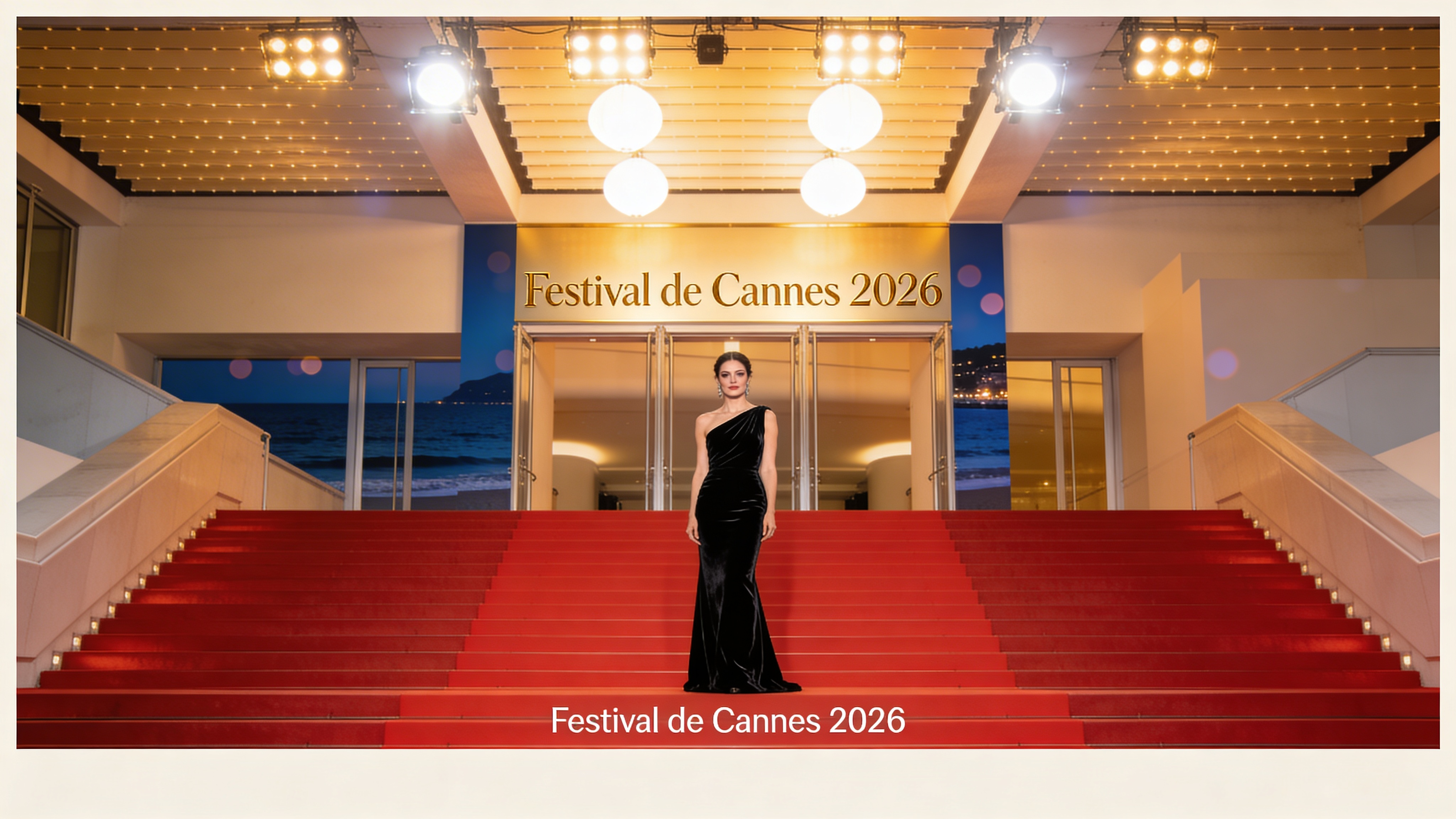 Web Search Integration by seedream 5.0
Prompt: A photorealistic official landscape poster for the 2026 Cannes Film Festival, showing a glamorous actress in an elegant black gown standing across the wide Palme d'Or red carpet steps at night, bathed in warm golden light from the Palais des Festivals, with the Cannes coastline and Mediterranean sea stretching in soft bokeh across the background, the Festival de Cannes 2026 title in classic gold serif typography centered at the top, and the official dates displayed in clean white font along the bottom of the image
Deep Reasoning
Where Nano Banana Pro understands prompts, Seedream 5.0 Lite reasons through them. This distinction produces different outputs in scenarios requiring multi-step logic rather than direct interpretation, and it shows up across four areas:
- Spatial reasoning: Complex layouts such as "A is to the top-left of B, C is directly below D" are handled accurately, where earlier models often fail
- Physical consistency: Reflection angles, water ripples, and perspective are rendered with stronger physical accuracy
- Logical deduction: Tasks such as predicting the next position in a game or inferring assembly results from scattered parts are within the model's capability
- Domain knowledge: Scientific diagrams, geological cross-sections, ecosystem illustrations, and anatomy visuals benefit from the model's deeper knowledge base
For creators producing educational content, information visualizations, or knowledge-driven graphics, this reasoning depth produces more accurate outputs than Nano Banana Pro delivers in these specific categories.
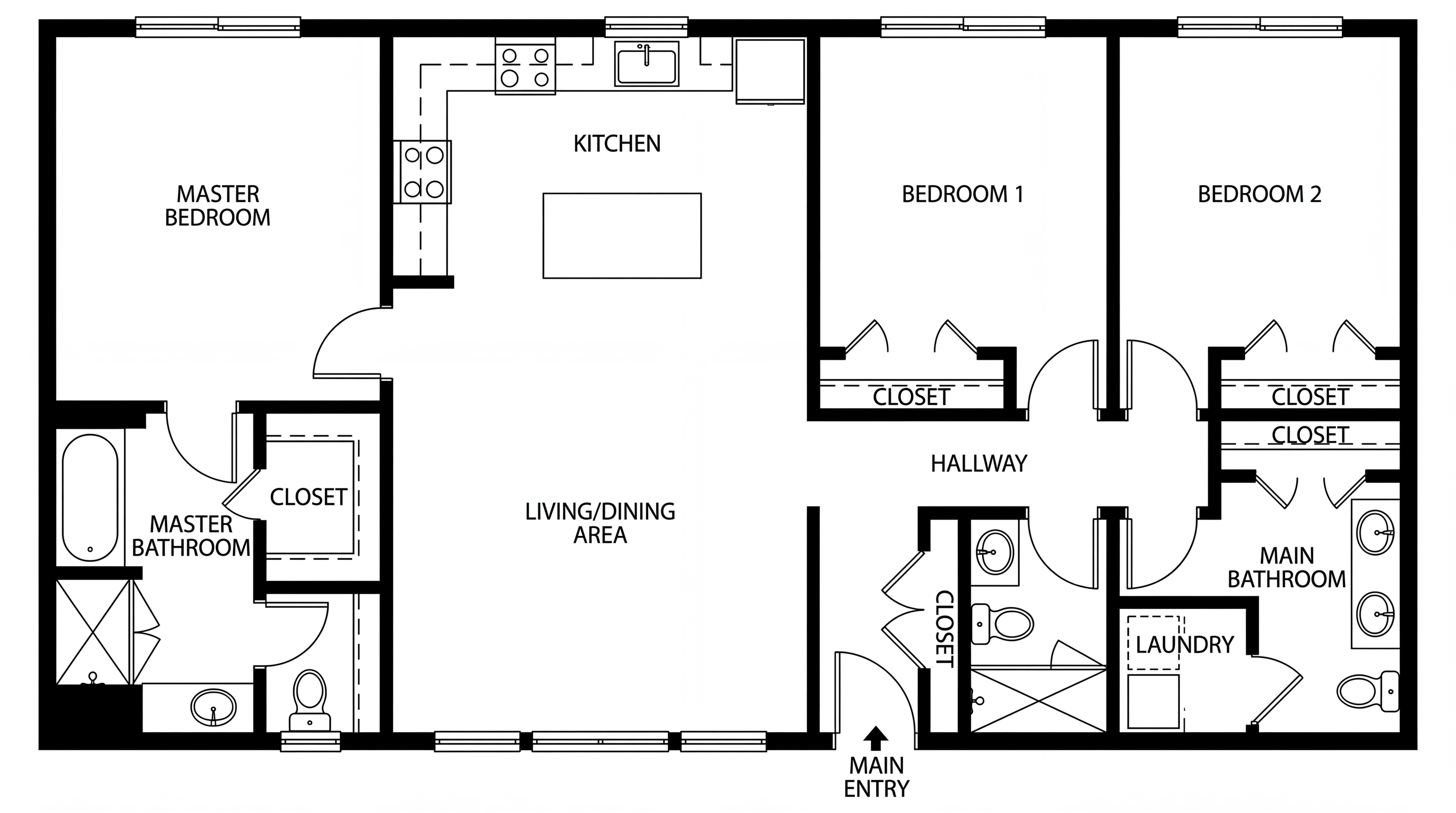 Deep Reasoning by Seedream 5.0
Prompt: A top-down architectural floor plan of a three-bedroom apartment where the living room is directly south of the kitchen, the master bedroom is to the northwest, and the two remaining bedrooms share the eastern wall, with accurate proportions and room labels
Vague Intent and Example-Based Editing
Seedream 5.0 Lite introduces two editing capabilities that Nano Banana Pro does not support. Vague intent editing removes the requirement for precise instruction writing, so a prompt like "make this photo look more high-end" is interpreted and executed without needing to specify every individual adjustment:
| User Instruction | Seedream 5.0 Lite | Nano Banana Pro |
|---|---|---|
| "Make this photo more atmospheric" | Adjusts lighting, tone, and contrast automatically | Needs specific instructions such as "increase warm tones, lower exposure" |
| "Put the product in a more high-end setting" | Selects appropriate context such as marble surfaces and spot lighting | Needs descriptions of specific background elements |
| "Make it look more professional" | Optimises composition, colour balance, and detail sharpening | Needs itemised adjustment parameters |
Example-based editing goes further: you provide before-and-after transformation examples, and the model learns the transformation logic and applies it to new images. This is particularly useful for maintaining style consistency across large batches without rewriting detailed prompts for each asset.
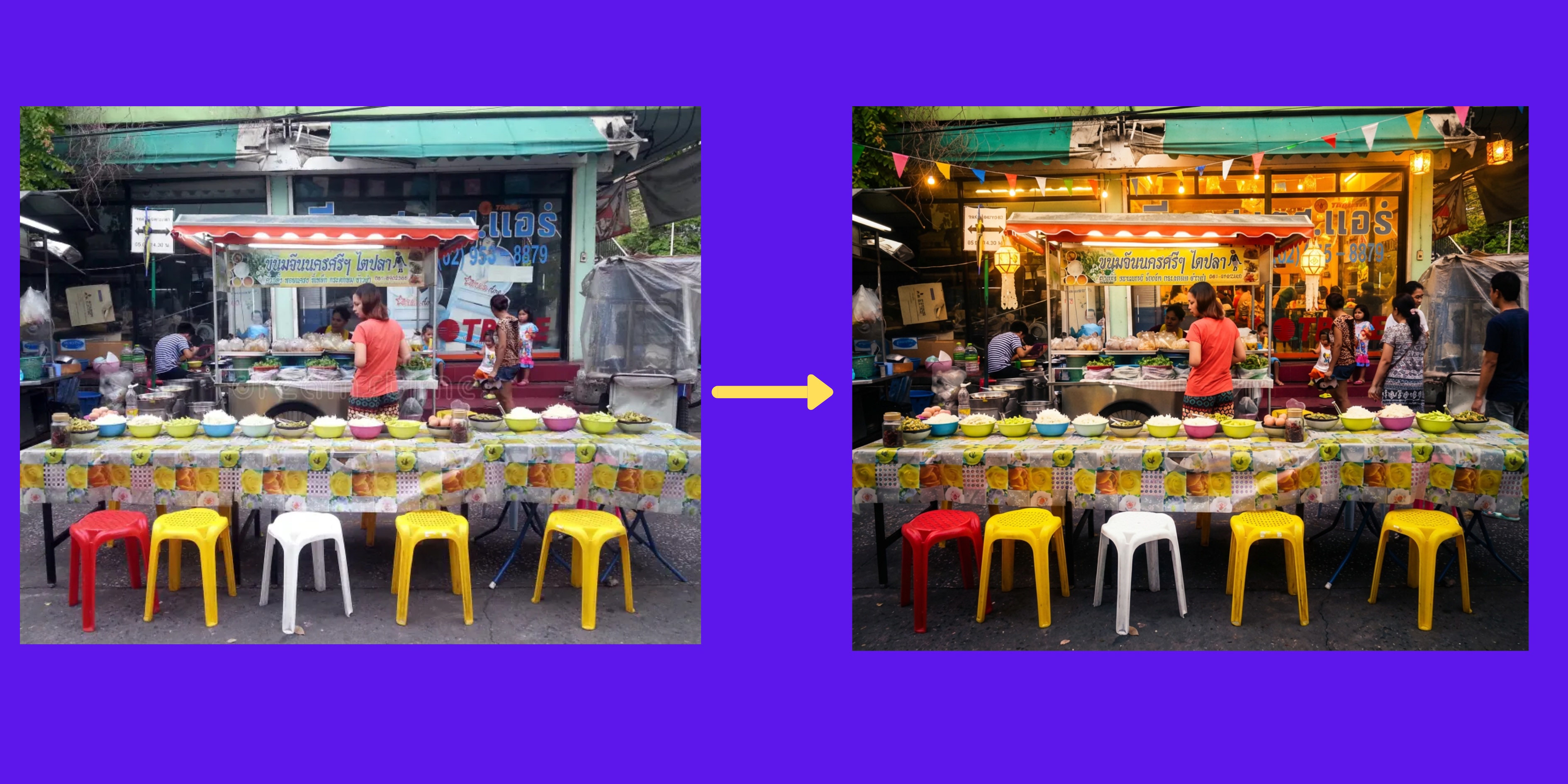 Vague Edits By Seedream 5.0
Prompt: Enhance this street food stall photograph: make the atmosphere feel lively and festive. Adjust lighting to be warmer and more dynamic, enrich colors for vibrancy, and subtly refine background elements to add depth and context — focus on improving the existing image rather than generating a new scene.
Recommended read: How to Use Seedream 5.0?
What Nano Banana Pro Is Built For?
Nano Banana Pro, built on Gemini 3 Pro by Google DeepMind, holds the benchmark position for three traditional image quality metrics: native 4K resolution, text rendering accuracy, and photorealistic output. For workflows where the trade-offs in Seedream 5.0 Lite are not acceptable, Nano Banana Pro is the appropriate model.
Native 4K Resolution
The resolution distinction between these two models is more significant than it might first appear:
| Resolution | Nano Banana Pro | Seedream 5.0 Lite |
|---|---|---|
| 1K (1024×1024) | Supported | Supported |
| 2K (2048×2048) | Supported | Supported (native) |
| 4K (4096×4096) | Supported | AI-enhanced, non-native |
Nano Banana Pro's 4K output is fully rendered at that resolution. Seedream 5.0 Lite's 4K is upscaled from 2K through AI enhancement. For print media, large-format displays, or exhibition screens where pixel integrity is a hard production requirement, Nano Banana Pro's output is the stronger choice.
Teams needing additional resolution refinement can combine Nano Banana Pro outputs with the ImagineArt image upscaler for further quality control.
 4K Print Ready poster by Nano Banana Pro
Prompt: A large-format print-ready concert poster for a classical music evening, featuring the orchestra name in large serif typography, supporting text listing conductor, soloists, date, and venue in smaller fonts, all text perfectly rendered against a deep navy background with gold accents
Text Rendering Accuracy
Nano Banana Pro is Google DeepMind's strongest model for generating accurate, legible text directly within images. This covers:
- Multilingual text across English, Chinese, Japanese, Korean, and other languages with consistent accuracy
- Complex layouts in infographics, data dashboards, and UI prototypes where text remains clear and readable
- A wide variety of textures, fonts, and calligraphy styles is enabled by Gemini 3 Pro's depth of language understanding
For any workflow where text is a structural design element rather than a decorative addition, from ingredient labels to dashboard copy to poster headlines, Nano Banana Pro delivers commercially reliable output that Seedream 5.0 Lite cannot consistently match at small sizes and high density.
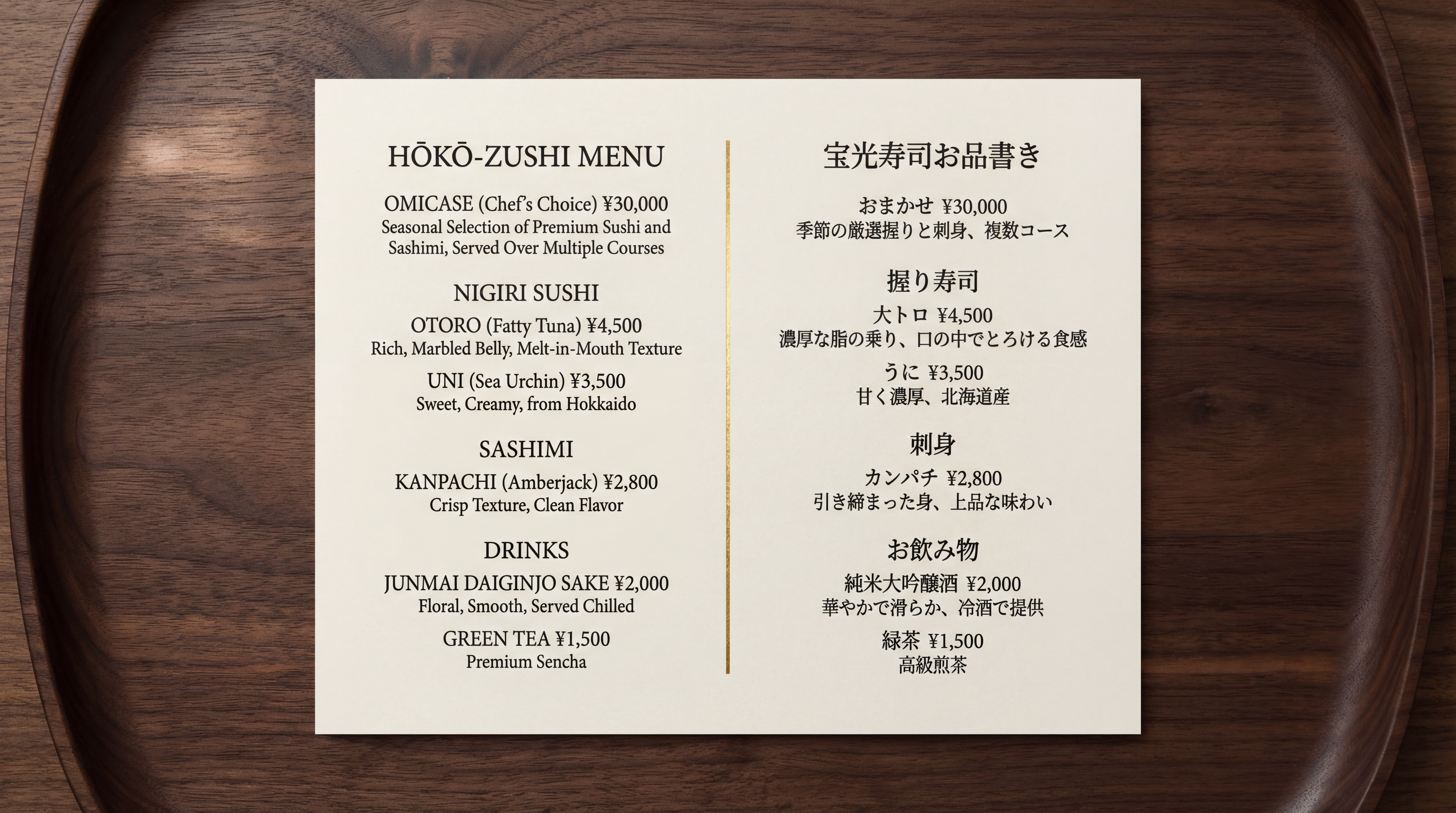 Text Rendering Accuracy by Nano Banana Pro
Prompt: A bilingual English and Japanese restaurant menu card for a high-end sushi restaurant, with dish names, descriptions, and prices in both languages, using a clean serif font on a cream background
Photorealism and Material Rendering
Nano Banana Pro produces near-photographic output with natural skin textures, layered material surfaces, and nuanced lighting transitions. These qualities are most relevant for commercial product photography, portrait work, fashion imagery, real estate renderings, and premium brand visuals where the output needs to meet the same standard as a professional photograph.
ImagineArt's relight tool and skin retouch apps complement Nano Banana Pro's realism outputs for workflows that require post-generation refinement before final delivery.
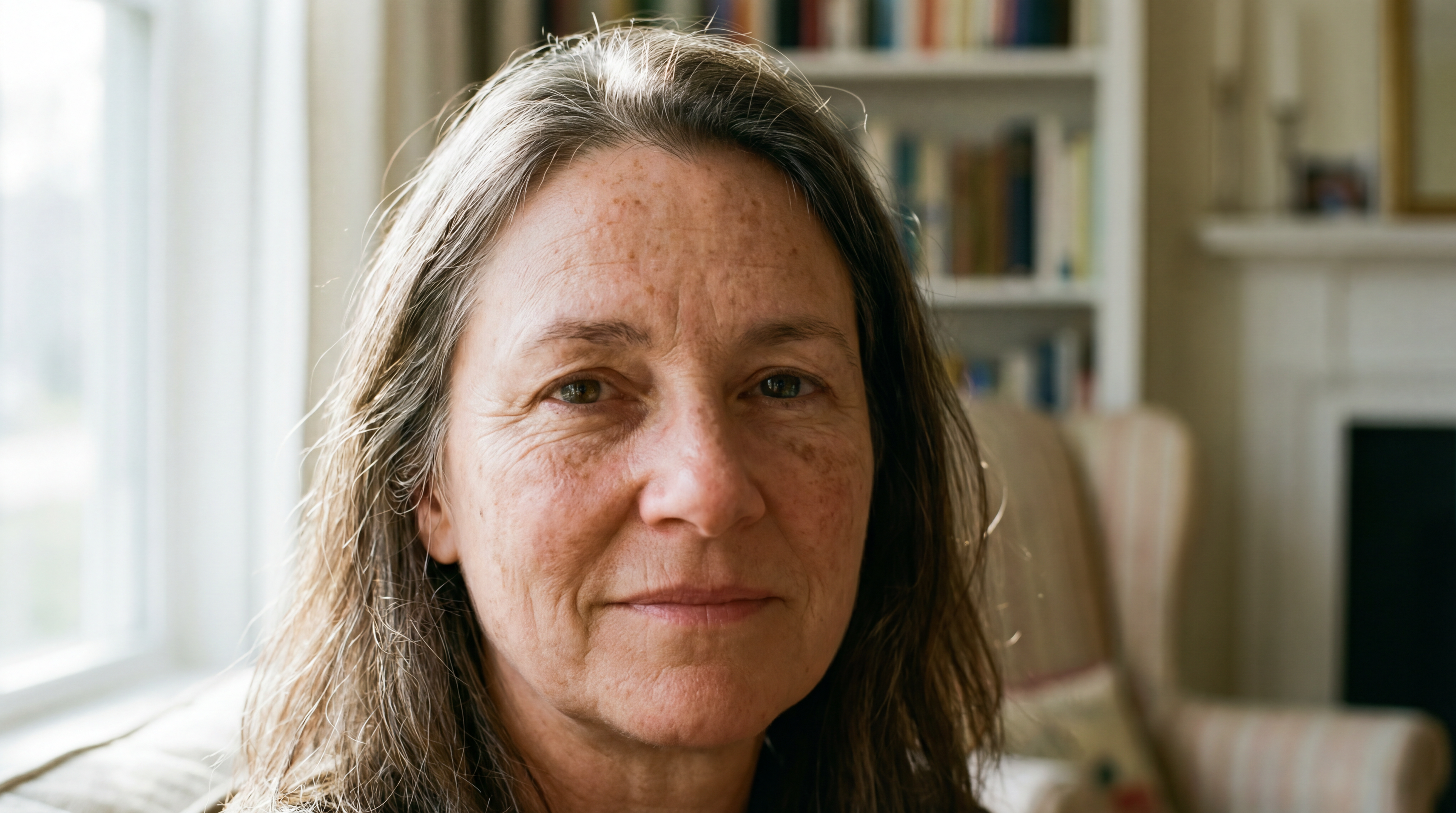 Photorealistic Images by Nano Banana Pro
Prompt: A portrait of a middle-aged woman with natural skin texture, soft window light falling across her face from the left, realistic subsurface scattering on her cheekbones, and fine detail in her hair strands
Image Editing Capabilities
Nano Banana Pro is not just strong at generating images. Its real advantage is in precision editing. Unlike models that require full regeneration to make small changes, Nano Banana Pro allows you to refine images while keeping their original quality and structure. This makes it ideal for commercial workflows where accuracy is essential.
Some of its key editing strengths include:
- Inpainting and outpainting that blend seamlessly with surrounding textures, lighting, and colours, ensuring edits look natural across boundaries.
- Object addition and removal with clean background reconstruction. For example, removing a product from a lifestyle shot leaves no visible artifacts.
- Style and tone adjustments that apply consistently across the image, maintaining fine detail without introducing compression artifacts or visual inconsistencies.
- Layer-accurate element replacement. You can swap backgrounds, props, or surfaces while keeping lighting and shadows aligned with the subject.
For teams working with finalized images that need targeted corrections, such as background swaps, logo removal, or lighting adjustments, Nano Banana Pro reduces the need for external tools and manual post-processing.
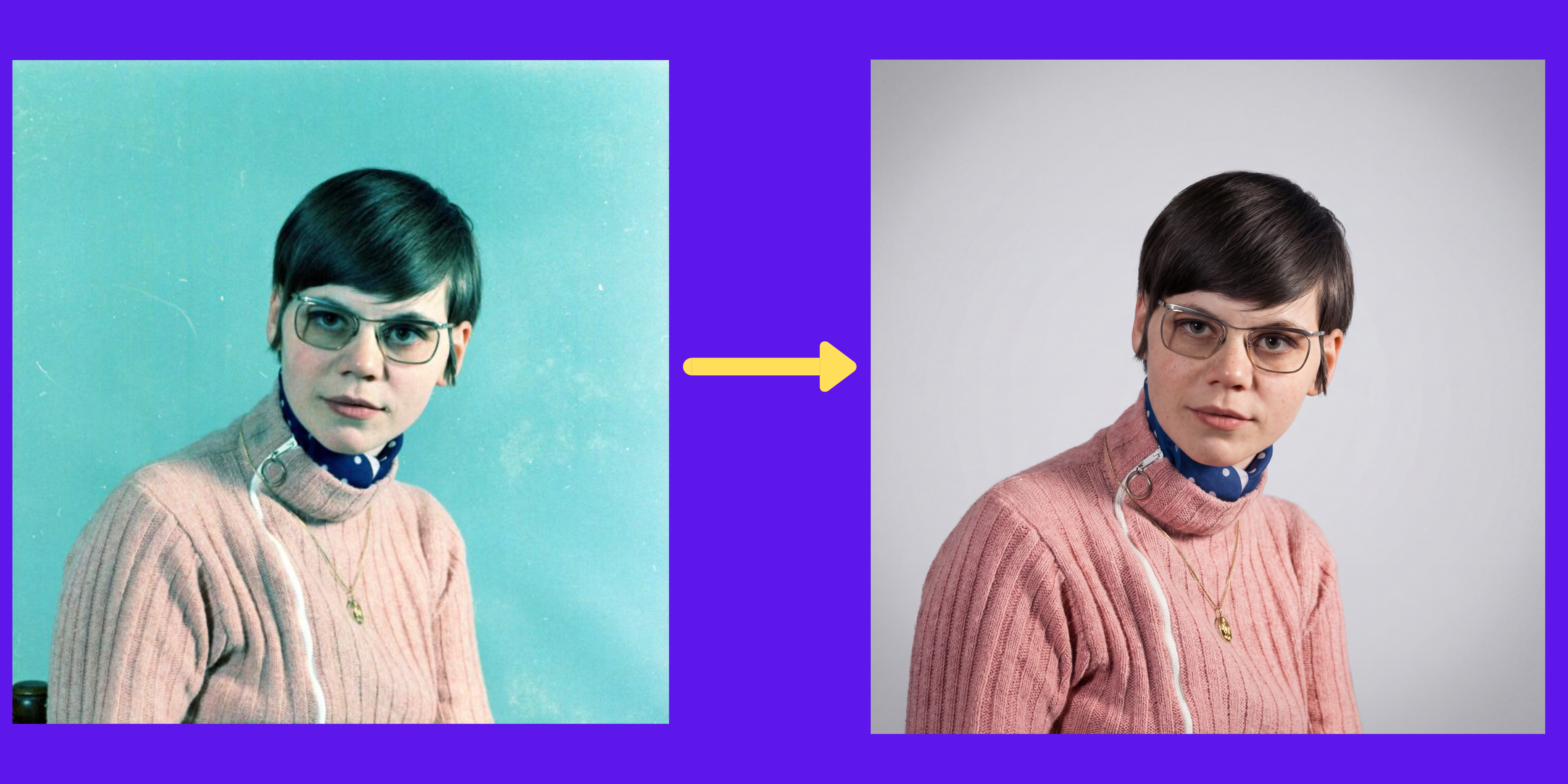 Image Editing By Nano Banana Pro
Prompt: Refine this fashion model photo by smoothing skin and fabric textures, enhancing hair and clothing details, and subtly adjusting lighting for a more polished, professional look. Replace any distracting background elements with a clean, elegant studio backdrop while keeping the model’s pose, proportions, and original features exactly as they are. Maintain all original colours, shadows, and textures for a realistic, high-end result.
Recommended read: Nano Banana Pro overview
Seedream 5 vs Nano Banana Pro: Which Model Fits Your Workflow?
Use Seedream 5.0 Lite if:
- Your content requires real-time information, trending topics, or current-event relevance
- Your prompts involve complex spatial reasoning, physical simulations, or domain-specific knowledge
- You are in early-stage creative exploration, where vague intent editing saves time and prompt-writing overhead
- You operate at high volume, and the four-times credit difference per generation has a measurable impact on your production budget
Use Nano Banana Pro if:
- Your workflow requires native 4K output for print, large-format displays, or exhibition work
- Your outputs are for commercial product photography, portrait work, or premium brand visuals where photorealism is a baseline standard
- Your production is at a final-output stage where image quality takes precedence over cost per generation
For workflows that span both creative exploration and final delivery, using both models in sequence within the ImagineArt AI Workflow is the most efficient approach. Seedream 5.0 Lite handles the ideation phase, where intelligence and lower credit cost matter most, and Nano Banana Pro handles the final output phase, where precision and quality are the priority.
Seedream 5 vs Nano Banana Pro: Scenario-Based Selection
Understanding the Seedream 5 vs Nano Banana Pro distinction becomes most practical when mapped to real production scenarios. Here is where each model performs best:
Four Typical Scenarios for Seedream 5.0 Lite
Scenario 1: Current Events Content Creation. News teams, social media managers, and editorial designers who need visuals grounded in real-time information have no alternative to Seedream 5.0 Lite's web search capability. A prompt tied to a current event produces a result informed by live data rather than training history that may be months out of date.
Scenario 2: Budget-Sensitive Batch Generation. For platforms or content teams generating thousands of images per month, the cost difference between these two models adds up to hundreds or thousands of dollars annually without sacrificing good image quality for standard creative tasks.
Scenario 3: Vague Design Iterations. In the early stages of a project where requirements are not yet defined, Seedream 5.0 Lite's vague intent editing removes the overhead of rewriting precise prompts for each iteration, speeding up the creative exploration phase considerably.
Scenario 4: Education and Information Visualization. When accuracy in scientific diagrams, data visualizations, ecosystem illustrations, or domain-specific graphics is important, Seedream 5.0 Lite's deep reasoning produces outputs grounded in correct logical and factual relationships.
Four Typical Scenarios for Nano Banana Pro
Scenario 1: Print and Large-Format Display Work. When native 4K resolution is a hard requirement for printed posters, exhibition screens, or high-end brochures, Nano Banana Pro's native rendering is technically superior to any AI-upscaled alternative.
Scenario 2: Text-Intensive Design. Infographics, data dashboards, product manuals, or any layout where small and dense text must render accurately and consistently across multiple generations requires Nano Banana Pro's text accuracy.
Scenario 3: Photorealistic Product Photography. When photographic realism and material texture depth are baseline commercial requirements for the brief, Nano Banana Pro produces outputs that meet those standards without requiring extensive post-generation correction.
Scenario 4: UI and UX Prototyping. The precision required for app interface mockups and web design prototypes, where text clarity, icon consistency, and element positioning must all be accurate, consistently favours Nano Banana Pro over Seedream 5.0 Lite.
Which Model Is Right for You?
Choosing between Seedream 5 vs Nano Banana Pro comes down to what your brief demands at any given stage of production. Both are accessible on ImagineArt under a single subscription, and using them together within a single workflow gives you the full range of capabilities without managing separate platforms or budgets.
Once you have found the right model for your workflow, ImagineArt's image editing tools and AI video generator give you everything you need to refine, animate, and publish your generated assets without switching platforms.
Read:
Arooj Ishtiaq
Arooj is a SaaS content writer specializing in AI models and applied technology. At ImagineArt, she creates sharp, product-focused content that helps creators and businesses understand, adopt, and get real value from AI tools.