
Tooba Siddiqui
May 19, 2026 • Updated May 19, 2026
15 mins Read
The best AI music prompts specify genre, mood, tempo, instruments, and use case together — the more detail you give an AI music generator, the closer the output is to what you actually hear in your head.
Most prompt guides stop at "write a sad piano song." That is not a prompt — it is a suggestion. This guide is a full library of AI text-to-music prompts organized by genre, mood, and creator use case, designed to produce usable, original tracks from the first generation. Every prompt in this list was built for ImagineArt AI music generator, which turns text descriptions into complete music compositions in seconds.
What Makes AI Music Prompts Work
Here's the ultimate AI music prompt formula:
[Genre] + [mood] + [tempo] + [instruments] + [vocal style, if applicable] + [use case] = an AI music prompt that generates something usable on the first try.
Before diving into the library, here is what separates a prompt that generates something usable from one that produces a generic loop.
A strong AI text-to-music prompt includes five elements:
- Genre — the musical category (lo-fi hip hop, cinematic orchestral, dark EDM)
- Mood — the emotional tone (melancholic, euphoric, tense, warm)
- Tempo — fast, slow, or a specific BPM range
- Instruments — the sounds you want to hear (soft piano, distorted guitar, 808 bass)
- Use case or context — where the music will be used (TikTok background, YouTube intro, ad soundtrack)
- Vocal style (if applicable) — whether the track has vocals and what kind: ethereal female vocals, aggressive rap delivery, falsetto, spoken word, vocal chops, or no vocals at all
Prompts that include all five elements consistently produce more targeted output than prompts that only name a genre or mood.
For a deeper breakdown of prompt techniques, see the full guide to writing AI music prompts.
What We Found Testing These AI Music Prompts
Every prompt in this library was tested through ImagineArt' music generator before being included. A few patterns emerged that aren't obvious from prompt guides alone.
- Tempo specificity changed output quality more than any other variable. Prompts that included a BPM range — even a rough one like "around 90 BPM" — consistently produced more usable results than prompts that used tempo adjectives like "slow" or "fast." AI generators interpret "slow" differently across genres; 70 BPM is slow for EDM but standard for a ballad.
- Naming two to three instruments outperformed naming one or none. A single instrument gives the generator too much freedom. Two instruments in combination — "soft piano and muted trumpet" or "808 bass and distorted synth lead" — creates a more specific sonic identity the model can work toward.
- Mood adjectives work best when paired with a scene or context. "Melancholic" is vague. "Melancholic, like a song about distance and longing" gives the generator a reference frame that affects phrasing, progression choice, and arrangement. The more specific the emotional context, the less generic the output.
- The first generation is almost never the final output. Treat it as a direction indicator. If the tempo is right but the instruments are wrong, adjust only the instrument line and regenerate. Changing everything at once makes it harder to isolate what was working.
AI Music Prompts by Genre
Lo-Fi & Chill
Lo-fi works best when you describe the texture and environment, not just the genre. Think of what the listener is doing while the track plays.
Prompt 1: A slow lo-fi hip hop beat at 75 BPM with a muffled vinyl sample, soft jazz chords on Rhodes piano, gentle rain ambience in the background, and a warm, nostalgic mood — perfect for late-night studying or reading.
Prompt 2: Chill lo-fi track with dusty drum loops, a melodic guitar riff on repeat, soft tape hiss, and a bittersweet emotional tone — reminiscent of early 2000s bedroom pop production.
Prompt 3: Relaxed lo-fi instrumental at 70 BPM featuring a plucked bass line, muted piano chords, soft brush snare, and ambient city sounds — calming and introspective in mood.
Prompt 4: Lo-fi jazzy instrumental with a slow shuffle beat, upright bass, muted trumpet melody, vinyl crackle, and a cozy Sunday morning feel.
EDM & Electronic
Electronic genres need tempo and energy level to be explicit — "EDM" alone spans 80 BPM ambient to 180 BPM hardstyle.
Prompt 1: A progressive house track at 128 BPM with a driving four-on-the-floor kick, layered synth pads building to a euphoric drop, airy female vocal chops, and a summer festival energy.
Prompt 2: Dark techno track at 138 BPM with a pounding industrial kick, distorted synth stabs, minimal structure, and a cold, hypnotic atmosphere — built for a late-night club set.
Prompt 3: Future bass track at 150 BPM with supersaw chords, a heavy emotional drop, pitched-up vocal hooks, and a bittersweet yet uplifting mood — influenced by early 2020s electronic pop.
Prompt 4: Melodic dubstep instrumental at 140 BPM with a slow build, emotional string pads, a heavy half-time drop with wobble bass, and a cinematic, intense atmosphere.
For context on the genre's full range, see what is EDM music.
Hip Hop & Trap
Specify whether you want traditional boom bap, modern trap, or melodic rap production — they have completely different sonic identities.
Prompt 1: Hard-hitting trap beat at 140 BPM with rolling hi-hats, 808 sub-bass, punchy snare, dark minor key piano melody, and an aggressive, confident energy — influenced by modern Atlanta rap.
Prompt 2: Old-school boom bap instrumental at 90 BPM with a dusty breakbeat, chopped soul sample, warm bass line, and a smooth, laid-back New York feel.
Prompt 3: Melodic rap beat at 130 BPM with ambient synth pads, an emotional guitar loop, trap hi-hats, heavy 808s, and a reflective, late-night mood.
Prompt 4: Drill instrumental at 140 BPM with a dark piano melody, sliding 808s, fast hi-hat patterns, and a gritty, street-level tension — influenced by UK drill production.
See what is trap music for more on the genre's defining characteristics.
Cinematic & Orchestral
Cinematic music responds best to narrative context — describe the scene, not just the emotion.
Prompt 1: Epic orchestral piece with a slow build from solo cello to full strings and brass, dramatic timpani hits, a sweeping heroic melody, and a sense of triumph and scale — suited for a film trailer or battle scene.
Prompt 2: Intimate cinematic track with solo piano, soft string pads, minimal percussion, and a melancholic, searching emotional tone — like a scene of a character standing at a crossroads.
Prompt 3: Dark cinematic orchestral track with low brass, dissonant strings, subtle choral elements, and an atmosphere of suspense and creeping dread — suited for a thriller or horror film score.
Prompt 4: Adventure cinematic piece at a brisk tempo with French horns, rolling snare, bright strings, and an energetic, exploratory mood — suited for a travel documentary or action montage.
Pop
Pop prompts work best when you reference an era or production style rather than just "pop."
Prompt 1: Upbeat synth-pop track at 120 BPM with a catchy four-chord progression, bright electric piano, punchy drum machine, and an optimistic, summery 80s-influenced sound.
Prompt 2: Contemporary pop ballad with a slow build, emotional piano chords, soft programmed drums, layered backing vocals, and a heartfelt, vulnerable tone — inspired by mid-2010s radio pop.
Prompt 3: Danceable pop track at 115 BPM with a groovy bass line, warm synths, handclap percussion, and a fun, carefree energy — suited for a feel-good playlist or brand video.
See what is pop music for a breakdown of the genre's defining elements.
Indie & Alternative
Prompt 1: Indie folk track with fingerpicked acoustic guitar, soft vocal harmonies, light brushed drums, and a warm, nostalgic, introspective mood — like a slow drive through the countryside.
Prompt 2: Indie rock track with jangly electric guitars, a driving drum beat, melodic bass line, and an energetic yet melancholic tone — influenced by early 2010s indie rock.
Prompt 3: Dream pop instrumental with reverb-heavy guitar, lush synth pads, soft drumming, and an ethereal, hazy atmosphere — slow tempo, suited for atmospheric film scenes or ambient playlists.
See what is indie music for more on how the genre is defined.
R&B & Soul
Prompt 1: Smooth R&B track at 85 BPM with warm electric piano chords, a deep groove bass line, soft drum kit, subtle string pads, and a sensual, late-night atmosphere.
Prompt 2: Neo-soul instrumental with a jazzy chord progression, Rhodes piano, live-sounding drums with brush snare, warm bass, and a soulful, introspective mood — influenced by early 2000s neo-soul.
Prompt 3: Contemporary R&B beat at 95 BPM with ambient synth pads, an emotional vocal chop sample, minimalist drum pattern, and a moody, atmospheric feel — influenced by alternative R&B.
Learn more about the popular music genres of 2026 on ImagineArt blog.
AI Music Prompts by Mood
Hype & High Energy
Prompt 1: High-energy trap anthem at 145 BPM with aggressive 808s, rapid hi-hats, a distorted synth lead, and an intense, dominant atmosphere — built to open a sports highlight reel.
Prompt 2: Euphoric EDM drop at 130 BPM with layered supersaws, driving kick drum, uplifting chord progression, and a peak-time festival energy — maximum emotional intensity.
Prompt 3: Pump-up hip hop beat with heavy bass, punchy snare, fast-paced rhythm, aggressive brass stabs, and a confident, unstoppable energy — suited for a workout playlist or brand hype video.
Melancholic & Emotional
Prompt 1: Slow piano ballad at 60 BPM with sparse chords, gentle string swells, soft ambient room tone, and a deeply emotional, grief-touched atmosphere.
Prompt 2: Melancholic indie acoustic track with fingerpicked guitar, subtle cello, minimal percussion, and a quiet, aching sadness — like a song about distance and longing.
Prompt 3: Atmospheric R&B track with slow tempo, reverb-drenched piano, muted bass, and a wistful, nostalgic mood — as if looking back at something you can't return to.
Focus & Productivity
Prompt 1: Ambient lo-fi instrumental at 70 BPM with soft piano notes, gentle rain sounds, no percussion, and a calm, mentally clear atmosphere — designed for deep work sessions.
Prompt 2: Minimal ambient electronic track with soft synth pads, subtle pulse, no melody, and a neutral, spacious feel — non-distracting background music for focused tasks.
Prompt 3: Instrumental acoustic track with light guitar picking, quiet room ambience, and a peaceful, unhurried tempo — suited for reading, writing, or creative focus work.
Dark & Cinematic Tension
Prompt 1: Dark ambient track with low drone, distant metallic percussion, sparse piano notes, and a heavy atmosphere of dread and unease — suited for a thriller or horror visual.
Prompt 2: Tense cinematic build with dissonant strings, stuttering percussion, building brass, and a cold, suffocating intensity — like the final moments before a climax.
Prompt 3: Dark electronic track with industrial synths, distorted bass pulses, slow tempo, and a bleak, oppressive atmosphere — suited for a cyberpunk or dystopian visual project.
AI Music Prompts by Use Case
TikTok Background Music
TikTok tracks need a strong hook in the first three seconds, a loopable structure, and an energy that matches the visual without overpowering it.
Prompt 1: Punchy lo-fi hip hop loop at 85 BPM with a catchy piano riff, soft drums, and a fun, lighthearted mood — short and loopable, suited for TikTok lifestyle content.
Prompt 2: Upbeat electronic pop track at 120 BPM with a bright synth lead, groovy bass, and an energetic, trend-ready feel — designed to loop cleanly for a 15-second TikTok clip.
Prompt 3: Viral-style trap beat with a distinctive melodic hook, punchy 808, and a playful, confident energy — short structure with a strong opening hit suited for TikTok content.
For video tools that match your track to visuals, see best AI video generator for TikTok.
YouTube Intros & Outros
YouTube intros need to establish brand tone fast — under 10 seconds — while outros can afford to be longer and more resolved.
Prompt 1: Short energetic YouTube intro at 130 BPM with a punchy brass hit, rising synth build, and a confident, professional energy — resolves cleanly in 8 seconds.
Prompt 2: Warm, friendly acoustic guitar intro with a simple chord strum, light percussion, and an approachable, welcoming mood — suited for a lifestyle or educational YouTube channel.
Prompt 3: Cinematic YouTube outro with a slow string swell, soft piano melody, and a resolved, satisfying emotional finish — 20 seconds, fades gracefully.
For video tools that match your track to visuals, see best AI video generator for YouTube.
Ad Soundtracks
Ad music needs to communicate the brand's tone instantly, sustain energy without distracting from the message, and often fit within 15 or 30 seconds.
Prompt 1: Uplifting corporate ad track at 110 BPM with bright acoustic guitar, soft percussion, warm piano, and an optimistic, trustworthy tone — 30 seconds, clean ending.
Prompt 2: High-energy product ad soundtrack at 128 BPM with driving electronic beats, punchy synths, and an exciting, dynamic feel — 15-second version with a strong opening hit.
Prompt 3: Elegant, minimal ad music with solo piano, subtle strings, slow tempo, and a premium, sophisticated atmosphere — suited for luxury product or lifestyle brand advertising.
Podcast Intros
Prompt 1: Podcast intro track at 100 BPM with a confident bass line, rhythmic acoustic guitar strum, light drums, and a professional yet approachable tone — loops cleanly in 15 seconds.
Prompt 2: Dark, mysterious podcast intro with low synths, subtle percussion, and a slow, suspenseful build — suited for true crime or investigative storytelling formats.
Prompt 3: Warm, conversational podcast intro with soft piano, gentle acoustic guitar, and an informal, welcoming energy — under 10 seconds, fades naturally into speech.
Music Video Soundtracks
Music video tracks need strong emotional arc and enough dynamic variation to give editors something to cut to.
Prompt 1: Cinematic hip hop instrumental at 90 BPM with a string-led melody, slow-building arrangement, emotional peak at the two-minute mark, and a reflective, powerful atmosphere — suited for a narrative music video.
Prompt 2: EDM track with a long atmospheric intro, a building drop, and a melodic breakdown — full dynamic arc over three minutes, suited for a visually driven music video.
Prompt 3: Indie pop track with a quiet verse, swelling chorus, and an anthemic emotional release — layered instruments building from acoustic guitar to full band, suited for a coming-of-age music video.
For visuals to match your track, see best AI music video generator.
How to Generate These AI Music Prompts on ImagineArt
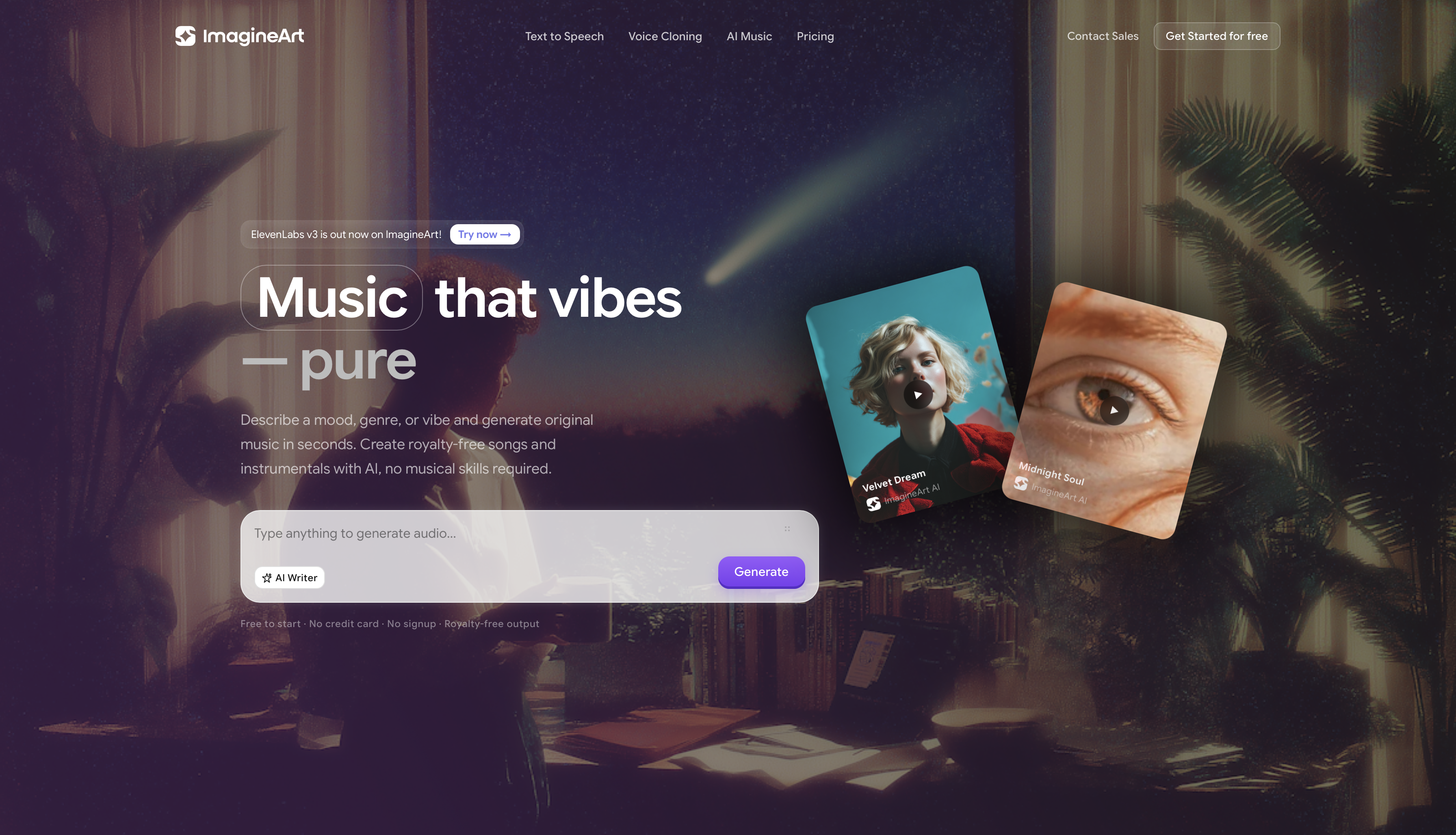
- Go to ImagineArt Audio Studio
- Select AI Music Generation from the audio modes
- Paste your prompt into the text field — include genre, mood, tempo, and instruments
- Hit generate and listen to the first output
- Refine by adjusting one element at a time — tempo, mood, or instrument — until the output matches your creative intent
- Export and use across your content projects
For a full walkthrough of the tool, see how to make AI music.
Why ImagineArt?
ImagineArt AI music generator is built for creators who need original, usable tracks — not just audio experiments. Unlike tools that produce short loops or require music theory knowledge to operate, ImagineArt generates complete compositions from plain text descriptions, supports lyric generation alongside the instrumental track, and produces output you can use commercially from the first generation.
The generator covers the full genre range in this library — lo-fi, cinematic, trap, EDM, R&B, indie, and everything between — without needing different tools or modes for different styles. And because ImagineArt is also a full video generation platform, your audio and visual content can be built in the same workflow: generate the track, generate the footage, and combine them without leaving the platform.
From Music to Music Video
A strong track without matching visuals is half a project. The tone you build into your music prompt — the tempo, the mood, the instruments — should directly inform the visual direction. A melancholic lo-fi track at 70 BPM calls for slow, atmospheric footage. A high-energy trap beat at 145 BPM needs fast cuts and kinetic movement.
ImagineArt lets you do both in the same workflow. Generate your track, then bring it to visuals using the same platform — no separate tools, no file transfers. For practical guidance on syncing audio and visuals, see how to add music to a video. For prompt examples that match music energy to visual style, see AI video prompts.
Common Mistakes in AI Music Prompts
- Being too vague. "Make a happy song" gives the generator almost nothing to work with. Name the genre, the tempo range, and at least two instruments.
- Contradicting yourself. "Slow and high-energy" or "calm but intense" creates conflicting instructions. Pick a dominant emotional direction and build around it.
- Skipping tempo. Tempo is one of the most precise instructions you can give. Even a rough range ("around 90 BPM" or "slow, under 80 BPM") dramatically narrows the output.
- Leaving out instruments. The same genre can sound completely different depending on whether it features piano, guitar, synths, or brass. Be specific about at least two or three instruments.
- Expecting perfection on the first generation. AI music prompts are iterative. Treat the first output as a draft — adjust one element, regenerate, and keep refining.
- Writing prompts as commands. Prompts written as descriptions ("a track with...") tend to perform better than commands ("create a track that...") in most text-to-music generators.
Ready to Try AI Music Prompts on ImagineArt?
Fifty-two prompts across seven genres, four moods, and five creator use cases — this library is a starting point, not a ceiling. The best prompt you write will be one you build from here: take a genre that fits your project, add your tempo, name your instruments, and describe the moment you want the listener to feel.
ImagineArt AI music generator turns that description into a complete, original track in seconds — no music theory, no DAW, no production team required. Generate your track, take it to video, and build the full creative package from a single platform.
Frequently Asked Questions
The most effective AI text-to-music prompts include genre, mood, tempo or BPM range, specific instruments, and the intended use case. The more specific the description, the more targeted the output.
Between 30 and 80 words is the practical range. Short enough to stay focused, long enough to give the generator clear direction. Avoid padding — every word in the prompt should add information.
Lo-fi, cinematic, EDM, and hip hop consistently produce strong results because they have well-defined sonic characteristics. Highly niche genres with fewer training examples may require more iteration.
Yes. Tracks generated through ImagineArt's AI music generator are yours to use commercially. Always verify the current terms on the platform for the latest usage rights details.
Reference a specific era, name unusual instrument combinations, add environmental details (room tone, acoustic space), and describe the emotional arc across the track rather than a static mood.
A music prompt describes the audio — genre, tempo, instruments, mood. A music video prompt describes the visuals — setting, lighting, character, movement.
Treat the first two or three generations as exploration. Once you identify what is working — a particular mood, an instrument, a tempo — refine around that element rather than rewriting the prompt entirely.
Tooba Siddiqui
Tooba Siddiqui is a content marketer with a strong focus on AI trends and product innovation. She explores generative AI with a keen eye. At ImagineArt, she develops marketing content that translates cutting-edge innovation into engaging, search-driven narratives for the right audience.