
Syed Anas Hussain
May 13, 2026 • Updated May 13, 2026
15 mins Read
Most AI film prompts fail before they start. You describe a scene, hit generate, and get something that looks like a stock footage reject — competent, flat, missing the soul of the genre you had in your head. The problem isn't the AI. It's the prompt architecture. Genre isn't decoration; it's a complete visual language with its own lighting logic, camera grammar, and pacing rhythm. Master that language and your prompts stop describing scenes — they start directing them.
What Makes a Great AI Film Prompt? (The Cinematographer's Framework)
What is an AI film prompt? An AI film prompt is a text instruction that tells an AI video model what to generate — including shot type, lighting, camera movement, subject action, atmosphere, and visual style. Unlike general video prompts, film prompts use cinematographic language to produce genre-specific, narrative-quality results rather than generic clips.
A great AI film prompt is a directed cinematographic instruction — not a scene description. It tells the model where the camera is, what the light is doing, how the camera moves, and what texture the frame should have. The difference between a prompt that produces a generic clip and one that produces a cinematic frame comes down to four elements applied consistently.
This is what professional creators call "Director-Level Prompting" — a prompting methodology where you use specific cinematographic language (shot types, lighting names, camera movement logic) that AI models have been trained on via millions of cinematic references, triggering specific rendering behaviors rather than average outputs.
The 4 Elements Every Cinematic Prompt Needs
- Shot type and camera position — Anchor the composition before anything else. "A woman walks across a rooftop" is description. "Extreme wide shot, low angle, camera tilted 10 degrees — a woman walks across a rooftop" is a directive. Shot types determine everything downstream.
- Lighting language — Lighting is mood, and AI models respond to specific lighting vocabulary. "Rembrandt lighting" (a classic portrait technique using a triangle of light on the cheek) triggers a specific rendering behavior. "Hard side lighting from a single practical source" builds from scratch. Generic terms like "warm" or "dark" produce generic results.
- Motivated camera movement — A slow dolly in has no reason behind it. "Slow dolly in as she reads the letter — intimacy building" gives the movement psychological logic. AI models produce more intentional compositions when motion has narrative meaning, not just spatial direction.
- Atmosphere and texture — Film grain, lens quality, color temperature, aspect ratio. "Shot on 35mm, slight halation around the lights, 2.39:1 aspect ratio" tells the model what decade, what format, what emotional register.
How to Choose the Right Model for Your Genre
The right ImagineArt model for your film prompt depends entirely on your genre — each model has distinct strengths for different visual grammars.
| Genre | Best Model | Why |
|---|---|---|
| Drama, Romance | Seedance 2.0 | Fluid motion, emotional facial nuance, naturalistic light |
| Action, Sci-Fi | Kling 3.0 Pro | Precise prompt adherence, complex choreography, sharp detail |
| Noir, Thriller | Kling 3.0 Pro | High-contrast rendering, deep shadow fidelity |
| Documentary | Seedance 2.0 | Observational realism, handheld vérité feel |
| Cosmic/Epic | Google Veo 3.1 | Scale, physics simulation, atmospheric depth |
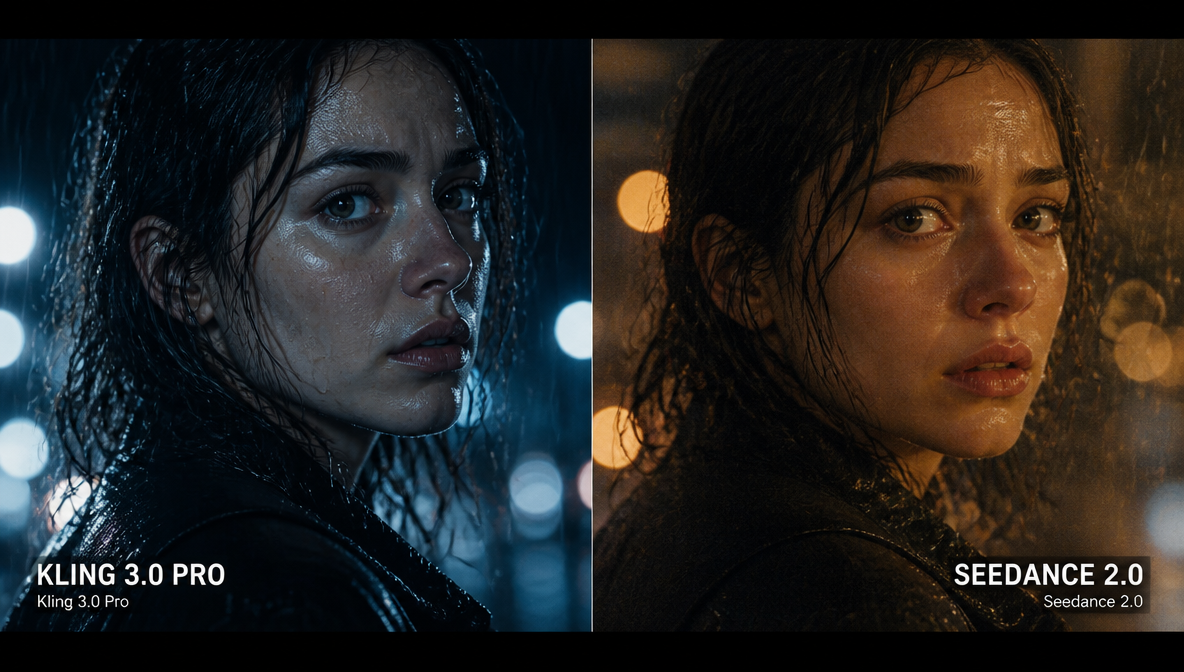
Drama & Emotional Realism Prompts
For dramatic film prompts, Seedance 2.0 on ImagineArt consistently delivers the emotional realism the genre demands — prioritize motivated push-ins and practical lighting.
Drama lives in the details — the micro-expression, the loaded pause, the way a room feels after an argument. These prompts are built for emotional depth over spectacle. Best model: Seedance 2.0
Intimate Character Moments
Prompt 1 — The Weight of a Decision
Medium close-up, eye-level. A middle-aged man sits alone at a kitchen table, hands wrapped around a coffee mug. Practical window light from the left, soft overcast. He stares into the middle distance. Slow push-in over 6 seconds. Color grade: desaturated warm tones, slight green in shadows. 35mm film grain. Aspect ratio 2.39:1.
Why it works: The push-in creates psychological pressure without visible action. Overcast window light is inherently melancholic — no shadows to hide behind.
Prompt 2 — The Goodbye
Two-shot, slightly over-the-shoulder favoring her. Interior small apartment entryway. Shallow depth of field, bokeh on background. She holds the door open; he stands in the frame. Neither speaks. Camera locked off. Available light from a single hallway bulb, warm. 5-second hold. 24fps, slight motion blur on any movement.
Why it works: Locking the camera during a charged moment forces the AI to find tension in stillness rather than movement — restraint as technique.
Prompt 3 — Aftermath
Low-angle wide shot, floor level. An empty living room, furniture overturned, one lamp still on. No people. Slow 10-second lateral track left to right. Late night. Practical light only — the single lamp and a streetlight through blinds, venetian shadow pattern across the floor. 16mm aesthetic, heavy grain, slight green cast.
Why it works: Environmental storytelling — the aftermath of an event the viewer never saw. The 16mm grain adds memory and fragility.
High-Stakes Confrontation Scenes
Prompt 4 — The Interrogation
Single source overhead practical light, swing-arm lamp, casting harsh downward shadow. Two characters: one seated, one standing. Claustrophobic concrete room. Push-in on seated character during long pause. Near-monochromatic, deep shadows, single warm highlight. Kling 3.0 Pro.
Prompt 5 — The Revelation
Reaction shot. Extreme close-up of a woman's face as she reads something off-screen. Expression shifts from neutral to devastated in 4 seconds. No dialogue. Shallow depth of field. Side lighting from a window, 45-degree angle. Real-time pace, no cuts. Seedance 2.0 — emotional nuance essential.
Environmental Storytelling
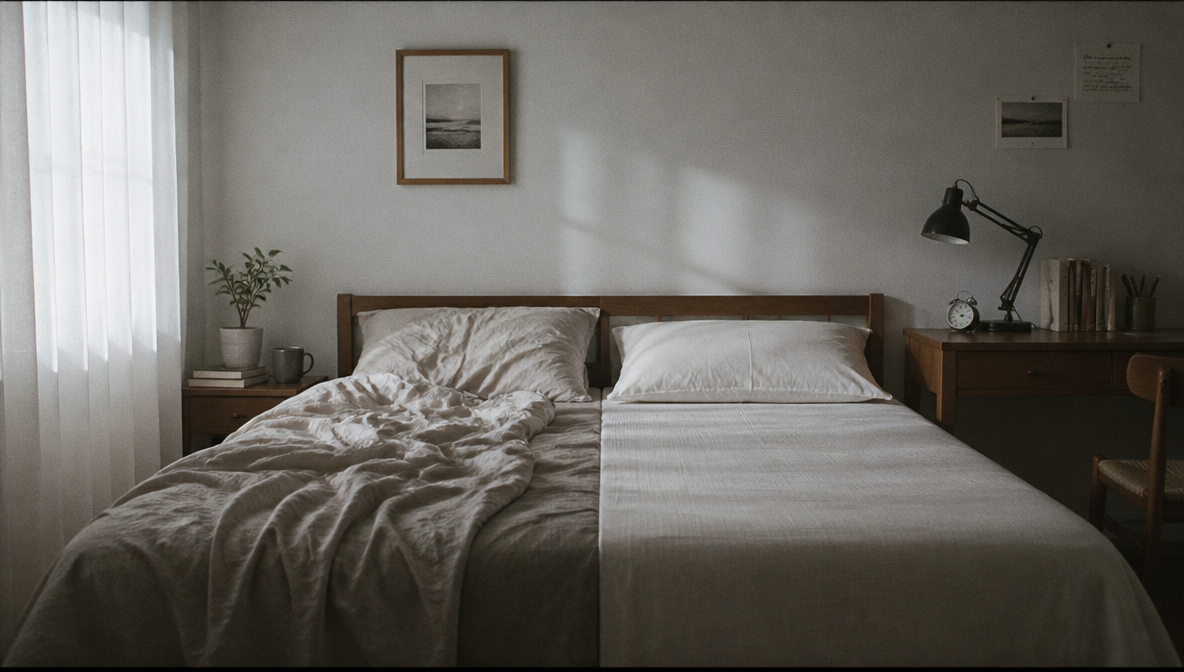
Prompt 6 — Before She Left
Slow crane shot descending from above a bedroom. Single bed — one side lived-in, one side pristine. Morning light through thin curtains. No people. Camera descends over 8 seconds, ending on a medium shot of the untouched pillow. Desaturated palette
Action & Kinetic Energy Prompts
For action film prompts, Kling 3.0 Pro's precise prompt adherence and complex motion handling make it the go-to model — pair it with handheld camera language and hard high-contrast lighting.
Action is about physical momentum and spatial clarity. The audience must always know where everyone is and what direction the danger is coming from. Best model: Kling 3.0 Pro
Chase Sequences
Prompt 7 — Urban Foot Chase
Handheld low chase POV — camera at shoulder height behind the runner, slightly shaky. Narrow city alley, night, wet pavement reflecting orange sodium lights. Subject running, closing on figure 30 feet ahead. 28mm equivalent lens breathing. Motion blur at 1/50 shutter feel. Quick pan right as runner rounds corner. High-contrast neon-lit.
Prompt 8 — Rooftop Escape
Wide establishing shot becoming a tracking shot: figure sprints across a rooftop at dusk, city skyline behind. Camera tracks alongside at the same pace, then pulls wide to reveal the 50-foot drop. Golden hour backlight, silhouette-heavy, lens flare at edge. The subject leaps to the next building — camera holds on the jump arc. IMAX-style framing.
Prompt 9 — Car Chase Intercut
Interior car, driver's face, rearview mirror showing headlights closing. Rapid cut rhythm: each shot 1.5 seconds — exterior wide two vehicles weaving traffic, close-up hand on wheel, wide wrong-way highway entry. Fluorescent highway lighting, 3AM atmosphere. Handheld on interiors, locked crane on exterior wides. Cold blue-grey color grade.
Combat and Choreography
Prompt 10 — The Alley Fight
Medium wide, action space framing. Two figures in a narrow alley, hard practical light from a single fixture above. Fight choreography: grapple and counter-strike sequence, 8 seconds. Camera circles slowly during the exchange. Deep shadow zones outside the light cone. Kling 3.0 Pro — complex multi-body motion required.
Prompt 11 — Slow Motion Strike
120fps slow motion, medium close-up. A punch lands — face impact, visible deformation, sweat and water particles scatter. Hard side lighting creates dramatic shadow relief. Camera locked off. Heavily desaturated with a single warm highlight on the fist.
Crowd and Scale Shots
Prompt 12 — The Riot
Drone descending aerial, starting 200 feet above, ending at 50 feet above a crowd scene in a city square. Hundreds of figures, chaotic movement, smoke in three zones of the frame. Late afternoon with God rays through dramatic cloud cover. Camera descends slowly as chaos escalates. Veo 3.1 — scale and physics simulation essential.
Sci-Fi & Worldbuilding Prompts
Sci-fi AI film prompts require visual world consistency above all else — define your technological era, lighting palette, and scale in every prompt to prevent the model from mixing visual eras.
Best model: Kling 3.0 Pro / Google Veo 3.1 for scale
Prompt 13 — Arrival
Ultra-wide establishing shot. A massive spacecraft, miles long, descends through cloud cover over a city — the ship is larger than the skyline. Storm-lit — lightning illuminates the ship's underside from within the clouds. Camera locked, held 8 seconds as the ship passes overhead. Dead quiet aesthetic. Cold blue-grey with amber practical hull lights.
Prompt 14 — The Lab at 3AM
Medium wide interior. Vast underground research facility, single scientist under a hooded light source. Server banks recede into darkness. Cathedral-scale ceiling height. Bioluminescent accents in the equipment. Slow lateral dolly passing behind glass panels. Sterile palette broken by amber console lights.
Prompt 15 — Terraformed Horizon
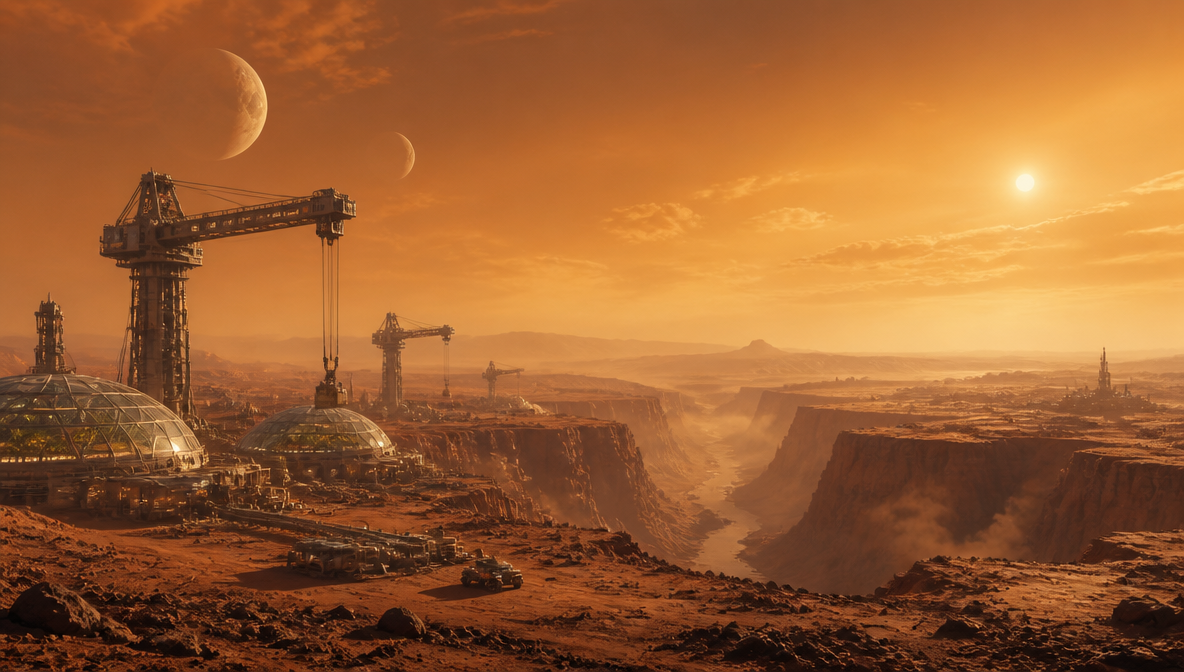
Extreme wide shot from a ridge. Alien planet: amber sky, twin moons visible in daylight, massive canyon in the background. Foreground: terraforming cranes and habitats at human scale. Dust haze in the middle distance. Camera completely static — 10-second hold. Veo 3.1 for scale and atmosphere.
Prompt 16 — Interface Interaction
Close-up, hands interacting with a holographic display. Light physics respond to touch — fingers pass through holographic elements, light bends around them. Cold cyan and white palette, dark background. 50mm focal length. Slow, deliberate gestures. No CG artifacting feel.
Prompt 17 — Corridor Chase, Zero Gravity
POV shot moving through a spacecraft corridor with failing artificial gravity — objects float upward as you run. Emergency red pulse lighting only. Motion blur increases. The corridor orientation shifts — you're running on what was a wall. Kling 3.0 Pro — spatial orientation control critical.
Noir & Atmospheric Tension Prompts
The defining rule of noir AI film prompts: specify your shadow architecture before anything else. Noir is 90% lighting — get the shadows wrong and the genre collapses.
Vérité — a documentary style that uses handheld cameras and available light to create an observational, non-staged feeling — is the opposite of noir's calculated shadow architecture, which makes the contrast between these two genres one of the most instructive in the prompt library. Best model: Kling 3.0 Pro
Shadow and Light Compositions
Prompt 18 — The Informant
Medium shot, harsh overhead practical light cutting the frame diagonally. A man in a dark coat, single chair across from an empty one. The light creates one harsh highlight on his cheekbone — everything else is deep shadow. Venetian blind shadow pattern from off-frame. Camera locked off. Near-monochromatic — only the practical source reads as color (amber). 35mm grain.
Prompt 19 — Rain on Glass
Extreme close-up of a rain-streaked window. A blurred figure visible on the other side, watching. Camera slowly racks focus from the raindrops (sharp) to the figure (soft). Hard single-source backlight from behind the figure. The rain creates shifting shadow patterns across the lens. 6-second hold.
Prompt 20 — The Drop
Overhead shot looking straight down at a rain-soaked alley. A figure at center, coat collar up. A second figure enters from the bottom of frame, stops 15 feet away. Neither approaches. Camera cranes down from overhead to a low-angle ground shot over 8 seconds. Steam from a grate. Sodium orange and deep black only.
Investigator / Street-Level Scenes
Prompt 21 — The Follow
Long lens compression, 135mm equivalent. A detective follows a mark through a crowded sidewalk, both moving away from camera. 30 feet between them at all times. Late afternoon, harsh backlight turns everyone into silhouettes. The detective ducks into a doorway — camera holds on the empty spot.
Prompt 22 — Office, 2AM
Interior detective's office — filing cabinets, desk lamp, cigarette smoke haze, case files pinned to a board. POV orbit around the board, slowly. No people. Warm lamp light against cold blue urban glow from the window. 16mm grain. The board tells a story through what's on it.
Documentary & Naturalistic Prompts
Documentary AI film prompts work best when you explicitly instruct the model not to compose cinematically — available light, handheld presence, and real-time pace are what separate vérité from everything else.
Best model: Seedance 2.0
Prompt 23 — The Market at Dawn
Handheld, eye-level, following a vendor setting up a market stall before sunrise. Available light only — fluorescent work lights. Camera keeps slight instability — not shaky, just present. Subject is aware but not performing. Real-time pace. Color: accurate and ungraded.
Prompt 24 — The Worker's Hands
Extreme close-up of hands — craftsman working at a workbench. Slow orbiting camera. Single incandescent available light. No face visible. Shallow depth of field tracks the work. Documentary naturalism — no mood enhancement. 8 seconds real-time.
Prompt 25 — The Subject
Medium shot, person seated slightly off-center, facing just left of the camera (interview-style off-axis eyeline). Clean neutral background, out of focus. Two-point lighting: key from the right at 45 degrees, practical fill from the left. Subject speaks — authentic facial expression only. Professional documentary aesthetic. Seedance 2.0 for facial realism.
Horror & Psychological Thriller Prompts
Horror AI film prompts generate maximum tension through restraint — locked-off cameras, static holds, and what the light doesn't reveal are more effective than any monster or jump scare.
Best model: Kling 3.0 Pro
Prompt 26 — The Sound Behind the Wall
Interior hallway at night. Camera locked off, slightly low angle. A closed door at the end of the hallway. A single practical sconce on the wall, casting an oval of light. The camera holds for 6 seconds — nothing moves. On second 7, a shadow passes under the door. Camera remains locked. 16mm grain, green cast in shadows.
Prompt 27 — The Descent
POV descending a staircase into a dark basement. Handheld, slight shake. The light from above recedes. At the bottom: a single bare bulb swings slightly, illuminating a room just out of frame. The camera pauses at the final stair. Holds. Cold, damp atmosphere — the light creates more darkness than it resolves.
Prompt 28 — Mirror Logic
Medium shot, bathroom mirror. The reflection shows something different from what should be there. Camera holds while the viewer studies the reflection. Mundane bathroom sconce lighting, clinical white. The horror is in the logic break. Kling 3.0 Pro — prompt adherence critical for the continuity mismatch.
Romance & Soft Cinematic Prompts
Romance AI film prompts perform best with Seedance 2.0 — its naturalistic motion handling and soft light rendering are built for the emotional restraint the genre requires.
Best model: Seedance 2.0
Prompt 29 — The First Morning
Medium shot, interior. Morning light floods the bedroom — soft, diffused, overexposed at the edges. Two people, awake but still, facing each other. No dialogue. Slow, almost imperceptible push-in. Everything warm and hazy — the overexposure is intentional, memory-like. 1.85:1 aspect ratio. 10 seconds to say what words can't.
Prompt 30 — Parallel Walking
Two people walking on opposite sides of a wide street, same direction, neither acknowledging the other — but the composition makes them a pair. Camera tracks from a distance, keeping both in frame. Late afternoon golden hour, long shadows. The gap between them is the subject. Seedance 2.0 — motion tracking with emotional restraint.
How to Build Prompt Sequences for a Full Scene
Individual prompts produce individual shots. A scene requires a sequence — three prompts designed to edit together.
- Write the establishing shot — tell the audience where they are and set the visual stakes. Camera wide and locked off.
- Write the reaction/intimacy shot — move closer. This is where character or emotion is revealed. Push-in or close-up.
- Write the resolution or twist shot — the camera movement or reframe that shifts the meaning of what came before.
Example — The Letter Scene:
- Prompt A (Establishing): Wide shot, interior kitchen, morning. Woman seated at table, envelope in front of her, unopened. Practical window light. Camera locked off.
- Prompt B (Reaction): Extreme close-up, her hands — she tears open the envelope, unfolds the letter. Slow push-in. The contents stay off-frame. Her expression is the story. Seedance 2.0.
- Prompt C (Resolution): Low angle, wide. She sets the letter down slowly, stands, walks to the window. Her back to camera. Outside: rain. Camera holds.
Three prompts. One scene. For the full production pipeline that strings scenes into a complete short film, the ImagineArt AI Film Studio guide covers everything from scripting to final cut.
Quick-Reference: Prompt Formulas by Genre
Choose your genre, match the formula, pick your ImagineArt model:
| Genre | Camera | Light | Motion | Model |
|---|---|---|---|---|
| Drama | MCU, ECU, two-shot | Practical, overcast, motivated side | Push-in, hold, slow dolly | Seedance 2.0 |
| Action | Handheld, low angle | Hard, high-contrast, neon | Track, chase, orbit | Kling 3.0 Pro |
| Sci-Fi | Ultra-wide, POV | Bioluminescent, cold, single source | Static reveal, slow descent | Kling / Veo 3.1 |
| Noir | Medium, overhead | Venetian shadows, single source, rim | Locked off, slow crane | Kling 3.0 Pro |
| Documentary | Handheld, eye-level | Available, ungraded | Present, observational | Seedance 2.0 |
| Horror | Locked off, low | Single practical, green cast | Hold, slow descend | Kling 3.0 Pro |
| Romance | Medium, two-shot | Golden hour, soft overexposure | Push-in, parallel track | Seedance 2.0 |
Run these prompts in ImagineArt's Video Studio — Kling 3.0 Pro, Seedance 2.0, and Google Veo 3.1 are all available without switching platforms.
Before running any of these, build your camera vocabulary with AI camera movement prompts — it's the single biggest differentiator between flat and cinematic outputs. For Seedance 2.0 specifics, the Seedance 2.0 prompt guide covers the model's full grammar in depth. The AI Film Studio is where all of these prompts come together — built specifically for genre-intentional, narrative filmmaking.
FAQ: AI Film Prompts
An AI film prompt is a text instruction that tells an AI video model what to generate — including shot type, lighting, camera movement, subject action, atmosphere, and visual style. Unlike general video prompts, film prompts use cinematographic language to produce genre-specific, narrative-quality results rather than generic clips.
Effective AI film prompts are typically 50–120 words. Long enough to specify shot type, lighting, motion, and atmosphere — short enough that the model doesn't get confused by competing directives. For complex multi-subject scenes, break them into prompt sequences rather than one long prompt.
It depends on your genre. Seedance 2.0 excels at emotional drama, romance, and documentary naturalism. Kling 3.0 Pro handles action, noir, horror, and sci-fi with precise prompt adherence and complex motion. Google Veo 3.1 is best for epic scale and physics-heavy cosmic or crowd scenes.
Start with shot type (extreme close-up, wide, medium), add camera movement (dolly, tracking shot, locked off), then lighting (Rembrandt, practical only, side lighting, golden hour), then atmosphere (film grain, aspect ratio, color grade). These terms trigger specific rendering behaviors in AI video models.
Yes — that's what they're designed for. Use the 3-prompt scene structure: establishing shot → reaction shot → resolution shot. Stack scenes with consistent visual grammar (same color grade, aspect ratio, camera style) and you have a coherent short film.
Generic prompts produce generic results. If you write 'a man walks down a street at night', the model defaults to the most average version of that scene. Add shot type, lighting source, camera movement, emotional context, and film grain — the same scene becomes specific and memorable.
Motivated camera movement means the camera moves for a reason — it follows a character, reveals information, or creates psychological pressure. Adding the motivation (e.g., 'slow push-in as she reads the letter — intimacy building') gives the AI psychological logic, not just spatial instruction.
Syed Anas Hussain
Syed Anas Hussain is a computer scientist blending technical knowledge with marketing expertise and a growing passion for AI innovation. Curious by nature, he dives into new AI sciences and emerging trends to produce thoughtful, research-led content. At ImagineArt, he helps audiences make sense of AI and unlock its value through clear, practical storytelling.