
Syed Anas Hussain
April 21, 2026 • Updated April 29, 2026
12 mins Read
OpenAI's image generation has evolved fast. DALL-E dominated the conversation from 2022 to 2024. Then GPT Image 1 arrived in March 2025, integrating image generation directly into ChatGPT. GPT Image 1.5 followed in December 2025 with faster generation and improved editing. Now, GPT Image 2 is here — and it is available on ImagineArt.
Here is everything you need to know — what GPT Image 2 delivers, real use cases with examples, and how to start using it today.
What Is GPT Image 2?
GPT Image 2 is OpenAI's latest and most powerful image generation model. It succeeds GPT Image 1.5 and is now available on ImagineArt.
GPT Image 2 is a major leap forward — not an incremental update. It delivers near-perfect text rendering, eliminates the yellow color cast that plagued earlier models, handles complex multi-part prompts reliably, and produces images with stronger character consistency than anything OpenAI has shipped before.
For marketers, designers, and content teams, this is the model that makes AI image generation genuinely production-ready.
GPT Image Timeline: From DALL-E to GPT Image 2
The GPT Image 2 speculation is not based on rumor alone. Here is the full documented timeline of OpenAI's image generation evolution:
| Date | Event | Significance |
|---|---|---|
| March 2025 | GPT Image 1 launches inside ChatGPT | First native image generation integrated into ChatGPT. Replaced DALL-E as default. |
| December 2025 | GPT Image 1.5 released | Faster generation, improved in-context editing. Current production model. |
| April 4, 2026 | Three anonymous models appear on LM Arena | Codenamed maskingtape-alpha, gaffertape-alpha, packingtape-alpha. Removed within hours. Community identified them as potential GPT Image 2 variants. Speculations are that they returned in one week with names duct-tape-1, duct-tape-2, and duct-tape-3. |
| Mid-April 2026 | A/B testing observed in ChatGPT | Some paid users reported noticeably better image outputs — near-perfect text rendering, no yellow tint. Consistent with canary testing of a new model. |
| May 12, 2026 | DALL-E 2 and DALL-E 3 scheduled shutdown | All DALL-E API users must migrate. OpenAI needs a replacement ready before this date. |
The pattern is consistent with how OpenAI has launched previous models. GPT Image 1.5 was preceded by anonymous Arena testing under the codenames “Chestnut” and “Hazelnut” in December 2025, followed by public release days later.
Key Features of GPT Image 2
GPT Image 2 is not a speculative model anymore — it is live and generating. Here is what it actually delivers based on real-world usage.
1. Near-Perfect Text Rendering
This is the breakthrough. Text rendering inside AI-generated images has been a persistent weakness across all major models — misspellings, character distortion, awkward spacing. GPT Image 2's text accuracy reaches above 99 percent, including support for CJK characters (Chinese, Japanese, Korean).
For marketers and designers, this means AI-generated images with product names, headlines, CTAs, and branded text that actually reads correctly on the first attempt.
2. Elimination of the Yellow Color Cast
GPT Image 1 and 1.5 had a well-documented tendency to produce images with a warm yellow tint. GPT Image 2 delivers neutral, accurate color reproduction — a seemingly small change that has a massive impact on brand consistency and commercial usability.
3. Higher Resolution Output
GPT Image 1.5 maxes out at 1536×1024. GPT Image 2 supports higher native resolution along with 16:9 widescreen formats, making it suitable for print materials, large-format displays, and professional content production.
4. Stronger Character Consistency
GPT Image 2 can maintain a single character's appearance across multiple generated images — consistent facial features, clothing, and expression across different poses and scenes. This "character lock" capability has been the holy grail of AI image generation for creators building visual narratives.
5. Complex Scene Composition
GPT Image 2 handles multi-object, multi-layer scene generation with significant improvement over previous models. Images with multiple characters, detailed backgrounds, and layered compositions no longer suffer from the occlusion and misplacement issues that plagued earlier models.
6. Deeper ChatGPT Integration
Unlike standalone image generators, GPT Image 2 benefits from being deeply coupled with ChatGPT’s conversational AI and world knowledge. This means the model understands context, can reference specific real-world objects and brands accurately, and supports iterative editing through natural language conversation.
7. Improved Prompt Following
One of the biggest frustrations with GPT Image 1.5 was prompt adherence — you describe a specific scene and the model ignores key details, misplaces objects, or interprets instructions loosely. GPT Image 2 follows complex, multi-part prompts far more reliably.
GPT Image 2 accurately handles compositional instructions like object placement ("product in the lower third"), spatial relationships ("person standing behind a desk with a window to the left"), and specific stylistic directions ("editorial lighting, shallow depth of field") that GPT Image 1.5 would frequently miss.
For professional use cases — ad creatives, UI mockups, product photography, storyboards — this is a critical upgrade. Stronger prompt adherence means fewer regeneration cycles, less trial and error, and outputs that match the creative brief on the first or second attempt instead of the fifth.
GPT Image 2 vs GPT Image 1.5: What Changed
| Feature | GPT Image 1.5 | GPT Image 2 |
|---|---|---|
| Text rendering | Good but inconsistent, especially with longer text | Near-perfect accuracy (99%+), including CJK characters |
| Color accuracy | Warm yellow tint on many outputs | Neutral, accurate color reproduction |
| Max resolution | 1536×1024 | Native 4K expected (2048×2048 or higher) |
| Character consistency | Inconsistent across multiple generations | Character locking across scenes expected |
| Complex scenes | Occlusion and misplacement issues with multiple objects | Significant improvement in multi-layer composition |
| Prompt following | Loosely interprets complex instructions, misses spatial and compositional details | Significantly improved adherence to multi-part prompts, spatial placement, and stylistic direction |
| Architecture | Based on GPT-4o multimodal model | Potentially new standalone architecture (hybrid autoregressive + diffusion) |
GPT Image 2 Is Live — Here Is How It Happened
GPT Image 2 rolled out in April 2026 after weeks of signals from the community. Here is how it unfolded:
- April 4, 2026: Three anonymous models appeared on LM Arena under codenames maskingtape-alpha, gaffertape-alpha, and packingtape-alpha. They were removed within hours, but testers had already captured samples showing dramatically improved text rendering and color accuracy.
- Mid-April 2026: A/B testing was observed inside ChatGPT. Some paid users reported receiving noticeably better image outputs without any announcement.
- April 21, 2026: GPT Image 2 began rolling out to ChatGPT users. The model is now live and accessible.
- Available on ImagineArt: GPT Image 2 is available now on ImagineArt alongside 50+ other AI image models.
GPT-Image-2 is here! 👌
— Mark Kretschmann (@mark_k) April 21, 2026
The new image model is especially good with text rendering, as you can see here. It's rolling out right now to all OpenAI users, and should become available to you *today*. In fact you might already have it!
Check this out: pic.twitter.com/EZbE3Uk3fl
How GPT Image 2 Transforms AI Creative Production
The significance of GPT Image 2 is not just better images. It is the shift from AI image generation as a creative novelty to AI image generation as production-grade infrastructure.
Near-perfect text rendering means marketing teams can generate ad creatives with real headlines and CTAs, without manual text correction. Character consistency means brands can build visual narratives with a persistent character across campaigns. Higher resolution means the output is usable for print, large-format, and professional applications.
Combined with ChatGPT's conversational interface and world knowledge, GPT Image 2 is a practical production tool — not just an artistic experiment.
Recommended Read: Node-Based AI Workflows for Creative Teams
Pricing of GPT Image 2
The pricing breakdown of GPT Image 2 on OpenAI ChatGPT:
- $8.00 / 1M tokens for inputs
- $2.00 / 1M tokens for cached inputs
- $30.00 / 1M tokens for outputs
On ImagineArt AI image generator, GPT Image 2 consumes 6 credits per generation for 1K and low-quality outputs. Read complete pricing overview of GPT Image 2 on ImagineArt blog.
GPT Image 2 Use Cases and Creative Possibilities
7 categories — each showcasing a specific GPT Image 2 capability. Try the prompts on ImagineArt.
1. Text Rendering and Typography
99%+ text accuracy. Menus, labels, barcodes, magazine layouts, small print — all legible on the first attempt.
Newspaper Front Page — Full editorial layout with gothic masthead, italic headlines, date lines, volume numbers, and body text columns. Every character renders accurately.
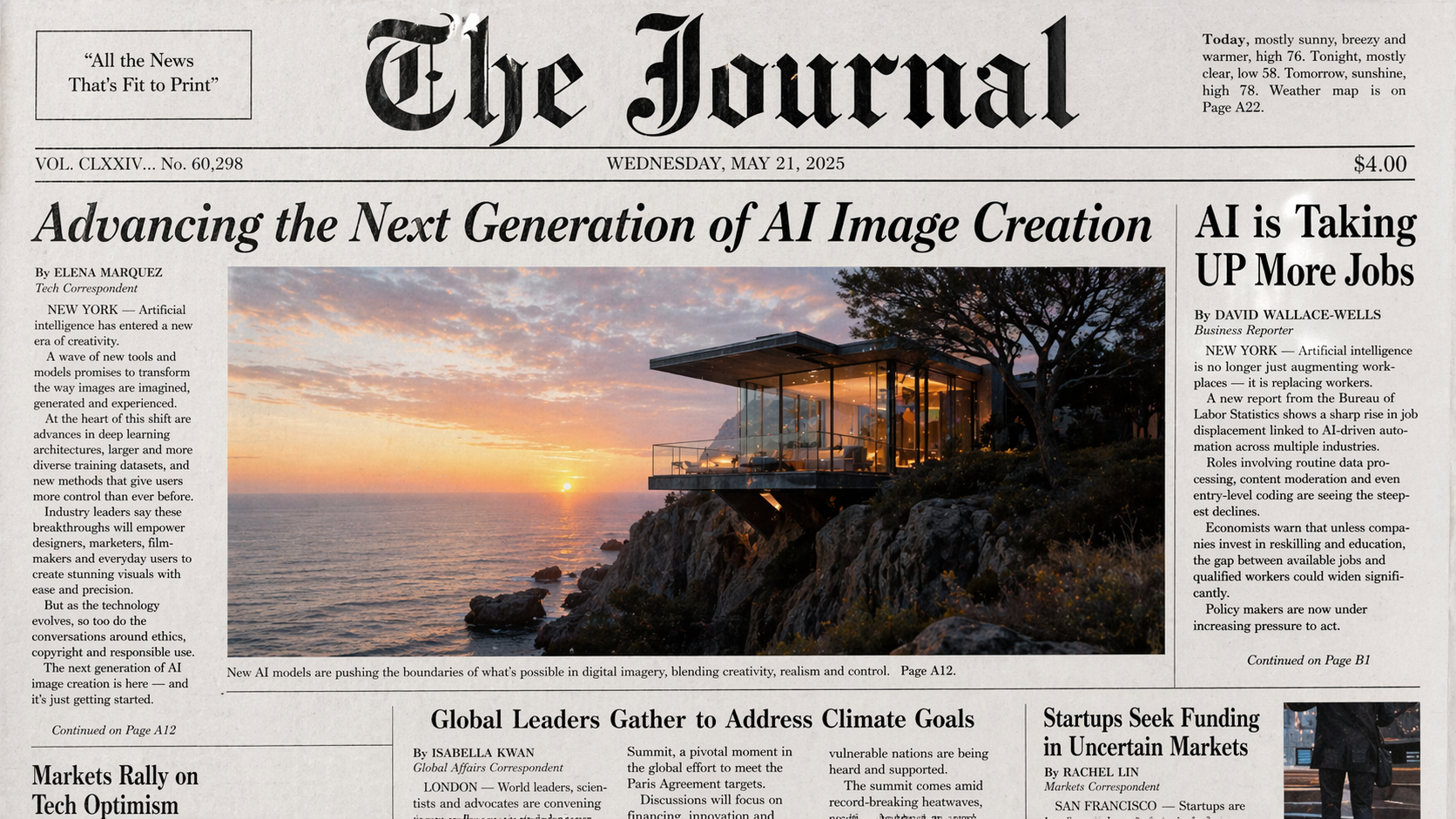
Prompt: "A front page of a broadsheet newspaper titled 'The Journal' in gothic serif font, bold italic headline 'Advancing the Next Generation of AI Image Creation', cliffside glass house photo in center, small body text columns, secondary headline 'AI is Taking UP More Jobs', date, price, volume number, photorealistic, print texture, 16:9"
More prompt ideas:
- "A photorealistic Italian restaurant menu on cream card stock with dish names, prices in euros, fine-print service charge, warm lighting, wooden table"
- "A premium craft coffee bag with brand name, origin, tasting notes, weight, organic badge, matte kraft paper, soft morning light"
2. Multilingual Visuals
Accurate Japanese, Korean, Hindi, Bengali rendering — confirmed by OpenAI and VentureBeat.
Japanese Manga Page — Multi-panel manga with accurate Japanese dialogue, sound effects, and right-to-left reading flow.
Prompt: "A full manga page in shonen style with 6 panels. Young samurai in battle. Japanese dialogue in speech bubbles. Sound effects in panels. Action lines, black and white with screentone, right-to-left layout"
More prompt ideas:
- "An educational infographic of the human digestive system fully labeled in Korean, color-coded sections, medical illustration, white background"
- "A photorealistic Indian market lane with Hindi shop signs, price tags in rupees, promotional banners in Devanagari, warm afternoon light"
3. UI and Software Mockups
VentureBeat: outputs exceeded Nano Banana 2 in UI and screenshot fidelity.
Desktop Software Screenshot — Photorealistic After Effects interface with menus, timeline, panels, and preview — all text labels accurate.
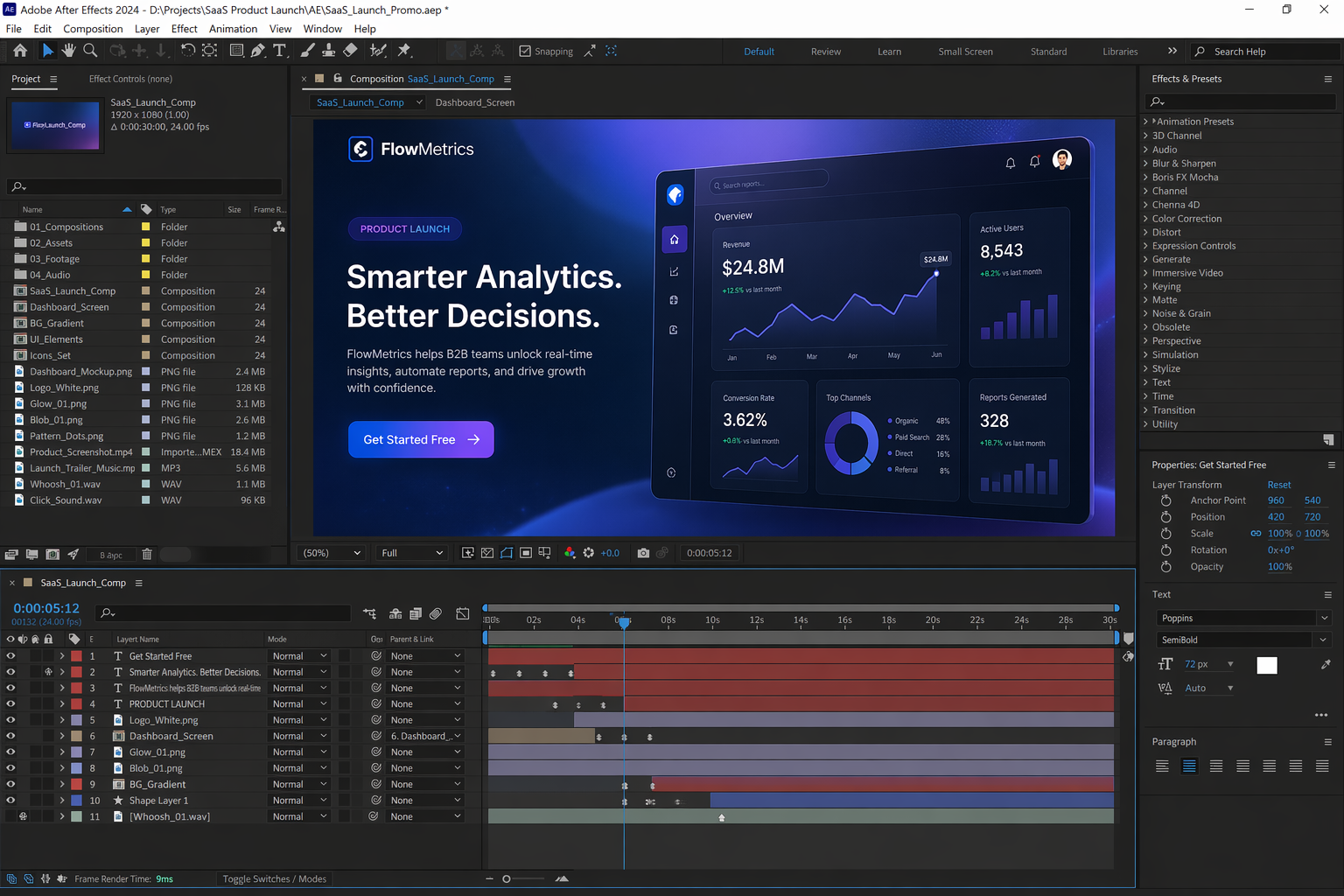
Prompt: "A realistic screenshot of Adobe After Effects 2024 editing a B2B SaaS promo video. Dark theme, composition preview, timeline with animated layers, effects panel, project assets, properties panel. Blue-purple visuals, high detail"
More prompt ideas:
- "A photorealistic SaaS analytics dashboard, dark theme, revenue card, active users, line chart, donut chart, activity table"
- "A photorealistic iPhone 16 Pro showing a food delivery app with restaurant name, ratings, prices, bottom nav, iOS design, phone on marble"
4. Multi-Panel and Sequential Art
Up to 8 consistent images per prompt with character and object continuity across panels.
Comic Strip — 4-panel strip with consistent character design, readable speech bubbles, and visual storytelling.
Prompt: "A 4-panel comic strip, ligne claire style. Female engineer with short black hair, glasses, blue hoodie. Panel 1: Stares at laptop with coffee. Panel 2: Screen shows error. Panel 3: Slams laptop shut. Panel 4: Back with fresh coffee. Consistent character, clean lines"
More prompt ideas:
- "A character design sheet for a fantasy RPG ranger. Four views: front, 3/4 left, side profile, back. Consistent across all views, white background, labeled"
- "A 6-frame storyboard for a coffee commercial with labeled shot types and scene descriptions. Pencil sketch style"
5. Infographics, Maps, and Data Visualization
Full infographics, slides, and maps with accurate data labels, legends, and source attributions.
Data-Rich Infographic — Complete visualization with title, stats, bar charts, timeline, and source footer — all readable.
Prompt: "Infographic titled 'THE STATE OF AI IN 2026' on dark navy. Stat '86% of companies now use AI'. Bar chart by industry. Timeline 2020-2026. Source footer. Flat design, 9:16"
More prompt ideas:
- "A stylized map of Southeast Asia with country labels, color-coded legend, capital cities, scale bar, compass rose, cartographic style"
- "A pitch deck slide 'Revenue Growth' with bar chart, bullet stats, company logo, dark background, 16:9"
6. Immersive and Cinematic Scenes
📷 a new GPT Image 2 use case: text-to-360
— ilker (@ailker) April 22, 2026
turn text or an image into a 360° panorama. pic.twitter.com/6KQRiO03g6
More prompt ideas:
- "A cinematic still of a detective in a rain-soaked Tokyo alleyway at night. Neon reflections in puddles, anamorphic flare, Blade Runner grading, 2.39:1, 35mm grain"
- "A modern minimalist house on a hillside, white concrete, glass facade, infinity pool, golden hour, architectural photography, 16:9"
7. Marketing and Brand-Ready Creatives
No yellow tint. Accurate brand colors. Headlines and CTAs that read correctly inside the image.
Social Media Ad — Scroll-stopping ad with product shot, headline, and CTA badge — ready to deploy.
Prompt: "Instagram feed ad for a skincare brand. White background, glass serum bottle, headline 'Your Skin Deserves Better', CTA 'Shop Now', botanical accents, 1:1, photorealistic"
More prompt ideas:
- "A concert poster 'NEON NIGHTS MUSIC FESTIVAL' in neon-glow font, date, location, lineup, ticket URL, neon gradient sky, 24x36 poster"
- "A premium business card on dark slate with name, title, company, email, phone, website in embossed gold, white card, gold foil edge, 16:9"
Start Using GPT Image 2 Today
GPT Image 2 is live on ImagineArt right now. You do not need to wait for anything.
Use it alongside 50+ models. ImagineArt gives you GPT Image 2, GPT Image 1.5, Flux, Nano Banana, Seedream, and more — all from one platform. Switch between models instantly and compare outputs side by side.
Build reusable creative workflows. AI Workflows let you build node-based pipelines that connect text, image, and video generation. Set GPT Image 2 as your generation model and run the same pipeline for every campaign.
Test it on your real use cases. Try it on your actual briefs — ad creatives, product mockups, social content, UI screenshots. The results speak for themselves.
Recommended Read: How to Scale Creative Production with AI in 2026
Frequently Asked Questions
Yes. GPT Image 2 is live and available on ImagineArt alongside 50+ other AI image generation models. You can start generating with it today at imagine.art/apps/gpt-image-2.
Near-perfect text rendering. GPT Image 2 achieves 99%+ accuracy on text inside images, including small text, complex layouts, and CJK characters. This was the single biggest weakness of all previous AI image models and is now effectively solved.
GPT Image 2 delivers near-perfect text rendering, elimination of the yellow color cast, higher native resolution, stronger character consistency across multiple generations, improved complex scene composition, significantly better prompt following, and deeper ChatGPT integration.
Yes. GPT Image 2 is available on ImagineArt alongside GPT Image 1.5, Flux, Nano Banana, Seedream, and 50+ other models. You can switch between models, compare outputs, and build AI workflows — all from one platform.
OpenAI has announced that DALL-E 2 and DALL-E 3 will be shut down on May 12, 2026. All applications using the DALL-E API must migrate to the GPT Image series. GPT Image 2 is the current recommended replacement.
GPT Image 2 excels at ad creatives with accurate headlines and CTAs, product packaging mockups with readable labels, UI screenshots and software mockups, infographics with legible data, storyboards with embedded dialogue, and branded social media content at volume.
Syed Anas Hussain
Syed Anas Hussain is a computer scientist blending technical knowledge with marketing expertise and a growing passion for AI innovation. Curious by nature, he dives into new AI sciences and emerging trends to produce thoughtful, research-led content. At ImagineArt, he helps audiences make sense of AI and unlock its value through clear, practical storytelling.