
Arooj Ishtiaq
December 19, 2025 • Updated April 21, 2026
9 mins Read
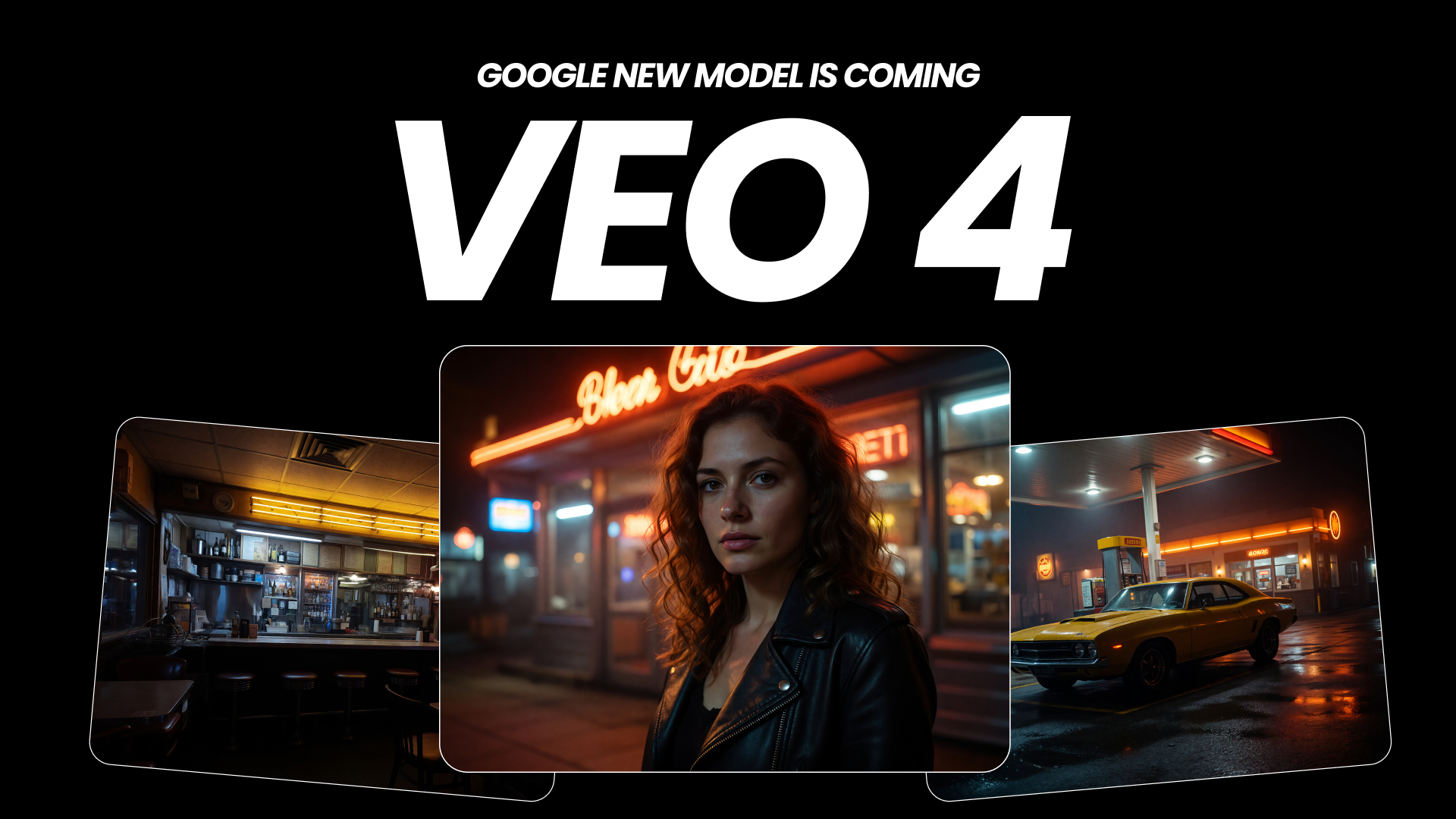
Google DeepMind has steadily raised the bar for AI video generation, and attention has now shifted squarely to what comes next. Veo 4 is expected to be the company's most significant leap forward yet — designed to move AI video from short experimental clips to practical, production-ready content.
Important: Google has not officially announced Veo 4 as of April 21, 2026. There is no confirmed release date, no public API, and no official feature list. However, with Google I/O 2026 scheduled for May 19–20 and multiple industry signals converging, a reveal looks increasingly likely in the coming weeks.
This article outlines everything we know so far — the expected features, how Veo 4 compares to Veo 3.1, the most likely release window, and what creators should be doing right now.
The Veo Timeline: How We Got Here
Understanding where Veo 4 fits requires understanding the full release trajectory. Google has shipped a new Veo version roughly every 5–7 months:
| Model | Released | Key Milestone |
|---|---|---|
| Veo 1 | May 2024 | First announcement at Google I/O 2024. Generated 1080p video from text prompts. |
| Veo 2 | December 2024 | 4K resolution support. Improved physics modeling. Available via VideoFX. |
| Veo 3 | May 2025 | Native synchronized audio — dialogue, sound effects, ambient noise. Announced at Google I/O 2025. |
| Veo 3.1 | January 2026 | Richer native audio, vertical video (9:16), 4K upscaling, scene extension up to 30 seconds, improved identity consistency. |
| Veo 4 | Expected mid-2026 | Not officially announced. Expected native 4K, longer generation, storyboarding, advanced camera controls. |
The pattern is clear: Google has alternated between Google I/O (May) announcements and year-end launches. That cadence makes Google I/O 2026 (May 19–20) the most likely window for a Veo 4 reveal.
What Features Is Veo 4 Expected to Deliver?
Based on the documented limitations of Veo 3.1, Google's research direction, competitive pressure, and credible industry reporting, here are the features creators widely expect from Veo 4.
1. True Native 4K Generation
Veo 3.1 generates at 1080p natively with 4K available through upscaling. The most requested upgrade across the creator community is true pixel-level 4K generation — not upscaled, but rendered from scratch at full resolution.
This single change would move AI video from concept-ready to client-ready, especially for commercial work, broadcast, and large-format displays. Google's TPU infrastructure is widely considered capable of supporting this.
2. Longer Videos in a Single Pass (15–30 Seconds)
Veo 3.1 supports scene extension up to 30 seconds, but the base generation still caps around 8 seconds. Creators have been requesting 15–30 second clips in a single pass — long enough for social media ads, product demos, and short-form content without manual stitching or extension.
NVIDIA has already demonstrated AI video generation stable for up to a minute. Google is expected to close this gap with Veo 4.
3. Storyboarding and Multi-Scene Narratives
This is where Veo 4 could genuinely change how creators work. Rather than generating isolated clips, Veo 4 is expected to support structured multi-scene generation from a script or storyboard input.
Independent filmmakers have highlighted this as the feature that would remove the single biggest bottleneck in their workflow: translating a written script into a visual sequence. Marketing agencies have praised the potential for generating complete narrative-driven ads in one pass.
4. Personalized Avatars and Voice Cloning
One of the most anticipated features is the ability to create personalized digital avatars. Users may be able to upload 3–5 reference images and a voice sample to generate a consistent digital version of themselves across different scenes, camera angles, and lighting setups.
For content creators, educators, and marketers, this could fundamentally change how video is produced at scale.
5. Stronger Character and Scene Consistency
Character drift — where faces change, clothing shifts, and visual identity breaks across shots — remains one of the most frustrating limitations in AI video. Veo 4 is expected to introduce stronger identity persistence through lightweight ID-embedding that locks a character's appearance across an entire sequence.
Improvements in temporal understanding should also make transitions between shots feel smoother and more intentional.
6. Advanced Camera Controls
Creators currently struggle with precise camera direction. You might ask for a slow dolly, but the model gives you a whip pan. Veo 4 is expected to understand true cinematic language — dolly in, rack focus, orbital drone shot, whip pan — giving filmmakers the reliable control they need for professional output.
7. Multi-Angle Scene Generation
Instead of producing just one view of a scene, Veo 4 may generate the same action from multiple camera angles simultaneously — front, side, overhead, and reverse shots from a single prompt. No major AI video tool has fully delivered this yet.
8. Interactive Editing During Generation
Currently, if one detail is wrong, the entire clip needs to be regenerated. Veo 4 may allow users to adjust elements mid-generation — fixing a composition issue or changing a detail without starting over. This would significantly reduce costs and accelerate creative workflows.
Recommended Read: Best AI Video Generators for Explainer Videos
Veo 4 vs Veo 3.1 vs Veo 3
| Feature | Veo 3 | Veo 3.1 (Current) | Veo 4 (Expected) |
|---|---|---|---|
| Video length | ~8 seconds per generation | Up to 30 seconds with scene extension | 15–30 seconds natively in a single pass |
| Resolution | 720p native | 1080p native, 4K upscaled | True native 4K generation expected |
| Audio | Native dialogue, SFX, ambient | Richer audio, improved spatial sound | Enhanced quality, music sync, multi-speaker expected |
| Character consistency | Limited, drifts across frames | Improved identity persistence | ID-locking across scenes expected |
| Camera control | Basic prompt-based | Cinematic presets, improved adherence | Professional cinematic language (dolly, rack focus, orbital) expected |
| Multi-angle scenes | Not supported | Not supported | Multiple camera angles per scene expected |
| Storyboarding | Not supported | Not supported | Multi-scene narrative from script expected |
| Personalized avatars | Not available | Not available | Zero-shot avatar creation from reference images expected |
| Vertical video | Not supported | Yes (9:16) | Yes, with more format flexibility expected |
| Interactive editing | Full regeneration required | Full regeneration required | Mid-generation adjustments expected |
When Is Veo 4 Coming Out?
The honest answer: nobody knows for certain. Google has not confirmed a date.
But as of April 2026, the evidence converges on a mid-2026 window:
- Google I/O 2026 is scheduled for May 19–20. Google has used I/O for major Veo announcements twice before — Veo 1 in May 2024 and Veo 3 in May 2025. Tom's Guide, Engadget, and other outlets have all flagged Veo updates as expected I/O 2026 topics.
- The release cadence supports it. Every Veo version has arrived roughly 5–7 months after the previous one. Veo 3.1 shipped in January 2026. A May 2026 reveal fits the pattern.
- Competitive pressure is intensifying. OpenAI shut down Sora's standalone app in March 2026. Kling 3.0 is pushing hard on motion quality. Google has strong incentive to move quickly.
- Community prediction markets give ~69% odds of a Veo 4 launch before June 2026.
That said, AI release timelines are unpredictable. Features get delayed or quietly dropped. Until Google makes an official announcement, treat everything as informed expectation — not fact.
What Could Make Veo 4 Truly Stand Out
Beyond the core expected features, several capabilities could push Veo 4 from a strong model to a complete video creation platform:
- Collaborative workflows that allow teams to share prompts, edit together, and iterate faster
- Style and genre presets that help beginners create polished cinematic results without deep technical knowledge
- Voice-based prompting that lets users speak their ideas instead of typing them
- Built-in cloud storage and project management for organizing and refining video projects over time
If even some of these are included, Veo 4 would feel less like a generation model and more like a production suite.
What Creators Should Do Right Now
Do not wait for Veo 4 to start building your AI video workflow.
Use Veo 3.1 now. It is the best publicly available AI video model and is accessible on ImagineArt AI Video Generator alongside 15+ other leading video generation models including Kling 3.0, Seedance 2.0, Runway Gen-4.5, and more — all from one platform.
Build reusable workflows. ImagineArt Workflows lets you create node-based creative pipelines that connect text, image, and video generation. When Veo 4 arrives, you swap the model — the pipeline stays the same.
Document what works. Keep a record of your best prompts, winning visual styles, and effective generation settings. This library transfers directly to any new model.
Recommended Read: How to Scale Creative Production with AI in 2026
Final Thoughts
Veo 4 is shaping up to be the most important AI video release of 2026. Longer clips at native 4K with consistent characters, professional camera controls, and storyboarding would make AI video genuinely usable for ad campaigns, product demos, short films, and social content at a quality level that previously required a production crew.
The teams already building their AI video workflows today — testing models, refining prompts, building reusable pipelines on platforms like ImagineArt — will be the ones who move fastest when Veo 4 drops. Everyone else will be starting from scratch.
Recommended Read: Node-Based AI Workflows for Creative Teams
Frequently Asked Questions
No. As of April 2026, Google DeepMind has not officially announced or released Veo 4. The current latest model is Veo 3.1, released in January 2026. All information about Veo 4 is based on the documented release trajectory, industry reporting, and expected competitive positioning.
The most likely window is Google I/O 2026, scheduled for May 19-20. Google has used I/O for major Veo announcements twice before (Veo 1 in May 2024, Veo 3 in May 2025), and the 5-7 month release cadence from Veo 3.1 supports a mid-2026 launch. However, no date has been officially confirmed.
Based on the documented limitations of Veo 3.1 and industry trends, Veo 4 is expected to deliver true native 4K generation, 15-30 second video clips in a single pass, multi-scene storyboarding from scripts, improved character consistency with ID-locking, advanced cinematic camera controls, personalized avatar creation, multi-angle scene generation, and interactive mid-generation editing. None of these have been officially confirmed by Google.
Yes. ImagineArt provides access to Veo 3.1 and other Veo models alongside 15+ other leading video generation models including Kling 3.0, Seedance 2.0, and Runway Gen-4.5 — all from one platform with one subscription.
Start with Veo 3.1 now. It is the best publicly available AI video model and is production-ready for social content, ad creatives, and creative workflows. Building your AI video skills and workflows today means you will be ready to take full advantage of Veo 4 the moment it launches.
OpenAI officially shut down Sora's standalone consumer app and API in March 2026. The shutdown leaves Google Veo as the dominant player in AI video generation, and increases competitive pressure for Google to deliver a strong Veo 4 release.
Arooj Ishtiaq
Arooj is a SaaS content writer specializing in AI models and applied technology. At ImagineArt, she creates sharp, product-focused content that helps creators and businesses understand, adopt, and get real value from AI tools.