
Syed Anas Hussain
June 17, 2026 • Updated June 17, 2026
9 mins Read
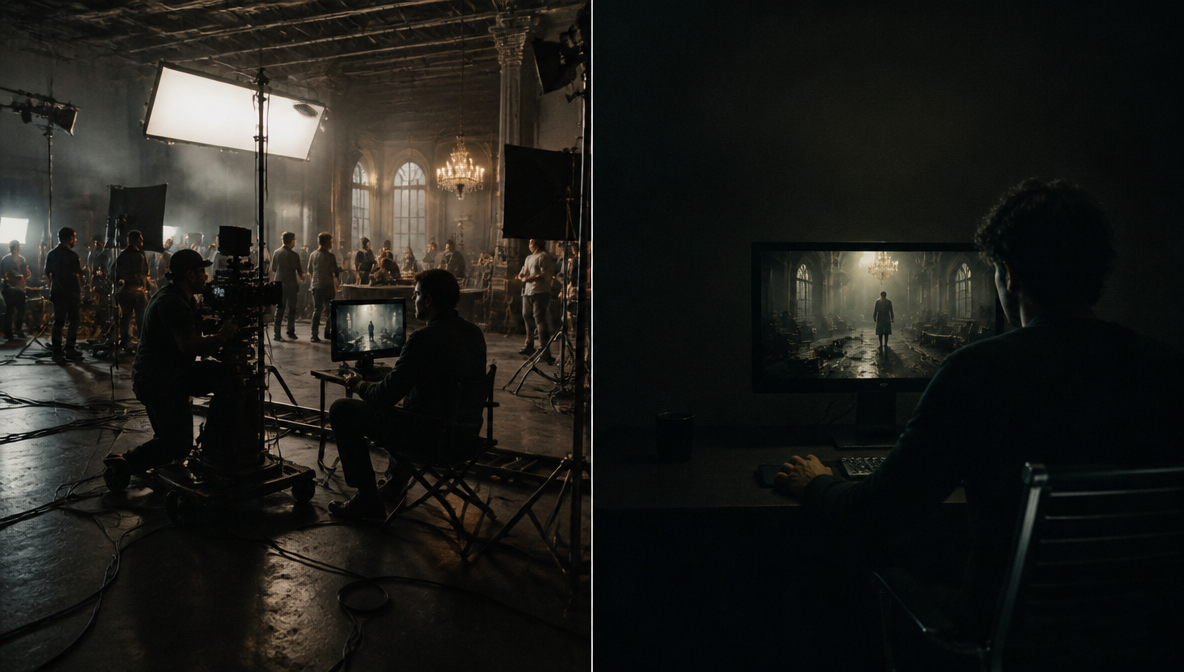
The cost of making a short film has two very different answers in 2026 - one for traditional production and one for AI filmmaking. However, the gap between them is larger than most people expect. A traditionally produced short film costs anywhere from $5,000 to $50,000, depending on crew size, locations, and post-production scope. The same film made with AI tools costs between $75 and $500. This article breaks down exactly where that difference comes from, department by department, with real budget examples for both approaches.
How Much Does It Cost to Make a Short Film?
How much it costs to make a short film depends entirely on the production method. A traditional short film with a hired crew, physical locations, camera rentals, and an editing suite runs $3,000 to $50,000 for a 5–10 minute film. A micro-budget AI short film produced with tools like ImagineArt's Film Studio, using generated visuals and AI voiceover, runs $75 to $500 for the same length.
For context, how much it costs to make a feature film averages $65–$100M at the studio level. Indie features on micro-budgets run $10,000 to $500,000. Short films are the entry point, and AI has made that entry point nearly free.
The breakdown below covers both paths, category by category.
Traditional Short Film Budget: Breakdown by Department
A traditional short film budget is organized across four phases: pre-production, production, post-production, and distribution. Here's where the money goes.
| Department | Low Budget | Mid Budget | Notes |
|---|---|---|---|
| Script & Development | $0–$500 | $500–$2,000 | Paid writer vs. self-written |
| Director | $0–$500 | $1,000–$5,000 | Often deferred on micro-budget |
| Cast | $0–$1,000 | $2,000–$10,000 | SAG rates apply on union shoots |
| Camera & Equipment | $300–$1,500 | $2,000–$8,000 | Rental per shoot day |
| Crew (DP, Sound, AC, PA) | $500–$2,000 | $3,000–$12,000 | Day rates × shoot days |
| Locations & Permits | $0–$500 | $500–$5,000 | Public locations often free; studios cost |
| Lighting & Grip | $200–$800 | $1,000–$4,000 | Often bundled with camera rental |
| Production Design | $100–$500 | $500–$3,000 | Props, wardrobe, set dressing |
| Catering & Transport | $200–$600 | $500–$2,000 | Per shoot day; often underestimated |
| Editing | $500–$1,500 | $2,000–$8,000 | Editor day rate or flat project fee |
| Color Grade | $200–$800 | $1,000–$4,000 | Colorist rates vary significantly |
| Sound Design & Mix | $200–$600 | $500–$3,000 | Often the most skipped item, always noticed |
| Music Licensing | $0–$300 | $300–$2,000 | Royalty-free vs. licensed sync |
| VFX | $0–$1,000 | $1,000–$10,000+ | Often balloons independent of other budgets |
| Total Range | $2,500–$8,000 | $15,000–$50,000+ |
The biggest variables in a traditional budget are shoot days (every additional day adds $1,500–$5,000+), cast size, and VFX. These three categories are where budgets most commonly exceed estimates.
One thing traditional budgets always underestimate: catering and transport. On a two-day shoot with a crew of eight, those two line items alone can hit $1,500 before a single frame is shot.
AI Short Film Budget: What the Same Film Costs with AI Tools
An AI short film budget replaces every physical production cost with a subscription or per-generation fee. The table below uses ImagineArt AI Film Studio as the production tool.
| Category | Traditional Equivalent | AI Cost | Notes |
|---|---|---|---|
| Script & Development | $0–$2,000 | $0 | Written by creator or AI writing tool |
| Visual Generation (Scenes) | Camera + crew + locations | $20–$80 | ImagineArt subscription or generation credits |
| AI Voiceover / Audio | Cast + sound recording | $10–$30 | Audio Studio generation cost |
| Editing | $500–$8,000 | $0 | Free editors (DaVinci Resolve, CapCut) |
| Color Grade | $200–$4,000 | $0 | Film Studio Genre controls handle this at generation |
| Sound Design & Music | $200–$3,000 | $0–$30 | Royalty-free libraries (Epidemic Sound, etc.) |
| VFX | $0–$10,000+ | $0 | Generated scenes include cinematic effects |
| Platform / Tool Subscription | N/A | $20–$60/mo | ImagineArt plan covers image + video generation |
| Total Range | $2,500–$50,000+ | $50–$200 | Per short film project |
The platform subscription is the primary ongoing cost. Generation credits for a 5-minute short — typically 20–40 scene generations across image and video — fall well within a standard ImagineArt plan. The total hard cost per film is genuinely under $200 for most projects.
Traditional vs AI Filmmaking: Side-by-Side Cost Comparison
| Production Element | Traditional | AI (ImagineArt) | Saving |
|---|---|---|---|
| Crew (4-person minimum) | $2,000–$12,000 | $0 | 100% |
| Camera & Equipment | $300–$8,000 | $0 | 100% |
| Locations & Permits | $0–$5,000 | $0 | 100% |
| Cast | $0–$10,000 | $0 (AI avatars) | 100% |
| Post-Production | $1,000–$15,000 | $0–$50 | 95–100% |
| VFX | $1,000–$10,000+ | $0 (generated) | 100% |
| Music & Audio | $200–$3,000 | $10–$60 | 85–95% |
| Total (5–10 min film) | $5,000–$50,000 | $50–$200 | 96–99% |
The savings aren't marginal — they're categorical. Every budget line that requires physical presence (crew, cast, locations, equipment) collapses to zero. What remains are platform fees and audio licensing, which together rarely exceed $100 per project.
Two Real Short Film Budget Examples
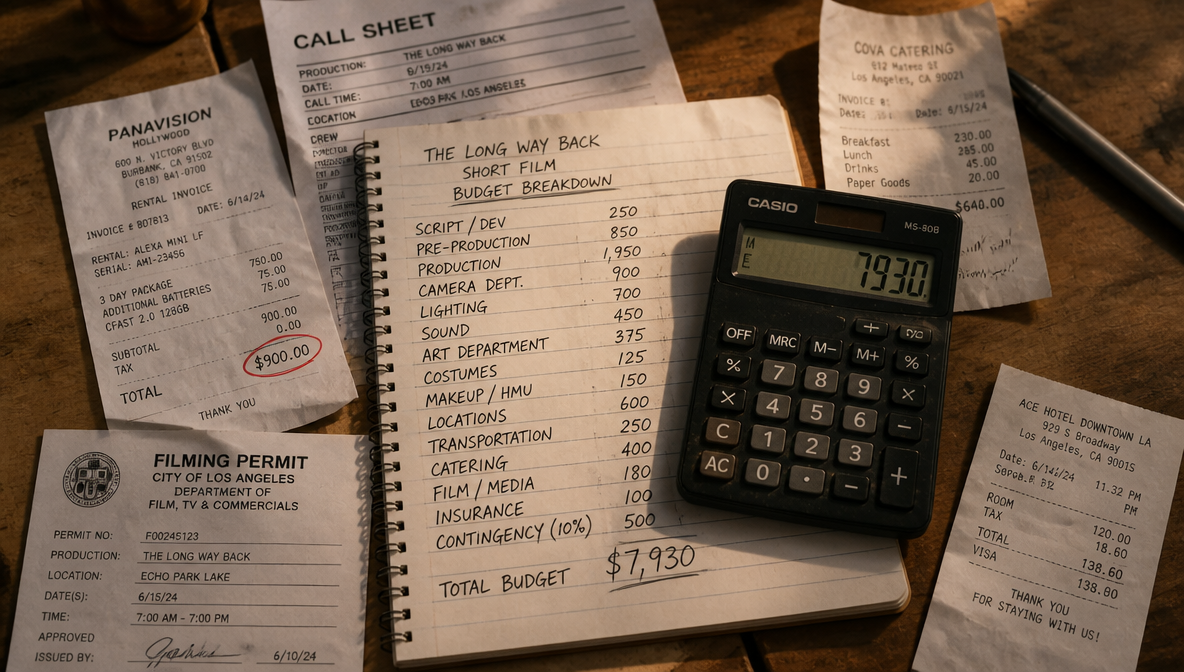
Example A: Traditional 8-Minute Drama Short
A two-day shoot. Indie director, four-person crew, two cast members, two locations (exterior and apartment), no union.
| Line Item | Cost |
|---|---|
| Director (deferred) | $0 |
| DP day rate × 2 days | $1,200 |
| Sound recordist × 2 days | $800 |
| AC + PA × 2 days | $600 |
| Camera + lens rental | $900 |
| Lighting package | $400 |
| Location fees | $200 |
| Cast (2 actors, non-union) | $600 |
| Catering × 2 days | $480 |
| Transport + fuel | $200 |
| Props + wardrobe | $300 |
| Editing (freelance) | $1,500 |
| Color + sound mix | $600 |
| Music license | $150 |
| Total | $7,930 |
This is a lean traditional budget. Add union cast, a DIT, or a steadicam operator and it doubles quickly.
Example B: AI 8-Minute Drama Short (ImagineArt Film Studio)
Same story, same genre, same runtime. Built using ImagineArt Film Studio for visual generation and Audio Studio for narration.
| Line Item | Cost |
|---|---|
| ImagineArt subscription (1 month) | $39 |
| Scene generation credits (approx. 35 generations) | Included in plan |
| Audio Studio narration | Included in plan |
| Editing (DaVinci Resolve) | $0 |
| Music (royalty-free library) | $15 |
| Export + delivery | $0 |
| Total | $54 |
$54 versus $7,930. For the same 8-minute short film. The difference isn't quality compromised — it's physical infrastructure removed.
Where AI Filmmaking Saves the Most (and Where It Doesn't)
AI filmmaking doesn't replace everything equally. Understanding where it excels — and where the gaps are — is how you plan a realistic budget.
Where AI saves 100%:
- Physical crew — No DP, no AC, no PA, no gaffer. Every scene is generated, not shot.
- Equipment rental — No camera, no lens package, no lighting rig, no grip truck.
- Location costs — AI generates any location from a text prompt. Interior, exterior, period setting, sci-fi environment — zero permit or hire fee.
- VFX — Spectacular effects (storms, destruction, impossible physical events) are built into the generation parameters, not added in post.
Where AI requires investment of time, not money:
- Script and story development — AI doesn't write great stories. The creative work still belongs to the filmmaker.
- Prompt iteration — Getting scenes to match a specific vision takes multiple generations. Budget time, not money.
- Character consistency — ImagineArt Film Studio's References panel locks in character appearance across scenes, but it requires deliberate setup at the start of the project.
Where traditional production still has an edge:
- Spontaneous performance — Real actors react in ways AI can't yet replicate with full nuance.
- Dialogue-driven close-up drama — Scenes where everything rides on two actors talking remain stronger in traditional production.
- Documentary and real-world footage — AI can't capture something that actually happened.
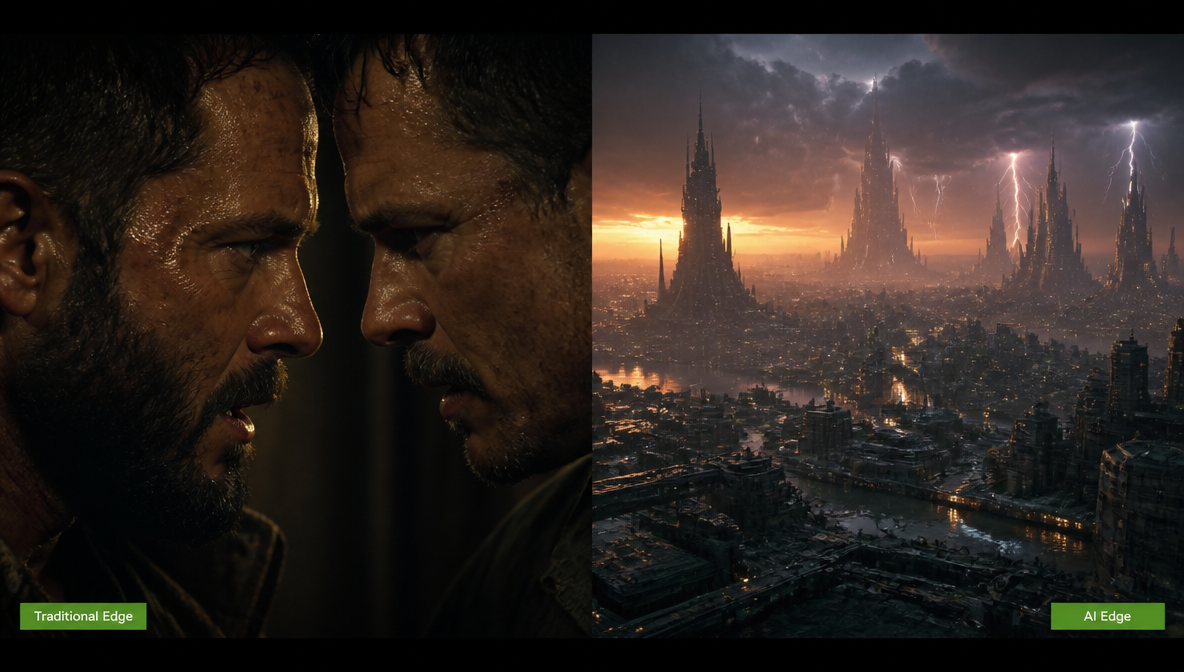
For narrative short films, brand films, social media content, and anything involving locations, VFX, or cinematic visuals, AI filmmaking with ImagineArt collapses the cost by 95%+ without visible quality compromise in the final cut.
If you're ready to start producing, How to Make a Movie with AI Studio is the step-by-step production guide — covering scene generation, character consistency, audio, and assembly from first prompt to final export. For the broader context of how AI filmmaking compares to traditional production beyond just cost, the AI Film Studio vs Traditional Video Production breakdown covers quality, speed, and use-case fit side by side.
Frequently Asked Questions
A traditional short film costs $2,500 to $50,000 depending on crew size, shoot days, locations, and post-production scope. An AI-produced short film made with tools like ImagineArt Film Studio costs $50 to $200 for the same runtime. The difference is physical production infrastructure — crew, equipment, locations — which AI eliminates entirely.
A realistic traditional short film budget for an 8-minute indie drama with a 4-person crew, 2 shoot days, and freelance post-production runs approximately $7,000–$10,000. The equivalent AI short film using ImagineArt Film Studio costs under $60 — primarily a one-month platform subscription.
Yes, significantly. Every budget category that requires physical presence — crew, cast, equipment, locations — is eliminated in AI filmmaking. What remains are platform subscription fees ($20–$60/month) and royalty-free music licensing. The total cost reduction is 95–99% compared to traditional production.
AI filmmaking doesn't replace the creative development of the story, real-world documentary footage, or the spontaneous nuance of live performance in close-up dialogue scenes. For narrative films, brand content, and social media productions, AI handles the visual and audio production layers fully — the story development is still on the filmmaker.
A 5–8 minute AI short film with ImagineArt Film Studio takes 20–40 hours of production time for a first project. Once a workflow is established — prompt templates saved, character references locked in, scene types repeatable — production time drops to 8–15 hours for the same output length.
A laptop, an ImagineArt subscription, and a video editor (DaVinci Resolve is free). No camera, no lighting, no location, no crew required. The entire production pipeline runs from a single machine.
The Math Has Changed
The cost of making a short film is no longer the barrier it was. Traditional production has a floor of a few thousand dollars before a frame is shot. AI filmmaking with ImagineArt Film Studio has a floor of $39 — a single month's subscription.
That doesn't mean AI replaces the craft. It means the financial barrier to producing a cinematic short film has been removed. The story, the structure, the visual direction — those are still on the filmmaker. Everything else, ImagineArt handles.
Next reads:
- How to use AI Film Studio — complete platform walkthrough for serious production
Syed Anas Hussain
Syed Anas Hussain is a computer scientist blending technical knowledge with marketing expertise and a growing passion for AI innovation. Curious by nature, he dives into new AI sciences and emerging trends to produce thoughtful, research-led content. At ImagineArt, he helps audiences make sense of AI and unlock its value through clear, practical storytelling.