
Syed Anas Hussain
April 19, 2026 • Updated June 10, 2026
8 mins Read
Every major brand in 2026 is looking to scale its creative production and reduce its ad costs. But what is the best place for scalable ad creative, and how is AI revolutionizing it? Today, we are going to find the answers.
What Is the Best Place for Scalable Ad Creative?
The best place for scalable ad creative is a system — not a single platform. It is a repeatable production pipeline that consistently outputs brand-consistent, multi-format ad assets at the volume and cadence platforms need, without proportionally growing your team or budget every time output requirements increase.
What Does Scalable Ad Creative Actually Mean?
Most teams confuse scalable with more. They are not the same.
Scalable ad creative means producing volume without quality loss. It means brand consistency across every format and every output — the 50th asset looking as on-brand as the first. It means a production cadence that outpaces creative fatigue before performance drops, not after.
The data support how much this matters. A 10% improvement in creative performance delivers the same result as a 10% increase in media budget. That means the system you build to produce creative is worth as much as the spend you put behind it. Scalable ad creative is not a nice-to-have. It is an algorithmic infrastructure.
Why Most Ad Creative Set-ups Do Not Scale
Understanding the failure points is more useful than jumping straight to solutions. Most teams hit the same four walls.
The Volume Ceiling
Manual production caps out at 10 to 20 assets per month for most teams. Algorithms need 20 to 50 to test, optimise, and find pockets of performance that scale. The gap between what teams produce and what platforms need is massive. And the teams on the wrong side of that gap are paying more to reach fewer people with fewer results.
Brand Drift at Scale
The more people producing assets independently, the faster visual and tonal consistency breaks down. What started as one campaign identity becomes five different aesthetics by week four. Logos are sized differently. Colors drift. The copy tone shifts. None of it is intentional. All of it is expensive.
Format Fragmentation
One approved campaign concept now needs to live across feed ads, Stories, Reels, YouTube pre-roll, display banners, and carousels — each with different dimensions, different durations, and different copy lengths. Manually adapting each format for each placement is not a creative task. It is repetitive production work that compounds with every campaign and consumes hours that should be spent on strategy.
No System — Just Sprints
Most teams operate in creative bursts before campaign launches and go quiet between them. The agency scrambles for two weeks before a product launch, then stops producing. The in-house team has a great Q4 push, then coasts until the next major moment. Platforms reward consistent weekly output. Creative sprints followed by silence do not build the kind of learning loop that compounds into better performance over time.
How to Build a Scalable Ad Creative System
- Think in modules, not full ads.
Break every ad down into three components: the hook, the body, and the CTA. Build multiple versions of each. This means a new ad does not require starting from zero — it requires combining proven components in a new way. Modular creative slows fatigue, speeds up production, and makes every new campaign faster than the last.
- Standardize the brief.
Every campaign that enters the pipeline starts from the same structured input — the offer, the audience, the key message, the format requirements, and the success metric. A brief template that every campaign follows eliminates the ambiguity that causes rework downstream. Garbage in, garbage out applies to creative systems just as much as it applies to data.
- Lock your style parameters before production begins.
Define the visual treatment — color values, image tone, typography rules, composition style — and document it as a reference. Every asset generated in a campaign should inherit those parameters. Style consistency does not happen by accident at scale. It happens because it was defined before the first asset was made.
- Build human checkpoints at the right places, not everywhere.
The two moments that always need human judgment are brief input and final approval. Everything in between — generation, resizing, format adaptation, variation output — is the pipeline's job. Over-inserting human review into every step is what turns a scalable system back into a manual one.
Recommended read: What is an Ad Creative?
How to Scale Ad Creative Using ImagineArt Workflows
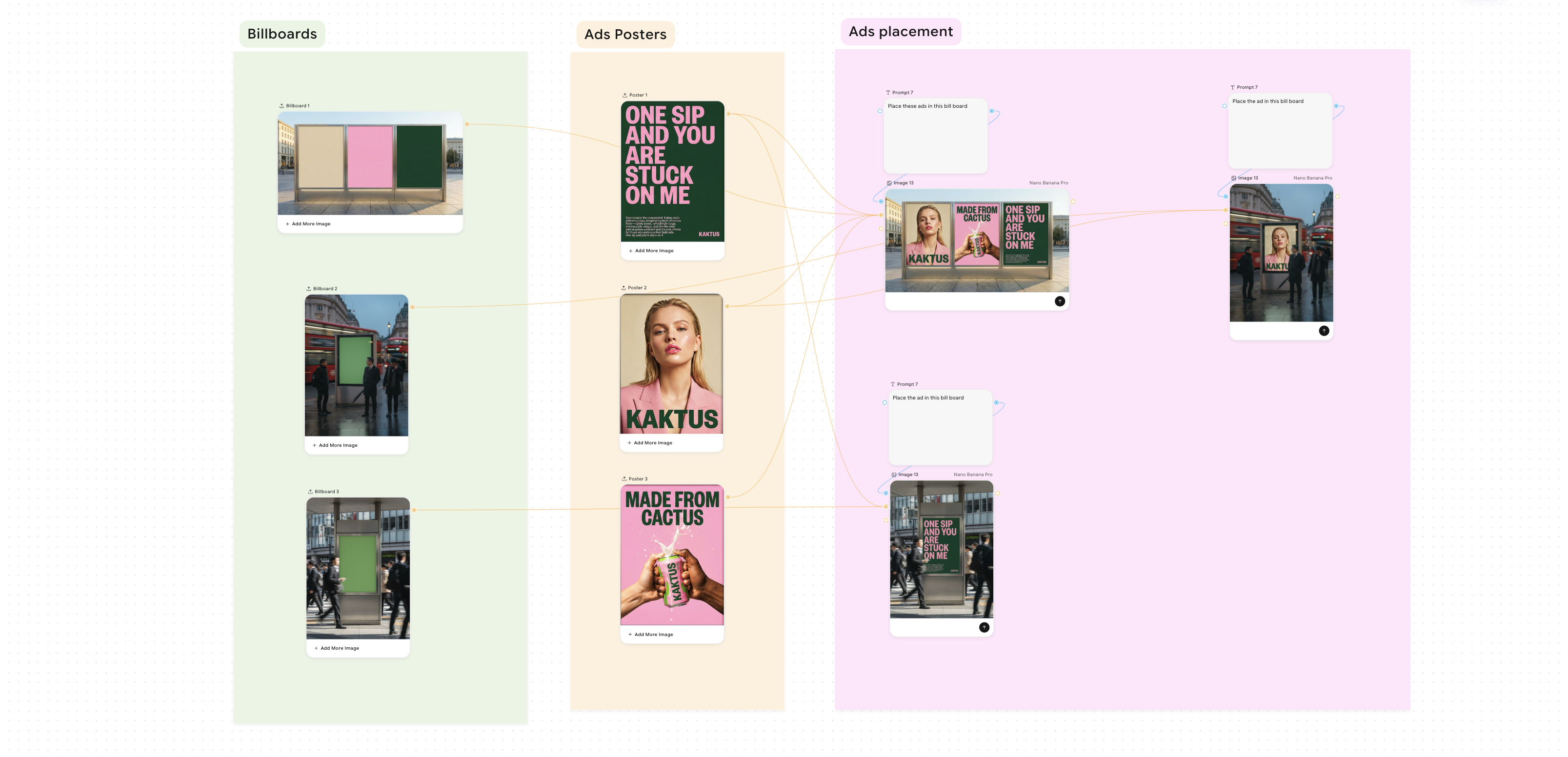
Once the foundation is in place, you need the engine. ImagineArt Workflows is a node-based creative automation canvas where you connect brief inputs, AI generation models, editing steps, and format outputs into a single reusable pipeline. A brief goes in one end. A full set of platform-ready assets comes out the other.
Here is how it works in three steps:
Step 1 — Load your brief and assets into the canvas.
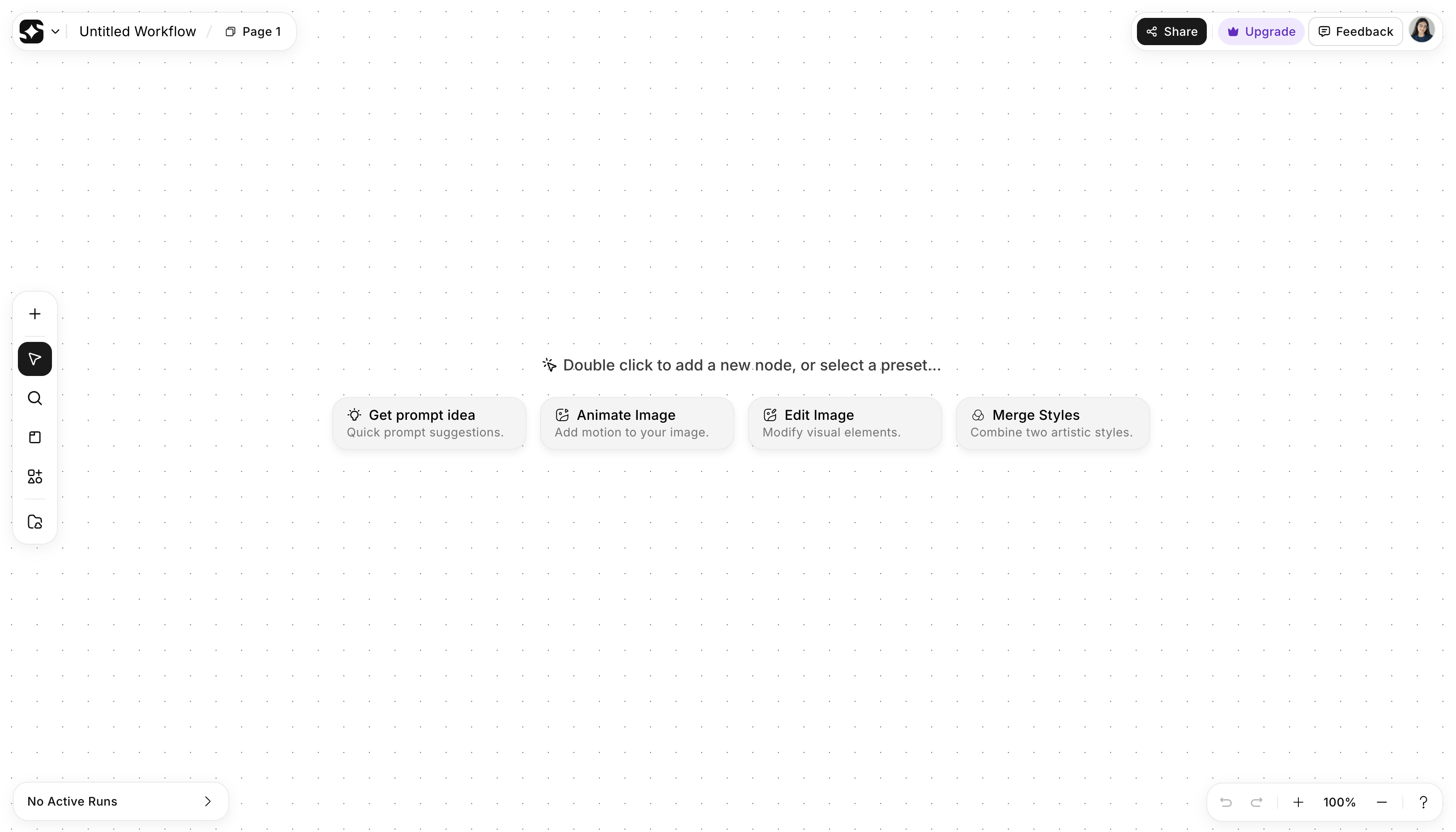
Add a Text node with your campaign brief — product details, visual tone, key message, platform requirements. Or upload a product image as the visual starting point. This becomes the single source of truth that every downstream node in the pipeline draws from.
Step 2 — Connect your models and branch your outputs.
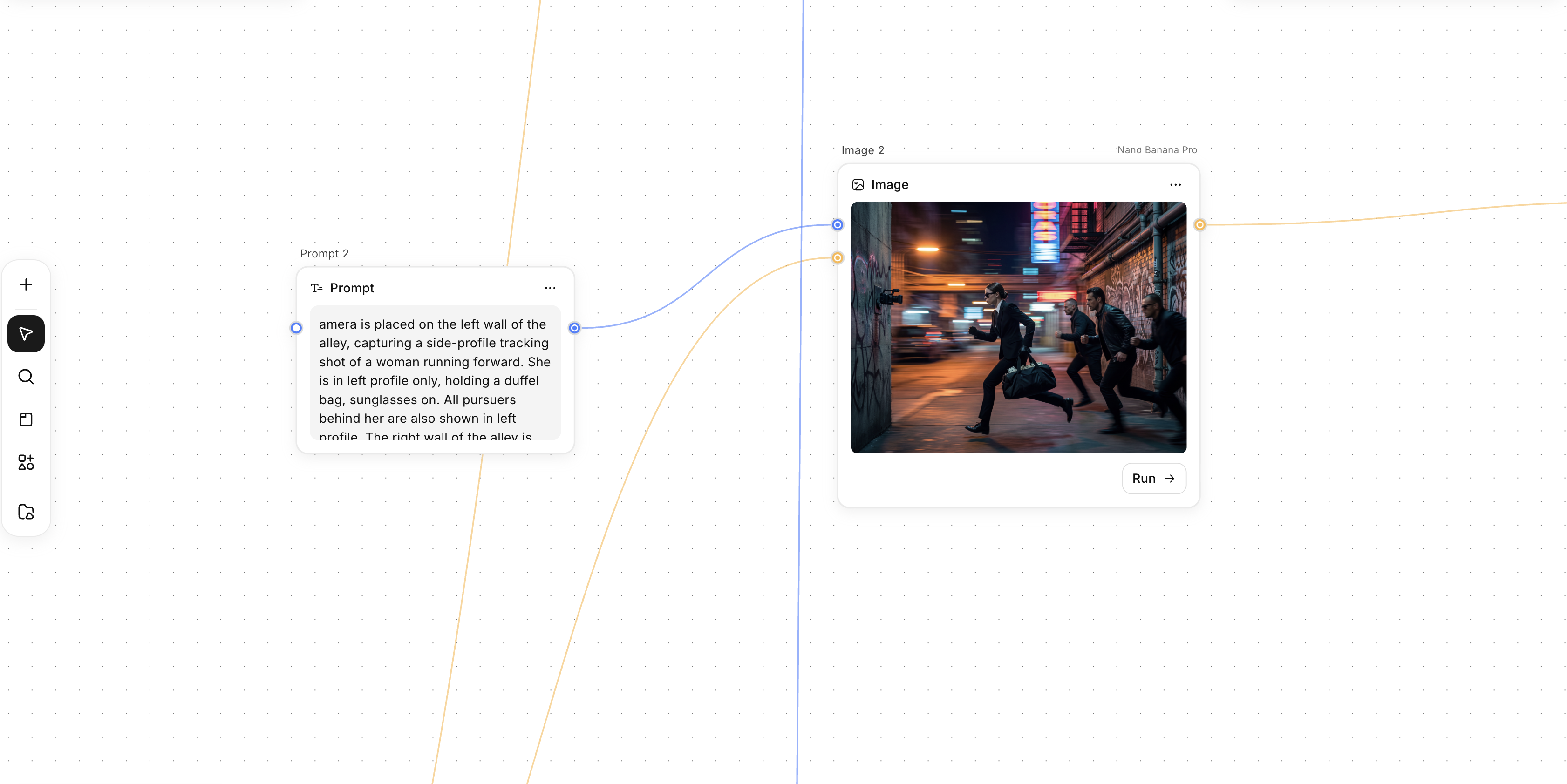
Link your input node to AI generation models on the canvas. ImagineArt gives you access to 20+ models — all within the same workflow. Branch the pipeline so one input simultaneously generates a static feed ad, a vertical video, a widescreen banner, and additional format variants.
Step 3 — Save the pipeline and run it every week.
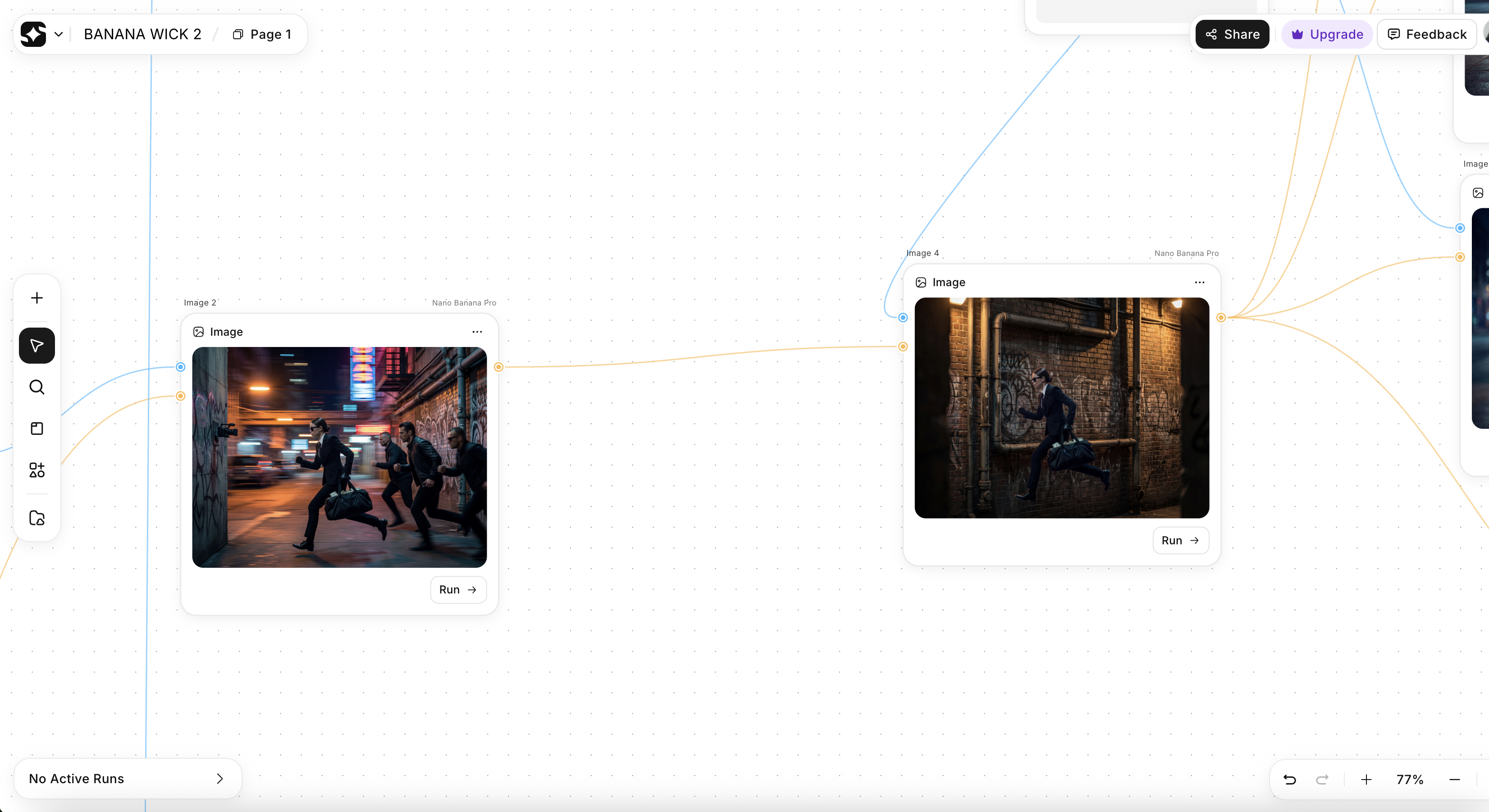
Once the workflow is built, save it. Next week's campaign runs the same pipeline with a new brief or new product image. The system produces a full asset set in one run. Over time, the pipeline gets more precise as the system gets smarter with every run.
This is the difference between using AI for one-off generation and building an AI-powered creative system. One solves today's problem. The other solves every campaign that follows.
If your scaling problem is specifically product ads — ecommerce video creatives for paid social — there is an even shorter path: ImagineArt AI Ad Studio. Paste a product URL and the studio generates complete UGC, unboxing, try-on, and cinematic video ads, 20–50 variants per session, exported to every platform spec automatically. Workflows is the engine for custom pipelines. Ad Studio is the engine for ad volume. Most scaling teams end up running both.
Recommended read: How to Build AI Workflows for Your Creative Team
What to Watch as You Scale Ad Creative
Creative Fatigue Signals
Fatigue rarely announces itself. It creeps in. CTR softens over two consecutive weeks. CPA rises without any change to the budget or targeting. These are the early indicators that your creative has worn out its welcome — and the time to act is when they first appear, not when performance has already collapsed.
A practical rule: refresh or replace any creative when frequency crosses 4.0 or when CTR drops more than 20% over two weeks. High-growth brands do not wait for metrics to fail. They have new assets ready before the old ones stop working.
Brand Consistency at Volume
The more assets the pipeline produces, the more important a spot-check becomes. Not every asset needs individual review. But a sample review per pipeline run — checking for brand fit, copy accuracy, visual tone, and compliance — catches drift before it goes live. Build this into your approval checkpoint, not as a bottleneck but as a quality gate on the way out.
The Refresh Cadence
High-growth brands rotate at least 20% of their active ads every 7 days. This is not a reactive move after performance drops. It is a proactive system that keeps fresh content in the queue before the algorithm needs it. The pipeline makes this possible. Without it, refresh always comes too late — after the CPA has already climbed and the learning phase has reset.
The Compounding Advantage
This is the part most teams miss. Monthly creative cycles give you 12 optimisation points per year. Weekly cycles give you 52. The gap between teams running 12 cycles and teams running 52 does not grow arithmetically — it compounds.
Summing It Up
The best place for scalable ad creative is not a platform you sign up for. It is a system you build. And the teams building it right in 2026 are not producing more for the sake of it. They are producing consistently, intelligently, and with a pipeline that gets better every week it runs.
ImagineArt gives you both halves of that system: Workflows for the custom creative pipeline, and AI Ad Studio for high-volume, platform-ready ad production. Build it once — and start running it today.
Recommended read: How to Use AI to Test Ad Creative Variations in 2026
Frequently Asked Questions
Scalable ad creative means producing high volumes of brand-consistent, multi-format ad assets at the cadence platforms need — without proportionally increasing your team or budget. It is a system, not a single output. The 50th asset should look as on-brand as the first.
The best place for scalable ad creative is a repeatable production system built on AI. ImagineArt offers two: AI Ad Studio, which turns a product URL into 20–50 platform-ready video ad variants per session, and Workflows, a node-based canvas for custom multi-format pipelines. Together they make ImagineArt one of the most practical platforms for scaling ad creative in 2026.
Most set-ups fail because of four problems: a volume ceiling from manual production, brand drift when multiple people produce assets independently, format fragmentation across platforms, and creative sprints with no system between campaigns. Fixing these requires a pipeline, not just a faster tool.
High-growth brands rotate at least 20% of their active ads every 7 days. The right cadence depends on your daily spend — under $1,000/day means refreshing every 7 to 10 days, while above $5,000/day may require refreshing every 3 to 5 days. Refresh before fatigue hits, not after.
Syed Anas Hussain
Syed Anas Hussain is a computer scientist blending technical knowledge with marketing expertise and a growing passion for AI innovation. Curious by nature, he dives into new AI sciences and emerging trends to produce thoughtful, research-led content. At ImagineArt, he helps audiences make sense of AI and unlock its value through clear, practical storytelling.