
Arooj Ishtiaq
August 11, 2026 • Updated August 11, 2026
6 mins Read
AI model video generation has improved fast enough that setting accurate expectations matters more than it did even a year ago. Some use cases genuinely rival traditional video today, while others still show visible tells that separate generated motion from the real thing. This guide covers exactly what to expect: where AI model video performs reliably, where it currently struggles, and which use cases make the most sense to build around it right now.
What Is an AI Model Video?
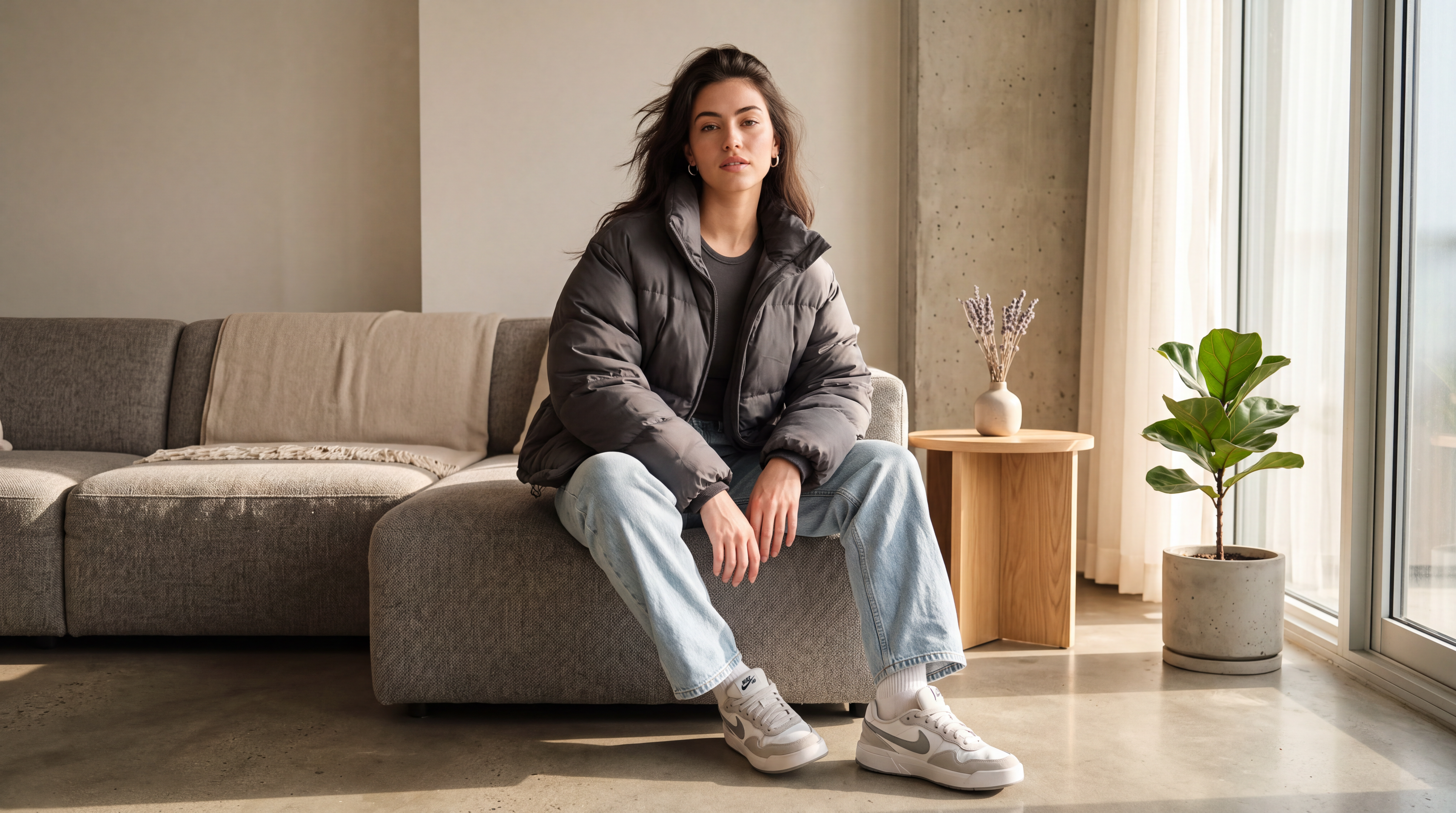
AI model video refers to generating video content of a model, typically wearing or presenting a product, using AI rather than filming an actual person. This usually starts from either an existing model photo, a virtual try-on output, or an AI-generated model image, and animates it into a short clip showing walking, turning, posing, or other natural movement.
The category sits alongside a few related but distinct capabilities: apparel image-to-video (animating a flat lay or catalog image directly), virtual try-on (placing a garment onto a model), and model video generation specifically (turning an existing model or try-on image into motion). Understanding which of these a specific tool actually does matters, since "AI model video" gets used loosely to describe all three in different contexts.
What Works Well Today vs. What Still Shows Limitations
| Performs Reliably | Still Limited |
|---|---|
| Short, single-subject clips with straightforward motion | Hands and fine details, including jewelry clasps and belt buckles |
| Simple, solid, or mildly patterned fabrics | Multi-person scenes where identity can blend across figures |
| Slow, deliberate motion | Clips longer than roughly 8 to 10 seconds |
| Prompt-coherent scenes, even with multiple details | Fast or highly kinetic motion |
| Structured, tailored garments such as blazers |
These limitations reflect the current state of the technology rather than a permanent constraint, and they improve with each new model generation. The practical approach is planning content around today's actual strengths rather than pushing immediately for the most demanding possible use case.
Best Use Cases for AI Model Video Right Now
Given where the technology currently sits, a few use cases consistently produce the most usable, reliable results:
- Social and ad content for simple garments. A single product, clean background, straightforward walk-and-turn presentation, well suited to platforms where shorter clips already outperform longer ones.
- Product page video. A short clip showing basic garment movement on a product detail page, answering the drape and fit question a still photo can't.
- Rapid creative testing. Because generation is fast and cheap relative to a physical video shoot, testing multiple looks, backgrounds, or motion styles before committing to a final campaign direction is genuinely practical.
- Catalog-scale video at consistent quality. Producing short video across an entire product range with a consistent model and presentation, something that would require rebooking a model repeatedly in traditional production.
How to Set Expectations With Your Team or Client
If you're producing AI model video for a brand or a client, being upfront about current limitations avoids disappointment later. A useful framing: current AI model video is strong for short, simple, single-garment content and best treated as a complement to, not a full replacement for, traditional video where a specific complex scene, fast action, or precise garment structure genuinely requires it.
Authenticity and Disclosure Considerations
As AI-generated video becomes visually harder to distinguish from real footage, disclosure is becoming a genuine consideration rather than an afterthought. Research specifically into AI-generated video authenticity has found that detection difficulty is increasing as generation quality improves, meaning viewers and eventually regulators are placing more weight on clear labeling rather than relying on visual inspection alone to identify synthetic content.
For fashion brands, this points toward a simple practical standard: label AI-generated model video clearly wherever a viewer might reasonably assume it's real footage of an actual model, particularly in advertising contexts. This isn't just a compliance consideration. A share of shoppers actively prefer transparent labeling and report more comfort with a brand that discloses AI-generated imagery than one that doesn't address it at all.
AI Model Video Inside a Full Photoshoot Workflow
The most practical way to use AI model video today isn't as a standalone tool. It's an extension of an existing photoshoot. AI Fashion Studio generates video directly from the same model, garment, and background already established in a photoshoot, with adjustable aspect ratio and clip length, rather than requiring model video to be generated separately from scratch.
This keeps expectations grounded in what the tool is actually good at right now: short, consistent, single-garment motion extending a shoot you've already built, rather than an attempt at complex, long-form video content the current technology isn't yet built to handle reliably.
Related Fashion Photography Resources
Setting expectations for AI model video is easier once you understand the underlying photoshoot workflow it extends. See what an AI photoshoot actually is for that foundation, and AI fashion video for the specific templates-versus-advanced-controls decision that shapes how a clip actually gets produced. If you're evaluating this for a full ecommerce catalog rather than a single hero clip, how to shoot a full ecommerce fashion photography catalog covers the consistency-at-scale considerations that apply to video just as much as stills.
For a direct comparison of platforms offering AI model video, the best AI fashion model generators of 2026 covers nine tools, and what an AI fashion model actually is explains the underlying technology and addresses realism skepticism directly.
Conclusion
AI model video is genuinely strong for short, simple, single-garment content and still visibly limited on complex scenes, fast motion, and fine detail like hands. Setting expectations around today's actual strengths, rather than assuming full parity with traditional video, produces the most usable results right now.
AI Fashion Studio applies this directly, extending an existing photoshoot into video rather than treating model video generation as a separate, standalone process, and pairs well with 10 product photography tips for fashion brands for the still-image side of the same catalog.
Frequently Asked Questions
How realistic is AI model video currently?
For short, simple clips with a single model and straightforward motion, quality can be close to convincing. For complex scenes, multiple people, or fast, intricate motion, current limitations, particularly around hands and fine detail, remain visible.
What's the maximum reliable clip length for AI model video?
Most current tools perform most consistently under roughly 8 to 10 seconds. Longer clips are technically possible on some platforms but tend to show more visible identity drift and artifacts as duration increases.
Can AI model video replace a traditional fashion video shoot entirely?
For short social content, product page video, and rapid creative testing, often yes. For complex scenes, fast action, or precise garment structure where current technology still shows visible limitations, traditional video remains the more reliable choice.
Does AI model video work from an existing photoshoot?
Yes, and this is generally the most practical approach. AI Fashion Studio animates the same model and garment setup already used for a photoshoot's still images, rather than requiring a separate video generation process.
Arooj Ishtiaq
Arooj is a SaaS content writer specializing in AI models and applied technology. At ImagineArt, she creates sharp, product-focused content that helps creators and businesses understand, adopt, and get real value from AI tools.