
Umaima Shah
June 10, 2026 • Updated June 10, 2026
12 mins Read
Your campaign can start strong and still run out of creative before it reaches its best audience. The first ad gets attention, then the same hook shows up too often, the product shot feels familiar, and each platform starts asking for a version that fits its own feed.
AI ad formats help you turn a single product idea into UGC-style videos, product demos, unboxing clips, testimonials, lifestyle ads, and comparison creatives without having to rebuild the campaign from scratch.
With ImagineArt, you can create the next batch of ad variations while the offer still has momentum, so your creative keeps up with the way people scroll, compare, and buy.
What Are AI Ad Formats?
AI ad formats are repeatable ad styles you can create with AI for different platforms, audiences, and campaign goals. They include UGC-style videos, product demos, unboxing clips, testimonials, comparison ads, lifestyle visuals, and voiceover ads.
Think of them as creative containers. The product stays the same, but the angle changes based on what the buyer needs to see before they click, watch, or buy.
A skincare brand might use:
- a UGC-style ad to build trust
- a product demo to show texture
- An unboxing ad to show packaging
- a before-and-after ad to show results
- a lifestyle ad to place the product inside a daily routine
With ImagineArt, you can create these AI ad formats without starting from a blank screen each time. You can build product visuals, turn images into videos, test different hooks, and adapt the same idea for TikTok, Instagram, YouTube Shorts, and Meta ads.
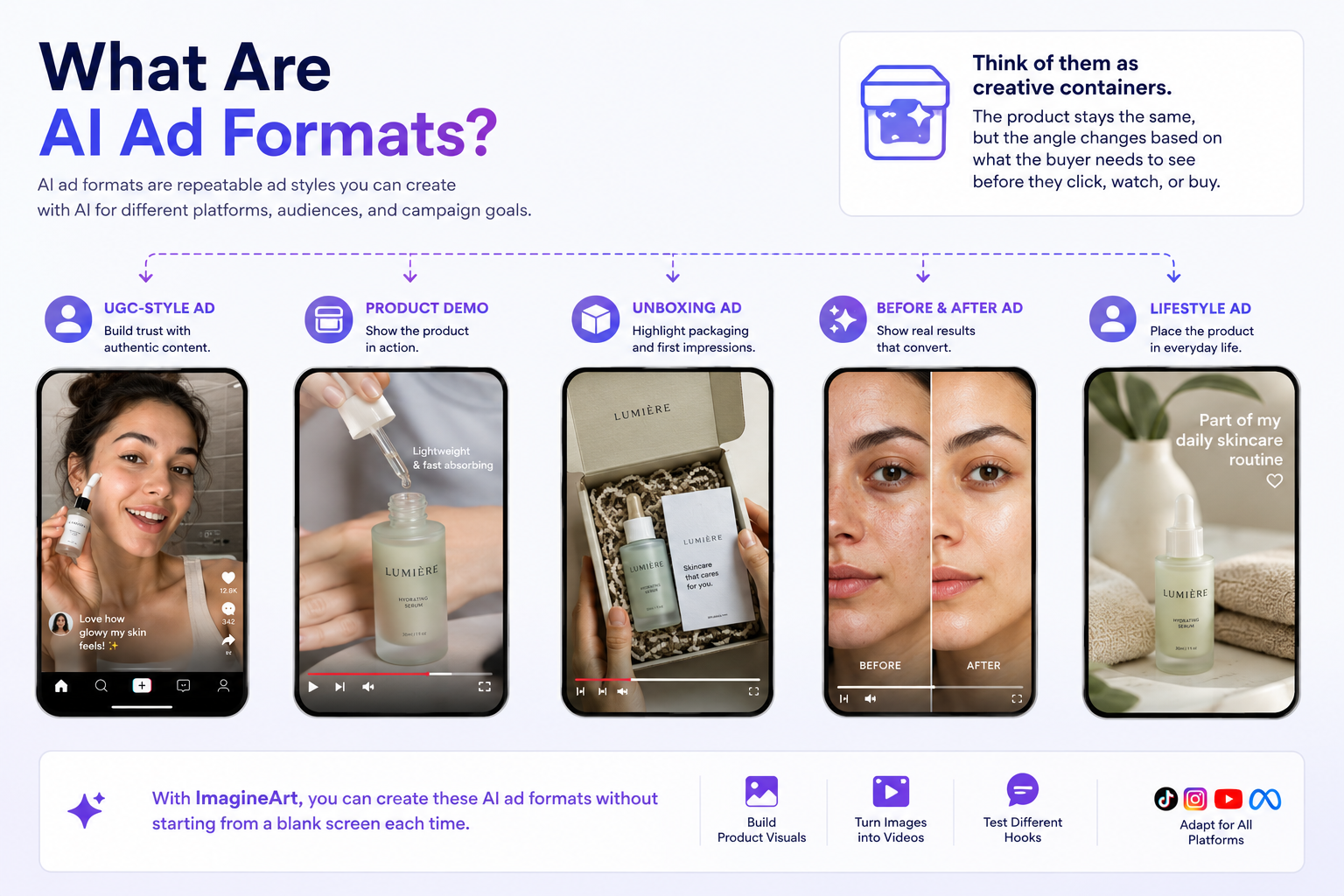 One product, multiple AI ad formats, each built for a different buying moment.
Why AI Ad Formats Matter for Paid Social
A TikTok ad, a Meta retargeting ad, and a YouTube Shorts ad cannot carry the same creative weight. Each platform trains people to watch in a different way, so the same product needs different angles.
A buyer scrolling TikTok may stop for a messy UGC-style review. The same buyer on Meta may need a cleaner product demo before clicking. On YouTube Shorts, the ad may need to explain the offer before the skip instinct kicks in.
That creates pressure fast:
- One winning ad starts losing attention after repeated views
- One format does not fit every placement
- One hook cannot speak to every buyer stage
- One product shoot rarely gives enough usable versions
AI ad formats help paid social teams build around that reality. A brand can test a product demo for cold audiences, a testimonial for retargeting, an unboxing clip for ecommerce traffic, and a lifestyle ad for visual demand.
The product stays the same. The buyer sees a version that matches how they think, scrolls, compares, and decides on each platform.
AI Ad Formats You Can Create with ImagineArt
AI ad formats work best when each creative has a clear role. One format builds trust. One shows the product in action. One makes the product feel desirable. One answers the doubt that stops the buyer from clicking.
With ImagineArt, you can shape one product idea into different ad creatives for different platforms, audiences, and buying stages.
AI UGC Ads
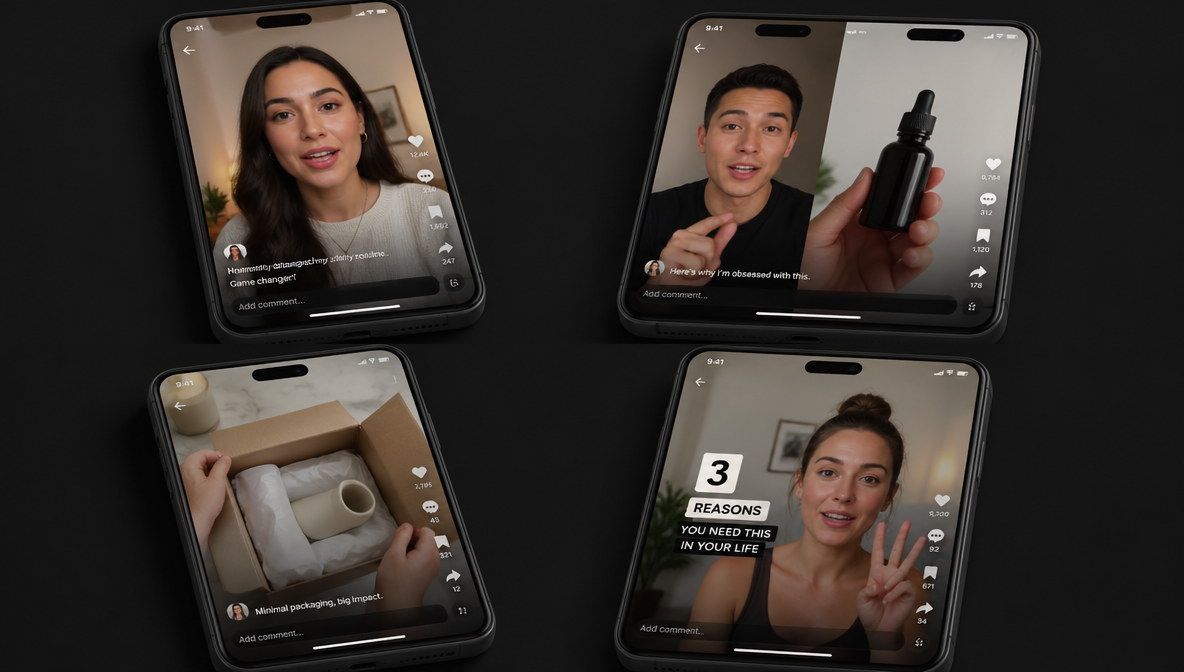
AI UGC ads look like creator-led content, which makes them useful when the buyer needs trust before product details.
Use this format for creator reviews, founder clips, product reactions, and customer-style stories. It works well for skincare, apps, fashion, wellness products, gadgets, and AI tools.
A good AI UGC ad should feel direct. The viewer should believe someone tested the product and found a reason to talk about it — not that a brand briefed a script and hired someone to read it.
The format works because it removes the distance between the product and the buyer. A polished brand video signals advertising. A UGC-style clip signals a recommendation. That difference changes how the viewer processes the message before they even hear the first word.
For the format to work, the persona needs to match the product category:
- A wellness product needs calm, conversational delivery
- A gadget needs visible excitement
- A SaaS tool needs someone who sounds like they actually use it for work
If the tone feels off, the trust signal breaks before the product point lands.
ImagineArt AI UGC Creator generates creator-style video ads without casting, scheduling, or reshoots. For setup, the guide on how to create AI UGC videos walks through the full process. For paid social specifically, how to make UGC ads with AI covers the format decisions that affect performance on TikTok and Meta.
AI Product Demo Ads
AI product demo ads show the product in action, making them useful when the buyer needs to understand how something works.
Use this format for apps, SaaS tools, gadgets, beauty products, home products, and ecommerce items. The demo can show an interface, product texture, setup, result, or workflow.
The strongest demo ads focus on one useful moment. They do not explain every feature. They show the part that makes the product easier to understand.
AI Unboxing Ads
AI unboxing ads focus on the first impression. Packaging, reveal, texture, product size, and presentation all help shape the buying decision.
Use this format for beauty, fashion, wellness, tech accessories, subscription boxes, and ecommerce launches. It gives the buyer a closer look before they reach the product page.
A good unboxing ad should feel like the product just arrived. The reveal needs to create interest without making the ad feel like a staged product shoot.
AI Testimonial Ads
AI testimonial ads turn a product benefit into a short customer-style story. They work when the buyer needs proof before taking action.
Use this format for retargeting, subscriptions, services, apps, courses, and higher-cost products. It fits audiences who already understand the offer but still need confidence.
Keep the story tight. Show the old problem, the product experience, and the result the buyer actually cares about.
AI Before-and-After Ads
AI before-and-after ads work when the result can sell the product faster than a long explanation.
Use this format for beauty, fitness, home improvement, photo editing, design tools, productivity apps, and visual services. It works well when the buyer can spot the change in seconds.
The result needs to look believable. If the “after” feels too perfect, the ad loses trust before the product gets attention.
AI Problem-Solution Ads
AI problem-solution ads work when the buyer already feels the pain but has not chosen a fix yet.
Use this format for apps, tools, home products, health products, finance offers, ecommerce items, and services. The opening should show a problem the buyer recognizes fast.
Specificity carries this format. “Your product photos look flat under indoor light” lands better than a broad line about bad visuals.
AI Comparison Ads
AI comparison ads work in crowded categories where buyers already compare options.
Use this format for product A vs product B, old routine vs new routine, manual workflow vs AI workflow, or budget vs premium choices. It also works when your product saves time, reduces cost, or improves output.
Focus on one clear difference. Too many points make the AI ad feel like a landing page squeezed into a video.
AI Lifestyle Ads
AI lifestyle ads sell the feeling around the product. The product appears in frame, but the scene shows the moment, routine, or identity the buyer wants.
Use this format for fashion, skincare, food, home, travel, tech, and premium ecommerce products. It works when visual taste affects the buying decision.
Some strong Meta and YouTube ads have no face on camera. A product on a bathroom counter, desk, kitchen shelf, or travel bag can say enough when the scene feels right.
AI Voiceover Ads
AI voiceover ads work when the visual needs a clear story but no face on camera.
Use this format for explainers, product walkthroughs, app demos, founder-style messages, comparison ads, and retargeting creatives. The voice guides the viewer while the product or scene carries the screen.
Keep the voiceover focused. One hook, one product point, one reason to act.
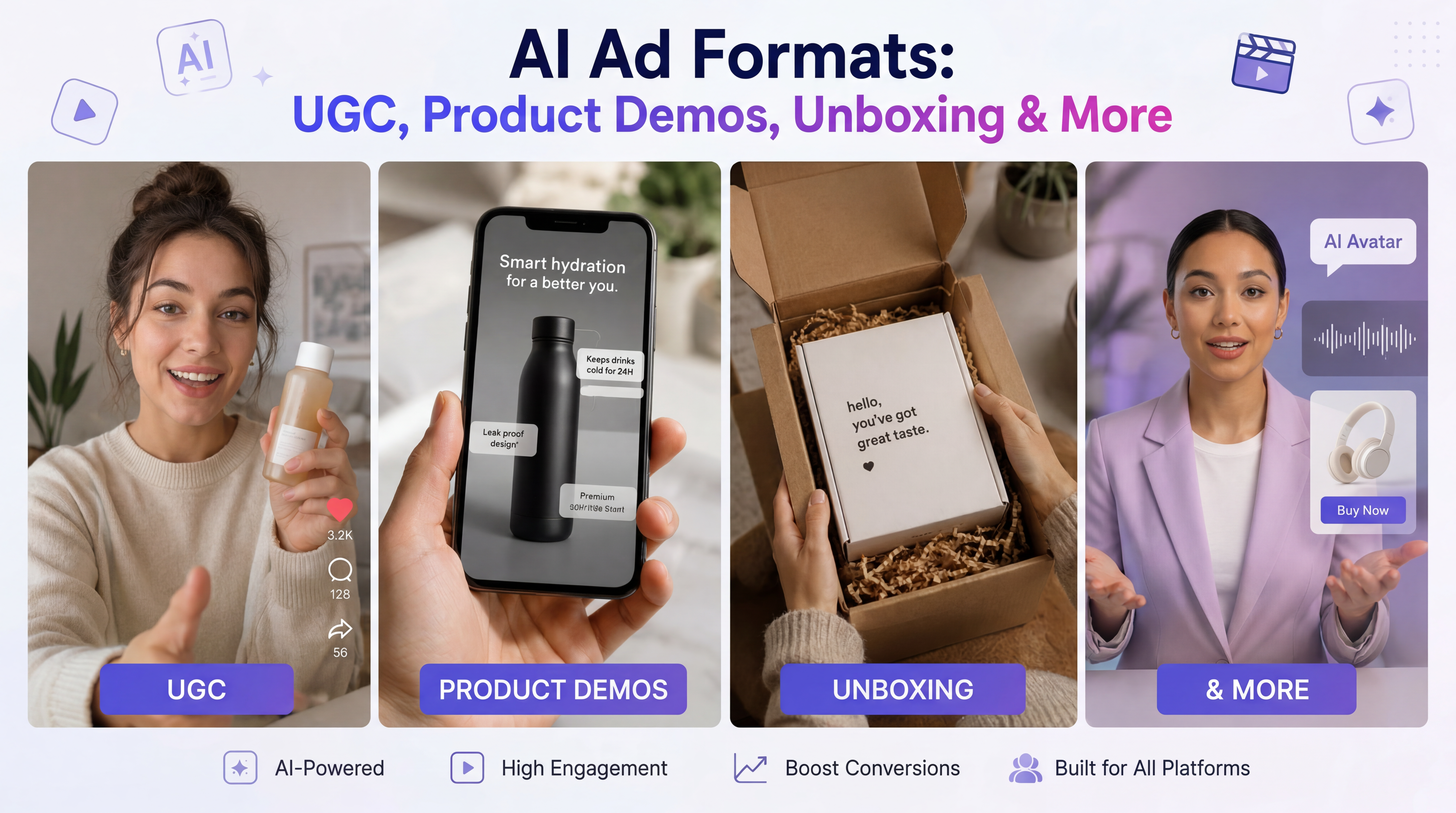
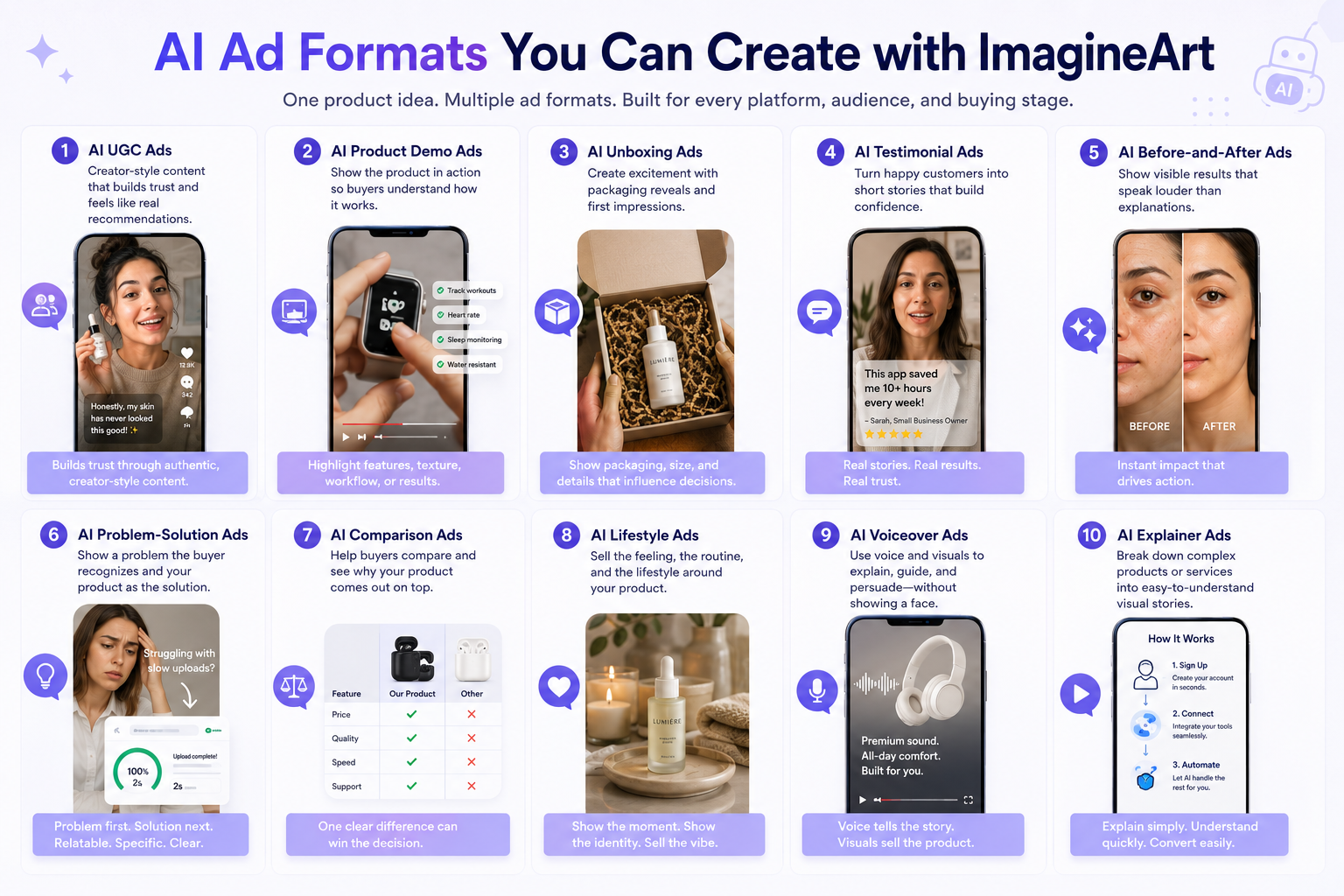 One product, multiple AI ad formats, each built for a different platform, audience, and buying stage.
Where AI Ad Formats Work Best Across Platforms
AI ad formats need platform context. A product demo that works on YouTube Shorts may need a faster opening for TikTok. A lifestyle creative that performs on Meta may need tighter framing for Stories.
The format stays the same, but the pace, crop, hook, and visual style should match where the buyer sees it.
AI In-Feed Ads
AI in-feed ads appear inside the normal scrolling experience on TikTok, Instagram, Facebook, and YouTube Shorts. They need to earn attention fast because users can skip or swipe within seconds.
This format works well for UGC ads, problem-solution clips, unboxing videos, product demos, and voiceover ads. The opening should feel native to the feed, not like a resized brand video.
Use a clear first frame. A product close-up, creator reaction, bold use case, or visible result can stop the scroll faster than a slow intro.
AI Reels Ads
AI Reels ads appear between short-form videos on Instagram and Facebook. They work best when the creative feels vertical, quick, and social-first.
Use this placement for lifestyle ads, product demos, UGC-style clips, before-and-after ads, and voiceover creatives. The first seconds should show motion, product use, or a clear visual change.
Reels ads do not need heavy explanation. They need a strong visual reason to keep watching.
AI YouTube Shorts Ads
AI YouTube Shorts ads sit inside a fast-swipe video feed. The format needs a clear point early because the viewer expects quick payoff.
Use this placement for product demos, comparison ads, voiceover explainers, testimonials, and short brand stories. It works well when the product needs more context than a static image can give.
The first one or two seconds matter most. Show the product, result, or claim before the viewer moves on.
AI Story Ads
AI Story ads appear in full-screen vertical placements on Instagram, Facebook, and similar platforms. They work well when the creative feels quick, personal, and direct.
Use this placement for flash offers, UGC clips, product reveals, event promos, quick demos, and retargeting reminders. The ad should feel built for the Story screen, not copied from the feed.
Keep the message simple. One visual, one line, one action usually works better than a crowded layout.
AI Carousel Ads
AI carousel ads let brands show multiple visuals inside one ad unit. They work well when the buyer needs to compare products, features, steps, or use cases.
Use this placement for ecommerce collections, skincare routines, fashion drops, app features, product bundles, and before-and-after sequences. Each card should carry a separate point.
The first card needs to do the hardest job. It should give the buyer a reason to swipe instead of showing a generic product image.
AI Collection Ads
AI collection ads connect the main creative with product browsing. They work well when the buyer may want to explore more than one item after seeing the ad.
Use this placement for ecommerce brands, fashion, beauty, home, lifestyle products, and product sets. It suits campaigns where the ad needs to move the viewer closer to shopping.
The main AI ad creative should set the mood or product promise. The product cards should make the next click feel natural.
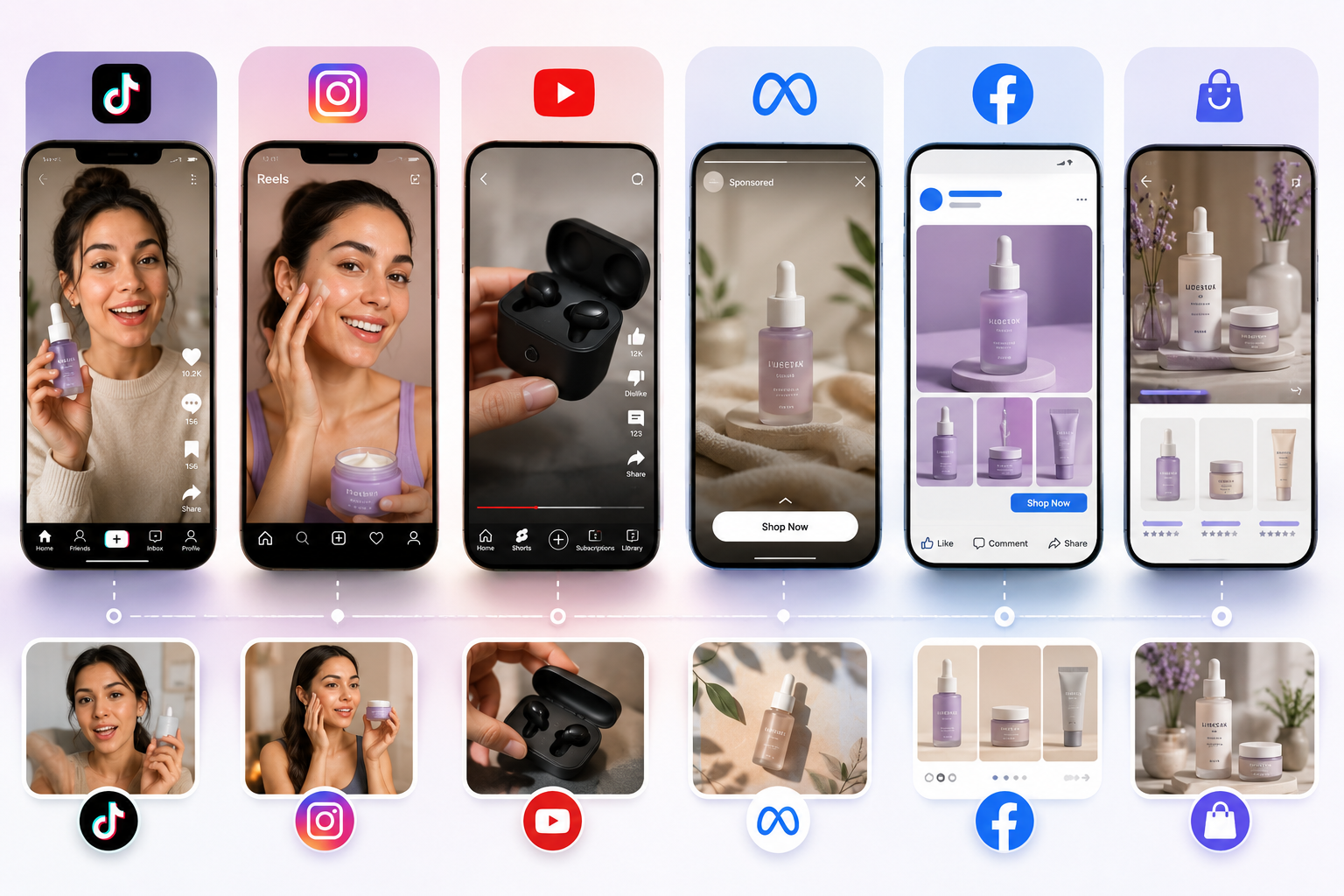 The same AI ad format can drive different results when it is adapted for the platform where people scroll, watch, and shop
Which AI Ad Format Should You Use?
Pick the AI ad format based on what the buyer needs before they take action. A cold audience may need a reason to stop scrolling. A warm buyer may need proof. A returning visitor may need one final push.
For trust, use AI UGC ads or testimonial ads. These formats work when the buyer wants to hear the product explained more humanly.
For product clarity, use AI product demo ads, comparison ads, or voiceover ads. These formats work when the buyer needs to understand the use case, difference, or value fast.
For visual desire, use AI unboxing ads, lifestyle ads, and before-and-after ads. These formats work when the product needs to look good, feel useful, or show a clear result.
For platform fit, match the format to how people scroll. TikTok and Reels work well for UGC, unboxing, and problem-solution ads. The best AI video generator for DTC product ads makes it faster to produce these at the volume short-form platforms demand. YouTube Shorts carries demos and voiceover ads well, and knowing which AI video editor is best for ads helps you finish those formats faster. Meta carries lifestyle, testimonial, and comparison ads across cold traffic and retargeting, especially for category-specific campaigns like fashion ads, healthcare ads, and real estate ads.
Top Mistakes While Selecting AI Ad Formats
Most paid social campaigns do not fail on targeting. They fail because the format does not match what the buyer needs at that stage.
These are the mistakes that kill performance before the campaign has enough data to course correct:
Running one format across every placement
TikTok, Meta feed, YouTube Shorts, and Stories do not reward the same creative. A lifestyle ad that converts in Meta feed will feel slow and off-brand in a TikTok in-feed placement. Match the format to where the buyer sees it, not just what looks good in the export.
Picking the format before the funnel stage A testimonial ad sent to a cold audience asks for trust the buyer has not built yet. A UGC-style review sent to a retargeting audience wastes the conversion window on awareness work. The format should follow the buyer stage, not the other way around.
Testing one creative and calling it a loss One version of a format is not a format test. If the UGC ad did not perform, the question is whether the persona, hook, or product category was the problem, not whether UGC works. Learn how to read what actually went wrong with a proper ad creative analysis before pulling a format entirely.
Not building enough variations to find the winner Most brands ship two creatives and wait. The algorithm needs volume to find signal. If you are not testing enough variations per format, you are not testing, you are guessing. The guide on how to use AI to test ad creative variations covers how to build a proper testing structure without inflating production cost.
Ignoring creative fatigue until ROAS drops A format that worked last month is already losing attention this month. Creative fatigue sets in faster than most teams catch it, especially when the same hook runs across multiple placements simultaneously. Knowing how to handle ad fatigue and refresh ad creative before performance tanks is what separates brands that scale from brands that restart from zero every quarter.
Treating production cost as the ceiling for creative volume The reason most brands run two or three creatives per campaign is not strategy, it is production capacity. If the volume of creative you can test is limited by shoot budgets and timelines, the format selection problem never gets solved. The best place for scalable ad creative is one that removes production as the bottleneck entirely.
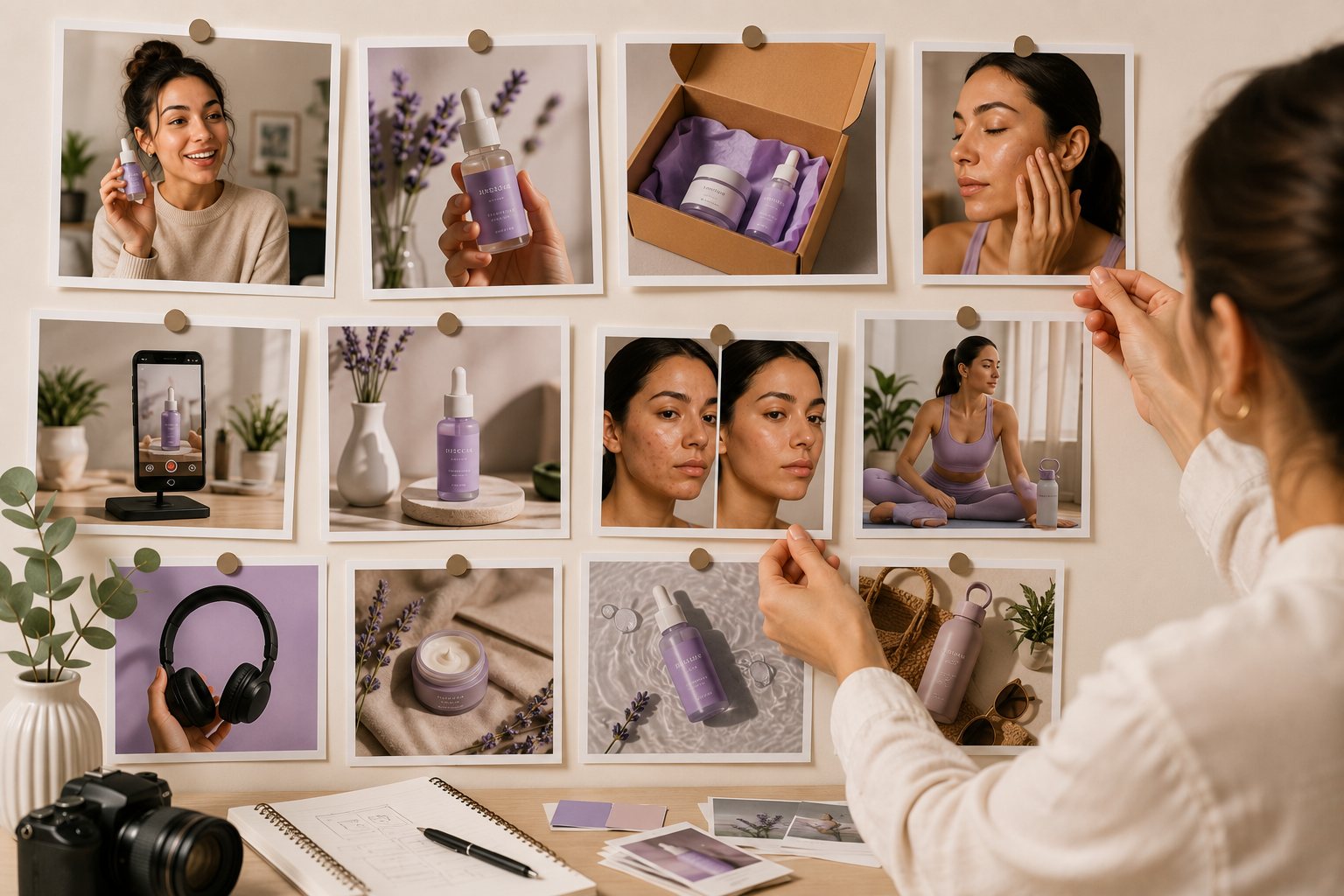 UGC, Product Demos, Unboxing & More
Ready to Create AI Ad Formats with ImagineArt?
A strong AI ad starts with the right format. UGC ads build trust, product demos explain the use case, unboxing ads create interest, and lifestyle ads make the product easier to picture.
With ImagineArt, you can turn one product idea into multiple ad creatives for TikTok, Instagram, YouTube Shorts, Meta, and ecommerce pages.
Start with the format your campaign needs most, then create the next version around a different buyer doubt, product angle, or platform.
Umaima Shah
Umaima Shah is a creative content strategist specializing in AI tools, image generation, and emerging technologies. She focuses on translating complex platforms into clear, practical insights for creators, designers, and product teams