
Syed Anas Hussain
April 14, 2026 • Updated April 14, 2026
10 mins Read
The advertising technology portfolio has changed more in the last three years than it did in the previous decade. New channels, new formats, new data rules, and a growing pressure to produce more creative, faster, without losing quality. AdTech solutions are at the center of all of it.
These are the tools and platforms that make modern digital advertising work. And in 2026, they are smarter, more immersive, and more data-driven than ever.
Here is what we are covering:
- AI-Powered Solutions
- Big Data & Analytics
- Programmatic Advertising
- Retargeting Solutions
- AR-Powered Advertising
- VR-Powered Advertising
- Creative Automation & Workflows
1. AI-Powered AdTech Solutions
AI sits inside almost every part of the modern adtech stack — and it is changing everything else. It powers real-time bidding. It drives smarter audience segmentation. It predicts which creative will perform before a campaign even launches. But for most marketing teams, the biggest, immediately useful application is quality creative production at scale.
What AI-powered adtech actually does:
- Generates ad visuals, product images, and campaign assets from a simple text prompt
- Produces dozens of creative variants for A/B testing — without a bigger design budget
- Optimizes bids and placements automatically based on performance data
- Personalizes ad content for different audience segments in real time
| Traditional Approach | AI-Powered Approach |
|---|---|
| Designer produces 1–2 variants | AI generates 20+ variants instantly |
| Campaign prep takes 1–2 weeks | Campaign-ready assets in hours |
| Resizing done manually per platform | Auto-resized for every format |
| Inconsistent quality under pressure | Consistent output every run |
| Dedicated/separate hires for multiple content formats | AI does text, numbers, design, motion and code |
| Campaign planning to post-campaign analysis take weeks | ROAS planning, keyword research, ad copies to fixes ready in minutes |
Real-world example:
Brands like Coca-Cola and Knorr have already run AI-generated campaigns where the entire visual direction from concept to final asset was produced using generative AI. The turnaround was days, not weeks.
The creative output side of AI adtech is where workflows become essential. When AI generation is connected to editing, resizing, and formatting in a single pipeline, one brief becomes a full campaign's worth of assets.
2. Big Data and Analytics Solutions
Good advertising has always been about reaching the right person. Big data is what makes that possible at scale.
Big data adtech solutions collect, process, and analyze massive amounts of audience information. They turn raw data into targeting decisions, performance insights, and smarter campaign strategies.
What big data adtech solutions track:
- Browsing and purchase behavior
- Content preferences and time-on-page
- Device usage and location signals
- Cross-channel interaction history
| Data Type | What It Tells You | How It Helps Ads |
|---|---|---|
| Behavioral data | What users browse and click | Better interest targeting |
| Purchase history | What they buy and how often | Smarter retargeting |
| Location data | Where they are physically | Local and geo-targeted ads |
| Device data | What devices they use | Format and channel selection |
Real-world example:
Netflix uses big data — along with AI and recommendation engines — to decide which thumbnail to show each user for the same show, and it is different for almost every viewer. Advertisers use the same principle: the right message, the right visual, the right moment.
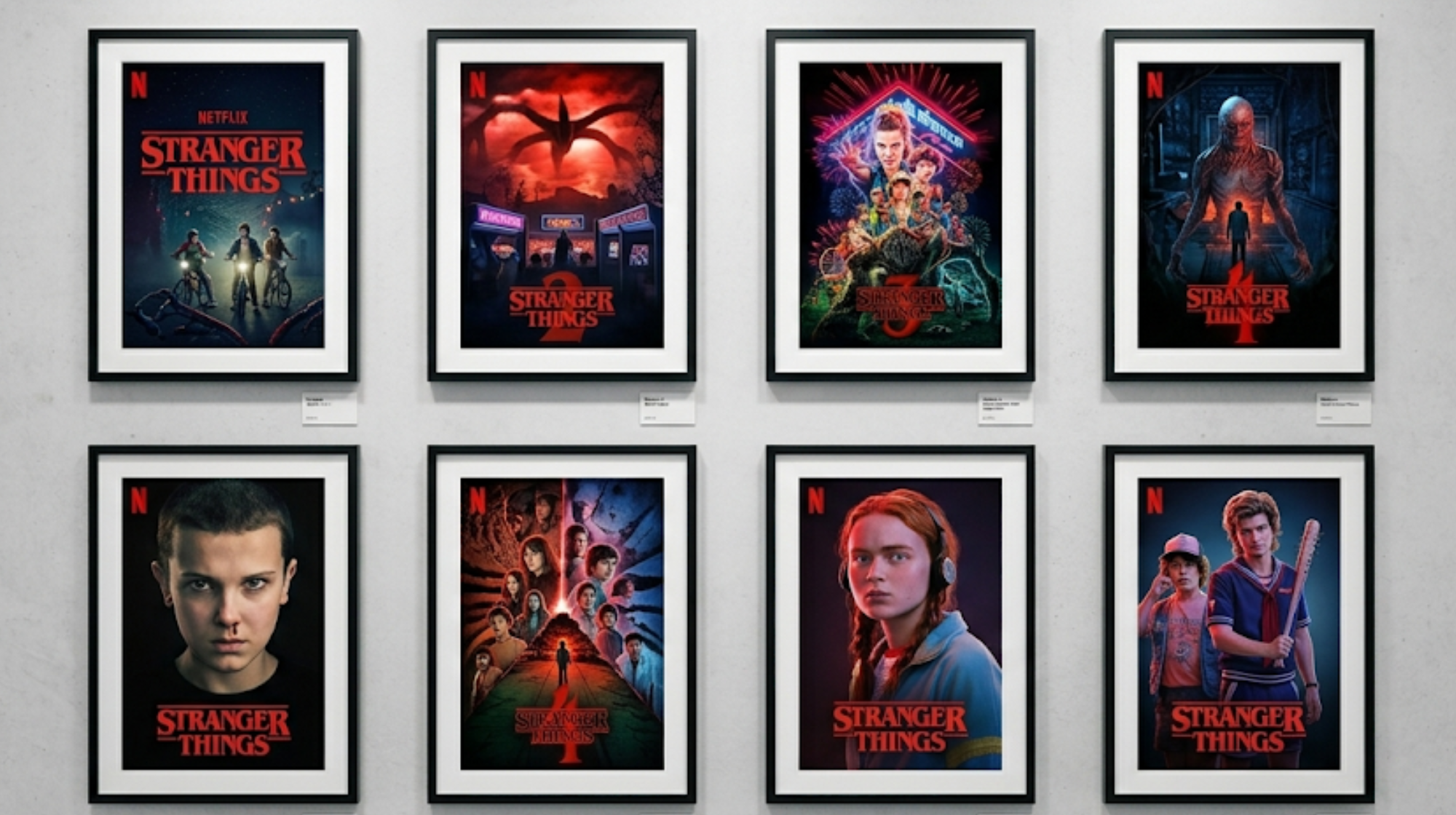
The shift right now is from third-party to first-party data. As cookies fade, brands are building direct data relationships through CDPs (Customer Data Platforms). And when you know your audience deeply, your creative has to match that precision. A hyper-targeted ad that lands on a generic visual loses its edge.
3. Programmatic Advertising Solutions
Programmatic is the engine running under most digital advertising today.
Instead of negotiating ad placements manually, programmatic solutions automate the buying and selling of ad inventory through real-time auctions. An advertiser sets audience parameters and budget. When a matching impression appears, the system bids for it in milliseconds and delivers the ad instantly.
Key components of programmatic adtech:
- DSP (Demand-Side Platform): The advertiser's buying tool. Examples: Google DV360, The Trade Desk
- SSP (Supply-Side Platform): The publisher's selling tool. Examples: Magnite, PubMatic
- Ad Exchange: The marketplace where buying and selling happen
- DMP: Feeds audience data into the whole system
| Programmatic Type | What It Is | Best For |
|---|---|---|
| Open Auction (RTB) | Anyone can bid on any impression | Broad reach campaigns |
| Private Marketplace (PMP) | Invite-only auction with premium publishers | Brand safety, quality placements |
| Programmatic Direct | Fixed-price deal, no auction | Guaranteed inventory |
| Preferred Deals | First-look access at fixed price | Performance-focused buyers |
Real-world example:
The Trade Desk powers programmatic campaigns for brands like Spotify and Unilever enabling them to reach specific audience segments across millions of websites and apps without a single manual placement.
Premium programmatic placements are growing fast — and premium placements demand premium creative. A static banner that was good enough for open exchange inventory does not cut it in a curated private marketplace deal.
4. Retargeting Solutions
Someone visited your product page. They did not buy. Now what?
That is what retargeting adtech solutions are built for. They track users who have previously interacted with your brand and serve them targeted ads as they browse elsewhere bringing them back at the right moment.
What retargeting can follow:
- Product page visits
- Cart abandonment
- Video views (watched more than 50%)
- App opens without conversion
- Email link clicks
| Basic Retargeting | Dynamic Retargeting |
|---|---|
| Same ad for all visitors | Ad shows the exact product they viewed |
| One creative for the whole audience | Unique creative per product/user |
| Lower relevance, higher fatigue | Higher relevance, better performance |
| Easy to set up | Needs a product feed + creative system |
Workflows 2.0 is officially live with Relight, Camera Angles, and Storyboard as nodes. And this changes how you build on canvas.
— ImagineArt (@ImagineArt_X) April 3, 2026
Check out the details below 👇️ pic.twitter.com/2ANL64Adev
Real-world example:
Adidas runs dynamic retargeting where users who viewed a specific sneaker see that exact sneaker in their social feed — not just a generic Adidas ad. This product-level personalization drives significantly higher click-through rates than standard banner retargeting.
Done badly, retargeting is why people feel followed around the internet.
Done well, it is one of the highest-ROI activities in digital advertising. The difference is almost always the creative. Dynamic retargeting requires producing variants at a product-by-product level, which is exactly the kind of volume that AI creative workflows are built for.
5. AR-Powered Advertising Solutions
Augmented reality ads are no longer experimental. They are mainstream.
AR adtech solutions overlay digital content onto the real world through a phone camera. The user does not just see your product, they experience it in their own environment, on their own face, in their own hands.
What AR advertising looks like in practice:
- Virtual try-on for eyewear, makeup, and fashion (think Warby Parker, MAC Cosmetics)
- Place-in-room features for furniture and home decor (like IKEA's AR app)
- Branded Snapchat and Instagram filters users actually share
- Interactive 3D product demos inside a social ad
| Feature | Standard Display Ad | AR Ad |
|---|---|---|
| Product interaction | User sees the product | User experiences the product |
| Engagement type | Passive engagement | Active, hands-on interaction |
| Memorability | Scroll and forget | Shareable, memorable |
| Creative fit | One-size creative | Personalized to user's environment |
Real-world example:
L'Oréal's AR try-on feature lets users test lipstick shades through their phone camera before buying. Conversion rates on products with AR experiences are consistently higher than those without because the user has already "tried" the product.
The engagement rates on AR ads are consistently higher than standard formats. But AR only works when the underlying visual assets are high quality and on-brand. Teams with flexible AI production pipelines are better positioned to build and update AR creative fast.
6. VR-Powered Advertising Solutions
VR takes immersion even further. Instead of layering digital content onto the real world, it replaces the environment entirely.
VR advertising is still growing into the mainstream, but in the right context it is extraordinarily effective. Branded virtual spaces, 360-degree video ads, and immersive product experiences create levels of attention and brand recall that flat-screen ads simply cannot match.
Where VR advertising is being used right now:
- 360-degree brand films and destination marketing (travel brands, events)
- Immersive product launches in virtual showrooms
- In-game advertising inside VR gaming platforms
- Virtual events and experiential brand activations
| VR Ad Format | What It Does | Best Use Case |
|---|---|---|
| 360° Video Ad | Fully immersive video environment | Travel, events, product launches |
| Virtual Showroom | Branded space users can explore | Automotive, luxury, real estate |
| In-Game VR Placement | Ad integrated into VR game world | Gaming audiences, Gen Z targeting |
| VR Live Experience | Real-time brand event in VR | Product reveals, brand activations |
Real-world example:
Volvo ran a VR test drive campaign that let users experience a new model from inside the car — before it was available in dealerships. The campaign generated significantly higher purchase intent than any of their traditional video ads.
The challenge has always been production cost. Traditional VR content is expensive to produce. AI is changing that — image-to-video tools and AI scene generation are making it faster and more affordable for brands to create immersive content without a dedicated VR studio.
7. Creative Automation and Workflow Solutions
This one ties all the others together. Every adtech solution on this list creates a demand for creative.
- Programmatic needs fresh banners.
- Retargeting needs product-level variants.
- AR needs high-quality assets.
- AI personalization needs dozens of visual options to test.
And none of that is possible if your creative production pipeline cannot keep up.
What creative automation solves:
- Producing multiple campaign variants without multiplying design time
- Maintaining brand consistency across every format and platform
- Removing the repetitive, manual steps that slow creative teams down
- Enabling one person to do what used to take a full production team
| Manual Creative Production | Workflow-Based Creative Production |
|---|---|
| One asset at a time | Full campaign set in one run |
| New designer needed for more volume | Same team, higher output |
| Inconsistent brand feel under pressure | Consistent quality every time |
| Each campaign starts from scratch | Reusable workflow, faster each time |
Real-world example:
H&M automated creative production for digital ads - generating multiple variations of product visuals and messaging at scale, enabling faster campaign launches while keeping branding consistent across markets.
ImagineArt Workflow is built exactly for this. It is a node-based canvas where you connect AI generation, editing, resizing, and export steps into a single pipeline. Brief goes in. Platform-ready assets come out. The workflow is saved and reused — so every campaign that follows gets faster and more consistent.
So, Which AdTech Solution Should You Start With?
The honest answer — it depends on where your biggest gap is right now.
If targeting is the issue, start with big data and programmatic. If conversion is the issue, look at retargeting. If engagement is the problem, explore AR and VR. And if you are doing all of the above but creative production cannot keep pace — creative automation is your most immediate win.
But here is the thing most teams miss. Every adtech solution on this list performs better when the creative behind it is strong, consistent, and ready on time. That makes a well-built creative workflow not just one item on the list — it is the infrastructure that makes all the others work.
The brands building that infrastructure in 2026 are the ones pulling ahead.
Frequently Asked Questions
AdTech (advertising technology) refers to the software and platforms used to plan, buy, deliver, and measure digital advertising campaigns. It includes tools like DSPs, DMPs, programmatic platforms, AI creative tools, and analytics dashboards.
AI is used across the adtech stack — from real-time bidding and audience segmentation to creative generation and performance prediction. AI tools can produce ad visuals, generate copy variants, and automatically optimize campaigns based on live data.
AR (augmented reality) advertising overlays digital elements onto the real world through a phone or device camera — like virtual try-ons. VR (virtual reality) advertising replaces the environment entirely, placing users inside an immersive branded experience using a headset or 360-degree video.
Programmatic advertising automates the buying and selling of ad inventory through real-time auctions. When a user loads a page, an instant auction takes place between advertisers bidding for that impression. The winning bid's ad is served — all in milliseconds, based on audience data and campaign parameters.
Syed Anas Hussain
Syed Anas Hussain is a computer scientist blending technical knowledge with marketing expertise and a growing passion for AI innovation. Curious by nature, he dives into new AI sciences and emerging trends to produce thoughtful, research-led content. At ImagineArt, he helps audiences make sense of AI and unlock its value through clear, practical storytelling.