Grok 4.6 — SpaceXAI's frontier model for agentic coding and knowledge work
Grok 4.6 is SpaceXAI's newest flagship, built for long-running agents, turning a rough product idea into a working first version, and knowledge work where it outscores every model SpaceXAI benchmarked it against.
Frontier intelligence, pointed at real work
Better than Grok 4.5 on all ten benchmarks SpaceXAI published, five weeks after 4.5 shipped.

Knowledge work, not just code
1753 on GDPval-AA v2, up from Grok 4.5's 1526 and ahead of both GPT-5.6 Sol Max (1728) and Fable 5 Max (1741). The gap on AA-Briefcase is wider still: 1577 against 1502 for Sol Max.

Broad idea to working first version
Hand it a loose product brief and it comes back with something that runs. On longer projects it tests its own output rather than declaring victory, and its first passes on visual and interactive work land better than Grok 4.5's did.

Agents that hold together
57.5% on APEX-Agents, up from 47.1%. On CursorBench v3.2 it posts 69.9%, ahead of GPT-5.6 Sol Max at 67.2% and within a point of Fable 5 Max.

Legal and specialist domains
15.8% on Harvey LAB, against 2.5% for GPT-5.6 Sol Max and 11.3% for Fable 5 Max. The absolute number is low because the benchmark is brutal; the relative gap is the point.
Experience The Brilliance
Grok 4.6 takes the jobs you'd normally break into six tickets and works through them in one pass.
From Rough Brief to Running Software
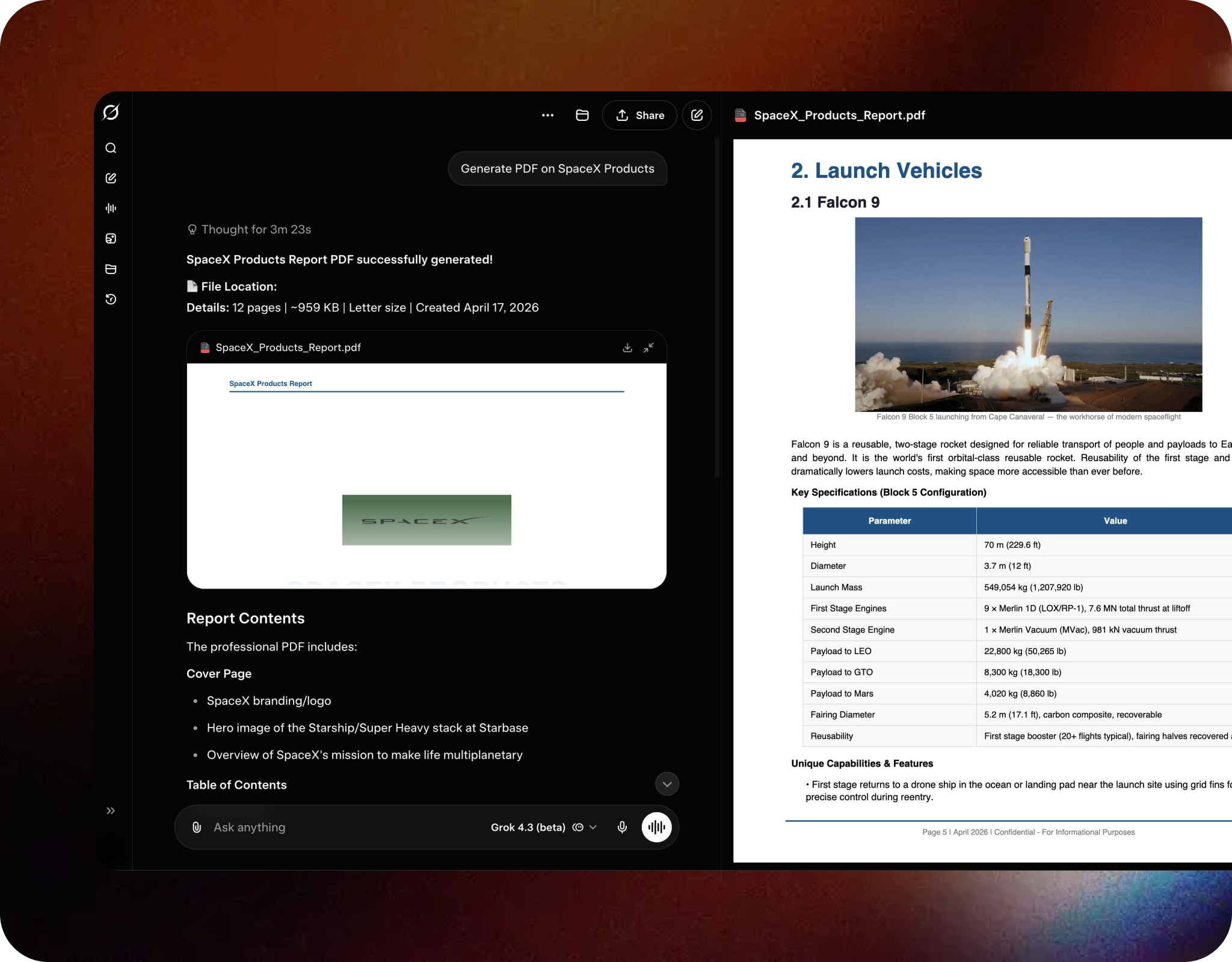
SpaceXAI built 4.6 around the jump from broad brief to running software, and the numbers follow: 69.9% on CursorBench v3.2, up three points on Grok 4.5 and ahead of GPT-5.6 Sol Max.
Hand It the Work You'd Give a Specialist
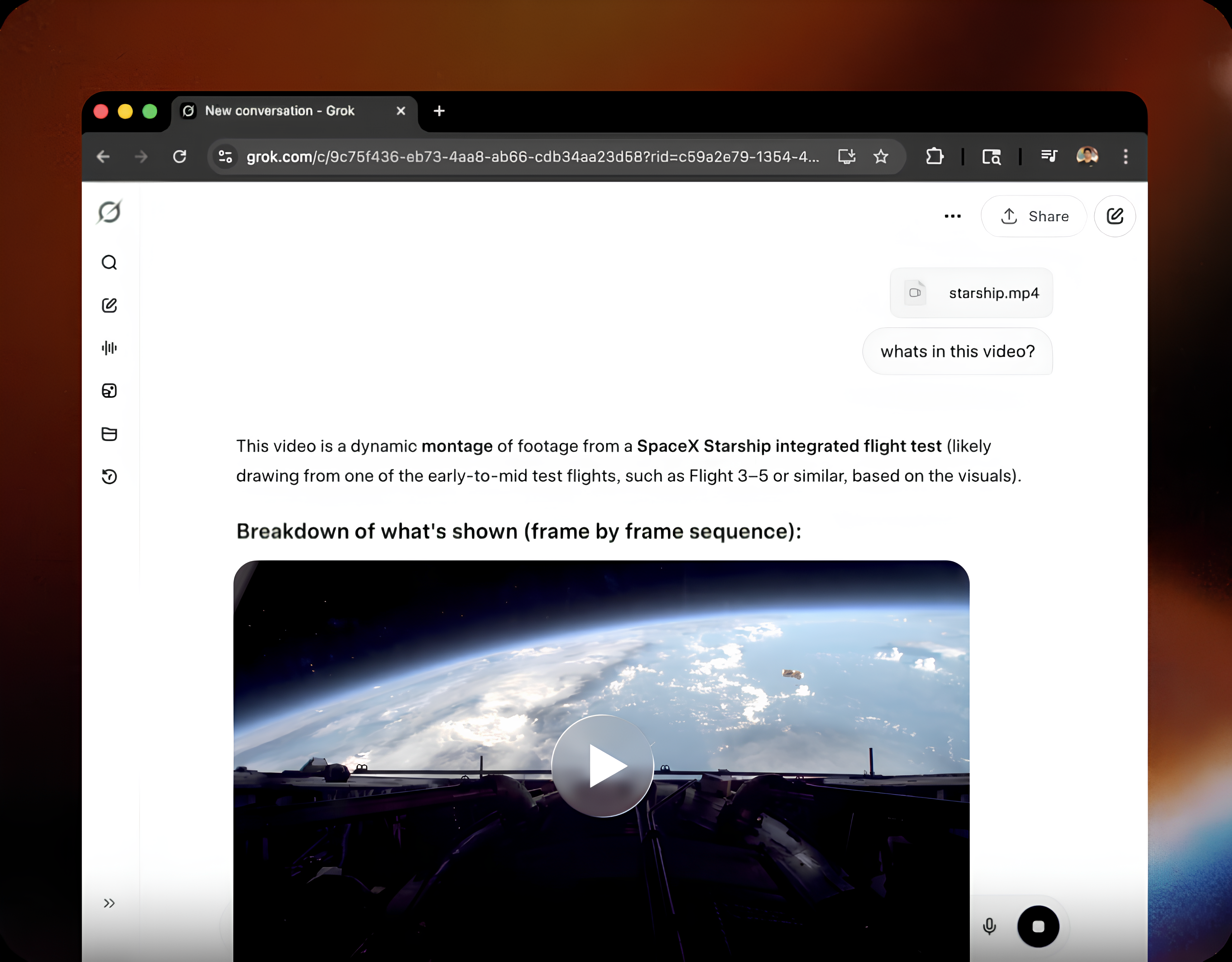
Give it a contract to review, a market analysis to draft, or a brief that would normally go to someone senior, and what comes back is worth editing rather than worth restarting. That's the difference this model actually makes to a working day.
Paste the Whole Repo and Keep Going
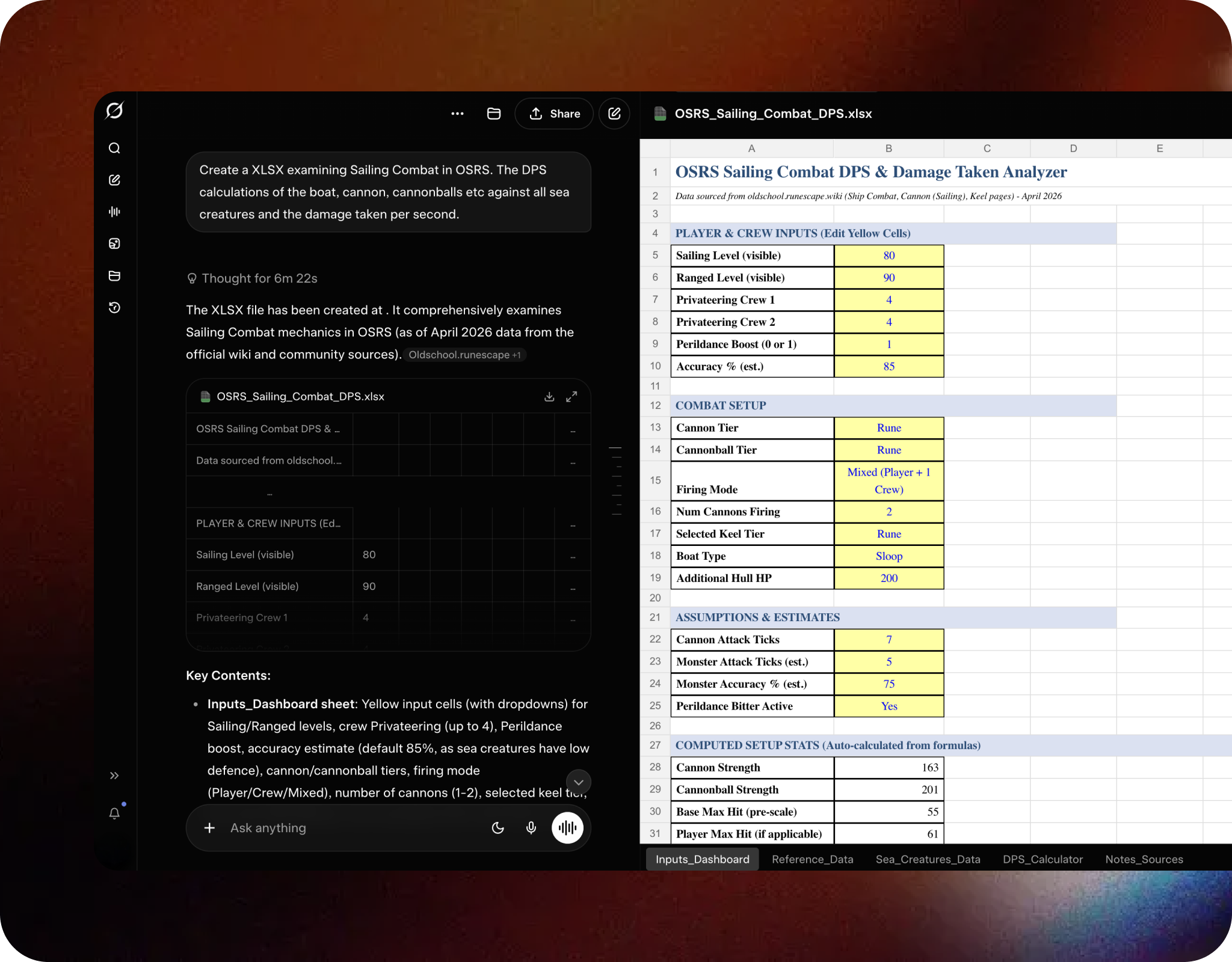
500,000 tokens means you stop choosing which files matter and just hand over the project. An agent can work a long session without you re-explaining the codebase every few turns, and because cached input drops to $0.50 per million, all that repetition costs a fraction of list price
What Makes the Long Runs Possible
Every capability behind the numbers above, from the size of the window to the platforms it already runs on.

Context window
Half a million tokens of working memory, unchanged from Grok 4.5 and enough for a large codebase in one request.

Text and image input
Screenshots, diagrams, and design mocks go in alongside the prompt; output is text.

Four reasoning levels
Low, medium, high, and xhigh, with high as the default if you don't specify.

Prompt caching
Cached input drops to $0.50 per 1M, which pays for itself the moment an agent replays a system prompt.

Function calling
Structured tool use with the tool-call correctness that agent frameworks depend on.

Long-context band
Requests above 200K keep working rather than erroring, at a documented higher rate.

Fast variant
A latency-optimised tier at double the standard price, for when response time is the product.

Agentic training
Reinforcement learning across agentic tasks, curated engineering datasets, and model-generated data.

Recalibrated safeguard
SpaceXAI states the safety layer was retuned to match the expanded capability rather than carried over.
Have questions?
We have answers!
SpaceXAI's newest flagship model, released August 12, 2026, five weeks after Grok 4.5. It's built for agentic coding, long-running multi-step tasks, and knowledge work, and it takes text and images as input. Training combined curated model-generated data, engineering datasets, and reinforcement learning across agentic tasks. Knowledge cutoff is February 1, 2026.
Below 200K prompt tokens it's $2 per 1M input and $6 per 1M output, with cached input at $0.50. At or above 200K, every token in that request bills at $4 in and $12 out, with cached input at $1 — worth reading twice, because it's the whole request that reprices, not just the tokens past the threshold. A fast variant runs at double the standard rate. Through Imagine Computer it's part of the plan at $9/month billed yearly, or $13/month billed monthly.
It leads on knowledge work and trails on terminal automation. On GDPval-AA v2 it posts 1753, the highest of the four models SpaceXAI benchmarked, above Fable 5 Max (1741) and GPT-5.6 Sol Max (1728), and it takes AA-Briefcase at 1577 and Harvey LAB at 15.8%. On the Artificial Analysis Intelligence Index it scores 61, level with GPT-5.6 Sol Max and third overall behind Claude Opus 5 (63) and Claude Fable 5 (62). GPT-5.6 Sol Max still wins clearly on raw software engineering: 73% on DeepSWE v1.1 against 65.9%, and 34.6% on Terminal-Bench v3.0 against 26%.
Cursor, Grok Build, the SpaceXAI API at api.x.ai, and through OpenRouter, Vercel, and Cloudflare. Both the Responses API and Chat Completions work. It hasn't reached the consumer Grok chat app yet. You can also chek out Imagine Computer's AI chatAI chat to use other Grok models.
Three things. The 200K pricing cliff will surprise you if an agent's context grows over a long session, so cap it or budget for the higher band. Terminal and shell-heavy automation is the model's weakest area relative to GPT-5.6 Sol Max, so check it against your own workload before switching an existing agent over. And SpaceXAI hasn't published a parameter count, so there's less public detail on architecture than Google or Anthropic release with a launch.
Try Grok Models in Imagine Computer
We've added Grok models to Imagine Computer's AI Chat, so SpaceXAI's newest agentic model runs directly in your workspace alongside everything else you use.