
Umaima Shah
April 3, 2026 • Updated April 7, 2026
15 mins Read
Some events are just events. And some events are the thing someone has been planning for two years:
- The product launch, they built a company around
- The wedding anniversary that their family will talk about for decades
- The graduation party has to be perfect because it only happens once
And all of them end up as a quickly thrown-together graphic on an Instagram story that gets fourteen views. This is where event promotion on social media becomes the difference between a full room and empty seats.
Where Event Promotion Usually Goes Wrong
Here is what actually goes wrong when people try event promotion on social media:
- The visual looks like it was made in twenty minutes because it was, and the audience can feel it
- Content appears in a last-minute burst the week before, instead of building real anticipation over weeks
- Every post looks disconnected, different fonts, different energy, no thread running through the campaign that makes it feel like one story
- The promotion stops the moment the event starts, which is exactly when the most powerful shareable content is available
There is a reason some events sell out in hours and others struggle to fill a room with people who actually want to be there. It is the story told about the event before anyone walks through the door. Before we get into them, one thing worth knowing first:
Event promotion works as a campaign, not a collection of posts. Every piece of content you publish should feel connected, with the same visual identity, the same emotional build, and the same story moving toward one moment. These 15 strategies are built specifically for event promotion on social media campaigns.
Here we go.
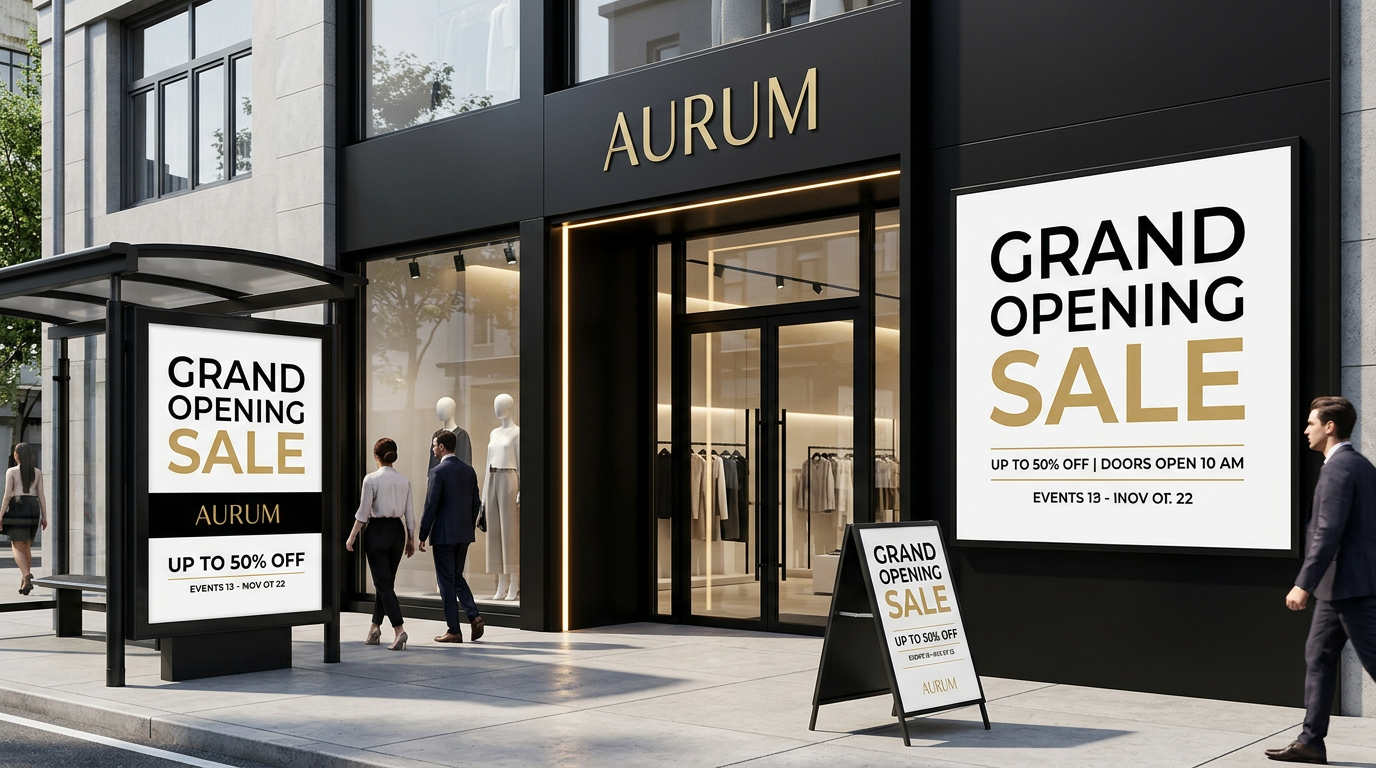 Promote openings, sales, and local events across every marketing surface..png
15 Tips to Promote Your Event on Social Media
1. Create a Visual Identity for Your Event
Most event promotions look visually inconsistent because graphics get made one post at a time with no shared direction. By the time the event arrives, the feed looks like it was run by three different people on three different days.
- Generate a full set of event visuals — hero image, speaker cards, countdown graphic, and day-of asset — all from the same style prompt using the AI Image Generator in a single session
- Lock in the colour palette, lighting style, and composition approach across every single piece before anything goes live
- Your audience should recognise your event content mid-scroll without reading a single word of the caption — that is when your visual identity is working
2. Build a Content Calendar
Posting about your event the week before is how you get a half-empty room. The algorithm rewards accounts that show up consistently over time, and accounts that suddenly appear with something to sell get buried.
- Map out every post for the four weeks before you create a single piece of content
- Assign a specific emotional job to each week: intrigue, credibility, social proof, urgency
- Schedule everything before the campaign launches so execution does not depend on finding time during the chaos of organising the actual event
3. Create a Teaser Video
A static graphic tells people your event exists. A well-made teaser video makes them feel something about it before they have even decided whether to attend.
- Use the AI Video Generator to produce a cinematic teaser capturing the atmosphere, energy, and feeling of the event without a filming setup or location
- Keep it under 30 seconds — you are building curiosity, not explaining the full programme
- Post it as your very first piece of content, pin it to your profile, and let it do the work of converting browsers into ticket buyers
4. Give Your Event a Dedicated Hashtag
A hashtag is how your event gets discovered, grouped, and amplified by the people who attend it. Most organisers add one as an afterthought three days before the event.
- Choose something specific enough to be unique to your event but short enough that people actually use it naturally
- Put it in every post, Story, and caption from the very first announcement
- Encourage speakers and early ticket buyers to use it from day one — the more it appears before the event, the more it trends during it, and that trend reaches people who have never heard of you
5. Create a Consistent Event Host or Spokesperson
Showing up personally on camera every day for four weeks creates a production burden that kills consistency halfway through the campaign. A dedicated event spokesperson keeps the campaign consistent without requiring the organiser to film every single piece.
- Use the AI Influencer Generator to create a consistent event host character that appears across all promotional content
- Generate a host that matches the tone and audience of your event: professional, casual, energetic, warm, or authoritative
- Use the same character across teaser videos, countdown posts, speaker introductions, and day-of content so the whole campaign feels like one story told by one voice.
Fwor
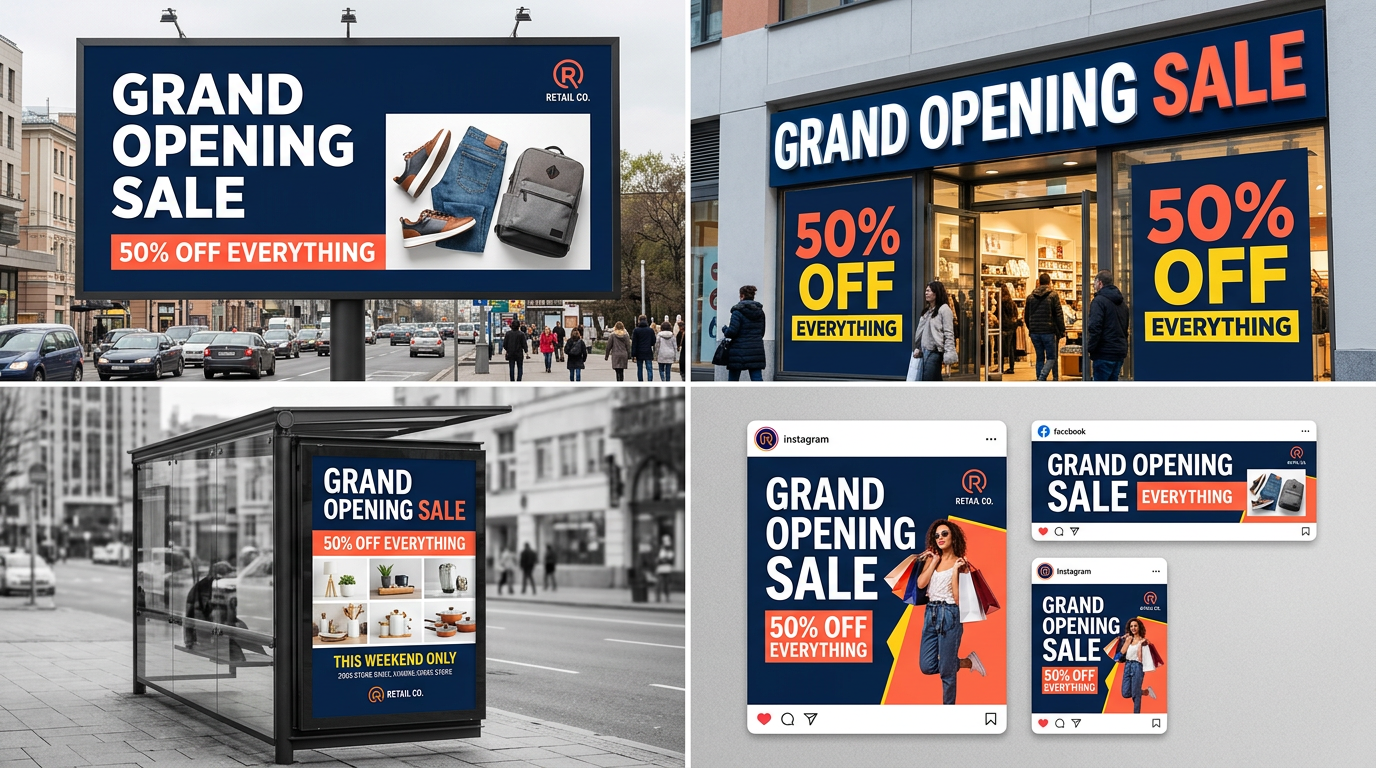 Manage multiple events and create full promotion campaigns in one go.png
6. Design Platform-Specific Graphics
Resizing one Instagram graphic for every platform makes event promotion look amateurish and gets ignored. Each platform has completely different visual requirements, and what stops the scroll on one can actively underperform on another.
- Use the AI Image Editor to adapt your event visuals for every platform format without losing the visual identity you built in Tip 1
- Square for Instagram feed, vertical 9:16 for Stories and Reels, horizontal for Facebook and LinkedIn headers, portrait for Pinterest
- Adjust contrast and sharpness for mobile viewing — most people see your graphics on a phone screen, and that is where the decision to click or keep scrolling happens in under two seconds
7. Partner With Speakers, Performers, and Guests to Multiply Your Reach
Every speaker or performer at your event has their own audience. That audience is exactly who should be hearing about your event right now, and waiting for partners to post on their own is a strategy that consistently produces nothing.
- Give every speaker a complete ready-to-post pack: branded graphic already sized for their platform, suggested caption already written, hashtag included, your account tagged
- Make it one click to share, not a creative project they have to find time for
- A single speaker with ten thousand engaged followers posting about your event is worth more than most paid ad budgets at the same reach
8. Animate Visuals Into Scroll-Stopping Reels and TikToks
Static posts get a fraction of the reach that video gets on every major platform right now. Most event organisers produce no footage until the event itself — which means the pre-launch window goes entirely unserved by video content.
- Use Motion Control to animate your event graphics and imagery into scroll-stopping Reels and TikTok content without filming a single second
- Take the hero image built in Tip 1 and animate it into a five-second looping Reel that runs as your organic reach engine throughout the campaign
- Movement in the feed stops the scroll — the same image as a static post gets a fraction of the organic reach of the animated version
9. Run an Early Promotion With a Real Deadline
A specific date and a specific number of tickets create urgency that vague scarcity language cannot. Early bird promotions work when the scarcity is genuine, visible, and followed through on.
- Announce exactly how many early bird spots exist and the exact date and time they expire
- Post a real-time update when half the early bird tickets are gone — that is social proof in action, and it drives the remaining sales faster than any promotional copy
- Close the offer on the announced date, even if spots remain — your credibility for every future event depends on following through on exactly what you said
10. Use a Clean Professional Background
The filming location needs to match the event brand. A cluttered office background, wrong lighting, or a space that undermines the premium feel of the event quietly damages the credibility of otherwise strong content.
- Use the Video Background Changer to replace any video background without a green screen, without reshooting, without editing software
- Choose a background that matches your event's visual identity: branded, minimal, atmospheric, or aspirational
- Speaker announcement clips, behind-the-scenes interviews, and countdown videos all perform better when the environment communicates the same quality as the event itself
11. Go Live During the Event
Live video reaches people who could not make it and builds the kind of FOMO that sells out your next event before it is even announced. The comment section during a live stream is more powerful social proof than anything you could post after the fact.
- Go live at least once during the event — the opening moment, a keynote speaker, the main performance, or the energy in the room at peak attendance
- Keep audio clear above everything else — bad audio kills live engagement faster than any other production problem
- Save the live video immediately after and clip the three best moments for post-event content that keeps the energy alive for days
12. Post Real-Time Content
The day of the event is when social media attention for your event peaks. Most organisers are too busy running the actual event to post anything meaningful and the opportunity disappears completely.
- Plan at least three specific posts for the day before it arrives: morning anticipation post, mid-event peak moment, end-of-night energy capture
- Identify in advance the one hero moment you are going to capture — a full room, a standing ovation, the best speaker line — and plan exactly who is capturing it and when
- Tag every speaker, sponsor, and partner in every day-of post — every tag is a notification to their audience and a potential repost to a crowd that did not know about your event until that moment
13. Make Sharing Effortless
Speakers and sponsors want to promote the event. The barrier is that creating content is one more thing on an already impossible to-do list. Removing every barrier between their goodwill and their post button is what actually gets them to share.
- Send every participant a complete ready-to-share pack at least two weeks before the event: the right graphic already sized, the caption already written, the hashtag and tag already included
- Follow up one week before with a simple message reminding them the pack is ready and asking if they need any adjustments
- The easier you make it, the more of them post, and the more of them post, the further the event reaches before a single pound is spent on ads
14. Batch Your Entire Pre-Event Content Calendar in One Single Session
Creating content one post at a time while organising an event is completely unsustainable. The solution is building everything before the campaign starts, so the calendar runs itself.
- Use ImagineArt's Workflow to chain image generation, video creation, and editing into one automated pipeline that produces the full four-week content set in a single session
- Map out every post on the calendar first, assign the creative brief for each, then run the whole thing through the pipeline
- Schedule every post through a social media scheduling tool, so the campaign runs itself while you run the event
15. Post a Recap That Creates FOMO
Post-event content is the most underinvested part of event promotion on social media. A strong recap celebrates the people who attended, creates genuine FOMO in everyone who did not, and seeds the next event with the most powerful marketing asset you have — proof that the last one was worth being at.
- Compile the best moments into a sixty to ninety-second recap video and post it within 24 hours while the memory is still alive in attendees' feeds
- Tag every speaker, performer, and sponsor in the recap post — every tag is a notification to their audience, a potential repost, and a reach multiplier you did not have to pay for
- End the recap with a direct link to early interest registration for the next event — FOMO converts fastest when the next opportunity is immediately available.
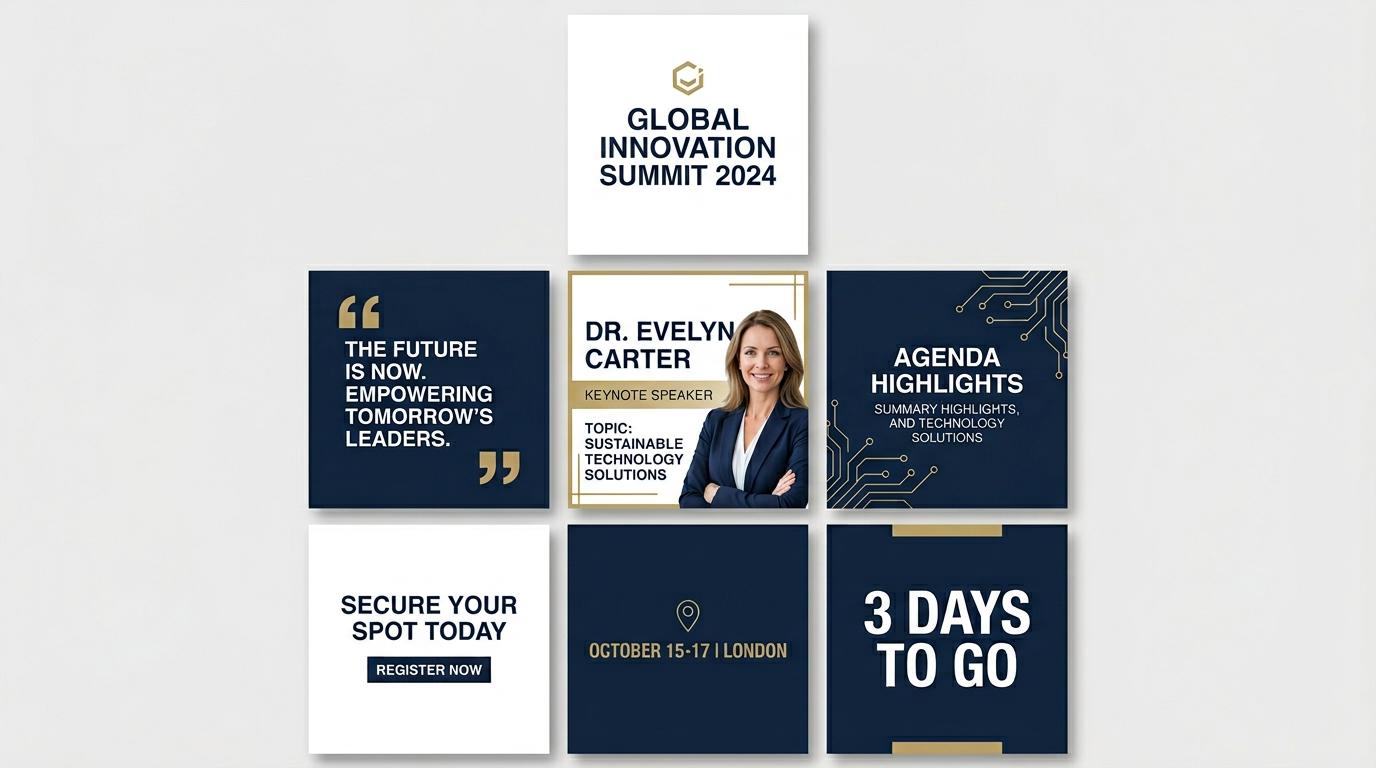 Your event should look like one campaign, not random posts. Build a visual identity before anything goes live.
The 4-Week Event Promotion Calendar You Should Actually Follow
Most event social media fails because there is no structure behind it. Here is the framework that works:
Four weeks out: announce and intrigue. Drop the event with the strongest visual you have. Reveal enough to create curiosity, withhold enough to create a reason to pay attention to what comes next.
Three weeks out: build credibility and desire. Reveal the speakers, performers, or key experiences one at a time. Every reveal is a separate piece of content. Testimonials from previous attendees if this is a recurring event. Behind the scenes of preparation.
Two weeks out: social proof and momentum. Show that other people are excited and committed. Real-time ticket numbers. Attendee content. Countdown posts. Partner and speaker reposts.
One week out: urgency and last chance. Real deadlines. Final speaker spotlight. Day-of logistics that make attending feel easy and exciting. The anticipation post the night before.
Day of: real-time content, live moments, best shots.
After: the recap that plants the seed for next time.
Which Platforms Actually Work Best for Event Promotion
Each platform serves a different promotional function and trying to be everywhere at once with the same content produces a mediocre presence on six platforms instead of a strong one on three.
Instagram is where events look premium. The visual feed rewards consistent, beautiful event content and Stories create the real-time urgency that drives last-minute ticket purchases. For any event with a strong visual identity, Instagram is your primary platform.
TikTok is where events go viral. The educational and behind-the-scenes content format drives organic reach that no other platform matches right now. A single well-made event teaser or speaker clip can reach an audience twenty times larger than your follower count.
Facebook is still where ticket conversions happen, particularly for events targeting audiences over thirty-five. The Events feature is underused and highly effective. Facebook ads with event-specific targeting, life events, local interest, and community groups outperform every other paid channel for filling seats.
LinkedIn works specifically for professional events, conferences, workshops, and business networking gatherings. A single post from a credible speaker announcing their participation can drive more registrations than a week of paid advertising.
The rule: choose two or three platforms where your specific audience actually spends time. Build a strong presence there. Resize and repurpose for the others.
How to Use Testimonials and Social Proof Before the Event Happens
Social proof is the most powerful conversion tool in event promotion, and most organisers wait until after the event to use it. That is a missed opportunity.
For a recurring event, previous attendee testimonials are your most valuable pre-event asset. A genuine quote from someone who attended last year, saying "this was the best professional investment I made all year", converts better than any written promotional content.
For a first-time event, build social proof from the speakers and partners themselves. A speaker posting "I am genuinely excited to be part of this" to their own audience is an endorsement, and audiences respond to it completely differently than they respond to brand promotion.
Practical ways to build social proof before the event even happens:
- Share early ticket sales numbers when they are impressive: "150 tickets sold in the first 48 hours"
- Post speaker and partner announcements as individual pieces of content — each one adds credibility
- Share the waitlist number if the event sells out: "We are at 340 people on the waitlist for next time"
- Ask early ticket buyers to share why they are attending and repost the best responses
The Day-After Strategy Most Event Organisers Completely Ignore
The 24 hours after an event ends are some of the most valuable hours in your entire promotion cycle, and almost nobody uses them well.
People who attended are still in the emotional high of the experience. People who did not attend are seeing the recap content and feeling the regret of missing it. This is the exact moment when interest in the next event is highest.
What to do in the 24 hours after your event:
- Post the recap video within 12 hours while the emotional memory is fresh
- Send a personal thank you message to every speaker and partner individually, not a group message
- Open early interest registration or a waitlist for the next event in the same post as the recap
- Share the one statistic that captures the scale of what happened: total attendees, cities represented, and number of connections made
- Ask attendees directly to share their one takeaway using your hashtag
Every event in a series is a chapter in an ongoing story, and the day after is always the opening line of the next chapter.
Ready to Promote Your Event Like a Campaign That Actually Fills the Room?
The story you tell about your event before anyone arrives is what fills the room. The content you create on the day is what creates FOMO in everyone who missed it. The recap you post the day after is what sells out the next one.
FAQs About How to Promote an Event on Social Media
Four weeks minimum for a standard event. Six to eight weeks for a major conference, product launch, or large-scale gathering. The earlier the content starts, the more time the algorithm has to distribute it and the more touchpoints your audience gets before the ticket purchase decision.
Video consistently outperforms static images across every platform. Teaser videos, animated event graphics, and day-of live content drive the highest reach and engagement. Within video, content that shows the atmosphere and community of the event, not just the programme, converts the most ticket sales.
Partner distribution is more powerful than your own following. Every speaker, sponsor, and partner posting about the event reaches audiences you do not have. Focus first on creating shareable content and making it frictionless for your partners to post it. Then run targeted local or interest-based paid ads with a modest budget to reach the specific audience most likely to attend.
Yes, but time them strategically. Run awareness ads three to four weeks out to build familiarity with the event. Run conversion ads targeting people who have already engaged with your content in the final two weeks when purchase intent is highest. Retargeting people who visited your event page but did not buy is consistently the highest-returning event advertising spend.
Starting too late and treating promotion as a single announcement rather than a campaign. The second most common mistake is not using partners and speakers as distribution channels. Both are completely avoidable with a plan built before the campaign launches.
ImagineArt generates professional event visuals, teaser videos, animated graphics, and spokesperson content from a text prompt. You need a clear brief, a consistent visual direction, and the right tools — and ImagineArt covers all three.
Umaima Shah
Umaima Shah is a creative content strategist specializing in AI tools, image generation, and emerging technologies. She focuses on translating complex platforms into clear, practical insights for creators, designers, and product teams