
14 Healthcare Marketing Trends for 2026
Patients arrive more informed, more skeptical, and more channel-fluent than at any point in this industry's history. Acquisition costs are climbing and compliance requirements are tightening. These are the healthcare marketing trends reshaping how health systems, pharma brands, and telehealth platforms compete in 2026.

Saba Sohail
May 31, 2026 • Updated June 9, 2026
8 mins Read
Healthcare marketing in 2026 demands one capability above all others: scale without compliance compromise. Acquisition costs are climbing, patient expectations have never been higher, and the production backlog at most health systems has never been larger. These are the fourteen healthcare marketing trends defining how the industry competes in 2026.
Hyper-Personalized Patient Campaigns
Health systems no longer market to broad demographics. The most effective campaigns in 2026 target conditions, care stages, and decision moments. A patient in early-stage diabetes management needs different content than one preparing for a joint replacement, and the health brands closing that gap see measurable gains in both acquisition and retention.
CRM platforms connected to EHR and appointment data give marketing teams the segmentation depth to build condition-specific campaigns. Geographic proximity to care facilities, prior engagement with health content, and stage in the patient journey all inform creative decisions. Meaningful personalization across healthcare marketing demands dozens of creative variants running simultaneously. That volume requirement makes AI creative infrastructure essential: the production foundation of this and every other scale-dependent healthcare marketing trend.
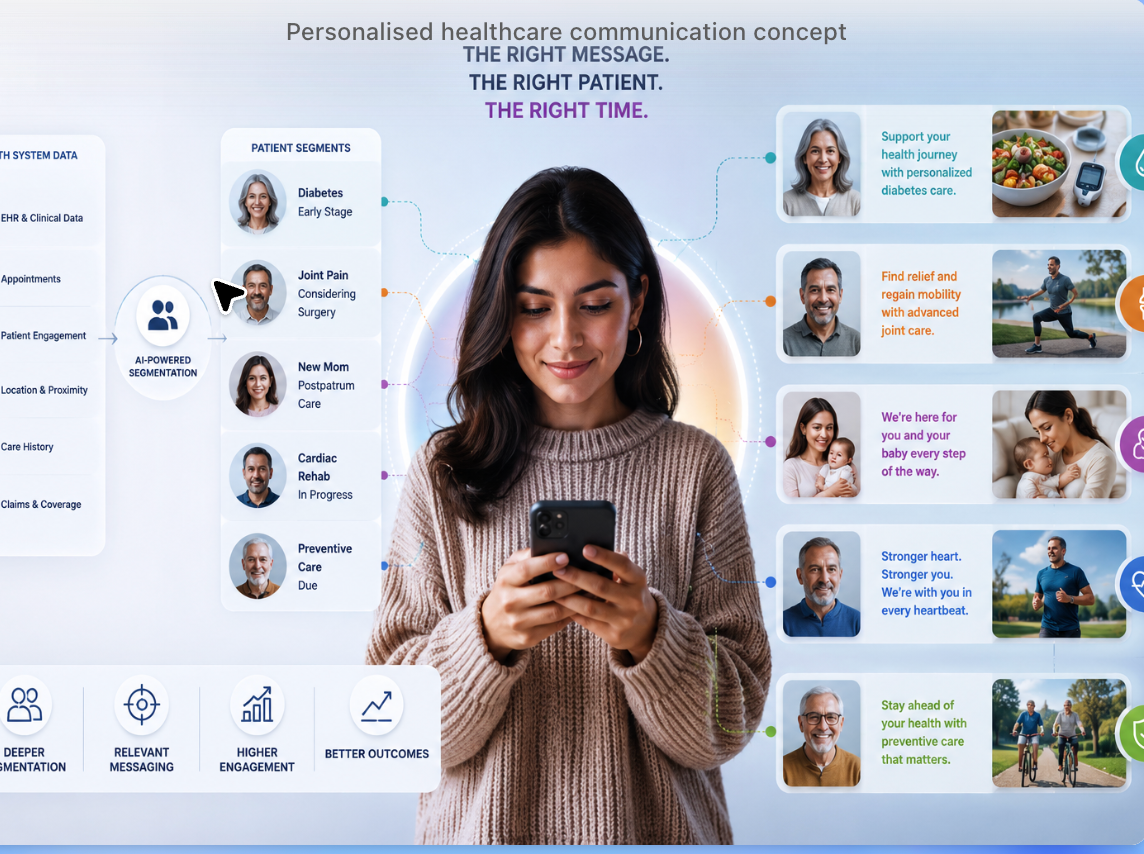 Personalised Campaign for patients
AI Creative Production at Scale
Healthcare marketing teams carry a production backlog that traditional creative workflows cannot clear. A mid-size hospital system running campaigns across oncology, cardiology, orthopedics, and primary care simultaneously needs condition-specific visuals, patient education materials, digital ad variants, and social content: all on brand, all compliant, all shipping in parallel.
ImagineArt is the creative AI for enterprises that need to close that gap without expanding headcount. Marketing teams generate hundreds of campaign-ready assets from a single brief, maintain visual brand consistency across every service line, and deliver seasonal campaigns in days rather than weeks. AI creative production at scale changes the operating model of the marketing department entirely: the new standard for health systems competing at volume.
Short-Form Video for Health Literacy
Patients now research symptoms, treatments, and care options on the same platforms they use for entertainment. TikTok, Instagram Reels, and YouTube Shorts have become primary discovery channels for health information, and health brands showing up in those formats with credible, clear content build trust faster than any traditional media placement.
Short-form video collapses complexity. A 60-second explainer on a treatment pathway, a 30-second myth-bust from a specialist, and a behind-the-scenes look at a care facility all communicate what a landing page cannot. Health systems investing in this format build patient audiences that convert, generating engagement that compounds rather than impression counts that evaporate.
Telehealth Platform Marketing Maturation
Telehealth grew explosively from 2020 to 2022 and spent the following years earning sustained patient trust. The platforms that survived consolidation are now investing seriously in brand differentiation, competing on experience, clinical specialization, and measurable outcomes rather than simply on convenience.
The competitive dynamic has shifted from acquisition to retention. Telehealth brands are building content programs around chronic condition management, mental health support, and preventive care, categories where ongoing patient relationships generate compounding value. Marketing teams at these platforms now operate like consumer brand teams, with editorial calendars, creator partnerships, and multi-channel content strategies. The fitness and wellness marketing playbook is a direct influence on how leading telehealth brands structure their content programs.
Condition-Specific Content Hubs
Generic health brand pages are losing ground to deep, condition-specific content destinations. Patients searching for answers about a diagnosis do not want a hospital homepage; they want authoritative, actionable information about their condition, their options, and what to expect from care.
Health systems and pharma brands building condition-specific content hubs capture high-intent traffic that brand-level SEO cannot reach. These hubs function as the top of the patient acquisition funnel, establishing clinical authority, building trust, and converting research-stage patients into appointment bookings. The investment pays compounding returns as content earns backlinks, ranks for long-tail queries, and reduces paid acquisition costs over time.
 Condition-Specific Content Destinations
Diverse and Inclusive Health Imagery
Healthcare marketing has historically underperformed on representation. Clinical stock imagery has defaulted to narrow depictions of patients and providers for decades, and patients notice. In 2026, leading health brands treat diversity in creative as a performance variable, not a compliance checkbox.
AI-generated imagery gives marketing teams the ability to produce diverse, clinically accurate visuals across every campaign without the logistical complexity of multi-cast photoshoots. A campaign that reflects the actual demographics of the communities a health system serves builds trust faster and converts better. The production infrastructure now makes this straightforward at enterprise scale.
Multi-Location Brand Consistency
A health system operating 40 clinics across three states has a brand consistency problem that traditional creative workflows cannot solve. Each location runs local campaigns, seasonal promotions, and community health events: generating constant demand for locally relevant creative that still looks and feels like the parent brand.
Design automation addresses this directly. Marketing teams build master brand templates, and local coordinators without design skills generate compliant, on-brand assets for their specific location and audience. The enterprise maintains brand integrity. The local team gets the flexibility they need. Both happen simultaneously, without manual oversight at every step.
HIPAA-Compliant Creative Automation
Creative compliance in healthcare is a genuine operational constraint. Patient imagery, condition-specific targeting, testimonial use, and data handling all carry regulatory weight. Marketing teams navigating HIPAA requirements have historically slowed creative production to manage compliance risk.
AI-powered creative platforms built for enterprise workflows embed compliance guardrails into the production process rather than treating them as a post-production filter. Teams define approved visual guidelines, messaging parameters, and consent-validated asset libraries upfront, and the automation operates within those boundaries. Faster production with lower compliance exposure. Speed and safety run together, and HIPAA-compliant creative automation is among the most operationally significant healthcare marketing trends for enterprise health systems.
Micro-Influencer Marketing via Health Creators
Patient advocates, nurses, physical therapists, dietitians, and mental health practitioners have built substantial, trusted audiences on social platforms. Health brands partnering with these micro-influencers access credibility that no paid media placement can replicate.
The model works because the recommendation comes from within the patient's own reference group. A nurse with 80,000 followers explaining how a telehealth platform works carries more weight than a 30-second pre-roll. Health systems and pharma brands formalizing these partnerships, with clear disclosure, content guidelines, and performance tracking, build awareness and consideration efficiently. The creative assets supporting these programs still require volume production, which is where AI creative infrastructure closes the loop.
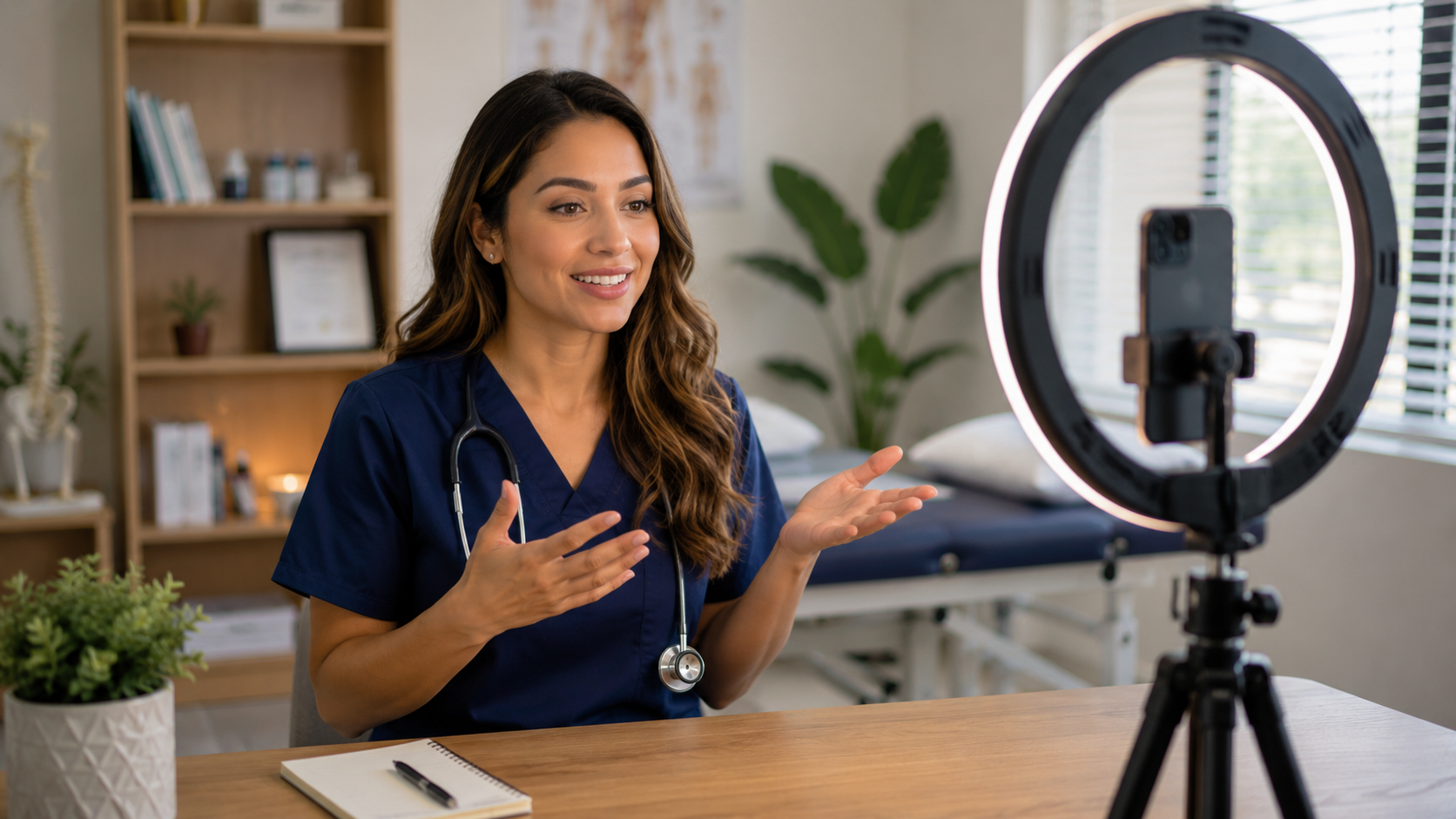 Micro‑Influencer Marketing from Health Creators
Programmatic Advertising for Health Systems
Programmatic advertising is among the fastest-moving healthcare marketing trends — health systems have historically lagged consumer brands in this channel, but in 2026 that gap is closing fast. Large health networks are deploying programmatic across display, video, and connected TV, using audience segmentation that targets condition signals, geographic health trends, and care-seeking behavior patterns.
Effective programmatic campaigns require dozens of ad sizes, messaging variants, and audience-specific creative: all trafficked simultaneously. Health marketing teams without scalable creative production capabilities hit a ceiling fast. Those with AI creative infrastructure run programmatic at the cadence the channel requires. The marketing automation frameworks reshaping consumer brands apply directly to health systems ready to adopt them.
Mental Health and Wellness Content Normalization
Mental health content has moved from taboo to mainstream in a short window. In 2026, health brands not addressing mental health, stress, burnout, and emotional well-being in their content miss a primary concern of their audience, across health systems, insurers, workplace wellness platforms, and pharma brands.
The creative challenge is tone. Mental health content requires warmth, precision, and cultural sensitivity that generic brand content does not demand. AI-assisted content production helps teams generate the volume required for sustained mental health content programs while maintaining the tonal consistency that makes this content effective. The brands getting this right build communities with genuine engagement, not audiences that scroll past.
 Mental Health Care Awareness Ad Visuals
Pharma Moving to DTC Digital Creative
Direct-to-consumer pharmaceutical marketing has existed for decades on television, but the shift to digital-first DTC is accelerating in 2026. Pharma brands are investing in paid social, search, and content marketing to reach patients earlier in the condition journey, before specialist consultations that influence treatment decisions.
Fair balance requirements, condition-specific compliance guidelines, and the need to drive patient-HCP conversations rather than direct conversion add layers of complexity that consumer marketers do not face. AI creative platforms that work within pharma-specific content parameters are becoming core infrastructure for DTC-focused pharmaceutical marketing teams operating at the scale the channel demands.
AI-Powered SEO for Healthcare Queries
Healthcare search is among the highest-value SEO categories, and among the most competitive. Patients generate millions of health queries daily, and the organizations ranking for condition-level, treatment-level, and symptom-level queries capture patient intent at its most actionable moment.
AI-powered content production enables health brands to build SEO programs at a scale previously impossible with human-only editorial teams. Condition-specific articles, treatment comparison pages, specialist FAQs, and local care facility content get produced, optimized, and published in volume. Health systems treating SEO as a primary patient acquisition channel build durable competitive positions that paid media budgets cannot replicate.
Data-Driven Patient Journey Personalization
The patient journey from first symptom search to scheduled appointment involves multiple touchpoints, channels, and decision moments. Health marketing teams that map this journey with precision and instrument each stage with the right content convert research-stage patients more effectively than those relying on broad awareness plays.
First-party data from appointment bookings, patient portal engagement, and health app usage gives marketing teams a detailed view of where patients are in their journey. That data drives creative decisions: what message, what format, what channel, at what moment. The higher education marketing sector navigates a parallel challenge, mapping a complex, multi-touchpoint decision journey with personalized content at every stage. The infrastructure to execute this exists in healthcare. The brands investing in it now build patient acquisition systems that their competitors will spend years trying to replicate.
Ready to Scale Your Healthcare Marketing with ImagineArt
Healthcare marketing in 2026 is a systems problem. The organizations leading the most important healthcare marketing trends, from AI creative production to condition-level personalization, are the ones that have closed the gap between patient insight, creative production, and campaign execution. AI-powered creative infrastructure, condition-level content strategy, and personalization at scale are the foundations of that system. Healthcare marketing trends in 2026 reward the operators who build them.
Saba Sohail
Saba Sohail is a Generative Engine Optimization and SaaS marketing specialist working in automation, product research and user acquisition. She strongly focuses on AI-powered speed, scale and structure for B2C and B2B teams. At ImagineArt, she develops use cases of AI Creative Suite for creative agencies and product marketing teams.