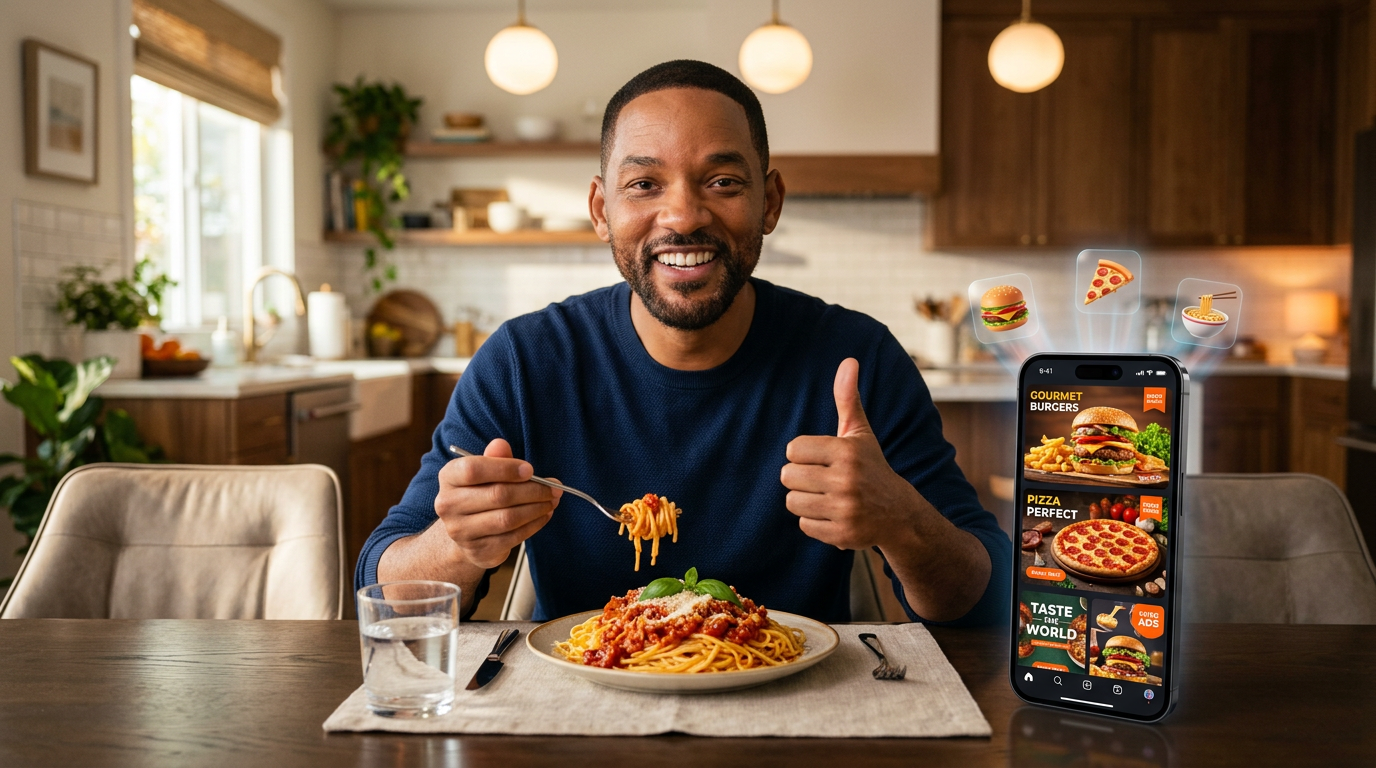

Umaima Shah
March 12, 2026 • Updated March 13, 2026
17 mins Read
Food is the most emotionally charged product category in advertising. That's why Food ads have the superpower that almost no other category can trigger: a physical reflex.
Buyers don't just see a well-done food ads: they salivate, feel hungry and there is a sudden urge to order: the craving! That physiological response is the most powerful conversion signal for advertising.
But most food advertising for SMEs misses the point entirely.
- Overlit product shots that look clinical
- Menu photography that makes food look flat and unappetizing
- Stock imagery that no one believes represents the actual food
These factors distinguish great food ads from good or bad ones. The gap is huge and so is the creative opportunity! But guess what? AI food photography and AI ad generators have made aesthetic food advertisements accessible to every business, regardless of their budget. So, this guide covers how to promote your food business with the right creative techniques and specific AI tools.
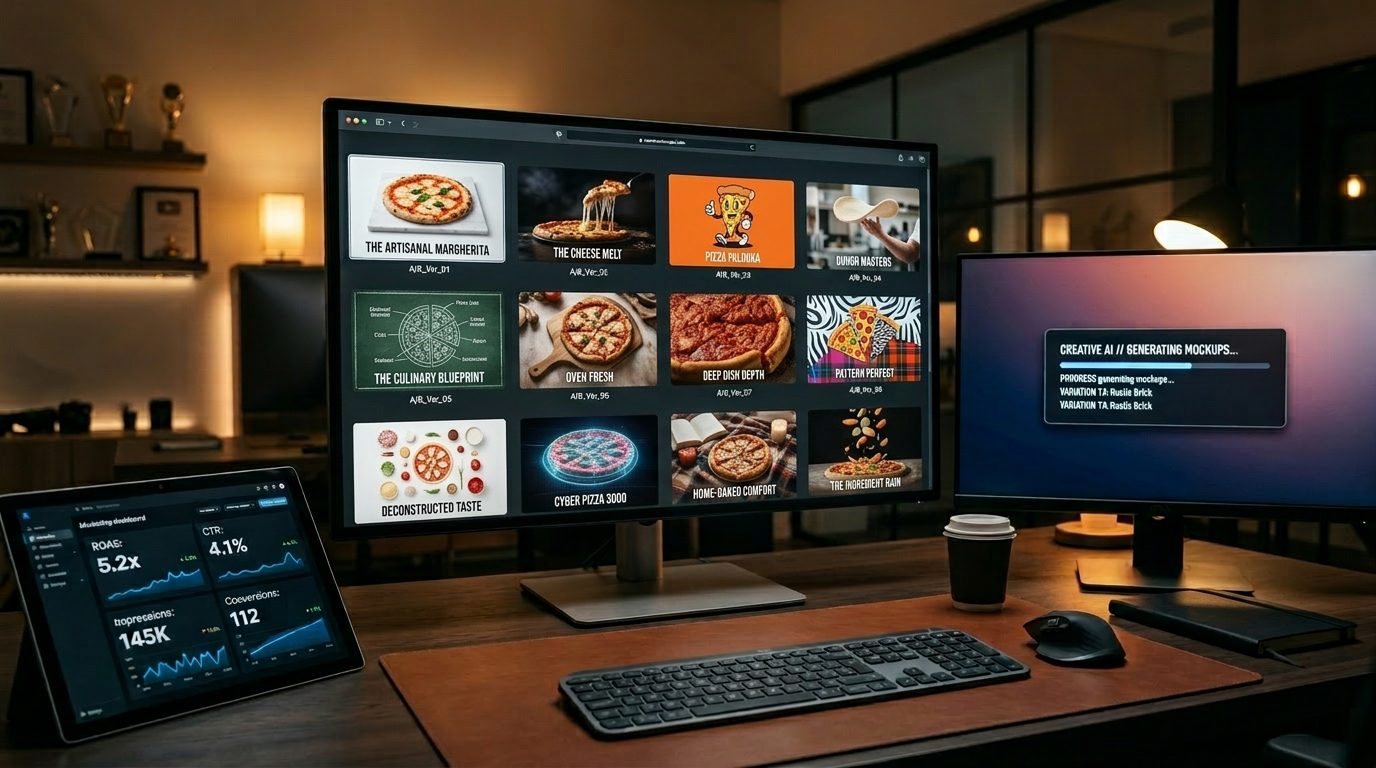 One food image. Dozens of AI-generated ads.
Why Some Food Promos Make You Hungry But Others Don't!
Understanding the psychology of appetite-triggering advertising is the foundation of effective food ads.
The Five Sensory Triggers In Food Advertising
Great food advertising activates multiple senses through visual cues alone. The brain fills in the rest from memory and imagination.
Texture: The brain responds strongly to visible texture in food, the char on a grill mark, the crust of a freshly baked bread, the bite through a macaron that shows the layers inside. Close-up photography that reveals texture is more appetite-inducing than wide shots that show the whole plate.
Temperature: Steam rising from a hot dish. Condensation on a cold drink glass. Ice cream slightly melting at the edges. Visual temperature cues trigger thermal memory responses, the brain "feels" the temperature and associates it with pleasure.
Freshness: Glistening surfaces (oil, glaze, moisture) signal freshness. Wilted, dull, or overly perfect food reads as stale or artificial. The imperfect strawberry with water droplets looks fresher than the perfect CGI strawberry.
Abundance: Full plates, overflowing portions, ingredients spilling naturally, abundance communicates generosity and satisfies a deep instinct around food security. Sparse plating can communicate sophistication in fine dining but anxiety in casual food advertising.
Color and contrast: The Maillard reaction (browning) is visually appetizing. The contrast of green herb against golden chicken, red sauce against white pasta, bright fruit against dark chocolate, color contrast makes food photography come alive.
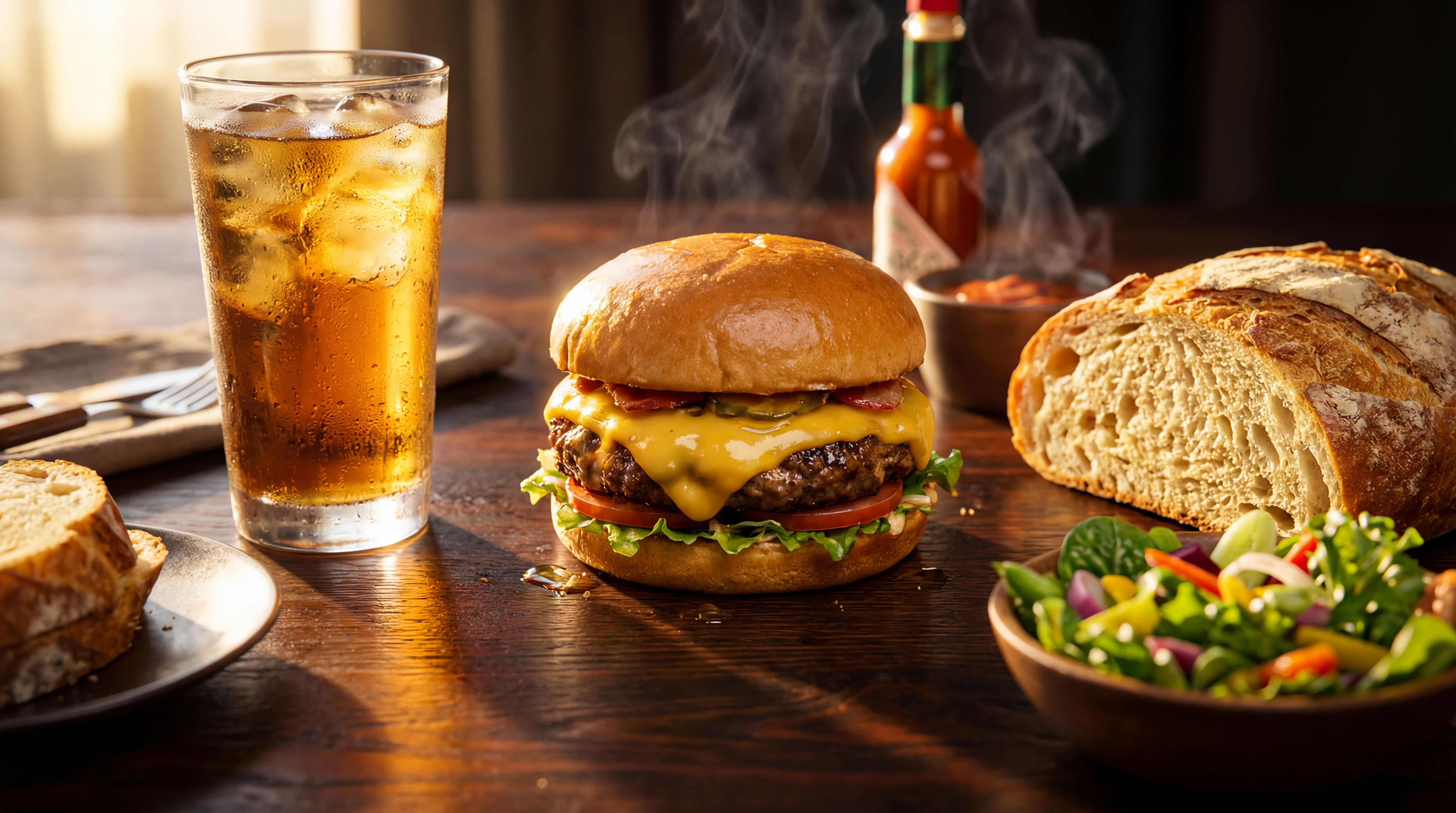 Food Advertisement with AI - ImagineArt
Types of Food Ads and When to Use Each
Different food advertising goals require different creative approaches:
1 - Brand Awareness Food Ads
Goal: make people aware your brand exists and associate it with a specific feeling or quality
Format: feed image or short video on Instagram, Facebook, and TikTok
Creative approach: lead with the emotion, not the product. A warm, gathering family scene that happens to include your food. A person's authentic reaction to their first bite. The occasion, not just the dish.
2 - Direct Response Food Ads
Goal: drive immediate action, order online, visit the restaurant, purchase the product
Format: carousel for range, single image with clear offer, video with visible CTA
Creative approach: specific offer front and center. "Order by 7pm, delivered in 30 minutes." "This week only: free dessert with any main." The visual shows the product; the copy closes the sale.
3 - Food Content Marketing (Educational/Recipe Format)
Goal: build audience, trust, and ongoing relationship
Format: carousel on Instagram, Reels, TikTok video
Creative approach: genuinely useful content that happens to feature your product. A recipe using your ingredients. A "how this dish is made" process video. A "what to pair with what" guide.
4 - UGC-Style Food Ads
Goal: social proof and authentic purchase influence
Format: TikTok and Instagram Reels
Creative approach: person trying your food for the first time, real reaction, natural setting. Not polished, intentionally authentic. The product sells itself through the response.
5 - Seasonal Food Ads
Goal: be present at the moments when food decisions are most emotionally charged
Format: platform-dependent, typically feed image and video
Creative approach: tie directly to the season, occasion, or moment. Valentine's Day, Ramadan, Eid, summer barbecues, winter comfort food, school lunches. The product finds its emotional hook in the timing.
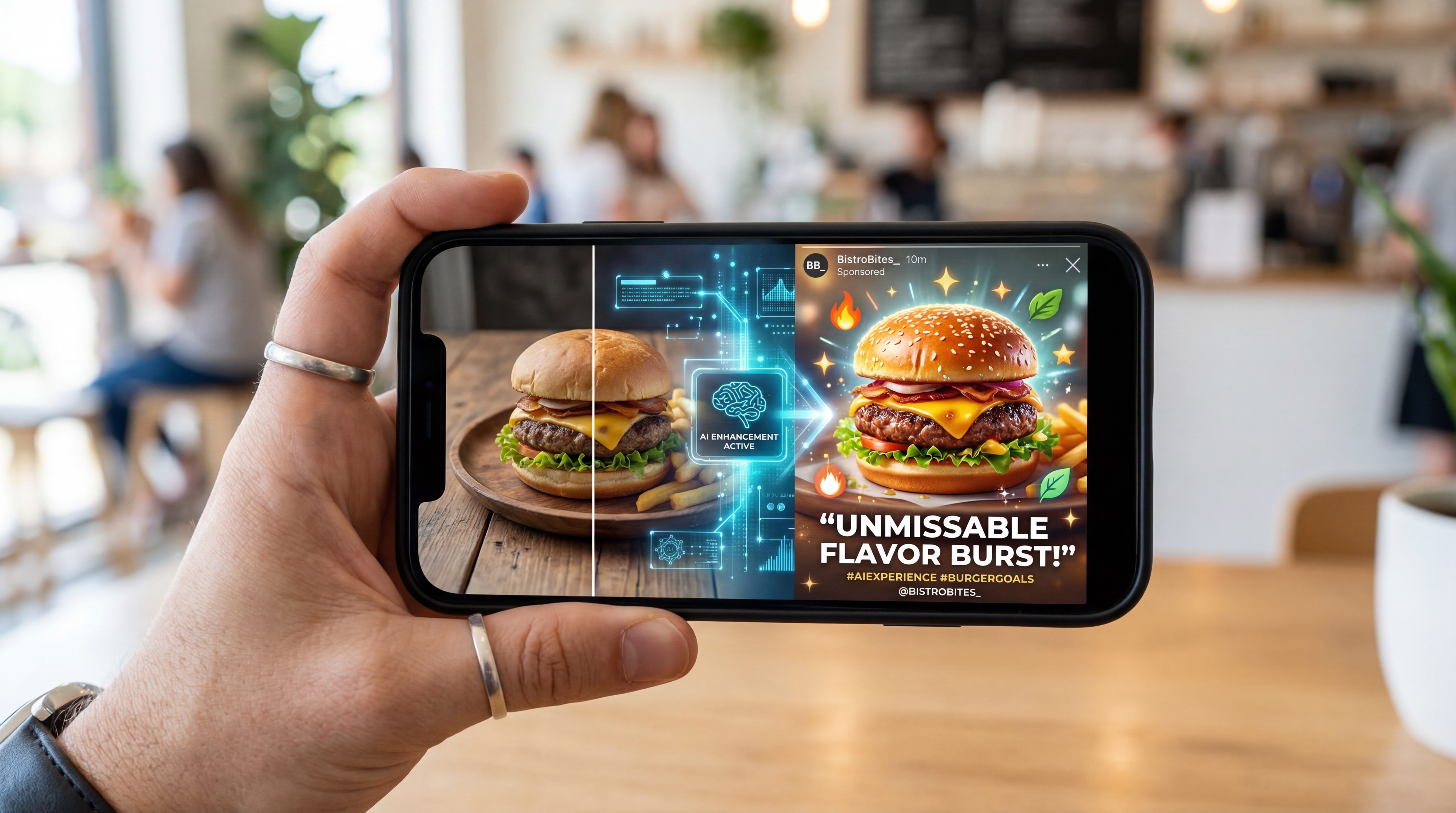 AI turns simple food photos into scroll-stopping ads.
The Food Ad Creative Formula: What Makes Food Photography Irresistible
Before using any AI tool, understand the visual principles that make food advertising work. These apply whether you're shooting real food or generating AI food photography.
The Hero Angle
Every food has a "hero angle", the perspective that shows it at its best. Burgers are best shot at eye level, slightly from the side, showing height and layer structure. Pizza is best from overhead, showing the full circle and topping coverage. Pasta is best with a slight downward angle showing the twist of noodles and sauce. Drinks with layers are best straight-on, showing the striation.
For AI food photography prompts: specify the angle. "Low angle, eye level" vs "overhead flat lay" vs "45-degree three-quarter" produces dramatically different results.
Light Quality
Natural light from a window source creates the warmth, softness, and slight shadow that makes food look real and appetizing. Hard studio light creates an artificial, clinical look that reduces appetite appeal for most food categories.
Fine dining is an exception: dramatic, directional studio lighting communicates prestige and craftsmanship. For casual and comfort food, natural light always wins.
For AI prompts: "soft natural light from left window," or "warm golden hour light," or "diffused daylight, slight shadow," rather than "studio lighting" for most food categories.
The Imperfect Perfect Shot
Slightly imperfect food is more believable and more appealing than perfect food. A drop of sauce runs slightly over the edge. A herb placed naturally rather than positioned. Crumbs from a freshly cut bread. These "flaws" signal authenticity and freshness to the viewer.
For AI prompts: "natural imperfections," "slightly rustic styling," "organic food placement" to prevent the over-perfect AI food aesthetic.
Background and Surface
The surface of food communicates everything about the context and occasion. Dark slate = premium, modern, confident. White marble = clean, aspirational, premium, but accessible. Warm wood = rustic, artisan, homemade. Paper or wrapping = casual, street food, fast, and fun.
The surface of food communicates everything about the context and occasion. Your background and surface styling sets the visual tone before a customer even reads the description.
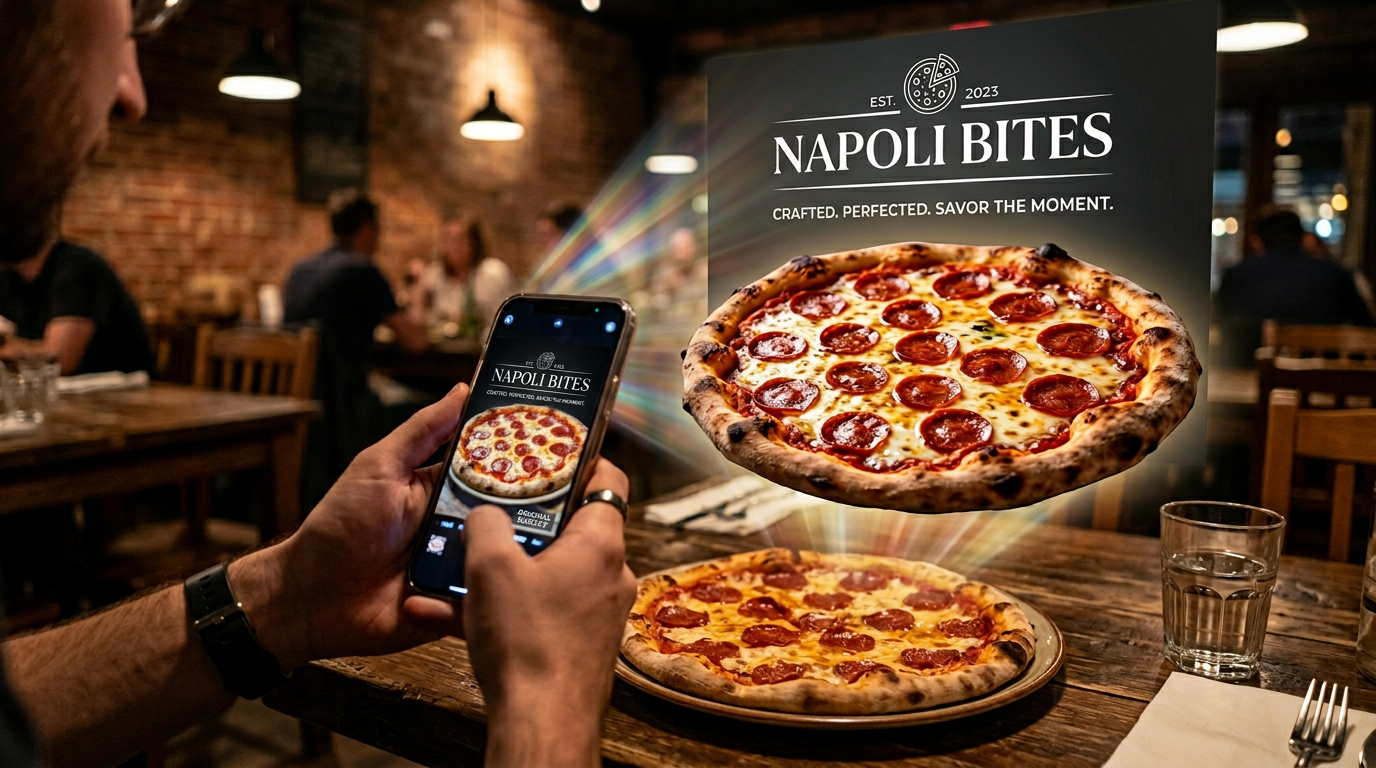 AI helps restaurants create ads without studio shoots.
AI Tools for Food Advertising
ImagineArt is the best AI ad generator for food businesses. It has got 5+ tools you can start using today for promoting your food business. Here are my favorite ones that solve ALL food advertising challenges literally:
AI Product Photography
ImagineArt's AI product photography app generates studio-quality food photos from your raw images.
For food businesses, this is transformative: professional food photography has traditionally required a food stylist, photographer, and production day. a minimum $1,000-3,000 investment for a handful of usable images. But with ImagineArt, you can get mouth-watering food waters for under $10!
Step 1: Simply upload a real photo of your food product or dish.
Step 2: Then give a prompt: describe the environment, lighting, styling, and mood you want.
The AI generates photography-quality output matching your description.
High-performing food photography prompts:
For a restaurant or café dish:
"Warm natural light from the left, rustic wooden table surface, close-up angle at 45 degrees showing texture and garnish, steam visible, artisan café aesthetic, slightly imperfect natural styling"
For a packaged food product:
"Flat lay overhead composition, marble surface, product centered, fresh ingredients surrounding it as props, clean and aspirational, natural light."
For a bakery item:
"Golden hour warm light, cross-section visible showing layers inside, crumbs naturally scattered, linen cloth surface, artisan bakery aesthetic."
For a drink product:
"Condensation on glass, side angle showing color layers, natural outdoor background slightly blurred, summer lifestyle context"
Product Placement App
Product Placement takes your food product and places it into any lifestyle scene you describe. For food businesses, this creates the contextual, occasion-based advertising that drives emotional connection. You can even show UGC-style or influencer stuff with this app.
Powerful food placement scenarios:
- Your packaged food product at a family weekend breakfast table
- Your restaurant's signature dish at an outdoor summer dining setting
- Your food brand's product at a Christmas gathering, Ramadan iftar, or Eid celebration
- Your coffee product on a home office desk in a morning work scene
- Your health food product at a gym bag or post-workout setting
Each context communicates a specific occasion and emotional territory without requiring a production setup.
Make People Hold Food
Make People Hold Product app generates images of AI models holding and interacting with your food product. Again, this is a superb ad if you want to use light-hearted UGC-style imagery in your food ad images and videos. You can make your ads even more magical by showing these scenarios:
- The "first bite" moment: someone about to eat your food with visible anticipation
- The "reaction" shot: expressions of enjoyment, surprise, or satisfaction
- The "holding and showing" format: the TikTok and Instagram "look at this" presentation that drives virality for food content
- The "sharing" scene: two people sharing food, the universal signal of social connection and generosity
AI Influencers for Your Restaurant
Food video advertising that features a person reacting to, reviewing, or demonstrating food consistently outperforms food-only video. ImagineArt has an AI influencer generator that creates AI spokesperson video for food content, without requiring a real person, camera, or filming session. With simple prompt, you can create a totally fictional AI influencer foodie or one from your own image!
Once you have your AI influencer, here are 4 video advertisement examples you can create under $10:
- The food review: person tasting and reacting authentically, describing flavor and texture
- The recipe or process: person explaining how to use your product, demonstrating techniques
- The recommendation: "I've been ordering from [restaurant] every week because..." testimonial format
- The discovery: "I just found this and I can't stop thinking about it", the viral food discovery format
AI Ad Generator
If you have a specific, say, hollywood-style script in mind, or want to simply animate a food image, the AI ad generator is your best shot. Type in a prompt and go: get your ad ready in 45 seconds.
Through these videos, you can show:
- Process and making: the visual language of food being prepared is universally engaging. The pour, the mix, the cut, the assembly.
- The close-up texture reveal: dramatic close-ups of food textures, melting, steaming, glistening
- The occasion setup: the table being set, candles being lit, food arriving at the table
- The seasonal context: matching the visual environment to the time of year and occasion
Editorials for Premium Food Brands
ImagineArt has editorial templates for food ads: choose a style you like, upload your image and get it done!
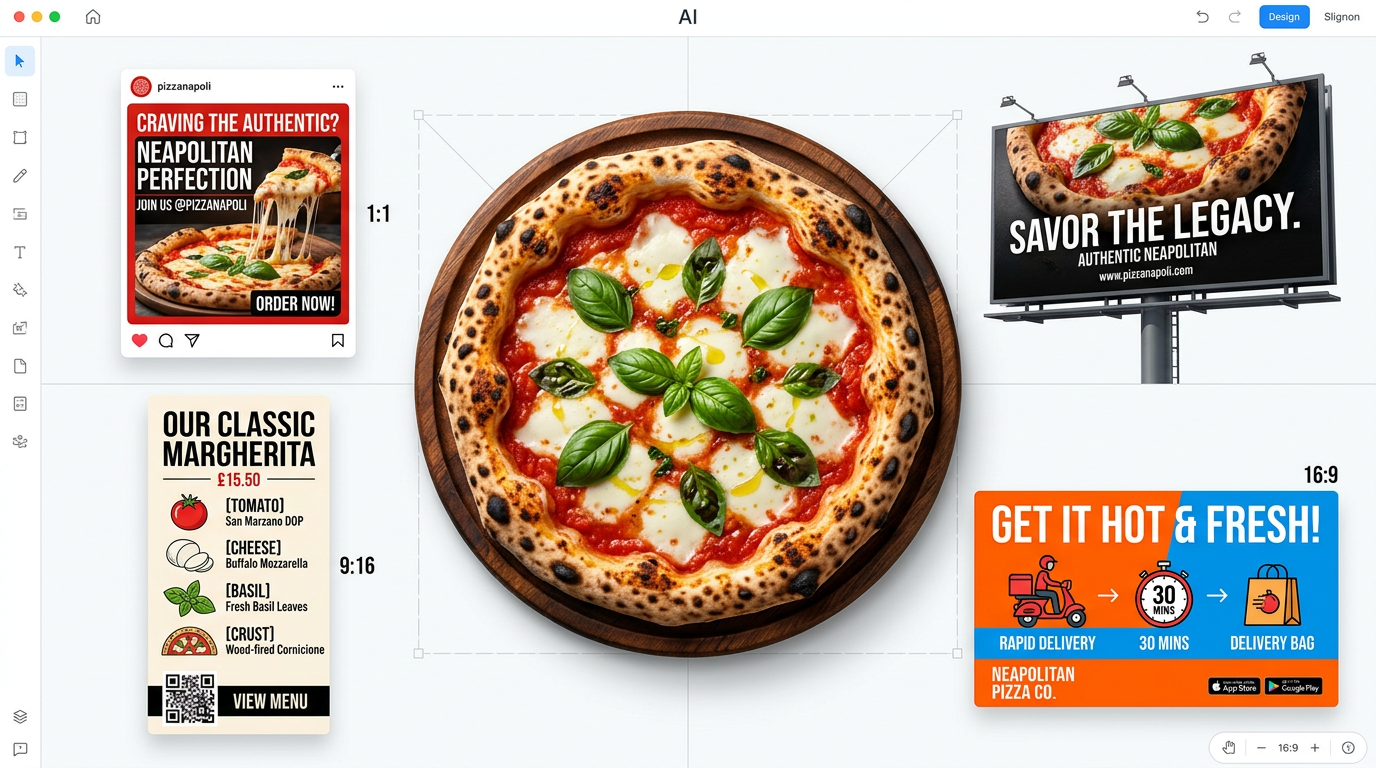 From kitchen to campaign — powered by AI.
Food Ads by Platform
Certain types and dimensions of ads perform differently on social media and video platforms. Here's a quick platform-specific guide if you are marketing your restaurant business on different channels:
Instagram Food Ads
Instagram is the best platform for promoting a food business, period.
The platform's visual culture was partly built on food photography, and so, users have a high expectation when it comes to food image quality.
Best formats for Instagram food ads:
- Feed image (4:5) for quality showcase
- Reels for process and recipe content
- Carousel for menu showcases and "what to order" guides
Creative approach for Instagram food ads:
Aesthetic quality is the minimum bar when promoting food on Instagram. Here are things you have to remember: natural light, appetizing angles, visible texture. Person-forward content for Reels. Saved-worthy educational content (recipe cards, pairing guides) for high algorithmic signal.
TikTok Food Ads
"FoodTok" has billions of views. Food is one of TikTok's most consistently viral categories, and paid food advertising benefits from that existing appetite for food content, period.
But here's what most food businesses get wrong on TikTok: they post the finished dish. TikTok doesn't want the result. It wants the process.
Best formats for TikTok food ads:
- In-Feed video (9:16), full screen, native feel
- Spark Ads boosting organic food content that's already getting traction
Creative approach for TikTok food ads:
Process videos outperform finished dish shots on TikTok. The making, the assembling, the reveal. Person reaction shots drive shares. Sound is critical, the sizzle, the crunch, the pour.
YouTube Food Ads
YouTube is the most underrated platform for food businesses, period.
Someone searching "best burger in Dubai" or "healthy meal prep ideas" isn't scrolling passively. They have intent. That's the most valuable audience in food advertising.
Best formats for YouTube food ads:
- Pre-roll video (6-15 seconds) for brand awareness, skippable, so your hook must land in second one
- In-feed video ads for recipe and process content
- Bumper ads (6 seconds, non-skippable) for promotions and seasonal offers
Creative approach for YouTube food ads:
YouTube rewards depth. A 60-second recipe video, a behind-the-scenes kitchen tour, and a "how it's made" process video, this is the content YouTube users actively seek and watch to completion. The thumbnail is your scroll-stopper. The first five seconds decide everything, show the food first, and explain later.
Facebook Food Ads
Facebook's targeting precision makes it the best platform for local food businesses targeting a specific geographic area, period.
The right food ad shown to people within 5km of your restaurant at 6pm on a weekday is one of the most efficient local advertising formats available.
Best formats for Facebook food ads:
- Single image for restaurant promotion ads
- Carousel for delivery menus and range showcases
- Video for brand storytelling and occasion-based campaigns
Creative approach for Facebook food ads:
Local relevance is the message. "Delivered to [neighborhood] in 30 minutes." "Five minutes from [local landmark]." The geographic specificity makes the convenience real, and real convenience converts.
Twitter/X Food Ads
Twitter/X is the platform for food businesses that have something to say, not just something to show.
The platform's text-first culture means food advertising here works differently, less about the perfect shot, more about the perfect line.
Best formats for Twitter/X food ads:
- Promoted tweets with a single strong image for product announcements
- Video ads (15-30 seconds) for seasonal campaigns and launches
Creative approach for Twitter/X food ads:
Copy leads on Twitter/X. Tweet about your food when people are hungry, lunch window (11am-1pm) and dinner window (5pm-7pm) see the highest food engagement. Specificity wins: "our truffle fries just came out of the fryer" outperforms "come try our menu" every single time.
Pinterest Food Ads
Pinterest is the longest-lasting food advertising platform available, and the most overlooked by small food businesses.
A great food pin gets saved, reshared, and discovered for months. Pinterest users actively search for recipes and meal inspiration, your ad reaches people in planning mode, not passive scrolling mode.
Best formats for Pinterest food ads:
- Standard pin (2:3, 1000x1500px) for recipe and dish showcase
- Video pin for process and recipe content
- Idea pins for multi-step recipe guides
Creative approach for Pinterest food ads:
Vertical format, aspirational styling, and recipe-forward content win on Pinterest. Text overlay on the image is essential, Pinterest users often save without clicking, so the key message needs to live on the image itself. Seasonal content performs exceptionally, plan 4-6 weeks ahead of each season or occasion.
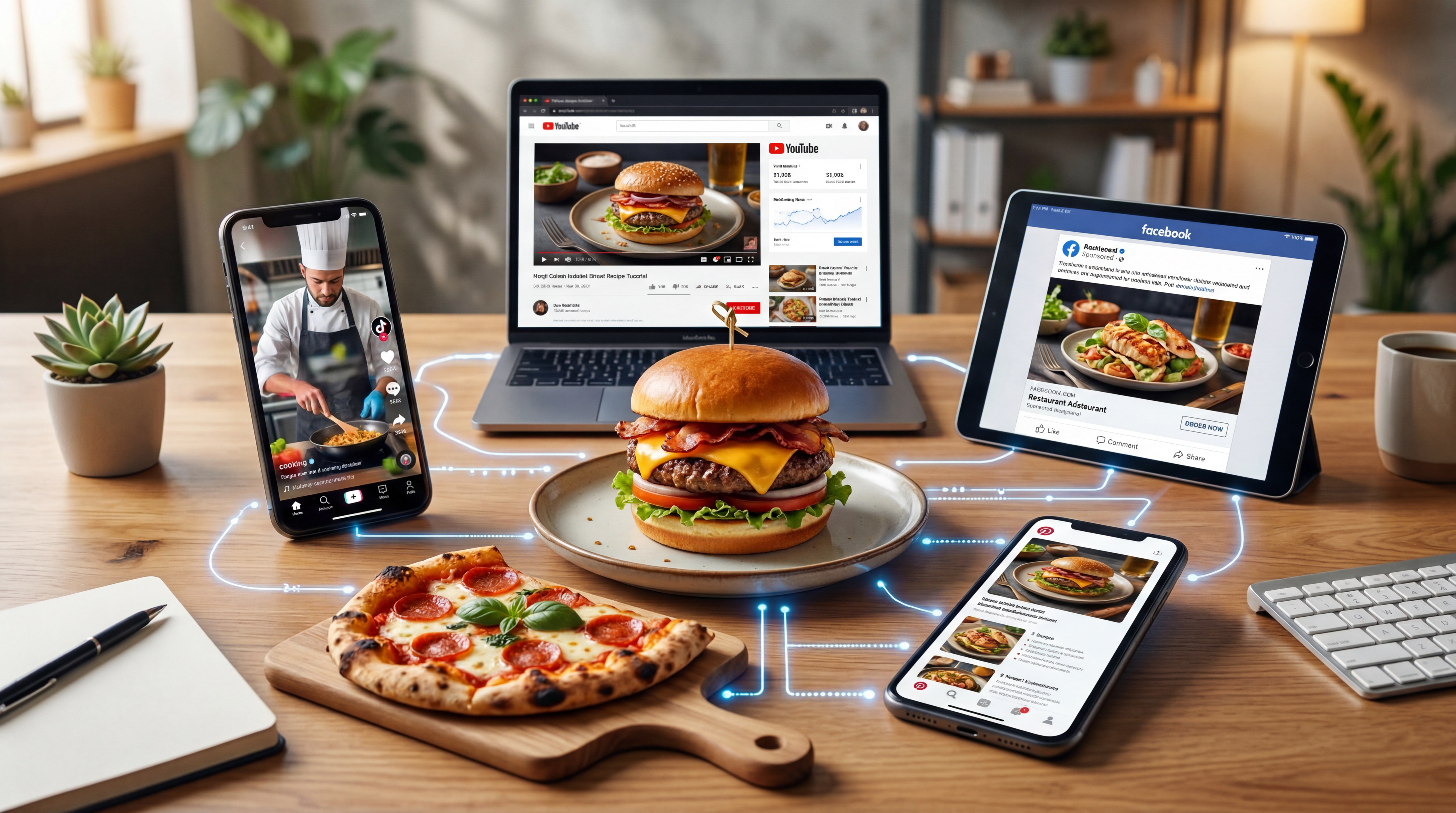 One dish. Multiple platforms. Different food ads for every audience.
20 Food Creatives Ideas for Different Businesses
Not all food ads can be made equal. If you are a growing business owner who just started, your strategy needs a lot more juice than an existing 5-star hotel. You have to beat them in quality and quantity! See where you are right now, where you want to be and advertise away!
Restaurants and Cafes
The single most effective restaurant ad format in 2025 is the dish showcase, a genuinely beautiful photograph of your best dish, shot at its hero angle, with enough contextual setting to communicate the dining experience.
Five restaurant ad ideas:
- "The dish we're known for", your signature item, photographed perfectly, let the visual do the work
- The chef's special announcement, new dish, limited time, creates urgency and discovery
- The occasion invitation, "Your Friday night sorted. [Dish image]. Book the table at [link]"
- The behind-the-scenes, the kitchen, the prep, the craft. Builds trust and authenticity.
- The regular's pick, "Our most reordered dish for three years running", social proof as creative
Food and Beverage Products
Packaged food products need to overcome the fact that the most important quality (taste) can't be communicated visually. The creative challenge is to make the visual experience so appealing that it triggers taste memory and purchase desire.
Five packaged food ad ideas:
- The ingredient origin story, where the key ingredient comes from, the quality it represents
- The occasion pairing, show the product in the moment where it belongs (Sunday morning, holiday gathering, after-school snack)
- The recipe enabler, show what someone makes with your product, make the end result the hero, with your product as the key ingredient
- The comparison, "Made with actual [ingredient], not [inferior alternative]", calls out the quality difference without naming competitors
- The subscription or loyalty ad, "Never run out. Subscribe and save.", for products people use regularly
Food Delivery Services
Delivery advertising has a clear single message: convenience. The creative challenge is communicating convenience without sacrificing appetite appeal.
Five food delivery ad ideas:
- The "what you're doing instead of cooking" ad, on the sofa, in a bath, watching something, and the food arrives
- The late-night craving ad, specific time of day, specific craving, specific solution
- The "too good to leave home for" ad, restaurant-quality food in a home setting
- The speed proof, "Ordered at 6:47. At the door by 7:12.", specific beats general
- The occasion rescue, "Forgot to plan dinner? We got you.", speaks to the specific stressful moment
Bakeries and Artisan Food
Artisan food businesses have a creative advantage: their process is beautiful. The craft, the skill, the physical making of food is compelling content.
Five bakery and artisan food ad ideas:
- The process reveals, bread proofing, pastry laminating, chocolate tempering. The craft is the story.
- The morning ritual, fresh bread at sunrise. Fresh coffee and a pastry. The start of a good day.
- The made-today proof, "Baked this morning. Gone by noon." Creates urgency and exclusivity.
- The ingredient story, the specific flour, the local butter, the single-origin chocolate. The sourcing is the premium.
- The gift occasion, "The thing people don't know they need until they receive it." Position artisan food as the thoughtful gift.
What kind of ad copy works for food businesses?
While visual quality is the dominant factor in food advertising, ad copy makes all the difference between a beautiful ad that's ignored and a boring ad that still converts!
Sensory language triggers appetite. Remember "crispy," "melting," "smoky," "tangy," "rich," "velvety" activate sensory memory better than neutral descriptors. "A burger" vs "a smoky, double-stacked burger with crispy edges and a molten cheese pull."
Occasion specificity creates relevance. "Perfect for weeknight dinners" is more compelling than "perfect for any occasion." The specificity makes the customer think "that's me."
Freshness signals are powerful in copy. "Made this morning," "just pulled from the oven," "seasonal menu, available while stocks last" all communicate freshness and urgency simultaneously.
Social proof always converts because people trust and imitate crowd behavior. Examples include: "Our most popular dish," "reordered by 78% of customers," "the one everyone talks about."
How to budget for food advertisements?
Budget guidance for food businesses
Your budget will definitely depend on your goals. But with AI food ads, you don't really need a fat budget to sponsor big dreams!
Here are the quick bits to start with. Around $10/month for an AI ad generator like ImagineArt, then:
- Local restaurants: $20-40/day, Facebook and Instagram for geographic targeting. Ideally, focus on dinner window (4-7 pm) dayparting for maximum relevance.
- Food delivery: $30-50/day minimum for competitive delivery markets. Retargeting past customers at a lower bid is highly efficient.
- Packaged food: $25-50/day to start. Instagram and Facebook for discovery; TikTok for younger demographics and viral potential.
Key metrics for food advertising
This is your impact part: this is what you record and reflect on to measure the success of your food ads:
- Cost per order or reservation: the primary metric for restaurants and delivery. What does it cost to generate each booking or order? Benchmark it against the average order value.
- Return on ad spend: for e-commerce food products. Target 3-5x minimum, depending on product margin.
- Click-through rate: 1-2% is typical. Above 3% means the creative is genuinely stopping the scroll. Below 0.5% means the food photography isn't doing its job.
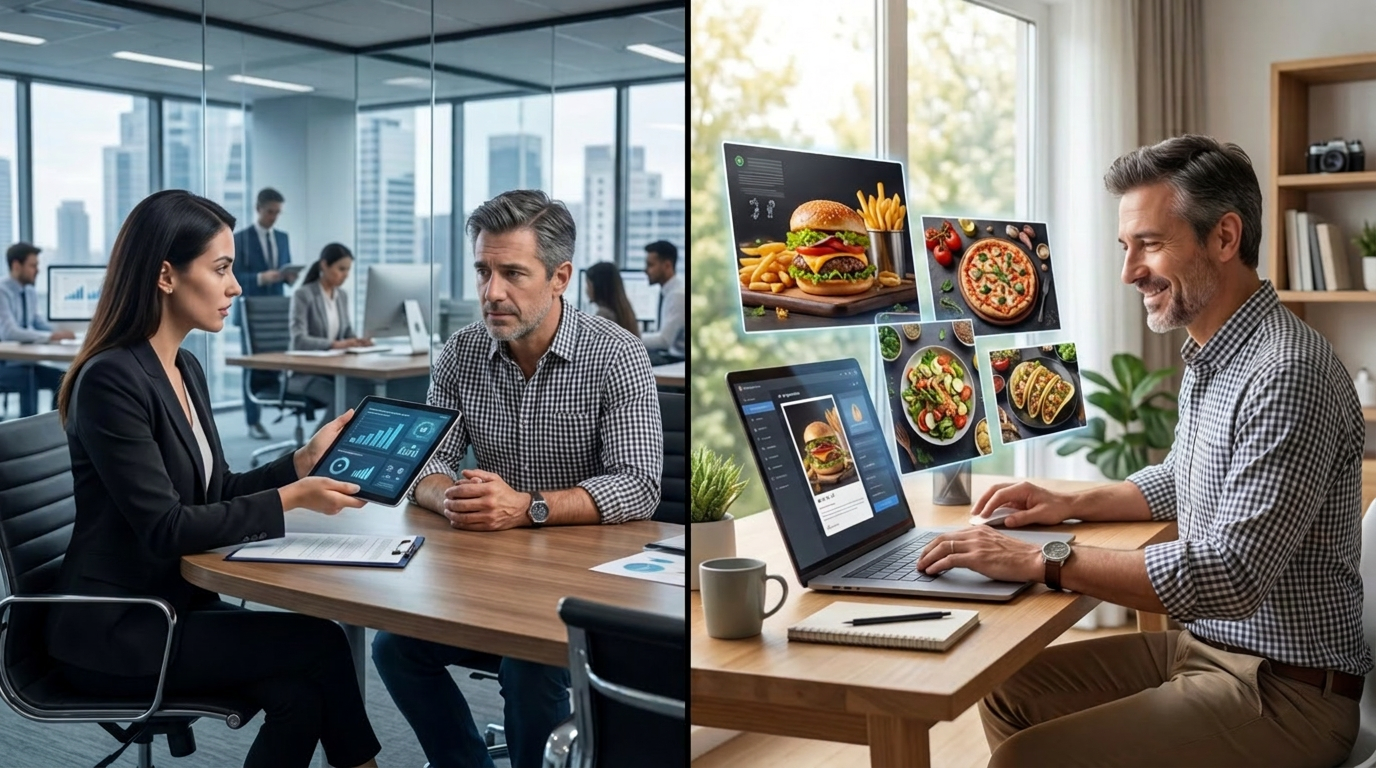 From expensive ad-agency deals to AI-powered ad creation
Your Complete Food Ads Workflow
Once you have your visuals, copy, and platform strategy in place, the next step is putting it all together efficiently. ImagineArt's Workflow feature lets you chain all your food ad tools, from AI product photography to ad generation, into a single automated pipeline. Build your food advertising workflow once and run it every time you need fresh, platform-ready creative.
Ready to create mouth-watering food ads?
Your real challenge with food business and its promotion is making your food look as good in an ad as it tastes in reality. Luckily, AI ad creation tools like ImagineArt have solved this for small to large food enterprises and restaurants. Ready to bring everything together into complete, platform-ready food advertising workflow?
Start with angle, light, and surface. Every food has a hero angle — usually close-up, at 45 degrees, or eye level — that highlights texture and composition. Soft natural light from the side creates warmth and appetite appeal, while a surface that matches your brand positioning (marble, wood, or slate) communicates quality before a single word is read.
Yes. ImagineArt's Product Photography AI can generate food images with natural lighting, realistic textures, and professional styling. The key is prompt specificity — describe the camera angle, lighting direction, surface material, styling approach, and mood for the most realistic results.
Instagram works best for visual brand building and showcasing food quality. TikTok is ideal for viral reach through cooking processes and reactions. Facebook is highly effective for local targeting, especially for restaurants promoting to specific neighborhoods.
Not always, but person-forward food ads often perform better. Seeing someone enjoy a dish creates emotional resonance and triggers appetite and aspiration in ways that food-only images sometimes cannot.
ImagineArt offers a free tier that includes generation credits for food photography and ad creatives. Paid plans start around $10 per month when billed quarterly, making professional-quality ad production accessible even for small food businesses.
Umaima Shah
Umaima Shah is a creative content strategist specializing in AI tools, image generation, and emerging technologies. She focuses on translating complex platforms into clear, practical insights for creators, designers, and product teams