![Top 10 AI Tools for Restaurant Marketing [2026]](https://blogs-cdn.imagine.art/Ai_tools_for_restaurant_0fecebc870.png)

Umaima Shah
February 4, 2026 • Updated August 7, 2026
12 mins Read
Running a restaurant today means you’re not just rivaling on food: you’re competing for attention. The good news? You can 10X the attention assets, aka marketing materials, from Instagram reels and menu visuals to ads and seasonal campaigns with AI tools for restaurant marketing that now single-handedly run most of the promotional workload.
Wait, Why Do You Need AI Tools For Restaurant Marketing?
Traditional restaurant marketing is costly, time-consuming, and competitive. As a restaurant business, you have to:
- Spend anywhere between $4500 - $58,000 monthly on marketing
- Assign billable team hours to photoshoots, agencies, influencers, advertisements, and whatnot
- cater to the never-ending demand for visual content
- Organize as well as repurpose your content across platforms
But this stack of restaurant marketing tools will help you replace scattered, manual work with a repeatable and scalable marketing process that is both faster and smarter.
And how exactly? AI marketing workflows help you:
- Cut creative costs
- Reduce turnaround time
- Launch campaigns consistently without adding headcount
And with the right AI tools in place, restaurant marketing can shift from reactive execution to a structured system that drives visibility for repeat visits.
Let’s get into the details.
Leading AI Tools for Restaurant Marketing
All of this leads to a practical question: which AI tools actually deliver these capabilities for restaurants? The categories below show the main AI tools restaurants use and how each fits into their marketing system.
AI Tools for Restaurant Content Creation
1. ImagineArt
Restaurants and food businesses today need far more than just good images. They need scroll-stopping visuals like:
- Short promo videos
- Ad creatives
- Seasonal campaign assets
- Branded and UGC content
but all that can be reused across social media, delivery apps, websites, and paid ads.
ImagineArt brings all of that into one enterprise-safe platform. ImagineArt is one of the best AI tools for restaurant marketing because it acts as a complete creative production suite rather than a single-purpose design tool.
As a strong AI for food industry, restaurants are using ImagineArt to generate high-quality AI food photography, lifestyle visuals, and promotional videos, especially using AI design workflows for text-to-image, image-to-image, text-to-video, image-to-video, and even video-to-video editing.
What makes ImagineArt especially powerful as an AI tool for restaurant marketing is its built-in studios, apps, and workflows.
- Dedicated AI image generator studio and AI video generator studio help teams create ads, posters, thumbnails, reels, and story content at scale.
- AI-powered image editing apps and video editing apps help with quick changes like background swaps, lighting fixes, aspect ratio adjustments, and brand-safe refinements.
- Node-based AI design workflows make it easy to standardize repeatable creative production across locations
- AI influencer generator for real-looking UGC content
If you’re a single-location restaurant, a growing chain, or a marketing team managing multiple brands, ImagineArt is the AI tool to produce on-brand, high-quality visuals faster without sacrificing creative control and brand identity. And the best part yet? You can do hundreds of visuals for $10/month on monthly, quarterly, or annual subscriptions.
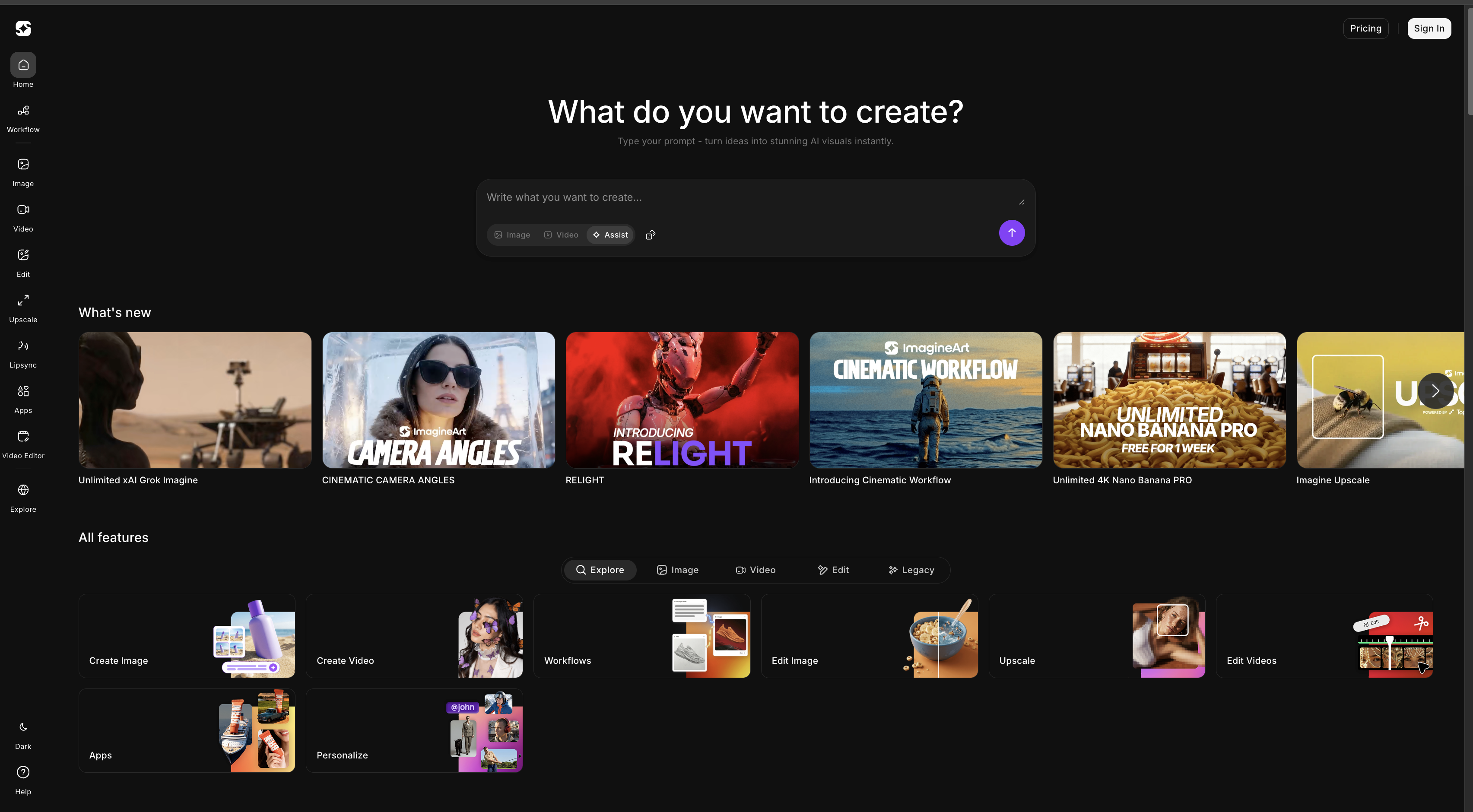 Generate images, videos, and ads for every campaign.
2. Adobe Firefly
Adobe Firefly is another well-known option among AI tools for restaurant marketing, and it’s suitable for food businesses already using the Adobe ecosystem. Firefly primarily offers AI-powered image generation and design assistance, and restaurants create visuals for menus, posters, social media posts, and basic marketing assets.
For restaurant marketing teams, Firefly generates background visuals, stylized food imagery, and design elements that you can refine further inside tools like Photoshop or Illustrator.
- Adobe Firefly is commercially safe, which makes it suitable for restaurant chains that prioritize legal compliance in creative work.
- Adobe Firefly focuses mainly on design.
- It relies on Veo 3 inside the Adobe ecosystem for AI video, which increases cost.
That said, for restaurants with in-house designers as well as agencies already working inside Adobe’s creative stack, Firefly can serve as a helpful AI layer for speeding up visual experimentation and concept creation.
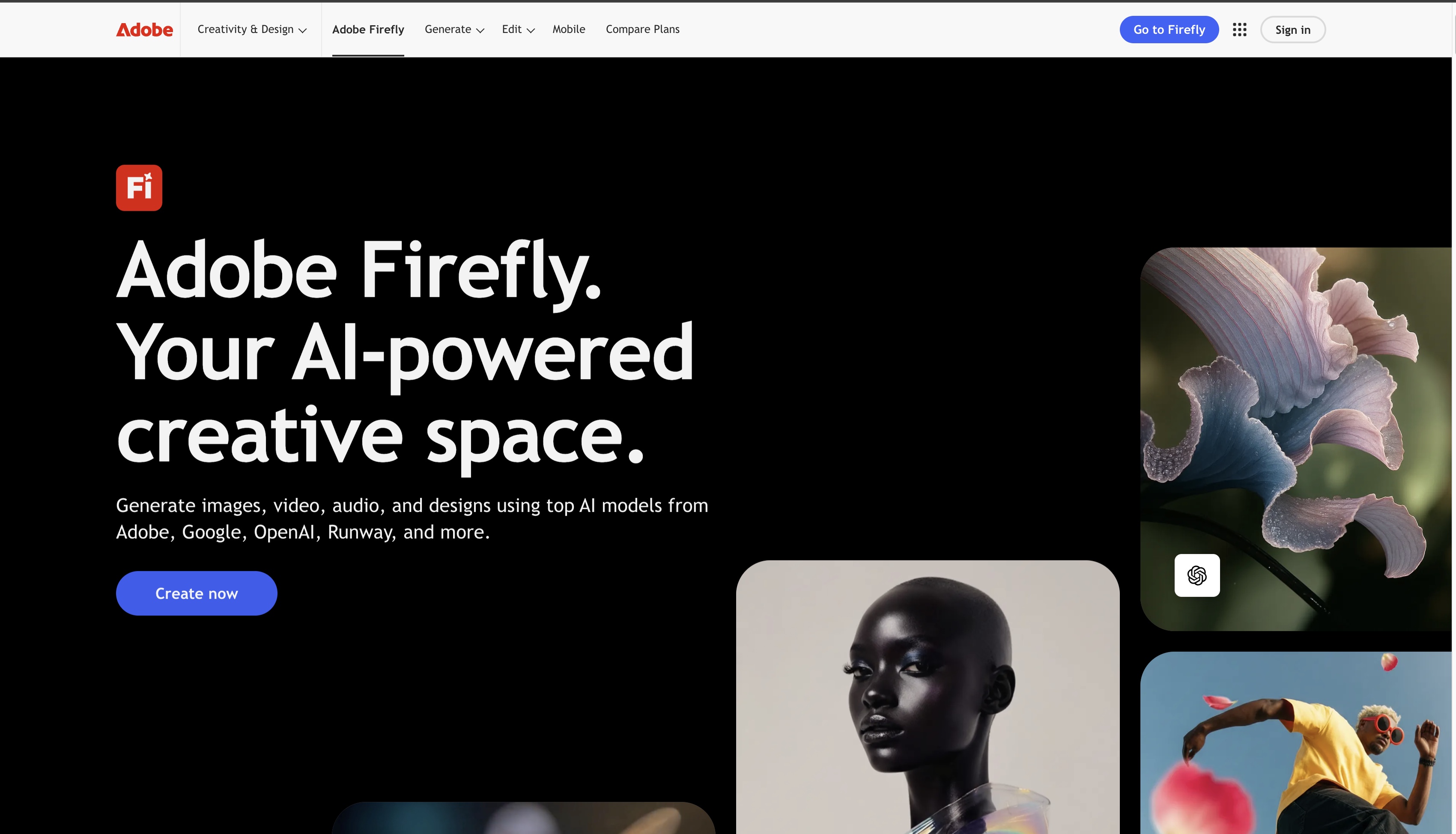 Generate menu and promo visuals with AI
AI Social Media Management for Restaurants
3. Hootsuite
Hootsuite is one of the most popular AI tools for restaurant marketing because of its social media features. Restaurants rely heavily on platforms like Instagram, Facebook, and TikTok to drive foot traffic, promote offers, and showcase food visuals. Hootsuite helps restaurant teams plan, schedule, and publish content consistently across multiple channels from a single dashboard.
- Hootsuite uses AI to generate captions, suggest hashtags, and recommend posting times based on engagement data.
- It removes guesswork around posting frequency and timing for restaurant teams.
- Teams spend more time creating content and less time scheduling posts manually.
- Hootsuite shows which posts drive the most engagement, clicks, and visibility.
- Restaurants can identify which visuals and campaigns perform best and adjust future content.
- It pairs well with creative tools like ImagineArt to create, publish, measure, and iterate content in a loop.
If you’re a restaurant manager planning to maintain a strong social presence without dedicating a full-time team to daily posting, Hootsuite offers a structured and reliable way to turn creative content into consistent marketing output.
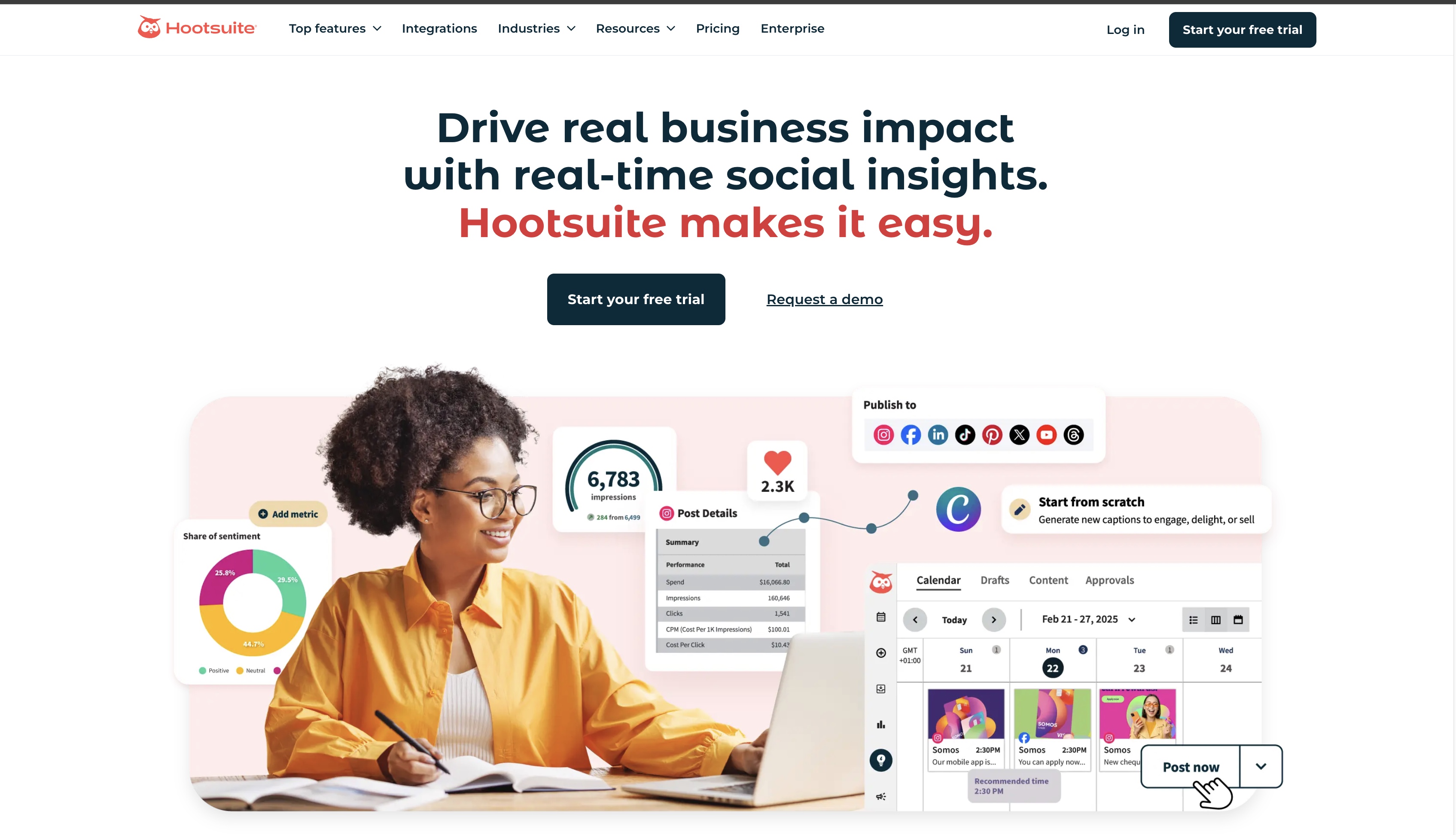 Schedule and manage restaurant social posts in one place
4. Buffer
Buffer is a lightweight and approachable option among AI tools for restaurant marketing for teams that value simplicity and speed.
Here is the thing: so many restaurants now don’t struggle with creating content at scale because of AI design tools, but they do with staying consistent on social media.
Buffer solves this problem by making scheduling, publishing, and planning posts straightforward as well as fast.
Its AI features help generate captions, rephrase promotional text, and adapt messaging for different platforms. Restaurant marketers can take a single visual, such as a dish photo, offer banner, or event poster, and quickly create platform-specific captions without rewriting everything from scratch.
Buffer’s clean interface makes it easy to plan content days or weeks in advance, which decreases the last-minute posting hassles.
Buffer also provides engagement insights that show how posts perform across channels. Restaurants can:
- test which content formats work best: static, reels, or announcements
- then refine their social strategy accordingly.
For smaller teams or single-location restaurants, this level of insight is often enough to guide better decisions without overwhelming complexity.
As part of a restaurant marketing stack, Buffer works well alongside creative AI platforms. Once visuals are generated using tools like ImagineArt, Buffer ensures they go consistently and on-brand, for visibility and engagement without adding operational overhead.
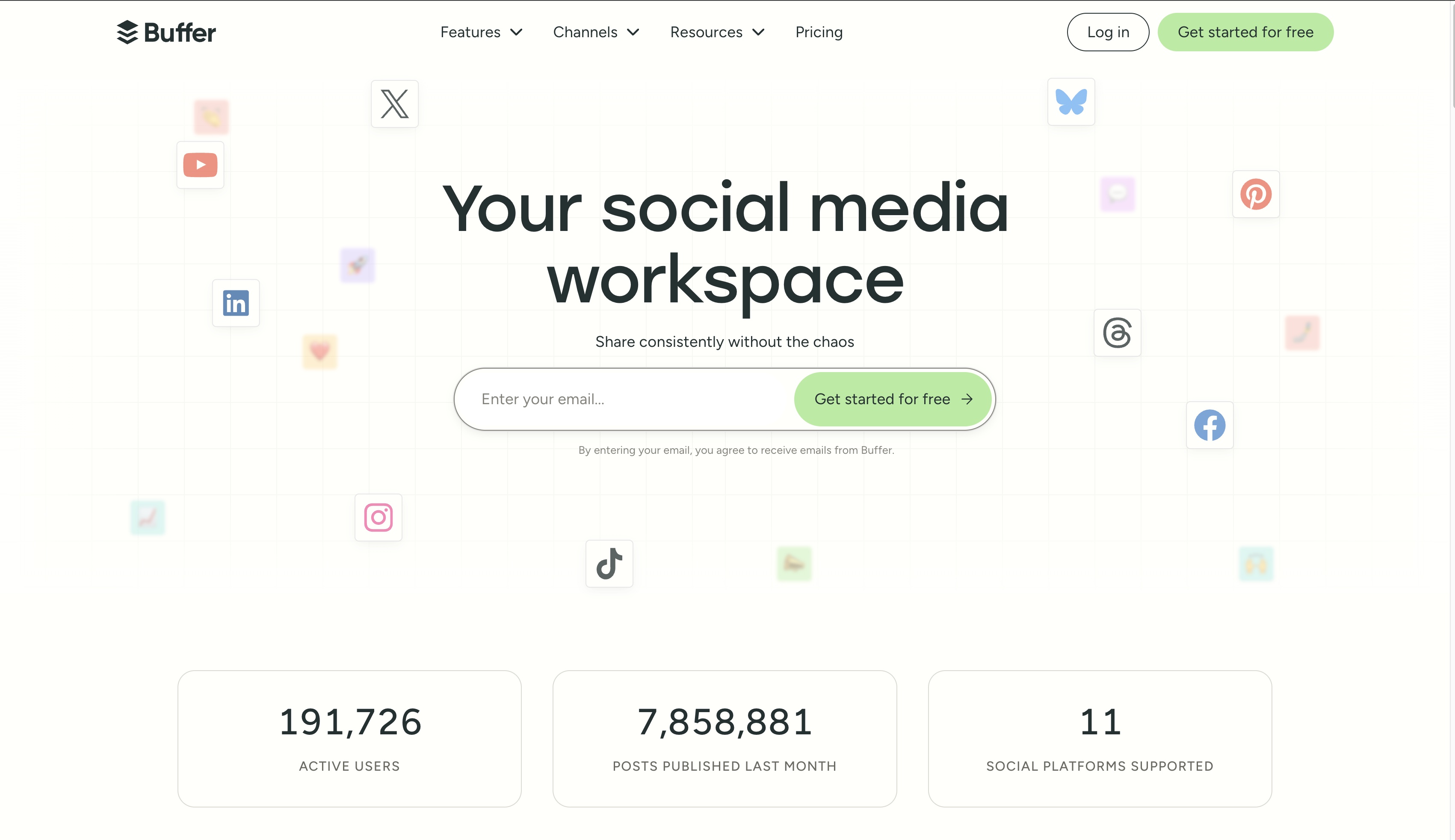 Schedule restaurant posts and stay consistent
AI Email Marketing & CRM for Restaurants
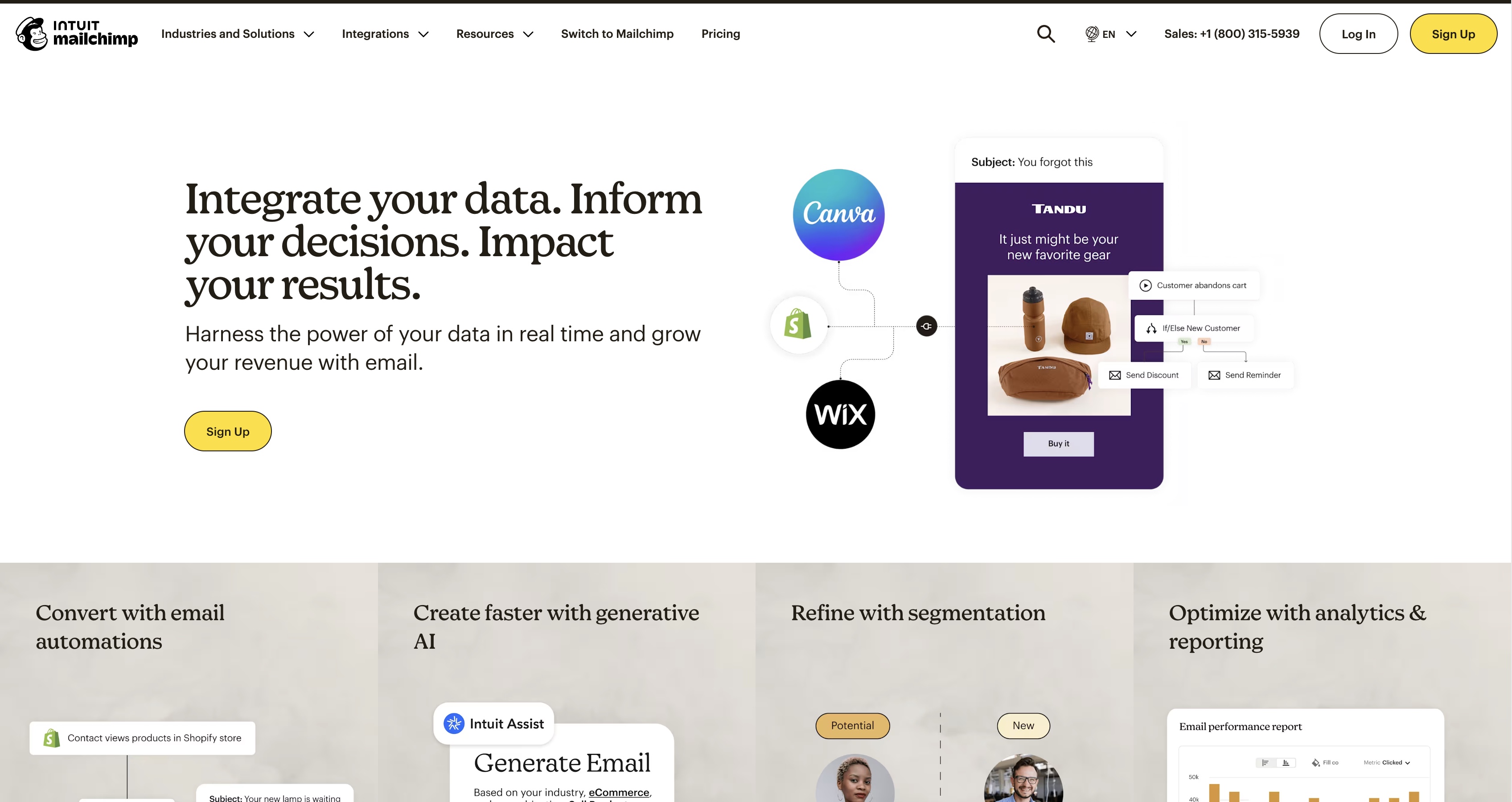
5. Mailchimp with AI
Mailchimp helps restaurants automate email campaigns, manage customer lists, and deliver personalized promotions, which makes it a key player among other AI tools for restaurant marketing.
You can send targeted emails for new menu launches, happy hour specials, seasonal offers, and loyalty programs.
Milchaimp’s AI:
- suggests subject lines
- optimizes send times
- and generate copy variations,
So when you have mouth-watering content, Mailchimp helps you reach the right audience at the right time via email.
Restaurants also use Mailchimp to segment customers by dining habits, location, or engagement history. This means you can deliver custom campaigns to increase reservations, repeat visits, and online orders.
Mailchimp’s analytics dashboards provide insights into open rates, click-throughs, and conversions, and give marketing teams measurable results.
If you are a restaurant team or an agency with clients in the food industry, you can design visually appealing emails with food photography and videos that maintain brand consistency and send them using Mailchimp right into the inbox while the AI recommendations improve engagement.
 Send targeted offers to restaurant customers
6. ActiveCampaign AI
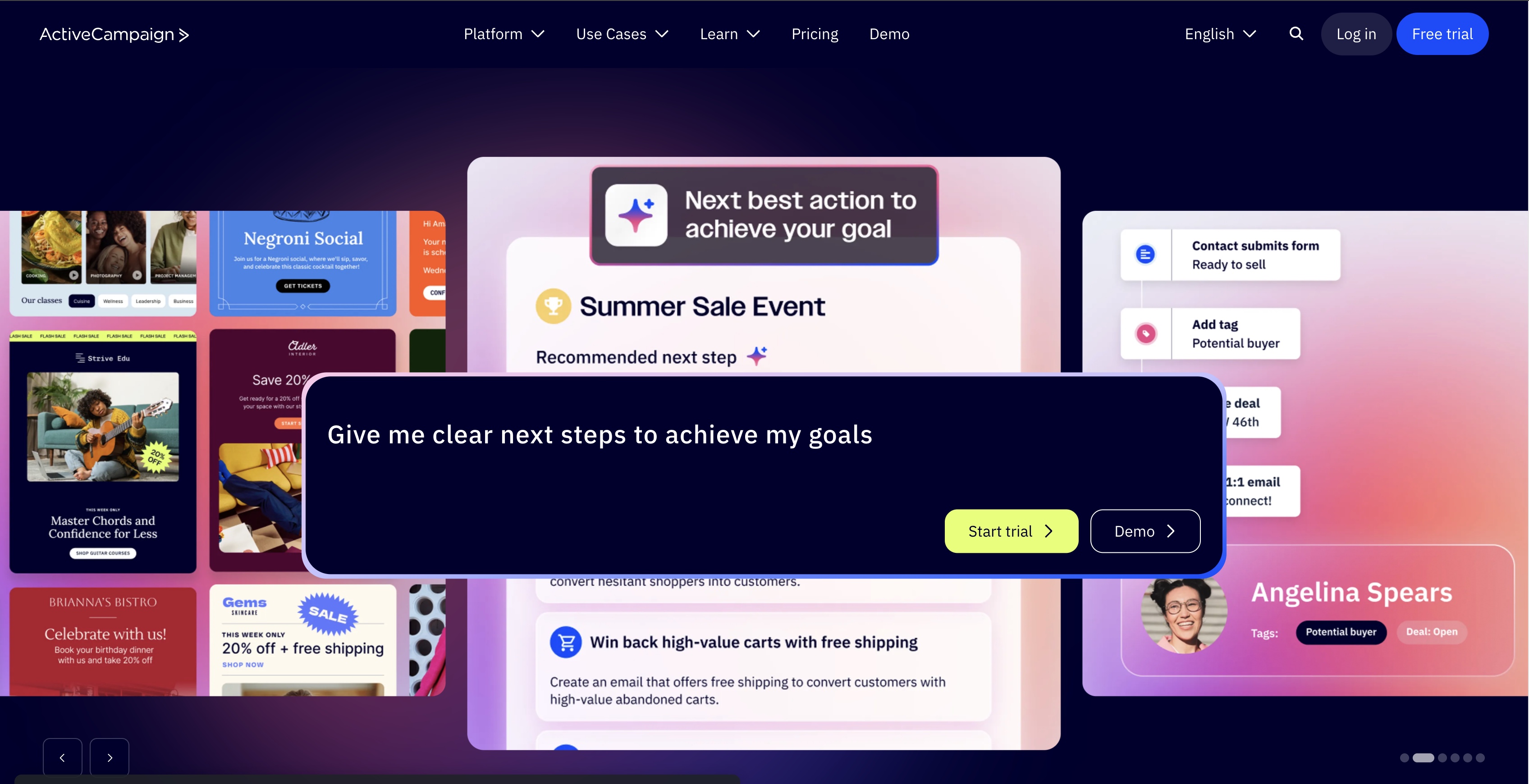
ActiveCampaign AI helps restaurants combine email marketing, customer relationship management, and automation into a single workflow. As one of the most practical AI tools for restaurant marketing, ActiveCampaign allows restaurants to track customer interactions, send personalized emails, and automate follow-ups for reservations, events, and promotions.
- Restaurants use ActiveCampaign AI to segment audiences, trigger campaigns based on dining behavior, and personalize offers at scale.
- AI recommends send times, predicts engagement, and suggests copy or content changes to increase opens and clicks.
- Teams automate loyalty programs, upsells, and event reminders without manual work.
- ActiveCampaign AI integrates with creative tools like ImagineArt to embed visuals and promo videos into emails.
- This keeps brand messaging consistent across campaigns.
- Restaurants track results in real time and adjust strategies quickly.
- The system improves marketing ROI through automation and personalization.
With ActiveCampaign AI, restaurants turn their CRM and email campaigns into an automated growth engine, making customer communication efficient, personalized, and effective.
 Automate restaurant emails and customer follow-ups
AI Tools for Customer Engagement & Reputation Management
7. Tidio
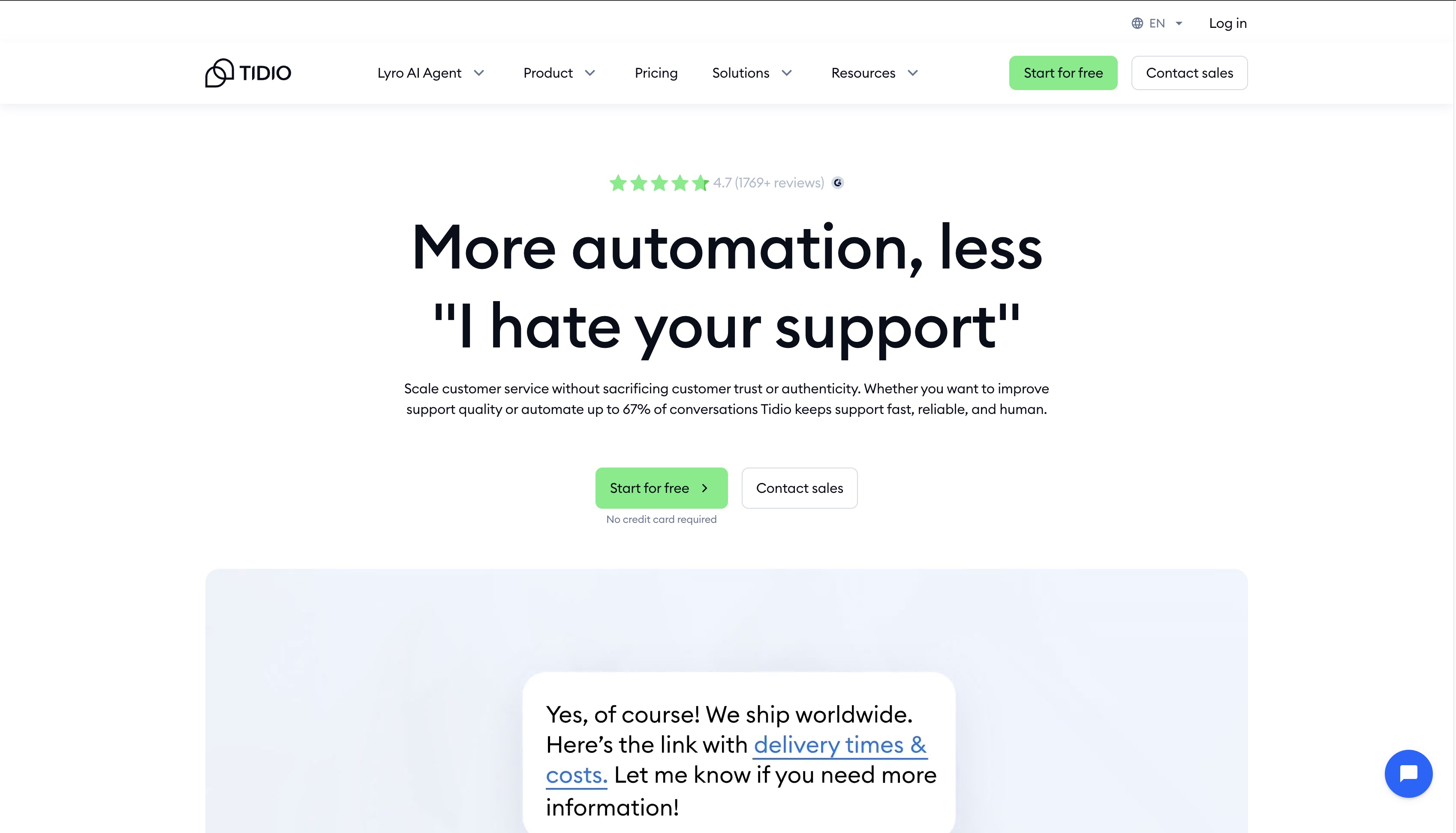
Tidio helps restaurants manage customer conversations across websites, messaging apps, and social platforms using AI-powered chat. As one of the practical AI tools for restaurant marketing, Tidio focuses on real-time engagement that turns interest into reservations, inquiries, and orders.
- Tidio answers common customer questions instantly, including opening hours, menu availability, delivery options, and reservation details.
- Its AI chatbot handles repetitive queries so staff can focus on in-person service.
- Tidio captures leads by collecting customer details and routing conversations to the right team.
- It integrates with restaurant websites to manage customer chats in one place.
- Automation rules trigger responses based on visitor behavior.
- Restaurants can engage users browsing menus, promotions, or event pages without manual effort.
- Marketing teams see fewer missed opportunities and faster response times.
From a marketing perspective, Tidio strengthens conversion and retention. Restaurants use it to promote offers, share updates, and guide customers toward bookings or online orders. When combined with strong visual campaigns, Tidio helps close the loop between awareness and action.
 Answer restaurant customers instantly with AI chat
8. Podium
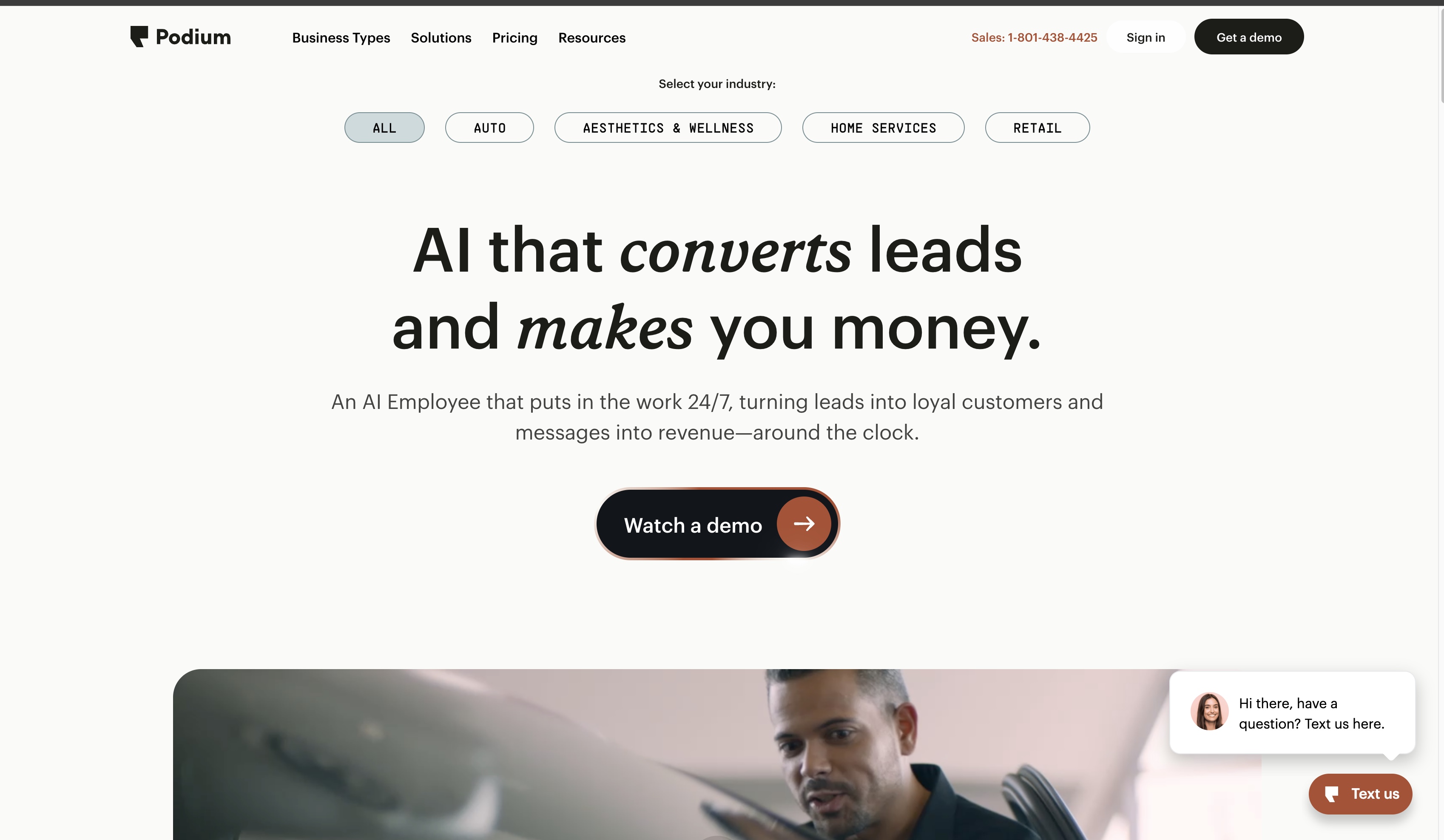
Podium helps restaurants manage reviews, customer messaging, and reputation from a single platform. Among AI tools for restaurant marketing, Podium plays a critical role in building trust and driving local discovery. Reviews heavily influence dining decisions, and Podium gives restaurants direct control over that experience.
- Restaurants use Podium to request customer reviews automatically after visits or orders.
- Podium’s AI routes feedback so teams handle negative issues privately and highlight positive reviews publicly.
- Podium improves ratings on Google and other review platforms.
- Podium centralizes SMS, web chat, and social messages in one inbox.
- Restaurants respond faster and more consistently to customers.
- Faster responses improve customer perception and increase repeat visits.
- Marketing teams use Podium to send promotions, reminders, and updates through direct channels.
- Podium supports reputation management and customer engagement for growing restaurants.
It turns reviews and conversations into measurable marketing assets, helping restaurants attract more diners and maintain credibility in competitive local markets.
 Manage restaurant reviews and customer messages in one place
AI Tools for Automation & Operations
9. Zapier
Zapier automates repetitive tasks in restaurant marketing workflows, making it one of the most practical AI tools for restaurant marketing.
- Restaurants use Zapier to push new menu items from their CMS to social media scheduling tools automatically.
- Zapier notifies staff when an online order triggers a promotional campaign.
- Zapier centralizes data from reservations, email marketing, and customer engagement platforms.
- Teams always work with up-to-date customer and campaign information.
- Marketing teams use Zapier to create Google Business posts automatically when offers launch.
- Zapier sends social reminders for upcoming events without manual input.
- Automation reduces repetitive work for marketing teams.
- Teams spend more time creating visuals, crafting promotions, and engaging customers.
- Zapier routes tasks based on conditions like location, campaign type, or audience segment.
Zapier also supports conditional workflows, meaning restaurants can route tasks based on specific criteria—like location, campaign type, or audience segment. This makes it valuable for multi-location restaurants and franchises, helping maintain consistent operations while scaling marketing efforts.
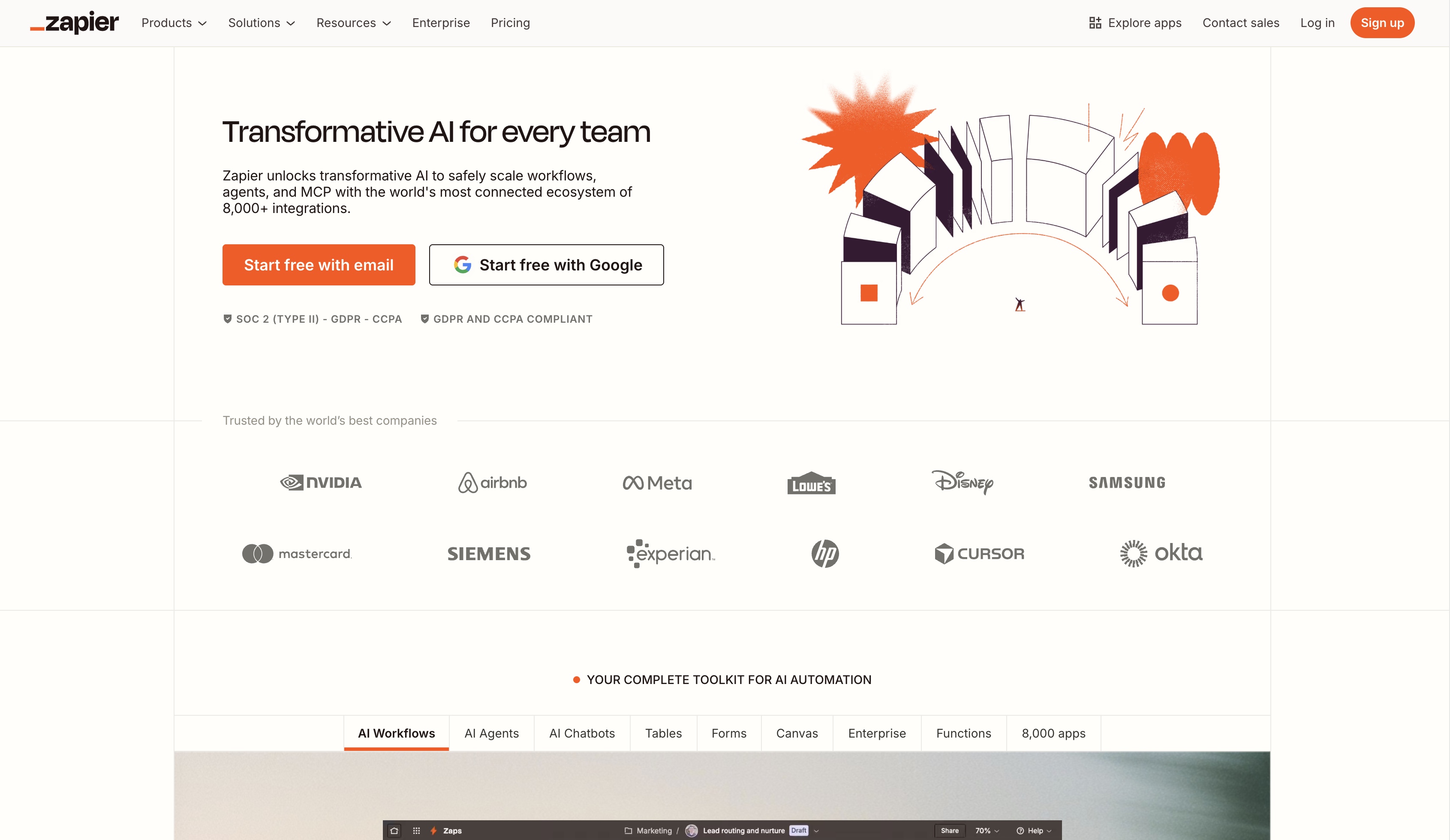 Connect your restaurant apps and run tasks automatically
10. Notion AI
Notion AI organizes restaurant marketing workflows and replaces scattered documents with a single operating system. It works as a coordination layer across planning, execution, and reporting.
- Restaurants use Notion AI to build shared content calendars for promotions and seasonal campaigns.
- Teams generate campaign ideas and outlines directly inside planning documents.
- Notion AI drafts promotional copy for emails, menus, and social posts.
- Restaurants store marketing SOPs in centralized, searchable workspaces. -Teams summarize meeting notes and convert them into actionable tasks.
- Notion AI tracks deadlines and assigns responsibilities across locations.
- Restaurants organize creative assets alongside campaign briefs.
- Teams collaborate in real time without switching platforms.
Marketing managers maintain consistent brand messaging across branches.
Notion AI also supports structured workflows through templates and databases. Restaurants standardize campaign planning, reporting, and asset tracking across locations. This structure supports multi-location operations and keeps marketing execution consistent as teams scale.
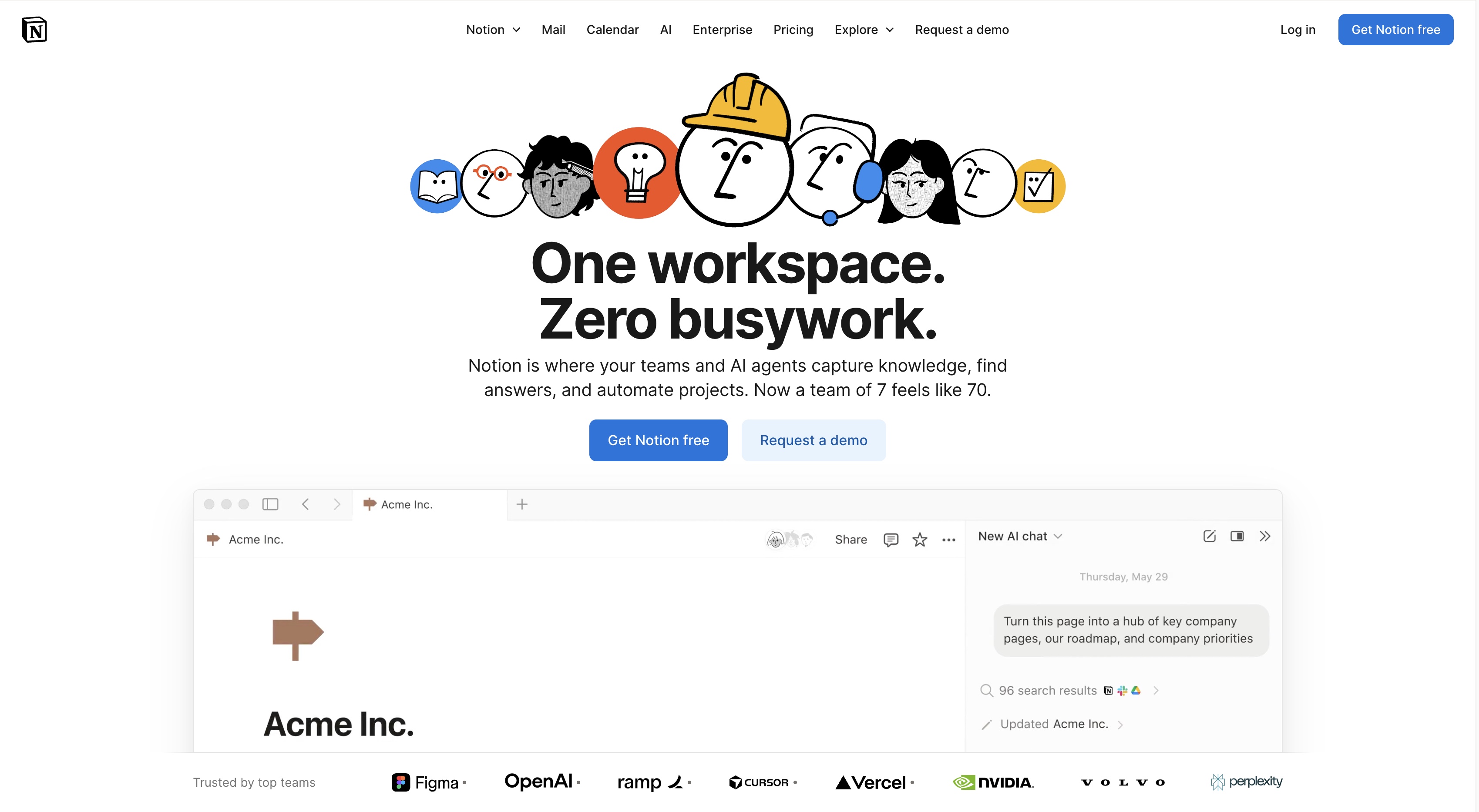 Turn marketing plans into tracked execution
How to Implement AI Tools in Restaurant Marketing
Restaurants get the best results from AI when they treat adoption as a phased rollout, not a sudden overhaul. Instead of replacing everything at once, teams layer AI into existing workflows step by step.
-
Define marketing goals Identify what you want AI to improve first, such as campaign speed, visual production, customer engagement, or repeat visits.
-
Audit current workflows Map how marketing currently runs, from content creation to publishing and follow-ups, and locate bottlenecks that slow execution.
-
Select tools by function Choose AI tools that solve specific problems, starting with high-impact areas like visual production and campaign automation.
-
Integrate into daily operations Embed AI tools into routine marketing tasks so teams use them consistently instead of treating them as optional add-ons.
A structured rollout like this makes it easier to turn AI into a working marketing system rather than another disconnected tool.
FAQs
The top AI tools for restaurant marketing include ImagineArt for visual content, Hootsuite and Buffer for social media management, Tidio and Podium for customer engagement, and Zapier and Notion AI for workflow automation and planning.
AI improves restaurant marketing by automating repetitive workflows, generating visuals and videos, optimizing social scheduling, producing marketing copy, and managing customer communication across channels.
AI social media managers schedule posts, suggest captions and hashtags, recommend publishing times, and track engagement metrics so restaurant teams maintain consistent online activity and measure performance.
Many restaurants use ImagineArt as a primary creative platform because it produces images, videos, and branded campaign assets inside a single system that supports scalable marketing workflows.
Restaurants usually begin with one workflow, such as social media content production or campaign automation, then expand AI usage gradually after teams adopt the tools and processes.
Ready to Create Stunning images and videos for your restaurant?
ImagineArt gives restaurants everything they need to create stunning visuals, videos, ads, and social campaigns from ONE platform. Stop juggling multiple tools and start producing high-quality, on-brand content faster than ever. Scale your marketing, attract more diners, and turn every campaign into measurable orders!
Umaima Shah
Umaima Shah is a creative content strategist specializing in AI tools, image generation, and emerging technologies. She focuses on translating complex platforms into clear, practical insights for creators, designers, and product teams