
Syed Anas Hussain
April 6, 2026 • Updated August 6, 2026
10 mins Read
If you've spent any time exploring AI image or video generation tools, you've probably heard this piece of advice at some point: "Write your prompts in English — it just works better."
But is that actually true? And if it is, what does that mean for the millions of creators around the world who think, dream, and create in Spanish, Chinese, Indonesian, Russian, or any of the world's other thousands of languages?
The answer is more nuanced and more hopeful than you might expect.
In this guide, we're going to unpack the real reasons behind English's early advantage in AI systems, compare how different languages stack up in practice, and show you exactly how ImagineArt tools like:
- AI Image Generator
- AI Video Generator
- AI Image Editor
- Background Remover
- Image Combiner
- AI Hairstyle Changer
And many others are deliver exceptional results regardless of the language you use.
So, really, do AI models perform better with English prompts?
Technically yes, but barely and not enough to matter for most creators. English had a head start because early AI training data was overwhelmingly English-dominant, but modern platforms have closed that gap significantly. For everyday creative prompts in Spanish, Chinese, Indonesian, Russian, or any other major language, you'll get strong results. The only place English still holds a real edge is in highly technical or niche artistic instructions.
Why English Has Traditionally Had an Edge in AI
To understand this, you need to know a little bit about how AI models learn.
Training Data - The Original Imbalance
Large AI models, whether they generate images, videos, or text, learn by processing enormous datasets. The quality, diversity, and volume of data they're trained on directly shapes how well they understand instructions.
Historically, the majority of structured, labeled content on the internet has been in English. Tech documentation, academic papers, creative writing communities, prompt-sharing forums, and early AI training datasets were overwhelmingly English-dominant. When an AI model sees 70% of its instruction-tuning data in English, it naturally develops a stronger "intuition" for English phrasing, syntax, and creative vocabulary.
This isn't a flaw in the AI's intelligence; it's simply a reflection of what data was most available at the time.
Tokenization - A Hidden Factor Most Creators Don't Know About
There's another, less-discussed reason English prompts have historically performed well: tokenization.
AI language models don't read words the way humans do. They break text into small chunks called tokens, roughly syllables or short word fragments. English was used as the baseline for most tokenization schemes, which means English words are often represented very efficiently. A word like "sunset" might be one token.
In contrast, languages like Chinese, Arabic, or even highly inflected languages like Russian may require more tokens to convey the same idea, sometimes significantly more. More tokens can mean more computational effort and, in some models, slightly less reliable interpretation of complex instructions.
The practical result? Early AI systems occasionally misread or "compressed" the meaning in non-English prompts.
Model Architecture and Fine-Tuning
Beyond training data and tokenization, many early AI image-generation models were fine-tuned specifically on English-language art communities platforms like Reddit, DeviantArt, and ArtStation, where the dominant language of prompt-sharing was English. The style tags, quality descriptors, and artistic references encoded into those prompts ("hyperrealistic," "cinematic lighting," "Unreal Engine render") became deeply embedded in how the models interpret creative intent.
How Much Does Language Actually Matter?
Here's where things get genuinely interesting.
The AI landscape in 2026 has changed dramatically. Modern frontier models, including those powering today's best image and video generation tools, have been trained on far more multilingual data, with deliberate efforts to close the gap between English and other world languages.
Let's compare English against other languages across three critical dimensions:
Accuracy: Does the AI do what you had asked?
English: High baseline accuracy across most descriptive tasks. Strong vocabulary for technical, stylistic, and compositional instructions.
Spanish: Very strong performance, especially for descriptive and emotional prompts. Spanish is among the best-supported non-English languages in most modern AI systems.
Chinese (Simplified & Traditional): Excellent support in leading platforms — and improving rapidly. Platforms built for global use actively train on high-quality Chinese instruction data.
Indonesian: Growing rapidly. Modern multilingual models handle Indonesian well, particularly for descriptive concepts, scenes, and moods.
Russian: Good support for descriptive prompts; some nuance around cultural references and complex grammatical structures may require slight prompt simplification.
The honest truth: For straightforward, well-structured prompts, the accuracy gap between English and other major languages has narrowed significantly. The biggest remaining differences show up in very technical or niche creative instructions.
Creativity: Does the Language Limit What You Can Imagine?
This is where things get especially exciting.
Different languages carry different conceptual vocabularies. Spanish has words for emotions and states of being that don't exist in English. Chinese has linguistic structures that describe visual relationships in uniquely expressive ways. Russian poetry has influenced entire aesthetic traditions.
When you prompt in your native language, you often reach for more specific, emotionally resonant descriptions because you're not mentally translating. And that authenticity can actually enhance creativity.
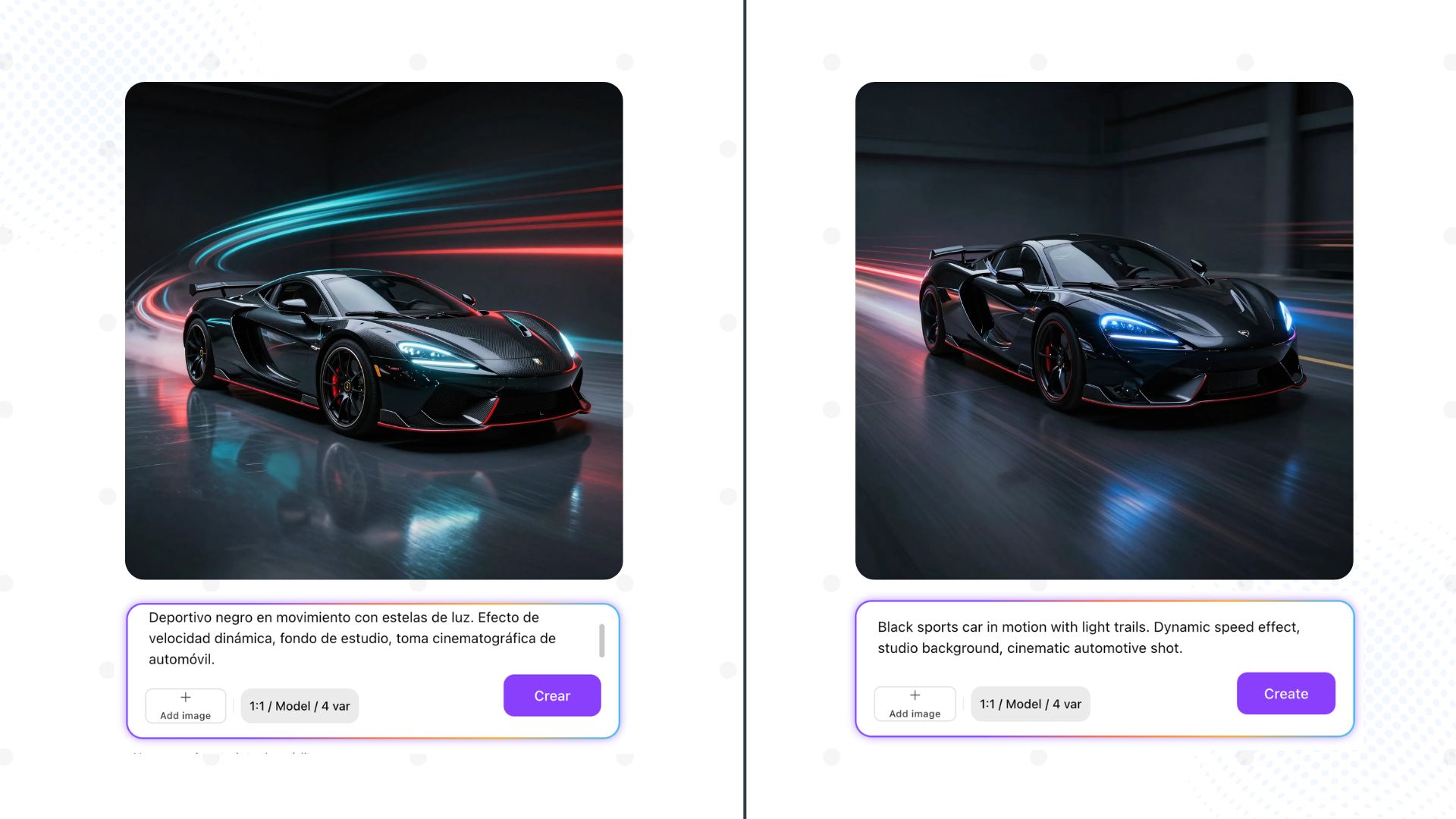
Example Comparison
English prompt: "A melancholic woman sitting by a rainy window at dusk, soft blue lighting, impressionist painting style"
Spanish prompt: "Una mujer melancólica sentada junto a una ventana lluviosa al atardecer, iluminación azul suave, estilo impresionista"
Chinese prompt: "一个忧郁的女人坐在黄昏时分的雨窗旁,柔和的蓝色灯光,印象派绘画风格"
All three prompts, when entered into ImagineArt's AI Image Generator, produce richly expressive, stylistically accurate results — because the tool is built to interpret creative intent across languages, not just parse English grammar.
Control: Can You Fine-Tune Results Without English?
Precision control — telling the AI exactly what to adjust — is where language differences can still show up most. Technical descriptors like "depth of field," "rule of thirds," "chromatic aberration," or "bokeh" exist as borrowed English terms in many languages' AI communities.
Tips for better control in any language:
- Use specific, concrete descriptions ("bright red dress with flowing fabric") rather than vague modifiers ("pretty clothes")
- Combine your native language with widely adopted visual terms (many of which are internationally recognized)
- Use tools with built-in style selectors and parameter controls — which removes the language barrier entirely for many creative decisions
ImagineArt's AI Image Editor and Nano Banana Pro are excellent examples of this philosophy: their interface-based controls let you adjust composition, lighting, style, and more without needing to write complex prompts at all.
How ImagineArt caters to creators and brands worldwide…
This is where we want to be direct about something: at ImagineArt, multilingual performance isn't an afterthought — it's a design priority.
AI Image Generator: Global Creative Power
ImagineArt's AI Image Generator is optimized to interpret prompts written in Spanish, Chinese, Indonesian, Russian, and other major languages with the same precision it applies to English. The model understands context, mood, cultural references, and artistic style — regardless of the language you use to describe them.
Whether you're a designer in Jakarta typing in Indonesian, a content creator in Moscow working in Russian, or a marketing professional in Mexico City crafting prompts in Spanish, the output quality is designed to be consistently high.
🌍 Prompt Example in Indonesian: "Seorang wanita berdiri di tepi pantai saat matahari terbenam, warna oranye dan merah, gaya foto sinematik" (A woman standing at the beach at sunset, orange and red hues, cinematic photo style)
The ImagineArt Image Generator interprets the compositional and mood cues accurately — producing a cinematic, warm-toned beach portrait that matches the intent perfectly.
AI Video Generator: Multilingual Storytelling
AI video generation introduces a new layer of complexity: prompts must convey not just a scene, but motion, pacing, and narrative arc. ImagineArt's AI Video Generator handles this across languages.
Spanish-speaking filmmakers and social media creators can describe scene transitions, camera movements, and subject actions in Spanish and receive video outputs that honor those instructions.
🎬 Spanish Video Prompt Example: "Un dron vuela sobre una ciudad futurista de noche, con luces de neón reflejadas en la lluvia, movimiento lento y cinematográfico" (A drone flies over a futuristic city at night, neon lights reflected in the rain, slow cinematic movement)
AI Image Editor: Precise Edits, Any Language
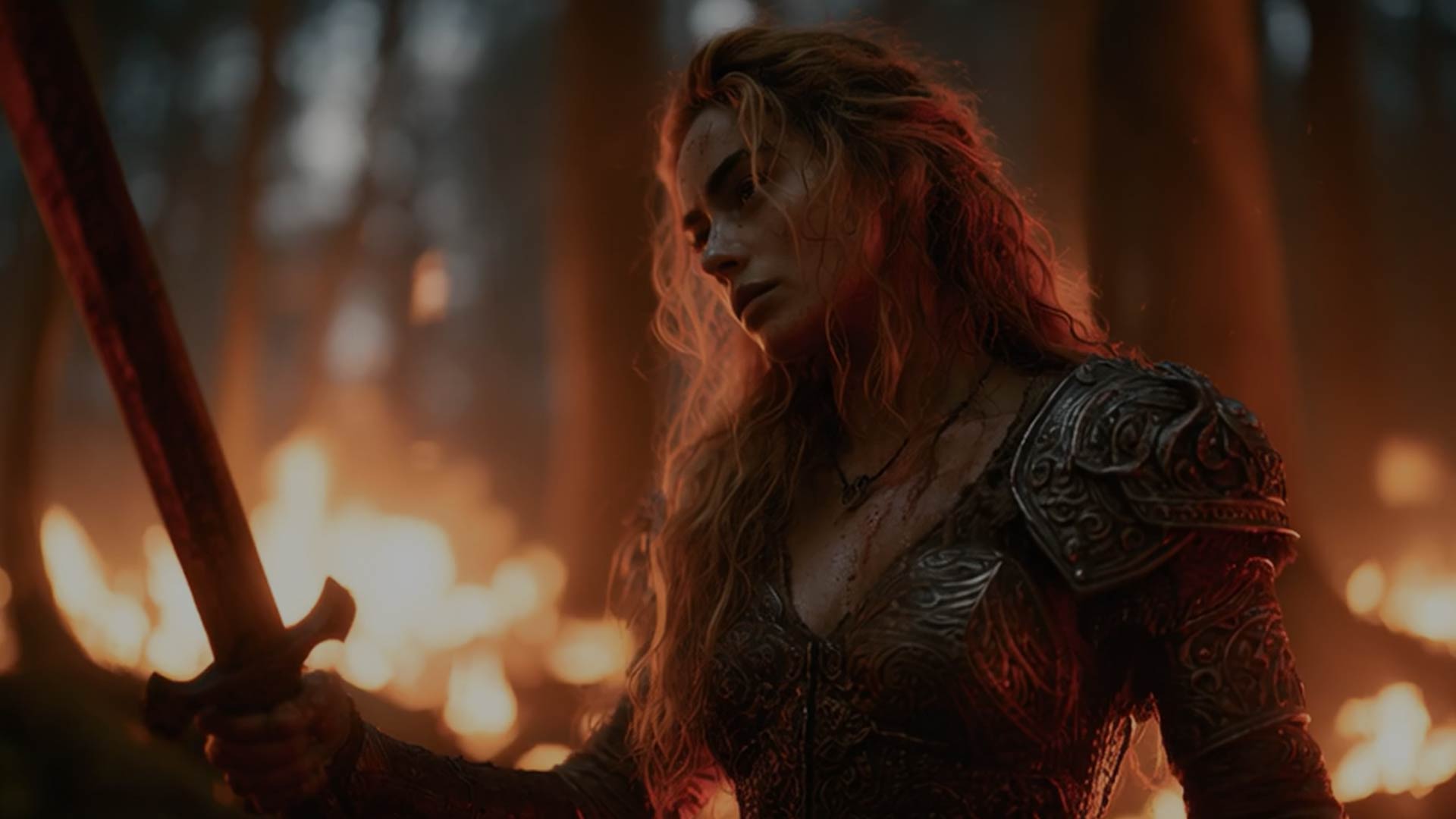
Once you've generated a base image, you'll often want to refine it. AI Image Editor allows you to describe changes naturally in your own language — adjust lighting, modify color grading, add or remove elements, and reshoot compositional details.
Russian-speaking designers, for example, can describe nuanced changes in Russian without worrying that the model will misinterpret them.
Background Remover: No Prompts Needed, No Language Barrier
ImagineArt's Background Remover is a perfect example of a tool where language is irrelevant entirely. With one click, it cleanly isolates your subject from any background — no prompting, no language, no friction. It's universally accessible and works the same way for a creator in Surabaya, Shanghai, or Seville.
Image Combiner: Compose Without Complexity
Need to blend multiple images into a cohesive visual? ImagineArt's Image Combiner handles compositional merging intelligently. While you can guide the output with descriptive prompts in any language, the tool's smart defaults also mean you can achieve great results with minimal written instruction — reducing language-related friction considerably.
Nano Banana Pro: Next-Level Creation for Power Users
Nano Banana Pro is ImagineArt's advanced creation suite, designed for power users who want maximum creative control. Its interface-driven workflow means that much of the nuanced creative direction happens through parameter controls, style selectors, and visual inputs — supplementing or even replacing text prompts for many use cases.
This is particularly valuable for non-English creators who want professional-grade results without needing to master English prompt-writing conventions. The tool meets you where you are.
Practical Tips: Getting the Best Results from AI in Any Language
Whether you're writing prompts in English, Spanish, Chinese, Indonesian, or Russian, these principles will help you get consistently strong results:
1. Be Specific and Concrete
Vague prompts produce vague results in any language. Instead of "a beautiful landscape," try "a misty mountain valley at dawn with pine trees, soft golden light, wide-angle perspective."
2. Describe What You See, Not What You Feel
AI models interpret descriptive language (visual information) more reliably than abstract emotional concepts. "A lone figure walking on a deserted road under a heavy grey sky" communicates mood through visual detail.
3. Layer Your Instructions
Break complex scenes into components: subject + environment + lighting + style + mood. This works in every language.
Russian example (layered): "Молодой художник в своей студии [subject], заваленной холстами и красками [environment], при тёплом мягком освещении [lighting], в стиле импрессионизма [style]" (A young artist in their studio, surrounded by canvases and paint, warm soft lighting, impressionist style)
4. Use International Visual Terms Where Helpful
Terms like "bokeh," "HDR," "cinematic," "8K," and "noir" are widely recognized across languages and AI systems. Including them in your native-language prompts often helps anchor the style more precisely.
5. Iterate and Refine
Your first output is a starting point. Use ImagineArt's AI Image Editor to refine details, adjust lighting, or change compositional elements, turning a good result into a great one, regardless of the language you started with.
The Verdict: Should You Always Prompt in English?
Not necessarily — and certainly not if it means sacrificing the expressiveness and authenticity of your native language.
English still has marginal advantages in highly technical or niche prompts, particularly when describing very specific artistic movements, obscure visual references, or complex compositional techniques that are deeply embedded in English-language creative communities.
But for the vast majority of creators and use cases, the performance gap has narrowed to the point where it should not drive you away from prompting in the language you know best. The only way to know where your language actually sits is to check for yourself. Test the same prompt across models in AI chat, once in English and once in your own language, then compare what comes back.
And with platforms like ImagineArt, the gap is smaller because multilingual performance is a core part of how the platform is built, not a bolt-on feature.
Spanish-speaking creators get the same access to stunning AI-generated imagery as their English-speaking counterparts. Chinese designers can express complex visual concepts in their native language and see them faithfully realized. Indonesian storytellers can bring their ideas to life in AI video without needing to translate their imagination first.
Start Creating in Your Language Today
ImagineArt is built for the world. Whether you're generating images, editing photos, removing backgrounds, combining visuals, or producing AI video, the platform is ready to understand you in the language that feels most natural to you.
Syed Anas Hussain
Syed Anas Hussain is a computer scientist blending technical knowledge with marketing expertise and a growing passion for AI innovation. Curious by nature, he dives into new AI sciences and emerging trends to produce thoughtful, research-led content. At ImagineArt, he helps audiences make sense of AI and unlock its value through clear, practical storytelling.