
Arooj Ishtiaq
June 17, 2026 • Updated June 17, 2026
12 mins Read
The biggest bottleneck in direct-to-consumer (DTC) creative production in 2026 is the time between deciding to test a new hook and having the ad live in Meta.
A traditional user-generated content (UGC) workflow typically takes 7 to 14 days because it involves multiple production stages:
- Finding and onboarding creators
- Sharing briefs and collecting feedback
- Recording and submitting content
- Reviewing drafts and requesting revisions
- Final editing and formatting
- Uploading and launching campaigns
AI avatar tools compress this entire process to less than an hour, which is why they have evolved from experimental technology into core infrastructure for performance marketing teams.
This guide compares six AI avatar tools based on the metrics that have the greatest impact on campaign performance:
- Realism
- Batch output
- Workflow speed
- Pricing at scale
- Practical limitations
For brands already producing content on ImagineArt, the UGC ad generator and AI ad studio sit within the existing platform.
What Is an AI Avatar UGC Ad
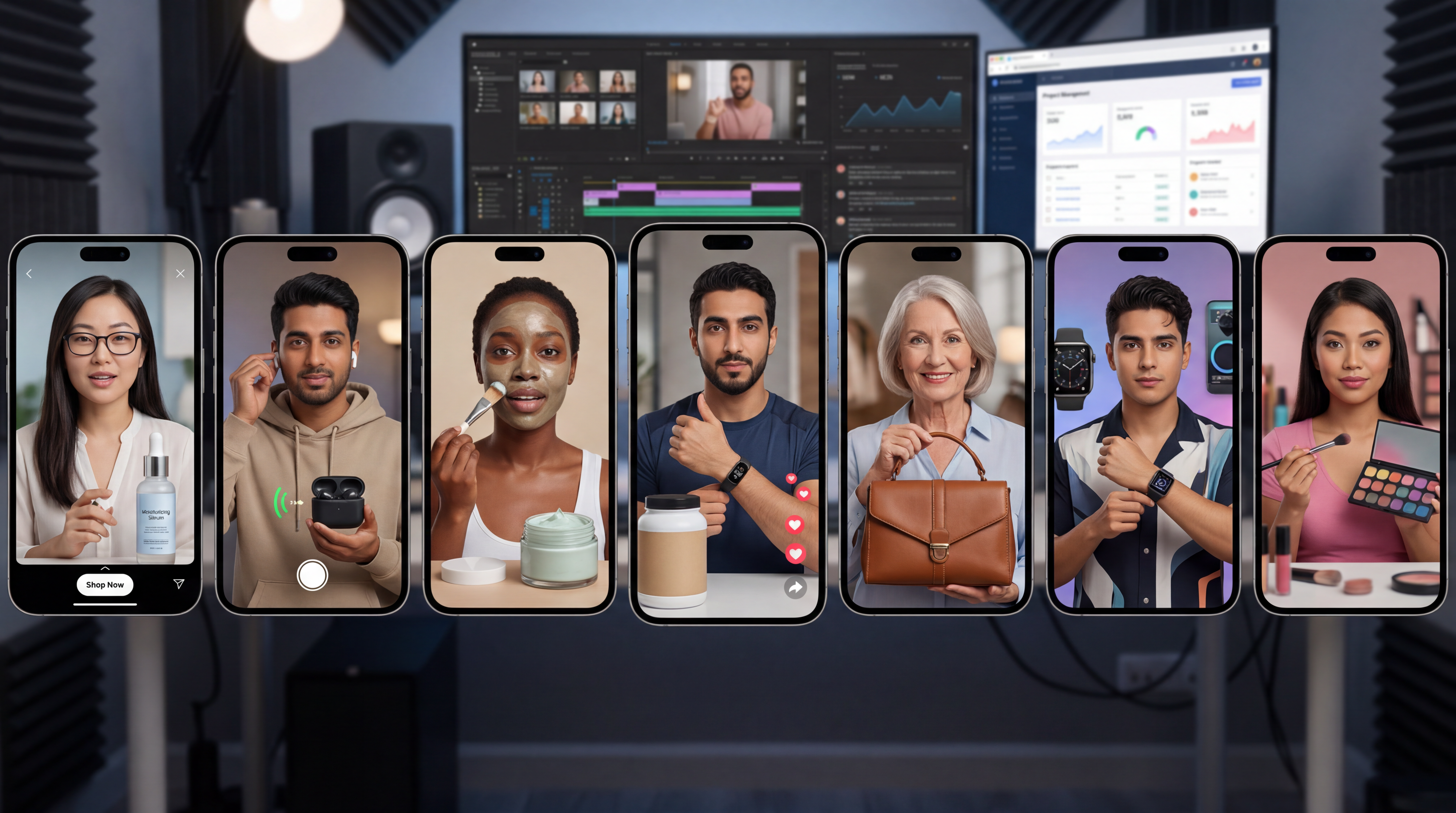
An AI avatar UGC ad is a video ad that uses a synthetic human presenter to deliver a script, reference a product, and mimic the casual, native-feeling format of real creator content. The output looks like someone filmed it on a phone in their kitchen, not in a studio, which is precisely why it performs.
The distinction that matters is that a real UGC ad is filmed by an actual customer or hired creator. An AI UGC ad looks like real UGC but was produced using a synthetic avatar from a script. Both formats trigger the same trust signal in the feed when the AI version's realism is high enough. Most performance marketing teams in 2026 run a mix of both, using AI avatars as the testing layer for hook discovery and real creators for proven concepts that scale.
What makes this category worth evaluating is the speed differential. AI avatar tools compress the full production cycle from days to minutes. For teams running 5 to 20 hook variations simultaneously, that compression is the deciding factor in how fast they find winning creative.
What to Look for When Evaluating AI Avatar UGC Tools
Most reviews of this category compare feature lists. Performance marketing teams need a different evaluation framework because the features that appear on a product page are rarely the features that determine whether an ad performs in a feed.
- Avatar realism is the primary variable. A viewer who reads the presenter as AI within the first two seconds is lost impression. The platform's rendering quality, lip-sync accuracy, and the range of micro-expressions available directly determine whether the creative enters the consideration window at all. This is not a secondary concern; it is the entire argument for using AI avatars rather than stock footage.
- Batch variant generation separates tools built for performance marketing from tools built for content creation. A tool that produces one high-quality video at a time does not serve a team running 20 hook variations against the same body content. Batch capability, the ability to run one script across multiple avatars simultaneously, is what turns AI avatars from a content tool into a testing infrastructure. For 20 documented examples of how different hook mechanisms perform in real ads, the advertising hook examples guide covers each format with performance data.
- Workflow speed covers the full path from brief to exportable video. This includes script generation, avatar selection, rendering time, caption overlay, aspect ratio formatting, and export. A tool that requires ten manual steps between script and export produces slower output than one that automates the full pipeline.
- Platform format support matters specifically for Meta and TikTok. Native 9:16 for Reels and TikTok, 1:1 for feed, and direct export in the correct spec eliminates a post-production step that adds friction to high-volume creative testing.
Best AI Avatar Solutions for UGC Product Ads Compared
The best AI avatar solutions for UGC product ads each win in a specific context. The six tools below cover the full range of the market, and each one solves a different production problem.
Arcads: Best Avatar Realism for Paid Social
Arcads produces the most convincing casual UGC presentation of any AI avatar tool currently available for paid social. The AI actors it generates read as real creators in a TikTok or Reels feed because the register is deliberately imperfect:
- Natural hesitations
- Subtle micro-expressions
- Casual delivery that contrasts directly with the polished presenter aesthetic
The batch workflow is what makes it a performance marketing tool rather than a content creation tool. Run one script across multiple AI actors simultaneously, generate variants in a single session, and ship the batch to Meta the same day. This is the workflow that performance teams use to find winning creative without waiting on creator logistics.
Key specs:
- Free trial: No (pricing is shown after sign-up rather than on a public page)
- Pricing model: Metered credits rather than a flat video cap; advanced features like Hook Repurposer and premium models consume credits at different rates
- Avatar realism: Highest in the category for casual UGC register
- Actor library: 300+ AI actors
- Batch generation: Yes, one script across multiple actors simultaneously
- Output: Talking-head only, no built-in product B-roll
- Editor: Native workflow tools for captions, skin enhancement, actor swap, and hook variations; no traditional multi-layer timeline editor
Best for: Premium DTC brands that need the most human-looking AI creator at volume, particularly for fashion, beauty, health, and lifestyle categories where avatar authenticity directly affects purchase trust.
ImagineArt: Best for Brands Already in the Creative Suite
ImagineArt's UGC ad generator produces native-feeling UGC-style video ads from a brief without requiring a separate platform subscription or a dedicated avatar selection workflow. The practical advantage is integration:
- UGC content
- Product visuals from the AI image generator
- Video assets from the AI video generator
- Full ad production from the AI ad studio all operate within the same platform
Teams that would otherwise manage four or five separate tool subscriptions for a complete ad production stack can consolidate into one.
Key specs:
- Free tier available
- Integrated with ImagineArt's full image and video generation stack
- No separate account or avatar selection required for UGC-style output
- Supports multiple social formats, including 9:16 and 1:1
Best for: Brands and agencies already using ImagineArt for image or video creative who want UGC-style ad output without adding a dedicated avatar tool to the stack.
Recommended read: AI Avatars vs Real UGC Creators: Which Performs Better for Ads?
Creatify: Best for High-Volume Ecommerce
Creatify starts from the product URL rather than from a script, which fundamentally changes the workflow for e-commerce brands with large SKU catalogs. Paste a product URL and it generates a complete ad with an AI actor, product B-roll, captions, and a CTA. For a brand with 50 products that each need multiple ad variants, the URL-to-video pipeline eliminates the scripting overhead that makes Arcads slower for catalog-scale production.
The batch generation feature produces up to 50 ad variations from a single product in one run, which is the highest documented throughput in this comparison.
Key specs:
- Free tier: Yes
- URL-to-video: Yes, including product B-roll generation
- Batch generation: Up to 50 variants from one product in a single run
- Actor library: 300+ on Starter, 1,500+ on Pro
- Built-in editor: Yes
- Languages: 75+
- Caption overlay: Yes, native
Best for: High-SKU ecommerce brands on Shopify or Amazon who need volume over peak realism, and DTC teams running large-scale creative testing where throughput matters more than polish.
HeyGen: Best for Multilingual Scale
HeyGen is the platform 40,000+ businesses use for professional video content, including Fortune 500 companies, major SaaS brands, and enterprise marketing teams. Its strength is not casual UGC realism but a multilingual scale:
- Lip-synced dubbing into 175+ languages
- 700+ stock avatars, and enterprise-grade features that make it the default for coordinated international campaigns.
For a global brand running the same campaign across English, Spanish, French, German, and Japanese markets simultaneously, HeyGen eliminates what would otherwise be five separate production cycles. The localization capability is native to the platform rather than a post-production step.
Key specs:
- Avatars: 700+ stock avatars (HeyGen pricing page, 2026)
- Languages: 175+ with native-accent voice synthesis
- Custom avatar creation: Yes, from video footage
- Credit system: Premium Credit allowance (typically 200/month on Creator); Avatar IV and V consume ~20 credits per minute
- Enterprise features: Custom avatar, team collaboration, API access (separate pricing)
Best for: Global brands that need multilingual UGC ad variants across markets simultaneously, and enterprise teams who need professional-quality video output with consistent branding at scale.
Argil: Best for Founder-Led and Personal Brand Campaigns
Argil solves a specific problem that stock avatar tools cannot:
- You want the founder
- The spokesperson
- The brand personality in the ad, rather than an AI actor, nobody recognizes
Argil creates a digital clone of a real person from a short video shoot (typically 2 minutes of source footage). That clone can then be used to generate unlimited video variations from scripts without scheduling additional shoots.
For founder-led DTC brands where the founder's face is a recognized trust signal, and for agencies running personal brand-adjacent UGC campaigns where the presenter's identity is the creative hook, Argil produces output that no stock avatar tool can replicate.
Key specs:
- Classic plan: 1 custom avatar clone (some tiers offer 3), 25 minutes of video per month (~50 clips at 30 seconds each), 75 audio minutes
- Pro plan: AI Influencer builder, 100 minutes of video per month, 300 audio minutes
- Custom avatar creation: Yes, requires 2 minutes of source video
- Commercial usage: All generated videos can be used commercially
- API access included from the entry plan
Best for: Founder-led brands whose face is part of the brand identity, agencies building long-running campaigns around a specific presenter, and businesses that need consistent spokesperson content without ongoing shoots.
Recommended read: Which AI Tool is Best for UGC
MakeUGC: Best Mid-Tier Entry Point
MakeUGC sits in the middle of the AI UGC avatar market on both price and capability. It provides a functional alternative for teams who find Arcads too expensive but need more output volume than Argil Classic provides.
Key specs:
- Actor library: 300+ to 500+ AI actors (sources vary)
- Product-in-hand feature: Yes (Pro tier only)
- Multilingual options: Yes
- Built-in editor: Limited; external editing typically required
Best for: Performance marketers running mid-volume testing (10 to 20 videos per month) who want better per-video economics than Arcads at higher volumes, and teams that need a $1 trial to validate output quality before committing.
AI Avatar Solutions for UGC Product Ads
This table distills every comparison point into a single reference. Verify current pricing directly with each platform before committing, as AI tool pricing changes frequently and several tools use credit-based systems that affect effective cost per video.
| ImagineArt | Arcads | Creatify | HeyGen | Argil | MakeUGC | |
|---|---|---|---|---|---|---|
| Avatar realism | Good | Highest (casual UGC) | Good at Pro tier | High (polished presenter) | High (custom clone) | Solid for price |
| URL-to-video | No | No | Yes | No | No | No |
| Batch generation | Via ad studio | Yes | Yes (up to 50) | Limited | Limited | Limited |
| Multilingual | Via AI video generator | Limited | 75+ languages | 175+ languages | Yes | Yes |
| Built-in editor | Via ImagineArt suite | No | Yes | Yes | Yes | Limited |
| Product B-roll | Via AI video generator | No | Yes | No | Yes (via B-roll) | Pro tier only |
| Custom avatar clone | No | Pro tier (custom) | Pro tier | Yes (Business+) | Yes (core feature) | Limited |
| Best for | ImagineArt ecosystem users | Premium DTC realism | Ecommerce volume | Global multilingual | Founder/spokesperson | Mid-volume testing |
Which AI Avatar UGC Tool Is Right for Your Workflow
The right tool depends on what is currently the biggest constraint in your production process, not which platform has the most features.
| Situation | Best Tool |
|---|---|
| Highest realism needed for premium DTC brand | Arcads |
| Large SKU catalog, URL-to-video speed required | Creatify |
| Global campaigns across multiple languages | HeyGen |
| Founder or spokesperson clone is the creative hook | Argil |
| Mid-volume testing with predictable monthly cost | MakeUGC |
| Already using ImagineArt for ad creative production | ImagineArt UGC ad generator |
| Need product visuals, video, and UGC from one platform | ImagineArt |
Conclusion
The best AI avatar solution for UGC product ads depends entirely on what your current production bottleneck is.
For brands running UGC ads as part of a broader creative production workflow that includes product imagery, video generation, and campaign-level ad creative, ImagineArt's UGC ad generator and AI ad studio integrate all of those functions in one platform without managing separate subscriptions.
Frequently Asked Questions
What is an AI avatar UGC ad?
An AI avatar UGC ad is a video ad that uses a synthetic human presenter to deliver a script in the casual, native-feeling format of real creator UGC. The goal is output that looks like it was filmed by a real person rather than produced by a brand. Avatar realism is the primary variable that determines whether the format produces the intended trust signal or reads as artificial.
Do AI UGC ads perform as well as real creator UGC?
When avatar realism is high enough, AI UGC ads produce comparable CTR to real creator content. The format works because the performance mechanism of UGC is trust and native appearance in the feed, both of which a convincing AI avatar can replicate. The caveat is that avatar detection sensitivity varies by audience. Tech-savvy audiences in categories like SaaS, consumer electronics, and financial products tend to detect AI avatars faster than audiences in lifestyle, beauty, and fitness categories.
Can AI avatars hold the product in the ad?
Several tools support product-in-hand features. Arcads, MakeUGC (Pro tier only), Argil, and Creatify all offer variations of this. Creatify additionally builds product visuals from the URL and composites them with the avatar. The quality of the product-in-hand interaction varies significantly between tools; test specifically on your product category before committing to a volume workflow.
Are AI UGC ads allowed on Meta and TikTok?
Yes, with mandatory disclosure. Both platforms require labeling of AI-generated content featuring realistic synthetic people. Failing to disclose can result in ad removal and account flags. The disclosure requirement applies regardless of how convincing the avatar appears.
Arooj Ishtiaq
Arooj is a SaaS content writer specializing in AI models and applied technology. At ImagineArt, she creates sharp, product-focused content that helps creators and businesses understand, adopt, and get real value from AI tools.