
Umaima Shah
June 12, 2026 • Updated June 12, 2026
14 mins Read
Instagram Stories ads move fast. You have one vertical screen, a few seconds of attention, and a viewer who can tap away instantly.
That is why studying Instagram stories ads examples helps before you create your own. The best examples show how brands use a strong first frame, short copy, clear product placement, and one direct CTA to stop the tap.
Stories work differently from Reels or Feed ads. They feel more private, more immediate, and more action-driven because they appear between content from accounts people already follow.
This guide breaks down Instagram Stories ad formats, examples, best practices, and the AI workflow you can use to create Story-ready ads for product launches, offers, UGC testimonials, app installs, and retargeting campaigns. You can also use ImagineArt AI Ad Studio to generate custom visuals, captions, and narration for Instagram Stories.
What Are Instagram Stories Ads?
Instagram Stories ads are full-screen vertical ads that appear between organic Stories. They use the same 9:16 format as regular Stories, so the creative fills the whole phone screen instead of sitting inside a feed layout.
A Story ad can use a static image, short video, carousel, UGC-style clip, product demo, or branded creator asset. The format works best when the viewer understands the offer quickly, even without sound.
Unlike Feed ads, Stories ads move inside a tap-forward environment. That means the first frame has to stop the viewer before they skip. Strong Instagram Stories ads usually use bold visuals, short copy, clear product placement, and one direct CTA.
For the basic structure behind the visual, copy, CTA, and brand elements inside any ad, keep your existing internal link to ImagineArt’s guide on what an ad creative is.
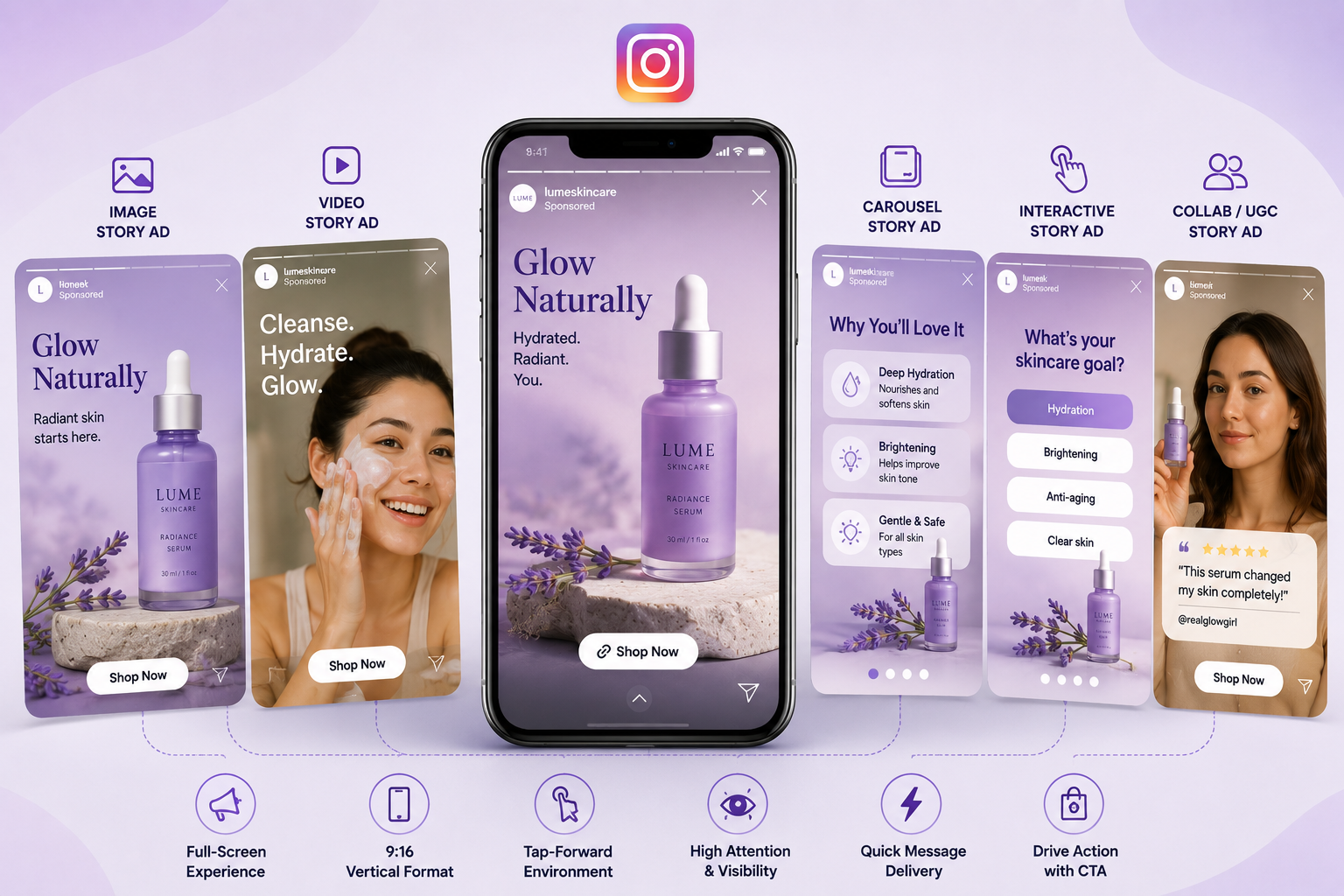 Unlike Feed ads, Stories ads move inside a tap-forward environment. That
Why Instagram Stories Ads Work for Brands
Instagram Stories ads work because they appear in a full-screen, vertical format where the viewer sees one message at a time. There is no crowded feed layout, no competing post beside it, and no long caption hiding below the creative.
That makes Stories useful for fast, direct campaigns. A brand can show the product, name the offer, add a short CTA, and move the viewer toward action without asking them to read too much.
Stories also fit lower-funnel moments well. Use them for limited-time offers, product reminders, cart recovery, UGC testimonials, app installs, and retargeting audiences who already watched a Reel or visited your profile.
The strongest Instagram Stories ads examples usually have the same pattern: one visual idea, one short message, one action. Once the ad goes live, use ImagineArt’s guide to ad creative analysis to measure which hook, frame, and CTA actually hold attention.
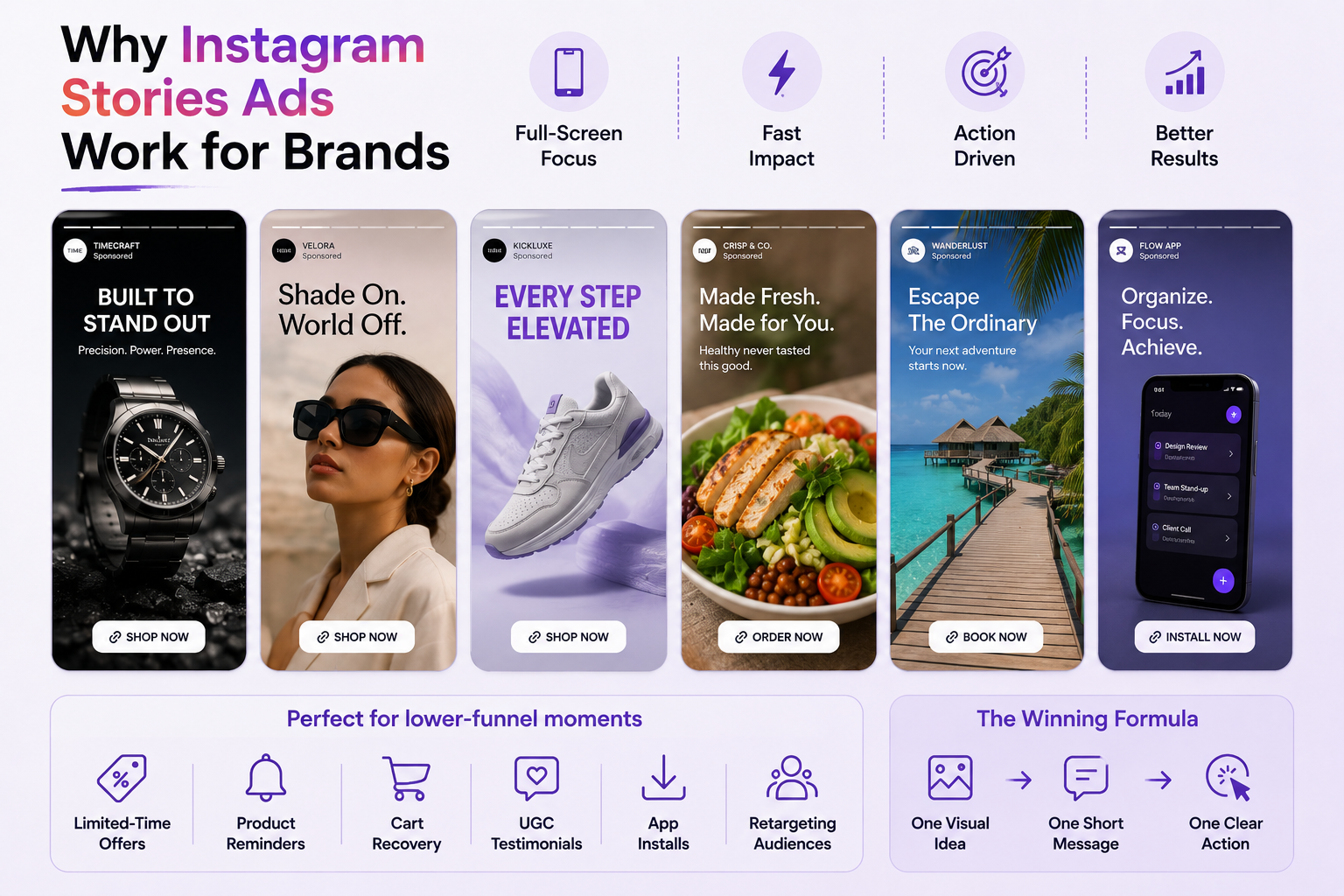 Why instagram stories ads works for brand
Instagram Stories Ads Formats You Can Use
Before looking at Instagram Stories ads examples, it helps to understand the formats brands use inside Stories. Each format changes how fast the message needs to land and what kind of creative you should make.
Image Story Ads
Image Story ads use one full-screen vertical visual. They work best for simple offers, product launches, reminders, announcements, and limited-time discounts.
Use a strong product image, a short headline, and one CTA. The viewer should understand the offer without reading a long caption.
For static Story visuals, ImagineArt AI Image Generator can help create product scenes, backgrounds, campaign visuals, and branded frames in 9:16.
Video Story Ads
Video Story ads give you more room to show movement, product use, before-and-after results, or UGC-style storytelling.
Keep the opening frame strong. A product in use, a creator face, or a bold text hook usually works better than a slow intro.
For vertical motion assets, ImagineArt AI Video Generator can help turn product visuals, prompts, or campaign ideas into Story-ready video.
Carousel Story Ads
Carousel Story ads let brands show multiple cards inside one placement. Use them when one image cannot explain the offer fully.
They work well for product benefits, feature breakdowns, step-by-step demos, objections, bundles, and before-and-after sequences.
Interactive Story Ads
Interactive Story ads use elements like polls, questions, countdowns, or tap-based prompts to make the viewer participate.
These formats work well for launches, product feedback, quizzes, limited-time drops, and audience research.
Branded Collab Story Ads
Branded collab Story ads use creator-style content to make the ad feel closer to organic Stories.
They work best for UGC testimonials, product reviews, try-ons, skincare routines, app walkthroughs, and lifestyle products where trust matters before the click.
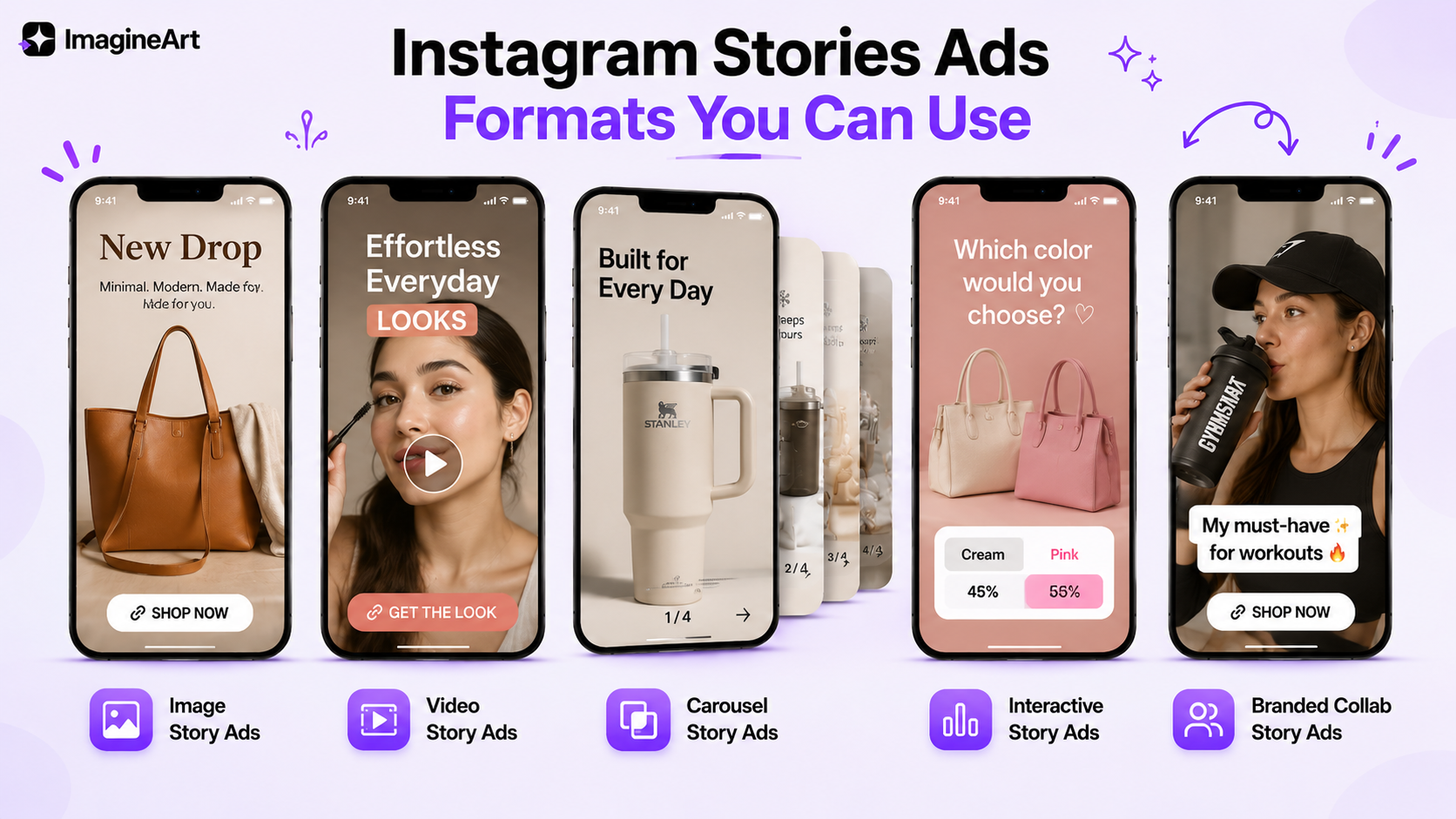 Instagram Stories ad formats showcased
Best Instagram Stories Ads Examples and What They Teach
The strongest Instagram stories ads examples do not rely on long storytelling. They use one clear angle, one strong visual, and one action the viewer can take before tapping away.
Product Demo Story Ad Example
A product demo Story ad shows the product in use from the first frame. This works well for skincare, gadgets, home products, food, fitness tools, and apps.
What it looks like: The product appears immediately, followed by a quick before-and-after, feature close-up, or result shot.
Real example: Gatsby Chocolate Gatsby Chocolate ran product demo Story ads using a bold hook in the first frame — the product front and center with a short claim about the calorie count. No slow intro, no brand history. Just the product, the benefit, and the CTA. The ad answered the main question before the viewer had time to tap away.
Why it works: The viewer does not need to guess what the product does. The ad answers the main question visually.
Key takeaways:
- Lead with the product in frame one, not your logo or brand name
- State the main benefit in the first two seconds using short on-screen text
- Pair a close-up shot with a single proof stat or result to hold attention before the CTA
UGC Testimonial Story Ad Example
A UGC testimonial Story ad uses a creator-style clip where someone explains what changed after using the product.
What it looks like: A creator holds the product, shares one pain point, then gives a short result or recommendation.
Real example: Glossier Glossier built its Stories ad strategy around minimal UGC-style collabs. Creators filmed themselves using the products in everyday settings — no studio lighting, no heavy scripting. The ads looked indistinguishable from organic Stories, which is exactly why they worked. The personal feel of the format matched the personal feel of the placement.
Why it works: Stories already feel personal, so testimonial-style content fits the placement. For this format, use ImagineArt AI UGC Ads to build creator-style video without booking real creators.
Key takeaways:
- Make the creative look native to Stories — raw and personal outperforms polished and produced in this placement
- Open with the pain point, not the product name
- Keep the creator on camera for the full clip so the viewer feels like they are getting a recommendation, not watching an ad
Flash Sale Story Ad Example
A flash sale Story ad works when the offer is the main hook.
What it looks like: A bold discount, product image, countdown-style copy, and one CTA such as "Shop now" or "Get 20% off."
Real example: Gymshark Gymshark ran Stories ads for its Black Friday campaign using a high-contrast black and yellow creative with a discount callout in the first frame and a single "Shop Now" CTA. The campaign achieved 9.3x ROAS. The urgency was built into the visual from the first frame — not added at the end after a slow brand intro.
Why it works: Stories move quickly, so urgency fits the format. The offer should appear in the first frame, not after a slow intro.
Key takeaways:
- Put the discount or offer in frame one — if the viewer has to wait for the deal, they will not wait
- Use high-contrast colors so the offer is readable in one glance
- Pair the CTA with a time cue like "Today only" or "Ends midnight" to push immediate action
App Install Story Ad Example
An app install Story ad shows the app interface, the problem it solves, and the action to download.
What it looks like: A screen recording or animated app mockup shows one useful feature in a few seconds.
Real example: Deezer Music streaming service Deezer adapted its existing video ads for Instagram Stories format, keeping the creative consistent with other platforms to increase ad recall. The Story version showed the app interface, played a recognizable music clip, and pushed one CTA to download. The campaign ran for one month and delivered a 52% lower subscriber acquisition cost and a two-time increase in conversion rate.
Why it works: The viewer sees the app's value before reaching the CTA. Keep the message focused on one feature, not the full app.
Key takeaways:
- Show one feature, not a tour of the whole app — clarity converts better than coverage
- Use sound strategically since app ads benefit from a quick audio cue that shows the product working
- Keep the download CTA visible throughout the video, not just at the end
Retargeting Story Ad Example
A retargeting Story ad speaks to people who already visited the product page, watched a Reel, or engaged with a previous ad.
What it looks like: The ad reminds the viewer of the product, adds proof or an offer, then pushes one clear action.
Real example: PUMA PUMA used sequential Stories ads across the funnel — awareness first, then engagement, then conversion. The retargeting layer showed the product the viewer had already seen, added a social proof element such as a review or a stat, then delivered a discount CTA to close. The structure worked because each ad assumed prior knowledge and skipped the introduction entirely.
Why it works: The audience already knows the brand. The Story ad only needs to remove hesitation, not explain everything again.
Key takeaways:
- Skip the brand introduction entirely — the retargeted viewer already knows who you are
- Add one new proof element the viewer did not see in the original ad, such as a review, rating, or result stat
- Use a stronger CTA than in the awareness version, this audience is closer to buying, so push them directly toward the action
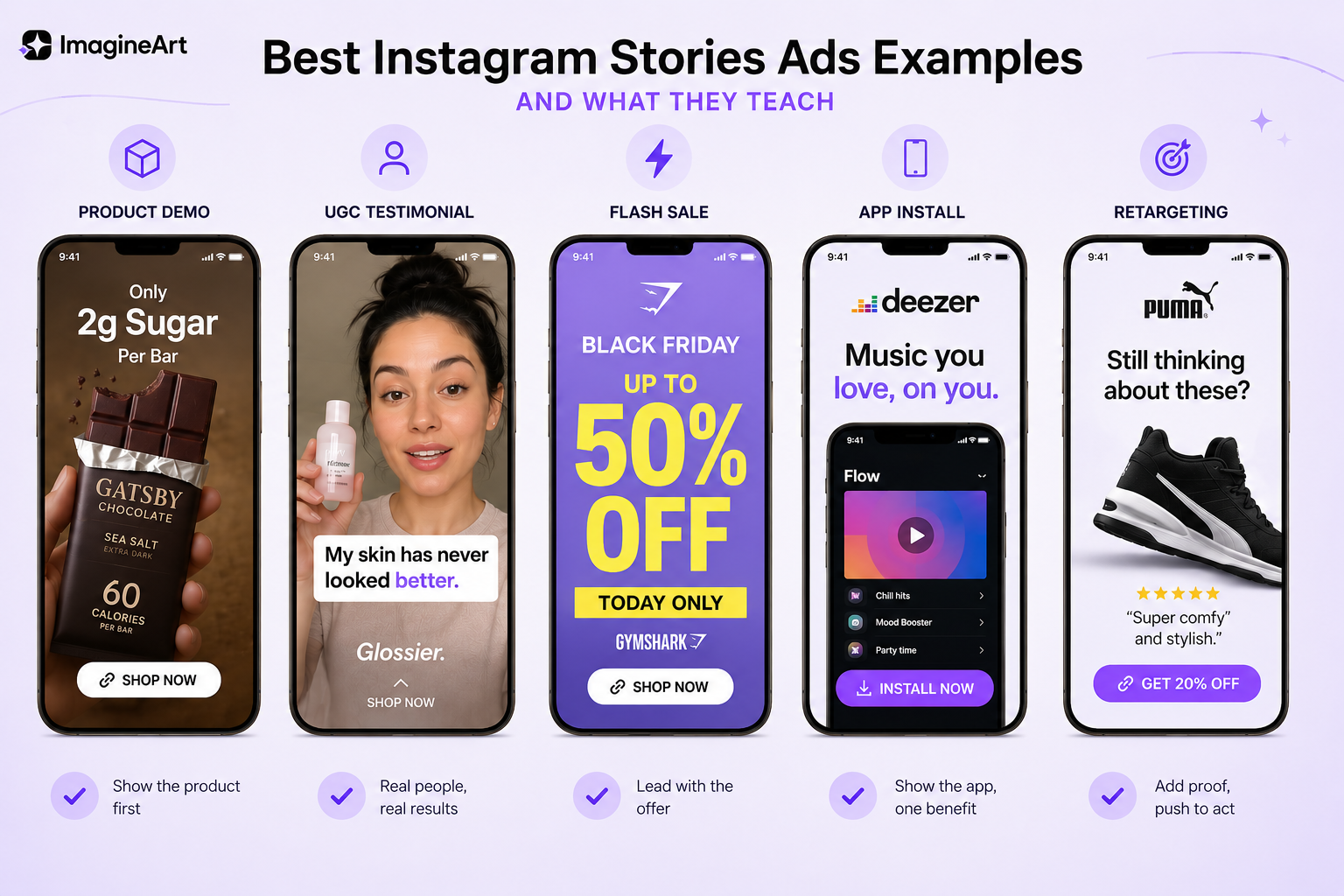 BEST INSTAGRAM STORIES ADS EXAMPLE
How to Create Instagram Stories Ads with ImagineArt
Once you understand the format and examples, the next step is turning the idea into a 9:16 Story ad. The goal is simple: create one vertical ad that shows the product fast, explains the offer clearly, and gives the viewer one action to take.
Step 1: Choose the Story Ad Goal
Start with the job of the ad. A Story ad for a flash sale should not look like a Story ad for awareness or retargeting.
Choose one goal:
- Product launch
- Flash sale
- UGC testimonial
- App install
- Retargeting
- Lead generation
- Brand awareness
This keeps the creative focused before you write the hook.
Step 2: Build the Story Visual with ImagineArt Ad Studio
Create the first frame around the product, offer, or creator. The viewer should understand the ad before the audio starts.
Use ImagineArt Ad Studio to build Story-ready video ads directly from your product URL or image. The dashboard gives you five ad formats that map specifically to how Instagram Stories perform on paid social:
UGC : An AI avatar delivers a creator-style review of your product on camera. The avatar uses realistic lip-sync, natural expressions, and handheld framing that feels native to Stories. Use this for testimonials, product reviews, and trust-building ads where the viewer needs to see a real person's experience before clicking.
Virtual Try-On : Your product is shown on a model in motion without booking a shoot. The AI replicates how fabrics move and fit on a real body. Use this for fashion, footwear, and accessories Story ads where showing the product worn is more convincing than showing it flat.
Hyper Motion : Static product images are turned into cinematic motion ads with dynamic camera movement, premium lighting, and visual depth. Use this for beauty, tech, and premium product Story ads where the visual quality of the creative needs to match the price point of the product.
Unboxing : The product arrives, packaging opens, and the reaction plays out in a short authentic-feeling clip. Use this for new product launches, gifting campaigns, and first-impression Story ads where the opening moment is the hook.
ASMR : The ad focuses on texture, sound, and sensory detail. Close-up product shots with satisfying audio cues. Use this for food, skincare, candles, and wellness products where the feel of the product is the selling point.
Every format exports in 9:16 for Instagram Stories, 1:1 for Feed, and 16:9 for YouTube, so you generate once and distribute across placements.
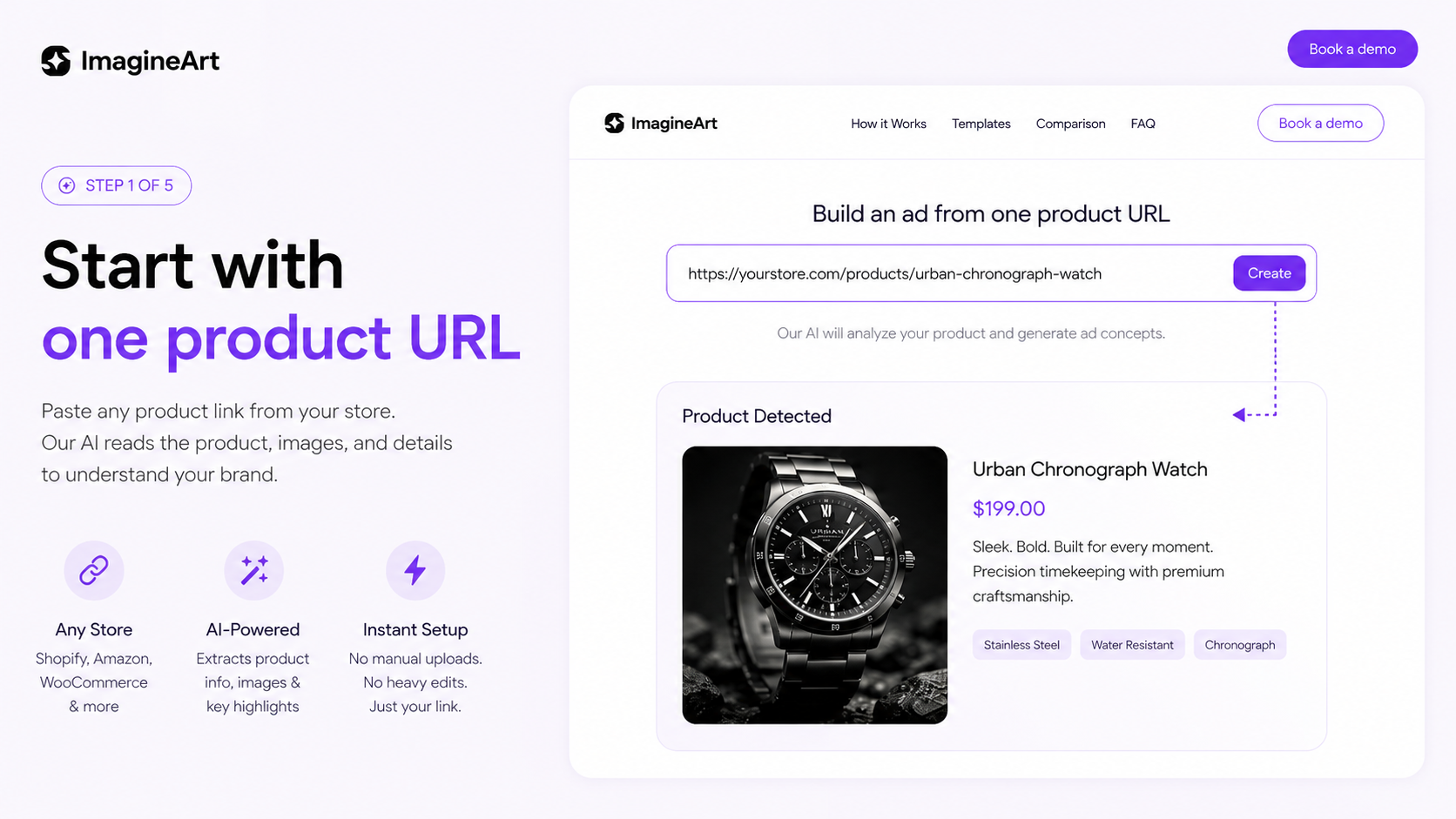 Imagineart ai ad maker
Step 3: Write a Hook That Works Without Sound
Stories often get viewed quickly, so the hook should work visually. Use short text that names the problem, result, or offer.
Good hook styles include:
- "Still using this?"
- "Your 10-second skincare fix"
- "Last day to get 20% off."
- "This app saves me 2 hours weekly."
- "I tried this for 7 days."
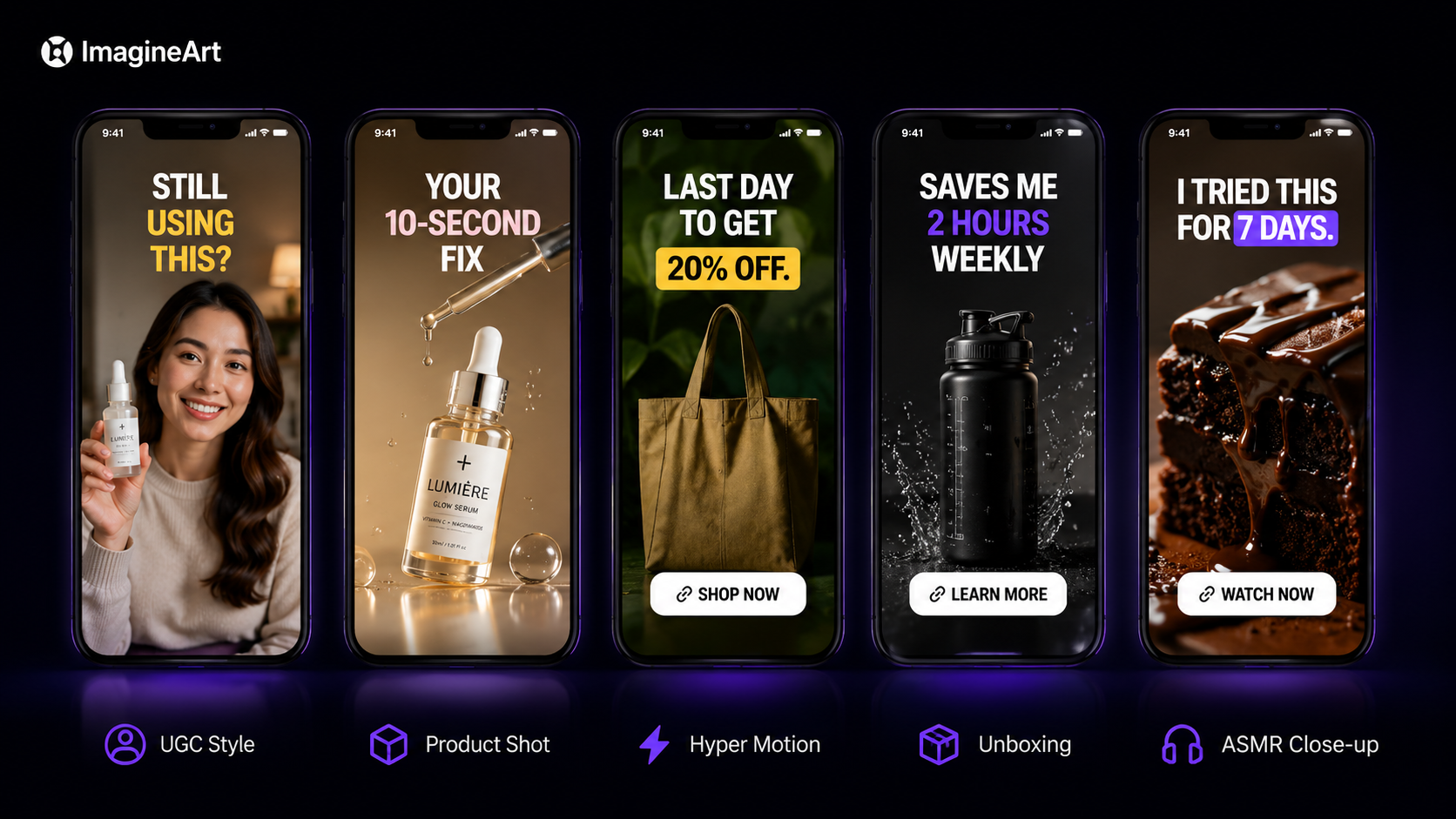 Instagram Ads Variation
Step 4: Create Multiple Story Variations
Do not make one Story ad and stop. Create variations with different first frames, hooks, CTAs, product shots, and creator styles.
For a wider ad production workflow, keep your existing internal link to ImagineArt's guide on how to make video ads with AI.
Step 5: Export in 9:16
Instagram Stories need full-screen vertical creative. Export in 9:16 so the ad fills the screen without awkward cropping.
Before publishing, check safe zones, text size, CTA placement, brand logo, and whether the message still works with sound off.
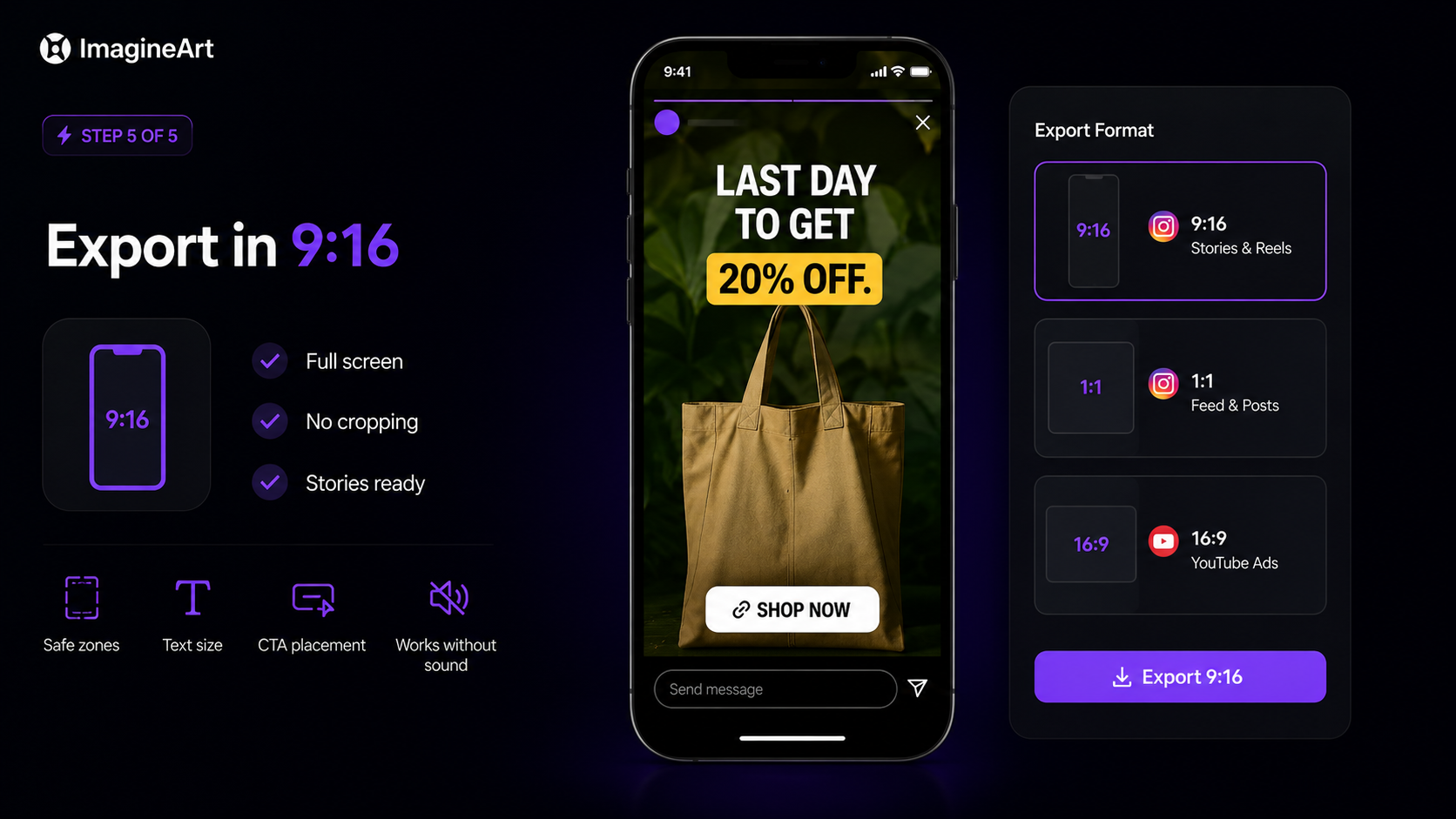 Export in Multiple Ratio
Common Instagram Stories Ads Mistakes to Avoid
Even strong Story concepts can fail when the creative does not match how people watch Stories. Most issues come from slow openings, crowded visuals, weak CTAs, or trying to reuse Feed creative in a vertical placement.
Starting Too Slowly
Do not open with a logo animation, long intro, or empty scene. Stories users tap quickly, so the product, offer, creator, or result should appear immediately.
Using Feed Creative in Stories
A square Feed ad resized into 9:16 usually looks awkward. The text may sit too low, the product may crop badly, and the creative will not feel native to Stories.
Adding Too Much Text
Stories need short copy. If the viewer has to read a full paragraph, they will tap away before reaching the CTA.
Use one hook, one benefit, and one action.
Hiding the CTA
The CTA should be clear and easy to act on. Avoid vague lines like “learn more” when the campaign goal is purchase, download, sign-up, or booking.
Ignoring Safe Zones
Keep text, logos, product names, and CTA elements away from the top and bottom interface areas. If Instagram UI covers your message, the ad loses clarity.
Running the Same Story Too Long
Stories fatigue quickly because viewers move through them fast. Refresh the first frame, hook, product shot, or creator angle before performance drops.
For a deeper rotation framework, keep your existing internal link to ImagineArt’s guide on handling ad fatigue and refreshing creative.
Ready to Create Instagram Stories Ads with ImagineArt?
Once you know which Story ad format and example fits your campaign, the next step is creating the vertical asset. A good Story ad should open fast, show the product clearly, use short copy, and guide the viewer toward one action.
Use ImagineArt AI Instagram Story Maker to create Story-ready visuals, captions, narration, and vertical creative for Instagram.
For product campaigns, you can also build variations for launches, offers, UGC testimonials, app installs, and retargeting audiences without starting from a blank brief each time.
Start with one Story ad idea, generate a few hooks and visual variations, then test which version gets the strongest tap-through, CTR, and conversion signal.
Frequently Asked Questions
A good Instagram Stories ad example presents one clear idea quickly. It usually uses a strong first frame, short copy, visible product placement, and one direct CTA. The best examples make the next action obvious without trying to explain everything.
Product demos, UGC testimonials, flash sales, app walkthroughs, retargeting reminders, and interactive Stories usually work well. Use product demos for clarity, UGC ads for trust, flash sales for urgency, and retargeting ads for people who already showed interest.
Short Instagram Stories ads usually perform better. A static Story ad should communicate its message within a few seconds, while a video Story ad should show the product, benefit, or offer near the beginning. Viewers may tap away if the ad takes too long to reach the main point.
Instagram Stories ads can use sound, but they should still work without it. Add captions, text overlays, product labels, and visual demonstrations so viewers can understand the message while watching silently.
Use one CTA that matches the campaign goal. For e-commerce ads, use "Shop now" or "Get the offer." For app campaigns, use "Download now." For lead generation, use "Sign up" or "Book now." Avoid vague CTA text when the viewer is ready to act.
Yes. AI tools can create Story visuals, scripts, hooks, captions, narration, avatars, product demos, and multiple vertical ad variations. You can use AI to test different first frames, hooks, and CTAs instead of relying on one Story ad concept.
Start with three to five Instagram Stories ad variations. Test different first frames, hooks, product shots, creator styles, and CTA lines. Keep the audience and offer consistent so you can identify which creative change affects performance.
Umaima Shah
Umaima Shah is a creative content strategist specializing in AI tools, image generation, and emerging technologies. She focuses on translating complex platforms into clear, practical insights for creators, designers, and product teams