Travel marketing in 2026 rewards one capability: distinctive content at volume, for more markets, faster, than any competitor can match. The brands winning are solving both the quality war and the production volume war simultaneously. Understanding which travel marketing trends are reshaping performance — and building the infrastructure to act on them — is the operational challenge every travel brand faces this year. These are the thirteen travel marketing trends defining the performance gap in 2026.
Destination Content Moving Away from Stock Photography
Stock photography killed travel marketing's ability to surprise. Every beach looks the same. Every mountain looks the same. Every city skyline has been photographed from the same angle by the same licensing agencies. Consumers have developed a functional immunity to stock travel imagery — they scroll past it without registering the brand behind it.
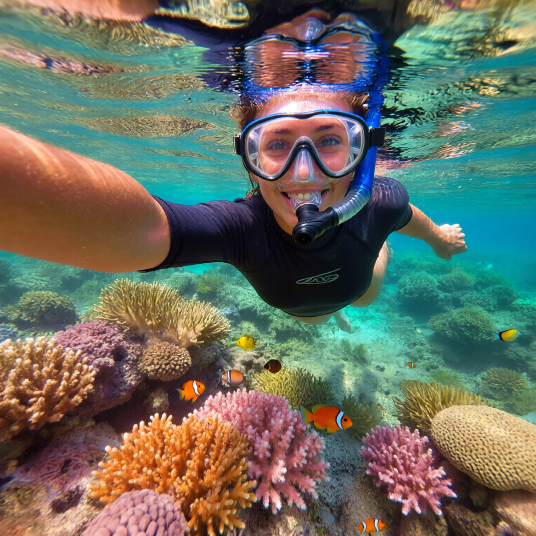
The travel brands investing in original visual content — genuine location photography, creator-produced destination content, and AI-generated imagery that produces visual perspectives that cameras cannot practically capture — are cutting through where stock imagery cannot. Distinctiveness is a performance variable in travel marketing. Generic creative underperforms and actively signals that the brand has nothing original to offer. The shift away from stock photography is one of the travel marketing trends with the most direct impact on performance metrics.
AI Creative Production at Scale
Travel marketing requires an extraordinary volume of creative output. A global OTA, hotel chain, or airline runs campaigns simultaneously across dozens of destination markets, multiple audience segments, several booking windows, and numerous promotional moments — each requiring market-specific, audience-calibrated visual content.
ImagineArt is the creative AI for enterprises that need to produce that output without building production infrastructure in every market they serve. Marketing teams generate destination-specific campaign assets, audience-tailored creative variations, and seasonal promotional materials from single briefs, at a pace that matches the travel industry's commercial calendar. AI creative production at scale turns what was a perennial bottleneck into a systematic capability.
Personalized Travel Creative by Audience Segment and Travel Style
The travel consumer is not a monolith. Adventure travelers, luxury travelers, family vacationers, solo explorers, wellness seekers, culinary tourists, and business travelers all respond to fundamentally different creative. Among travel marketing trends focused on conversion rate improvement, audience-segmented creative consistently delivers the clearest measurable lift. The destination is often the same. The story being told about that destination needs to be entirely different depending on who is listening.
Travel brands that segment their creative by travel style and audience profile: rather than running a single campaign creative for each destination: are generating significantly higher engagement and conversion rates. AI creative production makes the variant volume this requires viable. Instead of producing one version of a Bali campaign, a travel brand produces six: each speaking directly to a distinct traveler profile.
Video-First Travel Inspiration
Video is the dominant medium for travel inspiration and one of the travel marketing trends with the widest gap between early adopters and the rest of the market. Short-form content on TikTok and Reels drives discovery. Mid-form YouTube content drives destination research. Long-form cinematic content drives aspiration and brand affinity for luxury travel. Travel brands that have built video content strategies across all three formats are capturing consumer attention at every stage of the booking journey.
The cost of video production has fallen significantly with AI-assisted post-production and editing tools. Travel brands that previously could not justify video content for secondary destinations or niche audience segments can now produce platform-optimized video content across their full portfolio. The brands that have made video the default format for travel creative: not an exception reserved for major campaigns: are outperforming those still relying on static imagery as their primary creative format.
Multi-Language Campaign Localization
Travel is one of the most genuinely global marketing categories. A luxury resort in the Maldives markets to consumers in China, the Middle East, Europe, the US, and Southeast Asia simultaneously — each requiring not just linguistic translation but cultural calibration of the visual and editorial content.
AI-powered creative localization makes this viable at a scale that manual production cannot sustain. Multi-language creative localization is among the travel marketing trends generating the largest performance differential between global brands and English-language-only competitors. The same campaign direction generates market-appropriate creative for each audience — adapting imagery, messaging emphasis, and visual aesthetics to the cultural context of each target market. Travel brands maintaining high creative quality across 15 or 20 market variants are building competitive advantages that brands restricted to English-language creative cannot compete with.
Sustainable and Responsible Travel Storytelling
Consumer demand for sustainable travel options has moved from a niche preference to a mainstream consideration — particularly among the high-value leisure traveler segments that most travel brands are competing for. The travel brands that communicate their sustainability credentials clearly, specifically, and beautifully are capturing preference in a segment that is growing in both size and spending power.
The creative challenge is authenticity. Sustainability marketing in travel has been dominated by vague claims and symbolic gestures — and consumers are increasingly sophisticated at identifying performative positioning. Sustainable travel storytelling is among the travel marketing trends generating the most loyalty in high-value traveler segments. The brands investing in genuine sustainability credentials and communicating them through specific, evidence-based content are building the trust that vague eco-positioning cannot generate.
Hyper-Niche Travel Communities
Mass-market travel marketing is losing ground to content that speaks directly to specific traveler identities. Among travel marketing trends driven by organic audience building, hyper-niche community content generates the highest loyalty return relative to production cost. Adventure travelers, dark tourism enthusiasts, culinary explorers, wellness retreat seekers, heritage travelers, and solo female travelers all represent distinct communities with distinct content preferences and distinct purchasing behaviors.
Travel brands and destinations that build content programs specifically for these communities: rather than trying to appeal to everyone with generic destination content: generate disproportionate engagement and loyalty within their target segments. A travel brand that becomes the definitive voice for a specific traveler community owns a distribution channel that paid media cannot replicate.
Influencer-Led Destination and Property Launches
Travel influencer marketing has matured significantly from its early days of free stays in exchange for Instagram posts. The travel brands getting value from creator partnerships in 2026 are treating influencers as content production partners — with proper briefs, creative direction, performance expectations, and content licensing arrangements that give the brand durable content assets rather than ephemeral social posts.
Destination launches and new property openings that are anchored by well-chosen creator partnerships generate launch momentum that traditional PR campaigns cannot match. The combination of authentic creator voice, high production quality, and platform-native format creates content that both reaches the target audience and earns their trust. The hospitality marketing frameworks for influencer activation apply directly to destination and tour operator marketing.
Hotel and Resort Brand Differentiation Through Visual Identity
The hotel and resort category is overcrowded with brands that look and sound identical. Soft, warm photography. Generic language about experiences and memories. Design systems that could belong to any property in any market. The brands breaking out of this aesthetic uniformity are the ones that are investing in genuine visual identity — a distinctive look that makes every touchpoint immediately recognizable as belonging to a specific brand.
Visual identity in travel is not just an aesthetic preference — it is a business variable. Hotels with distinctive, consistent visual identities command higher ADR, generate more direct bookings, and build guest loyalty that generic brands cannot achieve. AI creative production enables hospitality brands to maintain that visual consistency at scale across all marketing channels and markets.
Real-Time Social Content During Live Trips
The most credible travel content is produced during actual travel experiences. Real-time social content: stories, live posts, and short-form video produced at the destination, during the experience: generates authenticity and urgency that pre-produced campaign content cannot replicate. This is one of the travel marketing trends that costs relatively little to execute but requires organizational commitment to make consistent.
Travel brands that have built real-time content production capabilities: either through creator partnerships, in-house content teams traveling with portable production setups, or guest content programs: are capturing the attention of audiences who have become skeptical of polished travel advertising. The rawness of real-time content is a feature, not a flaw.
Loyalty Program Creative Personalization
Travel loyalty programs are among the most sophisticated customer retention systems in the consumer economy — and the brands extracting the most value from those programs are using loyalty data to drive personalized creative across every customer communication. A loyalty member who consistently books beach resorts gets beach creative. One who books city hotels gets urban lifestyle imagery. The program knows the preference. The creative should reflect it.
Loyalty program creative personalization is among the travel marketing trends with the clearest measurable ROI. AI-powered creative personalization connects loyalty behavioral data to campaign asset generation — producing individualized visual content at a scale that manual creative production cannot approach. The brands implementing this are seeing engagement lifts in loyalty communications that improve retention, upgrade revenue, and ancillary spending across the program.
Bleisure Audience Targeting
The boundary between business travel and leisure travel has blurred significantly. Among travel marketing trends targeting high-frequency, high-spend segments, bleisure is consistently underserved by most travel brands' content strategies. Business travelers who extend trips for leisure, remote workers who travel while working, and professionals who combine conference attendance with destination experiences represent a high-value segment that books more frequently and spends more per trip than pure leisure travelers.
Bleisure travelers have distinct content needs: they need information about business facilities and connectivity alongside leisure and experience content. Travel brands building content that speaks to both dimensions of the bleisure trip are capturing preference in a segment that most competitors are failing to address specifically.
AR and Immersive Preview Content for Luxury Travel
Luxury travel consumers making purchasing decisions on $10,000+ trips want more pre-purchase assurance than a gallery of photographs provides. Augmented reality room previews, 360-degree property tours, and immersive destination experiences are giving luxury travel consumers the confidence to book at high price points without physically visiting the property first.
The luxury travel brands investing in immersive content infrastructure are reducing booking abandonment at the decision stage and increasing average booking values by enabling consumers to confidently select premium room categories and experiences. The investment in immersive content pays back through higher conversion rates and higher average transaction values.
Build travel marketing workflows that scale.
Empower your design and marketing teams with AI-powered creative production built for travel — destination visuals, audience-specific campaigns, and multi-market content at the pace the industry demands.
Ready to put this into practice?