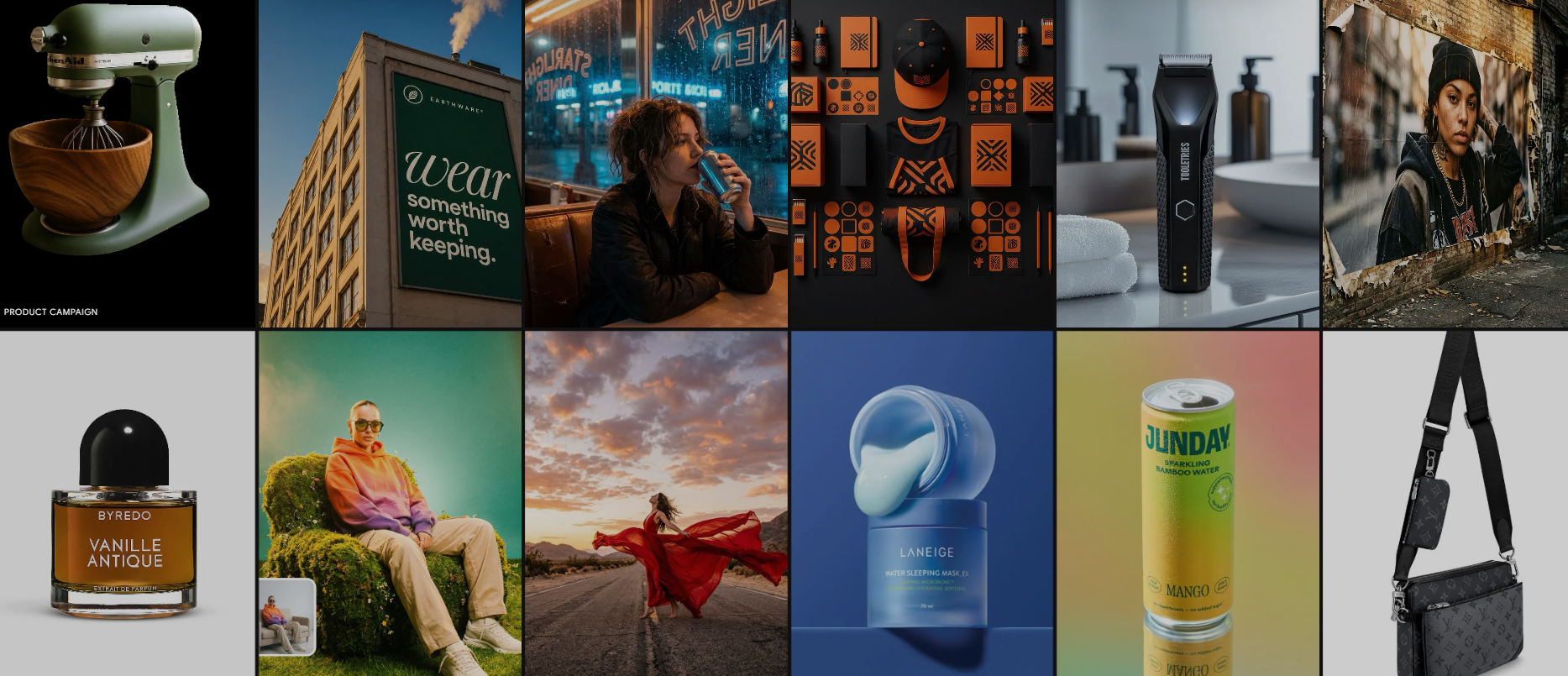
While the creative capabilities of enterprise AI solutions have advanced, we witness questions evolving too.
In early 2022, OpenAI’s ChatGPT could churn a mid-quality article in 3 hours with 50-50 human and AI effort. Today, creative leads are asking if their enterprise creative production can be automated.
And the answers aren’t simple too. Today, AI design tools have to check mark way more boxes than creating product ads with image-to-video workflow. Today we ask:
- can this AI design tool follow brief to the dot?
- can this AI design tool work independently?
- can this AI design tool participate in dynamic creative optimization?
And the most pressing question:
- can this AI design tool stay on-brand while a brand scales?
If these questions ring a bell, here are 11 AI tools for on brand content creation at scale. All of these tools have built brand integrity into their USP with content at scale, and volumetric production as a feature!
Best AI Tools for On-Brand Content Creation at Scale
1. ImagineArt Enterprise
ImagineArt Enterprise is the enterprise AI design platform for business teams that need to generate and ship commercial-quality content across image, video, audio, and advertising formats from a single governed environment.
The platform covers the full creative stack: image generation across multiple frontier models, cinematic video production, audio generation including voiceovers and music, dedicated studios for ads, fashion content, and film production, AI UGC through a virtual influencer system, and node-based workflow automation with App Builder for team distribution.
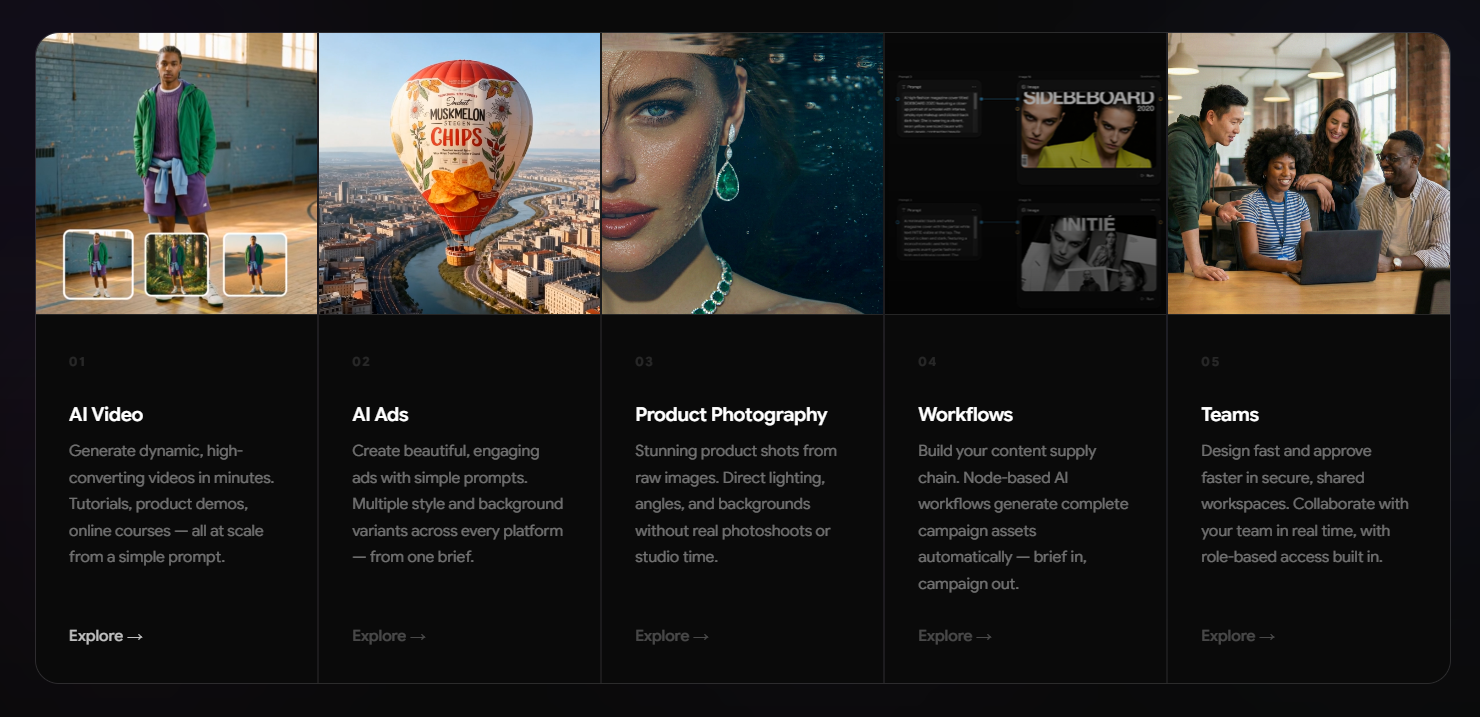 ImagineArt Enterprise AI Design Platform
The brand consistency infrastructure is built into the production layer. In fact, several features in ImagineArt Enterprise directly offer Brand Kits as a tool.
Role-based access controls, shared and private project permissions, centralized billing, and a real-time credit consumption dashboard give team leads full visibility into how production resources are being used across the organization. SOC 2 compliance meets the security requirement that enterprise procurement, IT, and legal teams require before approving any AI tool for organization-wide deployment.
ImagineArt Enterprise is the right platform for enterprise marketing and creative teams that need on-brand content production to operate as a governed, full-stack creative system rather than a collection of single-purpose tools.
Recently, ImagineArt has launched Ad Studio, Personal Computer, MCP, Fashion Studio and an AI Film Studio for commercial creative production. All of these are best AI tools for on-brand content creation at scale.
The organizations getting the most from ImagineArt Enterprise are the ones that have standardized their creative production pipeline on it and provided a tool for their teams to never fall to creative burnout again.
Best for: Enterprise marketing and creative teams producing commercial-quality content at scale across image, video, audio, and advertising formats, with SOC 2 compliance and full team governance required.
2. Adobe Firefly Enterprise
Adobe Firefly Enterprise is the AI creative layer for organizations already operating within the Adobe ecosystem. For teams that live in Photoshop, Premiere Pro, After Effects, and Illustrator daily, Firefly delivers AI generation capabilities directly inside the tools they already use.
Generative Fill, Generative Expand, and text-to-image generation are mature and production-ready. The integration with Creative Cloud and Experience Cloud connects Firefly to the broader Adobe enterprise environment that many large organizations already run.
Like ImagineArt Enterprise, Adobe Firefly Enterprise also prioritizes quality brand content at scale.
Firefly's commercially licensed training data is the platform's most significant enterprise differentiator for brand risk management. Images generated through Firefly are trained on licensed content, which removes the intellectual property concerns that legal and procurement teams raise about AI-generated imagery in commercial campaigns. For regulated industries and enterprises with strict content licensing requirements, this matters at the contract level.
Brand kit governance through Adobe's Brand Portal, node-based workflows through Adobe Boards, MCP automation, and SOC 2 compliance give the platform the governance infrastructure enterprise procurement expects. The video capabilities are still developing. Audio generation, URL-to-ad creative, fashion studio environments, and AI UGC are outside the platform's current scope.
The evaluation question for Adobe Firefly Enterprise is straightforward: is the organization already standardized on Creative Cloud? If yes, Firefly is the natural AI layer. If no, the integration depth that makes Firefly valuable is also the dependency that makes it a poor fit.
Best for: Enterprise creative teams already standardized on Adobe tools where AI capabilities integrating directly into Photoshop and Premiere Pro workflows are the primary requirement.
Recommended Read: Adobe Firefly Enterprise vs ImagineArt Enterprise
3. Ad Studio
Ad Studio is ImagineArt's dedicated paid social ad creative environment, and it operates differently from every other ad creative tool on this list. The input is a product or landing page URL. The output is 5 to 10 platform-formatted ad creatives informed by live market intelligence rather than a designer's instinct or a template's fixed format.
 URL to Ad
Three parallel AI sub-agents run before any creative is generated. Product Intelligence extracts the commercial narrative from the product page. Trend Intelligence identifies current high-performing ad formats and creative styles in the relevant paid social category. Competitor Intelligence scans the Meta Ad Library for what competing brands are actively running. The creative generated at the end of that process is not generic. It is informed by what is actually performing in the market and what competitors are doing right now.
For enterprise performance marketing teams, the implication is direct. Ad creative briefing, research, and production compress into a single workflow that produces market-aware, platform-formatted creative at a volume no traditional creative agency model supports. Brand parameters encoded in the platform's governance layer ensure the output stays within brand before it reaches the performance team.
No other enterprise creative platform currently offers URL-to-ad functionality with this level of pre-generation market intelligence built in.
Best for: Enterprise performance marketing teams producing high-volume paid social creative who need market intelligence embedded in the production process, not layered on top of it.
4. ImagineArt Workflows
ImagineArt Workflows is the node-based canvas that turns a validated creative process into a repeatable, automated production pipeline. The canvas connects 50+ AI nodes covering text, image, video, audio, and multi-format output stages. Brand brief in, finished multi-format content out: without manual steps between stages, without a designer making decisions that affect brand consistency at each handoff.
The production value of Workflows is in what it removes from the creative operation: the manual reformatting step for each platform, the review cycle for each format variation, the creative decision-making that happens below the level of strategy but above the level of production. Teams build the workflow once, validate it against brand standards, and run it as many times as the campaign requires.
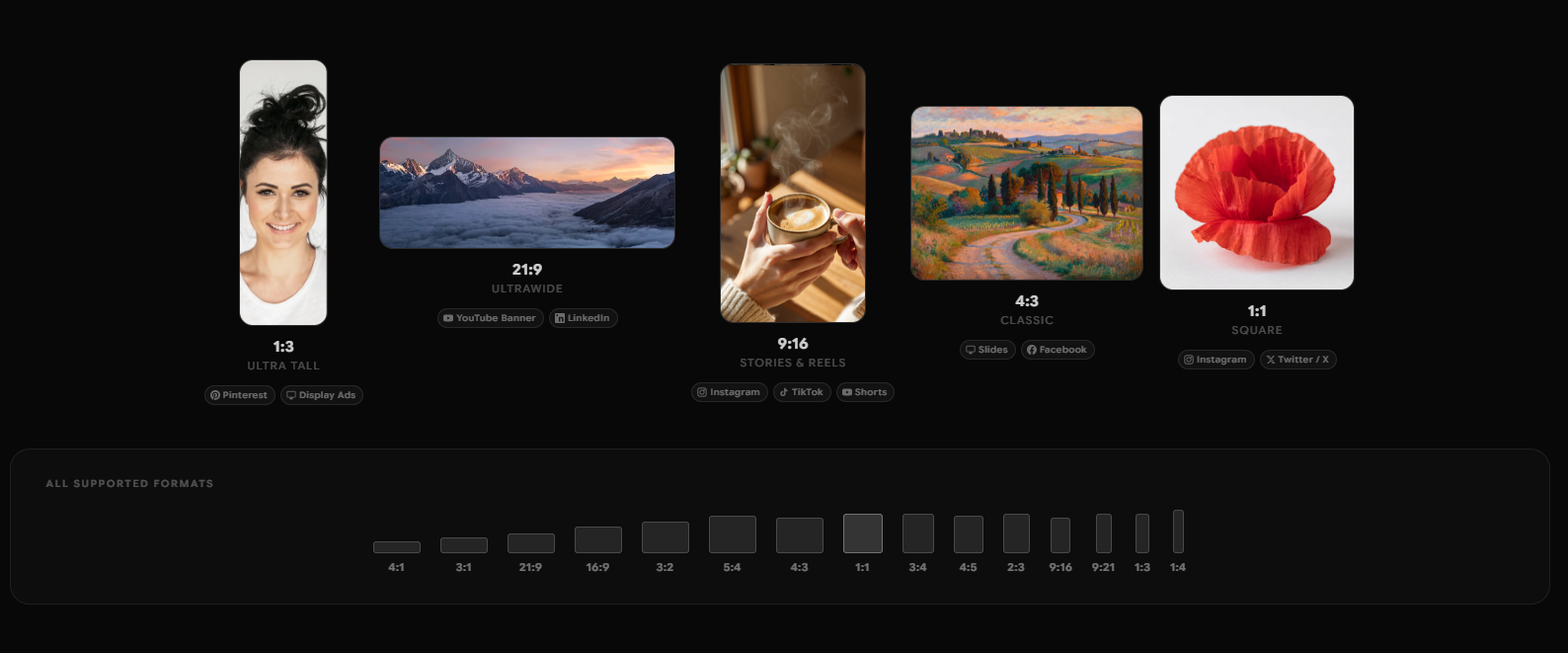 All ad formats
App Builder converts validated Workflows into Team Apps: a simplified interface where non-technical contributors enter the campaign details and generate a complete on-brand content set without accessing the underlying workflow or making decisions that affect visual or tonal consistency. Regional marketing managers, retail teams, and brand partners produce content that is on-brand by design rather than on-brand by review.
The enterprises getting the most from ImagineArt Workflows are the ones that have encoded their brand production logic into the canvas: visual style, format requirements, copy tone, output specifications: and distributed access through App Builder to every team that needs to produce content at scale.
Best for: Enterprise teams with repeatable content production requirements where brand consistency, production speed, and distribution to non-technical contributors are the three variables that matter most.
5. Jasper
Jasper is the enterprise AI writing platform built around brand voice. The platform's core capability is encoding a brand's tone, vocabulary, style guidelines, and messaging framework into an AI writing system that every contributor in the organization can use. The output is copy that sounds like the brand because the brand parameters are built into the generation layer, not enforced through a post-production style guide review.
Jasper covers the content formats that enterprise marketing teams produce at the highest volume: long-form blog and SEO content, short-form social copy, email campaigns, product descriptions, landing page copy, and campaign messaging. The platform's enterprise offering includes team collaboration, brand voice management, workflow integrations with existing martech tools, and access controls that keep brand parameters consistent across contributors in different departments and regions.
The integration depth with platforms like HubSpot, Salesforce, and WordPress is relevant for marketing operations teams where content production connects directly to CRM and publishing workflows. Jasper's value is strongest when the brand voice parameters are well-defined and the team contributing to content production is large enough that individual style variation creates a visible consistency problem.
Best for: Enterprise marketing teams producing high-volume written content across multiple contributors and regions where brand voice consistency is the primary production risk.
6. Canva Enterprise
Canva Enterprise is the brand distribution platform for large organizations that need to put templated, brand-consistent content production in the hands of non-technical teams at scale. Its brand kit, template library, role-based permissions, and simplified drag-and-drop interface solve a specific enterprise problem: regional offices, franchise operators, HR teams, and field staff need to produce branded content without design expertise, and without making decisions that take the output outside brand parameters.
For that use case, Canva is the strongest platform available. The brand governance infrastructure is mature, the template distribution system is reliable, and the accessibility of the interface means non-technical contributors can produce compliant branded content without training investment. Canva's AI capabilities through Magic Studio add basic text-to-image generation and AI design assistance, but the AI model selection is limited and does not reach the depth of generation quality or creative environment specialization that enterprise production teams require for commercial content.
Canva has no node-based workflow infrastructure, no URL-to-ad creative generation, no dedicated film or fashion studio, and no audio generation. It is built for distributing approved creative formats to non-technical teams, not for generating the creative assets those teams are distributing.
Best for: Enterprise organizations that need to distribute brand-consistent templated content across large numbers of non-technical contributors, where brand governance and accessibility matter more than AI generation depth.
Recommended Read: Canva Enterprise vs ImagineArt Enterprise
7. Fashion Studio
Fashion Studio is ImagineArt's dedicated creative AI fashion tool for fashion brands, retail groups, and lifestyle commerce platforms. The production gap it closes is specific: fashion enterprises producing seasonal campaign imagery, lookbook content, runway sequences, and on-model product photography at the volume e-commerce and brand channels now require cannot do it cost-effectively through traditional location shoots and model casting.
Fashion Studio produces lookbook imagery, AI runway sequences, ghost mannequin to on-model conversion, seasonal collection campaigns, and lifestyle fashion content from a single governed enterprise environment. Brand style parameters, model aesthetic, and visual direction are encoded at the environment level so every asset produced within the studio is consistent with the campaign direction without individual creative decision-making on each image.
 Fashion Studio
For fashion enterprises, the production economics change significantly. A seasonal lookbook that previously required a location, a model, a photographer, and a post-production team runs through Fashion Studio in a fraction of the time and cost. The output quality holds up across the e-commerce, paid social, and editorial placements that fashion brands need to cover simultaneously with each collection launch.
Fashion Studio is not a general image generation tool with fashion capabilities added. It is a purpose-built production environment for the fashion category.
Best for: Fashion brands, retail groups, and lifestyle commerce platforms producing seasonal campaign content, lookbooks, and product imagery at e-commerce volume.
8. Film Studio
Film Studio is ImagineArt's dedicated environment for cinematic and commercial video production. The production gap it closes is the distance between the quality of video content enterprise brands need for broadcast, connected TV, and premium digital placements, and what general-purpose AI video tools deliver.
Precision camera motion control is the defining capability: orbital reveals, golden-hour tracking shots, atmospheric push-ins, and location reveal sequences that produce brand films, Hollywood-style commercial ads, corporate sizzle reels, and campaign hero videos at a visual quality standard that holds up in premium placements. Enterprise creative and production teams access a full cinematic production environment without a production company, a director, or a location budget behind every brief.
For enterprise brands producing campaign hero content, event sizzle reels, product launch videos, and broadcast-quality commercial ads, Film Studio removes the production ceiling that AI video generation tools typically impose. The output is not functional social video. It is commercial-grade cinematic content produced at the speed of a content operation rather than a production company.
The integration with ImagineArt Workflows means a Film Studio production run can be built into an automated campaign pipeline: brand brief triggers production, output formats for every placement are generated in a single run, and finished assets are delivered across broadcast, digital, and social specifications without manual reformatting.
Best for: Enterprise marketing and creative teams producing commercial-quality cinematic video content for brand campaigns, broadcast placements, and premium digital channels.
9. Copy AI
Copy AI is the AI content production platform for enterprise marketing teams running high-volume copy workflows across multiple channels simultaneously. The platform covers the full range of marketing copy formats: email sequences, social media copy, ad copy, blog content, product descriptions, sales collateral, and campaign messaging, with workflow automation that connects copy generation to the broader content operation rather than treating each piece of content as a standalone generation task.
Copy AI’s GTM AI Platform positions the tool beyond single-piece copy generation toward automated content pipelines: a prospect enters a workflow, copy is generated and personalized at the right stage, and output moves through the pipeline without manual intervention between steps. For enterprise demand generation and content marketing teams running high-volume, multi-touch programs, this workflow automation layer is more relevant than the copy generation itself.
The platform's brand voice tools allow teams to encode tone and style parameters that carry through generated copy consistently. Integrations with CRM, marketing automation, and publishing platforms connect Copy AI’s output to the tools the content operation already runs. The gap is in visual content. Copy AI covers copy, not image or video production, and operates as one layer in a content stack rather than a complete creative production platform.
Best for: Enterprise demand generation and content marketing teams producing high-volume copy across automated workflows, where the volume and velocity of written content is the primary production challenge.
10. ElevenLabs
ElevenLabs is the AI voice and audio platform enterprise teams use when multilingual, high-quality voice content is a production requirement at scale. The platform's voice cloning, AI voice generation, and text-to-speech capabilities produce natural-sounding audio content across more than 30 languages from a single production environment. For enterprise brands producing localized video content, e-learning programs, audio ads, and regional marketing campaigns across multiple language markets, ElevenLabs closes the voice production gap that text and image tools leave open.
The voice quality at ElevenLabs is the differentiator. Where generic text-to-speech tools produce functional but clearly synthetic audio, ElevenLabs generates voice output that holds up in professional video, advertising, and broadcast contexts. Custom voice cloning allows enterprise brands to create and maintain a consistent brand voice across markets and content formats without a recording studio or a voice actor behind every piece of content.
Enterprise use cases include: video voiceovers for regional campaign content, AI-generated podcast and audio content, voice-enabled product explainers, e-learning and training program narration, and audio ad creative for streaming and podcast placements. The platform's API allows teams to integrate voice generation into automated content workflows rather than treating each voiceover as a manual production task.
ElevenLabs covers voice and audio. It is a single-capability tool that works best when integrated into a broader content production stack rather than as a standalone platform.
Best for: Enterprise teams producing multilingual video, e-learning, and audio content at scale where consistent, high-quality AI voice generation across languages is the primary requirement.
11. Claude
Claude is Anthropic's enterprise AI model, and its relevance for on-brand content operations sits primarily in long-form content production, strategic copy, and the AI layer that sits behind enterprise content workflows. Claude's strength is in producing coherent, nuanced, long-form written content that maintains a consistent voice across extended documents: the kind of writing where factual accuracy, structural coherence, and tonal consistency matter as much as the volume of output.
For enterprise content teams, Claude's most direct applications are: producing first-draft long-form content (reports, whitepapers, thought leadership, detailed guides) that requires human strategic input but not full human production time; structuring and editing large volumes of existing content; and powering the AI layer behind internal tools and content automation workflows through the Claude API. Claude's function calling and tool use capabilities make it a practical choice for enterprise teams building bespoke AI content tools on top of a reliable foundational model.
The enterprise offering through Anthropic Claude for Work and the Claude API includes data privacy commitments that matter to enterprise procurement: content submitted through the enterprise API is not used for model training. SOC 2 Type II compliance is in place. Claude does not generate images, video, or audio, and is not a visual creative production platform. Its role in an on-brand content stack is as the language intelligence layer: the model that handles the written content requirements that shorter-form AI writing tools are not built to manage.
Best for: Enterprise teams with demanding long-form written content requirements, and development teams building AI-powered content tools and internal automation workflows on top of a reliable enterprise-grade language model.
Scale On-Brand Content Creation with ImagineArt Enterprise
The practical architecture for most enterprise marketing and creative teams looks like this: ImagineArt Enterprise as the core visual production platform covering image, video, audio, and advertising creative with governance built in.
ImagineArt's dedicated studios: Ads Studio, Fashion Studio, Film Studio: cover the production requirements that general-purpose tools cannot reach for example, URL-to-ad creative with competitive intelligence, fashion and lookbook content at campaign scale, and cinematic commercial video at broadcast quality.
Ready to put this into practice?

![What is Creative Burnout? [and 8 Tools to Help You Recover]](https://blogs-cdn.imagine.art/Creative_Burnout_FI_c0ad752bea.png)