

Tooba Siddiqui
March 27, 2026 • Updated March 27, 2026
13 mins Read
Unlike most content investments where you can find a quick quote online, 3D animation pricing is notoriously opaque. Today, businesses are also exploring alternatives like AI video generator tools to reduce production overhead — but understanding traditional 3D animation cost is still essential before making that decision.
Professional 3D animation cost per minute in 2026 ranges from $5,000 at the lower end of custom production to $100,000 or more for cinematic broadcast quality. And if you want something tailored to a certain specification, you might need to budget a little more.
What Is 3D Animation and Why It Matters?
3D animation is the process of creating moving images in a three-dimensional digital environment. 3D animation software help build characters, objects, and environments that exist in virtual space. These 3D animation elements can be rotated, lit from any angle, textured with physical material properties, and filmed from any camera position. The result is a visual realism and dimensional depth that flat animation simply cannot achieve.
- 3D animation shows product internals, mechanisms, and physical behavior that live-action filming cannot capture — particularly valuable for medical devices, engineering components, precision machinery, and pharmaceutical products where the mechanism of action is the entire message.
- It enables architectural walkthroughs, medical visualizations, and product demonstrations for things that don't yet physically exist — making it indispensable for pre-launch marketing, investor presentations, and early-stage product development.
- Animated product content increases viewer retention and conversion rates — businesses using 3D animation in marketing consistently report higher ROI than those relying on static imagery or text alone.
- A single 3D asset library — characters, environments, and objects built once — scales across web, broadcast, AR/VR, and interactive platforms without reshooting. While traditional pipelines rely on manual modeling, some teams now use AI image generator tools to quickly prototype visual directions before moving into full 3D production.
- 3D animation gives brands complete creative control over characters, environments, lighting, and visual identity in a way that live-action production never can — every frame is a creative decision, not a logistical one.
8 Factors That Determine Your 3D Animation Cost
Before looking at 3D animation price tiers or 3D video production breakdowns, knowing these factors can help you budget correctly for 3D animation cost per minute.
1. Animation Complexity and Level of Detail
Complexity is the single biggest cost variable in any 3D animation project. Simple animations — logo reveals, basic product rotations, text effects — require less time and fewer specialist resources. Complex animations with intricate character movements, detailed environments, advanced visual effects, and sophisticated storytelling drive costs up significantly. A project requiring a particular visual style, detailed character development, or cinematic scene staging should expect a proportionally higher price.
2. Modeling and Asset Complexity
Every object, character, and environment in a 3D animation must be built from scratch as volumetric geometry — there are no flat assets, only three-dimensional meshes. More detailed 3D models with intricate geometry, realistic material texturing, and physically accurate surface properties take significantly longer to build and increase production cost at every subsequent stage that uses those assets. A product with ten moving parts costs more to model than one with two.
3. Rigging and Character Setup
Rigging is the process of building the internal skeleton and control system that allows 3D characters and objects to move. It's a highly technical task that adds substantially to 3D video production cost — rigging ranges from $150 for simple objects to $2,000 or more for complex characters requiring full body, facial, and cloth simulation controls. Characters requiring detailed facial performance for dialogue or emotional storytelling sit at the higher end of this range.
4. Frame Rate and Rendering Time
Frame rate — measured in frames per second (FPS) — has a direct and often underestimated impact on 3D animation cost. Standard marketing and instructional content runs at 24 FPS. Higher frame rates of 30 FPS or 60 FPS require proportionally more frames to be generated and rendered, dramatically increasing total production time and computational cost. Rendering photorealistic 3D scenes is computationally intensive — hours of processing for just seconds of finished video. 4K output adds 20 to 40 percent to 3D animation video production cost over standard 1080p resolution.
5. Style: Photorealistic vs. Stylized
The realism level of the visual style is a major cost driver. Photorealistic animation demands physically accurate lighting simulation, advanced material shaders, high-polygon geometry, and complex particle systems for effects like water, fire, and smoke. Stylized animation reduces cost through simplified geometry, non-realistic shading, and fewer simulation requirements — while still producing visually compelling output. For most marketing and explainer use cases, a stylized approach delivers strong results at a significantly lower price than photorealism.
6. Video Length
Duration affects cost, but not always in the way clients expect. A 30-second animation with intricate details and complex character interaction can require more production time than a 60-second animation with simple movements and minimal scene variety. Carefully evaluate both length and complexity together when building your budget — never assume that shorter automatically means cheaper. That said, longer projects typically have lower 3D animation cost per minute due to production efficiencies in asset reuse across scenes.
7. Studio Location, Tier, and Freelancer vs. Studio
Geography significantly affects pricing. US and Western European studios charge $50 to $150 per hour; Eastern Europe and South America $25 to $70 per hour; India and Southeast Asia $10 to $40 per hour. The right choice between freelancer and studio depends on project scale and complexity: freelancers offer competitive rates and flexibility for smaller, well-defined projects, while studios provide broader resources, managed production pipelines, and quality assurance for larger, complex productions where risk management matters as much as cost.
8. Deadlines and Revision Rounds
Rushed timelines are one of the most avoidable sources of budget overrun in 3D animation. Most studios include two to three revision rounds in their base quote — additional revisions beyond this scope, especially late-stage changes to script, character design, or scene structure, are billed separately and can add substantially to the final invoice. Rush projects where standard timelines are compressed typically incur 20 to 50 percent upcharges.
Increasingly, teams use tools like an AI image editor to refine visual assets before production, or an AI video editor to handle post-production adjustments — reducing revision cycles and lowering overall 3D animation video production cost.
The 3D Animation Video Production Process and What Each Stage Costs
Understanding how 3D video animation budgets are allocated across the production pipeline is crucial. Most clients focus on the per-minute price — but the per-minute rate is actually the sum of three distinct production stages. Each stage has its own cost logic and its own opportunities for budget control.
Pre-Production: 20–30% of Total Budget
Pre-production is where the entire creative and technical direction of a 3D video production project is established.
Script and Concept Development — Defining the narrative, message, and target audience. A clear, detailed script prevents expensive mid-production direction changes and gives every specialist on the team a precise reference point throughout production.
Storyboarding — Visual planning of every scene, camera angle, and transition. Comprehensive storyboards lock in creative direction before any 3D assets are built — changes at this stage cost a fraction of what they cost during production.
Concept Art and Style Frames — Establishing the visual style, character design, color palette, and environment aesthetic before any 3D modeling begins. Style frames give clients a preview of the final look and lock in the creative direction that every downstream production decision will follow.
3D Modeling — Building characters, environments, and objects as 3D geometry. This is the foundational output of pre-production — the quality and detail of models directly determines production cost at every subsequent stage.
Rigging — Creating the internal skeleton and control system for characters and moving objects. Ranges from $150 for simple objects to $2,000+ for complex characters requiring full body, facial, and cloth simulation controls.
Typical pre-production cost: 20–30% of total project budget. For a $15,000 project, expect $3,000–$4,500 in pre-production. This is the stage where most clients are tempted to cut budget — and where cutting budget causes the most downstream damage.
Production: 40–50% of Total Budget
3D animation video production is the most resource-intensive stage. In this stage, models are textured, scenes are lit, characters are animated, and the visual world is fully realized frame by frame.
Texturing and Shading — Applying surface materials, colors, and physical properties to 3D models — skin texture, fabric weave, metal reflectivity, glass refraction, painted surfaces.
Lighting and Environment Setup — Placing and configuring virtual light sources to match the intended mood, time of day, and realism level. Achieving physically accurate lighting — matching the behavior of real sunlight, interior lighting, or studio lighting — requires specialist skill and significantly increases production time compared to stylized lighting approaches.
Animation — Bringing rigged characters and objects to life through keyframed movement, timing, weight, and expression. Character animation for complex performances is the highest-skill and most time-intensive production task.
Visual Effects and Simulations — Particle systems, fluid dynamics, destruction simulations, cloth physics, and environmental effects like smoke, fire, or rain. Each simulation layer adds rendering complexity and production time.
Typical production cost: 40–50% of total budget. This is where the majority of specialist labor hours are concentrated and where the most significant cost differences between studios become visible in the output quality.
Post-Production: 20–25% of Total Budget
Post-production is where the rendered animation is assembled, refined, and delivered — and it's consistently the most underestimated stage in client budget planning.
Rendering — The computationally intensive process of converting 3D scene data into finished video frames. Rendering photorealistic scenes requires serious computing power. Many studios use render farms to parallelize this process, which adds infrastructure cost.
Compositing — Combining rendered 3D elements with backgrounds, VFX layers, and live-action footage where applicable. Adds visual coherence and realism to the final image, particularly for scenes mixing 3D and real-world footage.
Color Grading — Applying consistent color treatment and cinematic tone across all rendered scenes. Ensures visual coherence between shots rendered separately or at different times during production.
Voiceover and Sound Design — Professional narration, original music, ambient sound, and sound effects. Adds $1,000–$5,000 to total project cost, quoted separately in most studio briefs.
Editing and Final Delivery — Assembling the final cut, adding captions, and exporting in platform-specific formats. Revision rounds at this stage are significantly less expensive than mid-production changes.
Typical post-production cost: 20–25% of total budget.
Many modern teams now integrate an AI workflow into post-production — automating rendering alternatives, editing, and multi-format exports — significantly reducing turnaround time and cost for non-cinematic projects.
How Much Does 3D Animation Cost Per Minute? A Tier-by-Tier Breakdown
With cost factors and the production pipeline established, here is the breakdown 3D animation price by production tier:
| Production Tier | Cost Per Minute | What You Get |
|---|---|---|
| DIY / AI Tools (AI video generator platforms) | $50–$300 | Template 3D scenes, AI-assisted generation, limited customization |
| Freelancer | $500–$3,000 | Custom 3D work, variable quality, limited pipeline management |
| Small Studio | $3,000–$7,000 | Full 3D pipeline, basic custom modeling, project management |
| Professional Studio | $7,000–$20,000 | Custom characters, photorealistic rendering, full post-production |
| Premium / Broadcast | $20,000–$100,000+ | Cinematic quality, complex physics, broadcast-ready, specialist teams |
For most business use cases, the realistic per-minute budget falls between $3,000 and $20,000. Simple product rotations and motion graphics starting around $3,000, and character-driven 3D explainers with custom environments reaching $15,000 to $20,000 or more. For enterprise teams producing animation at scale, cost efficiency often depends on pipeline optimization, asset reuse, and increasingly, the adoption of AI-powered production systems.
Pre-production planning — scripting, storyboarding, and concept art — represents 20 to 30 percent of total project cost regardless of the tier.
Most US studios charge between $3,000 and $10,000 per minute for professional 3D work. Comparable studios in Eastern Europe and South America quote $1,500 to $5,000 per minute. Studios in India and Southeast Asia produce similar output at $500 to $3,000 per minute for most styles — location and cost do not reliably predict quality in either direction.
3D Animation Cost Breakdown by Project Type
3D animation cost per minute tells you the unit cost — but most businesses think in terms of projects, not minutes. Here is how 3D animation cost translates to the most common formats businesses actually commission.
Video Games and App Development
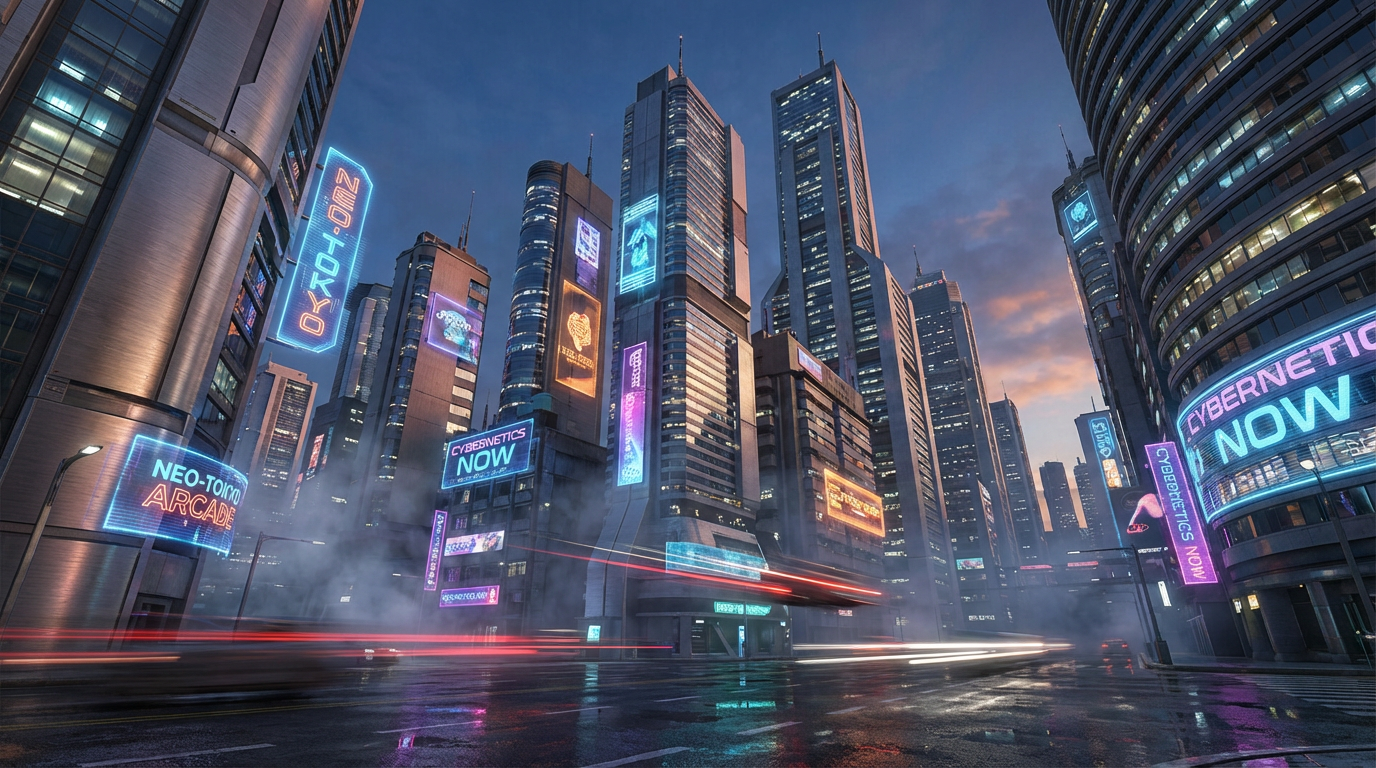 3D animated video game scene generated by ImagineArt AI image generator
3D animation costs in video games and app development differ significantly from commercial animation. Game assets must perform at runtime that adds to optimization overhead. Every character animation state and movement must be individually produced and integrated with the game engine. The number of unique character rigs, environment tile sets, and animation states per character are the primary cost drivers.
Standard gaming assets: $3,000–$12,000 per minute. AAA-quality character animation and cinematic cutscenes: $15,000–$50,000+ per minute.
3D Product Animation (30–90 Seconds)
It involves showing a product from every angle, revealing internal mechanisms, and demonstrating use-in-context scenarios. The final cost depends on the number of angles required, the complexity of internal mechanisms, and the realism level of materials and lighting. .
Cost: $3,500–$8,000 for quality-balanced production; $10,000–$25,000 for photorealistic output.
Social Media 3D Animation (15–30 Seconds)
Many brands reduce total cost by creating a master animation and repurposing it into multiple platform-specific cuts — YouTube Shorts, Instagram Reels, LinkedIn. It maximizes ROI across channels from a single production run rather than commissioning separate pieces for each platform.
Cost: $1,000–$5,000 for stylized 3D social clips; $5,000–$15,000 for photorealistic product content at the same length.
Architectural Walkthrough (60–120 Seconds)
It involves 3D animated architectural visualization for pre-construction property marketing, investor presentations, and interior design pitches. Short flythroughs with pre-built residential asset libraries are the most cost-efficient format. Fully custom commercial or mixed-use developments with unique materials, bespoke furniture, and cinematic lighting require more 3D animation cost per minute.
Cost: $2,000–$5,000 for short flythroughs; $7,000–$20,000+ for cinematic marketing-grade walkthroughs.
Tips to Reduce and Manage 3D Animation Cost
3D animation is an investment — but it's one with meaningful opportunities for cost control at every stage of production. Here are six practical strategies that reduce total spend without proportionally reducing output quality.
1. Use AI Tools for Prototyping, Social Content, and Campaign Variants
Before committing to a full studio production budget, try AI tools like ImagineArt AI image generator to prototype visual style, character direction, and scene composition. This alone can prevent the most expensive type of production change: changing creative direction after modeling has begun.
- For social media content, campaign repurposing, and platform-specific variants, use ImagineArt AI video generator and AI video editor to produce 3D-style animated output without per-project studio costs, rendering pipelines, or weeks-long delivery timelines.
- Use ImagineArt AI image editor to refine character reference images, clean backgrounds, and lock in visual style before passing assets into any animation workflow — reducing the feedback and correction cycles that add time and cost at the production stage.
- For marketing and content teams producing high-volume 3D social content and campaign variants, ImagineArt AI workflow automates batch generation across multiple formats, platforms, and languages — no per-project brief, no render farm, no waiting.
- For enterprises scaling 3D animation production at volume, ImagineArt Enterprise provides custom credit volumes, team collaboration tools, and dedicated infrastructure built around high-output content production.
2. Plan Thoroughly Before Production Begins
Comprehensive pre-production planning is the single most cost-effective investment in any 3D animation project. A clear script, detailed brief, and approved storyboard submitted before production begins prevents the mid-production direction changes.
2. Choose Stylized Over Photorealistic Where the Message Allows
A stylized visual approach with simplified geometry and non-realistic shading can deliver equally compelling content at 30 to 50 percent lower production cost. Reserve photorealistic output for contexts where material accuracy or visual realism is a commercial requirement.
3. Use Pre-Made Assets Where Brand Standards Allow
Use custom modeling for primary brand characters, hero products, and distinctive environments. Use pre-made assets for secondary elements — background objects, generic environments, supporting props — where uniqueness isn't a requirement.
4. Build a Reusable Asset Library
For brands producing animation series, e-learning modules, or seasonal campaign content, a reusable library reduces per-video cost by 30 to 50 percent over a production run. The second video is significantly cheaper than the first when assets already exist.
5. Protect Your Timeline
A compressed timeline requires overtime work, priority scheduling, and parallel production of tasks that would normally be sequential — all of which incur upcharges of 20 to 50 percent on top of standard rates. Build realistic production timelines with adequate time for review stages, feedback cycles, and revision rounds.
Ready to Create 3D Animation?
3D animation cost in 2026 ranges from a few hundreds to thousands of dollars. With AI tools like ImagineArt AI video generator, you can produce 3D animation video content in less than $20 using a text prompt and reference image — and without any rendering pipeline or software installation.
Recommended read: 2D Animation Cost | 10 Video Animation Apps for Visual Storytelling | Best AI Video Models for Motion Control & Animation
Tooba Siddiqui
Tooba Siddiqui is a content marketer with a strong focus on AI trends and product innovation. She explores generative AI with a keen eye. At ImagineArt, she develops marketing content that translates cutting-edge innovation into engaging, search-driven narratives for the right audience.