
Saba Sohail
December 18, 2025 • Updated December 19, 2025
7 mins Read
So Sam created a video he already called ‘perfect’ but didn’t post; this small glitch. But, he doesn’t want to create another one like he did the previous so painstakingly… Sam is me. I am Sam. And if you are Sam’s friend, you definitely need something to save you hours of time and credits.
As a quick rundown, this guide covers top 5 AI video generators that take videos as input, and transform them based on text and image instructions, all powered by AI and zero manual effort:
5 Top AI Video Generators for Video-to-Video
With these top AI video generators for video-to-video, you can now refine motion, fix inconsistencies, and polish, remove, replace elements without reshooting a single frame.
1. ImagineArt AI Video Generator
Starting this list of top AI video generators for video-to-video with ImagineArt, this platform stands out for offering an all-in-one workflow that lets teams transform existing videos using prompts, references, and built-in editing tools, all from a single interface.
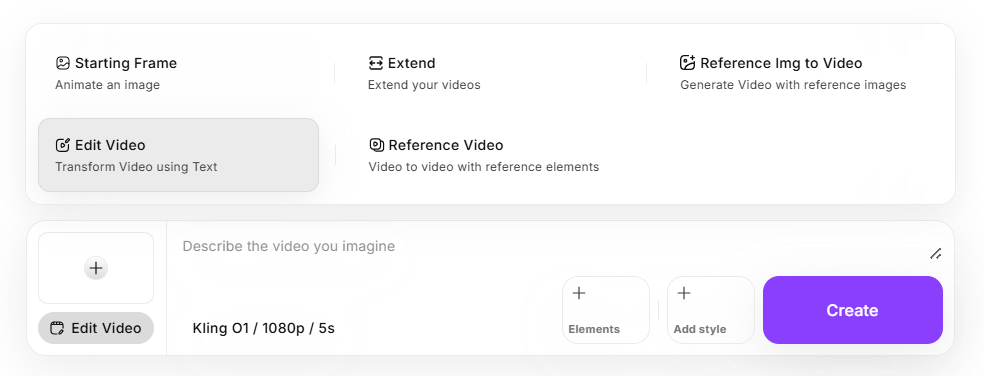 ImagineArt Video to Video
They say, “if you want to stand out from the rest, you have to do something different from the rest.” That’s why, ImagineArt brought AI video generation, image generation, AI-powered image and video editing, apps, video extension, motion transfer and node-based workflows for production teams.
ImagineArt’s AI video generator is flexible and workflow-efficient. You can upload an existing video, apply stylistic or structural transformations, refine motion, and iterate using simple text prompts about color, background, characters, lighting or camera movements.
Instead of treating video-to-video as a separate or experimental feature, ImagineArt offers it as part of a complete creation pipeline, and makes it easy to move from rough footage to polished output without switching tools.
Most importantly, ImagineArt has got video editing apps where you upload a video, type a text instruction for the video transformation you want, and get your new video in 30 seconds.
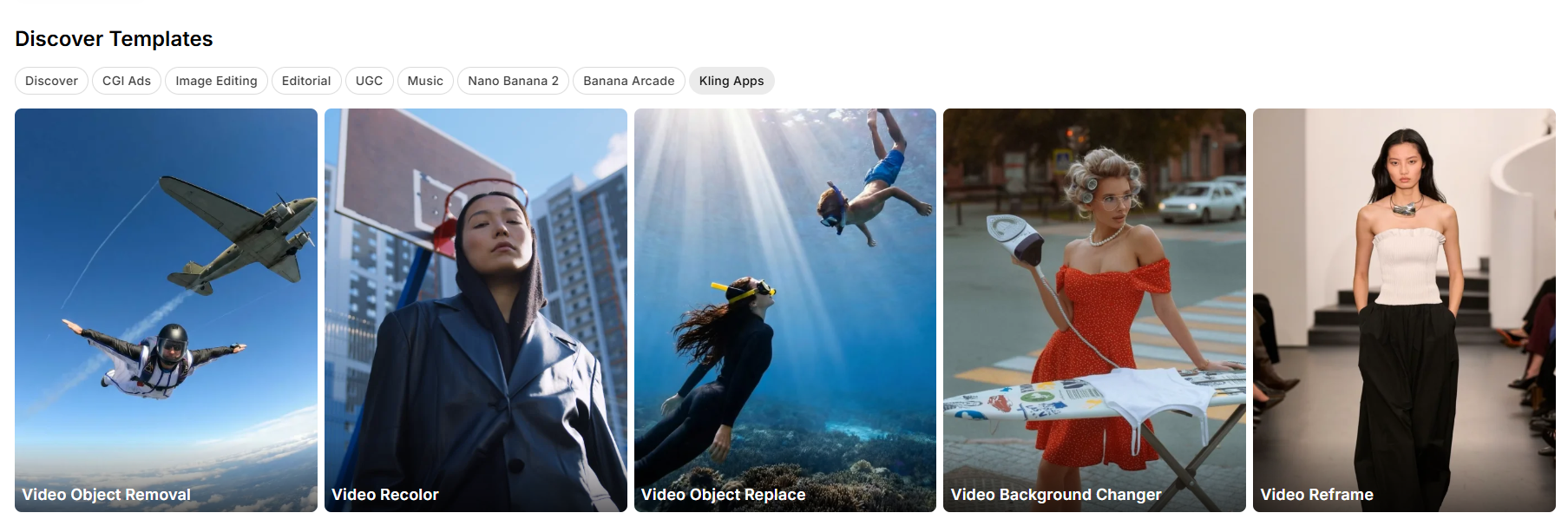 ImagineArt Video Editing Apps
Beyond basic transformations, the platform shines in integrated editing and prompt control. You can guide motion style, visual tone, pacing, and scene continuity using simple-to-detailed prompts, which makes experimentation approachable even for non-technical users.
Motion transfer feels smooth and consistent. Just give a video and an image, and you get a new video with the right character, body language and expressions. When applying stylistic changes across multiple shots, and the export controls give creators flexibility over aspect ratio, resolution, and duration.
Another strength is ImagineArt’s broader ecosystem. Video-to-video workflows sit alongside text-to-video, image-to-video, and reference-based generation, so creators can mix inputs creatively.
As an AI video generator with a video-to-video workflow, ImagineArt is best for creators, marketers, and small teams getting their hands on experimentation to export without the complexity or cost of cinema-grade tools.
2. Google Veo 3.1
Google Veo 3.1 represents the highest end of top AI video generators for video-to-video. After setting gold standards for cinematic video generation, it’s offering ultra-high-fidelity transformations with exceptional realism. When applied to existing footage, Veo excels at preserving spatial relationships, camera movement, and scene complexity while enhancing lighting, motion, and cinematic depth.
Its strongest advantage lies in cinema-grade motion transfer and lighting realism. Veo handles complex scenes with multiple subjects remarkably well, maintaining coherence across frames and producing outputs that feel film-like rather than synthetic. Natural dialogue, ambient sound effects, and realistic audio cues further elevate its realism, making it one of the closest tools to true AI-assisted filmmaking.
However, this level of quality comes at a cost. Veo 3.1 is typically priced at the premium end, often charging higher per-second or per-credit rates than most competitors. Rendering times can also be longer, reflecting the model’s computational intensity.
Because of its cost and depth, Veo is less suited to casual experimentation or high-volume social content. Instead, it shines when quality outweighs speed and budget considerations.
Best for: production-ready AI filmmaking, cinematic storytelling, high-end marketing videos, and narrative projects where maximum realism and prompt adherence are essential. Veo 3.1 is a powerful choice for studios and professionals aiming for film-quality results rather than rapid content output.
3. Runway Aleph / Runway ACT-Two
Runway’s video-to-video tools work best for post-production, period. Among the top AI video generators for video-to-video, Runway Aleph and ACT-Two focus primarily on motion transfer, AI-powered video editing based on references, timelines and stylistic transformations.
With these models, you can transform existing footage through motion transfer, style remixing, and visual reinterpretation while maintaining control over timelines and objects within the scene. Video-to-video here feels closer to AI-assisted editing than pure generation.
One of Runway’s biggest strengths is fine-grained control. Editable timelines, object tracking, masking, and remix workflows give editors the ability to shape outputs with precision. This makes it possible to apply effects selectively, modify movement across frames, or experiment with different visual styles while keeping the core structure intact. For storytellers, this level of control is invaluable.
Runway also benefits from a strong ecosystem of community presets and templates, which lower the learning curve and encourage experimentation. The remix-first mindset allows creators to iterate quickly, combining AI generation with traditional editing logic.
Pricing-wise, Runway sits in the mid-to-high range, often structured around subscription tiers and usage limits. While not the cheapest option, it delivers strong value for users who actively edit and remix footage rather than generate from scratch.
Best for: video editors, filmmakers, and content creators who want hands-on control over AI-assisted video transformation. Runway is ideal for short films, branded storytelling, music videos, and experimental visual projects where post-production flexibility matters more than speed.
4. WAN 2.6
WAN 2.6, despite being new in the list of top AI video generators for video to video, focuses on speed and consistency in video-to-video transformation workflows. It excels at taking reference footage and generating stable outputs with reliable motion continuity, which makes it a strong option for creators who value efficiency over cinematic complexity. The model handles temporal consistency well, which is critical for believable movement across frames.
One of WAN 2.6’s key strengths is its prompt reliability. It tends to follow instructions predictably, especially when dealing with motion adjustments, lighting changes, or stylistic refinements. This reduces the need for repeated retries and makes the tool suitable for rapid iteration. The model is also less compute-heavy, which contributes to faster generation times.
While WAN 2.6 does not aim for ultra-cinematic realism or complex scene orchestration, it delivers clean, usable outputs that hold up well for everyday content creation. Audio support and advanced effects are more limited compared to premium models, but for visual consistency, it performs reliably.
Pricing typically reflects its positioning as a cost-efficient solution, making it more affordable per second or per generation than high-end cinematic tools. This makes it accessible for creators producing content at scale.
Best for: teams and individuals who need fast, consistent video transformations—such as social media managers, educators, and marketers producing frequent short-form videos where realism matters, but cinematic polish is not the top priority.
5. Kling O1 Video
One of the most accessible top AI video generators for video-to-video is Kling O1 Video that combines realistic AI video generation with simple editing tools and detailed prompt controls at a competitive price point.
Kling O1 Video offers a balanced approach to video-to-video generation by pulling video editing, generation, and style transfer in a single environment. You can input an existing clip, guide transformations using prompts, and refine results with editing tools that feel purpose-built for AI video workflows rather than traditional editing suites.
A standout feature is Kling’s prompt granularity. Users can specify details at the shot level, guide transitions, and control visual changes across frames with more structure than many lightweight generators. This makes it easier to achieve consistent results without excessive trial and error. Native video editing features also help refine outputs without exporting to another tool.
In addition to visuals, Kling increasingly supports audio-aware workflows, which helps maintain realism in scenes involving dialogue or ambient sound. Motion consistency and scene coherence are solid, especially for short-form and mid-length videos.
Kling is generally positioned as value for money, offering competitive quality at a more approachable price point than top-tier cinematic models. Costs are usually lower per second or per credit compared to premium tools like Veo or Sora, making it practical for frequent use.
Best for: creators who want realistic video-to-video results without enterprise-level pricing. Kling works well for marketing videos, short narratives, social media content, and product visuals where consistency and control matter but budgets are limited.
Ready to transform your videos?
Saba Sohail
Saba Sohail is a Generative Engine Optimization and SaaS marketing specialist working in automation, product research and user acquisition. She strongly focuses on AI-powered speed, scale and structure for B2C and B2B teams. At ImagineArt, she develops use cases of AI Creative Suite for creative agencies and product marketing teams.