Five years ago, the fashion industry's biggest marketing challenge was channel fragmentation. Brands were figuring out strategies to be more present on TikTok, while juggling Instagram, while balancing distribution and marketing to wholesale and D2C.
The distribution and marketing problems were real, but the fundamentals hadn't changed: produce great product imagery, tell a compelling brand story, put it in front of the right audience on diverse platforms.
2026 is fundamentally different.
- The market value of AI in fashion was $270 million USD in 2018, and estimated to be $4.4 billion USD in 2027 with a CAGR of 36.9%.
- Executives cite AI as the #1 biggest opportunity for the fashion industry, ahead of product differentiation and sustainability.
- AI-generated fashion models cost under $1.
- The cost of customer acquisition is between $90 and $120.
- Consumer expectations have shifted from aspiration to accountability.
- And the brands that are winning aren't the ones with the biggest budgets.
This is the state of fashion marketing in 2026. Every major trend, every technological shift, and every operational challenge — with a clear view of what it means for brands navigating it right now.
Trend 1: AI is empowering fashion content at scale
Social commerce: the ability to move from discovery to purchase without leaving a platform, has compressed the buying journey to seconds for impulse categories, and minutes for considered purchases.
The lines between online, offline, and social commerce have dissolved to the point where the category of "fashion retail" barely describes what actually happens when a consumer discovers, considers, and buys a fashion product.
Fashion retail has become a media business. The brands building the most sustainable customer acquisition strategies are the ones treating their content as inventory while producing at the volume and velocity of a media company, with the precision of a direct-response advertiser.
Trend 2: Fashion brands are building experience-led retail.
According to IBM, 52% of females of today’s generation want to try on tools that allow them to customize products for themselves.
Quickest examples of experience in fashion industry are:
- AI-powered runways and lookbooks
- immersive digital storefronts
- editorial content that contextualizes products within a lifestyle
- virtual try-on that removes purchase anxiety
- and post-purchase communities that convert first-time buyers into brand advocates.
The sanguine implication here: the content requirement has multiplied, while the budget to produce it has not.
Trend 3: Direct-to-consumer fashion is maturing.
Brands that built on the premise of cutting out the middleman and spending heavily on Facebook acquisition have had to rethink their entire growth model as CAC has risen. Product and content strategy now revolves around the native platform behaviors and content repurposing is on rise.
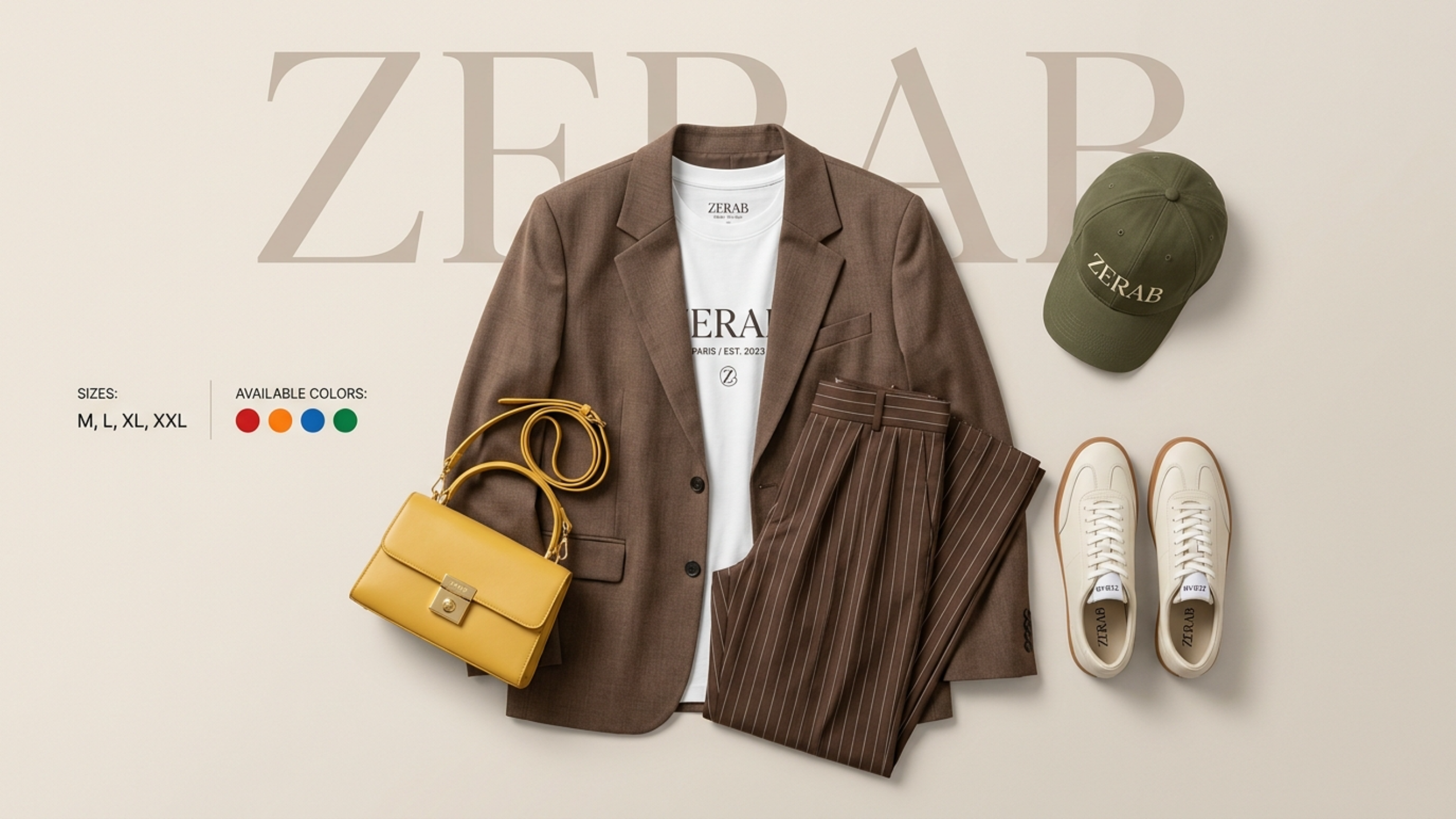 Fashion marketing trends
Trend 4: Fashion martech use cases are compounding.
From infrastructure to growth lever, precocious brands have built strong fashion martech stacks to outperform competitors. The technology story in fashion in 2026 spans several distinct areas, each with direct implications for how brands market, produce, and sell. Here are key fashion technologies we have witnessed in action:
A. Automated creative pipelines and workflows
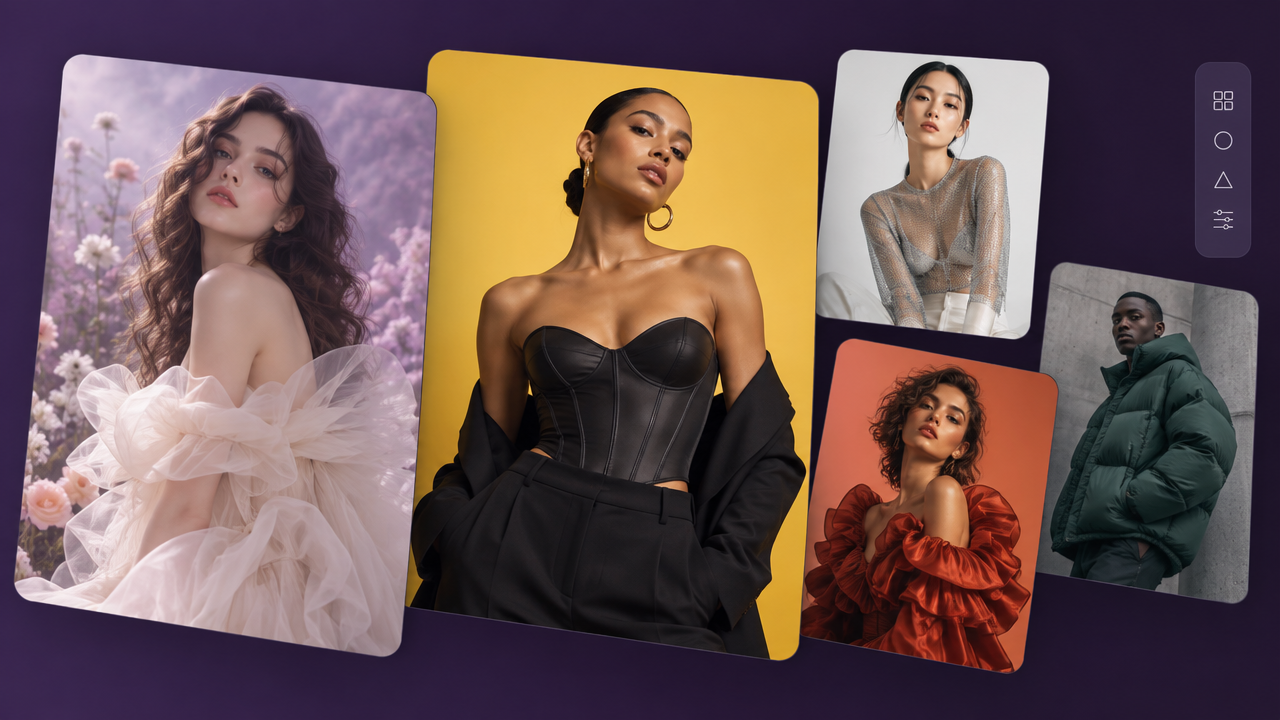
Generative AI for image and video has moved from experimental to core design workflows for leading fashion brands. The production cost reduction is significant, but the speed advantage is the real competitive differentiator. Fashion brands are using one raw product image to create hundreds of ready-to-publish campaign assets.
B. Virtual Try-On & Digital Avatars
Virtual try-on powered by AR and VR was expensive. But with apps and APIs like ImagineArt, fashion consultants, designers and sales representatives are offering hundreds of virtual try-ons in the fashion, skincare, beauty and aesthetics units.
C. Smart Inventory & Demand Forecasting
For creating structural sustainability improvement, brands are predicting and producing what sells, while optimizing what they hope did.
D. Automation Across Marketing & Merchandising
Automated A/B testing, dynamic pricing, personalized product recommendations, and AI-generated campaign variants are compressing the time between insight and action for marketing and merchandising teams.
Trend 5: Fashion AI is the creative system.
The conversation about fashion AI has moved decisively from "should we experiment?" to "how do we scale what's working?" The experimental phase, testing AI image generators for one-off creative projects, piloting chatbots for customer service is over for the brands at the front of the market.
In fact, generative AI for fashion is now the core of creative workflows: ideation, concept and product design, fabric simulations, product photography, campaign production, visual merchandising, and content at scale.
Recommended Read: Use cases of Generative AI for Fashion Industry
- AI as a tool produces incremental improvement.
- AI as a system with structured workflows where inputs, processes, and outputs are defined, repeatable, and scalable, produces transformation.
The cost difference?
Traditional lookbook production costs $5,000–$20,000 per season: execution 5 months.
AI lookbooks deliver equivalent or better quality for under $100: execution 2 weeks.
It's a structural change in how fashion brands allocate their marketing budgets.
Brands are deciding if they want to keep inpainting single lifestyle images or they want to automate bulk SKU-level product photography.
When creative production takes 48 hours, you can respond to cultural moments, trending sounds, and shifting consumer sentiment in near real-time. The brands building this kind of creative velocity are gaining meaningful advantage in organic, influencer and paid social performance, where creative fatigue is the primary variable in campaign decay.
Top two reasons AI fashion tools are winning:
- Generative AI like ImagineArt creates 10X content at 10% of the cost and headcount
- Smaller teams are producing, experimenting and iterating faster than enterprise clients because of quicker adoption and shorter approval cycles
Trend 6: Fashion consumers demand personalization at speed.
Buyers want personal experiences: not just "recommended products based on your browsing history," but genuinely contextualized content:
- the right editorial story,
- the right product configuration,
- the right model demographic,
- the right cultural framing for where they are and who they are.
Brands are capitalizing the data infrastructure to understand who the customer is, and the content production infrastructure to serve them the right asset, pretty much what Netflix did with the banners.
For most fashion brands, the second half of that equation has been the bottleneck.
Trend 7: AI is assisting in discovery and shopping.
According to McKinsey, 53% of US consumers who used AI for search in Q2 2025 also used it to help them shop. Visual search, the ability to search by image rather than keyword, is becoming a meaningful discovery channel for fashion. Consumers photographing a product they've seen in the street or on screen and finding something similar to buy is a behavior that is growing as the technology improves.
For fashion brands, this means visual SEO is no longer just about alt text and image file names. They have to optimize for LLMs recommending products to users and humans finally deciding to buy. The novelty of conversational commerce is transitioning into experiential expectations.
Trend 8: More buyers are demanding conscious fashion.
The consumer psychology shift of the last five years is not a trend but an emerging philosophy here to stay. The shift from impulse buying to intentional shopping and sustainable manufacturing — buying less, but buying better for themselves and for environment — is reshaping how fashion brands communicate.
Brands that publish their supply chain data, their environmental impact figures, and their pricing rationale are building the kind of consumer trust that performance advertising cannot buy.
- The brands that treat sustainability as a PR exercise are being called out
- The brands treating it as a genuine operational and communication priority are building durable differentiation.
The brands earning trust on sustainability are making specific, quantified claims: the percentage of recycled materials in a specific product, the carbon footprint per unit compared to industry average, the factories named and independently audited.
Trend 8: Supply chains are running on ERP.
The linear supply chain model: design, source, produce, distribute, has given way to more connected, data-driven models where visibility at every stage is a competitive requirement rather than a dessert.
When inventory data, demand forecasting, and production timelines are connected to marketing planning tools, campaigns can be timed to product availability with precision that was previously impossible.
The operational improvement is significant: fewer markdowns on overstocked items, fewer stockouts on promoted products, and better alignment between what marketing is selling and what the supply chain can actually deliver.
Trend 9: Fashion industry jobs are changing, fast.
The job roles that defined fashion marketing for the last two decades are transforming. The creative director, the stylist, the production coordinator, the junior copywriter, all of these roles are evolving in response to AI capability, and the most in-demand profiles in 2026 sit at the intersection of fashion knowledge and technical fluency.
In-Demand Fashion Industry Roles in 2026
- creative director with knowledge of workflow architecture and brand design thinking
- fashion consultant with hands-on experience into virtual try-on apps and their setups
- fashion marketers with expertise in cross-channel attribution and data fluency
- content creators with prompt engineering knowledge who can build creative pipelines for quality reviews
- sustainability manager who consolidates operations, marketing, consumer communication, supply chain and ESG reporting.
Trend 10: Regional and cultural shifts are happening.
The brands building real market share in specific geographies are localizing on the aesthetic and cultural level. This goes beyond language translation to genuine cultural fluency: the right voice assistants, AI video generators that offer diverse character rendering and multilingual outputs, targeting and retargeting in selected regions on the right platforms.
Regional Fashion Trends
- Asia-Pacific
Leads global ecommerce growth.
- Live-stream commerce is mainstream.
- Visual content volume requirements are the highest of any region
- Brands have automated creative pipelines but quality can be better
- Middle East
Digital-first luxury adoption is accelerating.
- High consumer expectation for visual quality and cultural specificity.
- AI models and campaign imagery must reflect regional demographics authentically.
- Europe
Sustainability regulation is the strictest globally.
- Consumers hold brands to the highest transparency standards.
- Content that tells the supply chain story in addition to the product messaging performs distinctly better in Northern European markets.
- North America
Performance marketing maturity is highest here.
- Minimal yet high quality shopping experiences are expected.
- Near real-time strategy improvements are winning.
Creative testing velocity, the ability to produce and test many creative variants quickly is the primary differentiator between brands winning and losing on paid social.
Trend 11: Enterprise fashion is embracing typical ecommerce.
The specific enterprise requirements look more like ecommerce penetration: multi-region catalog imagery that reflects local demographics and aesthetics; localization at scale with visual localization of campaign content; and AI-powered marketing and merchandising systems that can adapt in real time to performance data, inventory levels, and cultural moments.
Key Challenges Facing the Fashion Industry
- 76% of fashion leaders say tariffs will be the biggest issue defining 2026.
- Paid social CPMs have risen significantly year-over-year.
- Creative fatigue, the decay of ad performance as audiences become overexposed to the same creatives, is accelerating on all major paid channels.
- Global supply chains remain vulnerable to geopolitical and environmental disruption.
- Brands that haven't built genuine sustainability into their operations face growing compliance exposure alongside consumer backlash.
- The demand for creative professionals who understand both AI fashion exceeds supply significantly.
The Future of Fashion Marketing Is Intelligent, Ethical, and Scalable
The brands defining fashion marketing over the next five years are building three capabilities simultaneously:
- the speed to move faster than their competition,
- the intelligence to produce content that is genuinely relevant to specific audiences,
- and the ethical foundation to operate sustainably
AI is the enabling technology for the first two. But, as a brand, you have to choose AI enablement to scale quality and quantity proportionally, not only as a shortcut to more volume.
Build Fashion Workflows with ImagineArt
ImagineArt is the enterprise AI design platform where you can automate creativity and free your teams for the most important work: product vision, strategy, direction, cultural and emotional intelligence, team building and brand sentiment.
Ready to put this into practice?
![14 Use Cases of Generative AI for Fashion Industry [+Workflows]](https://blogs-cdn.imagine.art/Fashion_marketing_trends_8650a9f480.jpg)