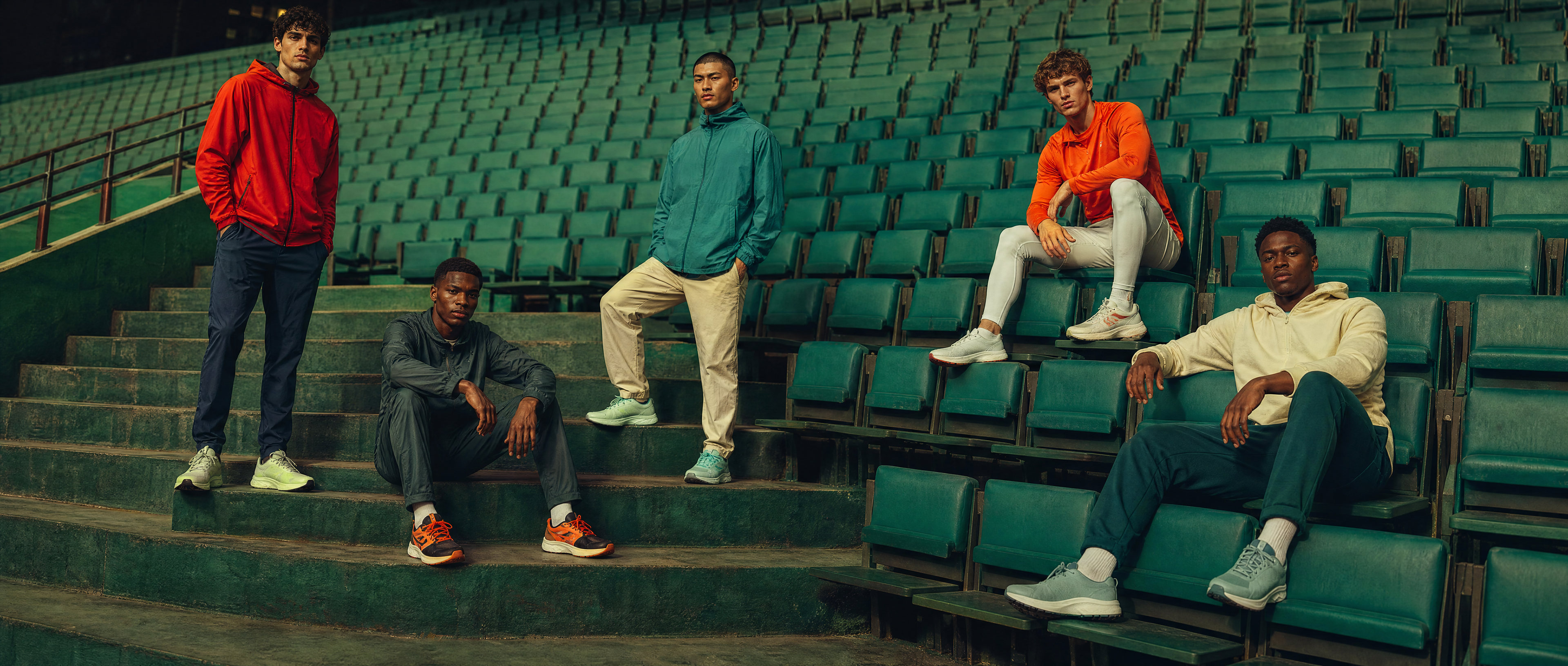
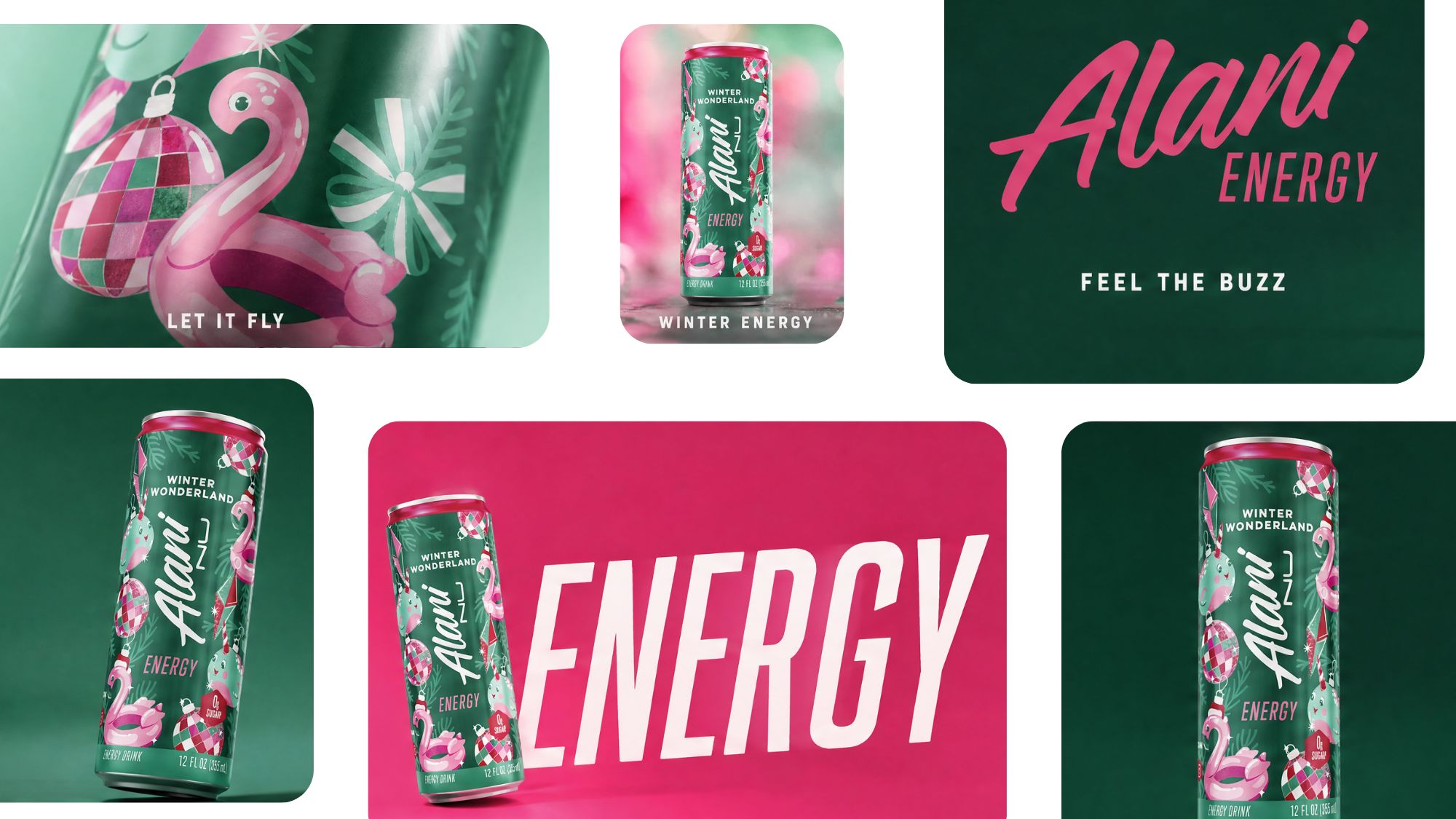
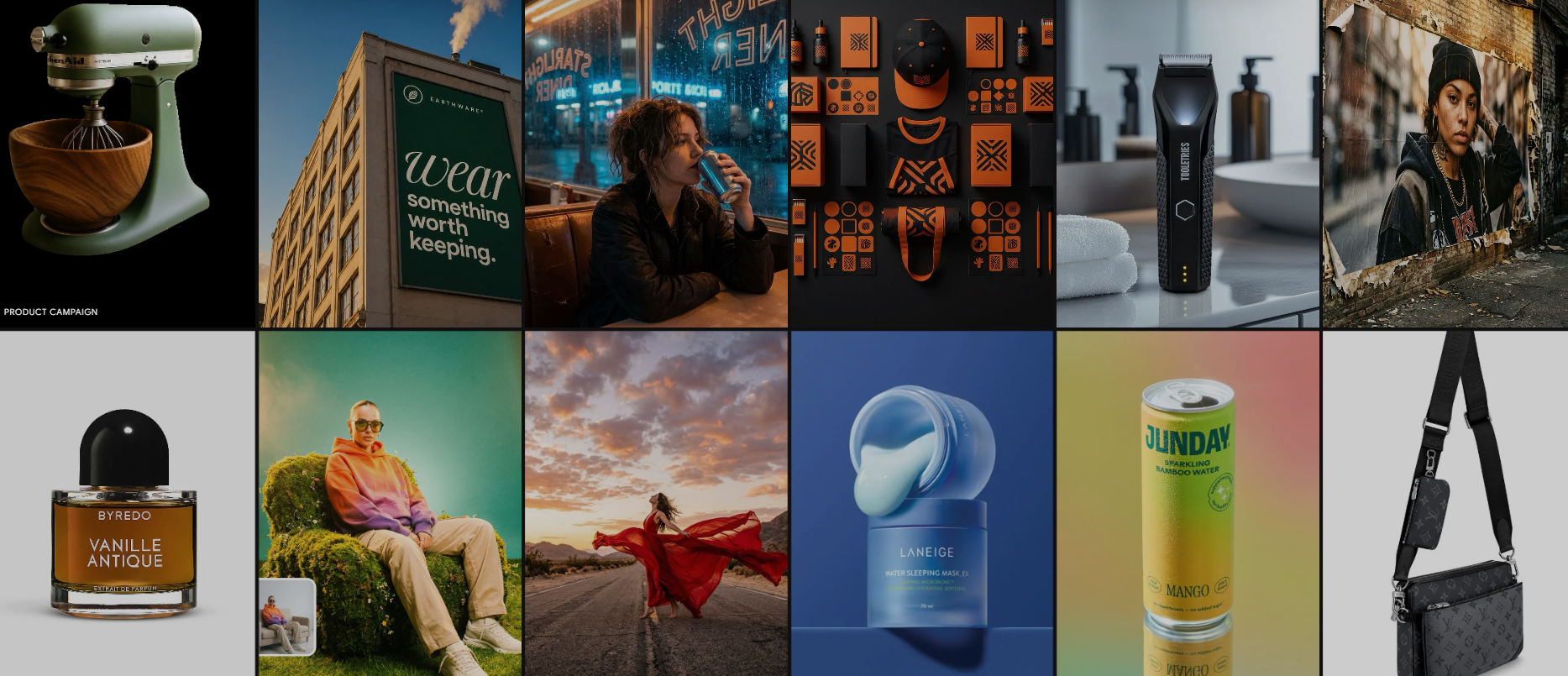
Design in 2026 sits at a specific intersection: AI design tools to execute at volume, audiences sharp enough to detect inauthenticity, and brand teams under enough pressure that the only viable path forward is building production systems and design workflows.
The trends shaping this year are the result of these three forces pushing against each other.
- Some are technical — new infrastructure for how creative work gets made.
- Some are aesthetic — visual languages emerging in response to the sterile perfection of early AI-generated content.
- Some are strategic — design decisions driven by the business need to reach more audiences, in more formats, with less friction.
All twelve are already visible in the work of leading brands and studios. The question for every creative team is how quickly they can build the capability to produce them.
Design Trend 1. Node-Based AI Workflow Tools
The most significant shift in creative tooling is the move from single-action generation to modular workflow architecture. Designers are no longer pressing a button and hoping for a good output. They’re building visual AI design workflows, say, pipelines — connecting AI models, prompts, editing nodes, and output logic into chains that execute the same way every time.
Node-based interfaces like ImagineArt Workflows give designers full transparency over how to produce a creative output. Every decision in the pipeline is visible, adjustable, and repeatable.
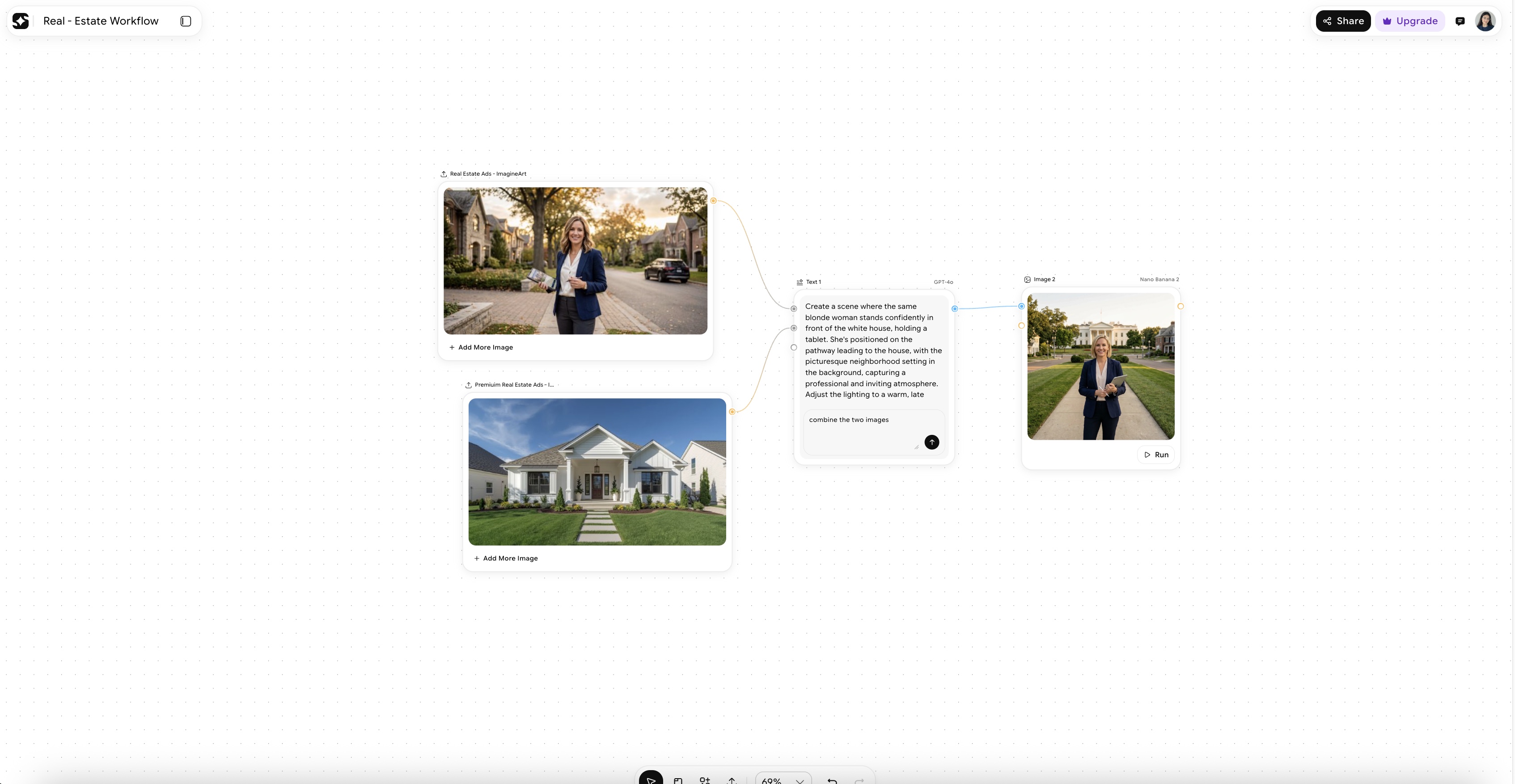 ImagineArt Workflows
The workflow becomes the creative asset + system: carrying institutional knowledge about brief structure, brand style, and output parameters that a single generation prompt cannot hold.
ImagineArt Workflows builds this architecture:
- Nodes chain in sequence: Generate Image → Edit Image → Relight → AI Resize → Image Iterator.
- Each node handles a specific production stage.
- The chain runs from brief to finished, multi-format output in a single execution.
Teams building workflows are producing campaign creative that would have required weeks of manual production in a pipeline that runs in minutes, and runs the same way every time.
Design Trend 2. Localization of Content
Global brands operating across markets have always faced the localization problem: the same campaign needs to feel native to twenty different cultural contexts simultaneously. Traditional production made this expensive and slow. One set of assets required a full production cycle for each market adaptation.
AI production infrastructure changes the economics of localization entirely.
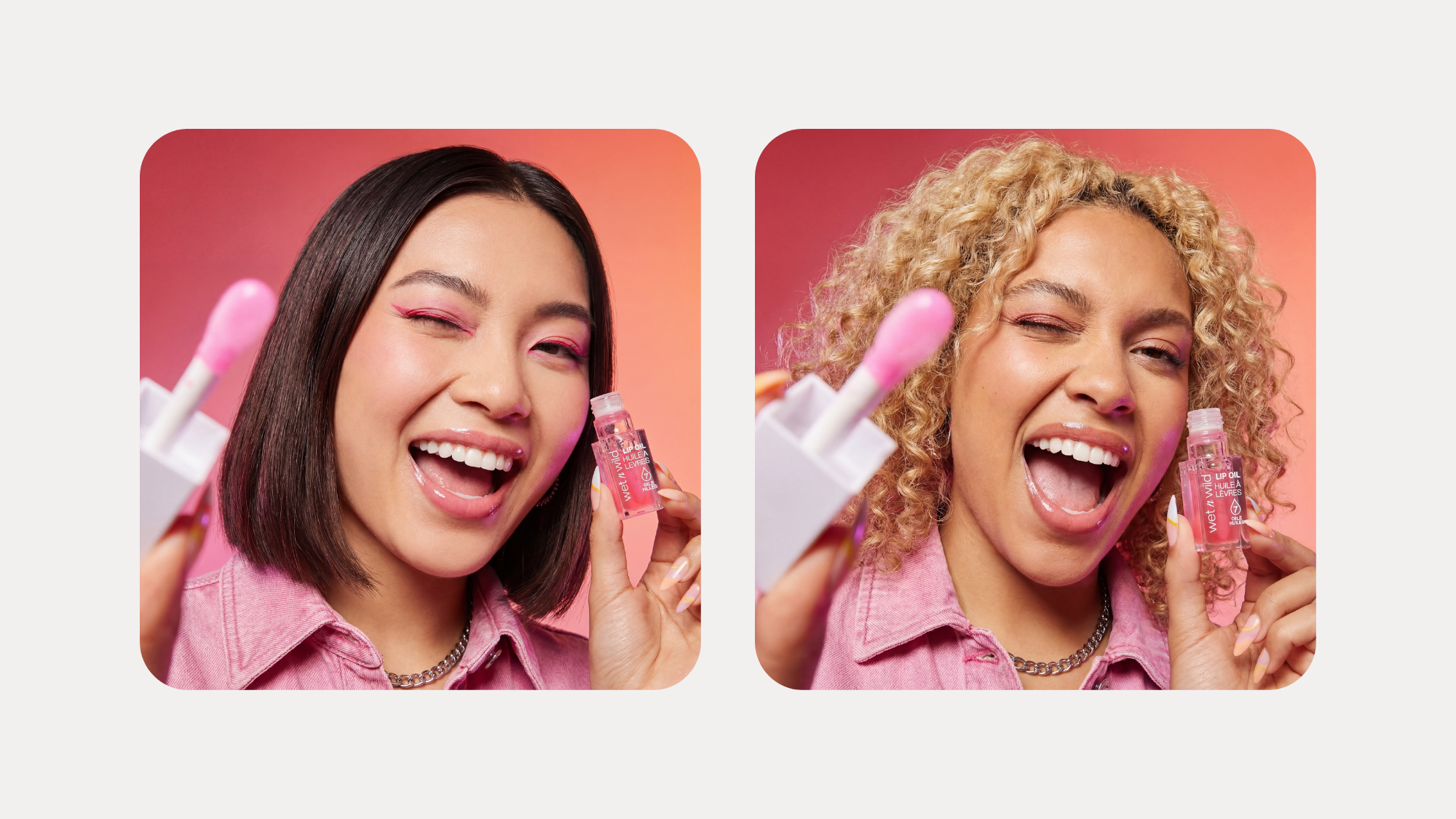 Localized content
The master workflow stays the same. The market-specific inputs, location context, model demographics, cultural visual references, diversity, language, change per run.
The output is a full set of on-brand, locally resonant assets for each market, coming from the same pipeline without a separate production cycle for each.
In 2026, the brands producing the most effective local content are treating localization as a workflow variable that doesn’t necessarily require a separate brief.
ImagineArt’s workflows process an entire market set through the same canvas with different inputs per run.
- Style references maintain brand consistency.
- Market-specific prompts adjust the scene, the environment, and the cultural visual language.
The output is consistent with the global brand and appropriate for the local context simultaneously.
Design Trend 3. Minimalism and Cloud Dancer from Pantone
Pantone’s 2026 Color of the Year, Cloud Dancer is a soft, luminous off-white with subtle warmth signals a deliberate move toward restraint.
After years of maximalist visual environments driven by social platform competition, the design direction in 2026 favors layouts that breathe, compositions with deliberate negative space, and palettes where white and near-white carry as much visual weight as accent colors.
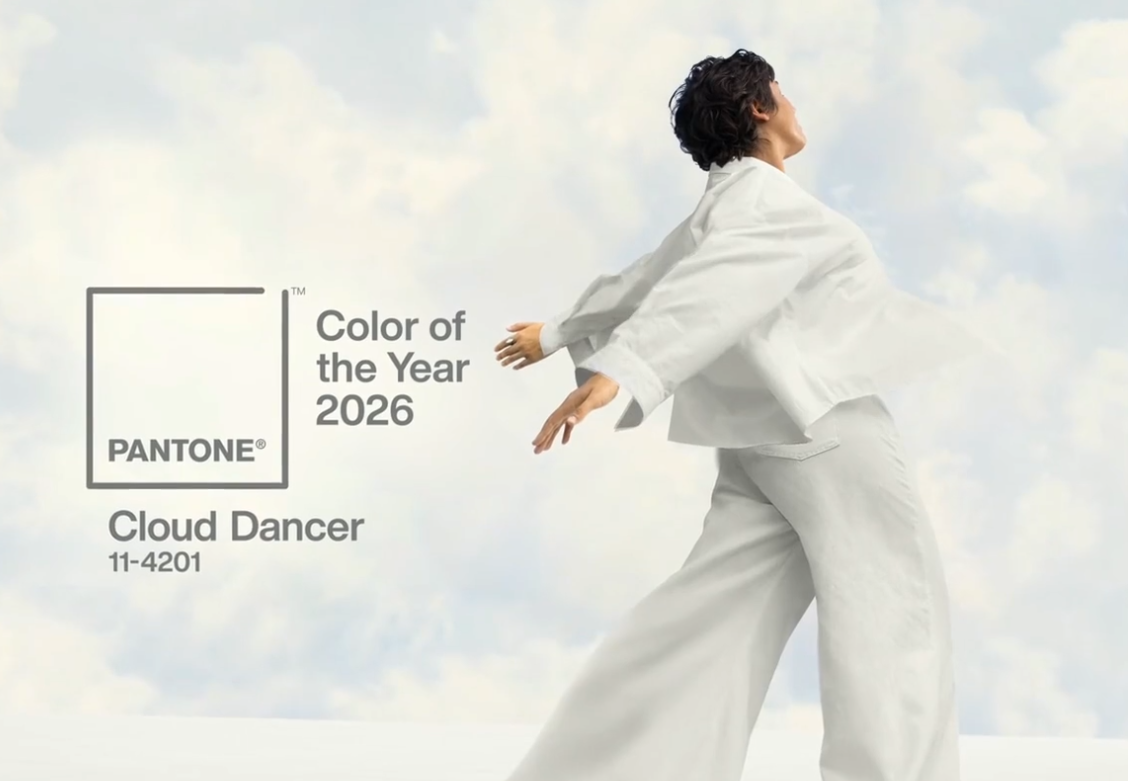 Pantone Color of the Year 2026 FI
You will find white and near-whites in branding more often, and especially with technology companies.
Neo-minimalism in 2026 is not the stark minimalism of earlier design eras. It pairs clean, open layouts with a single bold typographic element or a precisely placed color accent. The rule is one strong element in the spotlight — everything else in service of it. Cloud Dancer works as a background, a product surface, a compositional field that makes whatever sits against it feel considered rather than placed.
For product and lifestyle photography, this trend translates directly: soft white or cream backgrounds, open negative space around the subject, minimal environmental distraction.
Design Trend 4. Bold CGI
CGI as a design aesthetic has moved into mainstream brand creative. Bold CGI means the artificiality is the point: hyper-detailed product renders floating in impossible environments, brand elements behaving in ways physics doesn’t allow, visual worlds that are clearly constructed and embrace that construction as a creative statement.
 CGI design trends
The aesthetic is defined by precision, depth, and the kind of material realism that photography struggles to achieve: surfaces that catch light perfectly, environments scaled and colored for maximum visual impact, product placement in spatial contexts that exist nowhere in the physical world. Luxury, tech, beauty, and fashion brands are all moving toward this language as a way to demonstrate product quality at a level photographic production cannot always match.
Design Trend 5. Humanized AI-Powered Design
The visual language of early AI-generated content — technically correct, emotionally neutral, aesthetically uniform — produced a counter-reaction. Audiences recognize AI perfection and respond to it with distance. The humanized AI aesthetic is the design response: AI-generated work that carries deliberate imperfection, warmth, and the markers of human creative intention.
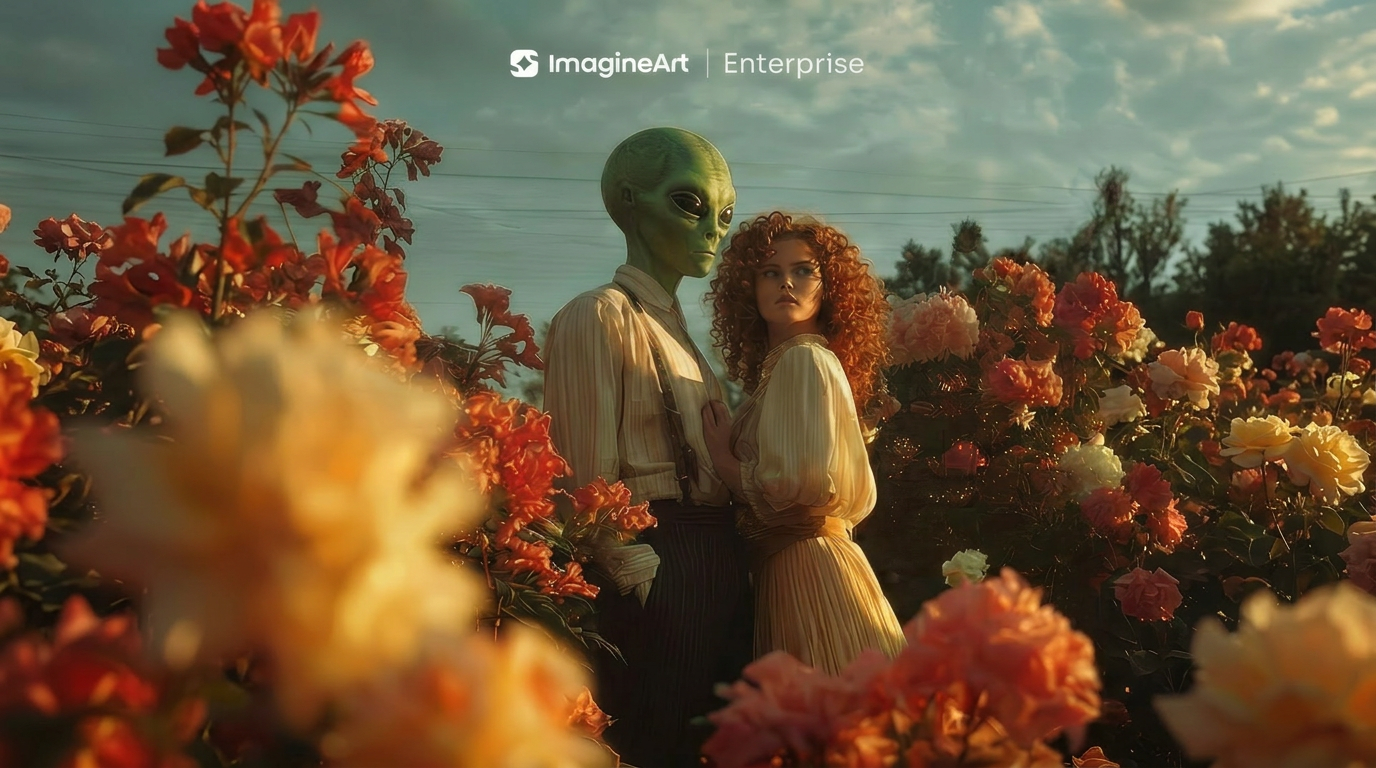 Design trends
This means hand-drawn details layered over AI-generated compositions, candid and unstaged compositional logic rather than perfectly centered subjects, color treatments that feel photographed rather than rendered, and narrative context that implies a human world rather than a generated one. The imperfections are intentional — a slight asymmetry, a texture that reads as analog, a lighting treatment that suggests natural rather than artificial light sources.
Trend 6. Creative Automation
Creative automation is the operational expression of everything AI tools make possible. The design team’s expertise — the brief structure, the style references, the lighting configuration, the output format logic — gets encoded into a workflow that executes without requiring the designer’s involvement at every step.
The distinction between teams using AI tools and teams operating with creative automation is the difference between working faster and working differently. A designer who uses AI to generate images faster is still the bottleneck. A team that has automated the production pipeline with create AI for enterprises — where validated workflows run from a brief input and return finished assets — has removed the bottleneck at the production level and redirected designer time toward creative direction and review.
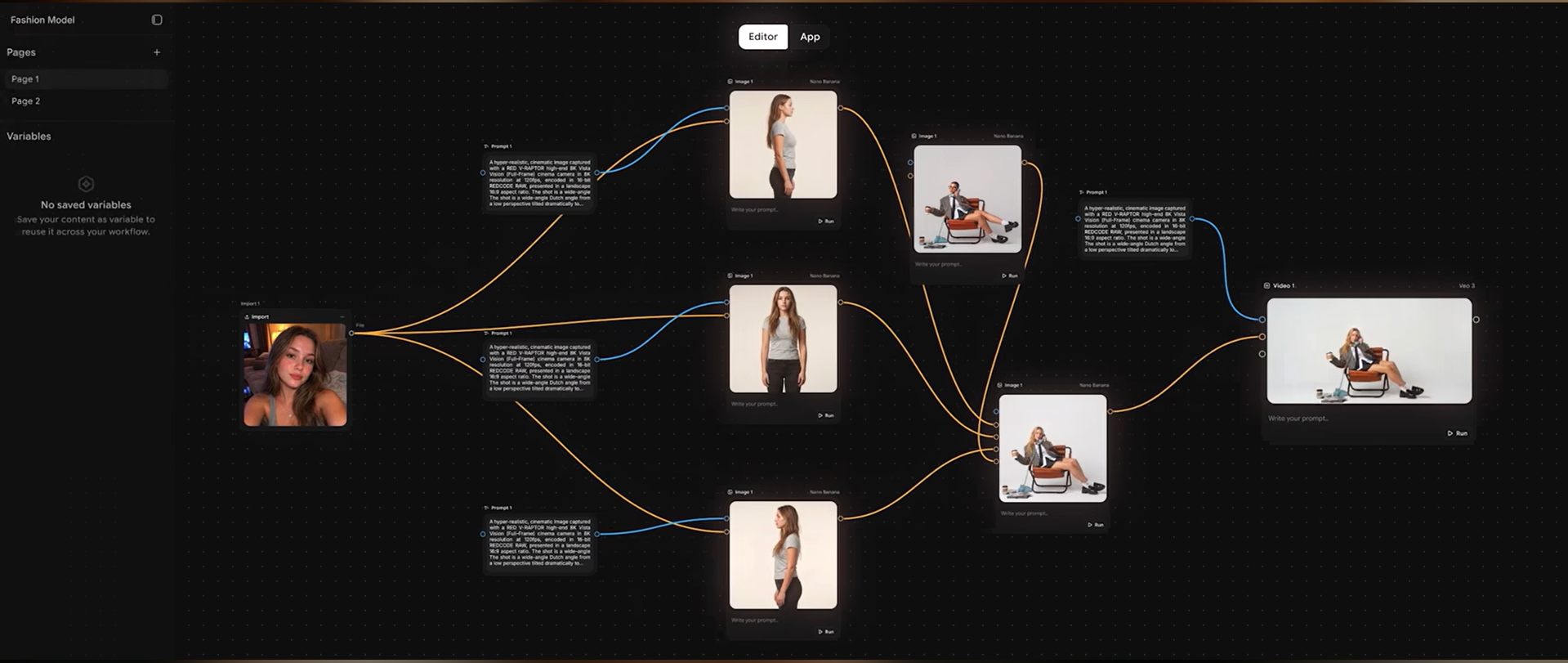 ImagineArt Workflows
ImagineArt’s App Builder converts validated workflows into Team Apps: clean interfaces where marketing teams, regional operators, and non-designers fill in the brief fields and receive production-ready outputs without touching the underlying workflow.
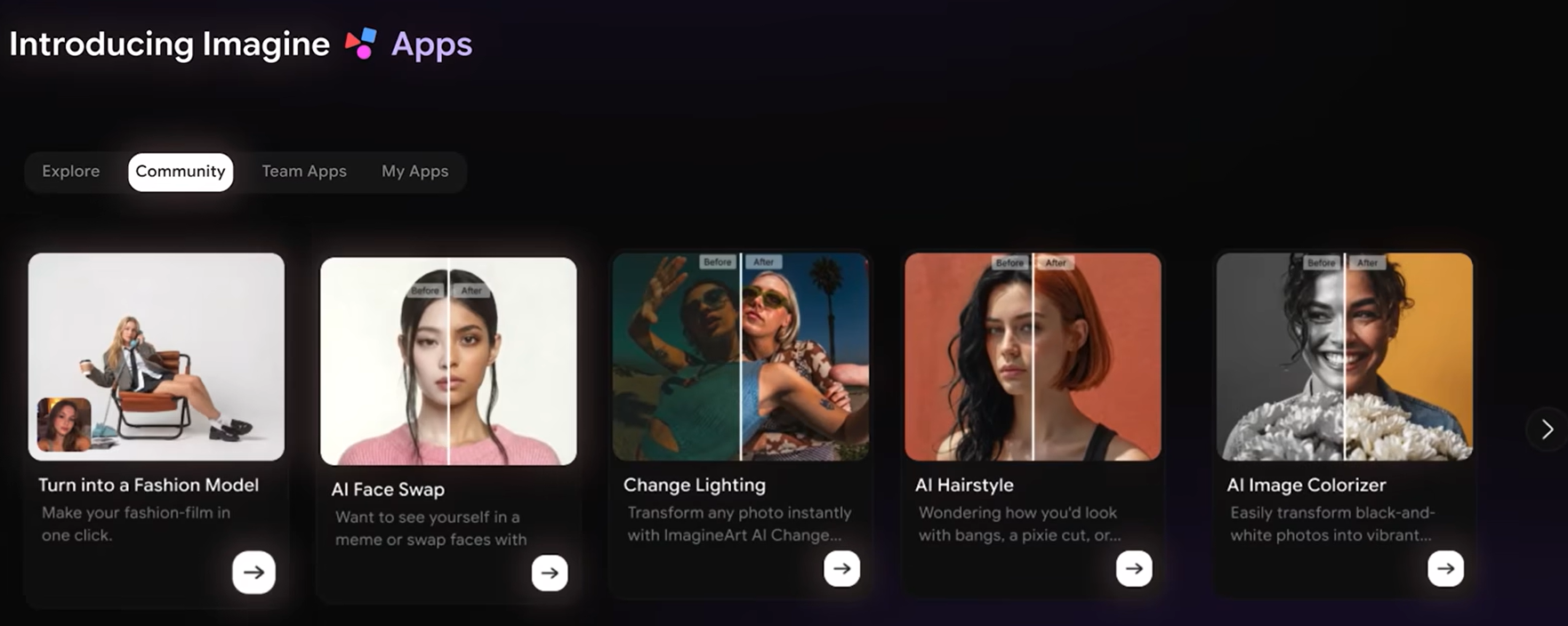 App Builder
The automation runs. The brand standard holds. The design team builds once and scales indefinitely. This is the architecture of creative automation at enterprise level — and it is one of the defining operational trends of 2026.
Trend 7. Cinematic Motion and Video Branding
Motion has become a primary brand language. Static imagery is increasingly a single state in a content ecosystem where the video version, the animated version, and the interactive version are all expected alongside it. In 2026, leading brand creative treats motion from the start of the brief — video is planned for, not adapted from stills after the fact.
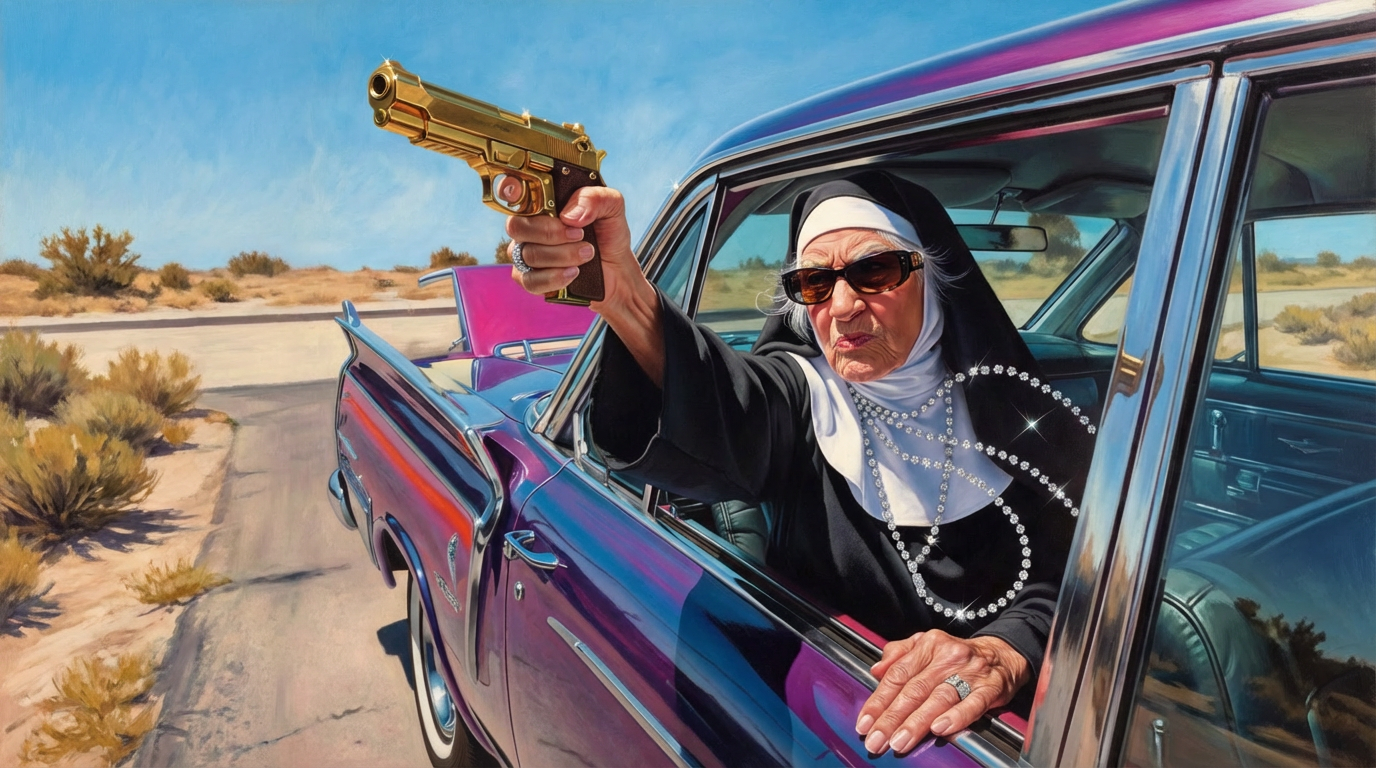
Cinematic motion in brand creative means camera movement with intention, subject animation with narrative logic, and atmospheric elements — light, smoke, environmental motion — that give the video a sense of physical space. The reference point is film direction, not content creation. Brands producing at this level are communicating with the visual fluency of cinema while operating at the speed and cost of AI production.
ImagineArt’s video generation models — Seedance 2.0, Google Veo, Kling 3.0, HappyHorse — cover the full range of cinematic motion requirements.
- Veo for deep scene coherence and cinematic quality.
- Kling 3.0 for high-motion dynamics.
- Extend Video adds duration.
- Combine Videos assembles multi-scene sequences.
- Generate Audio and Generate Music complete the production with voiceover and scoring.
A full cinematic brand video from brief to export runs in a single ImagineArt workflow.
Trend 8. Retro and Brutalist Aesthetics
Visual nostalgia and brutalist honesty are running in parallel as aesthetic responses to digital polish. Retro design in 2026 references specific eras — 90s web design, mid-century print, 70s editorial photography — with contemporary production quality. Brutalism embraces visible structure, asymmetric grids, raw typography, and the exposed logic of how the design is constructed.
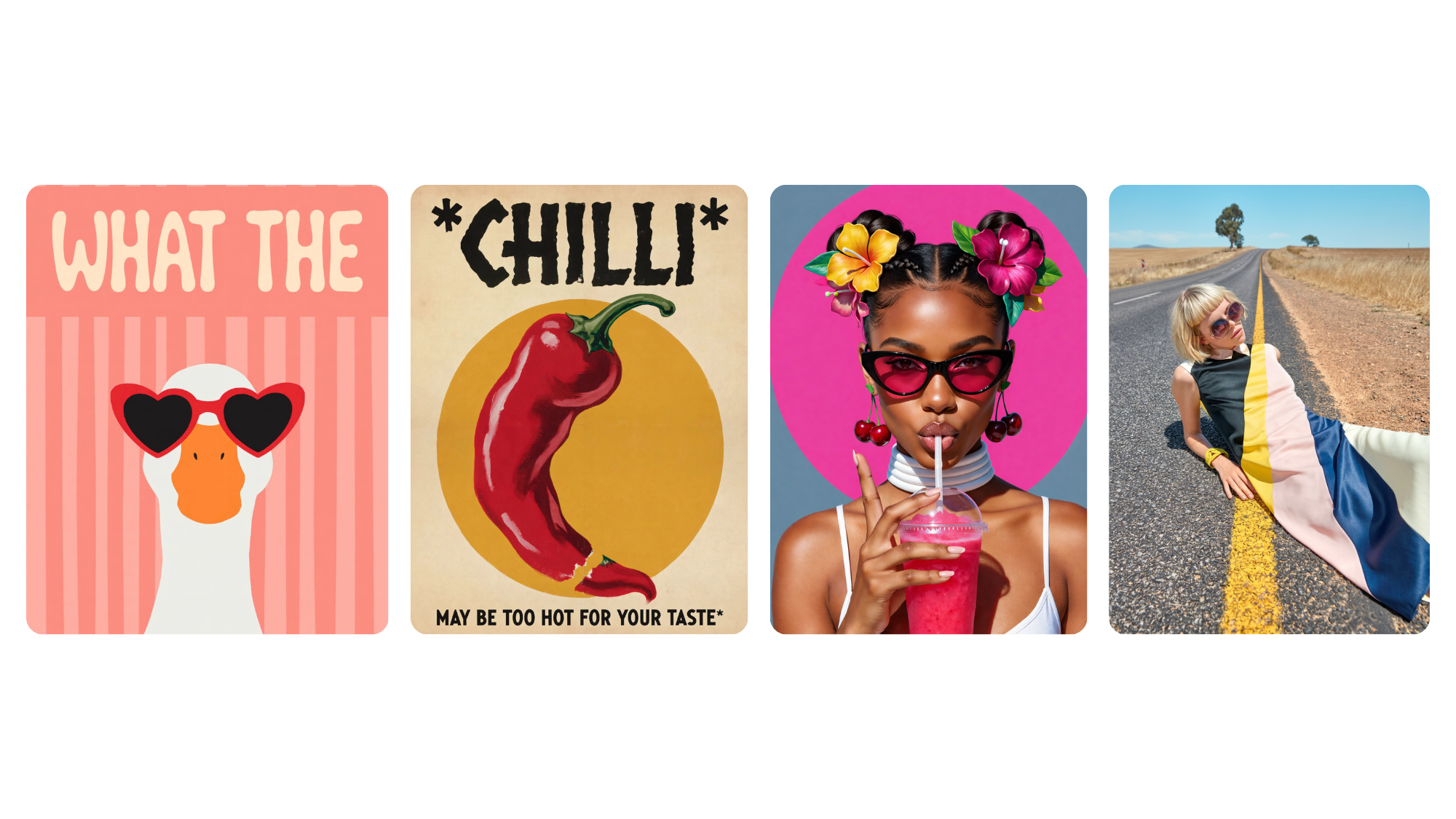 Retro
Retro
Both aesthetics share a common value: honesty about the process. Retro design says this is a reference to something real and specific. Brutalist design says this is what it is, without decoration. In a visual environment saturated with seamless AI production, both read as deliberate and considered — which is precisely what makes them effective for brands trying to stand out.
Trend 9. Immersive 3D and Spatial Design
Depth has become a compositional expectation. Flat design had its era. 2026 favors spatial layouts where foreground, midground, and background work together to create a sense of physical space inside a screen environment. Product imagery lives in constructed three-dimensional stages. Brand environments suggest architecture and spatial context rather than flat backdrop.
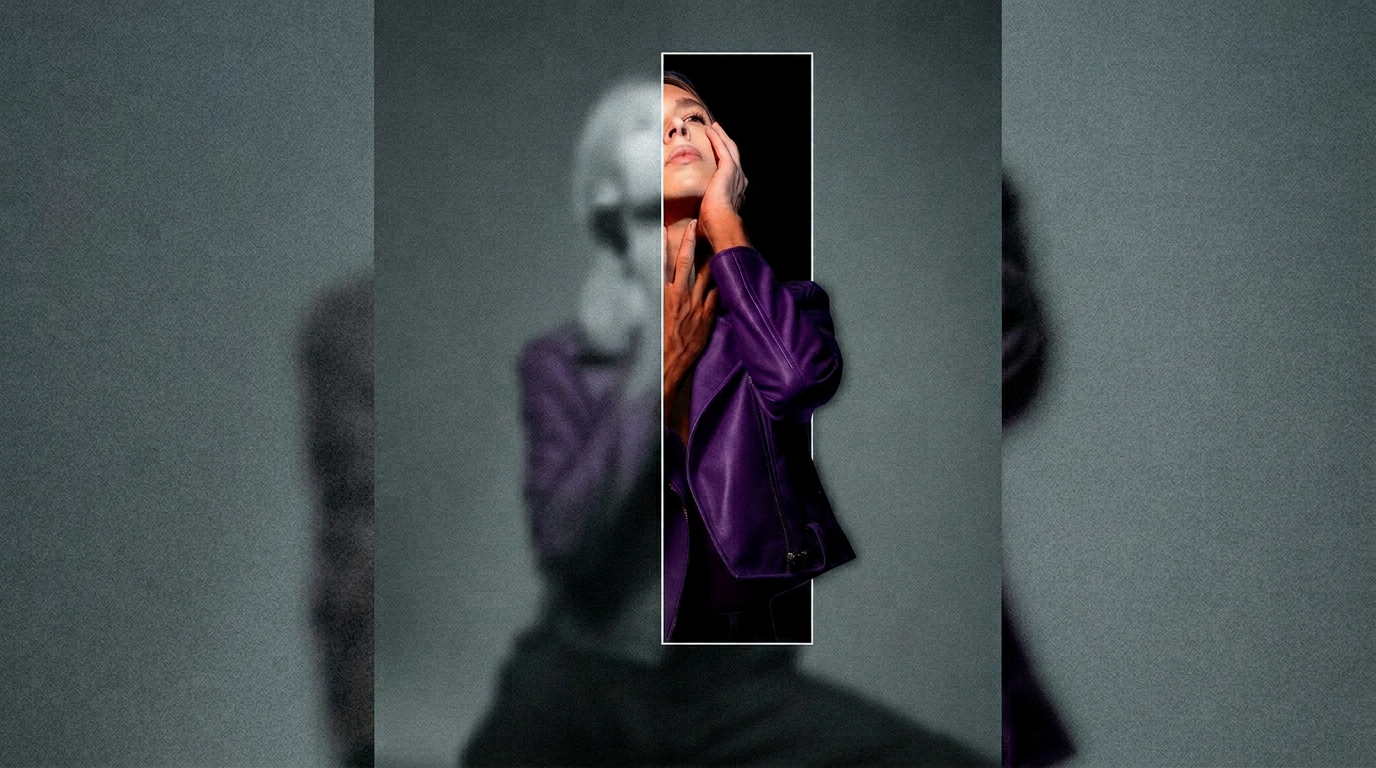
The practical application for brands runs from product visualization — showing a product in a spatial context that communicates scale, quality, and lifestyle context simultaneously — to full campaign environments where the visual world built around the product is as considered as the product itself. Virtual staging, for real estate and interiors, is entirely achievable through AI spatial generation without physical set construction.
ImagineArt generates spatial and 3D-aesthetic imagery through high-fidelity and realistic image model ImagineArt 2.0 that handles depth, perspective, and environmental lighting with production precision.
Trend 10. Vibrant and Reactive Color Storytelling
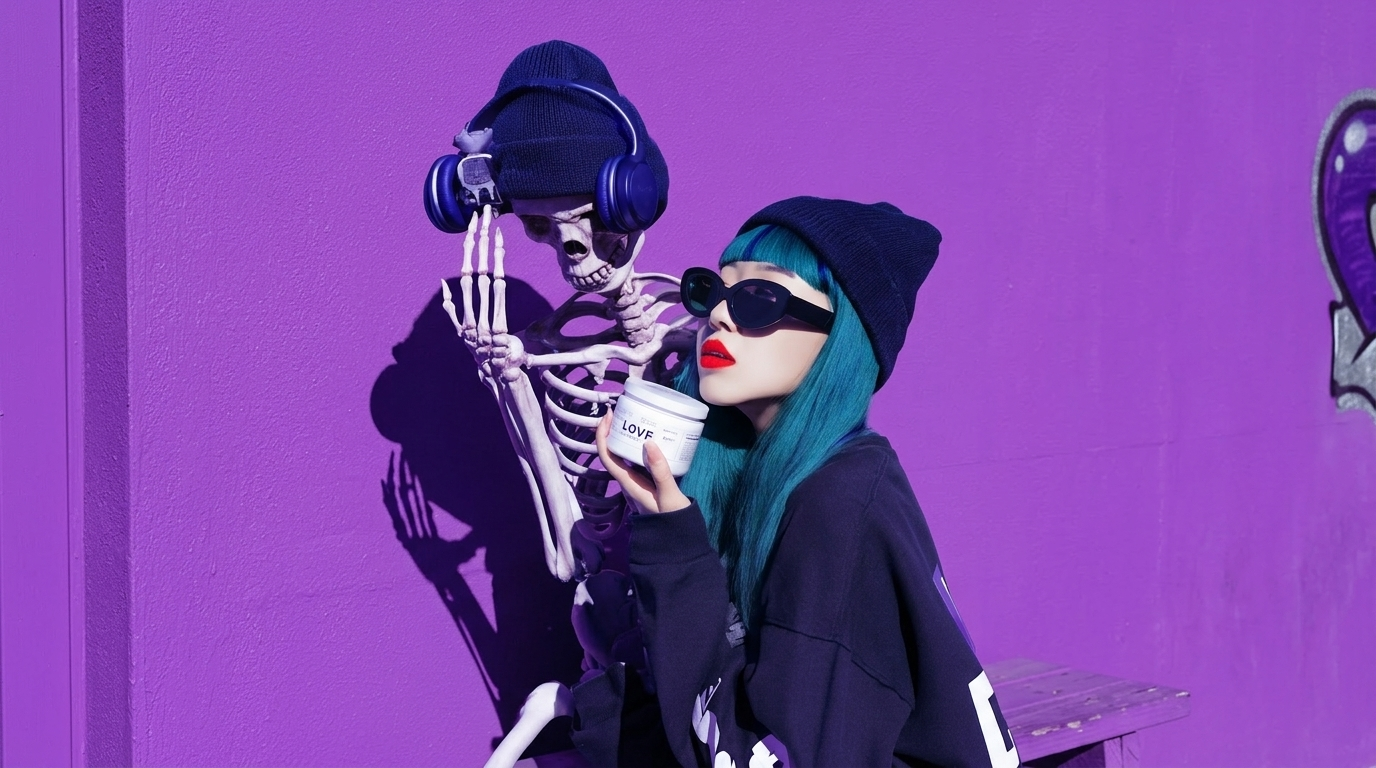
Color is functioning as narrative in 2026 brand creative. Beyond palette selection, brands are building color systems where hues shift, gradients move, and duotone treatments create emotional registers that static brand colors cannot. The most effective applications use color reactively — shifting the palette in response to content type, channel, audience segment, or campaign phase.
 CG
CG
Vibrant, high-saturation palettes with deliberate gradient work and duotone treatments are dominant in social and digital brand creative. The principle is not more color everywhere but one bold, precisely deployed color decision that carries the creative concept. A product in a monochrome environment against a single saturated accent. A gradient background that moves from the brand’s primary through a complementary tone at a rate that suggests motion.
Trend 11. AI-Generated Textures and Material Design
Texture has re-entered brand design as a deliberate material choice. AI generation has made it practical to specify and apply surface textures — concrete, brushed metal, organic linen, matte ceramic, liquid glass — across campaign imagery at a precision and consistency that physical material sourcing and photography cannot always match.
Material design in 2026 uses surface texture as brand language: a specific texture associated with a product line, a material register that signals quality and category positioning, surface treatments that create sensory associations in a visual medium. The texture of the background a product sits on communicates as much about the brand’s positioning as the product itself.
Trend 12. Adaptive Multi-Format Design Systems
The single-hero-asset production model is structurally obsolete. A campaign that ships one hero image and manually adapts it for twelve platform formats is not a design system — it’s a production bottleneck with an expensive manual step built in. The design trend of 2026 is treating multi-format output as a design decision made at the brief stage, with the format range as a parameter of the workflow rather than an afterthought in the production process.
Adaptive design systems encode the logic of how a creative concept translates across formats: how the composition reframes from 4:5 to 9:16, where the subject sits in a 1:1 crop, what background extension logic applies when the canvas widens for a 16:9 display format. These aren’t manual decisions made per format — they’re design rules built into the production pipeline.
ImagineArt’s AI Resize node makes multi-format output architectural. Set the full format range at the end of every workflow — 9:16, 1:1, 4:5, 16:9, and any print dimensions required — and every asset that exits the generation and editing stages adapts to every format in a single node pass.
- Backgrounds extend intelligently.
- Compositions reframe with the subject relationship to the frame preserved.
The result is a complete, consistent, multi-format asset set from a single generation run, the adaptive design system as production infrastructure.
Ready to jump the design bandwagon?
The twelve trends above share a common thread: the most effective creative work in 2026 is systematic. Node-based workflows, creative automation, adaptive multi-format systems, localization pipelines — these are all expressions of the same underlying shift. Design capability is increasingly measured by the quality of the systems a team builds, not the quality of the individual outputs a designer produces in isolation.
We built ImagineArt for this era. Its workflow canvas, multi-modal AI access, brand governance layer, and App Builder distribution infrastructure are the production architecture that turns 2026’s dominant design trends from aspirational references into executable, repeatable creative output.
The teams building these systems now will define what brand creative looks like in the next three years. The tools are available. The question is whether the team builds the system or keeps producing one asset at a time.
Ready to put this into practice?