
Saba Sohail
May 4, 2026 • Updated June 10, 2026
11 mins Read
DTC brands live and die by creative velocity. The brands winning on paid social, TikTok, and YouTube are producing creative at a volume and iteration speed that traditional production simply cannot match — multiple ad variations per week, fresh UGC-style content, product video in every format the platform algorithm favors. AI video generators have made this possible for brands without the production budgets of legacy consumer companies.
The market for AI video generation has matured rapidly. What was experimental in 2023 is now a production tool. Character consistency, product motion, cinematic quality, and platform-native formats are all achievable.
The best AI video generator for DTC product ads depends on your content format: Seedance 2 for lifestyle motion, Veo 3.1 for cinematic quality, Kling for high-motion social content, Hailuo for UGC-style human interaction, and ImagineArt for multi-model workflow production.
This guide covers fourteen of the leading AI video generators for DTC product advertising, what each one does best, and how DTC creative teams can scale production across all of them through a single platform.
1. ImagineArt AI Video Generator
ImagineArt AI video generator gives DTC brands something no standalone model offers: access to every major AI video model — Seedance 2, Veo 3.1, Kling, HappyHorse, Wan, and more — through a single production canvas, connected into automated workflows that go from product brief to finished ad in a single run.
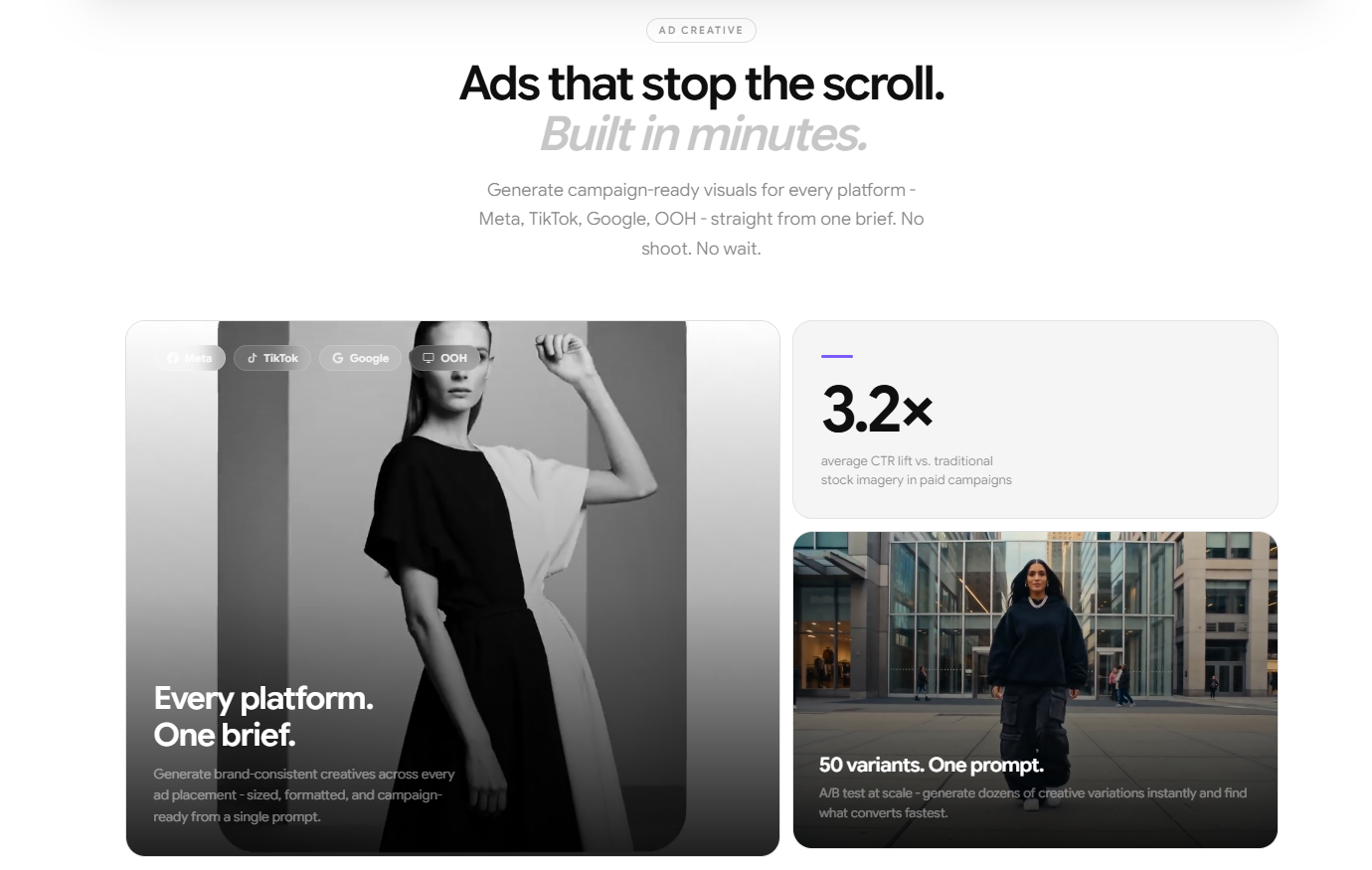 Creative Production with ImagineArt Enterprise
ImagineArt Workflows chains video generation with image editing, relighting, audio production, format adaptation, and upscaling in a continuous pipeline. A DTC product ad workflow runs: Generate Image → Relight → Generate Video → Extend Video → Generate Audio [voiceover + music] → AI Resize [9:16, 1:1, 4:5] → Upscale Video. This is an example pipeline delivers a complete, multi-format product ad set ready for paid social, TikTok, and YouTube from a single brief input. For a step-by-step production framework, see how to scale creative production with AI.
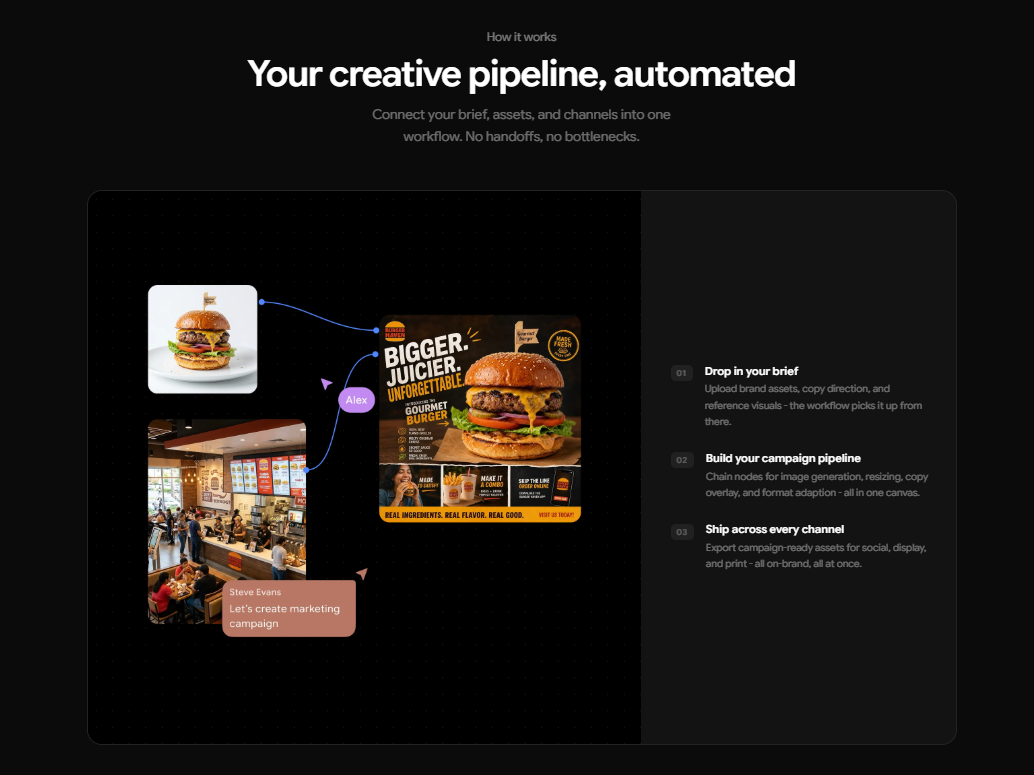 ImagineArt - AI Design Workflows
For DTC brands producing at volume,ImagineArt is the creative AI for enterprise. It gives you scalable content systems to get from an image through complete workflow in one run — every SKU animated, lit consistently, and delivered in every platform format. Brand governance is structural: style references lock the visual identity into every output, so the hundredth ad looks as on-brand as the first. The App Builder converts validated workflows into Team Apps, letting performance marketers run production independently without designer involvement in every execution.
For a breakdown of all AI ad creation tools available to DTC teams, see best AI ad tools for creative content creation.
2. AI Influencer App by ImagineArt
The AI Influencer App by ImagineArt is purpose-built for DTC brands that need a consistent AI-generated brand persona to anchor content across campaigns, social channels, and ad creative. The app creates a defined virtual model — a specific face, body type, aesthetic, and visual identity — that appears consistently across every piece of content it generates, unlike standard text-to-video generation where the subject varies between shots. For a comparison of AI-generated personas versus real UGC creators for ad performance, see AI avatars vs real UGC creators.
For DTC brands, the consistent AI influencer persona solves one of the most expensive problems in content production: the cost of booking the same model repeatedly across all campaign touchpoints. Once the AI persona is defined, it appears in product photography, lifestyle video, UGC-style ad content, and social posts — all produced at a fraction of the cost and turnaround time of human model shoots.
For brands building an always-on content operation, the AI Influencer App delivers the creative consistency that physical model production cannot sustain at social media volume.
For UGC ad production at scale, see how to make UGC ads with AI.
3. ImagineArt AI Ad Studio
ImagineArt AI Ad Studio is built specifically for DTC brands producing ad creative at volume — a purpose-built production environment distinct from the broader AI Video Generator platform. Where AI Workflows handles end-to-end pipeline automation for any creative output, Ad Studio is structured around the ad creative formats DTC performance teams actually run: UGC-style video, product testimonials, brand spots, and multi-format social ad sets.
The platform includes prebuilt UGC and lifestyle ad templates that work as production starting points rather than creative constraints. DTC teams can input a product image and generate polished ad creative across 9:16, 1:1, and 4:5 formats in a single session, eliminating the manual resize and reformat steps that slow production between brief and delivery.
For brands running always-on paid social — where weekly creative refresh is a performance baseline rather than a campaign exception — Ad Studio compresses the production cycle between brief and live creative. AI avatars replace model booking for UGC-format content. Format adaptation runs automatically. Each output carries brand reference controls ensuring consistency across a high-volume creative library.
For a head-to-head comparison of DTC-focused ad creation platforms, see best AI video ad creators and best AI video ad generators.
4. Seedance 2
Seedance 2 is ByteDance’s flagship AI video generation model and one of the most capable models for DTC product advertising, particularly for content requiring natural subject motion within realistic lifestyle environments. The model excels at generating video where a product or person moves convincingly inside a scene — a beverage poured, a garment worn and in motion, a skincare product applied — with the environmental coherence that makes generated content read as filmed rather than synthetic.
Seedance 2 is accessible through ImagineArt Workflows as one of the platform’s built-in video models, enabling DTC teams to chain it into a full production pipeline rather than using it as a standalone generation interface. For high-frequency DTC content — weekly product video for social and paid channels — Seedance 2 delivers the combination of generation speed and output quality that production calendars require.
5. Runway 4.5
Runway 4.5 advances the cinematic quality and creative control capabilities that have made Runway the go-to video AI for creative professionals. The model delivers high-fidelity video generation with precise camera motion controls — pan, tilt, push, orbit — that give creative directors the ability to specify shot grammar with the same language they would use briefing a cinematographer.
The model’s motion brush feature allows creative teams to define which elements of a scene move and how — isolating product motion from environmental motion, specifying the direction and speed of a pour, controlling the drift of smoke or steam around a candle or fragrance product. For DTC brands in beauty, fragrance, food and beverage, and lifestyle categories where the visual presentation of the product is the selling proposition, Runway 4.5’s combination of cinematic quality and directorial control makes it the strongest choice for premium hero ad content.
6. HappyHorse
HappyHorse brings a distinctive visual aesthetic to AI video generation — a cinematic, slightly stylized quality that sits between photorealism and editorial illustration, making it particularly effective for DTC brands in fashion, beauty, and lifestyle categories where the visual language of the content is part of the brand statement.
For DTC fashion brands, HappyHorse produces lookbook and editorial video content with a visual register that matches the aspirational positioning that the category requires. The model handles fabric motion, skin rendering, and environmental atmosphere with an aesthetic sensibility that purely photorealistic models do not always capture. The model is accessible within ImagineArt Workflows alongside other video generation models, allowing DTC teams to route briefs to HappyHorse when the aesthetic fits.
7. Luma Ray 2
Luma AI’s Ray 2 model is built for physically accurate, photorealistic video generation with strong spatial coherence and material rendering quality. For DTC product advertising, Ray 2 excels in scenarios where the product’s material properties — reflectivity, transparency, texture, weight — are central to the visual appeal of the content. Glassware, metals, liquids, and packaging materials render with the kind of physical accuracy that communicates product quality at a visual level.
Ray 2 also handles environment generation with spatial accuracy — generating consistent architectural and lifestyle environments that provide believable context for product placement without the physical production cost of location shooting or set construction.
8. Veo 3.1
Google’s Veo 3.1 represents the current state of the art in cinematic AI video generation, producing output with a depth of scene understanding and visual coherence that makes it the strongest model for DTC brands whose creative ambition runs toward brand film-quality production. The model handles complex scene compositions, multi-element environments, and nuanced lighting scenarios with the kind of consistency that earlier generation models could not sustain across longer clips.
Veo 3.1 is also the strongest model for DTC video requiring accurate text rendering within the generated scene — product labels, packaging text, and on-screen graphics that earlier models distorted. The model is accessible through Google Cloud Vertex AI and through ImagineArt Workflows as part of the platform’s multi-model video generation capability.
9. Wan 2.6
Wan 2.6 delivers AI video generation with strong spatial consistency and structured scene management, making it particularly effective for DTC product advertising formats that require controlled, organized visual environments. For DTC e-commerce brands producing product demonstration video — content that shows how a product works, how its features interact, how it fits into daily use — Wan 2.6’s structured scene coherence reduces the visual drift and spatial inconsistency that can make AI-generated product demos read as generated rather than filmed.
Wan 2.6 handles multi-element scenes efficiently — a product alongside props, supporting elements, and environmental context — with better object interaction logic than many comparable models.
10. Hailuo
Hailuo, developed by MiniMax, is one of the strongest AI video models for generating realistic human motion — the key capability for DTC UGC-style ad content, influencer-style video, and any format where a person interacting with, using, or responding to a product is the central visual element. The model produces human movement — facial expressions, gestures, body language, and product interaction — with a naturalness that makes UGC-aesthetic content read as genuinely human-captured rather than generated. For the broader UGC ad workflow, see which AI tool is best for UGC.
The model handles lip sync for voiceover-driven content accurately enough for social and paid advertising applications. For DTC brands building a large library of UGC-style ad variants — testing different personas, different tonalities, different use scenarios — Hailuo’s human motion quality makes variation production at scale viable without quality degradation across the library.
11. Kling
Kling, developed by Kuaishou, is the leading AI video model for high-motion content — video where subjects, products, and environments move dynamically, quickly, and with the visual energy that performs in fast-cut paid social and TikTok content. The model maintains subject and object consistency across high-motion sequences where other models lose coherence, making it the reliable choice for DTC ad formats built around movement, action, and dynamic product reveals.
Kling also excels at maintaining character and product consistency across sequential shots within a video, enabling DTC teams to build multi-scene ad sequences where the same product and persona appear across cuts with visual coherence.
12. Pika 2.2
Pika 2.2 is the AI video model with the strongest creative effects and stylistic transformation capability in the category — making it the tool of choice for DTC brands whose ad creative relies on visual inventiveness, unexpected transitions, and platform-native effects that distinguish content in saturated feed environments.
For DTC brands in beauty, cosmetics, and fashion where the transformation of appearance is part of the product promise — a foundation that changes skin appearance, a hair product that transforms texture — Pika 2.2’s visual transformation effects align directly with the ad creative logic of those categories. For DTC performance marketing teams testing creative hypotheses at volume, Pika 2.2’s speed of generation and creative range support the iteration velocity that performance optimization requires.
13. Pixverse 6
Pixverse 6 advances the platform’s strengths in character-driven video generation — producing AI-generated video content where a consistent character, persona, or virtual spokesperson appears across multiple pieces of content with stable visual identity. The model generates video with strong emotional range in character expression — facial animation, body language, and reactive motion that communicates personality and builds audience connection with the virtual persona over repeated content exposure.
Pixverse 6 also handles stylistic range effectively, producing content that spans photorealistic, editorial, and animated aesthetic registers from the same character base. DTC brands whose content strategy spans premium brand video and lo-fi social content can use the same AI persona across both registers without rebuilding the character definition.
14. Lucy
Lucy is an emerging AI video generation model built around expressive, narrative-driven video output — prioritizing the emotional and storytelling quality of generated content alongside visual fidelity. For DTC brands whose ad creative strategy centers on brand storytelling and emotional product positioning, Lucy’s output carries a quality of intentionality and narrative coherence that pure visual fidelity models do not always achieve.
For DTC content formats that require emotional resonance — brand films, product origin stories, mission-driven content — Lucy’s narrative sensibility translates into video that builds feeling around the product rather than simply demonstrating it.
How to Scale Creative Production for DTC Brands with ImagineArt Enterprise
Every model covered in this guide produces strong output for specific use cases. The operational challenge for DTC brands is not identifying the best model for a brief — it is building the infrastructure to use the right model for every brief, at the volume a DTC content operation requires, with the brand consistency that makes a library of generated content feel like a coherent brand rather than a collection of individually produced assets.
ImagineArt Enterprise solves this at the system level. The platform's AI design workflows canvas gives DTC teams access to all of the models in this guide from a single production environment. Seedance 2 for lifestyle product motion. Veo 3.1 for cinematic brand film quality. Kling for high-motion social content. HappyHorse for editorial fashion and beauty aesthetics. Hailuo for UGC-style human motion. Each model is a node in the same canvas — selectable per brief, chainable into the same production pipeline, delivering output through the same format adaptation and upscaling stages.
A performance marketing team testing thirty ad variants per week does not run thirty separate generation sessions. They build one validated workflow — brief in, multi-format ad set out — and run it with variation inputs across every concept they want to test. Image Iterator processes an entire product catalog through the same video workflow in a single run. AI Resize delivers every output in every platform format simultaneously.
Brand governance through AI design workflows ensures that volume does not compromise visual identity. Style references are locked into the workflow architecture. The hundredth ad variant carries the same visual DNA as the first. ImagineArt’s App Builder converts validated production workflows into Team Apps — clean interfaces where performance marketers, social managers, and regional teams run production independently.
For DTC brands ready to move from per-asset AI generation to systematic creative production at enterprise scale, ImagineArt Enterprise is the platform that makes it operational.
For ad creative testing methodology once your production pipeline is live, see how to test ad creative variations with AI and how to handle ad fatigue.
Saba Sohail
Saba Sohail is a Generative Engine Optimization and SaaS marketing specialist working in automation, product research and user acquisition. She strongly focuses on AI-powered speed, scale and structure for B2C and B2B teams. At ImagineArt, she develops use cases of AI Creative Suite for creative agencies and product marketing teams.