Beauty marketing in 2026 rewards one thing above all: producing more visually appealing content, faster, for more skin tones, markets, and audiences, without proportional cost increases. The production gap between brands that have solved this and those that have not is growing every launch cycle. These are the fourteen beauty marketing trends defining the production gap in 2026.
AI Creative Production at Scale
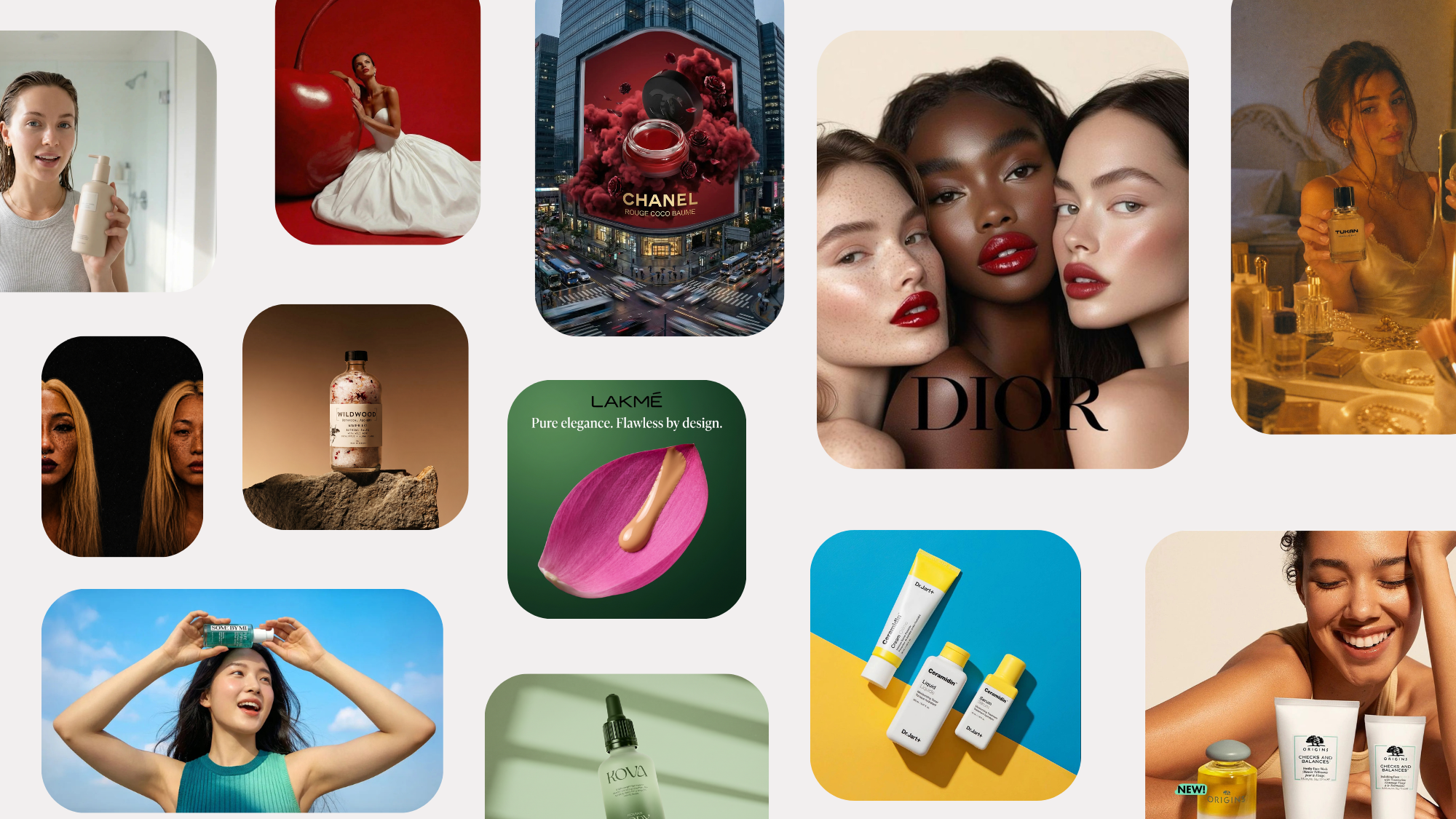
Beauty marketing runs on visual volume. A single product launch now requires hero campaign images, product detail shots across every shade and variant, short-form video content, paid social ads in multiple sizes, email creative, influencer brief assets, and localized versions for key markets: all simultaneously, all on brand.
 AI creative production at scale
ImagineArt is the creative AI for enterprises that need to deliver that volume without building a production agency inside their marketing team. Beauty brands using AI creative production generate full campaign asset sets from a single brief, produce shade-accurate product imagery across complete ranges, and ship seasonal campaigns weeks faster than studio-dependent workflows allow. AI creative production at scale is the new production baseline in beauty: and one of the beauty marketing trends that has moved fastest from early adoption to industry standard.
AI-Generated Product Visuals Across Shade Ranges and Skin Tones
Shade range representation in beauty marketing has been a persistent failure point. Producing campaign imagery that accurately represents every product variant across the full spectrum of skin tones demands a scale of creative production that traditional photoshoots cannot deliver cost-effectively.
AI-generated product visuals solve this at the structural level. Beauty brands generate accurate, on-brand imagery for every shade in a range: across multiple skin tones, lighting conditions, and application styles: without scheduling large-scale shoots. Brands that used to show 6 shades in campaign imagery now show 40. That is not a marginal improvement in representation. It changes the consumer experience entirely.
UGC-Style Content Replacing Traditional Campaign Shoots
Polished, high-production beauty campaigns are losing ground to content that feels real. Consumers trust peers more than brand studios: and UGC-adjacent content, shot with imperfect lighting, casual framing, and authentic reactions, consistently outperforms traditional campaign creative on social platforms.
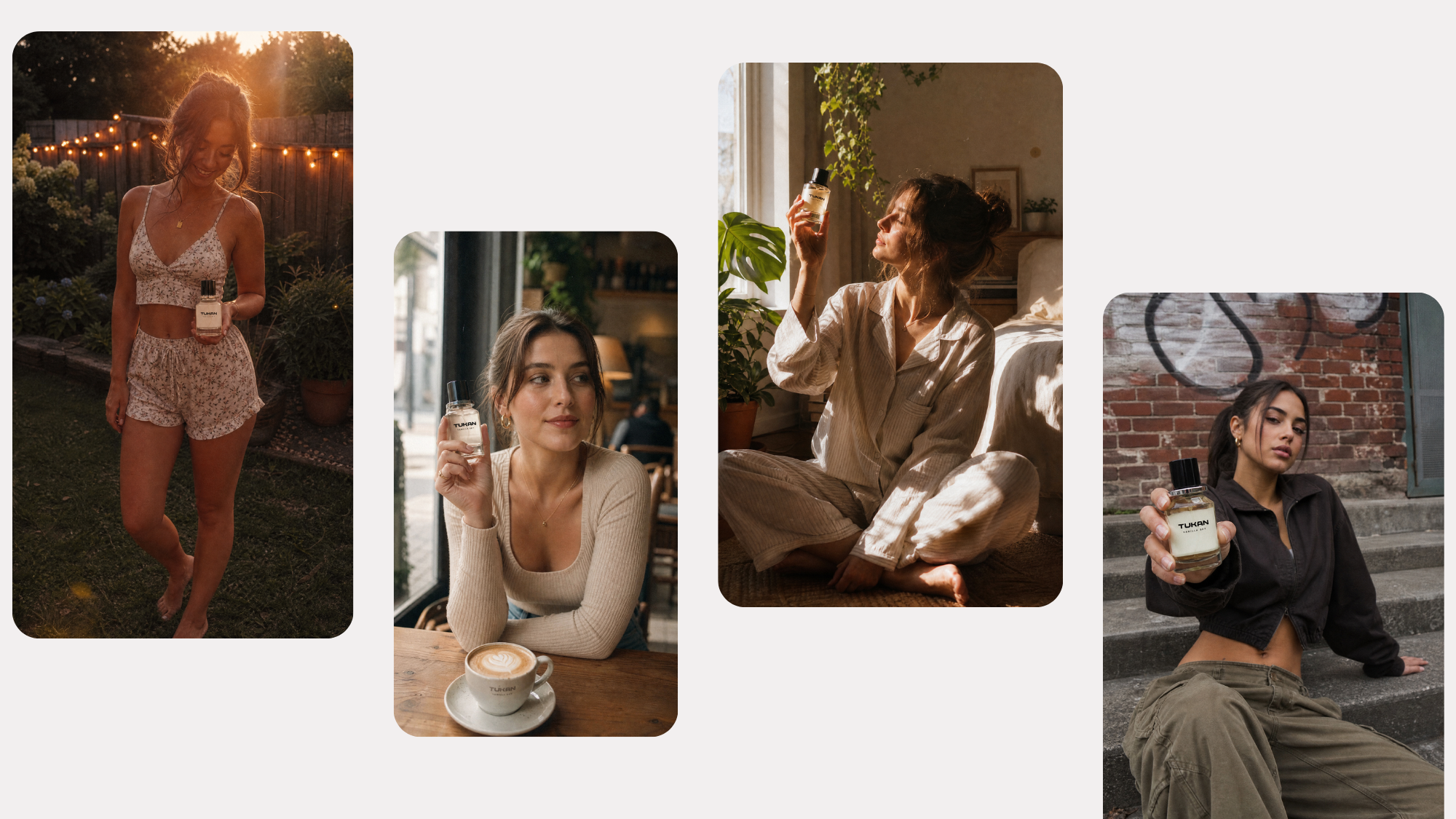
Beauty brands are responding in two ways: partnering with real creators for genuine UGC, and producing brand-owned content that captures the aesthetic of authenticity. AI tools for beauty content creation enable the second approach at scale: generating content that feels organic and personal without requiring a creator on every brief. The brands getting the balance right combine creator-generated authenticity with brand-owned AI creative for full-funnel coverage.
Virtual Try-On Integrated into Ad Creative
Virtual try-on has moved from novelty feature to performance driver. Beauty brands embedding try-on functionality directly into social ads, product pages, and retailer listings are seeing conversion lifts that justify significant investment in the technology.
The creative integration matters as much as the technical implementation. Try-on ads that feel clunky or require too many steps lose the consumer before they convert. The brands winning with this format design the try-on experience as a core part of the creative brief: not bolted onto existing assets. As mobile AR capabilities improve, virtual try-on becomes a standard creative format for any beauty brand competing seriously in paid social.
Creator Economy Replacing Brand-Owned Shoots
The economics of beauty content creation have fundamentally shifted. Creator-produced content: from a network of micro and mid-tier creators: now delivers better performance at lower cost than most brand-owned production. The brief goes to ten creators instead of one production company. The output is ten pieces of native, platform-optimized content instead of one campaign video.
Beauty brands formalizing creator programs with clear briefs, asset ownership terms, and performance-based structures build content pipelines that scale with demand. The shift also reduces the risk of a single campaign missing: when ten creators interpret a brief, at least five will resonate. Brand marketing teams are repositioning from producers to creative directors, setting the strategy and letting creators execute. The creator economy shift is among the beauty marketing trends with the most structural impact on how brand teams are built and budgeted.
TikTok Shop-Native Content Formats
TikTok Shop has changed the economics of beauty discovery and conversion. Products can go from unknown to sold out in 48 hours when the right creator picks them up: and beauty brands that understand how to produce TikTok Shop-native content access that distribution consistently.
The format requirements are specific. TikTok Shop content that converts is educational, demonstrates the product in use, and creates a moment of genuine reaction or discovery. Brands producing content for TikTok Shop the way they produce Instagram grid posts are wasting the format. Beauty brands building dedicated TikTok Shop content strategies: with creator-specific briefs, real-time trend responsiveness, and fast production cycles: build acquisition channels that cost a fraction of paid social. The e-commerce marketing frameworks driving social commerce apply directly here.
Clean Beauty and Ingredient Transparency Storytelling
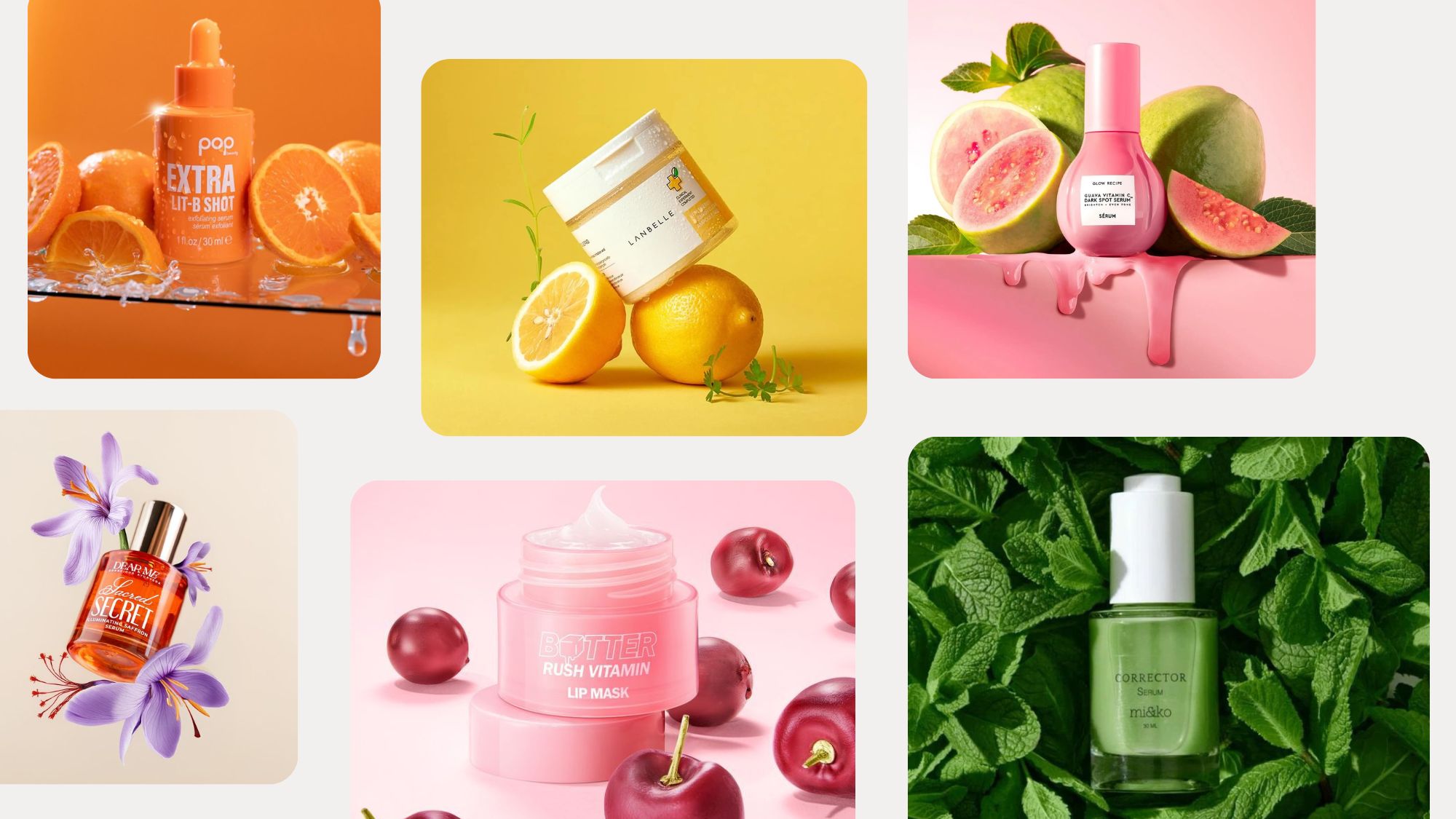
Consumer demand for ingredient transparency has moved from a niche preference to a mainstream expectation. Clean beauty positioning in 2026 requires more than a free-from label: it requires educating the consumer on why specific ingredients matter, what the brand's formulation philosophy is, and how that translates to skin outcomes.
 Ingredients Transparency in Beauty Marketing
Brands that invest in ingredient education content: explainer videos, formulation stories, science-backed claims: build authority in categories where consumer trust is the primary purchase driver. Those relying on vague clean positioning without substance are losing ground to brands willing to go deeper and be specific.
Video-First SKU Launches
The product launch playbook has changed. A new SKU that would have launched with a print campaign, a press event, and a retailer placement now launches with short-form video first: creator seedings, behind-the-scenes content, product demo videos, and social-native teasers that build anticipation before the product is available.
Video-first launches create more touchpoints, more shareable content, and more search surface area than traditional launches. Beauty brands that treat video strategy as an afterthought leave performance on the table. Those building video content into the launch brief from day one: with platform-specific formats, creator partnerships, and a real-time content plan for launch week: generate awareness and sell-through that traditional launches cannot match.
Personalized Beauty Recommendations as Content Strategy
Personalization in beauty has expanded beyond product recommendations on DTC sites. Leading brands are building personalized content experiences: skin analysis tools, shade matching journeys, routine builders: that simultaneously serve the consumer and generate first-party data that informs creative and media decisions.
The content these tools generate is highly engaging and shareable. A personalized shade match or skin routine recommendation creates a personal connection with the brand that generic campaign content never achieves. Beauty brands investing in personalized content infrastructure build data assets and customer relationships simultaneously: and the output feeds directly into retargeting and CRM programs.
Global Market Localization of Beauty Campaigns
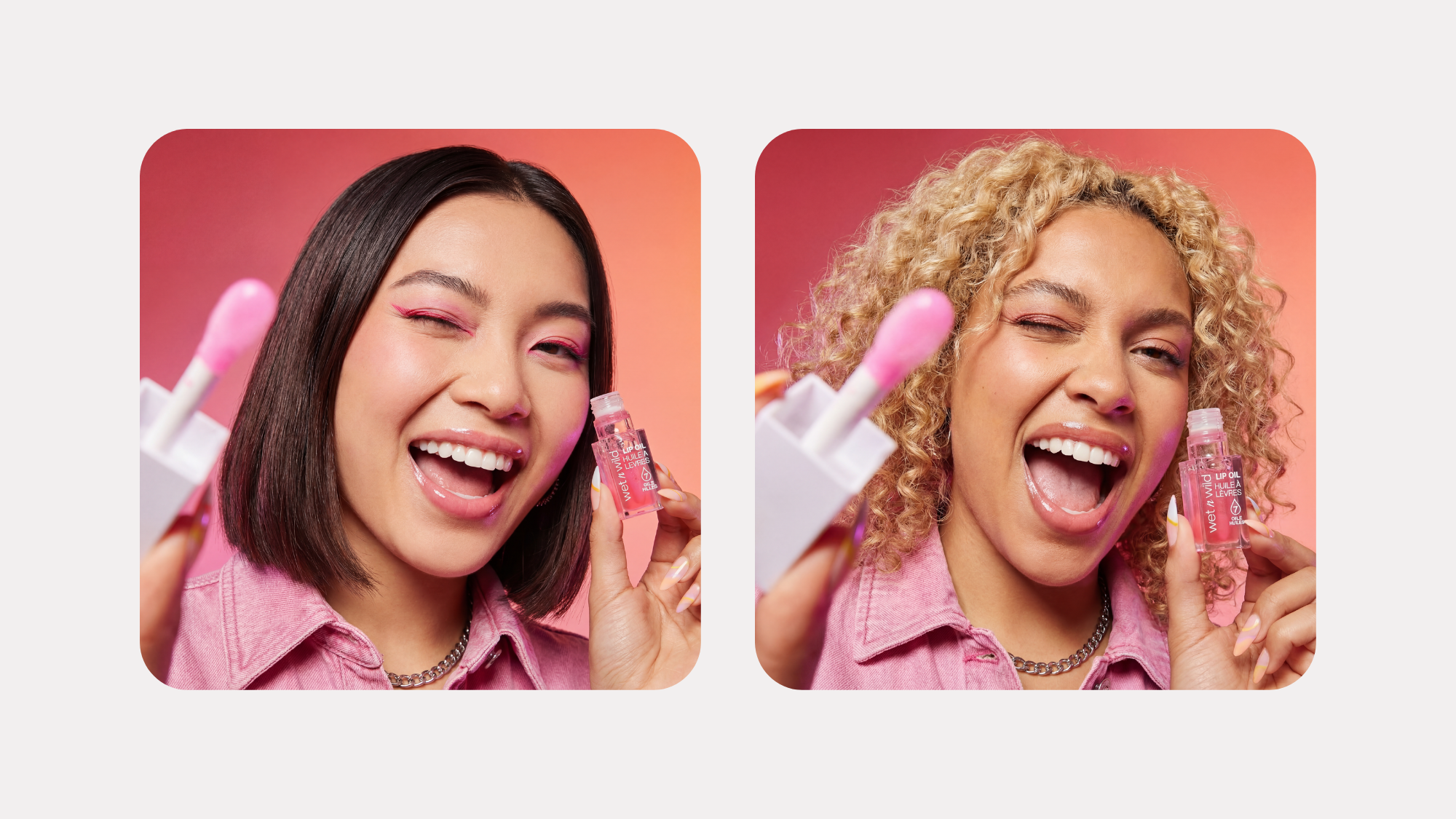
Beauty is one of the most culturally specific marketing categories. Skin tone preferences, beauty ideals, hero ingredients, and application rituals differ significantly across markets: and campaigns that perform in Western markets often require meaningful localization for Southeast Asia, the Middle East, or Latin America.
 Diversity in Beauty
AI creative production enables beauty brands to localize campaigns at a scale that was previously prohibitive. A hero campaign gets translated not just linguistically but visually: adapted for local skin tones, cultural aesthetics, and market-specific product positioning. Global beauty brands maintaining consistent creative quality across 15+ markets use AI creative infrastructure to make that localization economically viable.
AI-Powered Seasonal Campaign Variations
Seasonal campaigns are the heartbeat of beauty marketing: holiday, spring refresh, summer, back to school, and countless brand-specific moments all demand fresh creative. For large beauty brands running across multiple product lines and channels, producing seasonal creative at the required volume has historically meant enormous production budgets or creative fatigue.
AI-powered seasonal variation changes that math. Brand teams brief the seasonal direction once and generate complete campaign asset sets across formats, channels, and product lines from that brief. The quality is consistent. The production timeline collapses. The team's creative energy goes into strategy and direction, not production execution.
Fragrance and Sensory Product Visualization
Fragrance visualization is one of the beauty marketing trends generating the most creative experimentation with AI: and the category is both visually demanding and historically difficult to execute at scale. Conveying scent, mood, and sensory experience through visual content requires craft that generic production cannot deliver cost-effectively.
AI-generated imagery opens new creative territory for fragrance brands. Surreal landscapes, abstract mood environments, and unexpected visual metaphors for scent notes are now producible at campaign quality without commissioning full productions. Fragrance brands that relied on a single expensive visual identity can now produce multiple visual worlds for different scent families, audiences, and markets: all maintaining the premium aesthetic the category demands.
Sustainability and Refill Program Creative
Sustainable beauty is no longer a differentiator: it is a baseline expectation for a growing consumer segment. Refill programs, recycled packaging, and ethical sourcing need to be communicated through creative that is as beautiful as the product itself.
The content challenge is avoiding the aesthetic tropes of sustainability marketing: brown packaging, green leaves, earnest messaging that reads as corporate. Beauty brands in 2026 integrate sustainability credentials into campaign creative without sacrificing the aspirational visual language the category demands. AI-generated imagery helps teams explore this visual language faster: testing how sustainability messaging lands within a luxury aesthetic before committing to a full production direction.
Men's Grooming and Gender-Neutral Beauty Content Expansion
Men's grooming is one of beauty's fastest-growing segments: and the content gap between women's beauty marketing and men's grooming is closing fast. Brands investing in grooming content that speaks to male audiences with the same creative sophistication as women's beauty capture category growth that underfunded competitors miss.
Gender-neutral beauty positioning expands the addressable audience further. Brands building creative that works across gender identities: without defaulting to either hyper-masculine or traditionally feminine aesthetics: access broader audiences while building brand equity that feels genuinely inclusive rather than performative.
Ready to Create Beauty Marketing Content at Scale?
Beauty marketing in 2026 is a volume problem with a quality requirement. The beauty marketing trends that matter most: shade range representation, creator commerce, UGC-adjacent creative, and AI seasonal production: all require the same infrastructure: AI creative production that delivers quality at volume. The brands that have built it are leading every beauty marketing trend on this list, and pulling further ahead with every launch cycle.
Build beauty marketing workflows that scale.
Empower your design and marketing teams with AI-powered creative production built for beauty — more campaigns, more shade variants, more markets, without adding headcount.
Ready to put this into practice?