
Syed Anas Hussain
January 28, 2026 • Updated January 28, 2026
11 mins Read
Imagine a global retail giant with thousands of employees, millions of customers, and a legacy that spans decades. They have the resources, the talent, and the market share.
Yet, when a nimble startup enters the scene with a disruptive AI-driven experience, the giant finds itself moving like a tanker in a bathtub - slow, rigid, and unable to pivot. This is the "Enterprise Dilemma."
In a world where technology moves at the speed of light, how does a massive organization stay human-centered and agile?
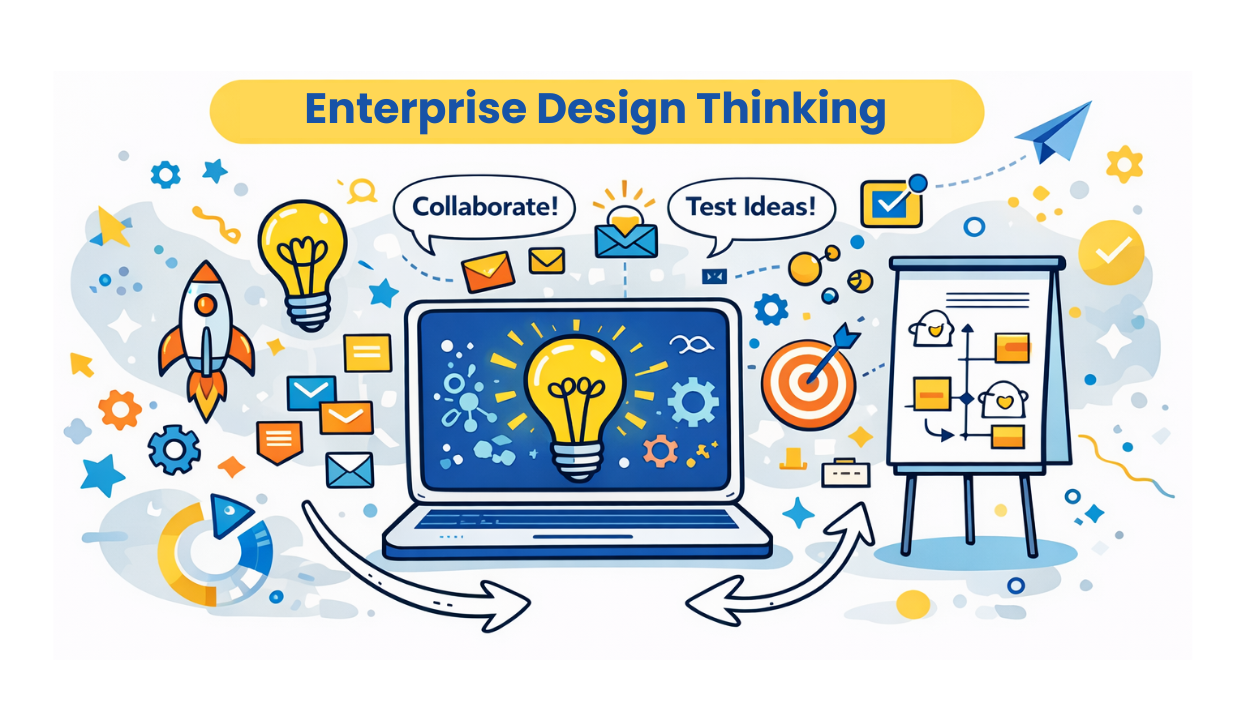
The answer lies in Enterprise Design Thinking (EDT). It is not just a methodology; it is a mindset shift that transforms how large-scale organizations solve problems.
By combining the empathy of traditional design thinking with the scalability required for global operations, EDT provides a framework for "restless reinvention."
Today, this framework is being supercharged by Artificial Intelligence. When we integrate AI into the EDT process, we don't just work faster; we work smarter, deeper, and with a level of impact that was previously unimaginable.
In this guide, we will explore how to master EDT in the age of AI, build high-impact teams, and leverage tools that turn enterprise complexity into a competitive advantage.
What is Enterprise Design Thinking?
To understand Enterprise Design Thinking, we must first look at what it isn't. It isn't a workshop you attend once a year, nor is it a set of Post-it notes on a glass wall. It is a scalable, human-centered framework designed to help teams align on user outcomes and solve complex problems at the speed of a modern enterprise.
While traditional design thinking often thrives in small, nimble teams, EDT was built to survive the silos, hierarchies, and geographic distances of the corporate world.
The framework is built upon three foundational pillars that guide every decision:
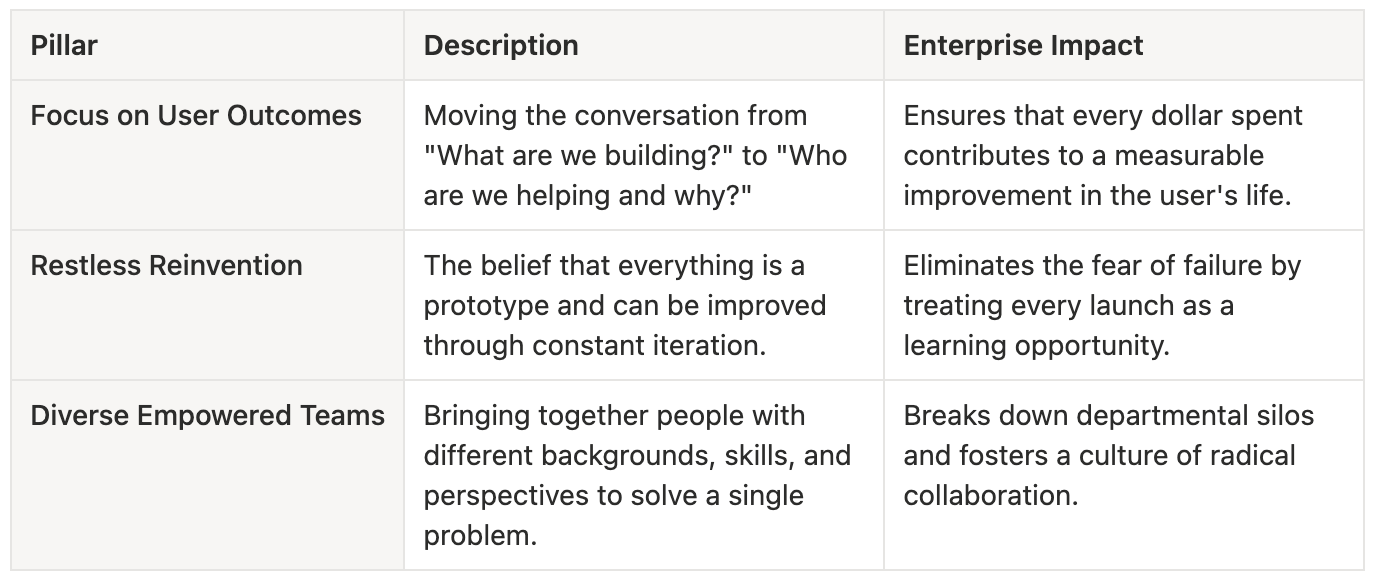 Pillars of Enterprise Design Thinking
By adhering to these pillars, enterprises can move beyond the "feature factory" mentality. Instead of shipping code or designs for the sake of meeting a deadline, teams focus on the impact of their work. This shift is crucial in the modern landscape, where a McKinsey report recently noted that 64% of enterprises say AI is now enabling them to innovate in ways that were previously impossible.
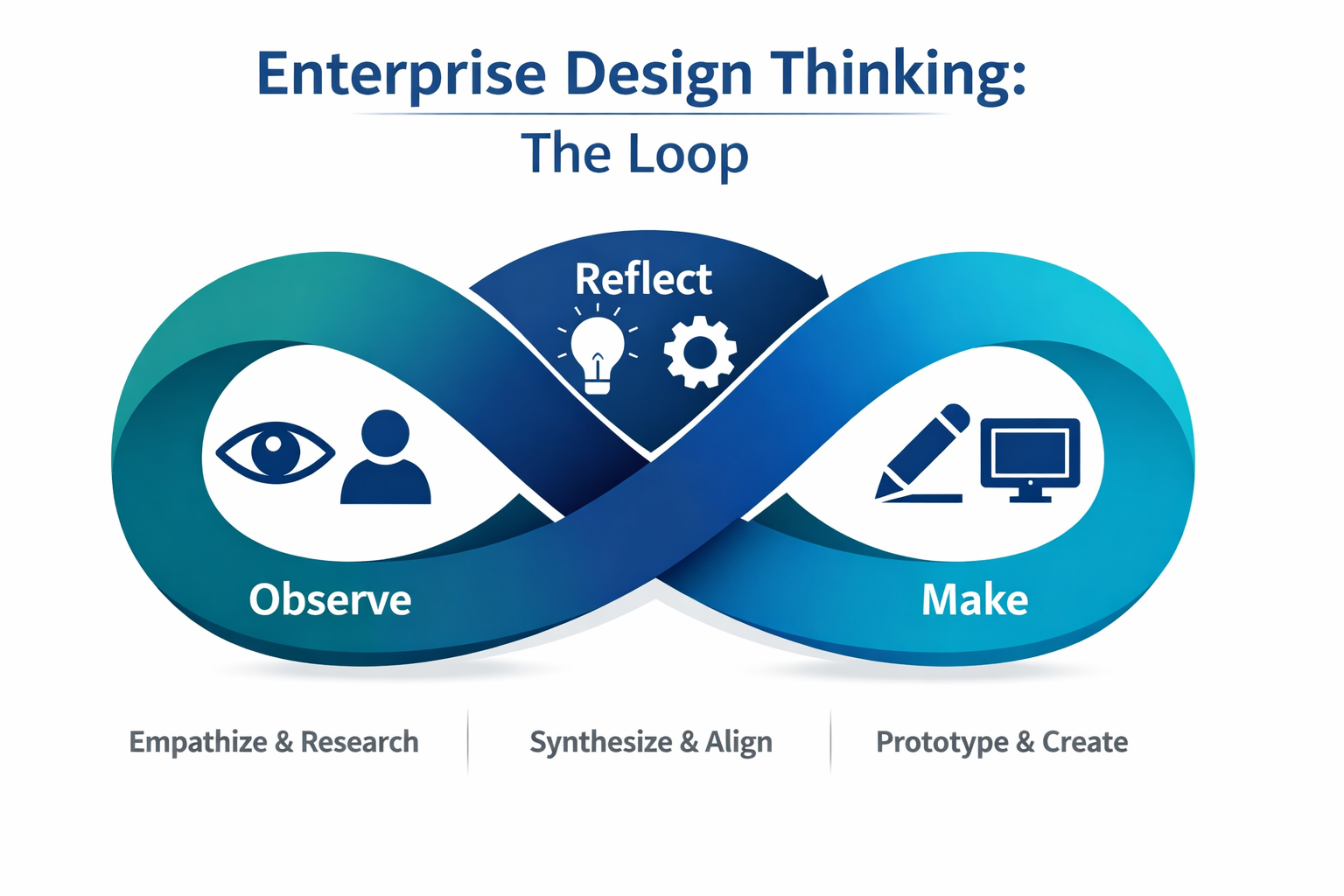 Loop of EDT
The Enterprise Design Thinking Principles
While the pillars provide the foundation, the principles are the rules of engagement. They define how a team operates on a day-to-day basis. In an enterprise setting, these principles act as the "North Star," keeping thousands of individuals aligned even when they are working on disparate projects across the globe.
-
The User is the North Star: In every meeting, the first question should be: "How does this benefit the user?" In a large organization, it is easy to get lost in technical constraints or stakeholder opinions. EDT forces the user back into the center of the room.
-
Multidisciplinary Collaboration: Innovation doesn't happen in a vacuum. A great EDT team includes designers, engineers, product managers, and even legal or HR professionals. This diversity ensures that the solution is not only beautiful but also feasible and viable.
-
A Bias Toward Action: In the enterprise world, "analysis paralysis" is a common trap. EDT encourages teams to stop talking and start making. Whether it's a rough sketch or a high-fidelity mockup created in ImagineArt Enterprise, a tangible prototype is worth a thousand meetings.
By mastering these principles, organizations can create a culture where innovation is not a lucky accident but a repeatable process. As we delve deeper into the age of AI, these principles become even more vital. AI provides the "what" and the "how," but Enterprise Design Thinking provides the "why."
Enterprise Design Thinking in the Age of AI
Now, let’s move on to the current times. We are currently witnessing a seismic shift in the design landscape. Artificial Intelligence is no longer just a futuristic concept; it is a fundamental teammate in the design process.
In the context of Enterprise Design Thinking, AI acts as a "force multiplier," allowing teams to process information, generate ideas, and test solutions at a scale that was once humanly impossible. However, the true power of AI in EDT doesn't come from the technology itself, but from how it is integrated into a human-centered workflow.
This integration is often referred to as Human-Centered AI. It is the practice of designing AI systems that amplify human capabilities rather than replacing them. In an enterprise setting, this means using AI to handle the "heavy lifting" of data analysis and repetitive tasks, freeing up human designers to focus on empathy, strategy, and creative problem-solving.
According to a 2025 report from OpenAI, enterprises leveraging AI are seeing productivity gains where users save between 40 to 60 minutes per task. In the world of design thinking, those minutes are the difference between a good idea and a revolutionary one.
The Enterprise Design Thinking Process: The 5 Phases Accelerated by AI
To truly understand the impact of AI, we must look at how it transforms each stage of the traditional 5-phase Design Thinking process. This is the engine of innovation in any large organization, and by injecting AI into these phases, enterprises can move from insight to execution in a fraction of the time, turning months of work into mere days.
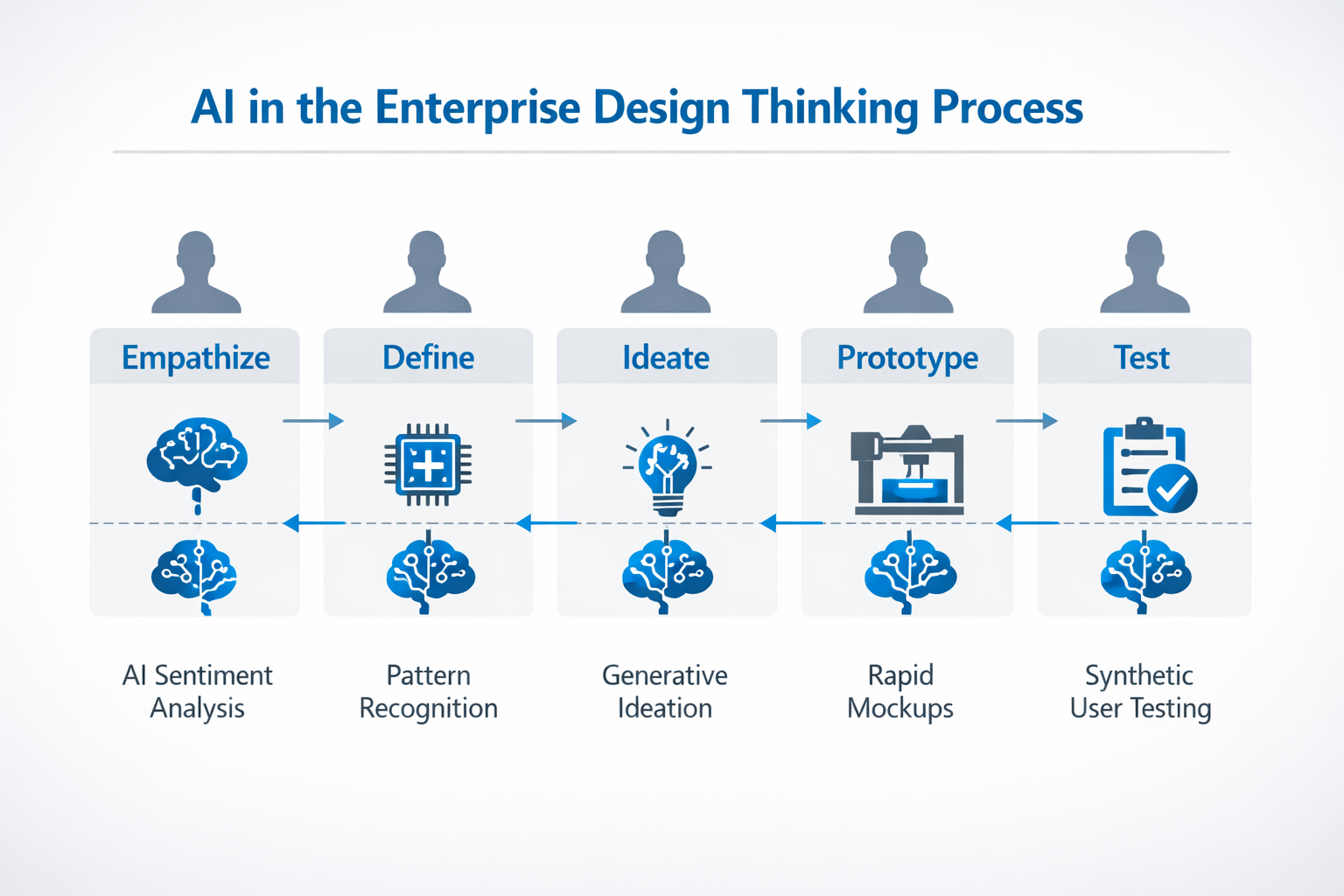 5 Phases of EDT accelerated by AI
Phase 1: Empathize (Deep User Understanding)
This is where the human-centered journey begins. The goal is to gain a deep, non-judgmental understanding of the user's needs, desires, and pain points. Traditionally, this involved weeks of manual interviews, ethnographic research, and surveys.
The AI-Enhanced Approach: AI has become the ultimate empathy machine. It can process millions of data points—from customer service transcripts and social media sentiment to in-app usage patterns—in real-time. This allows for real-time sentiment analysis and the creation of AI-generated personas that are far more comprehensive and less biased than manual ones.
Phase 2: Define (The Point of View)
Once the data is gathered, the team must Define the core problem. The goal here is to synthesize the observations, find patterns, and articulate a clear, actionable Point of View (POV) or problem statement. This is the critical bridge between understanding the user and generating solutions.
The AI-Enhanced Approach: AI excels at pattern recognition in massive datasets. It can identify non-obvious correlations and suggest problem statements that human teams might miss. This dramatically accelerates the definition phase, allowing the team to focus on refining the POV rather than just finding it. Teams use AI-driven brainstorming tools within ImagineArt to refine their POV, ensuring the problem statement is rooted in deep, data-backed insights before moving to the costly creation phase.
Recommended Read: How Remote Teams can Run Creative Sessions
Phase 3: Ideate (Creative Solution Generation)
The Ideate phase is all about quantity over quality—generating as many potential solutions as possible without judgment. In an enterprise setting, this requires breaking down silos and encouraging radical collaboration across diverse teams.
The AI-Enhanced Approach: Generative AI acts as a creative partner, capable of producing hundreds of concepts and visual ideas in seconds. This allows the human team to move beyond the obvious and explore truly novel solutions, using AI to rapidly visualize abstract concepts.
ImagineArt's generative suite allows any team member to turn a text prompt into a visual concept instantly. This democratizes ideation, enabling non-designers to contribute high-fidelity visual ideas that can be immediately shared and iterated upon.
Phase 4: Prototype (Building to Learn)
This is the phase of action—where ideas are turned into tangible prototypes. Traditionally, this involved manual sketching, slow iteration, and high-cost prototyping, making the "fail fast" mantra expensive and difficult to scale.
The AI-Enhanced Approach: Generative AI creates hundreds of concepts and high-fidelity mockups in seconds. This allows for Parallel Prototyping, where multiple solutions are tested simultaneously, significantly reducing the risk of investing in the wrong idea.
This is where ImagineArt truly shines. Its AI workflows allow for instant, brand-consistent prototyping. A product design team can use generative models to produce dozens of layout variations for a complex dashboard in a single afternoon.
They can then use ImagineArt Enterprise to ensure these variations adhere to the brand's strict visual guidelines, maintaining consistency at scale while iterating at the speed of thought.
Phase 5: Test (Gathering Feedback and Iterating)
The final phase is Test, where prototypes are put in front of real users to gather feedback. In the enterprise, this phase is crucial for validating the solution's scalability and viability.
The AI-Enhanced Approach: AI can facilitate synthetic user testing by simulating user behavior based on historical data, providing rapid, low-cost feedback loops. Furthermore, AI can analyze qualitative feedback from real users instantly, identifying key themes and pain points that need to be addressed in the next iteration.
The platform's collaborative features allow for seamless sharing of prototypes and the collection of structured feedback, which can then be fed back into the AI models for rapid, data-driven refinement.
Statistics that Tell the Story
The data supporting the integration of AI into design processes is overwhelming. Recent studies highlight the tangible ROI that enterprises are experiencing:
"The enterprise AI market has exploded from $24 billion in 2024 to a projected $200 billion by 2030. Organizations that fail to integrate AI into their core design and innovation frameworks risk being left behind in a hyper-competitive global market." — Glean Enterprise Insights, 2025
Furthermore, McKinsey's research indicates that 64% of respondents report that AI is enabling their organizations to create new revenue streams by identifying user needs that were previously invisible. In the framework of Enterprise Design Thinking, AI isn't just improving the process; it's expanding the horizon of what is possible.
Enterprise Design Thinking Team Essentials for AI
Building a team for Enterprise Design Thinking in the AI era requires more than just hiring talented designers. It requires a "new breed" of multidisciplinary collaboration where AI literacy is as fundamental as empathy.
In a large-scale organization, the "Team Essentials" aren't just about the people; they are about the culture and the tools that allow those people to thrive.
To succeed, an AI-driven EDT team must master three core areas:
-
AI Literacy and Prompt Engineering: Every team member, from the product manager to the lead developer, should understand the capabilities and limitations of AI. Learning how to communicate with AI—often through prompt engineering—becomes a vital skill for rapid ideation.
-
Ethical Design and Trust: As AI takes a larger role in the design process, the team must become the "moral compass" of the organization. This involves ensuring that AI-driven solutions are transparent, unbiased, and respect user privacy.
-
Collaborative Infrastructure: In an enterprise, teams are often spread across time zones. Having a shared workspace like ImagineArt Enterprise is essential. It provides a single "source of truth" where credits are shared, brand kits are centralized, and collaboration happens in real-time.
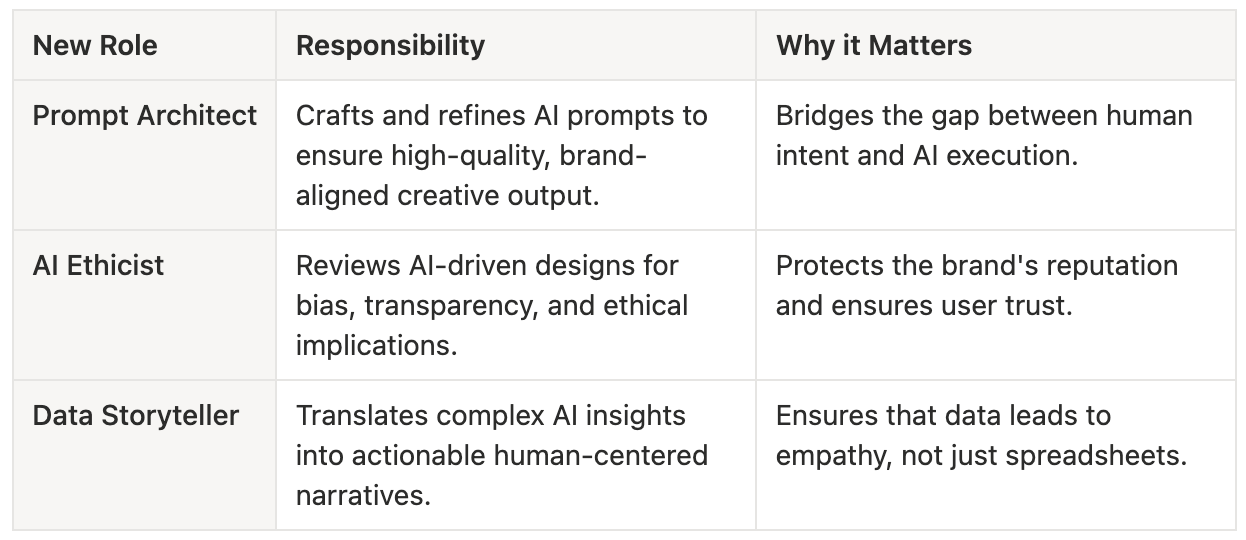 EDT Team for AI
Discussion: AI Workflows, Mockups, and Beyond
When we talk about the "Make" phase in Enterprise Design Thinking, we are really talking about the transition from an idea to a tangible asset. In the past, this was a linear process. Today, it is a complex, multi-layered workflow powered by AI. Modern enterprises are moving away from single-task AI tools toward integrated AI Workflows.
An AI workflow might start with a simple text description of a user problem. From there, AI models can generate user personas, suggest feature lists, and even create initial wireframes. But the real magic happens when these pieces are brought together in a platform like ImagineArt. Using the "Ideate" canvas, teams can chain together different models—generating an image, refining it with a background remover, and then applying a specific brand style—all within seconds.
The Role of High-Fidelity Mockups
Mockups are the "language" of design thinking. They allow teams to test their assumptions and gather feedback before a single line of code is written. In an enterprise setting, the quality of these mockups matters. A low-fidelity sketch might work for a small startup, but for a Fortune 500 company, a mockup needs to feel real.
Using ImagineArt's generative suite, teams can produce high-fidelity mockups that are indistinguishable from final products. This allows for "Parallel Prototyping"—the practice of testing multiple high-quality solutions simultaneously to see which one resonates most with the target audience. This approach significantly reduces the risk of investing in the wrong solution and accelerates the overall time-to-market.
Conclusion: Your Roadmap to Enterprise Innovation
Enterprise Design Thinking is no longer an optional "extra" for large organizations; it is a survival requirement. By focusing on user outcomes, fostering radical collaboration, and embracing a bias toward action, enterprises can navigate the complexities of the modern world with agility and grace.
The integration of AI into this framework represents the next great leap in human productivity. It allows us to be more empathetic, more creative, and more impactful at a scale that was previously impossible. But remember: AI is the engine, but Enterprise Design Thinking is the driver. Tools like ImagineArt Business provide the infrastructure, but it is your team's commitment to the user that will ultimately define your success.
The future of innovation isn't just designed, it is co-created. It is the result of human intuition meeting machine intelligence, all guided by the principles of empathy and scale. Start your journey today, and turn your enterprise's complexity into its greatest creative strength.
FAQ: Enterprise Design Thinking & AI
How does Enterprise Design Thinking differ from standard Design Thinking? While standard design thinking works best for small teams, EDT is designed for the scale and complexity of large organizations. It includes additional elements like "The Loop" (Observe, Reflect, Make) and focuses on multidisciplinary alignment across thousands of stakeholders.
Is our data secure when using AI for Enterprise Design? Security is a top priority for enterprise platforms. Tools like ImagineArt Enterprise offer role-based permissions, private data silos, and robust security protocols to ensure your intellectual property remains protected.
How do we measure the ROI of implementing EDT and AI? ROI can be measured through reduced iteration cycles, faster time-to-market, and increased user satisfaction scores. Additionally, enterprises often see significant cost savings by "failing fast" in the prototyping stage rather than after a full product launch.
Do we need a team of AI experts to get started? Not necessarily. While AI literacy is important, modern tools are designed to be intuitive. The key is to start with a human-centered problem and use AI as a tool to explore solutions, rather than starting with the technology itself.
Syed Anas Hussain
Syed Anas Hussain is a computer scientist blending technical knowledge with marketing expertise and a growing passion for AI innovation. Curious by nature, he dives into new AI sciences and emerging trends to produce thoughtful, research-led content. At ImagineArt, he helps audiences make sense of AI and unlock its value through clear, practical storytelling.