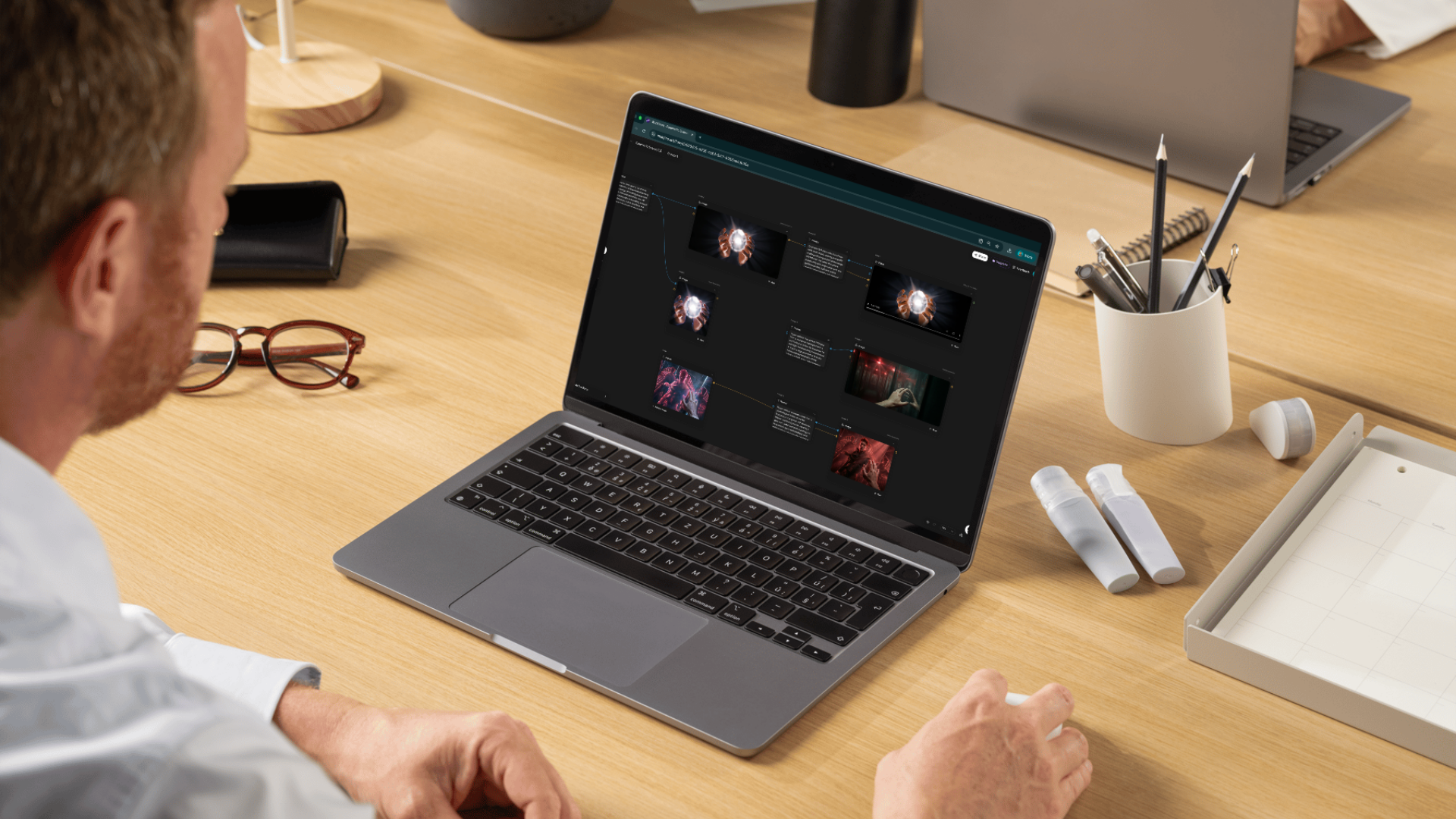
The value of content has increased significantly over the last two years, with brands under pressure to create more while maintaining quality and keeping up with trends.
Today, marketers are expected to:
- produce viral posts: because viral is the new ‘normal’
- build scalable campaigns: as content demand grows by 5X
- create personalized experiences: brands are nor competing in attention economy
- and do anything that caters to the ever-shrinking attention span of their audience.
So, how are brands keeping up?
hint: it’s not about how big or small a brand is.
It’s about their creative workflows and underlying content supply chain.
What is a Creative Workflow?
A creative workflow is a simple framework, a structured, repeatable sequence of steps that transforms an idea into a finished, distributed piece of content.
However, it’s more than just a checklist. A well-designed creative workflow defines responsibilities, establishes checkpoints, centralizes assets, and ensures that every project follows a predictable path from kickoff to launch.
In other words, instead of reinventing the process for every campaign, you create a system that supports consistent execution.
This shift is critical for growing teams. As output scales, complexity increases. More stakeholders become involved. More revisions are required. More channels must be considered. Without a workflow, each project becomes a one-off experiment. With a workflow, projects become controlled, measurable, and scalable.
Ultimately, the goal is to move from reactive, haphazard and chaotic content production to proactive creative operations.
Why Your Creative Process Is Broken and How Creative Workflow Helps
Creative teams are tasked with pushing out all sorts of content: social posts, performance ads, landing pages, email sequences, product photography, lifestyle shoots, UGC, video snippets, trailers, memes, brand documents, seasonal visuals and more.
Yet these teams are still operating with fragmented processes; how, you may ask.
As a result, projects slow down not because of a lack of creativity, but because of process friction.
Over time, this chaos creates measurable costs. First, branding becomes inconsistent. Second, time is wasted. Finally, creative burnout stings.
But with the right framework, or as we call it a “Creative Workflow”, systems develop!
The 5 Key Phases of a Winning Creative Workflow
Every effective creative workflow, regardless of the business niche or industry follows five foundational phases. While details may vary depending on the organization, these stages create a universal structure that ensures clarity, efficiency, and quality.
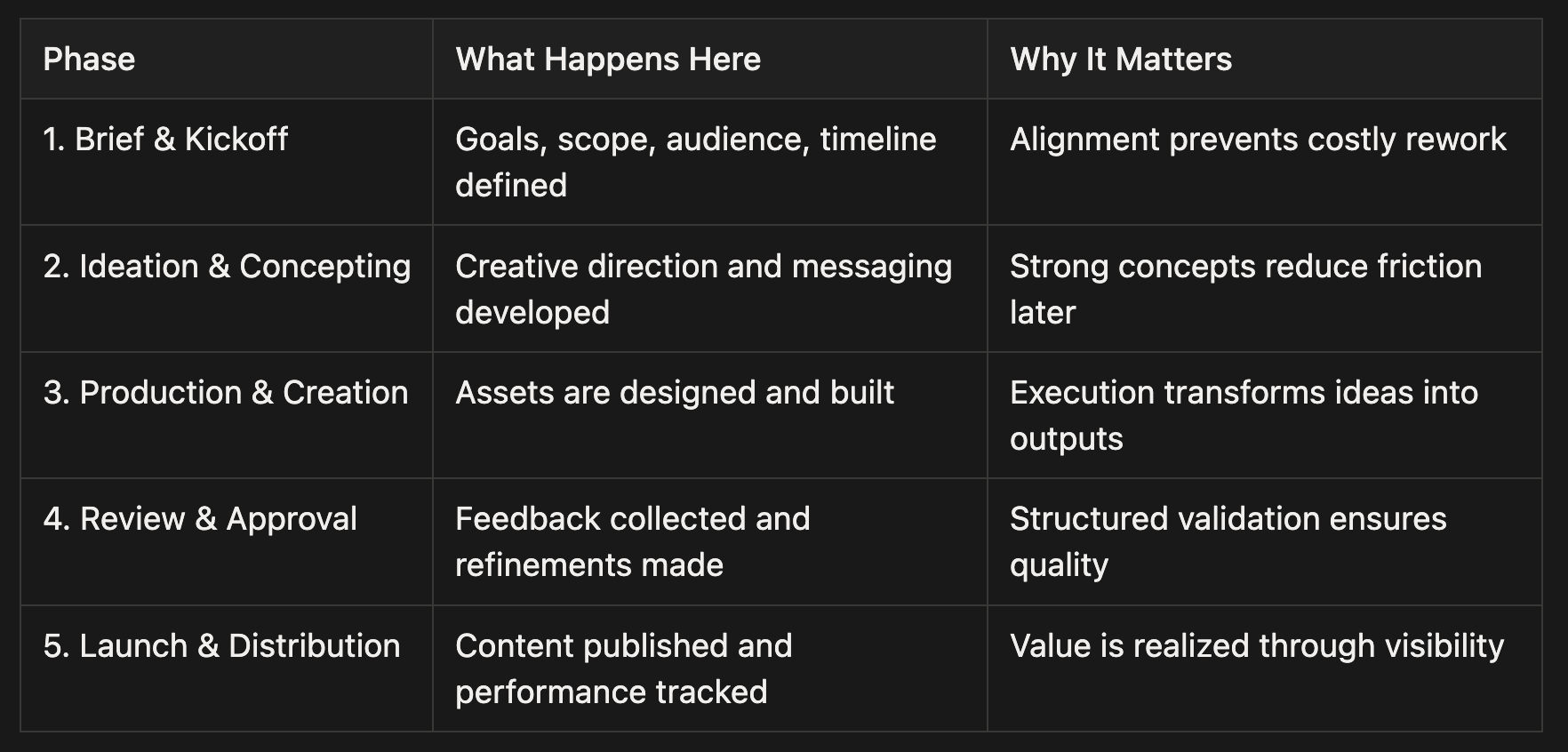 The 5 Key Phases of Creative Workflows
Let’s examine each phase in detail.
1. The Brief and Kickoff
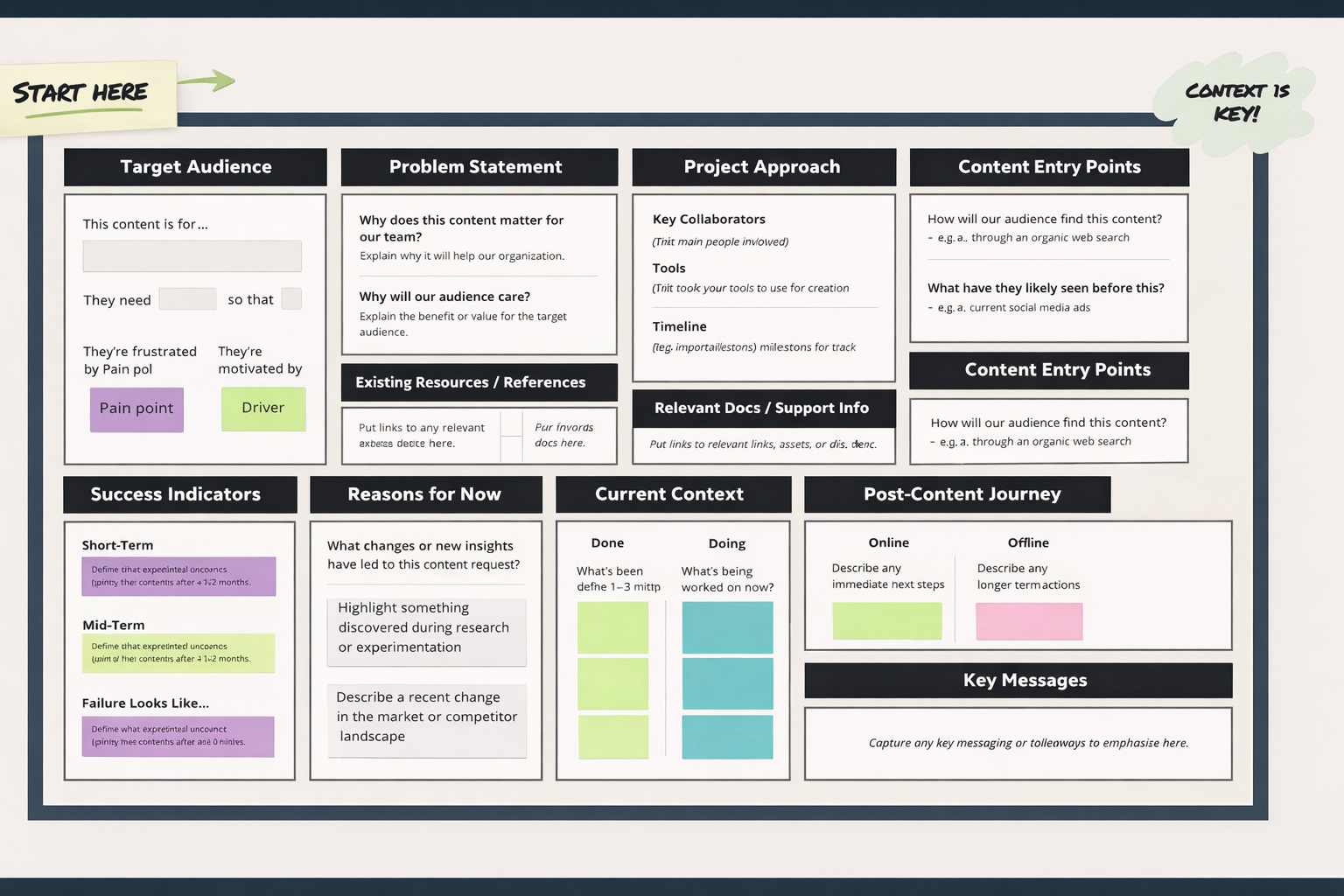
For every successful project, process, or business, the beginning is critical. You need a strong foundation to build on, which is why the brief and the kickoff are so important.
A strong kickoff meeting ensures every stakeholder understands not only what needs to be created, but also why it matters.
Furthermore, documenting the brief also creates accountability. When objectives and scope are clearly defined, it becomes easier to evaluate whether a project stays on track during execution. In enterprise environments, especially, this clarity helps prevent scope creep and reduces unnecessary iterations.
In short, investing time in alignment at the start saves exponentially more time later.
2. Ideation and Concepting
Once objectives are clear, the creative exploration begins.
The ideation phase is where strategy transforms into possibility. Teams brainstorm visual directions, messaging angles, campaign themes, and storytelling approaches. Mood boards, reference examples, sketches, and drafts often emerge during this stage.
Importantly, this phase should balance creative freedom with strategic guardrails. Without direction, brainstorming can become scattered. With too many constraints, creativity feels restricted. A mature workflow creates space for exploration — while keeping teams anchored to the defined brief.
Moreover, strong concepting reduces friction downstream. When stakeholders approve a clear creative direction early, production becomes smoother and revisions become more focused. In contrast, skipping structured ideation often results in “design by committee” later.
The clearer the concept, the cleaner the execution.

3. Production and Creation
With a defined concept in place, execution begins.
This is where designers build visuals, copywriters craft messaging, video teams produce footage, and developers assemble final assets. It is the most resource-intensive phase — and often the most vulnerable to inefficiencies.
Without a workflow, teams may duplicate work, misinterpret feedback, or struggle with version control. However, when production follows a structured path, creators can focus on output instead of coordination.
Additionally, standardized asset naming conventions, centralized storage systems, and predefined checkpoints prevent confusion and reduce delays. In enterprise teams managing dozens of deliverables simultaneously, this level of structure is essential for maintaining quality at scale.
Execution thrives when supported by clarity.
4. Review and Approval
Review cycles are where many creative projects stall.
Feedback loops can quickly become disorganized especially when multiple stakeholders are involved. Conflicting comments, unclear revision notes, and delayed approvals create bottlenecks that impact launch timelines.
Therefore, a structured review phase is critical.
An effective workflow defines:
- Who provides feedback
- When feedback is due
- How revisions are documented
- Who has final approval authority
By formalizing this process, teams reduce unnecessary iterations and protect creative momentum.
Furthermore, version tracking ensures clarity. Instead of debating which file is current, teams can reference documented revisions and maintain transparency across updates.
Structured review protects both timelines and morale.
5. Launch and Distribution
The final phase is where effort converts into impact.
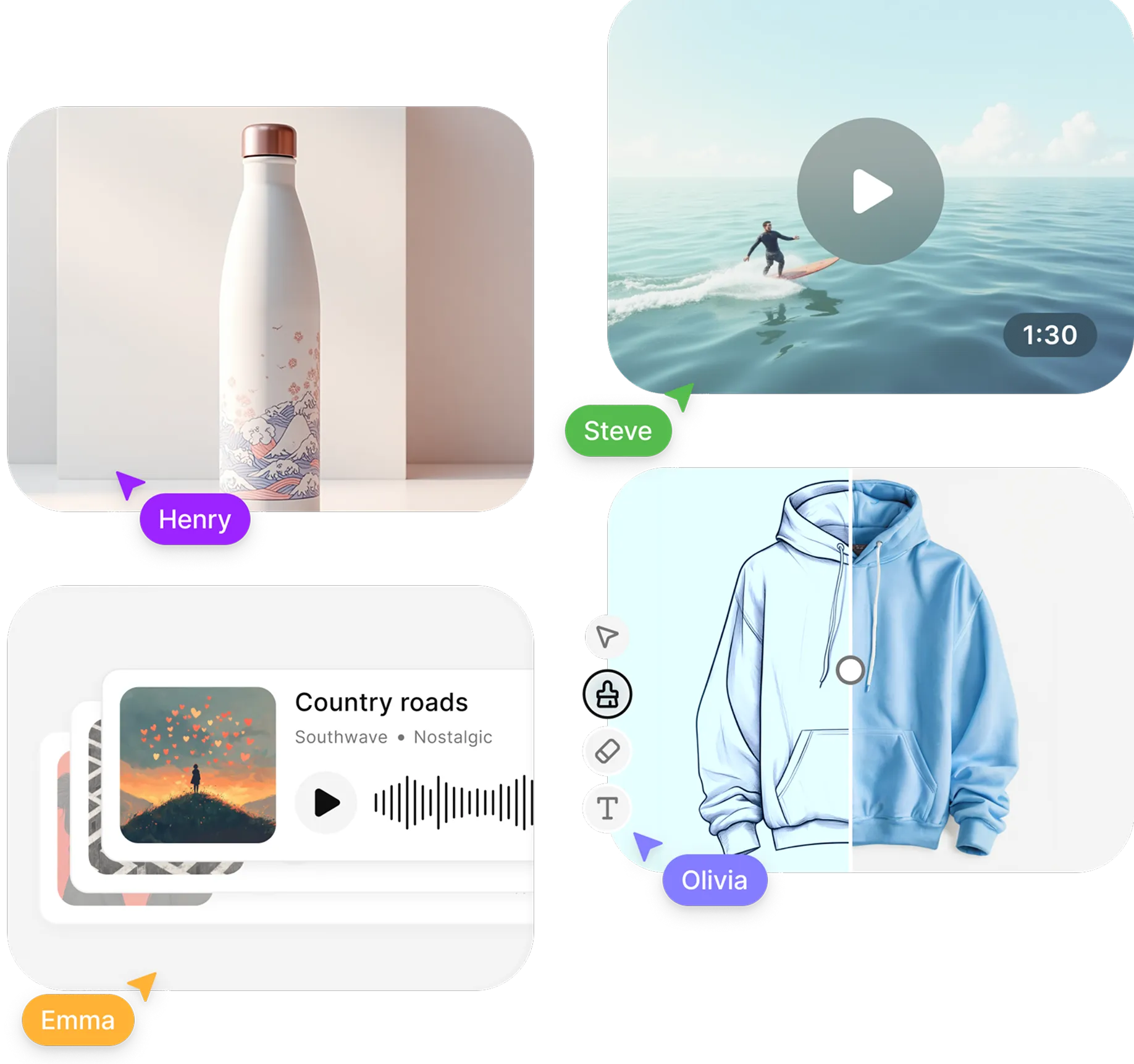
Publishing content across appropriate channels - whether social media, web, paid ads, or internal platforms requires coordination and timing. A workflow ensures that final assets are properly formatted, scheduled, and distributed according to plan.
However, launch isn’t the end. It’s a feedback loop.
Tracking performance metrics allows teams to measure effectiveness and gather insights that inform future briefs. In this way, creative workflows become cyclical systems of continuous improvement.
When structured correctly, each campaign strengthens the next.
Real-World Use Cases: How Different Businesses Benefit
Creative workflows aren’t one-size-fits-all. However, the structure behind them can be adapted to suit organizations of any size from solo founders to global enterprises.
Let’s explore how different teams benefit from implementing a structured creative workflow.
For Small Businesses
Small businesses and solo entrepreneurs often wear multiple hats. The same person might be managing strategy, content creation, design, and publishing. While this flexibility allows for speed, it can also create inconsistency.
Without a workflow, content becomes reactive. Posts are created at the last minute, messaging shifts between campaigns, and branding may unintentionally evolve in different directions.
A structured creative workflow solves this by introducing repeatability. Even a simple five-phase process helps small teams
- Clarify campaign goals before creating
- Maintain consistent messaging across platforms
- Reduce wasted time on rework
- Batch content production more effectively
As a result, small businesses can appear more professional and cohesive without increasing headcount or budget.
For Marketing Agencies
Agencies or marketing teams operate in high-complexity environments. Multiple clients, overlapping deadlines, and varying brand guidelines create operational pressure. In this context, creative workflows are not just helpful, they’re essential.
Without standardized processes, agencies face recurring friction
- Misaligned briefs
- Endless revision cycles
- Scope creep
- Delayed approvals
However, when agencies build a defined workflow framework, they gain predictability.
Each new client follows a structured onboarding and briefing phase. Concept approvals happen before production. Review cycles are documented. Launch timelines are coordinated. The workflow becomes a repeatable service engine.
This standardization enables agencies to
- Deliver faster turnaround times
- Maintain brand consistency per client
- Improve profit margins by reducing wasted effort
- Onboard new team members efficiently
Ultimately, a strong creative workflow turns creative services into scalable operations.
For Enterprises
Enterprise Teams must coordinate across departments, regions, and leadership teams. Campaigns often require legal approval, brand governance review, localization adjustments, and multi-channel distribution strategies.
In this environment, creative workflows function as governance systems.
A structured workflow ensures
- Brand compliance across regions
- Clear approval hierarchies
- Legal review integration
- Version control across global markets
- Asset standardization for localization
Moreover, enterprise workflows enable scale without losing control. Instead of reinventing processes for each campaign, teams operate within defined frameworks that ensure quality, compliance, and speed simultaneously.
For enterprises, workflows are not just about efficiency, its about risk management and operational resilience.
Tips for a Smarter Creative Workflow
Now to the fun part of reviewing some tricks that can help you achieve better results.
Below are practical strategies that elevate workflows from functional to high-performing.
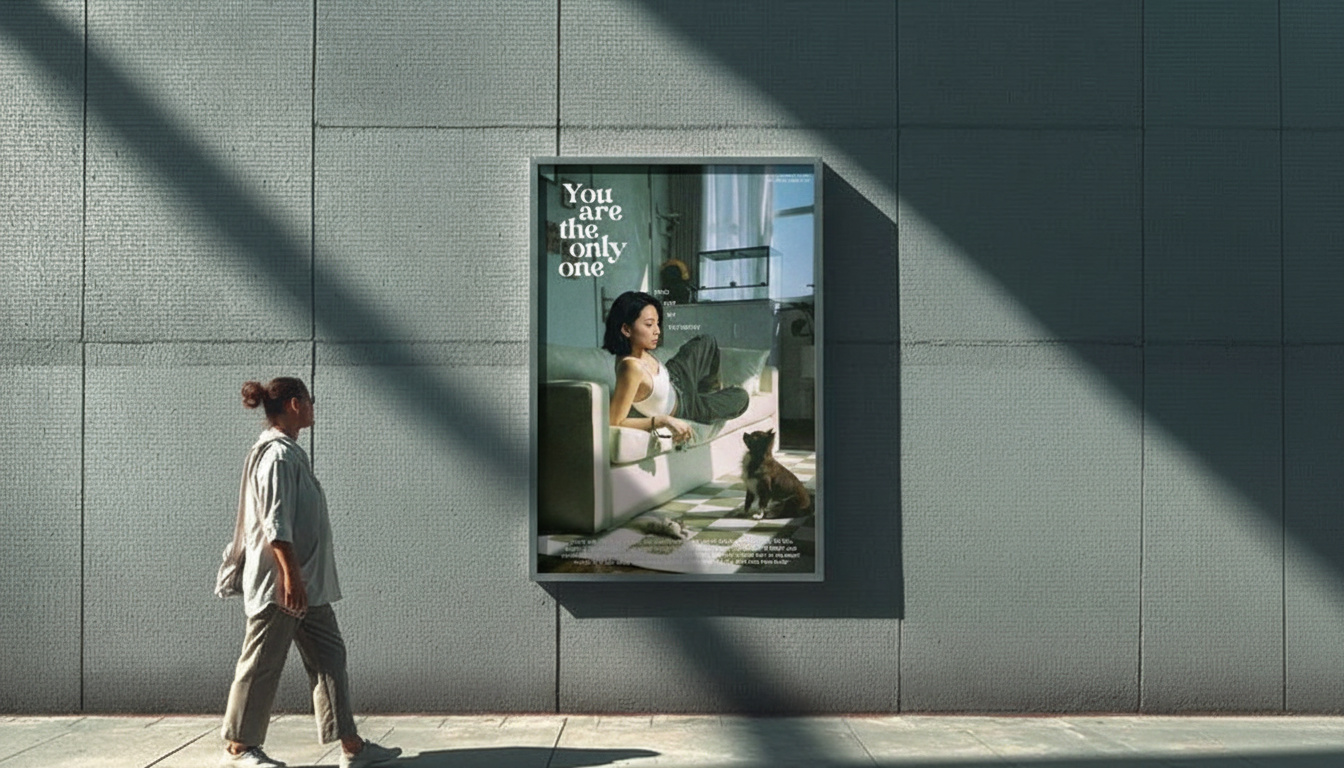
1. Start With a Master Template System
One of the most effective ways to streamline creative operations is to create standardized templates for recurring projects.
This includes
- Campaign briefs
- Social media content plans
- Ad creative checklists
- Video production outlines
- Review documentation forms
When templates are pre-built, teams eliminate setup time and reduce the risk of missing critical information.
More importantly, templates enforce consistency. Instead of relying on memory or informal documentation, every project begins with structured inputs, which improves output quality over time.
Standardization is the foundation of scalability.
2. Centralize and Organize Brand Assets
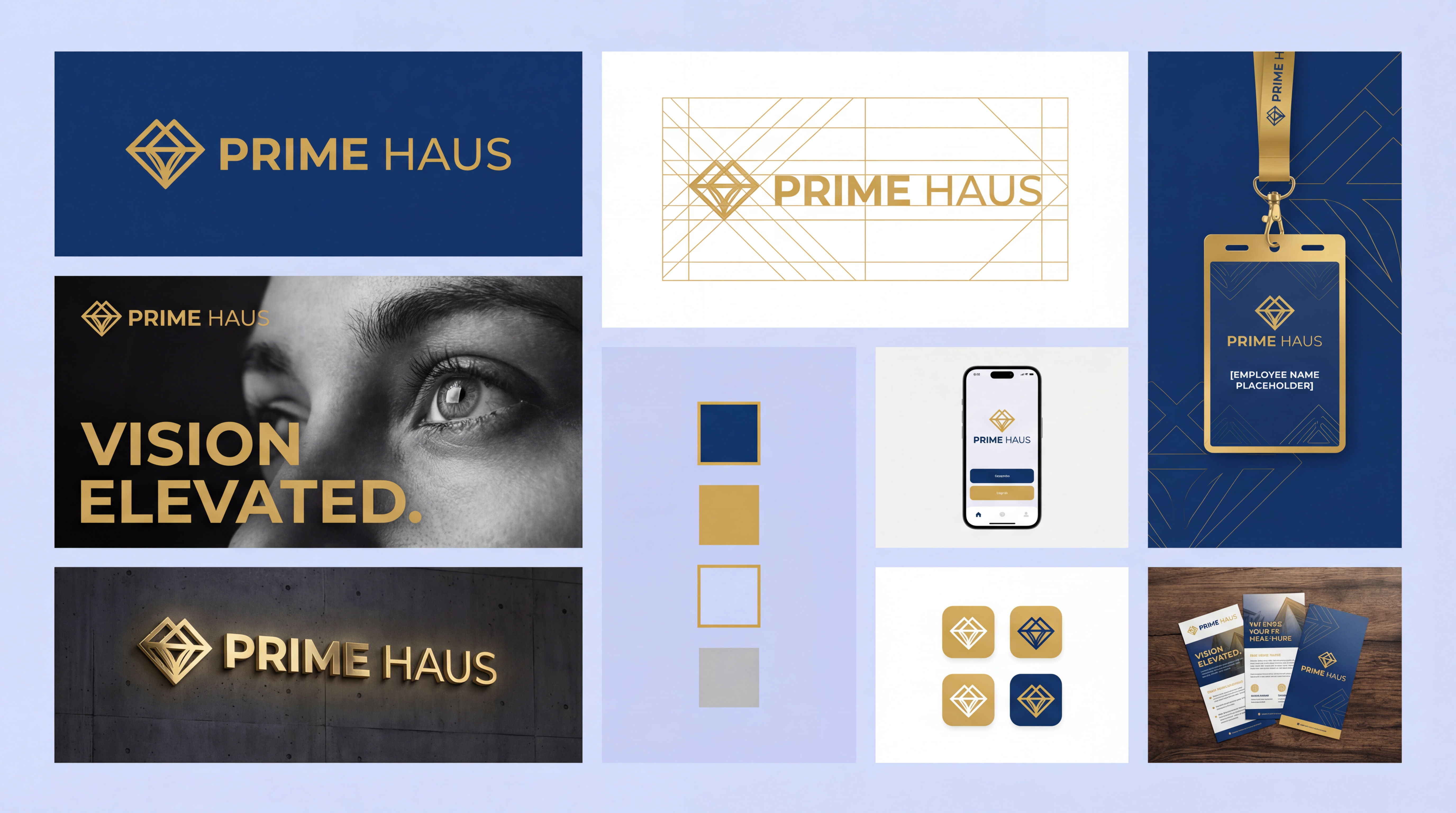
Disorganized assets are a major hidden drain on creative productivity.
When logos, fonts, imagery, and brand guidelines are scattered across drives or outdated folders, teams waste time searching and verifying versions. Worse, inconsistent assets may accidentally make their way into live campaigns.
A centralized brand asset library acts as a single source of truth.
This ensures
- Everyone accesses approved materials
- Updates are reflected universally
- Visual consistency is maintained across campaigns
- Onboarding new team members becomes easier
Clarity in asset management reduces friction in every production phase.
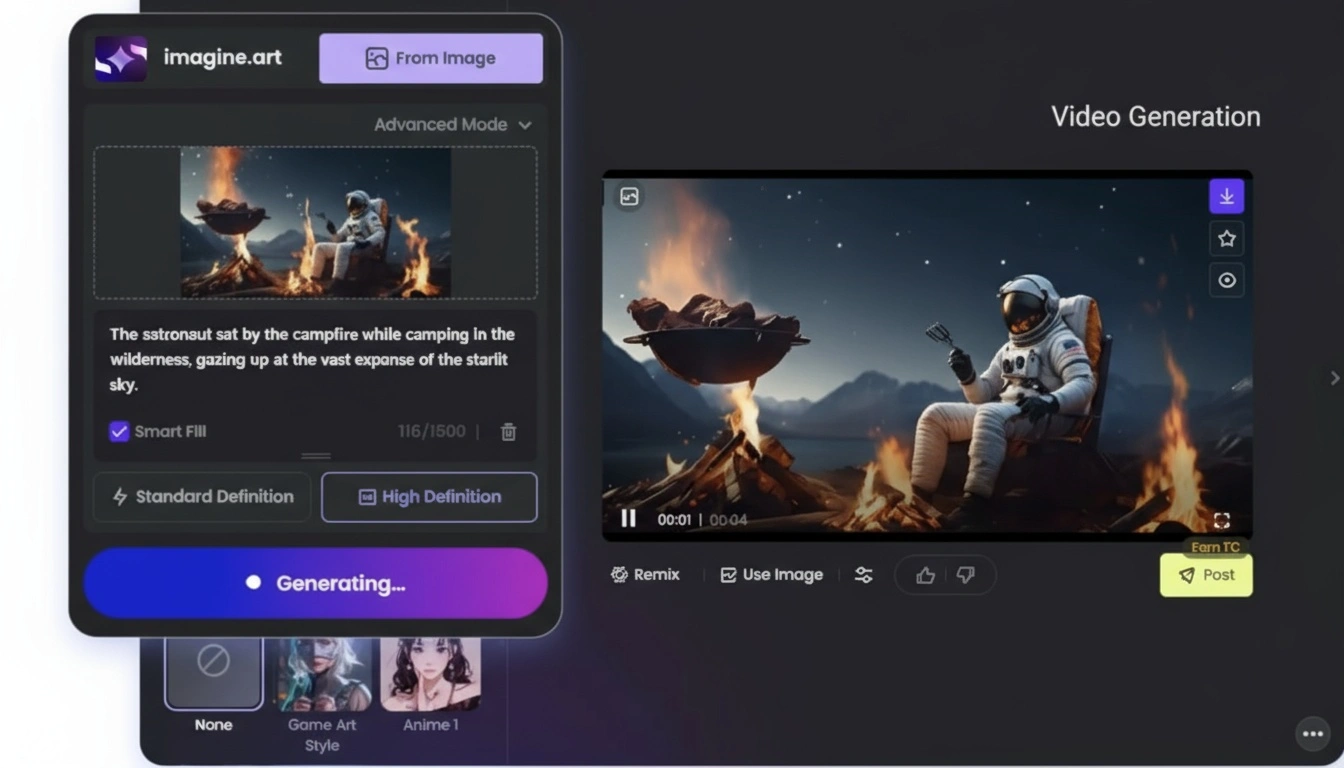
3. Embrace Automation Where It Makes Sense
Not every creative task requires human intervention.
Repetitive actions such as
- Resizing assets for multiple platforms
- Applying consistent formatting
- Version labeling
- File conversions
can often be automated.
By identifying repetitive tasks within your workflow, you free your team to focus on strategic and conceptual work instead of operational overhead.
4. Define Roles and Approval Ownership Clearly
Ambiguity is one of the most common workflow disruptors.
When responsibilities are unclear, projects stall. Feedback gets delayed because no one knows who has final authority. Revisions multiply because ownership is shared but not defined.
A mature workflow clearly outlines:
- Who owns the brief
- Who leads concept development
- Who provides feedback
- Who grants final approval
- Who is responsible for launch
By defining these roles upfront, teams eliminate confusion and reduce bottlenecks during critical stages.
Clear ownership accelerates decision-making.
5. Build Feedback Loops for Continuous Improvement
Workflows should not remain static.
After each campaign or project, reviewing what worked and what didn’t helps refine the system. Performance insights, stakeholder feedback, and production timelines all provide valuable data.
Over time, these refinements create a workflow that becomes increasingly efficient and aligned with business goals.
Continuous optimization transforms workflows from rigid processes into adaptive systems.
ImagineArt’s AI-Powered Workflows for Creatives
While structured workflows bring order, modern creative teams need additional acceleration.
Traditional workflows still depend heavily on manual asset production and disconnected tools. As output requirements grow, these limitations become more apparent.
AI-powered systems introduce a new layer of capability not by replacing creativity, but by amplifying it.
ImagineArt’s Creative AI Workflow takes the traditional process and enhances it with a visual, node-based canvas. Instead of juggling separate tools, teams can map their entire creative journey from concept to final asset, within an integrated environment.
This approach transforms workflows from static checklists into dynamic creative systems.
By combining structured creative methodology with intelligent automation, teams can move faster, maintain consistency, and scale output without sacrificing quality.
In a world where content velocity continues to rise, creative workflows are no longer optional. They are the infrastructure that enables modern teams to perform.
And when powered by intelligent systems, they become a true competitive advantage.
Final Thoughts
To sum it up, creative workflows aren’t just a “nice-to-have” anymore, they’re the future.
As content demands grow and teams scale, structure is what keeps everything aligned, efficient, and consistent. Without it, even the most talented teams struggle. With it, creativity becomes sustainable and scalable.
The future of content belongs to businesses that treat creativity as a system, not a one-off effort.
And adapting to a strong creative workflow today means staying competitive tomorrow.
Ready to put this into practice?


![14 Use Cases of Generative AI for Fashion Industry [+Workflows]](https://blogs-cdn.imagine.art/Fashion_marketing_trends_8650a9f480.jpg)